
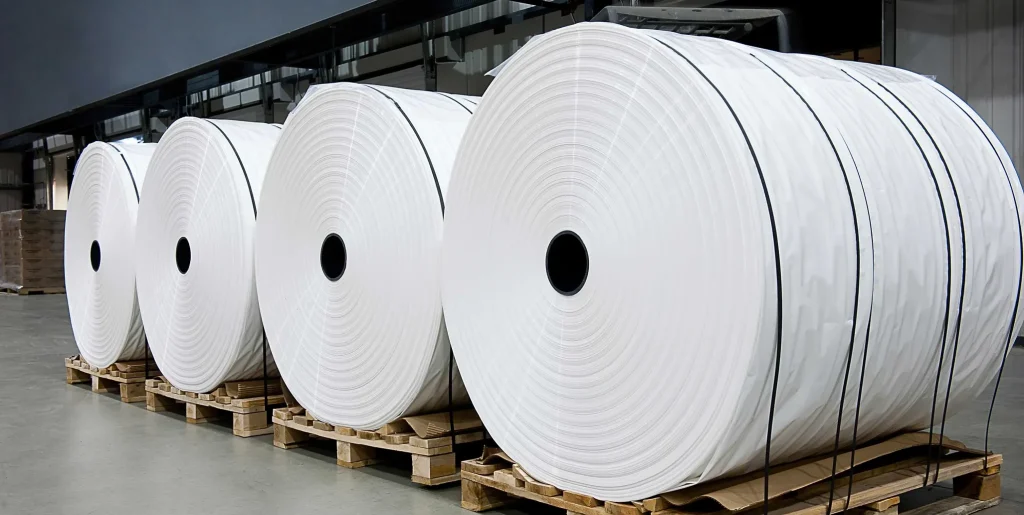
Context and significance of eco-friendly woven bags
When people talk about packaging that is both durable and more respectful of the planet, they increasingly end up discussing eco-friendly woven bags. These bags are not a marginal experiment anymore; they sit at the intersection of tightening regulations, shifting customer expectations, and the practical needs of global supply chains. Governments are phasing out single-use plastic, brands are pledging measurable reductions in greenhouse gas emissions, and logistics managers are asked to move more products with less waste. Within this triangle of pressure, eco-friendly woven bags move from “nice to have” to “strategic infrastructure”.
From a systems perspective, eco-friendly woven bags are not just replacement sacks. They are part of a broader transformation in how materials are sourced, how packaging is designed, and how products flow through their life cycle. A single bag connects oil and gas feedstocks or recycled plastics, advanced polymer engineering, precision machinery, complex logistics networks, and, eventually, recycling streams or waste-management facilities. When we examine each of these elements in isolation and then reconnect them, we gain a richer understanding of why eco-friendly PP woven bags are becoming a backbone of sustainable packaging strategies worldwide.
Key idea
The shift toward eco-friendly woven bags is not driven by a single factor such as cost or regulation; it is the result of converging pressures: environmental legislation, supply-chain efficiency, and brand responsibility all pushing in the same direction.
The following sections explore eco-friendly woven bags from multiple angles: what they are, how they are constructed, why their material choices matter, how they are manufactured at scale, where they are used, and how companies like VidePak maintain consistent quality. Along the way, different packaging formats are cross-referenced: open-top bags for waste management, printed BOPP woven bags for agriculture, pasted valve bags for efficient logistics, composite structures for enhanced barrier performance, and large FIBC bags for bulk handling. Each variation illustrates how a common technical foundation can address highly diverse industrial needs.
Defining eco-friendly woven bags in today's packaging landscape
At its core, an eco-friendly woven bag is a packaging bag made from woven polypropylene fabric that is engineered to minimize environmental impact without sacrificing mechanical performance. The basic idea sounds straightforward: take polypropylene, extrude it into thin tapes, weave those tapes into a strong fabric, turn that fabric into a sack or carrier, and then design the entire system so that it can be reused and eventually recycled. Yet hidden within that simple description are dozens of engineering decisions that separate truly sustainable woven polypropylene bags from ordinary plastic packaging.
In everyday conversations, eco-friendly woven bags appear under many alternative names, each highlighting a particular attribute or application scenario. They may be introduced as eco-friendly PP woven bags in a technical brochure, as recyclable woven packaging sacks in a sustainability report, or as reusable PP woven shopping bags in a retail promotion. Industrial buyers often talk about green woven industrial bags when they want heavy-duty performance with a documented reduction in emissions. All of these labels point toward the same underlying product family: robust woven polypropylene carriers whose carbon footprint, waste generation, and end-of-life options have been deliberately optimized rather than left to chance.
Why do these distinctions matter? Because the word “eco-friendly” can be used loosely. Some packaging is called green simply because it contains a small percentage of recycled material or because it is slightly lighter than an older design. In contrast, high-quality eco-friendly woven bags are usually judged against more rigorous indicators. They are expected to show meaningful reductions in carbon footprint per unit of packaged product, to achieve high levels of recyclability in real waste systems, and to provide long service life through repeated reuse. When life-cycle assessments compare them with traditional multi-wall paper sacks or thin-film plastic bags, eco-friendly PP woven bags often demonstrate a more favorable balance of impact and performance, especially when reuse and recycling are taken into account.
Common aliases for eco-friendly woven bags
- Eco-friendly PP woven bags for general-purpose packaging.
- Sustainable woven polypropylene bags for corporate sustainability programs.
- Recyclable woven packaging sacks where end-of-life processing is prioritized.
- Reusable PP woven shopping bags for retail and grocery environments.
- Green woven industrial bags for heavy-duty applications such as cement or fertilizer.
Key comparison dimensions
- Carbon footprint per metric ton of product packaged.
- Mechanical strength and resistance to tearing and puncture.
- Reusability over multiple logistics cycles.
- Compatibility with recycling systems and material recovery.
- Branding, printing, and consumer perception.
A useful way to understand eco-friendly woven bags is to compare them with other bag types. Cotton totes, for instance, are often perceived as very green, yet life-cycle studies show that their production is energy-intensive and water-intensive; they may need hundreds of uses to offset their initial impact when compared with sturdy reusable PP woven shopping bags. Paper sacks are renewable and familiar, but they can struggle under high humidity or when exposed to repeated handling of sharp or heavy products. By contrast, recyclable woven packaging sacks can reach very high strength-to-weight ratios, remain stable in humid climates when laminated, and still be designed as mono-material structures that are easier to recycle.
Material foundations of eco-friendly woven bags
The performance, cost, and environmental profile of eco-friendly woven bags all start with materials. Polypropylene dominates this landscape because it delivers a rare combination of low density, good stiffness, toughness, chemical resistance, and relatively low melting temperature. These traits allow manufacturers to create thin yet strong tapes, reduce material usage, and run conversion equipment at lower energy levels compared with some alternative polymers.
However, not all polypropylene is the same. The polymer can be produced in homopolymer or copolymer grades, each with slightly different mechanical behavior. It can be tailored for specific melt-flow ranges, crystal structures, or impact performance. In practice, eco-friendly PP woven bags often rely on homopolymer grades for stiffness and strength, while selected copolymer or impact-modified components may be introduced when greater toughness is required. The challenge is to maintain a narrow process window that supports consistent extrusion of tapes and stable weaving, especially when recycled content is introduced.
Material insight
The same low density that makes polypropylene efficient from a weight perspective also helps sustainable woven polypropylene bags achieve lower transport emissions, because less mass needs to be moved for the same containment function.
A defining attribute of modern eco-friendly woven bags is the integration of recycled polypropylene. Instead of relying solely on virgin resin, many producers operate closed-loop systems in which used woven bags and in-plant scrap are shredded, washed, and regranulated into high-quality recyclate. When this reprocessed material is carefully filtered and compounded, it can retain a large fraction of its original tensile strength and stiffness. The result is that recyclable woven packaging sacks can incorporate 30 to 50 percent post-consumer content without compromising the safety margins demanded by industrial users.
The technical key is control of melt flow and contamination. If the melt-flow index is too low, extruders may consume more energy and struggle with uniform tape formation. If it is too high, tapes can become brittle and prone to breakage, undermining the durability of eco-friendly PP woven bags. Similarly, contamination with incompatible polymers or foreign materials can create weak spots that fail under load. VidePak and other advanced producers address these challenges through rigorous incoming inspection, melt-flow analysis, filtration during extrusion, and frequent mechanical testing of tapes and fabrics.
Beyond the base polymer and recyclate, a sophisticated additive package gives eco-friendly woven bags their long-term stability. Ultraviolet stabilizers are essential for bags that will be stored outdoors or used in sunny climates. Without these stabilizers, PP chains can break under UV exposure, leading to embrittlement and fabric failure. Antioxidants protect the polymer during repeated heating cycles in extrusion, weaving, lamination, and printing. Slip agents and anti-block additives adjust the surface properties so that filled green woven industrial bags can be stacked securely without sticking excessively, and yet still flow smoothly on automated packaging lines. Color masterbatches provide consistent brand colors while meeting strict regulations for food contact, heavy-metal content, and chemical safety.
Laminates, films, inks, and structural details
Many eco-friendly woven bags extend beyond plain fabric. For moisture-sensitive commodities, the woven structure is often combined with a film layer to produce laminated sustainable woven polypropylene bags. A common configuration uses biaxially oriented polypropylene film laminated onto the woven fabric. This laminated surface delivers several advantages at once: enhanced moisture barrier, improved print quality, and better resistance to dust and contamination. While the film increases material usage slightly, it can reduce product losses from moisture damage, which often has a much larger environmental footprint than the packaging itself.
In addition to polypropylene films, some applications use polyethylene layers, complex aluminum foil composites, or specialty coatings to deliver barrier properties against oxygen, light, or strong odors. For example, when products are light-sensitive or aroma-sensitive, composite structures similar to those described in resources on advanced aluminum foil composite bags may be relevant. Such designs need to balance performance with end-of-life considerations: while they can protect high-value contents extremely well, their multi-material nature can make recycling more challenging and may shift them into specialized recovery streams.
The visual and informational layer of eco-friendly woven bags depends on inks and printing techniques. Water-based inks with low volatile organic compound content are increasingly chosen to minimize emissions during printing and to simplify downstream recycling. High-resolution flexographic or gravure printing can produce photo-realistic graphics, which makes reusable PP woven shopping bags appealing as brand carriers. Digital printing technologies are emerging as another option, particularly for small runs or highly customized designs, allowing companies to align their packaging messages with local campaigns or seasonal promotions without large inventory risks.
Structural components also influence the performance of eco-friendly PP woven bags. Sewing yarn, typically made of polypropylene or polyester, closes bag bottoms and forms side seams. Handle options vary from simple punched holes reinforced with extra fabric, through woven polypropylene straps, all the way to padded handles sewn into reinforced hems for premium carriers. Gussets can be added to increase volume and improve palletization. Optionally, inner liners made from polyethylene or specialty films can be inserted where additional barrier properties or contamination control are essential, as in powdered chemicals or fine food ingredients. Wherever possible, these liners are designed to be separable, so that recyclable woven packaging sacks remain compatible with mechanical recycling once the liner has been removed.
Key functional features and performance advantages
The wide adoption of eco-friendly woven bags across agriculture, construction, retail, and humanitarian logistics is not accidental. It rests on a cluster of functional advantages that go beyond simple cost-per-unit. When engineers or purchasing teams compare packaging options, they consider strength, reusability, barrier properties, weight, ergonomics, cost, and environmental profile. On many of these axes, sustainable woven polypropylene bags perform strongly, which explains their growing appeal.
Strength is the most obvious starting point. The woven architecture of oriented polypropylene tapes produces fabrics that can carry heavy loads while remaining light. This high strength-to-weight ratio is especially important in bulk sectors such as grains, animal feed, fertilizer, and cement. A well-designed green woven industrial bag can support dozens of kilograms repeatedly, resist tearing when dragged or dropped, and maintain seam integrity over long journeys. When customers choose recyclable woven packaging sacks instead of lower-strength alternatives, they usually experience fewer bag failures, reduced product spillage, and better worker safety.
Durability and reusability closely follow. Unlike thin film carriers that often fail after a single use, reusable PP woven shopping bags can be used dozens or even hundreds of times, depending on their design and handling. In a supermarket context, each reuse displaces another disposable bag; in an industrial context, each reuse represents another successful trip from plant to warehouse to customer without damage. The environmental implication is clear: if a single eco-friendly woven bag replaces many single-use items over its lifetime, the packaging footprint per unit product falls dramatically.
Question for decision-makers
If a packaging format costs slightly more per piece but survives ten times as many trips, protects the product better, and can be recycled at the end, is it really more expensive, or is it actually a more efficient asset in the long run?
Barrier performance is another critical dimension. Laminated eco-friendly woven bags can be engineered for specific moisture vapor transmission rates and, in composite structures, for resistance to oxygen or light. This matters greatly for seeds, flour, powdered milk, specialty chemicals, and nutraceuticals that degrade in humid or oxidizing environments. While the details of barrier design can be complex, the practical effect is simple: well-designed sustainable woven polypropylene bags keep valuable product in good condition for longer periods, which in turn reduces product waste and the environmental impact associated with wasted goods.
Logistics and handling efficiency further enhance the value proposition. The rectangular or pillow-shaped form of many recyclable woven packaging sacks allows them to stack efficiently on pallets, maximizing the use of container and truck space. Anti-slip textures, sometimes created through specific coating formulations, help prevent pallet loads from shifting during transport. In automated warehouses, well-dimensioned eco-friendly PP woven bags flow more smoothly on conveyors and are easier for robotic systems to handle when compared with floppy or irregular packaging.
Finally, we come to visual impact and brand communication. Because laminated eco-friendly woven bags offer a smooth, printable surface, they can serve as traveling billboards. High-resolution graphics, clear typography, and vivid color reproduction help brands stand out on crowded shelves or in wholesale warehouses. This is particularly important for agricultural inputs and pet food, where bags are large, often displayed on pallets, and highly visible. In the retail world, premium reusable PP woven shopping bags turned into loyalty items can become part of a brand's identity, visible on city streets and in households long after the original purchase.
Production process from resin to finished eco-friendly woven bag
To understand why eco-friendly woven bags can achieve consistent quality at large scale, it helps to walk through their production process. The journey starts with raw material selection and continues through extrusion, weaving, lamination, printing, conversion, and inspection. Each stage contains multiple control points where parameter choices determine mechanical performance, appearance, and environmental impact.
The first stage is raw material management. Polypropylene pellets, both virgin and recycled, arrive from carefully vetted suppliers. Additives, masterbatches, and films are delivered with certificates describing their composition and performance. VidePak performs melt-flow index tests, tensile tests, and contamination checks on incoming batches. Any lot that does not match the specified window is either rejected or downgraded to non-critical applications. In parallel, process engineers fine-tune formulations that combine virgin and recycled PP to achieve the desired combination of strength, processability, and cost for each family of eco-friendly PP woven bags.
Next comes tape extrusion. Pellets are fed into extruders, melted, and pushed through wide flat dies to form thin films. These films are then slit into narrow tapes that are reheated and stretched. Stretching aligns the polymer chains along the tape, dramatically boosting tensile strength. The degree of stretching, the temperature profile, and the cooling rate all influence the resulting tape properties. If tapes are stretched too aggressively, they may become brittle; if stretched insufficiently, they may lack strength. Automated monitoring systems, combined with periodic lab tests, ensure that tapes destined for sustainable woven polypropylene bags remain within the defined strength and elongation ranges.
Weaving is the next critical step. Orientation-stable tapes are fed into circular or flat looms, many of which in VidePak's plants are supplied by Starlinger in Austria. These machines interlace tapes in warp and weft directions to produce woven fabric with specific densities, often expressed in tapes per inch or per centimeter. Loom controls keep tension constant, detect broken ends, and maintain even fabric edges. When weaving is stable, the resulting fabric for recyclable woven packaging sacks exhibits a uniform weight and thickness, helping downstream processes function smoothly.
Once woven, the fabric may pass through a lamination line. Here, polypropylene or polyethylene film is combined with the fabric under heat and pressure, sometimes using thin adhesive layers. In VidePak's operations, sophisticated equipment from W&H in Germany plays a central role, delivering precise web handling, accurate registration, and efficient drying. It is at this stage that laminated eco-friendly woven bags gain their smooth print surface and improved barrier. Lamination parameters such as nip pressure, temperature, and line speed are carefully tuned to deliver strong peel strength without creating excess adhesive that might hinder recyclability.
Printed graphics are then applied, usually on the laminated surface. High-speed flexographic or gravure presses can print multiple colors in a single pass while keeping line speeds compatible with industrial demand. The printing stage is where brand stories, regulatory information, batch tracking, and usage instructions appear on eco-friendly PP woven bags. Water-based inks and solvent-recovery systems help keep emissions low and worker environments safe.
After printing, fabric is cut into bag blanks. Automated conversion lines fold, sew, and finish these blanks into final eco-friendly woven bags. Bottom seams are formed, side gussets are created if required, and top closures or handles are added. In industrial sectors, valve openings or spouts may be integrated into the design, allowing automated filling systems to work with minimal dust emissions. Technologies and practices similar to those described in resources about high-efficiency pasted valve bags inform the configuration of many woven valve bags used in cement, chemicals, and construction materials.
Front-end controls
- Supplier qualification and audits.
- Incoming tests on melt-flow index and tensile strength.
- Color and additive verification for consistency.
In-process controls
- Online monitoring of tape dimensions and tension.
- Fabric weight and gauge checks during weaving.
- Lamination peel strength and registration checks.
Back-end controls
- Finished bag dimensional checks.
- Seam and handle strength testing.
- Random drop and stacking tests for critical applications.
Final inspection verifies appearance, dimensions, seam integrity, and printing quality. Sampling plans based on recognized inspection standards define how many eco-friendly woven bags must be tested per lot. Any nonconforming units are removed, and root-cause analysis prevents repeats of systematic issues. The combined effect of advanced equipment from Starlinger and W&H, structured process control, and disciplined inspection is a stable platform capable of delivering millions of sustainable woven polypropylene bags with predictable behavior in the field.
Sector-specific applications and design variations
Because eco-friendly woven bags are highly configurable, they serve a wide range of sectors. Each sector imposes its own mix of mechanical, hygienic, regulatory, and branding requirements. As a result, the same underlying polypropylene fabric can turn into a rugged cement sack, an attractive retail shopper, a high-barrier composite for specialty powders, or a bulk container for transport of hundreds of kilograms of product.
In agriculture and animal nutrition, eco-friendly PP woven bags are used for seeds, grains, rice, and feed. When micro-perforation is added to the lamination film, the bags can balance the need for ventilation with protection against external moisture. For higher-value seeds and branded products, printed BOPP surfaces become crucial. Insights similar to those discussed in resources about high-impact printed BOPP woven packaging for agricultural goods show how carefully chosen graphics and film structures can protect product quality while also conveying agronomic information and promotional messaging.
Construction and industrial minerals rely heavily on green woven industrial bags. Cement, mortar, gypsum, and pigments demand packaging that resists both mechanical abuse and challenging environments. Valve-type eco-friendly woven bags, often based on pasted-valve constructions or specialized valve designs, interface with automated filling systems to achieve high filling speeds while keeping dust levels low. Once stacked on pallets, the bags must withstand compressive loads, occasional impacts, and sometimes exposure to rain or sun on construction sites.
Retail and grocery contexts favor reusable PP woven shopping bags for customers who want strong, attractive carriers they can use many times. These products are designed around ergonomics and visual appeal. Handles are reinforced, sometimes padded, and bag volumes are matched to common retail baskets or trolleys. Eye-catching graphics turn each eco-friendly woven bag into a moving advertisement that reinforces brand recognition in daily life. When retailers integrate loyalty concepts, customers may be rewarded for reusing their bags, further amplifying environmental benefits.
Waste management and recycling operations present another important application area. Facilities that handle household waste, construction debris, or recyclable materials need packaging solutions that are rugged, easy to handle, and compatible with sorting and processing systems. Here, designs inspired by open-top polypropylene woven solutions for waste and recycling illustrate how large, sturdy eco-friendly woven bags can facilitate collection and transport of bulky or irregular waste without frequent tears or spills.
At the upper end of the capacity range are FIBC bags, also known as big bags or bulk containers. These are made from heavier woven polypropylene fabrics, sometimes with additional reinforcement, and are capable of carrying hundreds or thousands of kilograms of material. Developments in this segment, including more advanced lifting loops, improved discharge spouts, and customization options, are captured in discussions about the future of flexible intermediate bulk containers and their evolving material choices. Even at this scale, design choices can prioritize recyclability, traceability, and reduced environmental footprint.
Finally, specific industrial packaging lines use tubular woven bags in form-fill-seal systems. These lines require packaging that is dimensionally precise and compatible with automated forming, filling, and sealing. Concepts similar to those outlined for tubular woven bags running on high-efficiency form-fill-seal equipment show how continuous tubes of woven fabric can be converted into filled bags in one synchronized process. For such settings, eco-friendly woven bags must perform not only as protective containers but also as highly reliable machine components.
Quality management and assurance in VidePak's approach
Producing eco-friendly woven bags that consistently meet demanding specifications is not simply a matter of buying good equipment. It requires a structured quality-management system that starts with design, continues through every process step, and extends into performance monitoring in the field. VidePak's approach rests on four interlocking pillars: alignment with recognized standards, careful control of raw materials, investment in world-class machinery, and multi-stage inspection regimes.
First, alignment with international standards provides a common language between suppliers, manufacturers, and customers. Design and test protocols reference widely used norms for tensile properties, impact resistance, drop performance, and stacking behavior. Environmental management systems align with recognized frameworks for resource efficiency and emissions control. By framing eco-friendly PP woven bags in this standardized context, VidePak makes it easier for global partners to evaluate performance and integrate these products into their own certified operations.
Second, raw materials are treated as critical assets rather than interchangeable commodities. Virgin polypropylene is sourced from established producers with strong environmental credentials and reliable quality records. Recycled polypropylene streams are derived from controlled collection programs and in-house scrap, where traceability is retained. Instead of mixing unknown recycled feedstock from many sources, VidePak designs sustainable woven polypropylene bags around well-characterized material streams with documented mechanical and rheological properties.
Third, the company relies heavily on advanced equipment from Austria and Germany. Starlinger provides high-performance extrusion and weaving lines, while W&H supplies highly accurate printing, coating, and lamination systems. This machinery is not only robust; it also offers precise control over parameters that directly affect the behavior of recyclable woven packaging sacks. Consistent web tension, accurate registration, stable coating weights, and efficient drive systems all contribute to fewer defects, lower energy consumption, and more reproducible results.
Quality philosophy in one sentence
Every eco-friendly woven bag is treated as the outcome of a controlled system: when the system is well designed and continuously monitored, quality becomes the default, not an accident.
Fourth, VidePak implements a tiered inspection regime. Incoming inspection checks resin properties, film dimensions, and additive concentrations. In-process inspection tracks tape width, fabric weight, lamination strength, print density, and seam alignment. Final inspection samples finished eco-friendly woven bags according to statistically defined plans. For critical applications, additional audits such as accelerated weathering, long-term stacking tests, and simulated transport trials provide further confidence.
This quality structure does more than prevent defects. It gives customers traceable information about each batch of eco-friendly PP woven bags: what raw materials were used, which machines produced the fabric and lamination, which operators were on shift, and which tests were performed. Such traceability supports audits by large brands, facilitates continuous improvement projects, and enables rapid response if an unexpected issue ever arises in the field.
System-level view and comparison with alternative packaging
Up to this point, the focus has been on eco-friendly woven bags themselves. To fully appreciate their role, it is helpful to place them within a broader system that includes alternative packaging formats, regulatory frameworks, and end-of-life pathways. Only by comparing options and mapping their interactions can decision-makers make informed choices that go beyond surface impressions.
Consider the question of carbon footprint. Paper sacks are often perceived as inherently green because they originate from trees, which are renewable. Cotton totes are celebrated for their natural fibers. Biodegradable plastics promise to disappear at the end of life. Yet life-cycle assessments reveal a more nuanced picture. Producing high-strength paper sacks can involve significant energy and water use; cotton cultivation can be resource-intensive and may involve pesticides; biodegradable plastics sometimes require specific industrial composting conditions that are not widely available. In contrast, eco-friendly PP woven bags use relatively small amounts of polymer, can incorporate recycled content, and are compatible with established mechanical recycling technologies.
Another angle is resource efficiency. The high strength of recyclable woven packaging sacks allows thinner fabric constructions to handle heavy loads. In engineering terms, this means more kilogram-kilometers of transported goods per kilogram of packaging material. Combined with reusability, the resource efficiency of sustainable woven polypropylene bags becomes even more pronounced. When one bag can perform the work of many single-use alternatives, the total lifetime demand for raw materials shrinks accordingly.
End-of-life scenarios also reveal interesting patterns. Multi-material structures based on paper and plastic laminates can be hard to separate, limiting recycling options. Compostable materials may end up in landfills or incinerators if dedicated collection systems do not exist. By contrast, mono-material eco-friendly woven bags made entirely from polypropylene can be shredded, washed, and regranulated in standard recycling facilities that already handle PP from bottles, containers, and other products. This does not guarantee that every bag will be recycled, but it means that recycling is technically straightforward wherever collection and sorting systems are in place.
Regulation adds another layer. Many jurisdictions tax or ban single-use plastic bags, encourage producer responsibility schemes, or define minimum recycled content for packaging. Brands seeking to comply, or even move ahead of regulation, find that eco-friendly woven bags provide a flexible platform. By adjusting fabric weight, recycled content, and lamination structures, designers can meet or exceed regulatory requirements while still delivering reliable performance in the field. Some market analyses, such as those related to evolving trends in valve bags and brand positioning, highlight how performance, branding, and compliance now work together rather than in isolation.
Design and selection guide for eco-friendly woven packaging
For companies considering a transition to eco-friendly woven bags, the range of possibilities can initially seem overwhelming. There are choices about fabric weight, bag dimensions, lamination type, handle design, valve configuration, recycled content, and graphical layout. A practical way to navigate these options is to treat the design process as a structured checklist, moving from product characteristics through logistics constraints to branding and sustainability goals.
The first question concerns the product itself. Is it dusty, sharp-edged, hygroscopic, or sensitive to oxygen or light? Cement and sand require abrasion-resistant green woven industrial bags, while sugar and flour may need high barrier and food-grade compliance. Fertilizers and crop-protection products demand chemical resistance and clear safety labeling. For each category, the critical risks can be mapped to specific design features: higher fabric weight, tighter weave, lamination film selection, liner usage, and sealing methods.
The second question relates to handling and logistics. How heavy is each filled bag? Will it be lifted manually, stacked on pallets, or handled by automated systems? What kind of pallets and containers will be used? Answers here influence decisions about bag size, gussets, handle placement, and surface friction. For automated filling environments, especially those working with valve-type bags or form-fill-seal systems, designs informed by tubular woven FFS configurations or by pasted-valve approaches can improve throughput and reduce downtime.
The third question addresses visual presentation and communication. Are the bags sold directly to consumers, or are they primarily used in business-to-business contexts? Consumer-facing applications usually justify investment in sophisticated artwork for reusable PP woven shopping bags or premium pet-food packaging, whereas industrial bulk shipments may prioritize clear text and hazard symbols over elaborate imagery. Even in industrial segments, however, branding on eco-friendly PP woven bags can influence perceived professionalism and reliability.
Practical checklist
When specifying eco-friendly woven bags, teams should clarify product risks, handling methods, logistics patterns, regulatory requirements, and brand objectives before locking in fabric weight, dimensions, and lamination combinations.
The fourth question revolves around explicit sustainability targets. Some companies set minimum recycled-content thresholds; others focus on total carbon footprint per shipped product. Still others prioritize compatibility with local recycling systems. By working through these priorities with VidePak's specialists, customers can configure sustainable woven polypropylene bags that strike the right balance between durability and circularity. In some cases, multi-layer composite structures similar to those used in advanced foil laminates may be justified for extremely sensitive contents. In others, simpler mono-material recyclable woven packaging sacks will offer the best blend of performance and end-of-life manageability.
In addition, designers should consider interactions with broader packaging portfolios. For example, projects focused on improving waste collection may combine eco-friendly woven bags with rigid bins, balers, and sorting equipment. Here, application notes on open-top woven containers for waste and recyclables provide valuable patterns. In logistics seeking to optimize pallet load stability, insights from studies on valve bag ergonomics and transport efficiency can influence the overall system design, even when other bag constructions are chosen.
Innovation directions and evolving expectations
As expectations on packaging continue to rise, eco-friendly woven bags are also evolving. Innovation is not limited to raw materials; it encompasses digital printing, traceability technologies, enhanced barrier designs, and new business models such as closed-loop supply agreements. Each of these developments deepens the role of eco-friendly PP woven bags as an integrated solution rather than a simple physical container.
Material innovation is one obvious frontier. Researchers and producers are exploring bio-based polypropylene sources, advanced compatibilizers that stabilize recycled blends, and new additive packages that provide better UV resistance with lower dosage. Over time, these efforts are likely to increase the share of recycled content in sustainable woven polypropylene bags without sacrificing performance, and may even open the door to bio-attributed materials with lower cradle-to-gate emissions.
Smart packaging features form another frontier. Printed codes, RFID tags, and sensor elements can be integrated into or onto eco-friendly woven bags to enable improved tracking, anti-counterfeiting measures, and condition monitoring. For example, humidity indicators embedded in high-value seed bags could signal whether storage conditions have been compromised. While such features add complexity, they also create new opportunities to reduce product losses and optimize inventories.
Digital printing and shorter production runs are changing how brands think about graphics and messaging. Instead of ordering one set of artwork for an entire region, producers can create multiple versions of reusable PP woven shopping bags tailored to local languages, campaigns, or partnerships. This flexibility allows packaging to respond quickly to shifting consumer concerns about climate, biodiversity, or social responsibility.
In parallel, large industrial buyers are increasingly interested in long-term partnerships that include take-back or refurbishing schemes. Under such models, a supplier might provide recyclable woven packaging sacks for bulk materials, collect empty bags from customers, and recycle them into new products. This approach connects product design, logistics, and recycling in a single loop, transforming packaging from a consumable into a managed asset.
Finally, market analyses directed at specialized formats like valve bags and bulk containers, for instance those examining changing expectations around valve bag performance and branding or future customization options in FIBC solutions, highlight a clear trend: technical performance, visual identity, and environmental responsibility are no longer separate topics. They are converging into a single set of expectations that eco-friendly woven bags are well positioned to meet.
In this shifting environment, VidePak's focus on material science, quality assurance, and system-level thinking gives companies a partner that can translate ideas into practical, scalable solutions. Whether the immediate task is replacing obsolete sacks, entering a new market segment, or aligning with ambitious climate commitments, thoughtfully designed eco-friendly woven bags provide a versatile and future-ready tool.
2025-12-06
- Context and significance of eco-friendly woven bags
- Defining eco-friendly woven bags in today's packaging landscape
- Material foundations of eco-friendly woven bags
- Laminates, films, inks, and structural details
- Key functional features and performance advantages
- Production process from resin to finished eco-friendly woven bag
- Sector-specific applications and design variations
- Quality management and assurance in VidePak's approach
- System-level view and comparison with alternative packaging
- Design and selection guide for eco-friendly woven packaging
- Innovation directions and evolving expectations
- 1. The Sustainability Imperative: Why Material Quality Matters
- 2. Closed-Loop Manufacturing: From Resin to Recyclable Bags
- 3. Performance Metrics: Sustainability Meets Functionality
- 4. Design Innovations for Logistics Efficiency
- 5. FAQs: Addressing Sustainability Concerns
- 6. Why Choose VidePak?
- References
VidePak’s eco-friendly woven bags reduce carbon footprint by 40%, achieve 95% post-consumer recyclability, and maintain tensile strengths exceeding 35 N/cm² through rigorously controlled polypropylene (PP) sourcing and closed-loop manufacturing. With ISO 9001-certified production lines and 16 years of expertise, VidePak redefines sustainability in packaging by combining advanced material engineering, ethical sourcing, and circular economy principles.
1. The Sustainability Imperative: Why Material Quality Matters
The environmental impact of packaging begins at the molecular level. VidePak’s four-pillar raw material strategy ensures every bag meets global sustainability benchmarks while outperforming traditional alternatives in durability and cost-efficiency.
1.1 Supplier Vetting: Building Ethical Partnerships
- Certification Mandates: Suppliers must hold ISO 14001 (environmental management), ISO 9001 (quality), and Oeko-Tex Standard 100 certifications.
- Technical Audits: Annual evaluations assess production capacity, R&D investments, and waste reduction initiatives.
- Strategic Alliances: Long-term contracts with BASF, Sinopec, and Yangzi Petrochemical secure ISCC PLUS-certified bio-based PP resins at 15% lower volatility than spot markets.
Case Study: In 2023, VidePak replaced 3 suppliers failing MFI (Melt Flow Index) consistency tests (>5% variance), ensuring batch-to-batch uniformity for a EU organic fertilizer client.
1.2 Precision Material Testing
- Incoming Inspection Protocols:
- MFI Analysis: ASTM D1238-compliant tests target 25–35 g/10min to optimize extrusion efficiency.
- Tensile Strength: Samples undergo ISO 527-2 testing, with minimum thresholds of 35 N/cm² for virgin PP.
- UV Resistance: QUV accelerated weathering tests validate 2,000-hour outdoor durability.
- Statistical Quality Control: ISO 2859-1 (AQL 1.0) sampling rejects lots with >0.1% defect rates, integrated with SAP QMS for real-time analytics.
2. Closed-Loop Manufacturing: From Resin to Recyclable Bags
VidePak’s production ecosystem minimizes waste and maximizes resource efficiency:
2.1 Advanced Production Infrastructure
- Starlinger Circular Looms: 100+ machines weave 14 threads/inch fabric with ±0.3 mm precision, reducing material waste by 18% vs. industry averages.
- Eco-Inks: Water-based pigments with GREENGUARD Gold certification achieve 1200 dpi resolution without volatile organic compounds (VOCs).
2.2 Circular Economy Integration
- Recycling Program: Post-consumer bags are shredded, pelletized, and reprocessed into new fabrics, achieving 95% material recovery rates.
- Energy Recovery: Biomass boilers utilize production scrap, cutting natural gas consumption by 30%.
3. Performance Metrics: Sustainability Meets Functionality
| Parameter | VidePak Specification | Industry Average | Environmental Benefit |
|---|---|---|---|
| Recycled Content | 30–50% post-consumer PP | 10–20% | Reduces virgin plastic demand |
| Carbon Footprint | 1.8 kg CO₂e per kg bag | 3.2 kg CO₂e | Aligns with SBTi 1.5°C targets |
| Degradation Time | 5–8 years (controlled) | 20–500 years | Prevents microplastic pollution |
| Tensile Strength | ≥35 N/cm² | ≥25 N/cm² | Extends reusable lifespan |
4. Design Innovations for Logistics Efficiency
VidePak’s bags are engineered to streamline supply chains:
- Pallet Optimization: Standardized 1200 × 800 mm dimensions maximize container space utilization, reducing shipping costs by 15%.
- Ergonomic Features:
- Anti-Slip Textures: Coefficient of friction >0.6 (tested per ASTM D1894) prevents pallet slippage.
- RFID Tags: Embedded chips enable real-time tracking, cutting inventory loss by 12%.
Example: A U.S. retailer reduced warehouse handling injuries by 20% using VidePak’s gusseted bags with reinforced lift points.
5. FAQs: Addressing Sustainability Concerns
Q1: How do recycled materials affect bag strength?
A: Our triple-wash purification process ensures recycled PP retains 95% tensile strength versus virgin resin.
Q2: Are bags certified for food contact?
A: Yes. FDA CFR 21, EU 10/2011, and BRCGS certifications guarantee safety for organic grains and spices.
Q3: What’s the cost premium for eco-friendly options?
A: Bulk orders (50,000+ units) incur only 8–12% cost increase, offset by 25% lower waste disposal fees.
Q4: Can bags withstand monsoonal climates?
A: Absolutely. BOPP lamination (25 microns) achieves MVTR <3 g/m²/day, tested per ASTM E96.
6. Why Choose VidePak?
- Global Compliance: Certifications include Ecovadis Gold, Cradle to Cradle Silver, and FSC Mix Credit.
- Scalability: 16 extrusion lines and 30+ printers enable 20M bags/month output.
- Transparency: Blockchain-tracked supply chains provide granular CO₂e data per batch.
For insights into BOPP laminated woven bags for moisture-sensitive goods, explore our technical guide on hybrid material solutions. Discover how FIBC bulk bags enhance sustainability in large-scale logistics.
References
- VidePak Official Website: https://www.pp-wovenbags.com/
- Email: info@pp-wovenbags.com
- Industry Standards: ISO 14001, ASTM D6400, EU Circular Economy Action Plan.
Anchor Links Integrated: