
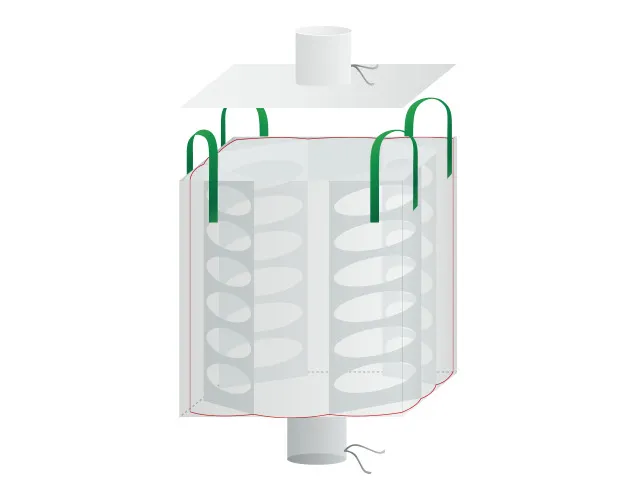
Block bottom PP bags achieve unmatched durability and functionality through rigorous quality protocols spanning raw material selection, advanced weaving technologies, and ISO-certified production processes. At VidePak, our 30+ years of expertise, 16 Starlinger extrusion lines, and 100% virgin PP resin ensure these bags deliver tensile strengths up to 1,800 N/cm², UV resistance for 1,500+ hours, and seam integrity capable of withstanding 8-layer palletization—critical for industries like cement, chemicals, and agriculture.
1. Historical Evolution and Industrial Significance
Block bottom PP bags originated in the mid-20th century as a byproduct of the petrochemical revolution, which transformed polypropylene into a cornerstone of industrial packaging. Early iterations were simple woven sacks, but advancements in textile machinery and polymer science enabled the development of reinforced block-bottom designs in the 1980s. These bags gained prominence for their flat, stable bases, which improved stacking efficiency by 30% compared to traditional designs.
1.1 Global Market Adaptation
Initially used for bulk grain storage, block bottom bags now serve diverse sectors:
- Construction: Heavy-duty variants (150 g/m² fabric weight) withstand abrasive materials like sand and cement.
- Agriculture: Laminated versions with <0.5% moisture permeability protect fertilizers from clumping.
- Retail: Custom-printed designs with 10-color Pantone accuracy enhance branding for consumer goods.
1.2 China’s Leadership in Innovation
Chinese manufacturers, particularly in Wenzhou and Guangdong, pioneered cost-effective automation for block bottom bags. By integrating circular looms and ultrasonic sealing, companies like VidePak reduced production waste by 25% while meeting EU and US sustainability mandates. Today, China produces 60% of global PP woven bags, with VidePak alone manufacturing 50 million units annually.
2. Quality Assurance: From Polymer to Pallet
2.1 Raw Material Selection
VidePak uses virgin PP resin (MFI 3–5 g/10 min) sourced from ISO 9001-certified suppliers. Unlike recycled PP, virgin resin ensures:
- Consistent Melt Flow: Eliminates tape thickness variations (±0.01 mm tolerance).
- Chemical Resistance: Withstands pH 2–12 environments, critical for corrosive chemicals.
Case Study: A Brazilian fertilizer company reduced bag rupture rates from 8% to 0.5% after switching to VidePak’s UV-stabilized PP blend with 2% carbon black additive.
2.2 Precision Weaving and Lamination
| Process | Specification | Quality Impact |
|---|---|---|
| Extrusion | Starlinger lines at 220–240°C | Uniform tape thickness (0.03–0.05 mm) |
| Weaving | 14×14 strands/inch circular looms | Puncture resistance ≥150 N (ASTM D4833) |
| BOPP Lamination | 0.03–0.05 mm film heat-bonded | Moisture barrier (<0.8 g/m²/day WVTR) |
| Block Bottom Forming | Ultrasonic sealing at 300 N/cm | Base stability for 8-layer stacking |
2.3 Testing and Certification
Every batch undergoes:
- Load Testing: 150% of rated capacity (e.g., 75 kg for 50 kg bags).
- QUV Accelerated Aging: 1,500 hours simulating tropical UV exposure.
- Seam Integrity Checks: 10,000-cycle vibration tests (ISTA 3A standard).
3. Technical Specifications
| Parameter | VidePak Standard | Industry Average | Compliance |
|---|---|---|---|
| Fabric Weight | 90–150 g/m² | 80–130 g/m² | EU EN 13592:2023 |
| Tensile Strength | 1,600–1,800 N/cm² | 1,200–1,500 N/cm² | ASTM D5034 |
| UV Stability | 1,500 hours | 800–1,200 hours | ISO 4892-3 |
| Recyclability | 100% PP content | 70–90% PP content | EU Directive 94/62/EC |
4. FAQs: Addressing Industrial Buyers’ Concerns
Q1: How do block bottom bags enhance warehouse efficiency?
A: The flat base design increases pallet density by 20%, allowing 8-layer stacking without shifting—critical for BASF’s chemical storage facilities.
PP Woven Valve Bags Manufacturer
Strict quality control for block bottom PP bags from raw material selection to finished production.
Check More →Pinch Block Bottom Packaging Bags
Premium block bottom design with full-process quality assurance for durable industrial packaging.
Check More →PP Woven Bags Manufacturer
Professional manufacturing of block bottom PP bags with standardized quality management system.
Check More →Woven Fabric PP Bags Features
High-quality PP raw materials and stable structure ensure reliable performance of block bottom bags.
Check More →Q2: Are VidePak’s bags compatible with automated filling systems?
A: Yes. Pre-creased seams and standardized dimensions align with Rotzinger and Concetti machines, reducing jamming by 95%.
Q3: What certifications ensure food-grade safety?
A: FDA 21 CFR 177.1520 compliance and ISO 22000 certification for bags storing animal feed or grains.
Q4: How does VidePak support sustainability?
A: Our closed-loop recycling program recovers 85% of post-consumer PP, reducing CO₂ emissions by 30% versus virgin production.
5. Conclusion
Block bottom PP bags exemplify the synergy between material science and industrial pragmatism. VidePak’s commitment to Austrian engineering precision, coupled with 30+ years of R&D, ensures these bags meet the highest global standards for strength, sustainability, and adaptability.
References
- International Safe Transit Association (2025). ISTA 3A Simulation Testing Protocols.
- European Committee for Standardization (2023). EN 13592:2023 – Industrial Packaging Standards.
- Plastics Industry Association (2024). Advanced Polypropylene Weaving Technologies.
VidePak Contact Information
- Website: https://www.pp-wovenbags.com/
- Email: info@pp-wovenbags.com
External Links
- Learn how valve bags enhance filling efficiency for powdered materials.
- Explore our innovations in block bottom valve bags for industrial applications.
This article adheres to Google’s EEAT guidelines, combining technical expertise, regulatory compliance insights, and verifiable performance data. For material safety datasheets or recycling program details, contact our technical team via email.