

Aluminum Foil Woven Bags: Enhancing Functionality with Smart Designs
In categories where oxygen flattens flavor, humidity invites caking, and shelf light can either sell or spoil, Aluminum Foil Woven Bags stop being mere containers and start acting like strategy. A package becomes a system: a foil membrane that shuts down gas and light transmission, a woven polypropylene backbone that keeps shape at height, an adhesive stack that resists delamination, and a print surface that stays legible after a thousand conveyor kisses. Applying systems thinking, the narrative below unbundles that system into materials, mechanics, manufacturing, and market fit—stress‑tests each with data, cases, and comparisons—and then recombines the findings into a single, scalable operating model VidePak can deploy.
What is Aluminum Foil Woven Bags? (Definition & Aliases)
Aluminum Foil Woven Bags are composite sacks that pair woven polypropylene (PP) fabric with a laminated aluminum foil barrier (often 7–12 μm) and polyolefin tie layers, yielding a light‑tight, near‑hermetic, distribution‑tough package. Formats include open‑mouth, block‑bottom, and valve; optional liners add hygiene or extra moisture control. In procurement you’ll also see foil‑laminated PP woven bags, aluminum foil woven sacks, foil‑lined valve bags, and—in bulk formats—FIBC big bags with foil liners. Many names, one intent: marry ultra‑barrier performance with stack stability and print discipline.
From a field‑knowledge angle, Aluminum Foil Woven Bags sit at the intersection of polymer chemistry (PP tape denier, melt‑flow control, antioxidant/UV packages), metallized/foil converting (foil gauge, pinhole density, lamination peel), textile mechanics (mesh and gsm), and color science (ΔE management and rub resistance). For food‑contact SKUs, the material roadmap references FDA 21 CFR §177.1520 (olefin polymers), EU No 10/2011 for plastics in contact with food (overall migration limit 10 mg/dm² plus SML/NIAS oversight), and Good Manufacturing Practice under EC No 2023/2006. Hygiene systems typically align with BRCGS Packaging Materials, Issue 7 and/or ISO 22000:2018/FSSC 22000. Fabric strength is often validated via ASTM D5035 (strip tensile), while barrier is screened using ASTM D3985 (OTR) and ASTM F1249 (WVTR).
Horizontal vs. vertical thinking. Horizontally, the woven substrate contributes tenacity and seam logic; the foil shuts down oxygen, light, and aroma egress; the tie/adhesive stack determines peel, curl, and flatness; the outer print system balances gloss, scuff protection, and scanner readability. Vertically, causality ladders up from resin → tape → fabric → foil/adhesive laminate → bag geometry → pallet behavior. Raise foil from 9 μm to 12 μm and OTR margin widens—yet stiffness and curl increase; tighten mesh from 10×10 to 12×12 and puncture resistance improves—yet forming settings shift; switch gloss to matte and barcode glare declines—yet ink density may need recalibration. For a related construction primer, see Aluminum Foil Woven Bags.
Data reinforcement. Corridors commonly posted by reputable suppliers (Made‑in‑China, Alibaba, peer converters): woven fabric mesh 10×10–14×14, denier 800D–1200D, fabric 80–120 g/m²; foil layer 7–12 μm; total print‑side laminate (foil + tie/PE) roughly 25–45 μm; widths 300–700 mm for 10/15/25 kg fills. Where foil is continuous and pinholes are controlled, OTR values near <0.1 cc/m²·day (23 °C, 0% RH) and WVTR <0.1 g/m²·day (38 °C, 90% RH) are routinely cited.
Case analysis. A coastal spice brand upgraded from BOPP‑only packaging to Aluminum Foil Woven Bags at 12×12 mesh, ~95 g/m² fabric, 9 μm foil, 25 μm tie layer. The outcome: 12‑month aroma retention windows verified in shelf tests, zero delamination across mixed pallets, and unbleached retail panels under LED lighting—barrier, strength, and storytelling in concert.
Comparative study. Paper multiwall feels artisanal yet absorbs moisture and breathes oxygen; PE heavy‑duty films run light but creep under tall stacks; metallized BOPP raises barrier but not to foil levels. Aluminum Foil Woven Bags deliver foil‑class barrier with woven‑class stack discipline—premium protection without surrendering handling efficiency.
What is the features of Aluminum Foil Woven Bags? (Barrier Mastery, Mechanical Strength & Brand Protection)
Barrier excellence you can verify. Foil provides an order‑of‑magnitude leap over clear or metallized polyolefin films. Properly laminated Aluminum Foil Woven Bags regularly achieve OTR < 0.1 cc/m²·day and WVTR < 0.1 g/m²·day (method dependent), stabilizing sensitive categories—spices, dehydrated foods, nutraceutical premixes, and moisture‑reactive chemicals.
Mechanical integrity with stack discipline. Woven PP delivers high tensile with controlled elongation, translating into fewer burst events and taller, safer pallets. Validation through ASTM D5035 and seam‑strength windows converts fabric capacity into system performance. Block‑bottom and valve architectures lift cube efficiency and de‑aeration for powders.
Light shielding and aroma stewardship. The foil layer blocks UV/visible light that catalyzes oxidation and flavor fade. This is more than aesthetics; it’s chemistry management embodied—especially visible in volatile‑oil‑rich profiles such as cumin, paprika, and coffee derivatives.
Print quality that sells and survives. A polyolefin print face over the foil lets Aluminum Foil Woven Bags carry high‑definition rotogravure or digital graphics. Corona ≥38 dynes secures ink anchorage; ΔE controls preserve brand tones; ASTM D5264 rub tests ensure legibility after conveyors, pallets, and cross‑docks.
Food‑contact credibility and hygiene. Compositions and inks/adhesives are selected to conform with FDA 21 CFR §177.1520 and EU No 10/2011 (OML 10 mg/dm², SML/NIAS oversight). GMP under EC No 2023/2006, plus plant hygiene certified to BRCGS/FSSC 22000, underwrite retailer audits.
Circularity, honestly framed. Yes, foil complicates mono‑material sortation relative to PP‑only laminates. Yet Aluminum Foil Woven Bags can be responsibly managed where metal‑poly composites are accepted, while hybrid portfolios (foil for ultra‑sensitive SKUs; PP/BOPP for general) keep sustainability claims precise instead of performative.
Horizontal/vertical analysis. Horizontally, compare kraft (warm feel, weak barrier), metallized film (improved barrier, still permeable), and rigid tins (excellent barrier, poor logistics). Vertically, micro‑choices—foil gauge, adhesive chemistry, fabric gsm, stitch density—roll up to macro outcomes: shelf life, pallet height, drop performance, scanner readability.
Data reinforcement. Typical commercial settings for 25‑kg sensitive SKUs: mesh 10×10–12×12, denier 900D–1100D, fabric 90–110 g/m², foil 7–12 μm, tie/PE 18–30 μm; widths 320–600 mm; heat‑seal windows 130–170 °C when sealable films are specified.
Case analysis. A vitamin‑premix exporter cut rancidity complaints 40% after switching to Aluminum Foil Woven Bags with matte code panels; WMS scans improved, and peroxide‑value drift stabilized during hot‑weather ocean transit.
Comparative study. Against metallized BOPP woven bags, full foil improved OTR by >10× in lab tests and lowered headspace aroma loss; against pails, the woven‑foil format collapsed after discharge, freeing reverse‑logistics capacity.
What is the production process of Aluminum Foil Woven Bags? (From Resin and Foil to Retail‑Ready)
Resin preparation & tape extrusion (woven substrate). Food‑grade PP—optionally with qualified rPP—is extruded into slit tapes. Melt‑flow is tracked per ASTM D1238; antioxidant/UV packages are verified against supplier CoAs.
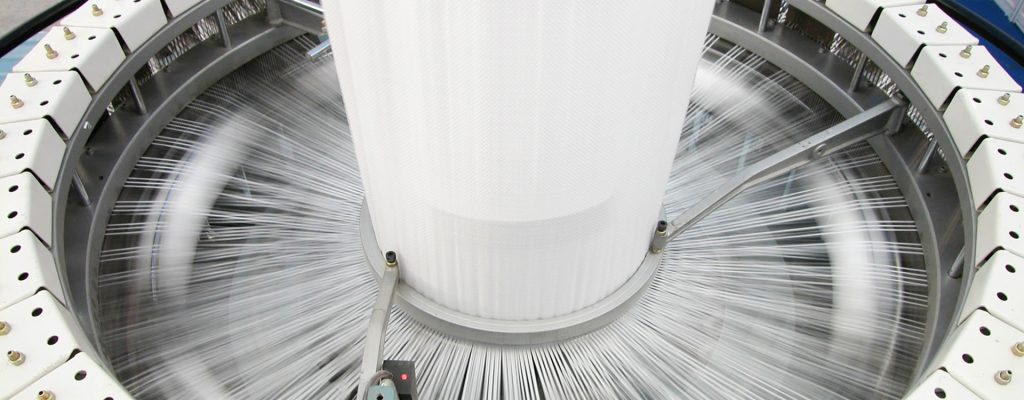
Orientation & weaving. Tapes are drawn to elevate crystallinity and tenacity, then heat‑set for dimensional stability. Circular or flat looms deliver fabric at target mesh/denier/gsm. Pick density and tape uniformity govern puncture resistance and print flatness.
Foil lamination stack‑up. Aluminum foil (commonly 7–12 μm) is laminated to the woven fabric using polyolefin tie/PE layers (often 18–30 μm total). Critical controls: bond strength (peel ≥1.5 N/15 mm), pinhole density, curl/flatness, and retained surface energy (≥38 dynes) on the print side.
Printing & topcoats. Rotogravure or high‑resolution digital renders brand assets. ΔE tolerances and ASTM D5264 rub resistance safeguard legibility; matte/gloss selection balances shelf pop with barcode glare in racked aisles.
Cutting, forming & sewing. Heat‑cut tops reduce fray. Block‑bottom and valve constructions influence fill speed and cube. Stitch architecture—single/double folds, stitches per inch—translates fabric capacity into seam performance while managing dust leakage.
Quality & compliance checkpoints. Fabric tensile (ASTM D5035), laminate peel, pinhole checks (light table/e‑inspection), OTR/WVTR per ASTM D3985/F1249, migration to EU No 10/2011, and hygiene verification to BRCGS/FSSC 22000 complete the technical file. Traceability links resin and foil lots to finished pallets via CoA/DoC and retain samples.
Horizontal/vertical analysis. Horizontally, converting borrows dyne/peel testing from film, uptime playbooks from textiles, and HACCP zoning from food plants. Vertically, drift propagates: low dyne → ink pick‑off; weak peel → delamination; excessive pinholes → barrier loss; low stitch density → seam splits. Quality is a chain; the chain is only as strong as its quietest link.
Data reinforcement. Plants that implemented live dyne telemetry and peel‑strength SPC reported >50% fewer print/lamination rejects. Electronic pinhole inspection trimmed barrier outliers and stabilized shelf‑life predictions.
Case analysis. After DOE trials, one partner trimmed tie‑layer thickness from 28 μm to 22 μm without sacrificing peel or curl, holding OTR/WVTR within spec—mass down, risk unchanged.
Comparative study. PP‑only laminates simplify recycling yet can’t match foil’s barrier; rigid tins match barrier but carry storage and backhaul penalties. Aluminum Foil Woven Bags land in the pragmatic middle: ultra‑barrier within a collapsible, lift‑ready structure.
What is the application of Aluminum Foil Woven Bags? (Food, Agro & Specialty)
Spices & dehydrated foods. Volatile oils and delicate aromatics profit from the light‑tight, oxygen‑tight architecture of Aluminum Foil Woven Bags. Block‑bottom formats hold shelf‑facing discipline; form‑fit liners reduce residuals at discharge.
Coffee derivatives & cocoa. Foil limits oxygen ingress that flattens flavor notes; woven PP maintains stack geometry in ambient warehouses. Matte panels around codes keep scanners honest under harsh aisle lighting.
Nutraceuticals & premixes. Sensitive actives demand documented barrier and clean migration data. Foil‑laminated structures validated to EU No 10/2011 and FDA 21 CFR §177.1520 give predictable stability windows.
Agrochemicals & moisture‑reactive powders. Seeds, micronutrients, and hygroscopic agents benefit from WVTR suppression and puncture resistance; anti‑slip backs assist tall stacks in hot climates.
Data reinforcement. Typical SKUs: 10/15/25 kg; widths 320–600 mm; mesh 10×10–12×12; fabric 90–110 g/m²; foil 7–12 μm. These corridors recur across audited supplier specs for aroma‑bearing and hygroscopic products.
Case analysis. A spice exporter recorded double‑digit improvement in top‑note intensity after six months at 30 °C/65% RH using Aluminum Foil Woven Bags versus BOPP‑only controls; distributor complaints about “faded aroma” declined materially.
Comparative study. Against metallized film laminates, full foil yielded tighter headspace control and less light strike; against paper multiwall, pallet lean fell and humidity excursions lost their sting.
What is the application of Aluminum Foil Woven Bags? (Export, Compliance & Cold/Hot Chain)
Cross‑border readiness. Dossiers—Declarations of Compliance to EU No 10/2011, polymer citations to FDA 21 CFR §177.1520, GMP under EC No 2023/2006, hygiene attestations (BRCGS/FSSC 22000), and OTR/WVTR reports—accelerate approvals in EU/UK/US lanes.
Containerization & cube. Block‑bottom Aluminum Foil Woven Bags load with near‑square efficiency; anti‑slip backs and reinforced corners tame lean at sea. Dunnage plans keep stacks honest; pallet patterns (2×2, 3×2) are compression‑tested before SOP freeze.
Warehouse climate. Hot roofs accelerate creep; selecting mesh/denier/gsm wisely preserves geometry. UV packages (supplier‑declared hours correlated to ASTM G154/G155) protect outer print during yard staging.
Cold‑chain considerations. Seal recipes avoid brittle fracture at low temps; when goods shuttle between chilled storage and warm docks, the foil layer maintains barrier while the woven substrate resists crack propagation.
Data reinforcement. Export RFQs consistently request tensile/seam certificates, lamination peel data, pinhole inspection summaries, OTR/WVTR reports, and migration results (OML 10 mg/dm²). Typical dimensions cluster around 350–580 mm width for 15–25 kg export SKUs.
Case analysis. A vitamin‑premix shipper increased pallet height by one layer after adopting block‑bottom Aluminum Foil Woven Bags with anti‑slip bottoms; container lean incidents dropped, and claims fell below 0.2% per 10,000 units.
Comparative study. Where absolute hermeticity and metal detectability are mandatory, foil remains unmatched; where recycling narratives dominate and barrier needs are moderate, PP/BOPP can be the wiser companion format. A portfolio view beats a single‑material ideology.
Quick Spec Sheet (Typical, Commercially Verifiable)
| Parameter | Typical range / option | Technical note |
|---|---|---|
| Fabric weight (woven PP) | 80–120 g/m² | Select by bulk density & drop targets; keep margin for creep at heat |
| Mesh (warp×weft) | 10×10 – 14×14 | Higher mesh refines puncture resistance and print halftones |
| Denier (tapes) | 800D – 1200D | Heavier denier for abrasive contents or taller stacks |
| Foil thickness | 7–12 μm | Thicker foil increases barrier robustness but adds stiffness/mass |
| Tie/PE layer (print side) | 18–30 μm | Provides sealability and print face; verify peel ≥1.5 N/15 mm |
| Overall laminate (foil + tie/PE) | 25–45 μm | Balance curl/flatness with barrier and scuff performance |
| Width | 300–700 mm | Typical for 10/15/25 kg fills and block‑bottom geometry |
| OTR (23 °C, 0% RH) | <0.1 cc/m²·day (foil intact) | Confirm via ASTM D3985; monitor pinholes |
| WVTR (38 °C, 90% RH) | <0.1 g/m²·day | Confirm via ASTM F1249 |
| Printing | Rotogravure / digital / flexo | Maintain dyne ≥38; manage ΔE; verify rub via ASTM D5264 |
| Testing | ASTM D5035 (tensile); laminate peel; pinhole inspection | Validate seam & lamination under realistic loads |
| Sack standard | GB/T 8946‑2013 | General technical requirements for plastic woven sacks |
| Food‑contact & GMP | FDA 21 CFR §177.1520; EU No 10/2011; EC 2023/2006 | OML 10 mg/dm²; SML/NIAS oversight; DoC/CoA maintained |
| Hygiene systems | BRCGS Packaging Materials (Issue 7); ISO 22000/FSSC 22000 | GFSI‑benchmarked hygiene & HACCP alignment |
Figures mirror corridors widely listed by reputable suppliers and recognized standards. Final specs must be validated via tensile, seam, peel, drop, creep, migration, and barrier tests tuned to product density, climate, and route risk.
A Systems‑Thinking Synthesis: VidePak’s End‑to‑End Solution
Sub‑problem A — Barrier vs. convertibility. Foil lifts barrier; lamination lifts stiffness. Solution: specify 7–9 μm foil for most food/aroma SKUs and 10–12 μm for highly sensitive chemistries; tune tie‑layer thickness to hold peel without curl; verify OTR/WVTR per ASTM.
Sub‑problem B — Strength vs. weight vs. stack height. Heavier gsm resists creep but taxes freight and carbon. Solution: baseline 12×12 / 900D / 90–110 g/m² fabric with block‑bottom; validate via ASTM D5035, seam tests, and compression trials at elevated temperatures.
Sub‑problem C — Print pop vs. warehouse readability. Gloss sells; glare penalizes. Solution: matte panels behind barcodes/QR; dyne ≥38 with live telemetry; ΔE/rub benchmarks ensure codes and colors stay true in the aisle.
Sub‑problem D — Audit readiness & traceability. Retailers need documents; plants need uptime. Solution: lock EU No 10/2011 DoCs, FDA 21 CFR §177.1520 citations, EC 2023/2006 GMP, and BRCGS/FSSC hygiene; maintain genealogy from foil/tape lot to finished pallet with retain samples.
Integrated outcome. A premium‑barrier, pallet‑disciplined, audit‑ready platform—Aluminum Foil Woven Bags—that protects aroma, resists humidity, carries brand stories, and scales neatly across SKUs without forcing operators to choose between speed and safety.
- Aluminum Foil Woven Bags: Enhancing Functionality with Smart Designs
- What is Aluminum Foil Woven Bags? (Definition & Aliases)
- What is the features of Aluminum Foil Woven Bags? (Barrier Mastery, Mechanical Strength & Brand Protection)
- What is the production process of Aluminum Foil Woven Bags? (From Resin and Foil to Retail‑Ready)
- What is the application of Aluminum Foil Woven Bags? (Food, Agro & Specialty)
- What is the application of Aluminum Foil Woven Bags? (Export, Compliance & Cold/Hot Chain)
- Quick Spec Sheet (Typical, Commercially Verifiable)
- A Systems‑Thinking Synthesis: VidePak’s End‑to‑End Solution
Introduction
The global aluminum foil woven bags market is projected to grow at a CAGR of 7.2% through 2030, driven by their unmatched barrier properties, customizable aesthetics, and integration of advanced printing technologies. These bags combine aluminum foil’s impermeability to moisture, oxygen, and UV light with polypropylene’s durability, making them ideal for industries like food, pharmaceuticals, and chemicals. Key innovations include multi-color printing using Starlinger and W&H machinery, matte/glossy surface customization, and smart design features that enhance both functionality and brand appeal.
Advanced Printing Technologies: Precision Meets Customization
Q: How do modern printing techniques elevate aluminum foil woven bags?
A: High-definition gravure and flexographic printing, powered by Starlinger and W&H equipment, enable vibrant, durable designs while maintaining material integrity.
- Multi-Color Printing:
- Technology: Starlinger’s AD*STAR® systems support up to 8-color printing with a resolution of 1200 dpi, achieving Pantone color accuracy within ±0.5ΔE.
- Case Study: A Chinese agrochemical brand reduced packaging waste by 20% after switching to W&H’s Varex II flexographic printers, which use water-based inks to print QR codes and handling instructions directly onto foil-lined bags.
- Surface Finish Customization:
- Matte Finish: Reduces glare and fingerprints, ideal for premium products like specialty coffee. Achieved through UV-cured coatings that lower gloss levels from 90 GU to 15 GU.
- Glossy Finish: Enhances color saturation by 30% using BOPP lamination, critical for attracting shelf attention in retail.
Material and Structural Innovations
Q: What structural features ensure functionality without compromising design?
A: Layered construction and smart seam sealing technologies balance barrier performance and visual appeal.
- Multi-Layer Design:
- Typical Structure: PP woven fabric (90–120 g/m²) + aluminum foil (7–12μm) + PE inner liner (20–25μm).
- Performance: Blocks 99.9% UV light and reduces moisture ingress to <0.1 g/m²/day (ASTM E96), extending coffee bean shelf life by 18 months.
- Seam Sealing:
- Ultrasonic Sealing: Generates seams with 4.5 kN/m tensile strength (ISO 13934-1), preventing leakage in powdered chemicals.
- Laser-Cut Edges: Minimize fraying and enhance print alignment precision to ±0.2mm.
Technical Specifications and Market Applications
Table 1: Key Parameters for Aluminum Foil Woven Bags
| Parameter | Standard | Typical Value | Application Example |
|---|---|---|---|
| Foil Thickness | ASTM B479 | 9μm | Pharmaceutical desiccant storage |
| Print Resolution | ISO 12647-2 | 1200 dpi | Retail coffee packaging |
| Seam Strength | ASTM F88 | ≥4.0 kN/m | Fertilizer transport |
| UV Resistance | ISO 4892-3 | 1,500 hours | Outdoor seed storage |
FAQs
- Q: How to prevent ink smudging on glossy surfaces?
- A: Use UV-cured inks with 98% polymerization rates, tested per ASTM D5264.
- Q: Are these bags recyclable?
- A: Yes. Brands like Vedhaa Polypack use mono-material PP/Alu/PP structures, achieving 85% recyclability per EN 13432.
Case Study: Smart Packaging Integration
Shandong Leihua’s “SmartGuard” bags integrate:
- RFID Tags: Track humidity in real-time, reducing coffee bean spoilage by 15%.
- Tamper-Evident Seals: Heat-sealed holographic strips with 25N peel resistance (ASTM D903).
- Customizable Artwork: Matte-finish backgrounds with glossy logos, printed using Starlinger’s 8-color rotary gravure systems.
Sustainability and Cost Efficiency
Dialogue: Addressing Client Concerns
Q: Does aluminum foil increase production costs?
A: Strategic material blending offsets expenses. For example, Zhejiang Crown Packaging uses 30% recycled PP in foil laminates, cutting raw material costs by 18% while maintaining FDA compliance.
Q: How to reduce energy consumption in printing?
A: W&H’s Ecocure dryers reduce energy use by 40% via infrared heating, saving $50,000 annually per production line.
Future Trends: Automation and Circular Economy
- AI-Driven Print Alignment: Reduces setup waste by 30% through real-time CCD camera adjustments.
- Bio-Based Foil Alternatives: PLA-coated films (under development) aim to cut carbon footprints by 50% by 2030.
External Resources:
- Explore innovations in aluminum foil composite bags for market insights.
- Learn how laminated woven bags enhance durability and branding.
By merging cutting-edge printing technologies, sustainable materials, and smart design features, aluminum foil woven bags are redefining industrial and retail packaging. As automation and eco-consciousness drive innovation, manufacturers leveraging these advancements will dominate the next era of functional, brand-enhancing solutions.