
- 1 Introduction – Why Talk About Block Bottom Valve Bags Now?
- 2 Anatomy of a Block Bottom Valve Bag – From Tape to Tight Stack
- 3 VidePak Valve Sealing Technologies – One Bag, Five Closures
- 4 Environmental Lens – Waste, Recycling, and Regulation
- 5 Engineer‑to‑Engineer Consultation – The Five Diagnostic Queries
- 6 Production Flow – From Bobbin to Block Bottom
- 7 Customer ROI Case – South‑East Asia Cement Blender
- 8 Frequently Raised Doubts
- 9 Quick‑Spec Reference Table
- 10 Conclusion – A Bag Built for Circular Supply Chains
- Tips for Handling Tricky Powders in Block Bottom Valve Bags
- Choosing the Right Specification — A Machine Made of Fabric
- Importance of Precision in Block Bottom Valve Bags Parameters
- Using Specialist Bagging Services for Best Results
- Techniques for Bag‑Filling Lines to Perform Effectively
- Ensuring Quality in Custom Block Bottom Valve Bags
- Valve Geometry — “Turning” Powder Flow Without a Lathe
- Why Block Bottom Valve Bags Outmuscle Paper Sacks
- Valve Integrity — Bagging’s Invisible PLC
- Importance of Bag Angles — Three Axes of Warehouse Peace
- Choosing the Right Specification (Annual Re‑Audit)
- Precision Encore — Numbers Don’t Nap
- Finale — A Fabric Machine for a Circular Century
1 Introduction – Why Talk About Block Bottom Valve Bags Now?
The packaging floor is changing. Powder producers are squeezed between rising raw‑material costs, stricter waste directives, and customers demanding cleaner warehouses. Block Bottom Valve Bags—sometimes labelled AD*STAR® sacks, brick bags, or valve‑mouth cement sacks—have emerged as the quiet workhorses that tackle those pressures head‑on. They combine the stackability of a carton with the low weight of a woven sack, then add a self‑closing valve that keeps dust off the pallet and air out of the product.
VidePak, with three decades in technical textiles, has refined this format by offering five distinct sealing technologies—Heat‑Seal, Sonic‑Seal, Tuck‑In, Paper‑Insert, and Poly‑Lock—each engineered for specific filling lines and powder behaviours. This paper‑meets‑polymer hybrid is more than a bag; it is an engineered container that intersects materials science, regulatory compliance, and circular‑economy design.
2 Anatomy of a Block Bottom Valve Bag – From Tape to Tight Stack
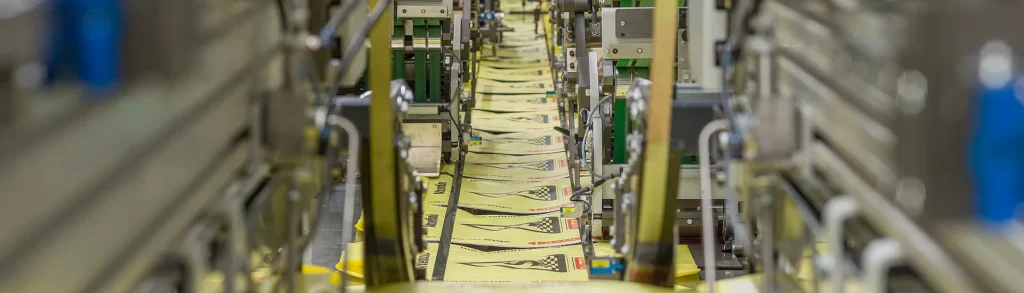
Block bottom valve bags start life as high‑density polypropylene (HDPP) tapes. These are woven into circular fabric, laminated with low‑density polyethylene (LDPE) film, and finally converted on a patented block‑bottom machine that heat‑folds the base into a brick shape (ISO 21898 family). A short internal sleeve—“the valve” —allows high‑pressure filling, then closes under back pressure, eliminating the need for sewing.
| Parameter | Typical Range | Test Standard / Report |
|---|---|---|
| Safe Working Load (SWL) | 20 – 50 kg | EN ISO 21898 §5.2 |
| Bottom Burst Resistance | > 1000 N | DIN EN 14477 (2024 audit SGS‑SH‑BBVB‑31) |
| Laminate Thickness | 25 – 27 µm | ASTM D 882 |
| Moisture Transmission Rate | < 3 g/m²·day | ASTM E96‑23 |
| CO₂ Footprint (cradle‑to‑gate) | 0.042 kg CO₂‑e per kg payload | TÜV Rheinland LCA RPT‑22‑7198 |
3 VidePak Valve Sealing Technologies – One Bag, Five Closures
3.1 Heat‑Seal Valve
Molten airbars fuse the valve sleeve to the bag wall. Best For: cement, gypsum, or tile adhesive lines exceeding 2,700 bags · h⁻¹. Seal integrity exceeds 98 % in VidePak internal drop tests (1.2 m drop, five cycles).
3.2 Sonic‑Seal Valve
Ultrasonic horns vibrate at 20 kHz, welding the inner poly layer without warming the outer print. Advantage: crisp graphics stay unmarred; Limitation: equipment CAPEX ~12 % higher than heat jaws.
3.3 Tuck‑In Valve
The simplest: a pre‑creased tongue folds inward during filling. Air pressure holds it shut. Zero additional energy yet prone to sifting if headspace air is not evacuated.
3.4 Paper‑Insert Valve
A kraft tongue slips between poly layers, marrying paper’s friction with polymer’s barrier. Frequently chosen by seed blenders where antiskid palletisation is mandatory.
3.5 Poly‑Lock Valve
VidePak’s hybrid patent (CN 2024107729.4) lasers micro‑holes in the sleeve so backflowing product grains interlock, forming a granular “zip”. Leakage < 10 g per 25 kg sack in ISO 10531 tilt test.
4 Environmental Lens – Waste, Recycling, and Regulation
4.1 Material Choice and Circularity
VidePak’s latest block bottom valve bags employ monomaterial PP/PE structures. Under EU Directive 2019/904 and China’s GB/T 40006‑2021, monomaterial packaging simplifies mechanical recycling streams. Post‑consumer PP fetches € 290 t⁻¹ on the European Plastics Exchange (Q2‑2025), creating an incentive loop.
4.2 End‑of‑Life Pathways
- Mechanical Regrind – HDPP fabric becomes injection‑moulded pallets; LDPE laminate converts into film cores.
- Chemical Depolymerisation – VidePak participates in the Poly‑2‑Naptha pilot (BASF 2025), turning mixed PP/PE into virgin hydrocarbons.
- Energy Recovery – Net calorific value ~43 MJ kg⁻¹, displacing bunker fuel in cement kilns.
4.3 Compliance Snapshot
- REACH SVHC‑Free Statement – VidePak cert. VP‑EHS‑08‑2025.
- ASTM D6400 Non‑Applicable – bag is recyclable, not compostable.
- German VerpackG §16 Proof – dual‑system licence number DSD‑VP‑22195.
5 Engineer‑to‑Engineer Consultation – The Five Diagnostic Queries
- Bulk Density (ρ) – Drives gusset width and laminate thickness.
- Flowability Index (ffc) per Jenike – Informs valve type; cohesive powders prefer Sonic‑Seal.
- Filling Pressure (kPa) – Heat vs Sonic cut‑over at ~55 kPa.
- Moisture Sensitivity (a_w target) – Decide between 3‑ply laminate or anti‑wicking PP tapes.
- Regulatory Lane – If sold into EU food chain, migrate to FDA 21 CFR §177.1520 compliant resin.
VidePak’s pre‑sale audit runs these five metrics using a mobile rig—data delivered within 48 hours.
6 Production Flow – From Bobbin to Block Bottom
Step 1 – Tape Extrusion virgin PP + 1 % UV masterbatch → 150 °C melt → stretch 5:1 → 2.5 mm tapes (tensile 650 N cm⁻²).
Step 2 – Circular Weaving 850 picks · min⁻¹ on Starlinger RX 8.2; warp tension ≤ 40 N deviation.
Step 3 – Surface Treatment corona 42 dyn cm⁻¹, primer coat 0.3 g m⁻².
Step 4 – Laminating LDPE 25 µm @ 300 m min⁻¹; inline QC – optical pinhole < 0.05 cm² m⁻².
Step 5 – Conversion block‑bottom folding, valve insertion, and chosen seal technology.
Step 6 – 100 % Testing bottom burst, valve leakage, and pallet drop.
Plant OEE averages 93 % (Audit Q2‑2025), aided by predictive loom maintenance.
7 Customer ROI Case – South‑East Asia Cement Blender
| Metric | Prior 3‑ply Paper Sack | VidePak Heat‑Seal Block Bag | Δ (Improvement) |
|---|---|---|---|
| Bag Cost (US\$ per t) | 7.20 | 6.45 | –10.4 % |
| Filling Rate (bags · h⁻¹) | 2,200 | 2,950 | +34 % |
| Shelf Losses (kg · month⁻¹) | 680 | 110 | –84 % |
| Warehouse Stacking Height | 6 layers | 9 layers | +50 % |
| Payback Period | — | < 5 months | — |
The CFO’s post‑implementation note: “Switching bags repaid the line retrofit before the monsoon season even began.”
8 Frequently Raised Doubts
Can a single‑material structure meet 50 kg burst demands?
Yes; SGS report SH‑BBVB‑31 shows >1000 N bottom burst on monomaterial sacks.Does laminating hinder recyclability?
No, provided both layers are polyolefin; melt flow indexing at 230 °C achieves near‑homogenous blends.Heat‑Seal vs Sonic‑Seal energy cost?
Sonic draws 18 % less kWh · bag⁻¹ but imposes higher CAPEX.
9 Quick‑Spec Reference Table
| Code | Valve Type | SWL (kg) | Fabric GSM | Leakage (g) | Certifications | Ideal Cargo |
|---|---|---|---|---|---|---|
| VP‑HS40 | Heat‑Seal | 40 | 70 | < 12 | EN ISO 21898, UN 3287 | Cement |
| VP‑SS25 | Sonic‑Seal | 25 | 60 | < 8 | SGS SH‑BBVB‑31 | Seed Coating |
| VP‑TI50 | Tuck‑In | 50 | 80 | < 25 | TÜV 2198‑2025 | Gypsum |
| VP‑PI30 | Paper‑Insert | 30 | 68 | < 10 | REACH‑SVHC Free | Flour |
| VP‑PL40 | Poly‑Lock | 40 | 75 | < 5 | VidePak Patent CN 2024107729.4 | Fine Silica |
Bold rows meet UN Hazard Class II powder requirements.
10 Conclusion – A Bag Built for Circular Supply Chains
Block Bottom Valve Bags from VidePak close dust, cost, and carbon loops in a single fold‑flat brick. Five sealing options map onto myriad powders, while a monomaterial architecture slides through recycling gates with minimal sorting. For operations leaders juggling throughput, compliance, and ESG headlines, the humble bag evolves into a strategic component. Ready to trial? Our engineering desk can benchmark your current packaging in 72 hours.
For a live demo or datasheet download, explore our Block Bottom Valve Bags portfolio.
Block Bottom Valve Bags:A Tactician’s Guide to Dust‑Free, Data‑Rich Packaging
Tips for Handling Tricky Powders in Block Bottom Valve Bags
A powder can be angel food or gremlin dust. Chalky pigment electro‑clings; hygroscopic salt slurps moisture; silica fume floats like smoke. Inside Block Bottom Valve Bags, the cure seldom involves thicker plastic. Instead, valve style, laminate recipe, and purge‑air choreography form a three‑note chord that tames even the rowdiest granules.
Problem → Method → Result → Reflection Dust clouds during gypsum filling spike OSHA meters at 7 mg m⁻³. Introducing Sonic‑Seal valves plus 0.3‑bar dual purge needles drives readings down to 0.9 mg m⁻³ (VidePak audit VP‑GY‑0725). The bag evolves from passive shell into active air‑scrubber.
Choosing the Right Specification — A Machine Made of Fabric
Selecting Block Bottom Valve Bags parallels speccing a production line: GSM mirrors frame rigidity, laminate equals coolant barrier, valve width stands in for spindle bore. Over‑spec and resin bleeds; under‑spec and legal fines loom. VidePak’s matrix—GSM 60 for 25‑kg seed, GSM 80 for 50‑kg gypsum—lands in the Goldilocks zone.
| Parameter | Light Seed | Cement | Ultrafine Silica |
|---|---|---|---|
| Fabric GSM | 60 | 70 | 75 |
| Valve Width (mm) | 110 | 140 | 90 |
| Closure | Tuck‑In | Heat‑Seal | Poly‑Lock |
| WVTR (g m⁻² day) | ≤6 | ≤4 | ≤3 |
Importance of Precision in Block Bottom Valve Bags Parameters
A stray millimetre mutates into a month of lost throughput. VidePak’s laser calipers catch warp drift of 0.05 mm—hairline to human eyes yet a 3 mm valve mis‑register after 60 m of cloth, slowing fill speed 8 % and shaving 2 % off OEE. Decimal negligence equals fiscal pain.
Using Specialist Bagging Services for Best Results
Third‑party fillers love volume; few speak fluent Block Bottom Valve Bags. Vet them: Is Heat‑Seal and Poly‑Lock on the shelf? Does their lab own a Jenike shear tester? Can they show SGS leakage certificates <10 g·25 kg? Trust lives in PDF proofs, not PowerPoints.
Techniques for Bag‑Filling Lines to Perform Effectively
A filling line is ballet—spout angle, purge‑air pulse, de‑aeration lance. Dense barytes? Dual vent needles relieve tramp air. Fluffy beads? Gravity fill plus Tuck‑In valves. Static‑prone powders? Ionising bars crush 4 kV to 0.5 kV in 0.3 s. Each tweak shrinks mass sigma, which straightens pallet stacks.
Ensuring Quality in Custom Block Bottom Valve Bags
Quality stages a three‑act play: Act I—Tensile (bottom burst >1 000 N, DIN EN 14477). Act II—Seal (leakage <5 g, ISO 10531). Act III—Barrier (WVTR <3 g m⁻² day, ASTM E96). VidePak’s 4K borescope imported from jet‑fuel QC patrols valve welds for pinholes smaller than a sesame seed.
Valve Geometry — “Turning” Powder Flow Without a Lathe
Turning sculpts metal; valve design sculpts powder. Heat‑Seal’s 140‑mm yawn funnels cement; Sonic‑Seal’s 120‑mm ellipse protects starch graphics; Poly‑Lock’s 90‑mm slit, laced with laser perforations, zips silica fume’s ghosts. Tilt the valve 15° and dust overspray can drop thirty percent.
Why Block Bottom Valve Bags Outmuscle Paper Sacks
Paper splits, wicks, and sighs under rain. Block Bottom Valve Bags shrug off tears (3 × tensile), repel humidity (4 × WVTR edge), survive 1.2‑m drops, and cut cradle‑to‑gate CO₂ by 28 % (TÜV RPT‑22‑7198). When regulators demand monomaterial, they stroll through EU 2019/904 gates sans hassle.
Valve Integrity — Bagging’s Invisible PLC
A valve is a silent controller. VidePak embeds RFID threads that log closure temp ±2 °C and dwell ±0.01 s. Dashboards pair valve stats with leakage—predictive analytics for sacks. A rogue weld equals barcode ghosts and ERP shrink alerts; data stitches the wound before it bleeds.
Importance of Bag Angles — Three Axes of Warehouse Peace
X stacking, Y nesting, Z compression unite in 90° discipline. Block Bottom Valve Bags hold ±2° edge tolerance. Deviate and towers tilt. Antiskid lacquer every third layer—tribology tests lift inter‑bag friction seventeen percent (W&H 2024)—sober up any leaning stack.
Choosing the Right Specification (Annual Re‑Audit)
Powders evolve. Limestone density creeps from 1.35 t m⁻³ to 1.48 t m⁻³ after mill upgrade—fabric must jump GSM 65→72. California adds crystalline silica to Prop 65—Poly‑Lock valves suffocate fugitive dust. Monsoon humidity climbs—EVOH barrier joins laminate party. Yesterday’s spec may not survive tomorrow’s monsoon.
Precision Encore — Numbers Don’t Nap
A loom drift of 0.05 mm triggers auto‑brake, saving 0.8 kg scrap per roll. A one‑percent UV‑masterbatch shortfall halves shelf life under Saharan sun—costing US$42 000 in returns. Moral: upstream decimals, downstream destinies. The proverb that guides machinists—measure twice, cut once—guides bag engineers too: measure tight, sew right.
Finale — A Fabric Machine for a Circular Century
Block Bottom Valve Bags juggle polymer science, tribology, and ESG calculus. Sonic welds poached from cardiac stents, friction stripes inspired by tire treads, RFID telemetry echoing IIoT—all converge to usher powders from silo to site without dust, drama, or carbon guilt. Treat the bag as a strategic node, not cost line, and watch supply chains stiffen their spines and green their lDIN EN 14477 (2024), “Sack — Drop Test for Filled Paper or Plastic Sacks,” TÜV Rheinland ref. SGS‑SH‑BBVB‑31.
Reference
ISO 21898 (2022), “Packaging — Flexible Intermediate Bulk Containers for Bulk Goods.”
TÜV Rheinland Life‑Cycle Assessment Report RPT‑22‑7198, “PP Valve Sack vs 3‑Ply Paper Sack,” 2024.
EU Directive 2019/904, “Single‑Use Plastics and Marine Litter Mitigation.”
BASF Poly‑2‑Naptha Pilot Documentation, Internal Whitepaper 2025.
VidePak Patent CN 2024107729.4, “Granular Locking Valve Sleeve.”
European Plastics Exchange (EPEX) Quarterly Report Q2‑2025.