
What are Block Bottom Valve Bags? (a.k.a. PP block‑bottom valve sacks / AD‑star‑type PP valve bags)
Block Bottom Valve Bags combine a square, self‑stabilizing base with a self‑closing valve sleeve, creating a package that fills quickly, seals cleanly, and stacks like brickwork. Also called PP block‑bottom valve sacks, AD‑star‑type PP valve bags, or square‑bottom woven valve bags, these sacks use a woven polypropylene (PP) fabric—often PE‑coated or BOPP‑laminated—to deliver high tensile strength, seam reliability, and abrasion resistance for 10–50 kg powders and granulates such as cement, mortar, tile adhesive, fertilizers, salts, feeds, starches, and polymer pellets. Are they packaging or presentation? Both: a structural container masquerading as a billboard.
From the perspective of materials science, the sack is a tape‑fabric composite tuned by mesh density, denier, and GSM; its exterior may be laminated for optics and rub resistance. In operations engineering, the block footprint and valve collaborate to raise fill speeds, flatten faces, and increase pallet density. For compliance, the story begins with PP granules—the melt‑flow index (MFI), isotacticity, and stabilization package shape tape drawability, seam retention, and long‑term performance. Horizontally, Block Bottom Valve Bags synthesize lessons from geotextile load paths, powder‑handling dust control, and food‑contact governance. Vertically, the logic rises resin → tape → weave → coating/lamination → valve & block‑forming → testing → documentation. One change upstream can reorder outcomes downstream: alter MFI, alter tape behavior; alter mesh, alter lamination lay‑flat; alter lay‑flat, alter print fidelity.
Data reinforcement. Credible market ranges show fabric around 70–130 g/m², meshes near 10×10–12×12, tape deniers in the 800D–1200D band, and common sizes ~50×80 cm (50 kg) and ~40×60 cm (25 kg). Coating weights often run ~15–30 g/m²; BOPP film, where specified, sits around 15–25 µm. Valve sleeve inner diameters typically live in the ~35–55 mm corridor, with hot‑melt, ultrasonic, or PE liners to promote self‑closure. Each number moves a lever: GSM shifts drop energy tolerance, mesh softens the surface for print, valve diameter balances speed with spill control.
Case analysis. A mortar brand replaced paper multiwall with laminated Block Bottom Valve Bags that included micro‑perforations and PE‑lined valves. Line dust dropped; target weights stabilized faster; pallets gained an extra tier because bag faces stayed flatter. Modest tweaks, material effects.
Comparative study. Against paper valves sacks, woven PP versions keep strength in humidity, resist clamp‑truck abrasion, and accept premium graphics when laminated. Against PE form‑fill‑seal (FFS) tubular film for powders, Block Bottom Valve Bags fill cleanly on legacy equipment and deliver high pallet friction, though FFS may lead on raw throughput where plants are optimized for it.
What are the features of Block Bottom Valve Bags?
Geometry that performs. The “block” base creates a rectangular footprint—less ballooning, more brick. Faces present flat to scanners and shoppers; pallets stand straighter and higher.
Valve that accelerates. Self‑closing sleeves—PE‑lined, hot‑melt, or ultrasonically sealed—let product inflow create its own seal as pressure rises, trimming fugitive dust and improving housekeeping.
Fabric that endures. Oriented PP tapes yield high tensile and tear strength with moderate GSM. Coatings add abrasion resistance and dust hold‑out; laminations (clear or matte BOPP) present a smooth print plane without surrendering mechanics.
Air that exits. Micro‑perforation patterns vent entrained air during fill so the block base “sets” quickly, stabilizing the stack and supporting extra tiers.
Surfaces that behave. Anti‑slip coatings elevate COF to meet clamp‑truck realities; antistatic packages tame charge migration in powders; UV stabilizers defend yard storage. Hemmed or heat‑cut mouths limit fray, while double‑fold/double‑stitch bottoms distribute impact.
Horizontal thinking. Materials engineering explains why denser meshes lay flatter under lamination; printing science shows how that flatness tightens registration and barcode contrast; logistics safety correlates higher COF with fewer pallet slides. Three disciplines, one effect: fewer rejects, safer moves, cleaner shelves.
Vertical logic. Adjust PP MFI → draw stability improves → width dispersion narrows → lamination laydown smooths → graphics sharpen → mis‑scan rates fall → picking errors shrink. Small upstream choices, large downstream gains.
Data reinforcement. For 50 kg cement‑class SKUs, spec sheets often read GSM ~90–120, mesh ~10×10–12×12, valve ID ~40–50 mm, and COF targets tuned to pallet deck material.
Case analysis. A feed producer specified matte BOPP plus anti‑slip with a wider valve sleeve for a new auger nozzle; stoppages fell, scuffs hid, rework declined.
Comparative study. Block‑bottom PP valves vs tubular PE FFS: compatibility and stack friction on the former; uninterrupted high‑speed cycles on the latter—equipment choice and route conditions decide the winner.
What is the production process of Block Bottom Valve Bags?
1) PP granules selection & compounding. Start with raffia‑grade PP granules featuring MFI ~2–4 g/10 min (230 °C/2.16 kg, ISO 1133) and density ~0.90–0.91 g/cm³. Additives—UV, slip/anti‑block, antistatic, processing stabilizers—tune drawability, seam retention, and shelf life. The granule recipe is not trivia; it is destiny for tapes.
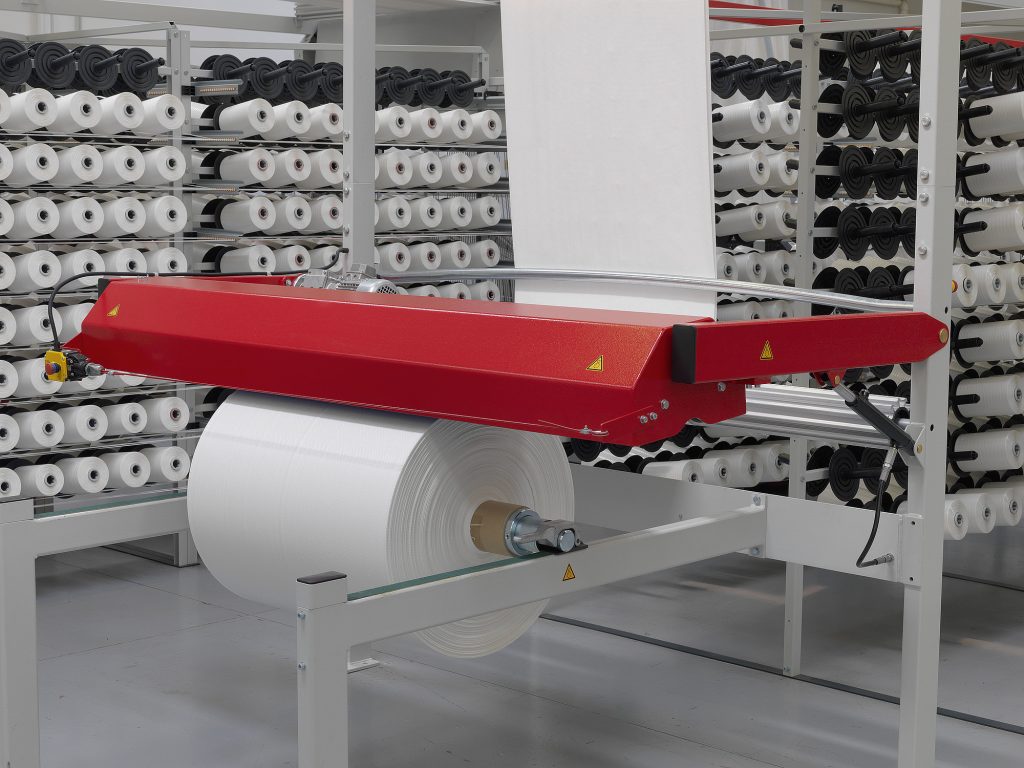
2) Tape extrusion & orientation. Melt, cast, slit, stretch, anneal. Online thickness control narrows modulus and width variation so tapes weave predictably; predictable tapes produce predictable fabric.
3) Weaving (circular or flat looms). Under controlled warp tension, tapes interlace to target mesh and GSM. Weft‑stop and warp‑break detection keep defects local and width within spec—precursors to square bottoms and on‑register print.
4) Coating/lamination & micro‑perforation. PE coatings tighten porosity; clear or matte BOPP lamination creates a premium face and adds abrasion resistance. Micro‑perfs are tuned to product bulk density and fill speed to vent air without giving dust a free pass.
5) Printing. Gravure for photo‑rich art (8–10 colors), flexo for efficient 4–6 color sets. Ink systems (PU or polyamide) are matched to dyne levels and rub resistance; register rides on the width control achieved upstream.
6) Valve sleeve insertion. PE/PP co‑extruded sleeves—often 3–5 layers—are welded or stitched in. Variants include internal flaps, ultrasonic seams, and hot‑melt valves that self‑seal as the product head builds.
7) Block‑bottom forming & stitching. The base is folded and locked (single/double) and stitched (single/double) per drop energy and product abrasiveness; corner gussets establish the brick geometry.
8) QA & compliance. Tensile, tear, seam strength; ASTM D5276 drop; ASTM D1894 COF; ASTM E96 WVTR and ASTM D3985 OTR where relevant; food‑contact migration tests where claimed; documentation—DoC, resin and additive lists, extrusion/loom IDs—under ISO 9001:2015.
Data reinforcement. Plants targeting cement‑class output often specify servo‑driven block formers and automated weave‑width control to reduce base skew and face waviness; micro‑perf densities are validated inline.
Case analysis. Switching from single‑fold to double‑fold/double‑stitch bottoms in a tile‑adhesive line cut base failures by distributing impact loads and limiting needle‑hole propagation.
Comparative study. Solventless lamination on woven PP typically yields clearer optics and more uniform bonds over textured substrates than some extrusion‑coated builds, which can imprint more of the weave.
What is the application of Block Bottom Valve Bags?
Powders and granulates (25–50 kg). Cement, mortar, plaster, grout: square bases stack; valves fill and self‑seal; micro‑perfs vent air. Block Bottom Valve Bags keep floors cleaner and pallets squarer.
Fertilizers & agriculture. Urea, NPK, seeds, feed: UV‑stabilized fabrics survive yards; anti‑slip faces resist pallet slides; liners or heavier coatings guard against moisture ingress.
Food‑adjacent powders. Salt, sugar blends, starches (with appropriate DoC): matte or clear BOPP faces support retail‑forward graphics while seams withstand clamp handling.
Chemicals & resins. Polymer pellets and powdered additives: antistatic packages reduce charge; sleeve diameters match plant nozzles to curb fugitive dust.
Data reinforcement. Typical 50 kg builds: GSM ~90–120, mesh ~10×10–12×12, widths ~50–80 cm, valve IDs ~40–50 mm; COF targets are set by route and pallet deck type.
Case analysis. A salt producer added inner PE liners and shifted to matte BOPP; labels stayed legible despite abrasion, clumping dropped, and pallets arrived drier after weather exposure.
Comparative study. For wet chains, coated/laminated PP valve sacks with liners outperform paper; for ultra‑high‑speed continuous fills, FFS tubular film may dominate—though often with trade‑offs in stack friction and changeover agility.
What is the application of Block Bottom Valve Bags? (sector‑specific deployment)
Food‑contact & retail signals. Where food contact is claimed, PP/BOPP constructions are specified to align with Regulation (EU) No 10/2011 (overall migration ≤ 10 mg/dm²) and FDA 21 CFR §177.1520 (olefin polymers). Many plants add BRCGS Packaging or ISO 22000 to build trust.
Yard storage & outdoor exposure. UV‑stabilized tapes and anti‑slip faces preserve stack integrity through forklift yaw and weather cycles.
Heavy‑drop & high‑abrasion duties. Heavier GSM/denier, double‑fold/double‑stitch bottoms, and matte faces help distribute loads and disguise scuffs—vital for mineral products.
ESD‑sensitive powders. Antistatic packages and liners limit charge compared with plain PE sacks while keeping woven strength and COF targets.
Cross‑disciplinary lens. Raise GSM and you may relax denier; add lamination for print and abrasion but accept mass; insert a liner for barrier and cleanliness but revisit seam pitch. The “best” bill of materials is the one that matches your filler, warehouse choreography, and regulatory perimeter.
Compliance & testing (the credentials that open markets)
- EU: Regulation (EU) No 10/2011 on plastic materials for food contact; maintain a Declaration of Compliance (DoC) with migration and organoleptic results.
- US: FDA 21 CFR §177.1520 (PP) with use‑condition tables governing temperature and duration.
- CN: GB/T 8946‑2013 general technical requirements for plastic woven sacks—dimensions, seam strength, marking, inspection.
- QMS: ISO 9001:2015 for lot‑to‑line traceability (resin grade, additive list, extrusion line ID, loom cluster, lamination/print lots, block‑former station).
- Methods: ASTM D5276 drop, ASTM D1894 COF, ASTM E96 WVTR, ASTM D3985 OTR (if barrier films used), plus tensile/tear and seam strength per woven‑sack norms.
Reality check. Paperwork is not decoration; it is the handshake between engineering and law—the step from “works in the lab” to “legal in the market.”
Key Parameters & Options (market‑referenced)
| Parameter | Typical Range / Option | Field Purpose | Notes |
|---|---|---|---|
| Fabric GSM | ~70–130 g/m² | Balance mass vs. drop/stack strength | Cement class often ~90–120 g/m² |
| Mesh density | ~10×10 – 12×12 | Surface smoothness & puncture control | Higher mesh → flatter print base |
| Tape denier | ~800D – 1200D | Clamp‑truck tolerance & impact | Interacts with GSM; validate on line |
| Coating/Laminate | PE 15–30 g/m²; BOPP 15–25 μm | Moisture, abrasion & print | Matte hides scuffs; clear gives gloss |
| Width × Height | ~40×60 cm (25 kg); ~50×80 cm (50 kg) | Align with filler spouts & pallets | Block bottom increases tiers per pallet |
| Valve sleeve | ~35–55 mm ID; PE/PP liner | Clean, fast fill; self‑closure | Hot‑melt, ultrasonic, or internal flap |
| Micro‑perforation | Tuned to product density | Air release during fill | Balance venting vs. dust hold‑out |
| COF target | Engineered per route/deck | Pallet stability & clamp safety | Anti‑slip raises margin of safety |
| Additives | UV / antistatic / anti‑slip | Outdoor life & powder behavior | Tailor to climate and SKU |
Integrated solution (synthesis for VidePak buyers)
Engineer from the granule up. Begin with stabilized PP granules that draw into uniform tapes; weave to a controlled mesh and GSM; apply PE coating or BOPP lamination and, where needed, patterned micro‑perfs; print with inks tuned to dyne levels; fit a valve sleeve that self‑closes under product head; form a true block bottom with double‑fold/double‑stitch where drops are harsh; and verify with COF, drop, seam, and migration data under an auditable QMS. For a concise category overview aligned with this construction, explore Block Bottom Valve Bags—an intentional anchor that ties this specification language to real‑world SKUs ready for line trials.
- What are Block Bottom Valve Bags? (a.k.a. PP block‑bottom valve sacks / AD‑star‑type PP valve bags)
- What are the features of Block Bottom Valve Bags?
- What is the production process of Block Bottom Valve Bags?
- What is the application of Block Bottom Valve Bags?
- What is the application of Block Bottom Valve Bags? (sector‑specific deployment)
- Compliance & testing (the credentials that open markets)
- Key Parameters & Options (market‑referenced)
- Integrated solution (synthesis for VidePak buyers)
Introduction
In the competitive landscape of industrial packaging, block bottom valve bags have emerged as a cornerstone for efficient and reliable product containment. These bags, characterized by their rectangular “brick-like” structure and self-sealing valve design, are engineered to optimize storage, transportation, and automated filling processes. At VidePak, a leader in woven bag manufacturing since 2008, the integration of premium PP granules and cutting-edge technology ensures that these bags meet the highest quality benchmarks. This report explores how VidePak’s block bottom valve bags address diverse industry needs through specialized designs while maintaining compliance with sustainability and safety standards.
The Role of PP Granules in Bag Quality
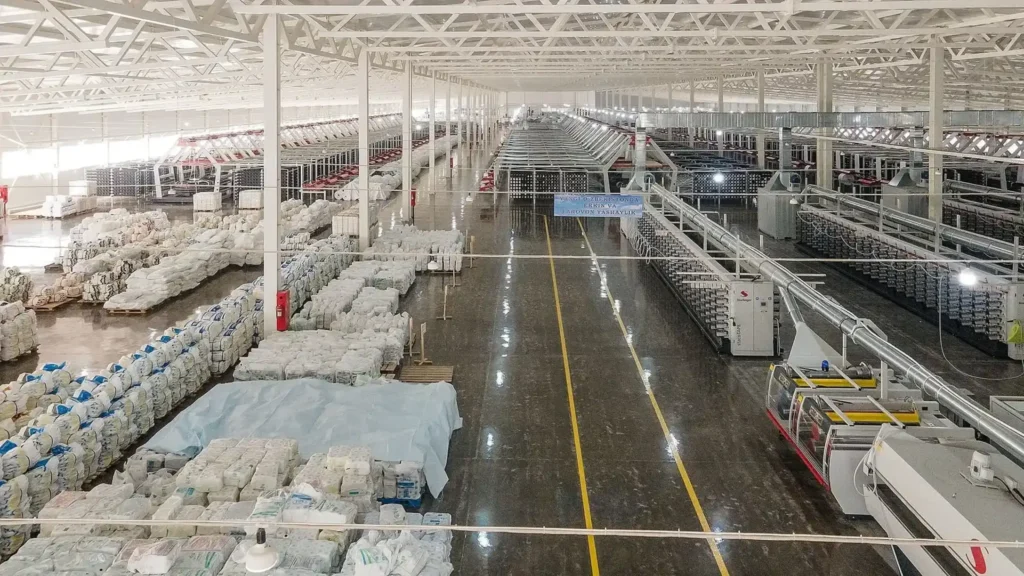
Polypropylene (PP) granules form the backbone of block bottom valve bags, offering a balance of strength, flexibility, and chemical resistance. VidePak exclusively uses virgin PP granules, which are extruded into high-tensile threads using 100+ circular looms and 16 extrusion lines. This material choice ensures:
- Durability: With a tensile strength of 8–12 N/mm², PP-based bags withstand heavy loads (up to 50 kg) and rough handling.
- Customization: PP’s compatibility with additives allows for UV stabilization, anti-static coatings, and color masterbatches.
- Sustainability: PP is 100% recyclable, aligning with global ESG commitments.
Case Study: VidePak’s collaboration with a European cement manufacturer required bags capable of enduring high-speed filling (1,200 bags/hour) and extreme environmental stress. By optimizing PP granule density (10×10 threads per inch) and adding a polyethylene (PE) inner liner, VidePak reduced bag breakage rates by 40% and enhanced moisture resistance.
Specialized Designs for Diverse Applications
1. Breathable Designs for Agricultural Packaging
Agricultural products like grains and fertilizers require ventilation to prevent mold and spoilage. VidePak’s breathable valve bags incorporate micro-perforated films or woven meshes, enabling controlled airflow while retaining fine particles.
- Technical Insight: A 2024 study by the Journal of Food Packaging highlighted that breathable PP bags reduced moisture content in rice storage by 15% compared to traditional options.
- VidePak’s Solution: Using ultrasonic seaming technology, the company produces bags with adjustable porosity (5–20 μm), ideal for climates with high humidity.
Dialogue Example:
Q: “How do breathable bags prevent condensation in tropical regions?”
A: “Our bags use PP granules blended with desiccants and perforated liners to regulate internal humidity, ensuring product integrity even at 85% relative humidity.”
2. Barrier Designs for Chemical and Food Safety
For sensitive products like pharmaceuticals or volatile chemicals, barrier designs are critical. VidePak employs multi-layer lamination (e.g., PP/PE/aluminum foil) to block oxygen, odors, and UV light.
- Data Point: Laminated bags reduce oxygen transmission rates (OTR) to <10 cm³/m²/day, extending shelf life by 30%.
- Industry Application: A partnership with a Korean electronics firm required anti-static bags with EMI shielding. VidePak integrated carbon-coated PP layers, achieving surface resistivity of 10⁶–10⁹ Ω/sq.
3. Anti-Static and Antimicrobial Innovations
- Anti-Static: By embedding conductive PP fibers, VidePak’s bags dissipate static charges, critical for packaging flammable powders (e.g., toner, magnesium).
- Antimicrobial: Silver-ion coatings inhibit bacterial growth, meeting FDA standards for food-grade packaging.
VidePak’s Production Capabilities
With 30 Starlinger machines and a 526-member team, VidePak produces 20 million bags annually. Key metrics include:
| Parameter | Specification |
|---|---|
| Bag Dimensions | 35–60 cm (width), 45–91 cm (length) |
| Printing Options | Up to 6-color CMYK, UV-resistant inks |
| Production Speed | 1,000–1,200 bags/hour |
| Certifications | ISO 9001, SGS, Sedex, GB9774-2020 |
FAQs: Addressing Industry Concerns
Q1: How do block bottom bags enhance automated filling?
A: Their rigid structure aligns perfectly with robotic arms, reducing misalignment errors by 70%.
Q2: Are these bags suitable for food contact?
A: Yes, VidePak’s food-grade bags use FDA-approved PP and antimicrobial liners, ideal for flour or spices.
Market Trends and Competitive Edge
The global valve bag market is projected to grow at 5.2% CAGR through 2030, driven by construction and agriculture sectors. VidePak’s Starlinger-equipped facilities and R&D focus on:
- Lightweight Designs: Reducing material use by 20% without compromising strength.
- Smart Packaging: QR codes for traceability and NFC tags for tamper evidence.
Conclusion
Block bottom valve bags are not just packaging solutions—they are engineered systems that safeguard products, streamline logistics, and support sustainability. VidePak’s commitment to PP excellence and innovation positions it as a global leader, ready to meet the evolving demands of industries from cement to consumables.
External Links: