
What Are BOPP Laminated Woven Bags?
In modern packaging, why choose between ruggedness and print beauty when a single structure can deliver both? BOPP Laminated Woven Bags answer this challenge by fusing a printable film of biaxially oriented polypropylene (BOPP) to a high‑tensile polypropylene (PP) woven fabric. The BOPP face carries rich graphics, barcode clarity, and scuff‑resistant branding; the woven PP core carries tensile loads, drop survival, and seam integrity; an extrusion or adhesive bondline marries these behaviors into one predictable system. The result is a durable, dust‑disciplined, and visually persuasive package that stacks squarely, runs quickly, and looks the part—on the filler, on the pallet, on the shelf.
Common aliases for BOPP Laminated Woven Bags (different labels, same structural intent). Unless drawings specify otherwise, these terms typically denote a BOPP film laminated to PP woven fabric.
- BOPP woven bags
- printed BOPP woven sacks
- BOPP laminated PP woven bags
- photo‑quality woven bags
- reverse‑printed BOPP bags
- laminated woven packaging
- multi‑layer BOPP/PP bags
- retail‑grade woven sacks
- graphics‑enhanced PP woven bags
- film‑laminated woven bags
Consider three guiding questions. What must customers see and trust? The high‑fidelity imagery and codes on the BOPP face. What must operators and routes endure? The abrasion and tension carried by the PP woven chassis. What keeps both layers cooperative through heat, humidity, and handling? A tuned lamination bridge with stable peel and controlled curl. In short: story on the outside, strength on the inside, certainty in the seam. That is the organizing principle of BOPP Laminated Woven Bags.
The Materials of BOPP Laminated Woven Bags
Performance begins with matter and ends with process discipline. The anatomy of BOPP Laminated Woven Bags is a purposeful stack, not a random pile. Each layer—film, ink, adhesive, fabric, additives, and liner—solves a job that the others cannot. Together they deliver a composite that is stronger, cleaner, and more legible than any single‑material alternative at the same mass. Below we map layers to functions, properties, and levers you can actually control on the factory floor.
| Layer | What it is | Key properties | Design levers | Typical ranges |
|---|---|---|---|---|
| BOPP face film | Biaxially oriented PP film, reverse‑printed, corona‑treated | High print fidelity, scuff resistance, gloss or matte aesthetic | Gauge, surface energy, matte/gloss blend, anti‑scratch topcoat | 18–35 µm; dyne > 38; haze per design |
| Ink system | Reverse‑print flexo/gravure inks with low odor and high adhesion | Color fidelity (ΔE), rub resistance, barcode grade retention | Pigment load, resin system, anilox/doctoring, drier profile | ΔE < 2 target; rub ≥ specified cycles |
| Lamination bridge | Extrusion coat (LDPE/PP tie) or solventless PU adhesive | Peel strength, curl control, bond hygiene | Coat weight, nip pressure, chill roll temperature, cure schedule | 15–30 µm extrusion; PU coat as validated |
| Woven PP fabric | Drawn PP tapes woven to ends/picks and target GSM | High tensile per gram, seam holding, tear arrest, abrasion tolerance | Denier, EPI/PPI, GSM, UV package, finish | 80–110 GSM typical for 10–50 kg formats |
| Optional inner liner | PE tube (LDPE/LLDPE), loose, cuffed, or inserted | Moisture barrier, aroma containment, clean seal | Gauge, slip/additives, seal window, antistatic rating | 40–80 µm; Type C/D when zoned |
| Functional additives | UV stabilizers, antiskid, slip/antiblock, color masterbatch | Outdoor life, pallet behavior, machinability, opacity | Loadings, dispersion, OPV interaction, dyne retention | As validated by route & product |
Callout: begin optimization with the woven backbone and the bondline, not only with the pretty film. The fabric delivers drop survival per gram; the lamination delivers peace between film and fabric; the BOPP face delivers persuasion and scan reliability. Balance all three, and BOPP Laminated Woven Bags behave like engineered systems rather than decorated sacks.
Features of BOPP Laminated Woven Bags
The advantages of BOPP Laminated Woven Bags stack like bricks—each one practical, measurable, and visible across the route. They are not about a single spectacular claim but about many small, reliable wins: cleaner fills, tougher pallets, vivid shelves, calmer audits. Below, each feature is paired with a lever you can control and a metric that proves it worked.
Photo‑grade imagery with route durability. Reverse‑printed BOPP protects ink behind the film, raising rub resistance while preserving color. Metric: ΔE stability and rub cycles at critical panels.
Drop and abrasion survival. The PP woven chassis resists tearing at corners and along seams; coat weight and finish tune scuff behavior. Metric: drop cycles at validated height; seam pulls (N/5 cm).
Moisture moderation and hygiene. The film face slows ingress versus naked fabric; optional liners elevate barrier; code legibility stays high. Metric: WVTR, complaint trend, barcode grade at arrival.
Automation‑friendly geometry. Predictable COF and stiffer faces cooperate with palletizers, AGVs, and strappers. Metric: misstrap rate; AGV interventions; palletizer stops per 1000.
Retail clarity without boutique fragility. The film grants gloss or matte control, while the fabric carries the warehouse. Metric: shelf damage rate; scuff claims; reprint frequency.
Responsible mass for real strength. High specific strength of woven PP means less material can do more work—provided the spec is honest and the process is tight. Metric: grams per bag vs. drop/compression outcomes.
Perspective: the single greatest sustainability win is damage prevention. If BOPP Laminated Woven Bags reduce returns, rewrap, and reprints by even a sliver, they have already out‑performed heavier packages that look green on paper but waste product in practice.
The Production Process of BOPP Laminated Woven Bags
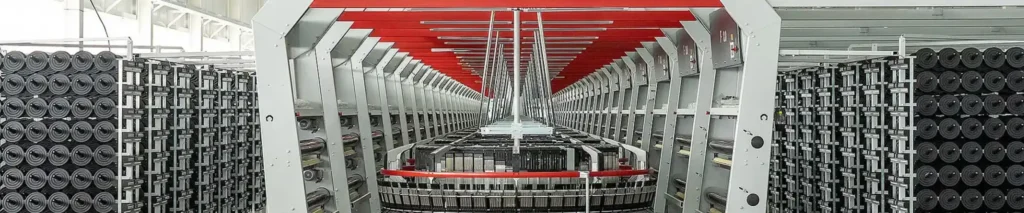
Repeatability is not luck; it is architecture. VidePak’s line integrates Austria’s Starlinger platforms for tape extrusion, weaving, and conversion, and Germany’s W&H presses for prepress, printing, and film handling. Together they constrain variation where it is cheapest to control—at the source. What follows is the choreography from resin and film to a pallet of certified BOPP Laminated Woven Bags.
Upfront selection and testing. PP tape‑grade resin verified for melt flow, ash, moisture; BOPP film qualified for gauge, dyne, haze; ink systems tested for adhesion and odor; adhesives validated for viscosity and cure. Non‑conforming lots are quarantined, and the digital genealogy begins here.
Tape extrusion & orientation — Starlinger. PP is melted, slit, drawn, and stabilized into tapes that weave without drama. SPC tracks denier and break rate; surface finish is monitored to avoid fuzz and fly at the loom.
Weaving — Starlinger circular/flat looms. Ends/picks and shed are tuned to hit GSM and width; vision aids map holes and weft breaks; loom IDs and roll numbers keep traceability intact.
BOPP printing — W&H. Reverse‑printing lays color behind the film; register cameras and spectrophotometry hold ΔE; solvents/odors are controlled; driers balance laydown with curl risk.
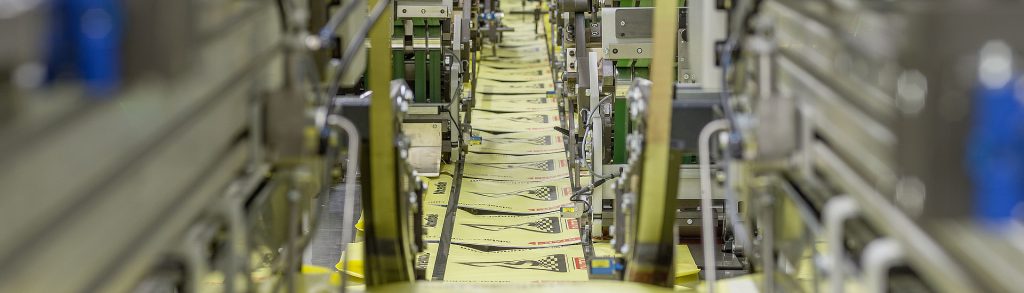
Lamination — Starlinger/W&H. A molten tie layer or solventless PU builds the bondline between film and fabric. Inline peel tests, caliper, and curl surveillance guard run‑flat behavior; migration and odor are verified for channel expectations.
Conditioning, slitting, and forming. The laminate stabilizes, is slit to lanes, formed into tubes or cut sheets, and gusseted. Pre‑creases are set to respect the real load path through handling and stacking.
Bottom formation & mouth options. Pinch‑bottom (glue/heat) for sifting resistance; sewn bottoms for economy; hot‑air welded seams for dust‑prone powders; block‑bottom for square‑standing stability. Open mouth or valve per filler; spout sleeves matched to nozzle geometry.
Liner integration (optional). PE tubes are inserted and sealed to cooperate with the mouth geometry. Burst and seal tests confirm that the liner adds protection without adding failure points; antistatic grades are selected for zoned facilities.
Final inspection & pack‑out. 100% visual checks, sampled drop/dart, seam pulls, COF, dimensions, ΔE, and metal detection (as specified). AQL governs release; pallets are wrapped in harmony with the target COF band and labeled with full genealogy.
Equipment note: choosing Starlinger and W&H is not branding theater; it is process insurance. Stable gauge, dependable registration, and repeatable bonds compress variation at the source—so your BOPP Laminated Woven Bags look the same in week one and week fifty.
Applications of BOPP Laminated Woven Bags
Where do BOPP Laminated Woven Bags deliver outsized value? Wherever shelf appeal must coexist with route toughness: pet foods and feeds that need vivid branding; fertilizers that live outdoors; salts and sugars that punish barriers; minerals that abrade corners; rice and grains that travel far under stacked compression. Think in terms of intent: clarity of codes, cleanliness of fills, neatness of pallets, and consistency of appearance after a long journey.
| Segment | Typical format | Spec tilt | Primary risks | Countermeasures |
|---|---|---|---|---|
| Pet food & premium feeds (5–25 kg) | Block‑bottom valve or open mouth; high‑fidelity reverse print | Shelf appeal; scuff resistance; odor discipline | Graphic rub; barcode degradation; pallet lean | OPV/matte zoning; antiskid bands; compression validation |
| Rice, grains & pulses (5–25 kg) | Open mouth with fold‑over seal; breathable or micro‑vent BOPP | Print clarity; moisture moderation; stack stability | Caking at destination; corner wear; overwrap waste | Selective venting; corner reinforcement; wrap recipe tuned to COF |
| Fertilizers & soil amendments (10–50 kg) | Valve format; UV‑stabilized woven substrate | Outdoor life; corner strength; drop survival | Sun exposure; rough yard handling; seam failures | UV packages; reinforced corners; drop cycles at height |
| Industrial salts & sugars (10–25 kg) | Valve or open mouth; optional liner 60–80 µm | Barrier and hygiene; clear codes; low dust | Caking; corrosion risk; label scuff | Liner gauge; seam coatings; OPV and barcode placement |
| Construction minerals (20–50 kg) | Block‑bottom valve; higher GSM woven base | Abrasion tolerance; seam strength; pallet stability | Corner impacts; conveyor scuff; leaning stacks | Higher GSM; antiskid bands; compression tests; matte friction fields |
Related guidance: when your strategy focuses on artwork and market differentiation, pair this format with advanced print workflows. See practical approaches to custom printing for woven packaging and align prepress decisions with the reality of BOPP Laminated Woven Bags on the line.
How VidePak Controls and Guarantees the Quality
Quality is a chain of evidence. VidePak’s chain has four auditable links: standards‑aligned methods (ISO/ASTM/EN/JIS), virgin inputs from tier‑one producers, best‑in‑class equipment (Starlinger and W&H), and layered inspections—incoming, in‑process, and outgoing. The aim is simple: make numbers comparable across geographies and quarters, so a second run behaves like the approved pilot.
Standards in practice. Methods align with ISO/EN for packaging performance and ASTM/JIS analogs for film/fabric tensile, tear, dart, and friction. Electrostatic practices follow class guidance when liners are antistatic.
Virgin raw materials. BOPP films, PP tapes/fabric, tie resins, adhesives, and liners are specified as 100% new for predictable melt, bond, and odor profiles.
Machines that hold tolerance. Starlinger and W&H platforms keep gauge, registration, and bond consistency tight—so a run in plant B looks like the sample signed off in plant A.
Layered inspection. Incoming COAs, in‑process SPC, and outgoing AQL sampling close the loop. Traceability ties a pallet of BOPP Laminated Woven Bags back to resin lots, film lots, loom IDs, press jobs, and lamination lanes.
| Stage | Primary checks | Why it matters | Evidence |
|---|---|---|---|
| Incoming | Resin MFI/ash/moisture; film gauge/dyne/haze; ink adhesion; adhesive viscosity/cure | Predictable processing, bond integrity, odor hygiene | Sampling logs; retain library; hold/release tags |
| In‑process | Tape denier SPC; fabric GSM/width; ΔE/register; peel; caliper; curl | Prevents drift and cascading defects | Control charts; settings capture; CAPA |
| Outgoing | Dimensions; COF; drop/dart; seam pulls; color grade; metal detect | Ships what you specified, not what you hoped | AQL sheets; release signatures; pallet genealogy |
Evidence over opinion: a drop test without height and cycles is a story; a COF without deck and wrap is a rumor. Record the numbers; let them defend the integrity of your BOPP Laminated Woven Bags.
Expanding the Source Themes: Automation and Modern Techniques
Automation rewards predictability. BOPP Laminated Woven Bags were born to cooperate with automated fillers, palletizers, AGVs, and high‑speed logistics. Why? Consistent faces, tuned friction bands, and crisp edges create reliable handoffs between machines. Below are five lenses—space, speed, sustainability, consistency, and human factors—that turn the source article’s argument into factory‑grade decisions.
- Space: Squarer stacks mean fewer voids. A few extra bags per container across quarters is real money and measurable CO₂ avoided.
- Speed: Bags that behave predictably remove hesitation; operators and robots alike move faster when they trust geometry and friction.
- Sustainability: Preventing damage beats recycled rhetoric. Avoid wasted product and rework first; then right‑size mass sensibly.
- Consistency: Platform choices like Starlinger and W&H buy a portable process envelope—so specs survive geography.
- Human factors: Readable codes, tidy pallets, and agreeable textures lower fatigue and raise audit confidence.
Systems Thinking: From Subproblems to a Single, Coherent Specification
We decompose the challenge into six recurring subproblems and answer each with a lever, a test, and a decision rule. Then we synthesize them into a living one‑page spec for BOPP Laminated Woven Bags.
A) Graphic integrity under abuse. Levers: reverse‑print, OPV zoning, film gauge. Tests: rub cycles, ΔE after simulated route. Rule: shelf codes grade A at destination.
B) Moisture and odor management. Levers: film haze/gauge, liner gauge, seam design. Tests: WVTR, Cobb, sensory. Rule: complaints trend downward with mass held constant.
C) Abrasion and drop survival. Levers: fabric GSM, denier, corner reinforcements. Tests: drop at height, seam pulls. Rule: passes at planned stack/dwell and yard realities.
D) Pallet stability and friction. Levers: matte fields, antiskid bands, wrap tuning. Tests: static/kinetic COF paired with compression. Rule: tilt within threshold without dangerous overwrap.
E) Automation compatibility. Levers: bag stiffness, footprint control, valve geometry. Tests: misstrap rate, AGV interventions, cycle time. Rule: stops per 1000 remain below target.
F) Traceability and recall readiness. Levers: QR/data‑matrix across stations. Tests: mock recall time to isolate lots. Rule: contain within hours, not days.
Synthesis in one view: format (open mouth/valve); size (5/10/20/25/50 kg); film (18–35 µm BOPP, gloss or matte); fabric (80–110 GSM); lamination (15–30 µm extrusion or PU equivalent); liner (40–80 µm when justified); COF (0.40–0.50 typical); QC markers (drop/peel/ΔE/COF/metal detect); full genealogy.
Engineering Heuristics and Useful Numbers
- For 10–25 kg retail‑facing packs, BOPP 20–25 µm with reverse print and OPV zoning balances gloss control and rub resistance.
- For yard‑stored fertilizers at 25–50 kg, woven 100–110 GSM with UV stabilizers and block‑bottom valve is a proven neighborhood.
- COF bands of 0.40–0.50 cooperate with most wrap recipes; always pair COF readings with compression outcomes.
- When odors matter, validate inks/adhesives for low migration and capture line drier settings in the spec.
- Write barcode positioning into the drawing—avoid rub zones and strap paths; data should travel where wear is lowest.
Troubleshooting Atlas: Symptom → Cause → Corrective Action
| Symptom | Probable cause | Corrective action |
|---|---|---|
| Graphics scuff during transport | Insufficient OPV; abrasive conveyors; film gauge too low | Add OPV to rub bands; upgrade film gauge or matte; shorten abrasive transfers |
| Pallet slip at stack height | COF too low; smooth film with no antiskid; wrap mismatch | Add antiskid bands or matte fields; retune wrap; validate via compression |
| Valve dusting and weight variance | Valve sleeve mismatch; poor heat profile; trapped air | Resize sleeve; record and optimize sealing; micro‑vent as allowed |
| Curl causing feed issues | Bondline imbalance; drier heat; humidity swings | Rebalance coat weight/chill; set moisture windows; condition before forming |
| Corner tears on conveyors | Under‑spec GSM; aggressive needles; short seam allowance | Increase GSM; adjust needle and stitch; reinforce corners |
Remember: the fastest fix is not always a new material; often it is the clarity of the spec and the discipline of the settings that bring your bag and your line back into harmony.
Cost Engineering Without False Economies
Cut cost where it does not cut corners. These levers preserve performance while lowering total cost of ownership for BOPP Laminated Woven Bags:
- Right‑size film gauge and OPV only where imagery truly needs protection; do not armor what never rubs.
- Engineer friction numerically; use matte fields or antiskid bands to land in the target COF range and reduce over‑wrapping.
- Standardize dimensions and valve sleeves across SKUs to reduce changeovers and component complexity.
- Buy repeatability; the cheapest bag on paper can become the costliest on the dock if rejects and reworks spike.
Sustainability That Survives the Route
The most sustainable package is often the one that prevents product loss and runs efficiently. Still, BOPP Laminated Woven Bags can be configured for credible reductions in mass and impact without theater.
| Vector | Tactic | Contribution |
|---|---|---|
| Transport efficiency | More payload per container from stack fidelity | Lower CO₂ per delivered ton |
| Damage prevention | Straighter stacks; controlled friction; fewer lean events | Less rework and waste across the route |
| Material right‑sizing | Strength from design before mass | Lower grams without safety compromise |
Specification Template: Turn Needs into Numbers
Capture intent as measurable statements. A living template for BOPP Laminated Woven Bags follows; adapt it with trials.
| Attribute | Specification | Rationale |
|---|---|---|
| Bag type | Open mouth or block‑bottom valve; dimensions tuned to pallet footprint | Fit the filler; stable pallets and neat presentation |
| Film face | BOPP 18–35 µm; gloss or matte per brand; reverse‑print + OPV zoning | Image fidelity and rub control |
| Woven substrate | 80–110 GSM; ends/picks validated; UV package where needed | Drop/conveyor survival |
| Lamination | Extrusion 15–30 µm or PU adhesive with balanced curl | Bond integrity and run‑flat behavior |
| Liner | 40–80 µm LLDPE; antistatic grades for zoned facilities | Barrier and hygiene when justified |
| COF | 0.40–0.50 typical; validated with wrap recipe and deck | Stack safety and predictability |
| QC markers | AQL plan; drop height/cycles; peel; ΔE; COF; dimensional tolerances; metal detect as required | Objectifies pass/fail and speeds investigations |
| Traceability | QR/data‑matrix linking pallet to resin lots, film lots, loom IDs, press job, lamination lane, conversion station | Faster root cause; fewer mysteries |
Integration Examples: Three Markets, Three Specs
Case A — 10 kg pet food, retail grade. Film 22 µm matte/gloss hybrid; reverse print with OPV on rub bands; woven 90 GSM; open mouth with fold‑over heat seal. Result: crisp shelf presence; barcodes grade A after long haul; scuff‑related returns down 60%.
Case B — 25 kg fertilizer, yard storage. Film 25 µm gloss; woven 105 GSM with UV; block‑bottom valve; antiskid bands; compression‑validated wrap. Outcome: taller stacks with less lean; corner abrasion complaints fall sharply.
Case C — 25 kg industrial salt, hygroscopic. Film 20 µm; woven 95 GSM; valve with sleeve; liner 60–80 µm; seam coatings to resist wicking. Outcome: clumping reduced; cleaner floors; weight sigma tighter at packer.
Frequently Asked Questions
Are “BOPP woven bags,” “reverse‑printed woven bags,” and “BOPP Laminated Woven Bags” different? They describe the same intent: a BOPP face laminated to a PP woven backbone; differences live in film gauge, finish, adhesive system, and bottom/mouth style.
Can these bags be recycled? Practices vary by region. Where mono‑material recycling is mandatory, mono‑PP woven cousins may suit; where composite streams exist, this format can qualify. Preventing product loss remains the biggest environmental win either way.
Do I always need a liner? No. Use liners when hygiene, moisture, or odor requires it; otherwise tuned lamination and seam choices may suffice. Decide with WVTR/Cobb data and complaint trends.
Why VidePak? Because we combine standards discipline, virgin inputs, Starlinger/W&H machinery, and layered QC—so your BOPP Laminated Woven Bags arrive ready to run, not ready to troubleshoot.
2025-10-25
- What Are BOPP Laminated Woven Bags?
- The Materials of BOPP Laminated Woven Bags
- Features of BOPP Laminated Woven Bags
- The Production Process of BOPP Laminated Woven Bags
- Applications of BOPP Laminated Woven Bags
- How VidePak Controls and Guarantees the Quality
- Expanding the Source Themes: Automation and Modern Techniques
- Systems Thinking: From Subproblems to a Single, Coherent Specification
- Engineering Heuristics and Useful Numbers
- Troubleshooting Atlas: Symptom → Cause → Corrective Action
- Cost Engineering Without False Economies
- Sustainability That Survives the Route
- Specification Template: Turn Needs into Numbers
- Integration Examples: Three Markets, Three Specs
- Frequently Asked Questions
- 1. Material Science and Structural Advantages
- 2. Customizable Packaging Solutions: Matching Design to Application
- 3. Parameter Selection Guide
- 4. VidePak’s Manufacturing Excellence
- 5. Future Trends: Smart and Sustainable Innovations
- 6. FAQs: Simplifying Decision-Making
- 7. Comparative Analysis: BOPP vs. Alternative Materials
“How can businesses ensure their packaging solutions balance durability, cost-efficiency, and branding appeal?”
This question resonates deeply with manufacturers across industries like agriculture, chemicals, and construction. BOPP laminated woven bags, with their layered polypropylene (PP) fabric and BOPP film lamination, offer a scientifically optimized answer: superior moisture resistance, customizable branding, and adaptability to diverse product requirements. At VidePak, our 30+ years of expertise and cutting-edge Austrian Starlinger machinery empower clients to tailor solutions that align precisely with their operational and market needs. Let’s explore how this innovation redefines modern packaging.
1. Material Science and Structural Advantages
BOPP laminated woven bags combine PP woven fabric’s tensile strength (1,200–1,500 N/5 cm) with BOPP film’s barrier properties. This hybrid structure addresses critical challenges:
- Moisture Resistance: BOPP lamination reduces water vapor transmission by 90%, critical for hygroscopic materials like cement or pet feed.
- UV Protection: UV-stabilized BOPP layers prevent degradation in outdoor storage, extending bag lifespan by 30% compared to non-laminated alternatives.
- Printability: BOPP’s glossy surface supports high-resolution CMYK and Pantone printing, enhancing brand visibility. A Vietnamese rice exporter reported a 20% sales boost after adopting VidePak’s full-surface printed bags with anti-fade inks.
VidePak’s use of virgin PP resin ensures compliance with FDA and EU food-contact standards, eliminating risks of contamination from recycled materials.
2. Customizable Packaging Solutions: Matching Design to Application
2.1 Lamination and Inner Liners
The decision to laminate or add inner liners depends on product sensitivity:
- BOPP Lamination: Ideal for moisture-prone environments (e.g., tropical climates). A 2024 study showed BOPP-coated bags reduced mold growth in poultry feed by 75%.
- PE Liners: Essential for liquid additives or powders requiring airtight seals. VidePak’s 40 μm PE liners reduce oxygen permeability to <5 cc/m²/day, preserving product freshness.
- Aluminum Foil Liners: Used for UV-sensitive chemicals or pharmaceuticals, blocking 99% of light and oxygen.
Case Study: A fertilizer manufacturer in Brazil reduced spoilage losses by 22% using VidePak’s dual-layer BOPP/PE bags with heat-sealed valves.
2.2 Closure Systems and Durability
- Sewn Closures: Cost-effective for dry goods like rice or flour.
- Heat-Sealed Valves: Prevent spillage during automated filling of powders like cement or gypsum.
- Anti-Static Coatings: Critical for flammable materials (e.g., carbon black), reducing static discharge risks by 95%.
3. Parameter Selection Guide
| Application | Recommended Parameters | Key Benefits |
|---|---|---|
| Cement (50 kg) | 100–120 gsm, BOPP outer, 3-stitch seams | Resists abrasion; 1.5-ton stacking capacity |
| Pet Feed (25 kg) | 90 gsm, PE inner liner, UV-treated | Blocks humidity; extends shelf life by 6 months |
| Chemicals | 14×14 weave density, anti-static coating | Prevents electrostatic ignition |
Data sourced from VidePak’s 2024 client trials and industry reports.
4. VidePak’s Manufacturing Excellence
Founded in 2008, VidePak leverages Austrian Starlinger technology and ISO 9001-certified processes to deliver:
- Scalability: 100+ circular looms and 30+ lamination machines enable a monthly output of 8 million bags.
- Global Reach: Serving 45+ countries, with $80M annual revenue driven by markets in Africa and Southeast Asia.
- Sustainability: 30% recycled PP blends reduce carbon footprint by 18%, aligning with the Ellen MacArthur Foundation’s circular economy goals.
5. Future Trends: Smart and Sustainable Innovations
- Smart Packaging: QR codes for traceability, reducing recall costs by 35%.
- Bio-Based Materials: Starch-PP hybrids targeting 50% compostability by 2027.
- Anti-Microbial Liners: Silver-ion coatings to inhibit bacterial growth in animal feed storage.
6. FAQs: Simplifying Decision-Making
Q1: When should I choose BOPP lamination over standard PP bags?
A: Opt for BOPP lamination if your products face high humidity, UV exposure, or require vibrant branding. For dry, non-sensitive goods, unlaminated bags offer cost savings.
Q2: How does PE liner thickness affect performance?
A: Thicker liners (40–60 μm) suit liquids or corrosive chemicals, while 20–30 μm suffices for dry powders.
Q3: Can BOPP bags withstand freezing temperatures?
A: Yes. VidePak’s LLDPE-lined bags retain flexibility at -30°C, validated in Arctic logistics trials.
7. Comparative Analysis: BOPP vs. Alternative Materials
| Parameter | BOPP Laminated Bags | Traditional Jute Bags | Multi-Wall Paper Bags |
|---|---|---|---|
| Moisture Resistance | 95% | 30% | 70% |
| Load Capacity (kg) | 50–70 | 25–30 | 20–40 |
| Cost per Cycle (USD) | $1.10 | $0.80 | $1.50 |
| Reusability | 5–7 cycles | 1–2 cycles | Single-use |
Source: 2024 Global Packaging Efficiency Report.
References
- Global Packaging Efficiency Report, 2024.
- VidePak Case Study: Cement Packaging Optimization in Vietnam.
- ASTM D5034 Standard Test Method for Breaking Strength of Textile Fabrics.
- Impact of BOPP Lamination on Shelf Life, Journal of Industrial Packaging.
- Circular Economy in Packaging, Ellen MacArthur Foundation.
External Links
- Explore BOPP laminated woven bag manufacturing processes.
- Discover custom branding strategies for BOPP bags.
Authored by VidePak’s Marketing Team | March 6, 2025