
What Are Polypropylene Bags? (Definition & Common Aliases)
When packaging must be light yet strong, printable yet durable, economical yet engineered, Polypropylene Bags step out of the commodity shadow and into the role of calibrated components. Built from interlaced polypropylene (PP) tapes that form a textile‑like fabric, then finished with a purpose‑chosen surface—extrusion‑coated PE, laminated BOPP, or paper laminate—Polypropylene Bags combine tensile strength, moisture discipline, and brand‑ready graphics in a single structure. In catalogs and buying guides they also appear as PP woven bags, WPP sacks, polypropylene woven sacks, BOPP‑laminated woven bags, and paper‑laminated PP bags. These aliases point to the same idea: tune the “skeleton” (fabric GSM, mesh, denier) and the “skin” (coating/laminate/print) so the container suits the product, the plant, and the pallet.
To understand why Polypropylene Bags matter, trace their horizontal lineage and vertical logic. Horizontally, the format borrows from three worlds at once: textiles (denier arithmetic, creep behavior, seam load paths), flexible packaging (seal windows, dyne level, coefficient of friction), and logistics (stacking geometry, pallet friction, barcode scannability). Vertically, the performance ladder reads resin → tape → fabric → surface → print → conversion → QA. Shift one rung—say, draw ratio at extrusion—and the echoes travel: denier stability changes, weave planarity shifts, coating laydown wanders, seal latitude narrows, and suddenly a readable barcode becomes a rumor. The message is plain: Polypropylene Bags are systems, not sacks.
For format and tolerance references, explore Polypropylene Bags. That link is not decoration; it is the bridge from adjectives to numbers, from claims to parameters.
What Are the Features of Polypropylene Bags?
Strength‑to‑weight that protects payload and margin. The woven PP base typically spans ~60–120 g/m² for 5–50 kg lanes, delivering high tensile and tear resistance at low tare. By selecting tape denier (≈600–1,200 D) and mesh (10×10 to 14×14) with intent, Polypropylene Bags convert material grams into reliable drop survival and calm handling—less overpack, more product per pallet.
Moisture and dust control designed in, not bolted on. Extrusion‑coated PE layers (~20–40 μm) bridge inter‑tape voids to widen the heat‑seal window and curb wicking. Where hermeticity is critical, inner liners or collar welds are specified; where speed rules, micro‑perforation bands—20–60 holes/cm² in a narrow top zone—vent headspace air without turning the bay into a snow globe. The horizontal analogy to pouch technology is clear: seal windows and vent paths are process variables, not afterthoughts.
Print surfaces built for brand and barcodes. Corona‑treated faces (≥38 dynes) accept high‑definition flexo (6–8 colors) or rotogravure (8–9 colors). Laminated BOPP (15–30 μm, clear/white/matte) lifts ink holdout and rub resistance, while matte whites mitigate scanner glare so GS1 barcodes, data matrices, and QR codes pass on the first scan. The vertical cause‑and‑effect shows up here too: low dyne → poor wet‑out → mottled solids → barcode failures at receiving.
Handling stability on lines and pallets. Coefficient of friction (COF) packages are tuned—inner ~0.18–0.30 for smooth feed through formers and seal jaws; outer ~0.35–0.55 for pallet grip under straps. Optional antiskid textures or embossed patterns lift stack friction, while UV stabilization (200–1,600 h) aligns outdoor storage with latitude and dwell time. Geometry matters as much as grams: block‑bottom forms stack like bricks; open‑mouth forms suit legacy sealers.
Closure choices without compromise. Polypropylene Bags support open‑mouth heat‑seal tops for wide, stitch‑free seams; block‑bottom valve formats enable self‑closing mouths—heat‑seal, sonic‑seal, tuck‑in, or poly‑lock—that cut the leak paths conventional stitching introduces. In short, the seam stops being a weakness and becomes a feature.
Sustainability pathways with evidence, not slogans. Virgin contact layers are used for food‑adjacent SKUs; paper from responsibly managed sources (FSC® options) supports paper‑laminated builds; PCR content can enter non‑food exterior layers where performance permits; water‑based inks and solventless laminations lower VOC profiles. Ethics show up as numbers—material declarations, audit trails—not as adjectives.
Customization that serves operations. Sizes typically span layflat widths of 300–600 mm with lengths tuned to bulk density. Add handles, tear tapes, transparent windows in white BOPP, antiskid patches, or EZ‑open features. With Polypropylene Bags, customization is not vanity; it is operations engineering.
What Is the Production Process of Polypropylene Bags?
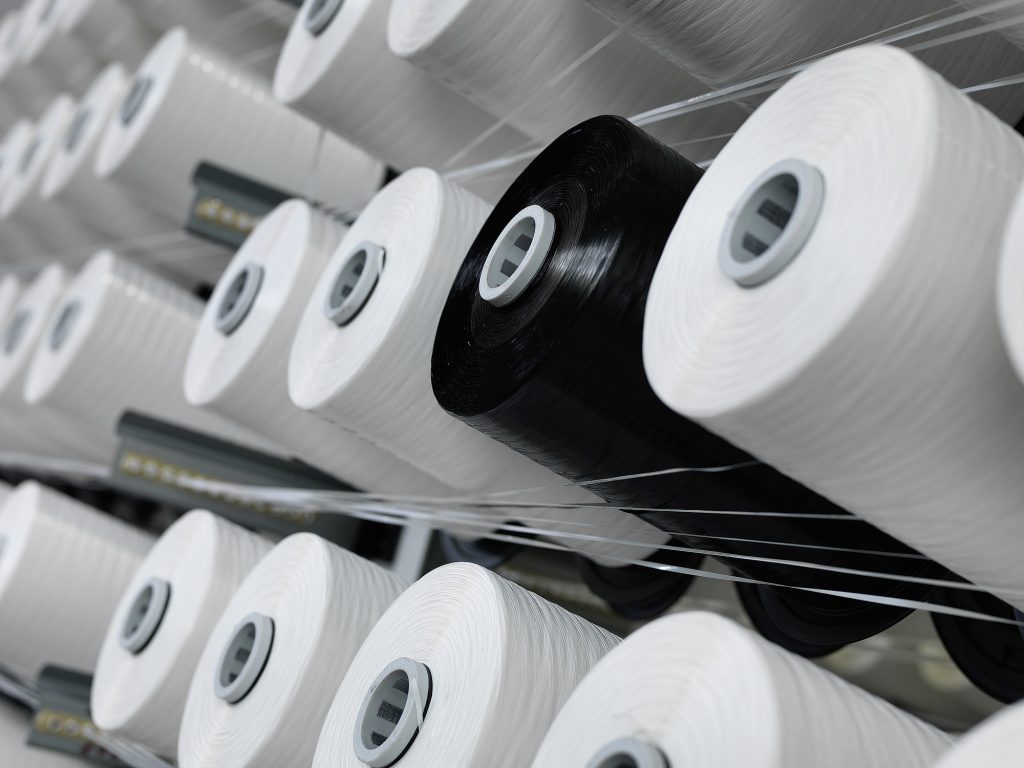
Extrusion & orientation (building the tapes). Virgin PP is extruded into flat tapes and drawn to target denier. Draw ratio sets tensile and creep; quench and anneal stabilize crystallinity. Online denier control smooths loom behavior; stable tapes yield calm fabric.
Weaving (forming the fabric). Circular looms interlace tapes into meshes commonly 10×10 to 14×14 at the GSM chosen for the job. Planarity here influences everything later—coating flatness, print registration, and block‑bottom forming accuracy. Think of it as the stage on which every later operation performs.
Surface engineering (coating/lamination). A PE extrusion coat (~20–40 μm) opens a generous heat‑seal window and reduces water vapor transmission. For premium graphics or outdoor rub, a BOPP laminate (15–30 μm; clear/white/matte) or a kraft‑paper laminate (60–120 g/m²) is bonded via extrusion tie‑layer or solventless adhesive. Corona treatment lifts dyne to ≥38 for ink anchorage; coat weight is SPC‑controlled because wandering coat means wandering seals.
Printing (carrying the message). High‑definition flexo and rotogravure deliver dense solids, crisp micro‑type, and compliant barcodes. Overprint varnishes improve rub and UV endurance so safety icons and QR codes arrive readable. Barcode grades are measured, not guessed, before reels leave the press.
Conversion (creating the form). Cut to length; add gussets; apply valve patches; form stitch‑free block bottoms by hot‑air welding or adhesive pasting. Place micro‑perfs in a narrow top band above the settled product level to evacuate headspace air during fill without product loss. The result is speed without dust—and that is not luck, it is layout.
QA & documentation (proving the promise). Thickness mapping; tensile/tear of the woven base; seal/peel strength by jaw type; COF inner/outer; dart impact and tear tests on formed specimens; dyne retention; barcode grades after strap‑rub simulation; visual AQL. For food‑adjacent builds, material declarations match destination regulations. These numbers travel with each lot so receiving can trust rather than test.
Vertical thinking ties the steps into one chain: resin MFI influences draw; draw sets denier stability; stability governs weave planarity; planarity shapes coating; coating determines seal latitude and dyne; dyne and overprint determine barcode grades; grades determine audit friction. Horizontal thinking borrows lessons from pouches (seal windows), corrugate (stack math), and labeling (quiet zones)—then adapts them to the hybrid textile/film nature of Polypropylene Bags.
What Is the Application of Polypropylene Bags?
Fertilizers & agro‑chemicals. Hygroscopic blends in humid lanes benefit from heavier coats, optional liners, and outer COF around 0.45–0.55 to resist pallet “skating.” Valve mouths and welded bases cut stitch‑line dusting; micro‑vent bands keep lines fast without losing fines. Here, Polypropylene Bags behave like throughput levers, not mere containers.
Cement, dry mixes & minerals. Abrasive, dense powders ask for higher GSM within range and robust, stitch‑free bottoms that form square. Pallets travel straighter, forklift handling turns calmer, and claims fall. Geometry plus friction—not geometry alone—keeps stacks honest.
Food ingredients (where compliant). Sugar, rice, flour, premixes: clean heat‑seals, scannable codes, and optional barrier liners elevate hygiene narratives and audit readiness. Matte white print zones suppress glare so scanners pass the first time; that is safety and speed in a single design choice.
Animal feed & pet food. BOPP faces preserve shelf artwork; welded bottoms reduce in‑store dust; transparent windows within white BOPP showcase blend quality. Polypropylene Bags must be both billboard and workhorse—visible, durable, trustworthy.
Plastic resins & masterbatch. High bulk density pushes for stiffer bodies and antiskid outer COF; rub‑resistant panels maintain product IDs through long drayage and rough straps. Label legibility is more than branding; it is receiving efficiency.
Salts, charcoal & specialty chemicals. UV‑stabilized skins suit yard storage; micro‑vent bands keep fills quick without turning the air opaque. Anti‑static options and zoning‑aware designs protect operators where dust clouds and ignition energy intersect.
In each lane, the pattern repeats: fewer leaks, cleaner floors, faster fills, straighter stacks—Polypropylene Bags that act like parts of a well‑tuned line.
**Indicative Parameters — Polypropylene Bags
The following windows reflect widely listed, export‑grade practice on Made‑in‑China/Alibaba‑class catalogs and peer manufacturers. Final set‑points depend on bulk density, fines %, climate, and handling severity.
| Attribute | Typical Options / Ranges | Role in Performance | Notes |
|---|---|---|---|
| Product | Polypropylene Bags | Woven PP sacks for 5–50 kg lanes | Open‑mouth or block‑bottom valve formats |
| Fabric GSM | ~60–120 g/m² | Drop/tear vs. fold behavior | Heavier GSM for abrasive/mineral contents |
| Mesh (warp×weft) | 10×10 to 14×14 | Porosity; lamination/print flatness | Finer mesh → smoother print face |
| Tape Denier | 600–1,200 D | Tensile & creep resistance | Stable denier = stable weaving |
| PE Extrusion Coat | ~20–40 μm | Heat‑seal window; moisture control | Thicker for humid/coastal lanes |
| BOPP Laminate | 15–30 μm (clear/white/matte) | Print fidelity; rub resistance | Matte white improves barcode scans |
| Paper Laminate | 60–120 g/m² kraft | Panel stiffness; stack friction | FSC® options on request |
| Valve Types | Heat‑seal / Sonic‑seal / Tuck‑in / Poly‑lock | Fill speed; dust control | Match to filler nozzle geometry |
| Micro‑Perforation | 20–60 holes/cm² (top band) | Headspace air release | Keep above settled product level |
| COF (inner/outer) | 0.18–0.30 / 0.35–0.55 | Feeding vs. pallet grip | Antiskid textures optional |
| Printing | Flexo 6–8c; Gravure 8–9c | Brand impact; code legibility | Validate barcode grade after strap‑rub |
| UV Stabilization | 200–1,600 h | Outdoor storage resilience | Match to expected yard dwell time |
| Sizes | Layflat 300–600 mm; length by density | Pallet fit; cube efficiency | Block‑bottom improves stacking |
| QA Metrics | Seal/peel; tensile/tear; dart impact; dyne; COF; thickness SPC; visual AQL | Objective acceptance & repeatability | Material declarations for food‑adjacent builds |
—
In the end, the question is not “Do Polypropylene Bags work?” but “How do they work for your line?” Horizontal comparisons provide clues; vertical cause‑and‑effect provides control. When both are used, a bag stops being a cost on a spreadsheet and starts behaving like a quiet asset—predictable, tidy, and tuned to its lane.
- What Are Polypropylene Bags? (Definition & Common Aliases)
- What Are the Features of Polypropylene Bags?
- What Is the Production Process of Polypropylene Bags?
- What Is the Application of Polypropylene Bags?
- **Indicative Parameters — Polypropylene Bags
In today’s rapidly evolving packaging industry, the need for sustainable and high-quality solutions is more pressing than ever. Polypropylene (PP) woven bags, known for their durability, versatility, and eco-friendliness, are playing an increasingly crucial role in various sectors, including agriculture, construction, logistics, and waste management. This article will delve into how the comprehensive supply of PP woven bags aligns with policy standards and Environmental, Social, and Governance (ESG) principles, exploring key trends, technological advancements, and the steps companies must take to meet these demands. We will also provide insights into product parameters and address common queries.
PP Woven Bags: Versatility Meets Sustainability
PP woven bags are a staple in industries requiring reliable and durable packaging solutions. Made from high-density polypropylene, these bags are typically used for packaging bulk products like fertilizers, grains, cement, and chemicals. Their woven structure ensures a high level of strength and durability, while their flexibility allows for a variety of shapes and sizes, making them ideal for multiple applications.
Key Benefits of PP Woven Bags
- Strength and Durability: PP woven bags are known for their superior tensile strength, making them ideal for heavy-duty packaging. They are resistant to abrasions, tears, and punctures, ensuring the safe transport and storage of goods.
- Cost-Effective: These bags are a cost-effective alternative to other packaging materials such as paper or plastic, offering a long shelf life and reusability.
- Customizable: PP woven bags can be customized in terms of size, design, and printing. This flexibility makes them suitable for businesses across various industries, from food packaging to construction.
- Eco-Friendly: As part of the growing trend towards sustainability, PP woven bags are recyclable, reducing their environmental footprint. With increasing consumer demand for eco-friendly products, these bags are becoming a popular choice for companies that prioritize sustainability.
Aligning with Policy Standards
Governments worldwide are introducing stricter regulations to manage waste, reduce environmental impact, and promote the use of sustainable packaging materials. The packaging industry, in particular, is under increasing scrutiny, with standards focusing on recyclability, reduced carbon emissions, and minimal environmental impact.
Global Regulations and Standards
- EU Packaging and Packaging Waste Directive: The European Union’s regulations require all packaging, including PP woven bags, to meet specific recyclability and waste management criteria. These rules are part of the EU’s broader effort to combat plastic pollution and move towards a circular economy.
- China’s Plastic Pollution Ban: China has introduced bans and restrictions on single-use plastics. As part of these policies, PP woven bags—especially those made from 100% recyclable materials—are a preferred choice for businesses looking to comply with these regulations.
- US Environmental Protection Agency (EPA) Guidelines: The EPA encourages the use of sustainable materials and provides guidance on waste management for packaging. Manufacturers of PP woven bags must ensure that their products are environmentally friendly, recyclable, and non-toxic.
By meeting these international standards, PP woven bag manufacturers are not only complying with regulations but also contributing to global efforts to reduce plastic waste.
ESG Principles in Packaging
Environmental, Social, and Governance (ESG) principles have become central to corporate strategies, especially for businesses aiming to position themselves as responsible and sustainable. These principles focus on reducing negative environmental impacts, ensuring ethical labor practices, and promoting good governance. The role of PP woven bags in ESG initiatives is significant due to their sustainable properties and ability to reduce overall packaging waste.
Environmental Impact
PP woven bags contribute to environmental sustainability in several ways:
- Recyclability: PP woven bags can be recycled into new products, reducing the need for virgin plastic and conserving natural resources. Companies that use recyclable materials are better positioned to align with global recycling goals.
- Reduced Carbon Footprint: The production of PP woven bags generally requires less energy compared to other materials like paper or glass, making them a more energy-efficient option for packaging.
- Durability and Reusability: Unlike single-use plastic bags, PP woven bags can be reused multiple times, significantly lowering the volume of waste generated.
Social Responsibility
From a social perspective, the manufacturing and use of PP woven bags can promote responsible labor practices and community engagement. Many manufacturers focus on:
- Ethical Labor Practices: Ensuring fair wages, safe working conditions, and respect for workers’ rights in their factories.
- Community Support: Supporting local communities by sourcing raw materials locally or investing in initiatives that foster education, health, and welfare.
Governance
Good governance practices in the PP woven bag industry include:
- Transparency: Ensuring clear communication about manufacturing processes and environmental impact.
- Compliance: Adhering to regulatory requirements and international standards for packaging.
Key Parameters of PP Woven Bags
To fully understand the benefits of PP woven bags, it’s essential to consider their key parameters. Below is a table summarizing the technical specifications of PP woven bags.
| Parameter | Details |
|---|---|
| Material | High-density polypropylene (HDPE) |
| Strength | High tensile strength, resistant to wear and tear |
| Weight Capacity | Ranges from 5 kg to 2000 kg, depending on bag size and design |
| Size Range | Custom sizes, typically ranging from 10 kg to 1000 kg |
| Printing Options | Up to 8 colors, custom logos, and designs |
| Lamination | Optional BOPP or kraft paper lamination for added protection |
| Recyclability | 100% recyclable |
| UV Resistance | UV-treated for outdoor use and durability |
| Customization | Available in various designs, sizes, and closure options |
Common Questions about PP Woven Bags
1. Are PP woven bags environmentally friendly?
Yes, PP woven bags are recyclable, making them an environmentally friendly option compared to non-recyclable plastics. Additionally, their durability ensures they can be reused multiple times.
2. What industries use PP woven bags?
PP woven bags are used in industries such as agriculture (for grains, fertilizers), construction (for cement, sand), chemicals, and logistics (for bulk storage and transport).
3. How strong are PP woven bags?
PP woven bags are extremely durable, with strength varying based on the thickness of the material. They can carry heavy loads (up to 2000 kg), making them ideal for bulk packaging.
4. Can PP woven bags be customized?
Yes, PP woven bags can be customized in terms of size, color, design, and printing. Businesses can have their logos or specific design elements printed on the bags.
5. How are PP woven bags produced?
The production process involves weaving polypropylene threads to create the fabric, followed by cutting, sewing, and sometimes laminating for added protection. Modern manufacturing methods like Starlinger technology enhance the production quality.
Conclusion: A Sustainable Future with PP Woven Bags
The growing demand for sustainable packaging solutions makes PP woven bags a key player in the packaging industry. Their durability, recyclability, and adaptability to various industries make them a perfect fit for businesses aiming to meet global policy standards and adhere to ESG principles. By investing in high-quality PP woven bags, companies not only meet the demands of today’s market but also contribute to a sustainable future.
To learn more about how PP woven bags can align with sustainability and policy standards, check out the article on industrial woven packaging bags aligning with policies and ESG standards.
For more insights on the versatility of Kraft paper laminated woven bags, visit Kraft paper bags laminated with woven fabric.