
- What Are Custom Woven Bags?
- Features of Custom Woven Bags
- The production process of custom woven bags
- Application
- Why Custom Woven Bags Solve Real‑World Problems in Plants and Warehouses
- Printing on Custom Woven Bags: PE Coating vs. BOPP Lamination vs. Kraft Lamination
- PE‑Coated Woven Fabric: Direct Flexo for Bold, Cost‑Efficient Graphics
- BOPP‑Laminated Woven Fabric: Reverse‑Gravure for Photo‑Grade Branding
- Kraft‑Paper‑Laminated Woven Fabric: Paper Aesthetics with Woven Strength
- Choosing the Right Printing Architecture for Custom Woven Bags
- Valve Systems in Custom Woven Bags: Types, Trade‑Offs, and Line Compatibility
- Block‑Bottom Geometry: Stack Like Bricks, Ship Like a Dream
- Standards and Test Methods That Support Custom Woven Bags Specifications
- From Problem to Solution to Result: Three Recurring Design Decisions
- A Specification Framework for Custom Woven Bags (Reference Ranges)
- Horizontal and Vertical Thinking for Custom Woven Bags Selection
- An Applied Blueprint: Portfolio Planning with Custom Woven Bags
- Frequently Asked Questions About Custom Woven Bags
- A Final Note on Language, Not a Conclusion
- How to Choose the Right Custom Woven Bags?
- The Basics of Block‑Bottom and Valve Formats
- Components of a Custom Woven Bags System
- Common Applications of Custom Woven Bags
- Types of Custom Woven Bags Available
- How to Set Up a Bag Specification for Your Packaging Line
- Benefits of Upgrading Your Custom Woven Bags
- Keeping Your Custom Woven Bags Supply in Top Shape
- What Components Are Essential for a Valve‑Fill Setup?
- How Can I Improve the Performance of Custom Woven Bags?
- What Is the Purpose of a Valve in Woven Sacks?
- Can I Use Paper Lamination in My Custom Woven Bags Projects?
- References
What Are Custom Woven Bags?
What does the market really mean when it talks about Custom Woven Bags? In practical terms, this phrase refers to packaging made from interlaced polypropylene tapes—engineered fabrics that combine high tensile strength with low weight and excellent durability. In different industries you will also hear aliases such as woven polypropylene sacks, custom woven PP sacks, BOPP‑laminated PP woven bags. These labels emphasize the face material or lamination method but point to the same core platform: a woven PP structure tailored to your product, filling line, and brand graphics.
Features of Custom Woven Bags
Yet a name alone does not capture why Custom Woven Bags have become the workhorse of dry‑bulk packaging. Consider their features: impressive tear resistance relative to mass; puncture toughness that shrugs off rough conveyors; optional block‑bottom geometry for brick‑like stacking; and the ability to integrate valves that speed filling while reducing dust. Add moisture protection by PE coating, BOPP lamination, or kraft‑poly composites; add UV stabilization for yard storage; add anti‑slip textures for pallet grip. The result is a packaging system that performs in the plant, in the truck, and on the shelf.
The production process of custom woven bags
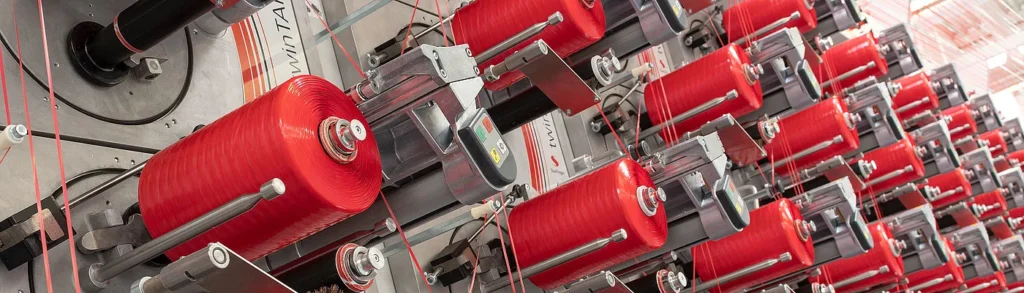
How are they made? The manufacturing process follows a precise sequence: PP resin is extruded into tapes and oriented for strength; those tapes are woven into flat or circular fabric; the fabric can be extrusion‑coated with PE or laminated with BOPP film or kraft paper; printing is applied (direct flexographic on coated fabric, reverse rotogravure on films, or offset/flexo on kraft); the web is converted—cut, formed, bottom‑closed (often by hot‑air welding for block‑bottom), and fitted with a valve sleeve (tuck‑in, internal, external, or sonic‑seal). Finally, bags are inspected, counted, and palletized.
Application
And what do people put inside these bags? The uses are wide and practical: cement and dry mortar, gypsum, fertilizer and soil amendments, animal feed and pet food, grains and flour, salt and sugar, plastic pellets and resins, minerals and powdered chemicals. Whenever the product is free‑flowing, the logistics chain is tough, and the brand needs to be seen, Custom Woven Bags earn their keep. If you’re comparing options, you can learn more here: Custom Woven Bags.
Why Custom Woven Bags Solve Real‑World Problems in Plants and Warehouses
Packaging is not an art project; it is a production tool. A line manager worries about filling speed, dust exposure, pallet stability, and barcode readability. A brand manager worries about shelf presence, color fidelity, and consistency across SKU families. A sustainability officer asks whether the structure is recyclable and how to reduce waste. Custom Woven Bags intersect all three perspectives. They are strong but light, printable yet rugged, modular in geometry and valve design, and configurable as mono‑material PP. When you adjust one lever—coating, lamination, micro‑perforation, valve sleeve—you influence multiple outcomes, from OEE to claims rate to sell‑through. That systems behavior is the reason these bags keep replacing older paper or film‑only solutions.
Printing on Custom Woven Bags: PE Coating vs. BOPP Lamination vs. Kraft Lamination
A single phrase—“custom printing”—hides three distinct surface architectures. Each has different ink anchorage, gloss, scuff resistance, and cost. Ask three questions: What image quality is required? How harsh is the logistics chain? What moisture protection is necessary? The answers lead you to one of the following.
PE‑Coated Woven Fabric: Direct Flexo for Bold, Cost‑Efficient Graphics
Bare woven fabric is porous and hydrophobic. Ink can bridge between ribs and bleed into voids; graphics may look “mesh‑like.” By extrusion‑coating the fabric with a thin LDPE/LLDPE layer, you fill the interstices, raise surface energy (with corona or primer), and create a smoother, printable skin. On this surface, flexographic presses routinely deliver 4–6 colors with clean line art, solid panels, and regulatory text that stays legible.
Why choose this path? Because it balances performance and cost. The coat acts as a modest moisture barrier and improves dust containment. Anti‑slip emboss can be added inline. UV stabilizer in the polymer protects graphics in outdoor yards. For cement, gypsum, and many agricultural inputs, this is often the right compromise.
A brief scenario illustrates the logic. Your cement plant fills 25 kg bags at high speed. Dust control matters; pallet grip matters; ultra‑photographic imagery does not. You specify coated woven fabric with micro‑perforation to vent air; you add anti‑slip stripes to reduce sliding under stretch wrap; you print in four colors. The result: faster filling, cleaner aisles, fewer leaning pallets.
Comparisons help clarify trade‑offs. Against BOPP lamination, PE‑coated fabric is more economical but offers lower print resolution and less rub resistance on very long routes unless protected with varnish. Against kraft lamination, the coated surface is glossier and more moisture‑resistant, though it lacks the tactile “paper” feel some brands prefer.
BOPP‑Laminated Woven Fabric: Reverse‑Gravure for Photo‑Grade Branding
When brand storytelling demands photographic imagery and saturated color, BOPP is the canvas. The workflow prints the film in reverse by rotogravure (often 8–10 colors), then laminates that film to the woven substrate with PP‑ or PE‑tie layers. Because the ink sits behind the film, it is protected from scuffing. Choose gloss for high sparkle or matte for diffuse, premium tonality. Either way, halftones and fine typography come alive.
This structure brings other perks. Typical BOPP gauges of 18–25 µm add smoothness and boost moisture holdout. If barcode performance is critical, specify a high‑opacity white underlayer and manage ΔE tolerances for repeatable scanning. For pet food, specialty fertilizers, and retail‑visible grains, BOPP‑laminated Custom Woven Bags deliver a “billboard” effect without sacrificing strength.
What about cost? Cylinders and lamination add to the bill. Yet rub resistance reduces artwork rejections; consistent tone reproduction helps multi‑SKU programs; and the face film tolerates wash‑downs better than coated paper. Pay more per bag to save more per pallet—many marketers make this trade.
Kraft‑Paper‑Laminated Woven Fabric: Paper Aesthetics with Woven Strength
Some brands favor paper’s natural, tactile surface. Think premium flour, seeds, or feed blends positioned as artisanal or organic. A paper‑laminated woven construction delivers that texture while keeping the woven core’s tear resistance. The kraft ply prints well via flexo or offset; lot codes adhere cleanly; matte glare reduces scanner errors in bright aisles.
Engineering matters. Humid lanes and rough handling punish paper faces. Combat this by integrating a thin PE barrier, using hot‑air‑welded block‑bottoms (cleaner and more sift‑proof than sewn), and specifying anti‑slip textures. You can also design EZ‑open features that preserve the paper feel while improving user experience.
Head‑to‑head, this format outperforms multi‑wall paper sacks on tear and wet strength at similar mass. Against BOPP, it gives up some moisture robustness and rub resistance but wins on tactile appeal and direct‑ink lot coding. For certain categories, that trade is exactly the point.
Choosing the Right Printing Architecture for Custom Woven Bags
Ask yourself: Is the hero image photographic, or will bold line art do the job? Are pallets exposed to rain or wash‑downs, or mostly kept under cover? How sensitive is the filling environment to dust and scuff? Then pair:
- High graphic ambition → BOPP lamination with reverse gravure (8–10 colors).
- Cost and ruggedness → PE‑coated direct flexo (4–6 colors).
- Paper look and feel → Kraft‑laminated woven with flexo or offset.
Complementary levers refine the result: UV stabilization for yard storage, micro‑perfs sized to powder particle diameter, matte vs. gloss optics tuned to store lighting, and anti‑slip topcoats that stop pallet creep.
Valve Systems in Custom Woven Bags: Types, Trade‑Offs, and Line Compatibility
Valves are not mere accessories; they determine how cleanly and quickly a bag fills and how well it seals. The choice splits across closure method, sleeve geometry, and product compatibility.
Closure methods include:
- Tuck‑in: a manual flap is folded after fill. Low capex, flexible across fillers, operator‑dependent for perfect closure.
- Sonic‑seal (ultrasonic or hot‑air): a film‑coated sleeve is welded shut automatically. Great for hygiene and speed; sleeve film must match the energy window of your sealer.
- Self‑closing internal sleeve: product pressure collapses the sleeve; often paired with a hot‑melt patch. Simple, effective for free‑flowing powders.
Sleeve geometries include:
- Internal (inner) sleeve: lies within the wall; best for sift‑proofing fine powders.
- External/extended sleeve: protrudes for easy spout docking and faster spearing on older rotary packers.
- Reduced/short valve: minimizes residual air, especially effective when the main deaeration path is via micro‑perforated fabric.
Compatibility cues make selection practical:
- Powders below 50 µm (cement, carbon black) → internal sleeve with sonic‑seal; pair with micro‑perfs to vent without dusting.
- Coarse granules (fertilizer, salt) → extended sleeve or tuck‑in; emphasize outer anti‑slip.
- Food powders (flour, whey) → paper‑ or BOPP‑laminated structures with compliant contact layers; prefer sonic or heat‑seal sleeves for hygiene.
In many plants, Custom Woven Bags with block‑bottom valves post superior results: faster cycles, lower dust, less sifting, and a larger printable billboard on the bottom panel. Align the valve location (top‑left or top‑right from the face) with filler handedness to simplify line layout and print orientation.
Block‑Bottom Geometry: Stack Like Bricks, Ship Like a Dream
Open‑mouth sewn bags can “pillow,” wasting cube and leaning under wrap. Block‑bottom designs form a flat base that locks into the next bag on the pallet. Hot‑air welded corners resist blow‑outs. A re‑entrant bottom fold reduces rocking. Add anti‑slip outer textures and you get higher stacks and safer shipments.
Speed is not sacrificed. Modern lines in this category achieve roughly 100 bags/min with the right sleeve and film stack. The key is tuning ultrasonic dwell and ensuring the sleeve polymer—PE or PP—matches the sealing profile.
Standards and Test Methods That Support Custom Woven Bags Specifications
Claims and preferences are nice; standards make them actionable. When writing a purchasing spec or a QA plan for Custom Woven Bags, cite:
- ISO 23560:2015 for woven polypropylene sacks—characteristics and test methods.
- Food‑contact rules such as FDA 21 CFR 177.1520 (olefin polymers) and EU 10/2011 (overall migration limit often managed as 10 mg/dm²). Keep supplier Declarations of Compliance for films, inks, and adhesives.
- Packaging heavy‑metals limits from EU directives (e.g., 94/62/EC) to control pigment selections. Many buyers spot‑check with ICP methods.
- ASTM D882 (film tensile) and ASTM D1709 (dart impact) for BOPP and valve sleeve films.
- Plant‑level systems such as ISO 9001 and ISO 22000/HACCP for change control, especially on food‑grade lines.
These elements do more than satisfy auditors. They reduce variability, speed root‑cause analysis when defects occur, and provide evidence to customers that your bags are not only attractive but also verifiably robust.
From Problem to Solution to Result: Three Recurring Design Decisions
1) Printing architecture
Problem. Coarse weave shows through; conveyor scuffs mar graphics; some scans fail.
Solution. Move to BOPP lamination with reverse gravure (8–10 colors) or specify kraft lamination for a natural matte look. Use 18–25 µm film, high‑opacity whites, and selective matte/gloss to control reflections.
Result. Photo‑grade branding, stable ΔE across reprints, improved barcode contrast. Plants report lower artwork rejection rates and more consistent retail presentation.
2) Dust control and filling speed
Problem. Fine powders trap air; sewn open‑mouth closures leak dust.
Solution. Adopt block‑bottom valve designs with sonic‑seal or self‑closing internal sleeves; map micro‑perfs to bulk density and particle size. For paper‑centric branding, use paper‑laminated woven with hot‑air bottoms.
Result. Faster cycles, cleaner aisles, reduced claims for sifting. Operators breathe easier; maintenance spends less time cleaning spouts.
3) Pallet stability
Problem. Pillow bags slide and lean; wrap usage climbs.
Solution. Block‑bottom geometry with anti‑slip outer; specify adequate bottom stiffness and a re‑entrant fold.
Result. Higher stack heights, fewer toppled pallets, lower film consumption.
A Specification Framework for Custom Woven Bags (Reference Ranges)
These ranges are typical starting points. Tune them to filler type, product density, and branding goals.
Capacity & Dimensions
- Loads: 20–50 kg.
- Body width: 350–610 mm; length: 440–920 mm.
- Bottom width: 90–180 mm.
- Valve location: top‑left or top‑right (face view); sleeve internal or extended.
Materials & Layers
- Fabric weight: 65–120 g/m² for 25–50 kg sacks; meshes in the 7×7 to 14×14 range; denier often 700–1000 D for cement‑class bags.
- PE coating: weight set for WVTR and print smoothness; optional anti‑slip stripes.
- BOPP lamination: 18–25 µm film; reverse gravure 8–10 colors; gloss or matte finish.
- Kraft lamination: kraft face with PP woven core; print via flexo or offset; add PE barrier or inner liners for humid lanes.
Printing & Artwork
- Flexo on coated fabric: 4–6 colors; specify anilox and solvent/water system compatible with PP.
- Gravure on BOPP: 8–10 colors CMYK+spots; manage color tolerances; consider matte/gloss combos.
- Offset/Flexo on kraft: high‑opacity inks; manage dot gain and dry time.
Functional Features
- Valves: tuck‑in, sonic‑seal, internal, extended, reduced; optional hot‑melt patches.
- Deaeration: micro‑perforation patterns aligned to powder behavior.
- Anti‑slip: emboss, sand‑grit varnish, or textured kraft.
- UV resistance: additive packages for outdoor exposure.
Compliance & QA
- ISO 23560 test plans; retain lab records.
- Food‑contact documentation for PP/PE stacks under FDA/EU rules.
- Heavy‑metals checks on pigments per EU packaging directives.
- Film properties via ASTM D882/D1709.
- Plant certificates: ISO 9001, ISO 22000/HACCP where applicable.
Horizontal and Vertical Thinking for Custom Woven Bags Selection
Horizontal lens. Compare across needs: image quality, barrier, mechanics, automation, and labeling. BOPP leads for photo images and moisture; kraft leads for tactile feel and easy coding; PE‑coated wins on cost and rugged utility. All three inherit the woven core’s strength. All support block‑bottom valves, and all can meet food contact rules when specified correctly.
Vertical lens. Dive into the details of each option:
- PE‑coated: tune corona or primer for ink anchorage; pick coat weight for WVTR vs. flex‑crack; pair with tuck‑in or sonic sleeves depending on dust tolerance.
- BOPP‑laminated: specify bond strength, film gauge, and anti‑slip varnish; combine micro‑perfs with the right valve to manage entrapped air.
- Kraft‑laminated: select basis weight and surface texture; use hot‑air welded block‑bottoms for sift‑proofing; add PE contact layers for food.
This two‑way thinking—wide and deep—prevents local optimizations from causing global headaches.
An Applied Blueprint: Portfolio Planning with Custom Woven Bags
Imagine four product families in one company and see how the menu of options creates cohesion.
Cement & Dry‑Mix
- Bag: PE‑coated or BOPP‑laminated block‑bottom valve, 25 or 50 kg.
- Valve: sonic‑seal internal sleeve; reduced length; engineered micro‑perfs.
- Print: 4–6 color flexo (PE‑coated) or 8–10 color gravure (BOPP).
- Quality hooks: ISO 23560 seam strength; film tensile records.
Fertilizers & Salts
- Bag: BOPP‑laminated block‑bottom valve, 20–25 kg.
- Valve: extended sleeve for fast docking on rotary packers.
- Print: bold hazard pictograms, matte face for scanner readability.
Feed & Pet Food
- Bag: BOPP‑laminated block‑bottom with internal valve or open‑mouth pinch‑top if reclosure is required.
- Valve: internal sleeve plus hot‑melt for sift‑proofing.
- Print: CMYK+white+spots; rub‑resistant reverse print.
Flour & Mill Products
- Bag: Kraft‑laminated woven valve format for paper aesthetics with woven strength.
- Valve: sonic‑seal sleeve; hot‑air bottoms to protect against sifting.
- Print: high‑opacity whites on kraft; optional EZ‑open.
Across all families, standardize on a color‑management SOP so that a green printed on BOPP matches the same green on kraft. Maintain a common library of valve sleeves and micro‑perf maps to simplify MRO and training.
Frequently Asked Questions About Custom Woven Bags
Can these bags really achieve photo‑quality images? Yes—by reverse‑printing BOPP films and laminating them to the woven fabric. Eight to ten color gravure is routine.
Which valve style is “best”? There is no single winner. Sonic‑seal internal sleeves are the cleanest and fastest on automated lines; tuck‑in wins where simplicity and repairability matter; extended sleeves ease docking on older spouts.
How do we avoid ballooning during fill? Use micro‑perfs in the body and a reduced‑length valve to vent entrained air. Match spout diameter to sleeve geometry.
Are Custom Woven Bags food‑safe? They can be—specify PP/PE contact layers compliant with FDA 21 CFR 177.1520 or EU 10/2011, and keep Declarations of Compliance from suppliers. Control inks and wash‑downs accordingly.
What about recycling? Prefer mono‑material PP stacks (PP fabric + PP‑printable film). For paper‑laminated options, discuss end‑of‑life pathways with local handlers.
Why do pallets sometimes lean even with block‑bottoms? Bottom stiffness and anti‑slip matter. Also check wrap patterns and the friction of pallet sheets.
Is there a simple way to benchmark vendors? Yes: require ISO 23560 testing, food‑contact DoCs where relevant, film tensile/impact data, and samples filled on your own lines.
A Final Note on Language, Not a Conclusion
You may call them woven polypropylene sacks. Your supplier may prefer WPP sacks. A marketer may highlight BOPP‑laminated woven bags; a miller might insist on paper‑laminated woven bags. Whatever the label, the platform remains the same: Custom Woven Bags that you can tune like a machine—by adjusting surfaces, valves, and geometry—until performance in plant, in transit, and in store aligns with your goals. And if a question lingers—Is this the right structure for our powder, our filler, our route?—that question is not a barrier but an invitation to calibrate, test, and refine until the answer is “yes.”
How to Choose the Right Custom Woven Bags?
Choosing Custom Woven Bags begins with a simple question that hides a complex answer: what must the package do from the hopper to the pallet to the customer’s hand? The decision space spans mechanics (tensile, tear, puncture), process fit (filler type, target rate, dust limits), and brand intent (matte, gloss, photographic imagery, or functional line art). A systems approach helps: treat the bag as a stack—woven fabric for strength, a printable skin for graphics and barrier, a valve for controlled filling, and finishing choices that influence friction and deaeration. Horizontally, compare across industries: building materials need cube‑true stacking and micro‑perforation, feed brands need scuff‑resistant print and clean seals, food powders require compliant contact layers and migration control. Vertically, drill from portfolio choices (PE‑coated vs. BOPP vs. paper‑laminated) down to coat weight, film gauge, valve geometry, and bottom seam method. The right answer is usually a tuned combination, not a single feature.
The Basics of Block‑Bottom and Valve Formats
Block‑bottom geometry transforms how Custom Woven Bags behave on a line and on a pallet. The square base resists “pillowing,” locks into the layer below, and turns a soft package into a bricklike unit. Valves do the same at the spout: they allow fast fill, self‑closing or sealed shut after dosing, and keep dust where it belongs—inside. Ask: is the powder fine (<50 µm) and air‑entraining? Plan for micro‑perfs and an internal valve that can be ultrasonically sealed. Are you running granules? Extended sleeves dock faster on older rotary packers. The method is mechanical; the results are human—cleaner aisles, fewer complaints, calmer operators.
Components of a Custom Woven Bags System
Think in modules. Fabric: PP tapes woven into circular or flat cloth deliver the backbone. Printable skin: a PE extrusion coat offers a low‑cost surface for direct flexo; a BOPP film laminated to the fabric enables reverse‑gravure, photo‑grade graphics; a kraft paper ply adds tactile, natural aesthetics. Adhesion & barrier: tie layers and coat weights calibrate bond energy and moisture holdout. Valve sleeve: internal or extended, tuck‑in or sonic‑seal, PE or PP film depending on your sealer’s energy window. Converting: hot‑air welded block‑bottoms, cut length, gusset profile, and anti‑slip textures. When these modules align, Custom Woven Bags behave like a well‑orchestrated machine.
Common Applications of Custom Woven Bags
Custom Woven Bags carry cement and gypsum that must vent air quickly, fertilizers that abrade faces during bulk handling, feeds needing rub‑resistant branding, grains and flour that demand compliant contact layers, salts that benefit from moisture barriers, and resins that want scannable barcodes and tough corners. Horizontally, compare logistics worlds: outdoor yard storage calls for UV stabilization; refrigerated chains prioritize low odour inks and tight migration limits; export routes prize scuff resistance and stable pallets. Vertically, within one category—say, dry‑mix mortars—specs split by product fineness and line speed: more micro‑perfs for faster deaeration, reduced valve length to curb residual air, and bottom stiffness to prevent rocking.
Types of Custom Woven Bags Available
PE‑coated woven: best for bold graphics, regulatory text, and rugged utility at attractive cost. BOPP‑laminated woven: reverse‑printed film (often 18–25 µm) bonded to the fabric for photo‑quality branding and superior rub resistance. Paper‑laminated woven: kraft face + woven core for a natural look with higher tear and wet strength than paper sacks. Open‑mouth vs. valve: sewing or pinch‑top for reclosable SKUs; block‑bottom valve for speed and cleanliness. Liners and contact layers: loose PE liners or co‑extruded films where hygiene or moisture protection dominates. Each branch narrows to parameters—mesh, GSM, film gauge, ink set, sleeve geometry—until Custom Woven Bags match your exact line.
How to Set Up a Bag Specification for Your Packaging Line
Start with the filler. Spout diameter and handedness dictate valve width and location; ultrasonic dwell sets the sleeve film; target OEE fixes acceptable back‑pressure and venting time. Then define the body: width/length/bottom width for target net weight and pallet pattern; fabric GSM and denier for drop and puncture performance. Choose the face: PE coat for direct flexo (4–6 colors), BOPP for reverse gravure (8–10 colors), or kraft for paper tonality and lot‑code friendliness. Add micro‑perforation maps tied to powder bulk density. Finally, codify QA: seam strength, valve pull‑out, film tensile/impact, color ΔE, barcode contrast. A written spec turns Custom Woven Bags from a commodity into a controlled component.
Benefits of Upgrading Your Custom Woven Bags
An upgrade is not cosmetic. Moving from coated fabric to BOPP lamination can cut artwork scuff rejects, stabilize retail color, and improve wash‑down durability. Switching to block‑bottom valves often shortens cycle times and reduces dust, which lowers housekeeping and PPE spend. Adding anti‑slip textures decreases pallet collapse risk; introducing matte faces reduces scanner glare and returns due to unreadable codes. Horizontally, the same investment often yields gains across safety, quality, and brand. Vertically, the benefits cascade: smoother filling leads to tighter weight control; better stacks allow taller loads; fewer damages build trust with distributors. That is how Custom Woven Bags upgrades return value beyond the unit price.
Keeping Your Custom Woven Bags Supply in Top Shape
Performance starts upstream. Qualify suppliers on documented standards—ISO 23560 test records for sacks, FDA/EU food‑contact declarations when relevant, heavy‑metals checks on pigments. Audit color management so greens on BOPP match greens on kraft across SKUs. In your warehouse, protect pallets from UV and moisture; keep wraps snug but not crushing; rotate stock by lot to avoid aged films losing sealability. Conduct incoming checks on seam strength, valve fit, and print legibility. By closing the loop between spec, supplier, and storage, Custom Woven Bags stay consistent from PO to pallet.
What Components Are Essential for a Valve‑Fill Setup?
Three clusters matter. Interface: the spout and sleeve must couple smoothly—choose an extended sleeve for quick docking on legacy rotaries or an internal sleeve for sift‑proofing fine powders. Closure: tuck‑in for simplicity; sonic‑seal for hygiene and speed; heat profiles matched to PE or PP film. Venting: micro‑perfs in the body, reduced‑length valve to minimize trapped air, and bottom stiffness to resist bulging. Calibrate all three and Custom Woven Bags will fill fast, seal clean, and stack tight.
How Can I Improve the Performance of Custom Woven Bags?
Treat improvement like engineering. If bags balloon, expand micro‑perfs or shorten the valve; if pallets lean, add anti‑slip stripes and specify a re‑entrant bottom fold; if graphics scuff, move to reverse‑printed BOPP or add a protective varnish; if scanner failures rise, increase white opacity and consider a matte face. For yard storage, add UV stabilizer; for humid routes, integrate PE barriers or liners. Cross‑functional gains appear when you connect dots: less dust during fill improves weight accuracy; higher grip reduces wrap use; stable color cuts relabeling. Incremental tweaks compound into a step‑change in how Custom Woven Bags perform.
What Is the Purpose of a Valve in Woven Sacks?
A valve is both gateway and gatekeeper. It controls how the product enters and how the package closes. In Custom Woven Bags, the right valve enables higher fill rates, reduces dust escape, and guides air out through the fabric rather than back through the port. Internal sleeves shelter fine powders; extended sleeves speed docking; sonic‑sealed films deliver hygienic, repeatable closures. Ask not only “does it seal?” but “how does it change line behavior?” If operators spend less time cleaning spouts and pallets arrive cleaner, the valve has done its quiet work.
Can I Use Paper Lamination in My Custom Woven Bags Projects?
Yes, when brand language and handling allow it. Paper‑laminated Custom Woven Bags combine a kraft face for tactile appeal with a woven PP core for tear and puncture resistance. They print crisply via flexo or offset and accept lot codes readily. To manage humidity and rough handling, specify a PE barrier, hot‑air welded block‑bottoms, and anti‑slip textures. In premium flour, seed, or feed segments, this hybrid hits a sweet spot: natural look, industrial strength, and clean filling—especially when paired with an internal sonic‑seal valve. For a broader overview, see Custom Woven Bags.
References
ISO 23560:2015. Woven polypropylene sacks — Characteristics and test methods.
FDA 21 CFR 177.1520. Olefin polymers for food contact applications.
EU Regulation No. 10/2011. Plastic materials and articles intended to come into contact with food; Overall Migration Limit guidance.
ASTM D882. Standard Test Method for Tensile Properties of Thin Plastic Sheeting.
ASTM D1709. Standard Test Method for Impact Resistance of Plastic Film by the Free‑Falling Dart Method.
EU Directive 94/62/EC and EN 13427 series. Packaging and packaging waste—heavy metals and essential requirements.
Industry platform listings for PP woven valve and block‑bottom sacks (e.g., Made‑in‑China, Alibaba) for dimensional and configuration benchmarks.