
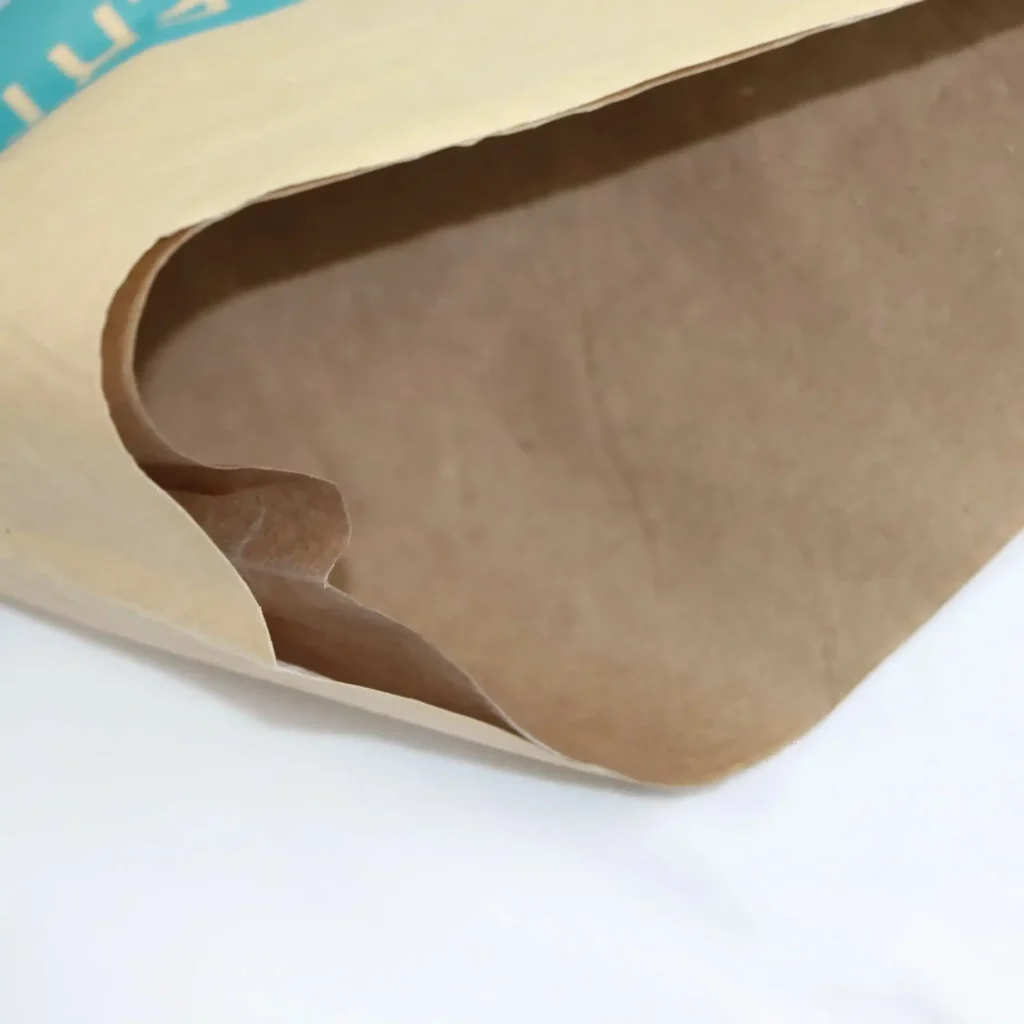
What are Multiwall Woven Bags?
Multiwall Woven Bags are composite sacks built by layering a woven polyolefin substrate—most commonly polypropylene (PP) and, in some routes, high‑density polyethylene (HDPE)—with one or more functional plies such as sack kraft paper, clear films, or dispersion‑coated papers. Each layer exists for a reason: the woven lattice contributes tensile efficiency and drop tolerance; paper confers print warmth and crease memory; films introduce scuff resistance and moisture control; coatings and tie layers make the stack behave as one structure under stress. In plant slang you will hear adjacent names: multiwall woven sacks, laminated woven poly bags, paper‑laminated woven sacks, block‑bottom woven valve bags, and hybrid multiwall sacks. However diverse the naming, the DNA is stable: a tape‑woven fabric backbone, purpose‑selected plies, engineered seams, and closures that match the physics of the filler and the roughness of the route.
Why this format, and why now? Supply chains in 2024–2025 demand what seems contradictory: higher line speeds but lower dust; lighter materials but stronger pallets; richer graphics but tighter hygiene; simpler end‑of‑life but stricter documentation. Multiwall Woven Bags sit at the pragmatic center of those tensions. The structure absorbs shocks, the face carries print, the seams keep fines inside, and the dossier—yes, the documentation—moves audits from weeks to days. Efficiency is not a slogan. It’s the ability to do these things at once, on purpose, without luck.
The materials of Multiwall Woven Bags
Designing Multiwall Woven Bags is purposeful layering, not guesswork. Every gram must earn its keep: drop survival per gram of fabric; moisture reduction per micron of film; line speed per millimeter of valve sleeve; legibility per pass of varnish. Below is a bill‑of‑materials map that ties properties to positions, and positions to costs.
1) Woven PP fabric — the structural backbone
Polymers are melted, cast as a sheet, slit into tapes (≈2.5–5.0 mm), drawn (≈4–7×), then woven on circular or flat looms into 70–140 g/m² fabrics. Orientation aligns chains, raising modulus and tensile while holding creep low at warehouse temperatures. In Multiwall Woven Bags, PP remains the default because it blends flex‑fatigue resistance with crease memory for crisp block‑bottoms.
- Where it goes: inner structural ply; mouth and base reinforcements.
- Cost levers: resin index, draw ratio (yield vs. split risk), loom uptime, gsm, UV packages.
2) Woven HDPE — the stiff alternative
Higher crystallinity yields higher modulus and lower elongation at break. HDPE bodies favor cold routes and dense chemistries (salts, minerals). Print often rides on film faces or primered coats. Process windows are narrower, so capability—and discipline—matter.
- Where it helps: shape retention, mono‑HDPE programs.
- Trade‑offs: draw sensitivity; greater split risk if gels or width CV% drift.
3) Paper plies — print warmth & microporosity
Sack kraft (70–110 g/m² per ply) provides tactile print, crease memory, and micro‑porosity that lets air evacuate during fast fills. Bleached grades enable retail‑adjacent aesthetics; unbleached favors rugged industrial charisma. Combined with coatings, paper faces give Multiwall Woven Bags brand presence without fragility.
4) Films & sealant skins — barrier, scuff, seal
BOPP (15–30 µm) carries high‑fidelity print and resists scuff; PE/CPP (10–30 µm) creates seal windows for pinch‑tops. Liners (LDPE/LLDPE 60–120 µm) add moisture control; EVOH coex shows up only when shelf‑life data demands oxygen barrier. Films add clarity and durability, but also end‑of‑life complexity—use with intent.
5) Lamination & tie systems — the invisible hinge
Extrusion lamination (PP/PE melt curtain ≈8–20 g/m²) or solvent‑free PU/water‑borne acrylic adhesive lamination creates a unified composite. Measure peel (ASTM F88/F88M), coatweight uniformity, curl, and residual solvent (if any). The lamination is invisible when it works—and unforgettable when it fails.
6) Coatings, primers, varnishes — small grams, big effects
Dispersion barriers lift KIT grease and damp WVTR while preserving repulpability; heat‑seal coats enable mono‑paper pinch seams; anti‑slip/anti‑scuff varnishes tame pallets and protect labels. Dyne stability and rub indices are the quiet determinants of customer complaints.
7) Valves, mouths, closures — where leaks live or die
Valve sleeves (paper/PP/PE; self‑closing or heat‑seal) must match nozzle geometry; open‑mouth options include pinch‑bottom, heat‑seal through a sealant face, or sewing with crepe tape. Hybrid seam assists (hot‑air or ultrasonic) close stitch paths and cut sifting on fine powders.
What are the features of Multiwall Woven Bags?
Features only matter when linked to outcomes operators track: run speed, pallet stability, dust loss, label legibility, audit friction. With that lens, the strengths of Multiwall Woven Bags become clear.
High‑speed, low‑dust filling
Microporous paper plies and micro‑perfs near the valve let entrained air out without carrying fines with it. Heat‑sealable valves shorten the path to a clean cube, especially for hygroscopic goods.
Brick‑like stacking
Block‑bottom geometry plus anti‑slip faces raise friction angles. Squares stack; cylinders roll. Crisp corners and stepped ends keep pallets square under braking and sway.
Strength‑to‑weight efficiency
Oriented tapes carry tensile and puncture loads; paper diffuses impact; films shield graphics. The composite resists shock without bloating grams.
Brand‑forward print
Water‑based flexo on paper faces provides warm, saturated color. Where photographic fidelity matters, BOPP faces plus varnish keep labels clean through the route.
Hygiene pathways
Compliant coatings, inks, and optional food‑grade liners let Multiwall Woven Bags handle ingredients and premixes under recognized hygiene systems.
Traceability, on‑pack proof
Large panels host QR codes that route to living dossiers—drawings, BoMs, test data—reducing audits from weeks to days.
What is the production process of Multiwall Woven Bags?
Conversion is choreography; small deviations cascade. The checkpoints below correlate most strongly with field performance.
- Tape extrusion & drawing. Melt PP/HDPE; cast sheet; slit; draw to target tensile/modulus; anneal for shrink stability. Controls: width/thickness CV%, draw ratio, gel count, surface finish for loom traction.
- Weaving & fabric QA. Interlace tapes on circular/flat looms; set pick density for gsm and permeability; map defects to predict seam outliers.
- Printing & surface prep. Print paper or film faces via CI/stack flexo or rotogravure; confirm dyne, cross‑hatch adhesion, register, wet‑rub indices, and odor where food lies adjacent.
- Lamination. Extrusion or adhesive lamination; measure peel (ASTM F88/F88M), coatweight uniformity, curl/flatness, residual solvent (if any).
- Tubing & valve insertion. Paste side seams to form tubes; insert valve sleeves to tight diameter/position tolerances; apply micro‑perfs near the valve to support de‑aeration.
- Bottoming & features. Create block/stepped‑end bases; apply anti‑slip coats, heat‑seal patches, reclose devices, and unit‑level codes; reinforce forklift/conveyor interfaces.
- QA & release. Dimensional checks; seam/bond pulls; filled‑bag drop tests; hygiene/migration dossiers for food‑adjacent SKUs; retained samples and CoAs tied to lots.
- If dyne is low, ink lifts and labels smudge: train viscosity control and re‑treat surfaces.
- If sleeve geometry drifts, dust complaints spike: hold diameter and concentricity bands, not just nominal values.
- If coatweight wanders, peel falls: add inline sensors and close the feedback loop to the lamination nip.
What is the application of Multiwall Woven Bags?
Selection logic starts with physics (particle size, bulk density, hygroscopicity), moves through line realities (filler type, de‑aeration, sealing), and ends with context (climate, storage time, retail vs. B2B).
- Cement, gypsum, minerals. Valve filling; tuned micro‑porosity; anti‑slip; mouth patches. In humid routes, thin PE faces or liners fight caking.
- Fertilizers and soil amendments. Abrasive granules and outdoor storage argue for UV‑stabilized tapes, robust faces, and optional liners in tropics.
- Food ingredients and milling. Flour, sugar, starches, premixes leverage compliant coatings and liners; bleached faces plus matte varnish deliver premium presence.
- Animal feed and pet nutrition. Grease resistance and durable print matter; reclose devices enter at small counts; block‑bottoms keep pallets neat.
- Chemicals and additives (non‑dangerous). Clean handling and label legibility dominate; antistatic liners and grounding practices where dust MIE concerns exist.
Efficient Multiwall Woven Bags Production — from buzzword to behavior
Efficiency begins on paper, lives in process capability, and shows up as fewer claims. To translate ambition into behavior, decompose the challenge into subsystems, measure the levers, and then synthesize a portfolio that avoids a forest of one‑off drawings.
Moisture‑only risks usually bow to dispersion‑coated papers or thin PE faces; true oxygen or aroma sensitivity justifies a liner—preferably form‑fit—with EVOH only when shelf‑life data demands it. Pallet stability improves more with crisp block‑bottoms and anti‑slip than with heavier plies. Seam upgrades reduce sifting better than tossing grams at the problem.
- Paper‑forward, repulpable: dispersion‑coated outer; heat‑seal inner coat; no films; for dry foods and light industrial.
- Hybrid paper//PE: thin in‑ply PE or liner for humid routes and abrasive minerals; optimized valve sleeves.
- Enhanced‑barrier lined: liner with optional EVOH for aroma‑sensitive goods; provide disassembly guidance.
Anchors auditors recognize: ISO 9001/14001 for systems; EN 15593 or FSSC 22000/ISO 22000 for hygiene; FDA 21 CFR 176.170 (paper), 177.1520 (olefin polymers), 175.105 (adhesives); EU 10/2011 + EN 1186 for plastic layers; ISO 7965‑2/ISO 2248 for drop tests; ASTM F88/F88M for peel; ASTM F1249/D3985 for barrier metrics when liners are specified.
Create per‑SKU dossiers (drawings, BoMs, test reports, migration declarations, hygiene certificates, environmental metrics). Print a QR on the face. When the evidence travels with the pack, approvals accelerate.
Capability‑driven downgauging removes grams from paper, films, and varnishes only after inline cameras and coatweight sensors show tight variation. Baffles in bulk formats increase cube efficiency; solvent‑free lamination trims oven energy and odor. Use a two‑column gate—€/1,000 and kg CO₂e/1,000—alongside performance metrics; approve when both improve or the risk is mitigated elsewhere (e.g., seam upgrade).
Print is a safety device as much as a brand asset. Clear pictograms reduce incidents; matte/gloss balance cuts scanner glare; easy‑open and reclose features reduce tool‑dependence. Standardize finish libraries (matte GU 20–40; gloss GU 70–90), rub indices, and iconography packs; validate after distribution simulation, not before.
Standards, identifiers, and test methods
A credible Multiwall Woven Bags program speaks the language of identifiers. They convert preference into proof, and proof into approvals.
- Management systems: ISO 9001 (quality), ISO 14001 (environment).
- Hygiene: EN 15593 or FSSC 22000 / ISO 22000.
- Food contact: FDA 21 CFR 176.170 (paper), 177.1520 (olefin polymers), 175.105 (adhesives); EU 10/2011 + EN 1186 (plastics).
- Mechanicals: ISO 7965‑2 (filled sacks drop); ISO 2248 (transport packages vertical impact); ASTM F88/F88M (peel).
- Barrier metrics: ASTM F1249 (WVTR); ASTM D3985 (OTR) when liners are specified.
Technical tables for Multiwall Woven Bags
Performance targets: for moisture‑sensitive goods, WVTR ≤ 5–10 g/m²·day (ASTM F1249 on the relevant film/liner); peel > 2.0 N/15 mm (ASTM F88/F88M) on key laminations; drop survival with no rupture at the defined mass and height (ISO 7965‑2/ISO 2248); and wet‑rub legibility on label zones after distribution simulation.
Worked scenarios — turning requirements into builds
Scenario A — 25 kg white cement (export)
Objective: clean rotary valve fill, low dust, square pallets. Structure: 3‑ply unbleached kraft laminated to 100 g/m² PP fabric; block‑bottom valve; anti‑slip exterior; micro‑perfs near valve. Why it works: paper diffuses impact; PP carries drops; micro‑porosity maintains line speed; anti‑slip secures stacks.
Scenario B — 10 kg strong flour (retail food‑adjacent)
Objective: six‑month moisture control, premium print, food‑compliant pathway. Structure: 2‑ply bleached outer with repulpable dispersion barrier + heat‑seal coat; laminated to 85 g/m² PP fabric; pasted stepped‑end bottom; self‑closing valve; low‑migration inks; hygiene certificate. Why it works: repulpable barrier delivers moisture holdout without films; neat block bottoms provide shelf presence.
Scenario C — 15 kg dry pet kibble (grease/aroma)
Objective: grease resistance, durable print, friendly handling. Structure: 2‑ply kraft with selective BOPP face; 95 g/m² PP fabric; 80 µm LDPE liner; block bottom; reclose device for small counts. Why it works: BOPP elevates branding; liner secures barrier; hybrid stack disclosed with disassembly guidance.
Scenario D — 20 kg polymer additive masterbatch
Objective: clean discharge, legible safety labeling, minimal fines. Structure: 90 g/m² PP fabric; printable PE sealant face; LDPE form‑fit liner; pinch‑bottom; matte varnish on label panels. Why it works: liner provides sealing and cleanliness; PE face enables pinch; matte reduces glare for scanners.
From efficient to repeatable — a plant playbook
- Define physics early. Particle size, bulk density, hygroscopicity, cohesion/abrasiveness, MIE if dust is combustible.
- Map the line. Filler type (gravity, auger, pneumatic), target rate, de‑aeration, sealing, pallet pattern.
- Choose the platform. Paper‑forward repulpable; hybrid paper//PE; enhanced‑barrier lined—decide by data, not habit.
- Engineer the seam. Stitch architecture + assist (hot‑air/ultrasonic); anti‑sift tape; acceptance bands for seam tensile/leakage.
- Demand the stack. Layer gauges/coatweights; valve geometry; anti‑slip; print/finish specs; hygiene requirements.
- Run the pilot. Measure fill time, dust loss, discharge completeness, pallet stability, scuffing, scanner readability; capture photos/videos.
- Gate by numbers. Use drop/seam/peel/CoF targets and WVTR/OTR where relevant; approve or iterate.
- Freeze drawings & BoMs. Change control protects trust; QR‑linked dossiers keep evidence at hand.
- Instrument and improve. Inline cameras and coatweight sensors justify downgauging; routine rub and seam pulls keep surprises off trucks.
Risk register & countermeasures
- Valve dust leakage. Tighten sleeve tolerances; trial self‑closing flaps; specify heat‑sealable sleeves; tune micro‑perfs; add stitch + thermal assist.
- Pallet slip/collapse. Specify anti‑slip varnish or micro‑emboss; verify CoF on filled sacks; optimize pallet patterns and wrap settings.
- Delamination or seam failure. Control glue temperature and dwell; validate coatweights; routine peel/shear tests; needle tracking and metal detection for food/feed shipments.
- Print scuffing/illegibility. Protective varnish in high‑rub zones; wet‑rub validation; safe‑zone artwork near forklift interfaces.
- Food‑contact non‑conformance. Maintain substance registers; migration tests tied to lots; keep hygiene certificates current.
- Greenwashing on recyclability. Scope claims by region; disclose liner removal; avoid ambiguous logos.
Strategy outlook — 2025 and beyond
When engineering discipline meets route reality, Multiwall Woven Bags shift from commodity to controlled component. Platform portfolios, instrumented processes, capability‑driven downgauging, safety‑grade printing, and QR‑linked dossiers together turn “efficient” into “advantageous.” The result is fewer claims, faster lines, safer handling, and lower CO₂ per tonne moved—exactly what the market is asking for, all at once.
In the ever-evolving packaging industry, the demand for durable and versatile packaging solutions has surged. Multiwall woven bags have emerged as a key player in this market due to their robust construction, flexibility, and wide range of applications. These bags are increasingly preferred across various industries, including agriculture, chemicals, construction, and food products, where durability and reliability are paramount. The global competition in the production of these bags is intense, with companies constantly innovating to meet the high standards of quality and efficiency required by the market.
VidePak, with its extensive experience and commitment to excellence, stands out in this competitive landscape. Leveraging over three decades of industry knowledge, the company has established itself as a leader in the production of multiwall woven bags. This success can be attributed not only to their superior product quality but also to their strategic investment in advanced technology. Central to this technological advancement is the adoption of the full range of Starlinger equipment.
The Growing Demand for Multiwall Woven Bags
As the packaging industry expands, the demand for multiwall woven bags continues to rise. These bags are constructed with multiple layers of woven polypropylene (PP) or other materials, providing superior strength and durability compared to single-layer bags. The multi-layer construction allows these bags to withstand the rigors of handling, storage, and transportation, making them ideal for heavy-duty applications. Additionally, the ability to customize these bags, including options for lamination and multi-color printing, adds to their versatility, making them suitable for a wide range of products.
However, meeting the growing demand for multiwall woven bags is not without its challenges. The production process is complex and requires high levels of precision to ensure consistent quality. Companies must also navigate the pressures of cost efficiency, as customers increasingly seek high-quality products at competitive prices. In this context, the importance of advanced manufacturing technology cannot be overstated.
VidePak’s Technological Edge
VidePak’s commitment to quality and efficiency is exemplified by its use of Starlinger equipment, renowned globally for its excellence in manufacturing machinery for woven plastic bags. The company’s production line includes 150 circular looms, 16 extrusion lines, 32 lamination machines, and 16 printing machines, all sourced from Starlinger. This full suite of equipment provides VidePak with a significant advantage over competitors who may rely on a mix of older and newer machinery or even manual processes in some stages of production.
One of the standout features of the Starlinger equipment is its high level of automation. Automation is a crucial factor in modern manufacturing as it significantly reduces human error, enhances consistency, and speeds up production. In the context of multiwall woven bags, where precision is key to maintaining the structural integrity of the bags, automated processes ensure that each bag meets the stringent quality standards that VidePak is known for.
The automation capabilities of Starlinger machines are complemented by their impressive production speeds. VidePak’s lines are capable of producing over 200 pieces per minute, a rate that is among the highest in the industry. This rapid production capability allows VidePak to meet large orders quickly without compromising on quality. In comparison, many competitors, especially those in developing markets, struggle to achieve similar speeds, often relying on less efficient equipment or manual labor, which can lead to inconsistencies and slower turnaround times.
Impact on Production Efficiency
The combination of high-speed production and automation at VidePak translates into unparalleled efficiency. The interconnected nature of the equipment allows for seamless transitions between different stages of the production process. For instance, the extrusion lines work in perfect harmony with the circular looms, ensuring a smooth flow of materials with minimal downtime. This efficiency is further enhanced by the multi-machine linkage capability of the Starlinger equipment, which reduces the need for manual intervention and allows for real-time adjustments to be made during production.
This level of efficiency is critical in maintaining VidePak’s competitive edge. By minimizing waste, reducing labor costs, and maximizing output, the company is able to offer high-quality multiwall woven bags at competitive prices. In contrast, competitors who have not invested in such advanced technology often face higher production costs, which can result in higher prices for end customers or lower profit margins. This technological disparity is a significant factor in the market dynamics of the packaging industry, where cost efficiency is as crucial as product quality.
Market Position and Future Prospects
VidePak’s strategic investment in Starlinger technology has not only enhanced its production capabilities but also strengthened its position in the global market. The company’s ability to produce high-quality multiwall woven bags at scale allows it to serve a diverse range of markets, including North America, Europe, the Middle East, Southeast Asia, South America, and Africa. This global reach is a testament to the reliability and quality of VidePak’s products, which are trusted by customers around the world.
In comparison, many other manufacturers of multiwall woven bags face challenges in scaling their operations to meet global demand. Those relying on less advanced equipment often struggle with maintaining consistent quality across large volumes, which can limit their ability to compete in international markets. Furthermore, the trend towards sustainability and eco-friendly packaging solutions is pushing companies to innovate in materials and production processes. VidePak is well-positioned to adapt to these trends, given its state-of-the-art equipment and commitment to continuous improvement.
Looking ahead, VidePak is poised to continue its growth in the multiwall woven bags market. The company’s focus on quality, efficiency, and customer satisfaction will drive its expansion into new markets and applications. Additionally, as sustainability becomes an increasingly important consideration for consumers and regulators alike, VidePak’s ability to offer customized, eco-friendly packaging solutions will be a key differentiator in the competitive landscape.
Conclusion
In the competitive world of multiwall woven bags, success depends on a company’s ability to deliver high-quality products efficiently and at scale. VidePak’s investment in Starlinger equipment has given it a significant advantage in this regard, enabling the company to produce large volumes of superior bags at competitive prices. As the market continues to grow and evolve, VidePak’s commitment to innovation and excellence will ensure its continued leadership in the industry, setting a high standard for others to follow.