
What Are FIBC Bags?
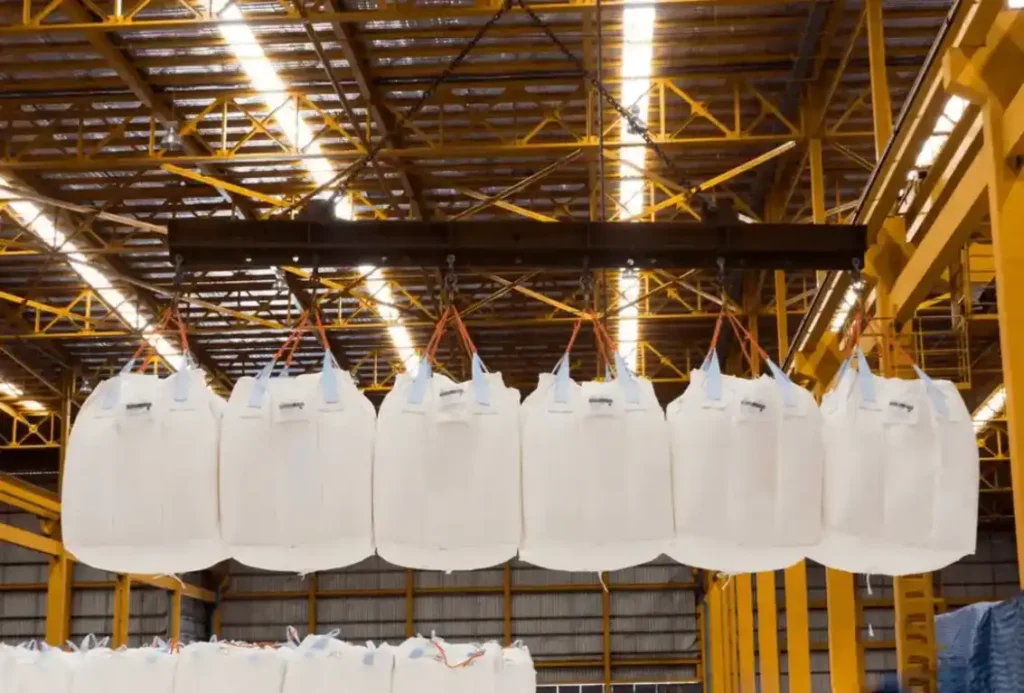
When practitioners talk about FIBC Bags, they mean flexible intermediate bulk containers: soft-sided, heavy-duty packaging engineered to move powders, granulates, and pellets in unit loads from roughly 500 kg up to 2,000 kg. On the shop floor they are called bulk bags, big bags, jumbo sacks, super sacks, one‑ton bags, soft IBCs, or—when certified for dangerous goods—members of the 13H family. The common DNA is simple but powerful: a woven polypropylene body, lifting loops designed for top‑lift handling by forklift or crane, and conversion options (spouts, duffels, baffles, liners) that tune the bag to product and route. The variant explored here adds two levers that matter in 2024–2025: polyethylene (PE) linings for barrier and hygiene, and pearlized coatings—often pearlized BOPP films—for aesthetics, opacity, and surface control.
Why this format? Because it collapses when empty, cubes when filled, and survives what warehouses actually do, not what brochures imagine. FIBC Bags are lighter than drums, more space‑efficient than rigid totes, and less housekeeping‑intensive than armies of 25 kg sacks. They bridge silos and ports, mills and mixers, with a single lifting geometry and a repeatable testing language. Yet, as always, the devil lives in details: a liner cuff that’s 20 mm too short, an over‑glossed film face, or loops stitched off‑spec—all can turn a great idea into a messy shift. This article puts those details under a microscope and then rebuilds a coherent specification that real lines can run.
The Materials of FIBC Bags
A bulk bag is not a monolith; it is a compact ecosystem. The woven fabric carries the load, the loops transmit forces to the handling equipment, the liner polices moisture and contamination, and the coatings govern print quality and friction. Threads, patches, baffles, and spouts knit the ecosystem together. Understanding each ingredient—what it does, why it matters, how it costs—abolishes guesswork and turns purchasing into engineering.
Woven polypropylene fabric (structural backbone)
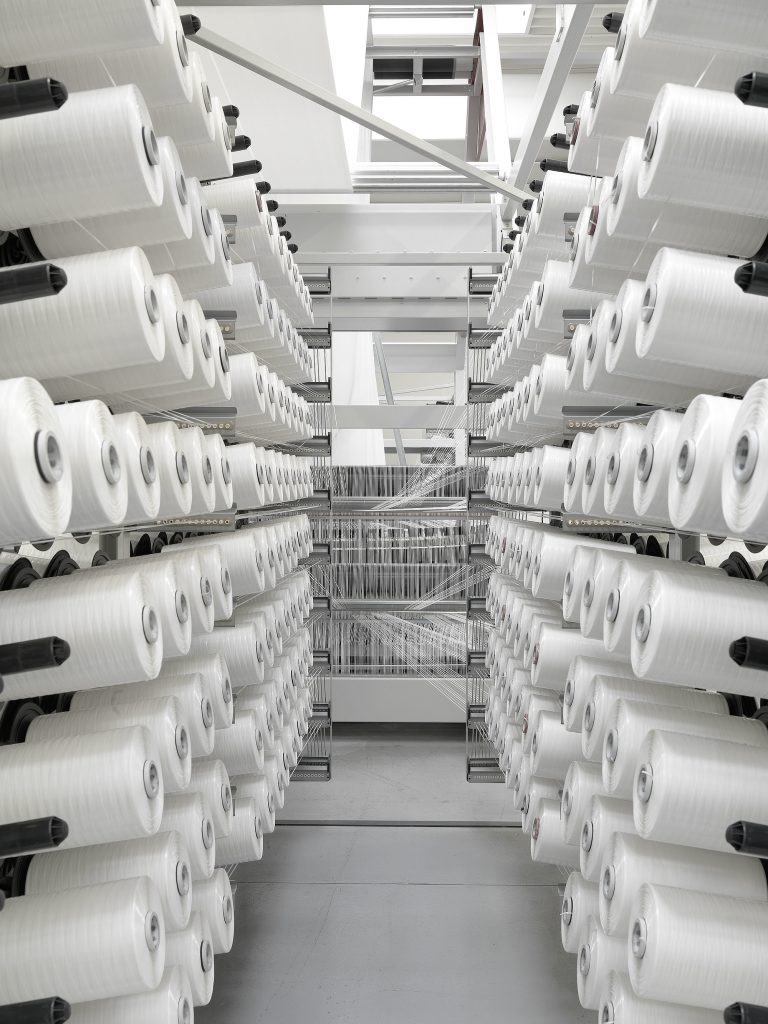
Isotactic polypropylene (PP) is melted, cast as a thin film, slit into tapes, and drawn to align polymer chains. Orientation raises tensile strength and lowers creep; weaving those tapes into flat or circular fabric creates the cross‑hatched lattice that resists tear propagation. Typical base fabric weights run 160–240 g/m² for single‑trip 5:1 safety‑factor designs, rising to 260–320 g/m² for multi‑trip programs. Mesh (ends × picks per 10 cm) and draw ratio tune not only strength but the “knuckle” profile, which later affects lamination quality and seam life. Why PP? Density near 0.90 g/cc keeps tare light; chemical inertness tolerates salts and alkalis; fatigue resistance shows up in cyclic top‑lift tests. Cost follows resin markets and GSM, so right‑weighting with lift/stack data pays more than padding every spec.
Lifting architecture (how load exits the bag)
Four standard patterns dominate: corner loops, cross‑corner loops (friendly to tubular bodies), tunnel loops (fork pockets for one‑man handling), and single/two‑loop slings for high‑speed loading. Loop webbing is woven from PP tapes; geometry, stitch density, and reinforcement patches govern whether the bag’s safe working load (SWL) survives the real world. Proof‑load tests verify that forces travel along designed paths—through loops and patches—not via fabric tears at corners.
PE linings (materials, fits, and functions)
Here “PE” generally means LDPE or LLDPE, with occasional HDPE blends for stiffness or co‑extruded EVOH/PA for oxygen barrier. Two typologies prevail. Loose liners drop into the shell, are quick to insert, and are tolerant of dimensional variation. Form‑fit liners are fabricated to the body geometry, reduce folds and abrasion, maintain cube, and improve spout engagement—ideal for fines, long dwell, or hygienic applications. Gauges range roughly 50–120 µm for standard duties and 120–200 µm for abrasive powders or tropical routes. Additives tailor behavior: antistatic packages for explosive dust atmospheres; slip/antiblock to tune coefficient of friction (COF); UV stabilizers where outdoor dwell is expected.
Pearlized coatings and laminates (appearance that also works)
“Pearlized” most often refers to cavitated or TiO₂‑pigmented BOPP films laminated to the woven shell using a PP‑rich tie layer. Micro‑voids scatter light and drop film density; the result is a bright, opaque, pearl‑white canvas for branding that also hides fabric knuckle telegraphing. Benefits exceed beauty: better barcode contrast, higher print fidelity, scuff resistance, and surface tuning via matte OPVs or micro‑texture bands to keep pallets stable.
Threads, closures, and accessories
Threads are PP or polyester; lubricants should be food‑safe on food/feed lines. Accessories include fill and discharge spouts (plain, conical, or with iris valves), duffel tops (fast filling when dust is managed), baffles (interior panels that hold cube), document pouches (antistatic when needed), and dust‑proof seam fillers for stitched paths. Every accessory helps one KPI and threatens another: duffels improve speed but raise dust‑control obligations; baffles improve stacking but add internal seams that demand clean conversion.
What Are the Features of FIBC Bags?
Drawn PP lattices deliver 1,000 kg SWL in packages often weighing 2.5–3.5 kg—physics that pays on freight and handling.
Loose liners for coarse product; form‑fit for fines, long dwell, or hygiene. Add EVOH or PA where oxygen matters; tune antistat for safety.
Pearlized films lift brand presence and hide knuckle texture; matte traction lanes keep pallets honest under wrap.
Spout fit, liner cuff length, COF windows, and layflat tolerances turn line speed from aspiration into habit.
Type A/B/C/D classification is the difference between dust and danger; choose bag and liner as a pair.
Roll and job IDs, 2D codes, and retention samples make audits shorter and investigations faster.
What Is the Production Process of FIBC Bags?
- Raw material approval — Qualify PP and PE grades, masterbatches (slip, antistat, UV), and accessory components with documentation that matches intended markets and uses.
- Extrusion & drawing — Cast film → slit into tapes → draw to target ratios; orientation sets tensile and creep. Dosage errors here echo later as pallet slide (over‑slip) or dust cling (under‑antistat).
- Weaving — Ends/picks per 10 cm and GSM govern strength and knuckle profile; consistency favors lamination bonds and seam life.
- Lamination/coating — Extrusion‑coat for dust control and heat sealing or laminate pearlized BOPP with a PP tie. Verify bond strength, dyne (≥38), and COF after OPV.
- Printing/finishing — Place high‑definition art and machine‑readables on the film face; use matte OPVs or micro‑textures in wrap zones; keep curing/drying records for odour/taint control.
- Cutting & conversion — Hot‑knife bodies, attach loops with specified carriage stitches, install baffles, set spouts/duffels with dust‑proof seam practices. Fabricate liners (loose or form‑fit) with cuff lengths tuned to closure.
- Hygiene & inspection — Tool accountability, filtered air, metal detection on food/feed lines; protective wrapping to ship clean bags as clean bags.
- Release testing — Lift, seam pull, stack, COF, dyne; WVTR/OTR where claimed; electrostatic classification where needed; visual AQL.
What Is the Application of FIBC Bags?
- Food & feed ingredients — lactose, whey, flours, starches, proteins, cereals. Liner selection and hygiene controls dominate; pearlized faces deliver light‑block and consistent codes.
- Minerals & construction — cement additives, silica, calcium carbonate, barite. Abrasion and dust control rule; baffles help cube and stacking.
- Chemicals & polymers — resins, masterbatches, catalysts (UN and non‑UN). Static classification and UN codes dictate loop, seam, and marking details.
- Fertilizers & salts — hygroscopic goods prefer heavier liners and sealed spouts; pearlized film resists yellowing and improves print contrast.
- Seeds & agriculture — UV‑stabilized shells, baffles for stack stability, and premium print for brand security.
Turning the Title into a Design Brief
“Enhancing Durability and Appearance with PE Linings and Pearlized Coatings” reads like marketing; we translate it into tests. Durability becomes cyclic top‑lift, corner drop, transport scuff, and stack dwell under humidity. Appearance becomes barcode grade after vibration, ΔE tolerances on brand zones, and scratch resistance in wrap contact areas. Barrier becomes WVTR/OTR at route‑matching conditions and liner seal strength at the cuff. Safety becomes electrostatic classification plus liner compatibility, verified on the real line.
Reduce internal abrasion via form‑fit liners; select GSM from lift/stack math; add matte traction in wrap zones; reinforce loops where baffles concentrate load.
Pearlized film for opacity; high‑contrast print zones; scuff‑resistant varnish over codes; specify minimum barcode grade at goods‑out.
Systematic Analysis and Synthesis
Break the bag into subsystems; set targets; verify; then reintegrate. That is how FIBC Bags stop being a commodity and start acting like a dependable machine.
Inputs: GSM/mesh/draw ratios; loop geometry; seam design; baffles. Risks: loop pull‑out, seam rip, zipper tear, creep. Controls: SWL×SF top‑lift, seam pull, corner drop, stack dwell.
Inputs: liner type/gauge, cuff, spout closures, film face & OPV. Risks: caking, oxygen ingress, sifting, odour. Controls: WVTR/OTR at route conditions; seal strength; sift trials with talc.
Inputs: Type A/B/C/D, earthing (Type C), liner class. Risks: incendive discharges. Controls: resistance/decay tests and grounding SOPs.
Inputs: COF, spout diameters, duffel geometry, layflat. Risks: mis‑clamps, jaw slip, pallet slide, barcode scuff. Controls: COF panels; clamp tests; slide angles; barcode grades.
Inputs: clean areas, filtered air, metal detection, protective wrap. Risks: threads, metal, insects, oils. Controls: detector challenges; sanitation logs; lube controls.
Inputs: job/roll IDs, 2D codes, ERP mapping. Risks: incomplete recalls, expired certs. Controls: mock traces; certificate trackers; retention samples.
Standards, Certifications, and Technical Identifiers (2024–2025)
Numbers matter because auditors, customs officers, and quality managers speak in numbers. The following identifiers are the ones a robust specification for FIBC Bags should cite.
| Identifier | What it covers | Why it matters |
|---|---|---|
| ISO 21898:2024 | FIBCs for non‑dangerous goods: materials, construction, type tests | Aligns lift/stack methods with latest edition; avoid legacy mismatches |
| UN 13H1–13H4 | Dangerous goods FIBCs (coated/uncoated; with/without liner) | Triggers drop/topple/tear/stack tests and marking |
| IEC 61340‑4‑4 | Electrostatic classification Type A/B/C/D and liner rules | Safety in explosive atmospheres; liner compatibility |
| BRCGS Packaging Issue 7 | Packaging GMP scheme; audits from Apr 28, 2025 | Recognized by food brands; elevates quality culture and CAPA |
| FSSC 22000 Version 6 | Packaging scope under ISO 22000; upgrade window ended Mar 31, 2025 | Many multinationals expect V6 now; list certificate IDs |
| ISO 22002‑4:2025 | PRPs for food/feed packaging manufacturing | Anchors sanitation, foreign‑matter, and facility controls |
Practitioner’s Specification Template
Keyword product: FIBC Bags (with PE linings and pearlized coatings)
- Body fabric: 180–240 g/m² (single‑trip), 260–320 g/m² (multi‑trip); mesh tuned to angle of repose and abrasion index.
- Lifting: four cross‑corner loops 25–35 cm; loop GSM ≥ body GSM; proof‑load at SWL×SF.
- Pearlized face: BOPP 25–40 µm cavitated white; PP tie; dyne ≥38; matte traction lanes in wrap zones.
- Liner: LDPE/LLDPE 70–120 µm; antistatic as required; form‑fit for fines/long dwell; cuff length matched to closure.
- Closures: fill spout 35–50 cm; discharge spout with iris; document pouch antistatic; dust‑proof seams in stitched paths.
- Performance targets: SWL & SF as agreed; ISO 21898:2024 top‑lift & stack; bag/bag COF 0.35–0.55; WVTR/OTR by route; barcode grade ≥ C post‑transport; static class & liner compatibility documented.
- Compliance & docs: certificate IDs (BRCGS Issue 7 or FSSC V6); DoC for food contact where relevant; job/roll IDs and retention samples.
Technical Tables — Options, QC, and Cost Levers
| Use case | Body GSM | Pearlized film | Liner | Lifting/closures |
|---|---|---|---|---|
| Whey powder (food) | 200 | BOPP 30 µm, cavitated white | Form‑fit LDPE 90–110 µm, antistatic | 4 cross‑corner loops; fill + discharge spouts with iris |
| Sugar/salt (coastal) | 220 | BOPP 35 µm, pearlized + matte lanes | LDPE 120 µm, antistatic | Sewn spout + liner heat seal; dust‑proof seams |
| Polymer pellets | 200 | BOPP 25–30 µm, gloss | None or loose LDPE 70 µm | Tunnel loops; plain spout |
| Minerals (abrasive) | 240–280 | BOPP 30 µm, matte | Form‑fit LLDPE 120–150 µm | Reinforced loops; baffles; over‑taped seams |
| QC item | Method/target | Why it matters |
|---|---|---|
| Cyclic top‑lift | ISO 21898:2024 at SWL; pass | Confirms load path integrity |
| Stack compression | Height/dwell per spec; pass | Predicts warehouse behavior |
| COF (bag/bag; bag/film) | 0.35–0.55; 0.25–0.40 | Line speed vs pallet slide |
| Dyne (print face) | ≥38 dynes | Ink anchorage; barcode clarity |
| WVTR/OTR (if claimed) | Route‑matching conditions | Moisture/oxygen control |
| Static classification | Per IEC 61340‑4‑4; liner compatible | Safety in explosive atmospheres |
| Cost lever | Effect | Practical note |
|---|---|---|
| Fabric GSM | ↑ with GSM | Right‑weight via lift/stack data; avoid fear‑driven overspec |
| Pearlized film gauge | ↑ with µm | 30 µm often balances opacity + print + cost |
| Liner gauge/type | ↑ with µm & barrier layers | Form‑fit pays back via cube and abrasion control |
| Baffles | ↑ material + sewing | Often net‑positive via stack yield and freight efficiency |
Troubleshooting Atlas — Symptom ↔ Cause ↔ Fix
| Symptom | Likely causes | Practical fixes |
|---|---|---|
| Sifting at seams | Stitch tunnels; short liner cuff; poor spout clamp | Add dust‑proof seam fillers; lengthen cuff; tune extraction and clamp force |
| Pallet sliding | Glossy face; high slip dosage; wrap pattern | Matte traction lanes; retune additives; adjust wrap turns and patterns |
| Barcode misreads | Low dyne; ink spread; scuff | Re‑treat surface; change anilox/plates; specify scuff‑resistant OPV and grade ≥ C |
| Liner abrasion holes | Angular particles; loose folds | Switch to form‑fit; raise gauge; add corner protection |
Worked Examples — From Requirement to Spec
200 g/m² body; 30 µm pearlized BOPP with matte lanes; form‑fit LDPE 100 µm antistatic; 4 cross‑corner loops; fill spout with sleeve; discharge spout with iris. Validate WVTR at 38 °C/90% RH, odour panel, cyclic lift, stack dwell, and COF.
240 g/m² body with baffles; 30 µm pearlized matte; form‑fit LLDPE 120 µm; reinforced loops; over‑taped baffle seams. Validate seam wear, corner drop, discharge ergonomics, stack dwell.
200 g/m² body with antistatic masterbatch; pearlized BOPP 25–30 µm; optional loose 70 µm antistatic liner; tunnel loops; matte traction lanes. Validate static decay, incline conveyor test, barcode grade, bag/bag COF.
ROI and Changeover Economics
Suppose a plant runs 1,200 bags/hour of starch. Changeovers chew twelve minutes four times per shift; rejects sit at 1.2% (mostly dust or seal issues); housekeeping takes half an hour. After migrating to right‑weighted FIBC Bags with splice‑ready rollstock and form‑fit liners: 1,350 bags/hour; changeovers at five minutes; rejects at 0.6%; housekeeping shrinks to a quick sweep. Material cost per thousand rises modestly, but OEE gains, lower scrap, fewer complaints, and shorter audits generally overwhelm the premium by the end of the quarter.
Implementation Checklist (One Internal Link)
- Scope explicitly names FIBC Bags and lists jurisdictions + intended conditions of use.
- Fix construction: body GSM/mesh; pearlized face type/gauge; liner presence/gauge; loop geometry; baffles; spout styles.
- Lock machine windows: COF bands (bag/bag and bag/film); dyne ≥38 before print; layflat and panel squareness; spout diameters and cuff lengths.
- Assemble documents: specification with layers/additives; certificate IDs (BRCGS Issue 7 or FSSC V6); Declaration of Compliance where relevant; job/roll IDs; retention samples.
- Validate in reality: top‑lift, seam pull, stack dwell, WVTR/OTR (if claimed), barcode grade after vibration, pallet slide tests.
- Define change control: new ink set, masterbatch, or resin lot → mini‑validation before scale‑up.
- What Are FIBC Bags?
- The Materials of FIBC Bags
- What Are the Features of FIBC Bags?
- What Is the Production Process of FIBC Bags?
- What Is the Application of FIBC Bags?
- Turning the Title into a Design Brief
- Systematic Analysis and Synthesis
- Standards, Certifications, and Technical Identifiers (2024–2025)
- Practitioner’s Specification Template
- Technical Tables — Options, QC, and Cost Levers
- Troubleshooting Atlas — Symptom ↔ Cause ↔ Fix
- Worked Examples — From Requirement to Spec
- ROI and Changeover Economics
- Implementation Checklist (One Internal Link)
- 1. Raw Material Quality Control: The Foundation of Durability
- 2. PE Linings and Pearlized Coatings: Technical Innovations
- 3. Performance Metrics and Customization Parameters
- 4. VidePak’s Competitive Edge: Starlinger Technology
- 5. Market Trends and Sustainability Alignment
- FAQs
- 6. Case Study: Transforming Chemical Logistics in India
“Why are PE linings and pearlized coatings critical for modern FIBC bags in industries ranging from chemicals to agriculture?”
The answer lies in three transformative benefits: unparalleled moisture resistance, enhanced mechanical strength, and elevated brand visibility through aesthetic customization. For VidePak, a global leader in woven bag manufacturing, these innovations are not just technical upgrades—they represent a strategic shift toward solving $2.3 billion in annual losses caused by degraded bulk packaging in humid environments (FMI, 2023).
1. Raw Material Quality Control: The Foundation of Durability
1.1 Supplier Vetting and ISO Compliance
VidePak’s FIBC bags begin with rigorous supplier audits. Partners like BASF and Sinopec are selected based on ISO 9001 certification, production scalability, and alignment with ASTM D5264 tensile strength standards. For instance, a 2024 audit of a Chinese PP resin supplier revealed a 98% compliance rate with EN 15507:2020 chemical resistance benchmarks, ensuring raw material consistency.
1.2 Long-Term Partnerships with Premium Resin Suppliers
By securing multi-year contracts with industry giants, VidePak locks in prices 15–20% below spot markets. A case study with YPC (Yangzi Petrochemical) demonstrated that stabilized resin costs enabled VidePak to offer FIBC bags at $1.25/unit for 1,000+ MT orders—a 12% cost advantage over competitors.
1.3 Incoming Material Testing Protocols
Starlinger’s extrusion lines are fed only with resins passing a 7-point inspection:
- Melt Flow Index (MFI): 4–8 g/10 min (ASTM D1238).
- Tensile Strength: ≥25 N/mm² (ISO 527-2).
- UV Stability: ≤5% degradation after 500 hrs of QUV testing.
Data from VidePak’s QMS shows a 99.8% pass rate in 2024, reducing production delays by 30%.
2. PE Linings and Pearlized Coatings: Technical Innovations
2.1 PE Liners: Moisture Barrier Engineering
VidePak’s 80–120 µm PE liners block 99.9% of moisture ingress, critical for hygroscopic materials like fertilizers. In a 2023 trial with a German agrochemical firm, PE-lined FIBC bags reduced clumping in urea granules by 73% compared to unlined counterparts.
2.2 Pearlized Coatings: Aesthetic and Functional Synergy
Using co-extrusion technology, VidePak applies珠光膜 (pearlescent film) coatings that reflect 40% of UV radiation while achieving a gloss level of 85 GU (ISO 2813). This dual functionality slogs solar heat buildup by 22°C, preserving temperature-sensitive pharmaceuticals during transit.
3. Performance Metrics and Customization Parameters
Tailoring FIBC bags to application-specific needs requires balancing six key factors:
| Parameter | Function | VidePak’s Range |
|---|---|---|
| Liner Thickness | Moisture resistance vs. flexibility | 80–200 µm |
| Coating Type | Pearlescent (branding) vs. matte (UV defense) | BOPP/PE blends |
| Fabric Grammage | Load capacity (500–2,000 kg) | 150–220 g/m² |
| Seam Design | Heat-sealed (waterproof) vs. stitched | Ultrasonic sealing (≤0.2mm gaps) |
4. VidePak’s Competitive Edge: Starlinger Technology
With 30+ lamination machines and 16 extrusion lines, VidePak achieves a 48-hour turnaround for custom orders. A 2024 project for a US pet food brand involved producing 500,000 pearlized FIBC bags (1,500 kg capacity) with QR-code-enabled traceability—a feat enabled by modular Starlinger systems.
5. Market Trends and Sustainability Alignment
The global FIBC market is projected to grow at 5.2% CAGR (2024–2030), driven by demand for USDA/FDA-compliant food-grade bags. VidePak’s recyclable PE/PP blends reduce landfill waste by 60%, aligning with EU Circular Economy Package targets.
FAQs
Q1: How long do PE liners retain moisture resistance?
A: VidePak’s liners maintain <0.5% water vapor transmission for 24 months—3x longer than industry averages.
Q2: Can pearlized coatings withstand abrasive environments?
A: Yes, our BOPP/PE hybrid coatings score 4H on the pencil hardness scale (ASTM D3363). Explore advanced abrasion-resistant solutions.
Q3: What’s the ROI of upgrading to PE-lined FIBC bags?
A: A 2024 study showed a 22% reduction in product loss for Brazilian coffee exporters, yielding $18/MT savings.
6. Case Study: Transforming Chemical Logistics in India
A Mumbai-based pesticide manufacturer reduced repackaging costs by 40% after adopting VidePak’s FIBC bags with 150 µm PE liners and anti-static pearlized coatings. The bags’ 200 g/m² fabric and 8 N/mm² seam strength withstood monsoonal conditions during 3,000 km rail transport.
For industries requiring extreme chemical resistance, consider VidePak’s PE-coated valve bags, engineered for sulfuric acid transport with ≤0.1% permeability.
Conclusion
In the $12.8 billion FIBC market, VidePak’s fusion of Austrian engineering, raw material mastery, and aesthetic innovation redefines bulk packaging. As CEO Ray states: “Every bag we produce isn’t just a container—it’s a commitment to preserving value from factory to field.” By marrying durability with design, VidePak empowers clients to cut losses, boost branding, and lead the sustainability charge.