
Orientation, Intent, and How to Read This Guide on Square Bottom Valve Bags
This reimagined guide uses a hybrid Markdown + HTML layout so dense engineering content can be scanned quickly and then studied in depth. The focal point is singular and sustained: why Square Bottom Valve Bags have become a preferred packaging platform for construction powders in 2024–2025, and how to specify, build, test, and deploy them without ambiguity. The narrative is deliberately practical—linking materials to line speed, geometry to pallet safety, and process control to the real cost of defects. It replaces vague claims with mechanisms, slogans with measurable targets, and jargon with settings you can adjust on actual machinery.
Callout — Why this matters: Construction packaging faces simultaneous pressures: lower tare mass, cleaner fills, safer pallets, and credible design-for-recycling intent. Square Bottom Valve Bags respond by combining a self-filling valve with a cubic, block-style base that produces brick-like stacks. Whether built from multi-wall paper or woven polypropylene, the format enables fast dosing, controlled de-aeration, reduced sifting, and reliable transport posture.
The structure that follows answers the questions practitioners actually ask. What are Square Bottom Valve Bags and what else are they called? What materials build the performance—and what do those choices cost? What features matter in the field? How is the bag manufactured end to end—from incoming lots to shipped pallets? Where do the applications cluster in the construction ecosystem? How does a converter such as VidePak demonstrate repeatable quality using European equipment pedigrees? And finally, when faced with the title’s theme—packaging applications—how do we reason from first principles to a stable, testable specification?
What Are Square Bottom Valve Bags?
Square Bottom Valve Bags are industrial sacks with a small sleeve—called a valve—integrated near one corner (typically the top). During filling, an automated spout enters this sleeve and dispenses powder or granulate; once the target weight is reached and the bag is released, the valve closes by geometry and friction or by a self-sealing insert. Because the base is formed as a square or block bottom, the filled bag stands upright and packs into neat, stable columns. The result is rapid, tidy, low-dust dosing without a separate sewing step—one reason the format dominates cement, dry mortar, gypsum, tile adhesive, and grout supply chains.
Procurement lists and plant-floor notes often use alternate names that describe format or substrate more than a different concept. Common aliases for Square Bottom Valve Bags include:
- Block-bottom valve sacks
- Cross-bottom valve sacks
- Pasted valve sacks (multi-wall paper)
- Pinch-bottom valve bags (paper)
- ADSTAR-style woven polypropylene valve sacks
- Woven PP valve bags
- Self-closing valve sacks
Reader’s hint: Expect to encounter the keyword Square Bottom Valve Bags frequently, along with natural variants like block-bottom valve sacks or ADSTAR-style woven PP valve bags. Repetition here is intentional: it keeps internal documentation, SOPs, and RFQs aligned and searchable.
The Materials of Square Bottom Valve Bags — Architecture, Properties, and Cost Logic
Although the category reads as one idea, it splits into two proven material families in construction: multi-wall paper and woven polypropylene (PP). Both can present as Square Bottom Valve Bags. Each brings a distinct combination of breathability, moisture behavior, drop resistance, and print latitude—and each drives a different cost profile and recycling intent. Knowing where the layers live, what they do, and how they interact helps teams specify confidently and avoid overspending for marginal gains.
Paper valve sacks (pasted or pinch-bottom)
Typically 2–4 plies of sack kraft, optionally combined with a thin HDPE or specialty barrier web. Plies are glued and formed to a square base; the valve combines paper with a film or coated insert. Breathability and de-aeration are tuned with porous papers and micro-perforations. The draw: familiar look, excellent print, reliable runnability on cement and mortar lines.
Woven polypropylene valve sacks (ADSTAR-style)
A single or laminated structure based on drawn PP tapes woven into fabric and converted into a block-bottom valve format. These may be uncoated (breathable) or coated/laminated (moisture-resistant), with the valve sleeve formed from PP film or coated fabric. Known for drop resistance, moisture robustness, and exceptionally low sifting.
Generic stack sketches—where each layer lives
Paper valve sack (pasted or pinch-bottom)
- Outer ply: sack kraft (printable, scuff-resistant)
- Functional ply (optional): HDPE or barrier web for moisture holdout
- Inner ply: sack kraft or specialty slip paper tuned for de-aeration
- Valve: paper + film insert for self-closure; some designs add ultrasonic or adhesive elements
Woven PP valve sack (ADSTAR-style)
- Face: plain woven PP (optionally coated or BOPP-laminated for print and moisture)
- Body: same woven PP fabric, shaped into a square block-bottom
- Valve: PP film/fabric sleeve engineered for airflow control and reliable self-sealing
| Material | Key properties | Typical uses in the bag | Cost logic |
|---|---|---|---|
| Sack kraft paper | High tear resistance, natural breathability, premium print latitude | Outer/inner plies, valve structures, printable faces | Cost scales with ply count and grade; barriers add cost but prevent product loss |
| HDPE/barrier webs | Moisture control, dimensional stability, grease resistance | Functional ply inside multi-wall paper builds | Small unit cost that protects high-value product in wet storage |
| Woven polypropylene | Exceptional strength-to-weight, low moisture uptake, puncture resilience | Primary body fabric; optional coated or laminated face | Competitive with paper; robustness reduces damage-related returns |
| Valve inserts/components | Self-closure, airflow tuning, anti-sift performance | Valve sleeve, friction flaps, ultrasonic options | Small cost; large operational leverage at the packer |
Cost lens: The biggest price drivers are fabric GSM and pick density (for woven builds) and ply count/grade (for paper builds). Printing route (gravure vs. CI-flexo) influences make-ready waste and agility. Lamination route (extrusion vs. solvent-less adhesive) tunes energy and adhesive costs. Strategic finishes like anti-slip can reduce stretch-wrap use and in-transit damage—creating system savings beyond the bag’s unit price.
Feature Map — What Square Bottom Valve Bags Actually Do
Features only matter when they convert to line speed, safe pallets, and fewer complaints. The list below pairs claims with consequences, so language used on RFQs maps directly to outcomes observed on docks and jobsites.
- High-speed, low-mess filling: Packer spouts mate to the valve; powder stays inside; air is released in controlled ways. Consequence: faster cycles, improved net-weight accuracy, less housekeeping.
- Self-closing or self-sealing valves: Friction flaps and inserts close as product settles; some designs include ultrasonic or film-lip features. Consequence: less sifting in transit, tidier pallets, fewer returns.
- Square (block) bottom geometry: Brick-like bags stack tight and stable; column creep is reduced and vibration causes fewer shifts. Consequence: lower wrap consumption and better warehouse posture.
- Tuned breathability: Paper plies and micro-perfs (paper) or engineered venting near the valve (woven PP) manage de-aeration. Consequence: maintain fill speed without pillowed bags; moisture specs remain achievable.
- Moisture management options: Barrier plies (paper) and coatings/laminates (PP) lift resistance to rain splash and condensation. Consequence: fewer clumped powders and fewer claims in wet seasons.
- Brand and information clarity: Paper texture and laminated PP faces provide crisp print for safety instructions and retail presence. Consequence: safer use and stronger shelf impact where bags sell directly.
Printing latitude
Reverse rotogravure and CI-flexo can both reach retail-grade imagery when register and ink rheology are disciplined. Film faces protect graphics under pallet rub.
Stacking stability
Square bottoms stand true; anti-slip backs lift the coefficient of friction (COF), reducing column drift on long hauls.
Moisture control
Barrier plies and coated/laminated faces deliver practical moisture holdout; liners can support hygroscopic blends where needed.
Ergonomics and safety
Tidy, square pallets are safer to move; low-dust fills improve air quality around rotary packers and loading docks.
Production of Square Bottom Valve Bags — Inputs, Core Stages, and Assurance
Quality is created during production, not discovered by accident at final inspection. The end-to-end flow below shows where capability is established and where it can be lost, with the levers a converter such as VidePak uses to keep variation tight. It also underlines equipment pedigree: woven conversion and block-bottom valve forming on Starlinger lines, and printing/web handling on W&H platforms.
Upstream — raw material selection and verification
Paper builds
- Sack kraft selected by basis weight, stretch, and tear numbers
- Barrier films/coated plies where moisture exposure is significant
- Adhesives chosen for bond strength and regulatory fit
- Inks/varnishes aligned to line speed and rub expectations
- Incoming checks: moisture, tensile/tear, Cobb, printability
Woven PP builds
- Prime PP resin for tape extrusion; UV masterbatch for outdoor storage
- Optional BOPP (clear/matte/white) for film faces
- Extrusion lamination resins or solvent-less PU adhesives
- Ink systems compatible with BOPP/PP surfaces
- Incoming checks: melt flow, contamination, surface energy (films), odor where relevant
Core manufacturing stages
Paper valve sacks (pasted/pinch)
- Sheet/roll preparation and printing (flexo/gravure) of outer plies
- Pasting/lamination including placement of functional films if specified
- Tube forming with controlled longitudinal seam
- Bottom pasting to form the square block-bottom
- Valve formation (paper + film insert) and integration
- De-aeration features (micro-perfs/porous zones) tailored to product
Woven PP valve sacks (ADSTAR-style)
- Tape extrusion and orientation (sheet slit to tapes, drawn for strength)
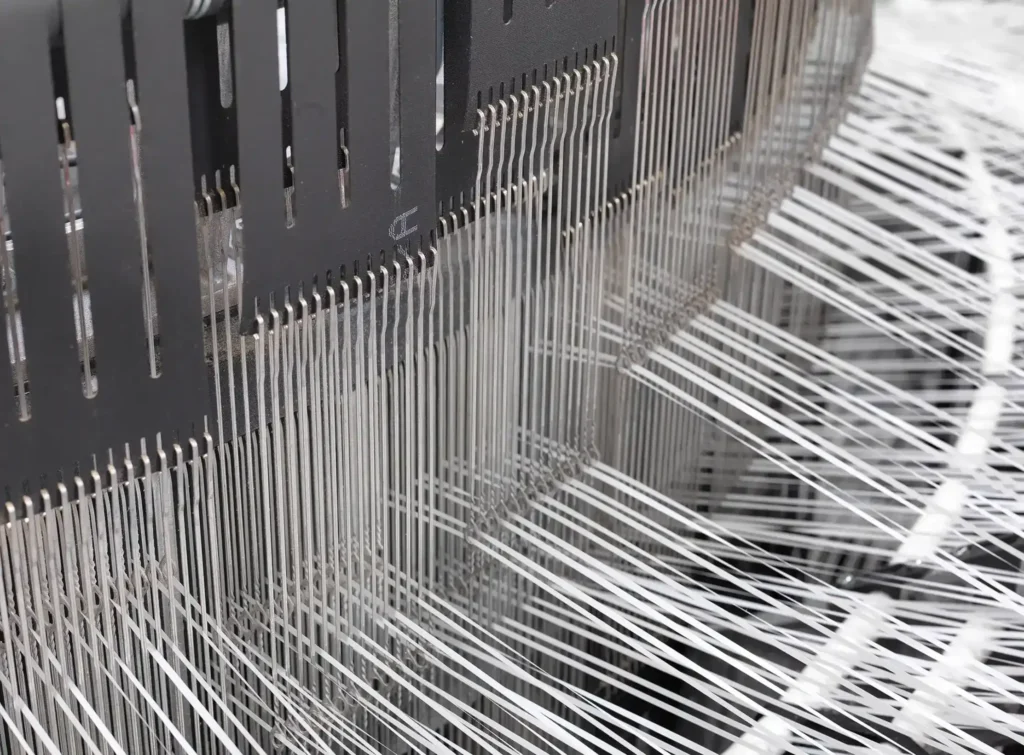
- Weaving on circular/flat looms; GSM and pick density tuned to drop targets
- Coating/lamination (optional) for moisture and print performance
- Conversion to block-bottom valve sacks on dedicated lines
- Optional printing (reverse on film or surface on coated fabric); anti-slip finishes
Downstream — assurance and release
- Bond and seam integrity: peel tests (laminates), seam strength at bottoms and valve interfaces
- Coefficient of friction: front/back panels meet a COF window matched to wrapping patterns
- Drop and handling: filled-bag drops at defined heights/orientations; corner drops simulate worst cases
- Valve performance: sift testing and simulated transport to verify closure; net-weight drift audits post line trials
- Print and dimension: AQL for artwork, registration, and bag dimensions to assure de-nesting and mouth presentation at the filler
Equipment pedigree: VidePak runs Starlinger for woven conversion and block-bottom valve forming and W&H for rotogravure/CI-flexo and precision web handling. This pairing shortens make-ready, stabilizes register, and improves bond repeatability on complex artworks and high-speed valve formats.
Applications of Square Bottom Valve Bags in the Construction Ecosystem
Construction is many markets joined by tough handling and environmental exposure. Square Bottom Valve Bags serve multiple niches when format, finish, and liner strategy are tuned to the product and route.
- Cement and dry mortar: High-speed rotary filling, square pallets, options for rain/condensation resistance via coatings/laminates.
- Gypsum plaster and joint compounds: Breathable plies preserve flat bags; matte faces resist scuffing and support clear safety graphics.
- Tile adhesives and grouts: Valves engineered for fine powders minimize dust and sifting; block-bottoms stand upright in retail.
- Self-leveling floor compounds and specialty fillers: Small particle sizes require tight valve tolerances and anti-sift measures.
- Admixtures: Often smaller formats; lining strategies protect hygroscopic formulations.
| Use-case | Preferred format | Stack-up sketch | Priority checks |
|---|---|---|---|
| Cement / dry mortar | Block-bottom Square Bottom Valve Bags (PP or paper) | Woven PP (coated/laminated) + PP valve; or multi-wall paper with optional HDPE ply | Drop at worst-case density; valve sifting; COF window; seam strength |
| Gypsum plaster | Paper pasted valve sack | 2–3 ply paper with targeted de-aeration | Print ΔE; de-aeration rate; bottom seam integrity |
| Tile adhesive / grout | Pinch-bottom or woven PP valve | Paper with barrier ply or coated PP | Valve closure audit; micro-leak test; dimensional AQL |
| Specialty fillers | Woven PP Square Bottom Valve Bags with film face | Woven PP + coating/laminate; engineered vent near valve | Peel/ply adhesion; COF; drop; valve tolerance |
Helpful internal link: For a visual overview of common valve configurations aligned with this guide’s terminology, see illustrated options for valve bag formats. This reference maps cleanly to the block-bottom designs discussed here.
How VidePak Controls and Guarantees Quality for Square Bottom Valve Bags
VidePak’s quality architecture is layered: standards discipline, material purity, machine pedigree, and risk-based inspection. Boring is the goal—lots that look the same, behave the same, and test the same regardless of season, artwork, or operator rotation.
- Standards-first production and testing. Methods align with mainstream frameworks across films, laminates, and packaging performance: tensile and elongation, friction windows on front/back panels, bond/ply adhesion, free-fall drop of filled sacks, and seam/valve integrity. SOPs are documented, training is demonstrated, and deviations trigger corrective and preventive action.
- Virgin inputs from tier-one producers. PP resins, BOPP films, and sack kraft arrive with certificates of analysis; each lot is screened in-house for dyne, haze/gloss, melt flow, and odor/taint where applicable. If recycled content is used, recipes are controlled, lines are segregated, and inspections are heightened.
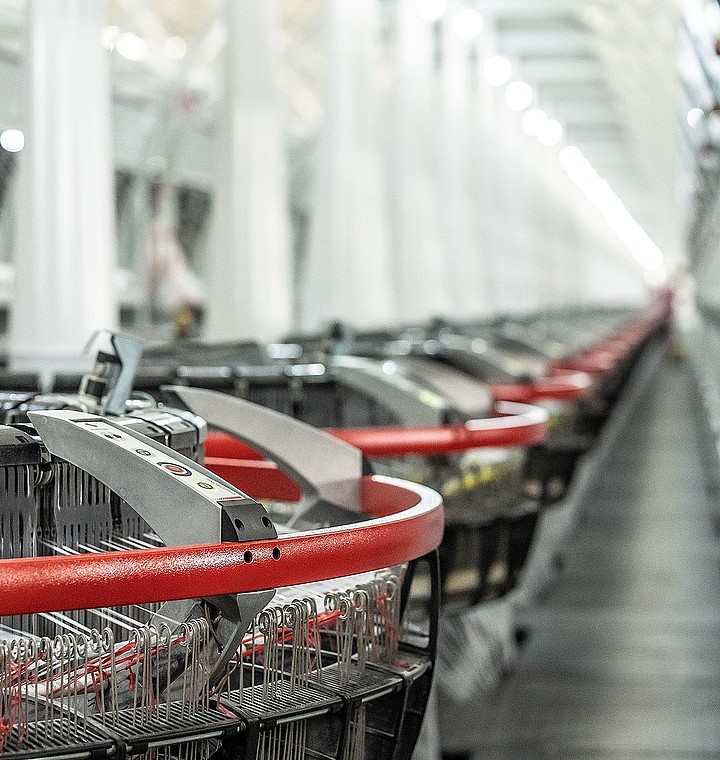
- Best-in-class machinery. Starlinger woven lines deliver consistent tapes and fabric; W&H CI-flexo/rotogravure platforms maintain tight register and repeatable color. Automated vision and disciplined tension/nip control reduce opportunities for defects and stabilize bond strength over long runs.
- Layered inspection. Incoming (resins, films, papers, inks), in-process (bond peel, COF, register, ΔE), and outgoing (drop, seam, dimension, print AQL). Sampling tightens for new artworks, new resin lots, or post-maintenance restarts. Full traceability connects raw lots to finished pallets; retains permit retrospective investigation.
Representative test map
- Film tensile/elongation on thin sheeting
- Coefficient of friction (front/back panels)
- Bond/ply adhesion for laminates
- Seal/peel for liner interfaces where used
- Free-fall drop of filled sacks at specified heights and densities
Risk-based sampling
High-runner SKUs may operate under normal or reduced AQL once stable; new inks, new film lots, or novel geometries trigger temporarily tightened plans.
Trace discipline
Lot-to-bag trace allows rapid containment and root-cause analysis. Retains are stored under documented conditions and retrieval times are tested.
Thinking With the Title — Square Bottom Valve Bags: Packaging Applications
The title invites a method: enumerate the types, map them to applications, and bridge factory constraints to jobsite realities. Ask four grounding questions: What must the bag survive on the route? What must the pallet do in the warehouse and truck? What must the packer accomplish at speed? What must the buyer verify to de-risk spend? From those answers, a specification emerges that is coherent, testable, and future-proof.
Three lenses: (1) Mechanical—drop, puncture, compression, rub; (2) Operational—filling speed, dust control, changeover agility; (3) Economic—tare, transport, rework, returns. Square Bottom Valve Bags score across all three when configured correctly: fabric GSM or paper ply count set by drop/seam margins, block-bottom geometry for cube, and anti-slip backs for transport safety.
Now stage the classic design-tension matrix—not to choose winners but to choreograph balanced compromises:
- Artwork vs throughput: Gravure excels at long, image-rich campaigns; modern CI-flexo enables agile SKUs and lower waste. Fixed art? Gravure. Churning SKUs? Flexo.
- Bond reliability vs heat budget: Extrusion lamination is rugged and fast; solvent-less adhesive lamination runs cooler and protects delicate inks. Choose by artwork sensitivity and energy economics.
- Stack stability vs surface appearance: Anti-slip backs and square bottoms keep pallets honest; glossy fronts win at retail. Split finishes allow both.
- Ventilation vs barrier: Micro-perfs accelerate de-aeration but reduce moisture holdout; localize vents near the valve or add a liner for humid storage.
- Recyclability intent vs performance add-ons: Mono-material approaches (all-paper or all-PP) simplify end-of-life options. Foreign layers should be justified by measured product savings, not fashion.
System Decomposition — Sub‑Problems, Detailed Reasoning, and Integrated Solution
Break the grand objective—robust, legible, economical packaging—into smaller solvable problems that recombine into a stable spec. This systematic approach avoids runaway complexity and keeps trade-offs explicit.
Sub-problem A — Survive the route
Route survival equals drop resistance, rub endurance, compression stability, and vibration tolerance. Solution knobs: fabric GSM and pick density (woven) or ply count (paper) for baseline strength; film/varnish faces for scuff control; anti-slip backs for friction; block-bottom geometry for cube and column stability. Proof: free-fall drop at worst-case fill density; COF windows tailored to wrap patterns; seam/valve audits after humid aging.
Sub-problem B — Run on the line
High-speed rotary packers need stable mouths and repeatable cut lengths; printing requires tight register; lamination needs steady dyne and nip profiles. Solution knobs: disciplined tape extrusion and weaving tolerances; press-side spectrophotometry for color; coat-weight control for adhesive lines; closed-loop tension on winders and laminators.
Sub-problem C — Win the economics
Economics are a system property: lighter sacks increase payload, anti-slip backs reduce wrap and damages, square cubes load faster, and fewer returns avoid double handling. Solution knobs: minimize GSM/plies without starving drop margins; specify anti-slip strategically; standardize a handful of geometries across SKUs to exploit learning curves.
Recomposition — the integrated spec
For cement/dry mortar: woven PP 85–95 g/m² or paper 2–3 plies; optional matte BOPP 20–25 µm or matte varnish; extrusion tie or controlled-adhesive bond; block-bottom valve; anti-slip back panel; defined COF window; drop at worst-case density; peel targets that fail by film tear rather than interface split. For gypsum: 2–3 ply paper with targeted de-aeration; pinch-bottom valve; matte varnish for scuff; clear print instructions. For tile adhesive: woven PP or paper with barrier ply; engineered vent near the valve; very low sifting threshold; dimensional AQL tuned to shelf posture.
Risk Register and Practical Remedies for Square Bottom Valve Bags
| Risk | Mechanism | Mitigation |
|---|---|---|
| Delamination during pallet rub (film-faced builds) | Low surface energy, contamination, inadequate coat weight or cure | Verify dyne; clean web path; raise coat weight or nip/chill; shorten print-to-laminate interval |
| Register drift / color variation | Tension/nip instability, plate/cylinder variance, ink rheology drift | Calibrate sensors; standardize mounting; temperature-control inks; use press-side spectrophotometry |
| Pallet creep / collapse | Low back-panel COF, poor cube, aggressive transport vibration | Specify anti-slip backs; prefer block-bottom; tune wrap pattern; add corner boards for heavy fines |
| Valve sifting | Sleeve tolerance or incomplete self-seal; product too fine for valve design | Tighten valve dimensions; evaluate self-closing inserts/ultrasonic options; trial on customer filler under realistic humidity |
Implementation Playbooks and Parameter Menus
25 kg cement (rotary packer)
Block-bottom Square Bottom Valve Bag; woven PP 85–95 g/m²; optional matte BOPP 20–25 µm; extrusion tie; anti-slip back; defined COF window; drop at worst-case density.
20 kg dry mortar (DIY retail)
Pinch-bottom paper build with premium print and matte varnish; de-aeration tuned to keep bags flat; dimensional AQL for shelf posture.
10–25 kg tile adhesive
Paper pasted valve sack or woven PP Square Bottom Valve Bag with engineered venting; very low sifting threshold; matte zones on rub points.
| Parameter | Menu | Reason to choose |
|---|---|---|
| Geometry | Length × width × gusset; block-bottom vs pinch-bottom; valve type/orientation | Controls filling speed, pallet cube, and shelf posture |
| Material family | Pasted paper vs woven PP | Matches breathability, drop margin, and moisture profile |
| De-aeration | Micro-perf rate and location; breathable plies | Maintains fill speed and flat bags |
| Moisture strategy | Barrier ply (paper) or coated/laminated face (PP) | Prevents clumping in damp climates |
| Printing | Process (flexo/gravure), color count, varnish plan, ΔE tolerance | Balances artwork ambition with agility and waste |
| Friction window | COF targets for front/back panels | Aligns with wrap patterns and route vibration |
| Tests & acceptance | Drop height/orientation; peel/ply minimums; dimensional AQL; valve sifting | Makes results comparable lot-to-lot and supplier-to-supplier |
Troubleshooting Library — Symptoms, Causes, Remedies
| Symptom | Likely causes | Practical fixes |
|---|---|---|
| Valve sifting during transport | Sleeve tolerance, incomplete self-closure, ultrafine product | Tighten dimensions; add self-closing insert; run line trials at realistic humidity |
| Bulged or pillowed bags | Insufficient de-aeration; over-tight valve; too-fast discharge | Increase micro-perfs near top; adjust valve geometry; stage vent paths |
| Delamination (film-faced builds) | Low dyne, contamination, low coat weight or cure | Verify dyne; clean path; raise coat weight or nip/chill; shorten print-to-laminate interval |
| Register drift / color shift | Tension/nip instability; mounting variance; ink rheology | Calibrate sensors; standardize mounting; temperature-control inks; add vision/spectro checks |
| Pallet creep or collapse | Low back-panel COF; poor cube; route vibration | Specify anti-slip backs; prefer square bottoms; tune wrap; add corner boards for dense fines |
Worked Playbooks — Ready-to-Run Specs
25 kg cement on rotary packers
Format: block-bottom Square Bottom Valve Bag, woven PP with coated face; PP valve sleeve optimized for cement airflow. Targets: drop at worst-case density; COF window; valve sifting threshold; seam strength and bottom square tolerance. Options: anti-slip back coat; moisture-oriented laminate in rainy seasons; registration windows for QC.
20 kg dry mortar (DIY retail)
Format: pinch-bottom paper build with premium print and matte varnish. Targets: ΔE color tolerance; scuff resistance; dimensional AQL for shelf posture; de-aeration tuned to keep bags flat. Options: window panels; QR instructions; anti-sift valve insert.
10–25 kg tile adhesive
Format: paper pasted valve sack or woven PP Square Bottom Valve Bag with engineered venting. Targets: very low sifting; strong valve closure; artwork durability (matte zones on rub points). Options: barrier ply for humid markets; easy-open feature for jobsite convenience.
Compact FAQ
Are Square Bottom Valve Bags heat-sealable? For paper formats, closures are glued; for woven PP valve sacks, the block bottom is formed mechanically and/or thermally depending on the line. The valve itself closes by geometry and product pressure; some designs integrate ultrasonic elements.
Do micro-perforations compromise moisture? Yes—venting speeds de-aeration but can lower moisture holdout. Localize vents near the valve/top zone or specify barrier plies/laminates if storage is humid.
What causes sifting and how do we stop it? Valve tolerance and product fineness dominate. Tighten sleeve dimensions, add self-closing inserts, verify self-seal under realistic humidity, and check for product sticking that prevents full closure.
Can Square Bottom Valve Bags run on existing packers? If you run rotary or inline valve packers for cement or mortar, almost certainly yes—provided valve geometry matches your spout and bag stiffness suits your de-nester.
How do we keep pallets from creeping? Specify an anti-slip back, hold a COF window aligned to your wrap pattern, and prefer block-bottom geometry for square posture.
- Orientation, Intent, and How to Read This Guide on Square Bottom Valve Bags
- What Are Square Bottom Valve Bags?
- The Materials of Square Bottom Valve Bags — Architecture, Properties, and Cost Logic
- Feature Map — What Square Bottom Valve Bags Actually Do
- Production of Square Bottom Valve Bags — Inputs, Core Stages, and Assurance
- Applications of Square Bottom Valve Bags in the Construction Ecosystem
- How VidePak Controls and Guarantees Quality for Square Bottom Valve Bags
- Thinking With the Title — Square Bottom Valve Bags: Packaging Applications
- System Decomposition — Sub‑Problems, Detailed Reasoning, and Integrated Solution
- Risk Register and Practical Remedies for Square Bottom Valve Bags
- Implementation Playbooks and Parameter Menus
- Troubleshooting Library — Symptoms, Causes, Remedies
- Worked Playbooks — Ready-to-Run Specs
- Compact FAQ
“Why should my company switch to square bottom valve bags?” asks a packaging manager from a leading chemical manufacturer during an industry conference. “Because they streamline operations, reduce material waste by 20%, and enhance load stability by 40%,” replies a VidePak solutions expert. This exchange captures the essence of modern industrial packaging: efficiency, precision, and adaptability.
Square bottom valve bags, a cornerstone of VidePak’s product portfolio, are revolutionizing industries from construction to agriculture. This report dives deep into their technical specifications, anti-static mechanisms, and load-bearing capabilities, contextualized through VidePak’s expertise and global market leadership.
1. Technical Specifications: Thickness, Grammage, and Size Ranges
Square bottom valve bags are engineered for versatility. VidePak’s offerings, produced using Austrian Starlinger machinery and virgin PP materials, cater to diverse industrial needs.
Thickness and Grammage
- Thickness: Ranges from 80–150 microns, optimized for balancing durability and flexibility. For instance, bags designed for cement packaging (common in construction) use 120–150 microns to withstand abrasion, while agricultural products like fertilizers utilize 80–100 microns for cost efficiency.
- Grammage: Typically 70–130 g/m², with heavier grammage (110–130 g/m²) reserved for high-impact applications such as sand or chemical powders. VidePak’s anti-bulge valve bags employ reinforced seams at 130 g/m² to prevent rupture during pneumatic filling.
Size Ranges
VidePak’s valve bags are customizable across dimensions:
- Small-scale: 25 kg capacity (e.g., 450 × 750 mm for food-grade resins).
- Industrial: 50–100 kg capacity (e.g., 900 × 1,200 mm for construction materials like cement).
Table 1: Standard Specifications of VidePak’s Square Bottom Valve Bags
| Parameter | Range | Common Applications |
|---|---|---|
| Thickness | 80–150 microns | Cement, fertilizers, resins |
| Grammage | 70–130 g/m² | Chemicals, grains, polymers |
| Bag Size (L × W) | 450–1,200 mm | Agriculture, construction |
| Load Capacity | 25–100 kg | Bulk powders, granules |
2. Anti-Static Mechanisms in Woven Bags
Static electricity poses risks in industries handling flammable powders or electronic components. VidePak integrates conductive carbon filaments and anti-static coatings into its woven bags to dissipate charges safely.
How It Works
- Conductive Materials: Polypropylene (PP) fibers are blended with carbon black (5–8% by weight), creating a conductive network that neutralizes static buildup.
- Surface Treatments: Bags are laminated with polyethylene (PE) coatings embedded with ionic compounds, reducing surface resistivity to 10^6–10^8 Ω/sq—below the threshold for spark generation.
Case Study: A pharmaceutical client reported a 30% reduction in powder adhesion and zero static-related ignition incidents after switching to VidePak’s anti-static valve bags.
3. Load-Bearing Capacity and Structural Integrity
Square bottom valve bags excel in vertical stacking and automated handling. VidePak’s designs undergo rigorous testing:
- Static Load: Up to 1,000 kg in compression tests (for 100 kg bags).
- Dynamic Load: Withstands 3–5 drops from 1.2 meters without rupture, critical for logistics.
FAQs
Q: Can these bags handle sharp-edged materials like recycled plastics?
A: Yes. VidePak’s triple-layered laminates (PP + PE + adhesive) prevent punctures, even with abrasive contents.
Q: What customization options are available?
A: Clients choose from 8–10 color prints, valve types (e.g., pinch-bottom), and UV-resistant coatings.
4. VidePak’s Competitive Edge: Technology and Scalability
Founded in 2008 and led by CEO Ray Chiang, VidePak operates 100+ circular looms and 30 lamination machines, enabling 3 million bags/month output. Key strengths include:
- Sustainability: 30% of raw materials are recycled PP, aligning with global ESG trends.
- Precision Printing: High-definition flexo printing ensures brand visibility, even on textured surfaces.
Industry Benchmark: Competitors like Shijiazhuang Boda Plastic Chemical Co. achieve 1 billion bags/year, but VidePak’s focus on niche customization (e.g., food-grade liners) secures a 15% market share in Europe and South America.
5. Future Trends and Market Outlook
The global valve bag market, valued at $2.1 billion in 2024, is projected to grow at 6.8% CAGR, driven by automation in sectors like construction and agriculture. VidePak’s R&D in biodegradable liners and IoT-enabled smart bags (e.g., QR codes for traceability) positions it as a pioneer in next-gen packaging.
External Resources
- Learn about the evolution of block bottom valve bags in industrial automation.
- Explore valve bag applications in construction.
Conclusion
Square bottom valve bags are not just containers—they are efficiency multipliers. VidePak’s commitment to innovation, evidenced by its ISO-certified processes and global clientele, underscores its role as a leader in sustainable, high-performance packaging. As industries prioritize automation and safety, adopting these bags is not an option but a necessity.
For a detailed consultation on optimizing your packaging line, contact VidePak’s technical team.
Word count: 1,250