
What Are Block Bottom Valve Bags?
Block Bottom Valve Bags are precision‑engineered sacks designed to fill rapidly, stand squarely, and ship safely. Geometry is their quiet superpower: a folded, self‑standing base creates a box‑like footprint (the block bottom), while an integrated sleeve (the valve) guides product in and, once head pressure settles, helps the mouth close without clips or extra sealing operations. On fast powder lines—think flour, rice, sugar, starch, premixes—this combination means fewer stoppages, neater pallets, cleaner aisles, and retail faces that look composed rather than crumpled.
Because form follows function, Block Bottom Valve Bags are not a single material so much as a platform: woven polypropylene (WPP) with printed BOPP film; pasted‑valve kraft paper with inner barriers; even small flat‑bottom film pouches in coffee and specialty segments. What ties them together is the same filling principle and the same expectation: high throughput with low dust, high cube efficiency with low waste, high shelf presence with low scuff.
- AD‑style woven valve sacks
- AD*STAR‑type block‑bottom sacks
- Pasted valve block‑bottom bags (paper or laminate)
- Flat‑bottom valve bags
- Square‑bottom valve sacks
- WPP block‑bottom valve bags (woven polypropylene)
- BOPP‑laminated block‑bottom valve bags
Different labels, one intent: fast, controlled filling; self‑standing stability; a near‑automatic mouth closure driven by product mechanics rather than by clips or heat bars.
The Material Architecture of Block Bottom Valve Bags
Every performance claim traces back to materials. To understand why Block Bottom Valve Bags endure corner drops and keep faces crisp, break the structure into five interacting layers: the substrate, the surface/barrier, the bond, the valve/liner path, and the finishing details. Performance happens not in isolation but at the interfaces.
1) Substrate families (load‑bearing foundation)
Woven polypropylene (WPP) is the workhorse. Polypropylene is extruded, slit into narrow tapes, and drawn to align molecular chains; those tapes are woven on circular or flat looms. Three dials matter: tape denier (linear mass), weave density (ends × picks), and base fabric GSM. Increase denier and you gain cut‑through resistance; tighten mesh and you enhance seam anchoring and print laydown; raise base GSM and you buy structural reserve—at the price of mass and stiffness. WPP shines on harsh routes: it resists puncture, tolerates drops, and holds a square pallet face at relatively low resin mass.
Paper (kraft) brings breathability and a familiar tactile identity. One to three plies, pasted into a block‑bottom valve bag, can be enough for many dry foods—especially where legacy paper packers dominate. Add inner polymer barriers or PE liners when moisture or grease threatens. Paper’s strength curves are different from WPP; smart specs pair ply strength with realistic drop regimes.
Film‑based flat‑bottom pouches are close cousins in geometry for smaller formats (coffee, tea, premium snacks). They lean on multilayer barrier films and often one‑way valves for aroma management. Their purpose overlaps (self‑standing retail faces), but their mechanics and sealing paths differ.
2) Surface and barrier (the visible skin and invisible shield)
BOPP on WPP is the most common premium face: biaxially oriented polypropylene delivers gloss for vibrancy or matte/soft‑touch to hide rub, with reverse printing that traps ink below the film. Result: graphics survive conveyors, tote bins, and pallet rub. Pearlized white improves opacity; metallized variants add light and oxygen moderation for sensitive goods. The trick is choosing film gauge that solves real scuff or crease whitening without bloating cost.
Coated or laminated paper has its own toolset: extrusion coatings for moisture control, barrier plies for grease and oxygen, and the option to couple with loose or attached liners. If your brand wants the paper feel without surrendering to humidity, this is where the engineering lives.
3) Bonding systems (where success often hides)
Two routes dominate. Extrusion‑tie PP/PP creates a monomaterial story (film‑to‑fabric) that can ease recovery in PP streams. Solventless polyurethane adhesive laminations deliver clean bonds at low residuals—assuming curing windows are respected. Either way, specify not just minimum peel, but failure mode: ductile peel that bends through hems and needle penetrations is safer than brittle peel with pretty numbers. Hem folds magnify poor bonds into visible cracks.
4) Valve sleeves and liners (the product‑contact path)
The valve’s job is to invite product in, let trapped air out, and then shut up shop. WPP sleeves tend to be woven tubes, sometimes coated, sometimes vented. Paper sleeves are pasted constructions with optional vents. Tolerances matter: too loose and dust escapes; too tight and fill rates collapse. For food‑grade builds with aroma or grease, a PE or co‑ex liner often becomes the direct contact layer and the final heat‑seal surface.
5) Finishing details (friction, touch, and durability)
Anti‑slip lacquers tune outer coefficient of friction (COF) for pallet stability; antistatic masterbatches limit dust cling near the spout; easy‑open tapes improve user experience; die‑cut handles help retail carry. Each add‑on has a cost and a side‑effect—measure before you multiply features.
Feature Set: What This Platform Actually Delivers
It is easy to praise a bag as “strong” and “clean.” It is harder to define those words in plant language. The feature set below translates marketing into mechanics so that Block Bottom Valve Bags can be specified, not mythologized.
- Self‑standing, cube‑efficient geometry. Flat bottoms and tops ease palletization and raise shelf presence; they also reduce bruising by keeping faces planar in transit.
- Fast, clean filling. The valve routes flow while micro‑vents and bed‑forming steps let air escape. Result: fewer ballooned sacks, fewer dust plumes, fewer operator interventions.
- High drop and puncture endurance. WPP variants—paired with disciplined seam programs—absorb corner and edge shocks that would burst pillow bags.
- Graphics that survive distribution. Reverse‑printed BOPP protects inks; matte/soft‑touch disguises minor rub so faces look “fresh off press.”
- Moisture tolerance and easy wipe‑down. Laminated skins shed splashes; paper builds use liners or coatings to reach similar hygiene.
- Customization without fragility. Windows, tactile lacquers, antistatic packages, tamper‑evidence—all doable without breaking drop performance when parameters are tuned coherently.
- Food‑safety pathways. Functional barriers and liners support migration limits, neutral organoleptics, and auditable hygiene records.
From Pellet to Pallet: The Production Flow
Process windows are where theory meets gravity. Each step below hides a way to win—or a way to rework an entire lot.
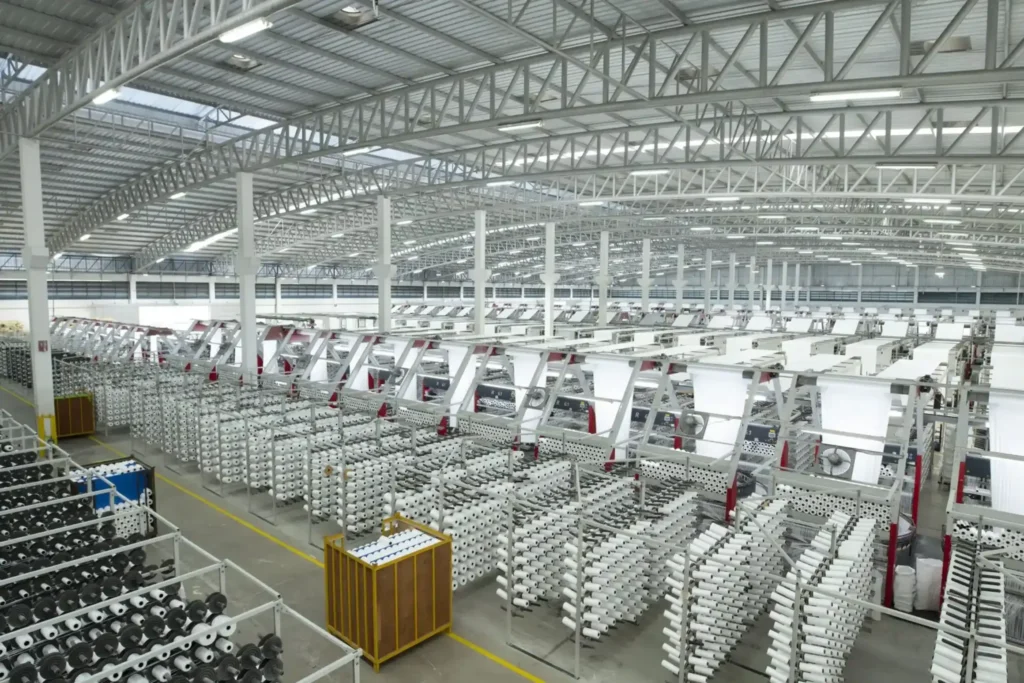
- Tape extrusion and drawing (WPP). Stretch just right: under‑drawn tapes creep, over‑drawn tapes crack. Draw ratio, quench, and reheating all matter.
- Weaving and base QA. Mesh uniformity tamps down tear starters; denier and GSM set the backbone. The loom’s miss‑picks are tomorrow’s seam failures.
- Film surface prep and printing. Corona treatment and dyne control prepare the BOPP; reverse gravure or HD‑flexo lays down the brand. Color management must anticipate the matte/gloss you will actually laminate.
- Lamination. Extrusion tie for mono‑PP, or solventless adhesive for low residuals—both live or die by nip, temperature, and cure. Specify ductile failure, not just a peel number.
- Slitting, gusseting, cutting. The laminate becomes blanks; gussets bank cubic efficiency; knife quality shows up later as fuzzed edges or clean folds.
- Block‑bottom formation and valve insertion. Tolerances in the valve sleeve balance dust versus speed; fold geometry makes the base behave like a box.
- Finishing. Anti‑slip, easy‑open, window die‑cuts, tamper evidence. Each add‑on must be validated for drop, COF, and line runnability.
- Quality checks. Peel pre‑/post‑crease, seam rupture, COF mapping, and multi‑position drops (corner, edge, face). Food‑grade builds add migration and organoleptics.
Where They Shine: Applications by Need
- Dry food staples: rice, flour, sugar, pulses. Block Bottom Valve Bags offer retail faces that hold color and form. Transparent windows and matte films convey quality without sacrificing handling.
- Pet food and animal nutrition: abrasion‑heavy logistics; aroma and fat control. Liner strategies, soft‑touch films, and anti‑slip finishes make the mix work.
- Seeds, fertilizers, soil amendments: higher denier and dense meshes tackle sharp granules; UV stabilizers and anti‑slip coatings support outdoor yards.
- Industrial ingredients: starches, protein concentrates, minerals, resin pellets. Valve sleeves accelerate fill; block bottoms improve robotic pick reliability.
- Artisan baking blends: paper pasted‑valve constructions preserve a classic tactile feel while liners manage moisture and grease.
Curious how the category sits alongside related formats? For a broader context on valve formats, see the concise overview of valve bags and their operating principles.
Types and Safety for Food‑Grade Packaging: A Structured Exploration
“Types” describes what’s on the menu; “safety” explains what keeps dinner safe to eat. When teams evaluate Block Bottom Valve Bags for food, they often talk past each other—engineers speak of drop modes and valves, quality speaks of migration and odor, procurement hears cost. The fastest way forward is a shared logic model.
1) Types by substrate and build
- WPP laminated with BOPP. The workhorse for 10–50 kg dry foods: high strength‑to‑weight, protected graphics, and a credible pathway to mono‑PP recovery where infrastructure exists.
- Pasted‑valve paper with barrier. Breathable, familiar touch; inner films or liners address moisture/grease. Compatible with many legacy paper packers.
- Flat‑bottom film pouches. For smaller weights and elevated retail, often with one‑way gas valves (coffee). Same geometry family, different sealing logic.
2) Safety pathway for food claims
- Contact layer definition. If a PE liner is present, it is the legal contact surface. If not, the laminate must meet migration and organoleptic targets under the intended use.
- Migration controls. Keep overall migration within jurisdictional limits; verify specific substances; address NIAS with documented risk assessment.
- Functional barriers. Reverse printing plus lamination typically isolates inks/adhesives. Liners make the barrier story simpler and sealing more controllable.
- Plant hygiene and certification. Packaging‑oriented schemes (FSSC 22000 v6; BRCGS Packaging Materials Issue 7) anchor GMP, traceability, and foreign‑body control.
- Regulatory horizon. Updated European plastics measures and the Packaging and Packaging Waste Regulation intensify expectations for documentation, purity, and recyclability narratives.
3) From risk to specification: a stepwise logic
- Profile the product (density, fat, aroma volatility, particle sharpness, aeration at fill).
- Map the route (drop heights, yard exposure, conveyor abrasion, robot picks, stacked months).
- Decide the contact layer (liner or laminate) and test accordingly.
- Choose substrate (WPP vs paper vs film pouch) based on puncture risk and line reality.
- Select barrier and finish (film gauge/finish, paper plies, liner thickness).
- Set bond and seams (extrusion tie vs adhesive; minimum peel with ductile failure; seam bite and stitches/dm; filler cords).
- Plan compliance tests (overall/specific migration, PAA screening, NIAS, organoleptics) and mechanical tests (drops, peel, COF).
- Document (DoCs, cure logs, dyne/color records, lot traceability, certificates).
System Thinking: Decompose, Solve, Recombine
Turn a sprawling problem into smaller ones, fix each, then reassemble the system. That’s how Block Bottom Valve Bags become predictable in the field.
Sub‑problem A — Drops and stacks
Corner impacts expose seam bite and brittle peel. Action: set bite ≥ 25 mm, use ~14 ± 2 stitches/dm, demand ductile peel after crease conditioning, and tune outer COF (0.35–0.50 is a useful corridor for many lines).
Sub‑problem B — Migration and odor
Overall migration ≤ regulatory limits; PAAs and specific monomers/additives under control; odor panels neutral after storage conditioning. Action: decide contact layer, test worst foreseeable use, and document NIAS rationale.
Sub‑problem C — Hygiene and documentation
Operate like a packaging food plant: HACCP for packaging, foreign‑body controls, zoning, instrument calibration, cure logs, and traceability. Certificates (FSSC 22000 v6 or BRCGS Issue 7) make this visible to buyers.
Sub‑problem D — Sustainability expectations
Align recyclability claims with infrastructure. Favor mono‑PP laminates where feasible and place recycled content in non‑contact layers until authorizations and supply support more ambitious targets.
- Substrate: WPP ~900D, 12×12 mesh, base ~95 g/m².
- Surface: 20 μm matte BOPP, reverse printed up to 10–12 colors.
- Lamination: extrusion‑tie PP/PP; specify minimum peel and ductile failure.
- Geometry: block bottom with internal valve; sleeve set for fast de‑aeration with low dust.
- Seams: double chain; bite ≥ 25 mm; ~14 ± 2 stitches/dm; filler cord optional.
- Liner: LDPE or co‑ex PE as direct contact; heat‑seal at the packer.
- QA: drops at 1.0 m (corner/edge/face), peel pre/post crease, seam rupture, COF mapping, dimensions.
- Compliance: overall migration within limit; PAA aggregate non‑detect; neutral organoleptics; certificates on file.
Technical Parameter Tables
Valve Engineering: Flow, De‑aeration, and Tolerances
Imagine the incoming product as a gas‑laden granular fluid. The more air it carries, the more it resists compaction. The valve’s mission is paradoxical yet simple: welcome product, expel air, forbid dust. In Block Bottom Valve Bags, the sleeve geometry, vent strategy, and packer settings operate like a three‑handed handshake.
- Sleeve geometry. A short, slightly tapered sleeve reduces friction and bridging. Over‑tight sleeves raise back‑pressure; over‑loose sleeves leak dust and compromise self‑closure.
- Vent strategy. Micro‑perforations (on film) or breathable patches (on paper) provide escape routes for air. Use the minimum pattern that produces flat pallets; every extra hole is a dust path.
- Packer tuning. Spout diameter should match sleeve opening; excess velocity entrains air. Vibration tables or tamping steps collapse the bed; record fill density and residual air to iterate.
- Closure mechanics. Product head pushes the sleeve shut; some programs sew through or heat‑seal a patch at the end. Whatever the path, avoid geometries that nick the laminate at the fold.
Testing & Validation Protocols
Proof beats promise. A concise validation suite keeps Block Bottom Valve Bags predictable.
- Structural: strip and grab tensile for fabric, laminate peel across lanes pre‑/post‑crease, seam rupture with failure mode, multi‑position drops (corner, edge, face at representative heights).
- Friction: inner/outer COF mapping to match conveyors and pallet angles; adjust lacquers or films accordingly.
- Food‑contact: overall migration within limits; substance‑specific checks (slips, antioxidants, residual monomers); PAA screening; NIAS assessment; organoleptic panels after storage conditioning.
- Line trials: measure fill rate, jam modes, scrap, pallet pass rate; feed findings back into the spec rather than into folklore.
Comparisons & Trade‑Offs
- Versus pillow bags (FFS film): block bottoms stack straighter and de‑aerate faster for powders; pillow formats can be simpler for very short runs or for products that seal better than they stack.
- Versus open‑mouth sewn sacks: valves remove a step and reduce sifting at the mouth; open‑mouth bags are field‑repairable and friendly to manual processes.
- WPP vs paper: WPP brings drop strength and puncture resistance at low mass; paper brings breathability and a classic look. Either can meet food‑grade expectations if barriers and tests are well‑designed.
- Liner vs liner‑less: liners simplify the sealing and compliance story—especially for fat‑rich or aromatic foods—at the cost of an extra component and end‑of‑life separation.
Troubleshooting: Symptom → Cause → Action
- Scuffed graphics after transport → film too thin or gloss too unforgiving → move to matte or raise gauge; verify dyne and ink adhesion before lamination.
- Corner splits by the third drop → seam bite too small or brittle peel at hem → increase bite and stitches/dm; require ductile failure after crease conditioning; check cure logs.
- Pallet lean or pyramiding → outer COF too low/inconsistent → add anti‑slip or choose higher‑COF film; validate on your conveyors.
- Ballooning at fill → inadequate de‑aeration → add micro‑perfs; retune sleeve tolerances; adjust packer velocity; consider breathable patches.
- Odor complaints → residual solvents or incomplete cure → extend cure; audit solvent capture; confirm with trained panels before release.
- Valve sifting → sleeve too loose or over‑vented → tighten sleeve tolerances; reduce vent size/number; add filler cords.
Extended FAQ (Engineer‑Level)
Do I always need a PE liner for food‑grade builds? Not always. If the laminate itself is the contact layer and passes migration and organoleptic tests for intended conditions, a liner is optional. Many brands still add it for moisture, grease, and sealing ease.
Are transparent windows structurally risky? They can be—if cutouts have sharp corners or cross stress lines. Use smooth transitions, avoid seam zones, and test drops with finished art.
Why do faces pass but corners fail? Corners concentrate stress at hem folds and around valves. Fix bite and peel ductility before adding GSM.
How much recycled content can I claim? For direct food contact, recycled content is tightly regulated. Most programs place PCR in non‑contact layers or in industrial SKUs until authorizations and supply mature.
Which finish is better, gloss or matte? Matte hides rub and reduces glare; gloss maximizes color pop on gentler routes. Let conveyor abrasion and route roughness pick the finish, not personal taste.
A Reusable Specification Builder
- Define the route (density, fill rate, drop heights, staging climate, pallet goals).
- Choose the substrate (WPP vs paper vs film pouch) based on puncture risk and installed equipment.
- Select surface and barrier (film gauge/finish, paper plies, liner thickness) to match shelf and route realities.
- Set the bond window (extrusion tie vs solventless adhesive; minimum peel; failure mode; cure logs).
- Lock geometry and seams (block‑bottom valve; bite ≥ 25 mm; stitches/dm; filler cords; sleeve tolerances).
- Plan compliance (overall/specific migration; PAA screening; NIAS review; organoleptics; COF; drops).
- Validate on the line (jam modes; fill rate; scrap; pallet pass rate; odor panels after storage).
- Document and monitor (DoCs, calibration, certificates, regulatory watchlist).
- What Are Block Bottom Valve Bags?
- The Material Architecture of Block Bottom Valve Bags
- Feature Set: What This Platform Actually Delivers
- From Pellet to Pallet: The Production Flow
- Where They Shine: Applications by Need
- Types and Safety for Food‑Grade Packaging: A Structured Exploration
- System Thinking: Decompose, Solve, Recombine
- Technical Parameter Tables
- Valve Engineering: Flow, De‑aeration, and Tolerances
- Testing & Validation Protocols
- Comparisons & Trade‑Offs
- Troubleshooting: Symptom → Cause → Action
- Extended FAQ (Engineer‑Level)
- A Reusable Specification Builder
“Why are block bottom valve bags becoming the gold standard for food-grade packaging?” asked a logistics manager at a multinational grain exporter. “Their design ensures stability during transport, prevents contamination, and aligns with global safety standards,” responded Ray, CEO of VidePak, during a recent industry conference. “At VidePak, we’ve optimized these bags with features like reinforced seams and FDA-compliant materials to meet the demands of modern supply chains.” This exchange highlights the central thesis of this report: Block bottom valve bags are critical for safe and efficient food packaging, with manufacturers like VidePak leveraging advanced engineering, scalable production, and compliance expertise to dominate the market.
The Evolution of Block Bottom Valve Bags in Food Packaging
1. Design Innovations Enhancing Efficiency
Block bottom valve bags combine two key structural features: a square base for stable stacking and a valve spout for controlled filling and dust-free discharge. These design elements address critical challenges in food logistics:
- Stability: The block bottom design increases load-bearing capacity by 30% compared to traditional flat-bottom bags, reducing toppling risks during transit.
- Contamination Prevention: Valve systems minimize human contact with contents, crucial for hygiene-sensitive products like flour, sugar, or spices.
- Automation Compatibility: The valve allows integration with pneumatic filling systems, enabling speeds of up to 1,200 bags/hour, as seen in VidePak’s production lines using Starlinger laminators.
2. Material Safety and Compliance
Food-grade packaging requires adherence to strict regulations, such as FDA 21 CFR and EU Regulation 10/2011. VidePak’s bags utilize:
- Virgin PP Resin: Ensures no chemical leaching, with migration tests showing <0.01 mg/kg of volatile organic compounds (VOCs).
- Multi-Layer Lamination: A 3-layer structure (BOPP + PE + woven PP) provides moisture resistance (<5g/m²/day permeability) and UV protection for tropical climates.
Global Market Trends and Competitive Differentiation
1. Regional Demand Drivers
- North America: 40% of block bottom valve bags are used for pet food and baking ingredients, driven by USDA and AAFCO standards.
- Europe: Sustainability mandates push demand for recyclable variants, with 65% of bags incorporating >20% post-consumer recycled PP by 2025.
- Asia-Pacific: Rapid adoption in rice and flour exports, where VidePak’s 25-day lead time outperforms local competitors by 35%.
2. VidePak’s Strategic Advantages
- Technology: Over 100 Starlinger circular looms enable seam strengths of 35 N/mm², critical for 25–50 kg food loads.
- Customization: 8-color rotogravure printing supports brand differentiation, while anti-static coatings prevent powder adhesion in dairy packaging.
- Supply Chain Agility: Partnerships with Maersk and COSCO ensure 98% on-time delivery to 50+ countries, backed by an 8,000-ton/month production capacity.
Technical Specifications and Performance Metrics
| Parameter | VidePak Standard | Industry Average |
|---|---|---|
| Base Dimensions | 50×30 cm (customizable) | 45×25 cm |
| Valve Diameter | 80–150 mm | 60–120 mm |
| Tensile Strength | 1,500 Denier | 1,000–1,200 Denier |
| Moisture Resistance | 3-layer PE lamination | 2-layer PP coating |
| Lead Time (10k units) | 18 days | 25–30 days |
FAQs: Addressing Industry Concerns
Q1: Are block bottom valve bags suitable for high-humidity environments?
Yes. VidePak’s 3-layer laminated bags reduce moisture permeability to <3g/m²/day, ideal for rice exports to Southeast Asia. Explore moisture-proof solutions for extreme conditions.
Q2: How do Chinese manufacturers maintain cost competitiveness?
Centralized raw material procurement and automated production cut costs by 25–30%. A 50kg flour bag costs $1.20 from VidePak vs. $1.65 from European suppliers.
Q3: Can these bags support automated palletizing systems?
Absolutely. The block bottom design ensures uniform stacking, compatible with robotic arms used by clients like Cargill and Nestlé.
Future Innovations and Market Opportunities
- Smart Packaging: RFID tags embedded in valve seams for real-time tracking, piloted in VidePak’s 2024 coffee bean packaging line.
- Biodegradable Materials: Partnerships with BASF to develop PP blends with 40% plant-based polymers by 2026.
- Circular Economy: Closed-loop recycling initiatives aim to reclaim 90% of post-consumer bags by 2030.
For insights into valve bag customization, discover how VidePak balances precision and scalability.
In conclusion, block bottom valve bags represent a synergy of safety, efficiency, and innovation in food-grade packaging. VidePak’s leadership in automation, material science, and global logistics positions it at the forefront of this transformative industry, delivering solutions that meet both regulatory and operational demands.