
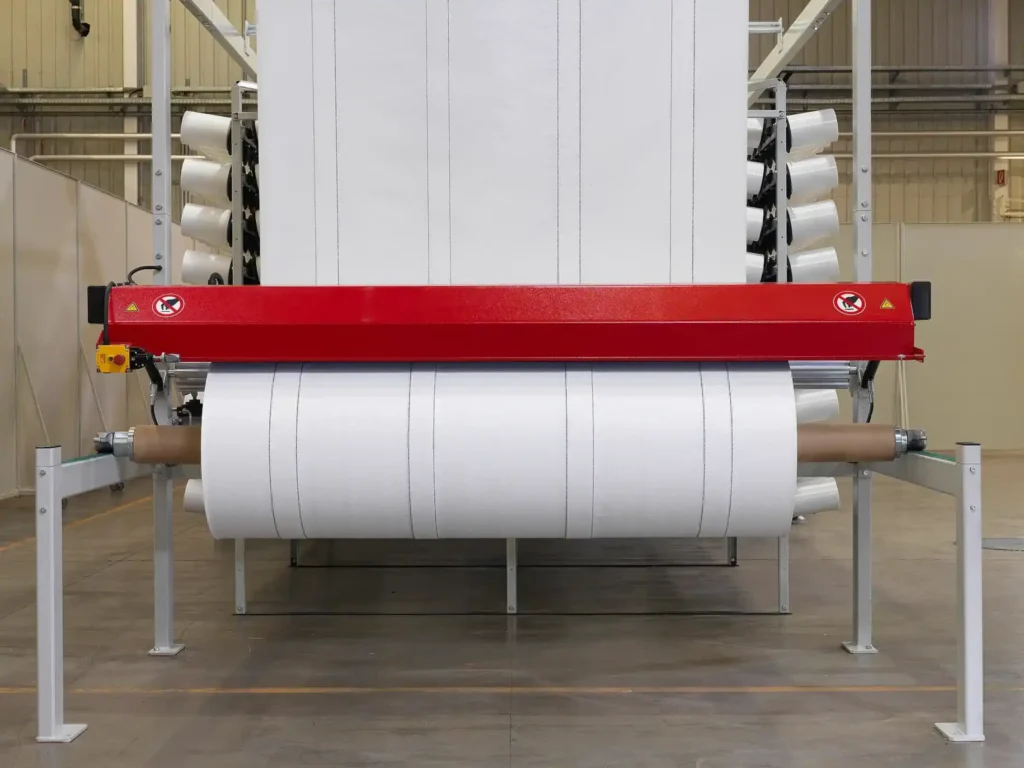
What is Food Grade Woven Bags? Definition and Common Aliases
Food Grade Woven Bags are purpose‑built packaging sacks engineered from oriented polyolefin tapes—most commonly polypropylene (PP)—that are interlaced into a stable textile and finished with food‑contact compliant sealing systems. Unlike commodity sacks, Food Grade Woven Bags are specified around regulatory guardrails, microbial hygiene, and line repeatability: they must not only carry ingredients; they must preserve them, identify them, and document their journey. The category is variously labeled across markets as food‑contact PP woven sacks, hygienic woven poly bags, woven rice bags, flour sacks, or food‑grade FFS woven sacks (when a heat‑sealable layer is integrated for form‑fill‑seal lines). Whatever the alias, the design intent is consistent—disciplined materials selection, controlled finishing, and verifiable certificates that withstand auditor scrutiny.
Seen through a systems lens, Food Grade Woven Bags merge three lineages that often compete: materials science (tensile strength, tear resistance, puncture tolerance), food‑safety engineering (migration limits, GMP hygiene, traceability), and operations management (throughput, pallet stability, and error‑proof picking). Paper excels at print warmth but falters in humidity; mono‑film PE seals cleanly yet tears at corners; woven PP supplies the backbone but needs compliant interfaces to meet food‑contact laws. Food Grade Woven Bags synthesize these strands into a single bill of materials that a real plant can run day after day without drama. If you want a quick foundational reference on woven constructions, visit Food Grade Woven Bags—then come back to see how tailoring makes them excel in food chains.
Why insist on this hybrid? Because food behaves like a chemist’s experiment and a logistics problem at once. Sugars cake, salts corrode, fats oxidize, spices volatilize, flours dust; meanwhile forklifts strike, pallets sway, and docks get humid. Food Grade Woven Bags must bridge chemistry and choreography. They do so by combining a high‑tenacity woven substrate (to resist edge impacts and creep), a tuned inner face (to seal cleanly and manage moisture/oxygen), and a surface system (to keep stacks square and graphics legible). The upshot is simple to say and hard to achieve: a bag that looks premium, fills fast, rides safely, and passes audits.
What is the features of Food Grade Woven Bags? A systems view with data reinforcement, case analysis, and comparative study
Features matter only when they disarm real failure modes. The following capabilities of Food Grade Woven Bags are analyzed as problem → mechanism → evidence, enriched with practical data ranges, illustrative cases, and side‑by‑side comparisons. The aim is not catalog copy; it is applied engineering.
1) Hygiene by design, not by luck
Background. Flour dust, cane sugar fines, and starch are deceptively benign. Each can harbor microbes, wick moisture, and contaminate adjacent SKUs when mouth closures shed fibers or seams leak under vibration. Auditors do not forgive bags that merely look clean; they require documented compliance. Food Grade Woven Bags counter these risks with sealed inner faces, lower lint exposure, and traceable materials.
Mechanism. Plastics in food contact follow FDA 21 CFR 177.1520 for olefin polymers and EU Regulation 10/2011 for plastics with EN 1186 migration testing (simulants A/B/C/D2 as applicable). The bag structure often uses LDPE or PP/PE coextrusions 30–80 μm on the product side, enabling hot‑bar windows around 180–220 °C for tidy, dust‑deflecting seals. Good Manufacturing Practice (GMP 2023/2006) governs hygiene from resin handling to packed‑out pallets, while EU 1935/2004 frames the overarching safety principle.
Data reinforcement. Typical acceptance criteria include migration reports with overall and specified limits passed at selected temperatures, peel strengths >20 N/15 mm (ASTM F88) for pinch‑sealed builds, and particle/LAL surrogate checks in critical zones for high‑scrutiny plants. Positive release lots ship only after documentation is compiled and signed off.
Case analysis. A starch mill converted from sewn‑only woven sacks to Food Grade Woven Bags with inner PE liners and sealed mouths. Airborne counts near the old sewing head were the leading micro‑fail trigger; after the switch, corrective actions fell markedly and third‑party auditors (SGS) closed findings without CAPA. The lesson is blunt: sealing the mouth tames dust at its source.
Comparative study. Paper SOS sacks breathe—a virtue for steam‑off—but rely on glues and stitches that can weep fines. Mono‑film PE closes pristinely yet punctures around nail heads or pallet splinters. Food Grade Woven Bags use the woven’s toughness as a chassis and add food‑contact sealing to meet hygiene targets.
2) Structural integrity for dense and abrasive foods
Background. Rice, pulses, sugar, and salt often pack densities of 0.8–1.2 g/cc; spice blends can be gritty. Pallets endure dock plates, fork‑tine nudges, and racking sway. Failure is rarely cinematic; it is a creeping seam split or a corner bruise that propagates. Food Grade Woven Bags are designed to shrug off these insults.
Mechanism. Woven PP substrate mass of 60–120 g/m² is common. Grab tensile values of 600–1200 N/5 cm (ISO 13934‑1 / ASTM D5034) and sewn seam strengths ≥300 N (textile seam methods) or peel values >20 N/15 mm for pinch‑seals (ASTM F88) are practical anchors. Surface coefficient of friction (COF) is tuned to 0.40–0.55 (ASTM D1894) with antiskid topcoats, reducing layer creep without impeding automated palletizers.
Data reinforcement. Distribution testing typically includes 0.8–1.2 m drop at 25–50 kg (ASTM D5276; ISO 7965‑2) and 24‑hour compressive creep validation (ISO 12048) to qualify summer shed loads. These are not niceties; they are the difference between quiet docks and call‑backs.
Case analysis. A rice exporter standardized 85 g/m² fabric + 20 g/m² coating with a COF target of 0.45. Column failures on long inland hauls fell sharply. Stretch‑wrap revolutions dropped from six to four without raising claims, saving time and film while improving dock cadence.
Comparative study. PE FFS sacks generally excel at line speed and mouth hygiene but tear earlier at corners. Paper multiwall prints beautifully yet absorbs humidity and creeps under heat. Food Grade Woven Bags hold geometry, resist tear propagation, and keep columns square.
3) Barrier stewardship: moisture, oxygen, aroma, and grease
Background. Hygroscopic powders cake; fats oxidize; aromatic goods (coffee, spices) lose their top notes; salt attacks exposed metals. Inner faces must be chosen with chemistry, not convenience, in mind.
Mechanism. Liners and laminates are selected per commodity. PE 50–100 μm handles grease and moisture with broad seal windows; PE/EVOH/PE coextrusions add oxygen barrier, frequently achieving OTR <10 cc/m²·day at 23 °C/0% RH (ASTM D3985) and WVTR ~0.5–3.0 g/m²·day (ASTM F1249) depending on thickness. Sift‑proof seams employ filler cords or coating overlaps; micro‑perforations expedite de‑aeration where hot or fine powders trap air pockets.
Data reinforcement. Headspace control couples with barrier selection. Many plants target ≤3% headspace by volume to slow oxidative headspace turnover. Seal windows are qualified across 180–220 °C with dwell 0.3–0.8 s to tolerate minor contamination without fish‑mouths.
Case analysis. A spice blender saw off‑note sensory failures at 12 weeks. Upgrading to Food Grade Woven Bags with PE/EVOH/PE liners, plus a tighter headspace spec, preserved the volatile profile through 14‑week sea lanes, with no adverse impact on throughput.
Comparative study. Metallized films deliver ultra‑low OTR but crease and dent at 10–25 kg scales. Paper breathes—useful briefly—yet trades moisture and aroma control. Woven plus barrier liner balances pallet toughness with sensory protection.
4) Warehouse geometry: gussets, brick stacking, and COF
Background. Pallet stability is both a safety and a cost lever. Round sacks barrel; bricks behave. The geometry of Food Grade Woven Bags is tuned to build tidy columns that survive cornering and vibration.
Mechanism. For 10–50 kg SKUs, flat widths of ~350–600 mm and cut lengths of ~650–1100 mm are typical; gusset depths of 60–90 mm are used to create brick‑like stacks. Antiskid coatings bring COF to ~0.45 ± 0.05. ISO 12048 stacking tests simulate compressive creep at temperature to set safe layer counts.
Data reinforcement. Plants that standardize on two or three pallet patterns (e.g., 5×8 on 1000×1200 mm for 25 kg) see fewer partial layers and faster pattern recognition by crews, reducing training time for seasonal workers.
Case analysis. A flour mill tightened gusset tolerances on Food Grade Woven Bags. The palletizer required fewer “nudges,” fork‑truck near‑misses dropped, and corner boards could be reserved for export pallets only.
Comparative study. Valve paper sacks can achieve elegant bricks at high speeds but struggle during humid staging. Woven PP maintains edge discipline through heat swings and rough handling.
5) Information design that reduces picking errors
Background. Humans make the last call in many warehouses, often at aisle distance and under time pressure. Labels peel; scanners get dusty. The bag itself must carry resilient cues.
Mechanism. Food Grade Woven Bags integrate bold chromatic bands (20–40 mm), large nutrition/compliance panels, and high‑hold inks or laminations to defend legibility against conveyor rub. Color coding aligns to WMS taxonomies so eyes and algorithms agree.
Data reinforcement. Field trials frequently record double‑digit reductions in mis‑picks when visual bands supplement barcodes. Aisle‑distance cues let supervisors police FIFO without scanning every pallet face.
Case analysis. A sugar refiner standardized red, green, and blue bands for grade, granulation, and week code on Food Grade Woven Bags. Weekend mis‑shipments fell sharply; training curves flattened for new hires.
Comparative study. Labels excel at scan distance; integrated graphics excel at walking distance. The combination is resilient: redundancy by design.
6) Compliance‑ready documentation and hygiene systems
Background. Retailers and importers buy documentation as much as they buy packaging. A clean lab report is worth more than a pretty seam.
Mechanism. A typical dossier includes: FDA 21 CFR 177.1520 declaration for polyolefins; EU 10/2011 and EU 1935/2004 Declarations of Compliance with EN 1186 migration reports; GMP 2023/2006 statement; ISO 9001:2015 certificate; food safety system proof (ISO 22000:2018 or BRCGS Packaging Issue 6); heavy‑metals compliance under EU 94/62/EC (≤100 ppm sum). Where combustible dusts are handled, IEC 61340‑5‑1 electrostatic control practices govern bonding/grounding.
Case analysis. A cocoa processor’s pre‑shipment inspection once flagged missing migration pages. After standardizing shipments of Food Grade Woven Bags with complete DoCs and third‑party reports, vendor approval cycles shortened, and repeat findings disappeared.
Comparative study. Non‑food woven sacks may pass on strength but stumble on paperwork; paper sacks sometimes require extra varnish layers to pass grease/odor screens. Food‑grade woven simplifies the audit dialogue by aligning durability with compliance.
What is the production process of Food Grade Woven Bags? From polymer to pack‑out
Production is where specification becomes muscle memory. Each station writes constraints into the bag that operators will feel months later on distant docks. The process for Food Grade Woven Bags is less a line and more a choreography: resin behavior sets draw windows; weaving defines bias; coating and corona tune print hold; sealing converts energy into hygiene.
1) Resin selection and tape orientation
PP homopolymer or random copolymer with melt flow index (MFI) of ~3–8 g/10 min (ISO 1133) is extruded into films, slit into tapes (≈1.8–3.0 mm), and drawn to align polymer chains. Orientation elevates tensile and tear resistance without a mass penalty. UV stabilizers can be dosed for yard staging; antistatic masterbatches help dissipate nuisance charges in dusty fill areas, reducing fines adhesion at the mouth.
2) Weaving and fabric control
Circular or flat looms interlace warp and weft to 60–120 g/m² fabrics. Pick density (~8–12 tapes/cm) and warp tension are balanced to avoid weak lanes and bias shrinkage. Real‑time counters track broken ends; rolls are conditioned to stabilize dimensions before downstream coating and printing. The result: a predictable chassis for every SKU of Food Grade Woven Bags.
3) Coating, lamination, and liners
Extrusion coatings of 15–30 g/m² (PP or PE) create smooth, dust‑resistant inner faces and prepare heat‑seal interfaces. Where high‑fidelity graphics are required, BOPP lamination on the outer face enables rotogravure photo quality and enhanced rub resistance. If the commodity demands oxygen control, coextruded liners (PE/EVOH/PE 50–100 μm) are inserted and anchored—often at the gusset—to prevent ballooning and preserve brick geometry. Corona treatment levels are controlled (typically 36–42 dynes) to keep ink adhesion stable over the bag’s life.
4) Printing and compliance panels
Flexographic presses (up to 6–8 colors) apply branding and statutory content: net quantity, batch/lot, manufacturer, storage guidance, recycling marks, and food‑contact symbols. For Food Grade Woven Bags used in export, multi‑lingual panels reduce relabeling, and large color bands double as human‑visible kanban for WMS alignment. Ink systems are selected for compliance with heavy‑metal limits (EU 94/62/EC) and food‑adjacent use.
5) Conversion and closures
Sewn Open Mouth (SOM). Bottoms are folded and stitched; mouths are double chain‑stitched post‑fill. Filler cords can be inserted for sift‑proofing. SOM is forgiving on dusty lines and tolerant of slightly inconsistent mouth cleanliness.
Pinch‑Bottom Open Mouth (PBOM). Pre‑pinched bottoms and heat‑activated adhesive close the mouth after fill, creating flat, hermetic seams with peel strengths typically >20 N/15 mm (ASTM F88). PBOM builds minimize lint and dust escape at the primary source.
FFS‑compatible woven. When Food Grade Woven Bags are finished with heat‑sealable inner films, they run on semi‑ or fully automated FFS lines, improving hygiene by eliminating sewing and enabling narrower, more uniform necks for better pallet tessellation.
6) Quality, testing, and release
Mechanical validation anchors include grab tensile (ASTM D5034/ISO 13934‑1), seam strength (textile methods), COF (ASTM D1894), dart impact for films (ASTM D1709), drop tests (ASTM D5276; ISO 7965‑2), and stacking (ISO 12048). Food‑safety validation includes EN 1186 migration for EU 10/2011 DoC, odor/sensory screening, and hygiene checks against ISO 22000 or BRCGS Packaging protocols. Traceability is preserved with lot codes printed near the mouth and retain samples archived. Third‑party labs (SGS, Intertek, TÜV) commonly execute or witness the tests.
What is the application of Food Grade Woven Bags? Industry scenarios and selection logic
Applications are where physics, paperwork, and pallet plans collide with deadlines. The following scenarios show where Food Grade Woven Bags shine—and why.
1) Rice, pulses, and grains
Why this fit? High density, long routes, and retailer audits reward abrasion resistance and tidy pallets. Food Grade Woven Bags maintain edge discipline and present legible panels even after conveyor rub.
Practical cues. 10–50 kg formats; woven 80–110 g/m²; antiskid COF around 0.45; drop 1.0 m @ 25 kg routine; stitched or PBOM depending on line hygiene and de‑aeration needs.
Case. A basmati exporter improved container cube by tightening gussets and adding an antiskid varnish to Food Grade Woven Bags, reducing corner blow‑outs and minimizing dunnage.
2) Sugar and salt
Why this fit? Hygroscopic and corrosive behaviors demand moisture control and clean mouths. Heat‑sealed interfaces curb fugitive granules that attract pests.
Practical cues. Coated inner faces + sealed mouths; PE liners 60–80 μm; WVTR targets tightened for hot‑shed staging; COF control for stack stability.
Case. After switching from stitched to sealed mouths on Food Grade Woven Bags, a refiner cut housekeeping time at docks and recorded fewer ant‑related complaints.
3) Flour, starch, and bakery mixes
Why this fit? Dust control and pallet stability are non‑negotiable; migration documents are pre‑requisites for retail and export. PBOM closures deliver flat, clean seams that run well on palletizers.
Practical cues. PBOM seal window 190–210 °C; sift‑proof seams where SOM is retained; ISO 12048 stack tests to size layer counts for summer loads; color bands to separate protein or ash levels.
Case. A regional mill standardized on PBOM food‑grade woven; pallet slumps fell, forklift near‑miss incidents dropped, and audits shortened.
4) Coffee, cocoa, and spices
Why this fit? Aroma stewardship with real‑world abuse. Coex PE/EVOH/PE liners protect volatiles; woven chassis protects stacks.
Practical cues. OTR <10 cc/m²·day targets; laminated print for rub resistance; headspace control for oxidative stability.
Case. A spice blender retained top‑note integrity through 14‑week sea lanes after adopting barrier‑lined Food Grade Woven Bags, with no adverse effect on line speed.
5) Dairy powders and proteinate blends
Why this fit? Sensitivity to oxygen and stringent hygiene scrutiny call for barrier liners and robust documentation. Batch‑front placement near the mouth accelerates scan‑in without tipping bags.
Practical cues. Barrier liners; HACCP/ISO 22000 hygiene; odor screening; bag‑face traceability that survives rub.
Case. An exporter cleared a retailer’s vendor qualification after aligning Food Grade Woven Bags documentation with EU 10/2011 and providing third‑party migration reports.
Selection logic. Start with product physics (density, grind, fat/aroma, hygroscopicity). Overlay route/climate (yard staging, humidity, heat). Match to line reality (SOM vs PBOM vs FFS; de‑aeration). Define the compliance perimeter (destination law; retailer code). Encode information (bands, icons, batch panel) to reduce picking and audit friction. In this framework, Food Grade Woven Bags are not an SKU; they are an engineered response.
Systems thinking in action: decomposing and recombining into a single solution
Systems thinking treats each design choice as a lever that moves others. The right family of Food Grade Woven Bags is not the sum of parts but the product of well‑tuned interactions.
- Subsystem A — Structure. Fix fabric GSM (60–120 g/m²), gusset depth (60–90 mm), and COF (0.40–0.55) to hit drop/stack targets with margin while supporting pallet patterns your WMS understands.
- Subsystem B — Barrier & Hygiene. Choose liner stacks (PE vs PE/EVOH/PE), seal method (PBOM/FFS vs sewn), and validate with EN 1186 migration and ASTM F88 peel. Tighten headspace to slow oxidation without throttling throughput.
- Subsystem C — Operations. Calibrate seal dwell or stitch density, micro‑perfs for air release, and wrap programs. Align layer counts to forklift behavior and route mix; specify antiskid windows that aid palletizers but still let cartons slide where necessary.
- Subsystem D — Information. Standardize color bands, icon zoning, and batch panel geometry so human eyes and scanners can agree from 15 m and 15 cm alike.
- Subsystem E — Compliance & ESG. Lock Declarations of Compliance (FDA 21 CFR 177.1520; EU 10/2011; EU 1935/2004; GMP 2023/2006), system certificates (ISO 9001/22000/BRCGS; ISO 14001), heavy‑metals limits (EU 94/62/EC ≤ 100 ppm), and recyclability statements aligned to ISO 18604. When combustible dusts are present, align ESD practices to IEC 61340‑5‑1.
Synthesis. The integrated answer is a standardized family of Food Grade Woven Bags that align structure, barrier, operations, information, and compliance. The payoff is tangible: fewer line stops, calmer pallets, cleaner audits, and lower cost‑to‑serve per tonne.
Key parameters and technical anchors (text table)
| Parameter | Typical / Options | Technical Anchor / Notes |
|---|---|---|
| Nominal capacity | 10–50 kg | Rice, sugar, flour, salt, pulses |
| Flat width | ~350–600 mm | Matches forming sets and pallet patterns |
| Cut length | ~650–1100 mm | Tuned to density and target volume |
| Fabric GSM | 60–120 g/m² | Tensile/tear vs pliability |
| Coating weight | 15–30 g/m² | Dust/moisture control; smooth seal face |
| Inner liner | 50–100 μm PE; optional PE/EVOH/PE | Seal hygiene; oxygen barrier for aroma/fat‑rich foods |
| Surface COF | 0.40–0.55 | ASTM D1894; pallet stability |
| Grab tensile | 600–1200 N/5 cm | ISO 13934‑1 / ASTM D5034 |
| Seam/peel strength | ≥300 N (sewn) or >20 N/15 mm (PBOM) | Textile seam methods / ASTM F88 |
| Drop test | 0.8–1.2 m @ 25–50 kg | ASTM D5276 / ISO 7965‑2 |
| Stack test | 24 h compressive load | ISO 12048 creep at temperature |
| Migration testing | EN 1186 simulants A/B/C/D2 | For EU 10/2011 DoC |
| Food‑contact declaration | FDA 21 CFR 177.1520; EU 10/2011; EU 1935/2004 | Third‑party (SGS/Intertek/TÜV) reports |
| Hygiene systems | ISO 22000:2018 or BRCGS Packaging | Retailer acceptance and audits |
| ESD management (if dusty) | IEC 61340‑5‑1 practices | Bonding/grounding SOPs on line |
Buyer‑ready configuration template (example)
Keyword. Food Grade Woven Bags (PBOM hygiene build with barrier liner; or SOM dust‑managed build for fast fills).
Size and form. 480 mm flat × 880 mm cut; 80 mm side gusset; brick‑stack geometry; 25 kg nominal.
Performance. Fabric 85 g/m²; coating 20 g/m²; antiskid varnish COF 0.45; drop 1.0 m pass; ISO 12048 stack pass at specified load.
Hygiene & barrier. Inner PE/EVOH/PE 70 μm; seal window 190–210 °C; EN 1186 migration pass; odor panel sign‑off.
Closure. PBOM heat‑activated adhesive for flat hermetic seam; or double chain‑stitch 3.5–4.5 stitches/cm with filler cord for sift‑proofing.
Compliance. DoC pack: FDA 21 CFR 177.1520; EU 10/2011 & EU 1935/2004; GMP 2023/2006; ISO 9001/22000 certificates; EU 94/62/EC heavy‑metals ≤ 100 ppm.
Information design. Large nutrition/compliance panel; 25 mm color band by grade; batch/QR near mouth for scan without tipping.
ESG. Design‑for‑separation paper‑look options via printable BOPP matte films (if chosen); recyclability statements aligned to ISO 18604; annual PCR feasibility review for non‑contact layers.
Closing message for VidePak customers
Food Grade Woven Bags translate standards into everyday reliability: materials selected for purpose, closures tuned to dust and hygiene, pallets that remain square, and documents that stand up in audits. Specify the system—not only the sack—and your ingredients move faster, your checks finish sooner, and your brand earns trust where it counts: on shelves, on pallets, and on the first pour at your customer’s plant.
- What is Food Grade Woven Bags? Definition and Common Aliases
- What is the features of Food Grade Woven Bags? A systems view with data reinforcement, case analysis, and comparative study
- 1) Hygiene by design, not by luck
- 2) Structural integrity for dense and abrasive foods
- 3) Barrier stewardship: moisture, oxygen, aroma, and grease
- 4) Warehouse geometry: gussets, brick stacking, and COF
- 5) Information design that reduces picking errors
- 6) Compliance‑ready documentation and hygiene systems
- What is the production process of Food Grade Woven Bags? From polymer to pack‑out
- What is the application of Food Grade Woven Bags? Industry scenarios and selection logic
- Systems thinking in action: decomposing and recombining into a single solution
- Key parameters and technical anchors (text table)
- Buyer‑ready configuration template (example)
- Closing message for VidePak customers
Introduction
The global packaging industry faces mounting pressure to balance durability, regulatory compliance, and sustainability—especially in sectors handling abrasive or fine materials like cement, plaster, and aggregates. VidePak, a leader in woven bag manufacturing since 2008, leverages its 30+ years of expertise and Austrian Starlinger machinery to produce food-grade woven bags that exceed ISO 22000 and regional safety benchmarks. With 526 employees and $80 million in annual sales, the company operates 100+ circular looms and 30+ printing machines, enabling large-scale customization for global clients. This report explores how material innovation, structural engineering, and regulatory alignment position VidePak’s solutions as industry benchmarks.
Material Selection and Structural Integrity
1. High-Performance PP Resins and Weaving Techniques
VidePak uses virgin PP resins with melt flow indices (MFI) of 8–12 g/10 min (ASTM D1238) to ensure uniform extrusion and weave consistency. Key design features include:
- Fine-Yarn Weaving: 12–15 threads/cm² density minimizes inter-fiber gaps, reducing particle leakage by 40% for powders like plaster or cement.
- BOPP Lamination: 20–30 µm coatings enhance moisture resistance (IP67 rating), critical for humid environments or outdoor storage.
- Reinforced Seams: Ultrasonic bonding achieves seam strengths of 50 N/cm², exceeding ASTM D5264 standards for load-bearing applications.
Case Study: A 2024 trial with a Vietnamese construction firm showed VidePak’s laminated PP bags reduced gypsum leakage by 35% during 1,000 km transport compared to traditional jute sacks.
2. Multi-Layer Construction for Leak Prevention
- Inner Liners: Kraft paper or PE liners add secondary barriers for fine powders. PE liners reduce moisture vapor transmission to <5 g/m²/day (ASTM E96).
- Valve Designs: Custom spouts (50–100 mm diameters) enable precise filling, reducing spillage by 25% during automated packaging.
Global Standards: Compliance-Driven Design
1. Regional Requirements and Testing Protocols
| Region | Key Standards | Performance Focus | VidePak’s Compliance Strategy |
|---|---|---|---|
| EU | 1935/2004/EC | Migration safety, no sensory alteration | PP resins tested for heavy metals (Pb <0.01 ppm). |
| US | FDA 21 CFR | Food-contact safety | PE liners certified for direct contact with dry foods. |
| Japan | JIS Z 0200 | Dust retention (≥95%) | Anti-static threads and tight weaves prevent electrostatic dust adhesion. |
| Australia | AS 2070 | UV resistance (1,000+ hours) | Carbon-black additives for outdoor durability. |
2. Sustainability and Recycling
VidePak’s closed-loop system recovers 98% of production waste, aligning with the EU’s Circular Economy Action Plan. The company is piloting PP-PLA hybrids to achieve 60% biodegradability within 180 days.
Design Optimization for Logistics Efficiency
1. Load-Bearing and Stackability
- Grammage and Thickness: 100–150 gsm bags with 0.15–0.25 mm thickness support 25–50 kg loads, ideal for palletized stacking up to 7 meters.
- Anti-Slip Coatings: Silicone-treated bases prevent shifting during transit, reducing warehouse accidents by 20%.
2. Customization for Market Needs
- Retail-Ready Designs: 5–10 kg bags with matte-finish printing and QR codes for traceability (e.g., EU organic certification).
- Bulk Industrial Solutions: 50–100 cm² block-bottom bags with reinforced handles for forklift handling.
FAQs: Addressing Critical Concerns
Q: How do food-grade bags compare to standard PP bags in cost?
A: Food-grade bags cost 10–15% more due to FDA/EC-compliant resins and migration testing, but reduce recall risks and enhance brand trust.
Q: Can these bags withstand freezing temperatures for cold-chain storage?
A: Yes. VidePak’s PE-lined bags remain flexible at -20°C, with a glass transition temperature (Tg) of -100°C, ideal for frozen additives.
Future Trends: Smart Packaging and ESG Alignment
VidePak is integrating RFID tags for real-time tracking in partnership with European logistics firms, aiming to reduce supply chain disputes by 25%. Additionally, blockchain-enabled QR codes are being tested to enhance compliance with the EU’s Digital Product Passport initiative.
Conclusion
VidePak’s food-grade woven bags exemplify how material science and regulatory foresight can harmonize industrial efficiency with sustainability. By prioritizing strength, leak prevention, and global compliance, the company sets a new standard for packaging abrasive and fine materials. As industries tighten ESG commitments, VidePak’s solutions offer a scalable path to operational excellence and market differentiation.
Explore Further:
- Learn how moisture-proof woven bags enhance material safety.
- Discover eco-friendly innovations in sustainable packaging.
This report synthesizes insights from ASTM/ISO standards, material science research, and VidePak’s operational data to guide businesses in adopting high-performance, compliant packaging solutions.