
What Are Heavy Duty Woven Bags?
Heavy Duty Woven Bags are engineered packaging systems built on a high‑tenacity polypropylene (PP) fabric made from drawn tapes, then converted into open‑mouth or valve formats and, when the product and route demand, laminated with films such as BOPP/CPP/PE or integrated with HDPE/LLDPE liners. In food‑ingredient logistics—where powders clump, crystals abrade, pallets lean, and labels must endure—this format functions as a coordinated mechanism: the woven substrate provides structural strength; lamination governs moisture uptake and graphic durability; seams and corner treatments diffuse stress; friction characteristics (COF) choreograph the bag’s behavior on belts and pallets; documentation and hygiene controls keep food‑contact claims defensible.
Common aliases: PP woven bags; polypropylene woven sacks; raffia bags; laminated PP woven bags; BOPP‑laminated woven sacks; block‑bottom valve sacks; open‑mouth woven sacks. Many names—one promise: reliable movement of bulk solids with predictable protection and presentable branding.
Need a concise primer on formats and base specs? Explore Heavy Duty Woven Bags for a quick orientation before specifying lines and lamination stacks.
Why this format for food ingredients? Because mills, refineries, and packers require a solution that appears contradictory: light yet tough, printable yet scuff‑resistant, breathable when needed yet moisture‑governed, hygienic yet practical on high‑speed lines. Heavy Duty Woven Bags reconcile those tensions by combining structural physics, barrier science, surface engineering, and operational discipline in a single, tuneable platform.
What Are the Core Features of Heavy Duty Woven Bags?
A simple checklist can describe attributes, but a systems view explains reliability. The functionality of Heavy Duty Woven Bags emerges from six interlocking subsystems that reinforce—and sometimes counterbalance—one another. Treat them as dials on a single control panel: adjust one, observe two others move.
Mechanical Strength — Fabric, Seams, and Corner Survival
The physics starts at the polymer chain. PP tapes are slit and drawn to orient molecules, increasing modulus; those tapes are woven—commonly 8×8 to 12×12 picks per inch—and heat‑set to stabilize dimensions. Yet most failures do not start in a pristine fabric center; they originate at hems, cut edges, valve panels, or forklift‑kissed corners. Strength is therefore choreography, not a single number: fabric GSM → seam architecture → pallet pattern. Raise GSM and you gain tensile reserve; redesign corners and you interrupt crack propagation; tune stitch density and you convert material strength into uptime.
Representative industrial fabrics span 60–120 g/m² for 5–50 kg fills. Many converters publish strip tensile targets of ≳ 1200 N (warp) / 800 N (weft) per 5 cm. Block‑bottom formats with fold‑over hems and reinforced corners are used to resist edge initiation when clamp trucks or tight warehouse turns are routine.
Case analysis: A sugar refiner suffering port‑side bursts replaced 70 g/m² unlaminated fabric with 90 g/m² laminated fabric and shifted from chain stitch to fold‑over, lock‑stitch seams. Result? Energy at the corner dispersed, 4‑high stacks stabilized, and ramp transitions stopped triggering tears. Comparative note: against two‑ply kraft sacks of similar tare, Heavy Duty Woven Bags typically deliver higher puncture resistance under coarse crystals and less split growth after incidental pallet impacts.
Barrier Behavior — Moisture, Odor, and Dust Governance
Woven PP breathes by design; flour and starch prefer governance, not guesswork. Laminated faces (reverse‑printed BOPP anchored by a molten PE/PP tie) reduce water vapor transmission rates dramatically versus unlaminated fabric at like GSM. Where humidity climbs or odor transfer matters, an inner liner—HDPE or LLDPE, commonly 30–50 μm—extends shelf life and controls caking.
Typical lamination gauges: BOPP 18–25 μm; tie layer 20–40 μm. UV masterbatch around 0.3–0.5% resists outdoor embrittlement during yard staging. Many producers report order‑of‑magnitude WVTR reduction versus plain woven fabric when moving to laminated structures.
Case analysis: A rice exporter operating through monsoon months added a 40 μm liner to a 20 μm BOPP laminated woven structure. Complaints about clumping fell, seal settings were adjusted marginally, and the line maintained nameplate speed. Comparative insight: paper sacks wick at edges and collapse when wet; single‑layer PE pillow bags repel water but scuff easily and deform under stack load. Heavy Duty Woven Bags take a deliberate middle path—rugged substrate, governed WVTR, scuff‑resistant printable face.
Hygiene, Food Safety, and Contact Compliance
For food ingredients, compliance is not a footnote; it is the table of contents. Material selection, ink systems, and process controls must align with recognized frameworks so that labels can be defended and audits passed without drama. Documentation—Certificates of Conformity, migration reports, lot traceability—turns well‑intended design into acceptable product.
Common frameworks: FDA 21 CFR 177.1520 (olefin polymers), EU Regulation No. 10/2011 (overall and specific migration), ISO 9001:2015 (quality), ISO 22000:2018 / FSSC 22000 (food safety). Transport of certain regulated solids may require UN woven sack performance codes 5H1/5H3.
Case analysis: A flour brand harmonized documentation across three plants—same laminate recipe, same migration dossier format, same CoC language. Audit prep time fell from weeks to days, retailer onboarding accelerated, and label‑compliance variances nearly vanished. Comparative note: paper/PE hybrids complicate separation and require adhesive declarations; mono‑PP laminations (fabric + PP‑compatible tie) maintain a clearer recycling and food‑contact narrative.
Friction and Handling — COF as the Quiet KPI
The coefficient of friction governs how a bag glides on conveyors, negotiates diverters, and resists pallet creep. In Heavy Duty Woven Bags, COF is a tunable property: film selection, slip/antiblock masterbatch, surface texture (matte vs. gloss), and even chill‑roll finish influence results. Lower COF favors speed; higher COF favors stack stability. The sweet spot depends on line geometry and warehouse patterns.
Static/kinetic COF windows of 0.25–0.40 (per ASTM D1894) are commonly targeted. Production teams often lock a narrower internal band (e.g., 0.30–0.36) to match known pallet patterns and incline conveyors.
Case analysis: A starch packer raised measured COF from ~0.22 to ~0.33 using a matte over‑lam and narrow anti‑skid stripes, eliminating pallet lean on a 5‑high pattern without reducing throughput. Comparative observation: PE pillow bags often need heavier stretch wrap to compensate for low COF; kraft sacks provide friction but surrender wet‑stack strength. With targeted surfaces, Heavy Duty Woven Bags achieve both flow and hold.
Branding Surface and Label Legibility
A package must survive the warehouse and persuade in the aisle. Reverse rotogravure printing hides ink beneath BOPP, guarding against abrasion and solvent rub while preserving photographic tonality across 6–10 colors. For retail‑adjacent ingredients—premium rice or artisan flour—the front panel must carry brand language, nutrition panels, allergen statements, and machine‑readable codes that remain crisp after hours of conveyor scuff.
Typical gravure settings: 6–10 colors; cylinder engravings around ~120–160 lpi equivalence. Reverse‑printed BOPP maintains gloss and hue fidelity along long conveyor paths and during cross‑dock handling.
Case analysis: A specialty flour line moved from surface print to reverse‑printed BOPP faces. Barcode misreads decreased; scuff‑related returns fell noticeably; shopper panels reported higher perceived quality and easier shelf recognition. Comparative view: unprinted or surface‑printed film sacks scar quickly; kraft sacks accept print well but falter in wet‑stacking. Heavy Duty Woven Bags provide a scuff‑armored canvas that keeps codes readable and colors consistent.
Sustainability and Circularity — Design for Evidence
Sustainability in food packaging must stand up to audits. Mono‑PP builds (fabric plus PP‑compatible tie) keep a cleaner path into mechanical recycling streams than paper/PE hybrids. But material choice is only half the story; the other half is proof: ISO certificates, migration reports, and clear product declarations that map to every SKU and laminate revision.
Case analysis: A pulses exporter migrated from kraft/PE laminate to mono‑PP laminated woven. Bale density improved, tare waste dropped, and recycling partners reported fewer contamination issues. Comparative note: when infrastructure exists for PP recovery, Heavy Duty Woven Bags offer a more straightforward end‑of‑life narrative than mixed‑material sacks with pressure‑sensitive adhesives.
What Is the Production Process of Heavy Duty Woven Bags?
A nine‑stage tour from resin to retail, with the control points that truly move needles:
- PP Tape Extrusion. Raffia‑grade PP is slit and drawn to orient molecules; draw ratio, chill, and take‑off tension dictate tape modulus. UV masterbatch (about 0.3–0.5%) supports yard exposure.
- Fabric Weaving. Circular or flat looms build tubular/flat webs at 8×8–12×12 picks per inch; heat‑setting stabilizes dimensions and shrink balance.
- Surface Preparation. Corona treatment or primer raises dyne levels for strong lamination bonds and reliable ink anchorage.
- Graphic Preparation. Reverse rotogravure printing on BOPP (6–10 colors); color management tracks Pantone or L*a*b* tolerances across plants.
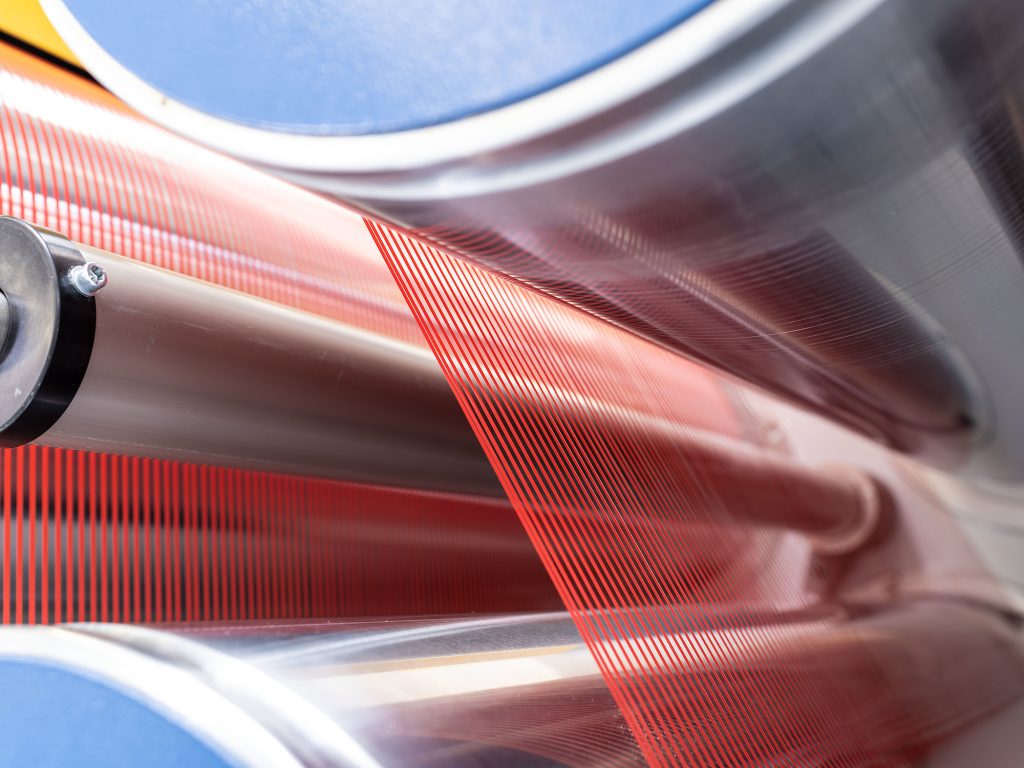
- Extrusion Lamination. A PE/PP tie layer bonds film to fabric; melt temperature, nip pressure, web tension, and chill roll texture determine bond strength, curl, and COF.
- Gusseting and Cutting. Side gussets increase cube efficiency; precision cuts match density‑dependent fill mass and target pallet footprints.
- Bag Forming. Open‑mouth, valve, or block‑bottom; ultrasonic corner closures for sift‑proofing when powders are fine.
- Seaming/Sealing. Sewing, heat sealing, or ultrasonic bonds are chosen by powder flowability and dust control targets; stitch density and thread spec matter.
- In‑Line QA & SPC. GSM sampling; COF testing (ASTM D1894); film tensile (ASTM D882); dart impact (ASTM D1709); fabric strip method (ASTM D5035); periodic drop/stack sampling; lot‑level traceability.
Throughput benchmarks: lamination speeds often run 80–160 m/min. BOPP gauges around 18–25 μm and tie layers around 20–40 μm cover a broad range of food‑ingredient SKUs. COF is a knob you will revisit—document targets, test on the actual belt, and trend drift with control charts.
Could adhesive lamination replace extrusion lamination? It can; adhesives widen material windows and enable specialty films. But extrusion lamination with PP‑compatible ties usually favors mono‑polymer pathways and high bond strengths. Engineering is choice under constraint—state the trade, record the rationale, and move forward.
What Is the Application of Heavy Duty Woven Bags?
Across sectors, the recurring demand is predictable protection for flowable solids—from field to silo, from mill to mixer, from dock to display. Here is a compact map of fit‑for‑purpose structures and priorities.
| Use Case | Representative Structure | Design Priority | Operational Note |
|---|---|---|---|
| Moisture‑sensitive powders (flour, starch) | Woven 80–100 g/m² + BOPP 20–30 μm + PE/PP tie 20–40 μm; optional liner 30–50 μm | WVTR control; sift‑proof seams; label legibility | Balance liner gauge with gusset depth to prevent stiff stacks and slow fills. |
| Abrasive crystals (sugar, salt) | Woven 90–120 g/m² + laminated face or anti‑scuff zones | Tear/puncture resistance; corner durability | Specify anti‑skid zones to stabilize 4–5‑high patterns. |
| Valve‑fill premixes (bakery blends) | Block‑bottom valve; ultrasonic corners | Cube efficiency; dust control; high throughput | Match valve geometry to powder fineness to curb dusting. |
| Retail‑adjacent ingredients (premium rice) | Reverse‑printed BOPP; matte/gloss zoning; carry aids | Shelf impact; scuff resistance; code integrity | Use handles or reclosures on premium tiers to aid reuse. |
Capacity norms include 5, 10, 20, 25, 40, and 50 kg. Outer dimensions often fall near (48–55) × (75–95) cm, tuned to bulk density and filling jaws. The harsher the handling, the higher the GSM; the more hygroscopic the product, the more likely a liner proves its worth.
Standards, Certifications, and Test Methods for Heavy Duty Woven Bags
When a retailer, regulator, or brand steward asks “How do you know?”, you answer with standards and third‑party evidence. A disciplined evidence pack reduces debate and accelerates onboarding.
- Food contact: FDA 21 CFR 177.1520 (olefin polymers); EU Regulation No. 10/2011 (overall and specific migration). Maintain migration test reports for each laminate revision and ink system.
- Quality and food safety management: ISO 9001:2015; ISO 22000:2018 or FSSC 22000.
- Mechanical/surface tests: ASTM D882 (film tensile), ASTM D1709 (dart impact), ASTM D1894 (static/kinetic COF), ASTM D5035 (fabric strip method).
- Transport safety (optional): UN 5H1/5H3 woven plastics sacks for specified regulated solids.
Parameter Matrix — Realistic Ranges for Heavy Duty Woven Bags
| Category | Typical Options / Targets | Notes |
|---|---|---|
| Fabric (PP) | 60–120 g/m²; 700D–1000D tapes; 8×8–12×12 picks/inch | Scale GSM to fill mass and handling abuse. |
| Lamination | BOPP 18–25 μm; PE/PP tie 20–40 μm | Reverse print protects ink; tie controls bond and curl. |
| Inner Liner | HDPE/LLDPE 30–50 μm (as needed) | Adds WVTR and aroma control; may affect fold and fill speed. |
| Overall Bag Size | (48–55) × (75–95) cm for 20–50 kg fills | Confirm with product density and filling jaws. |
| COF (ASTM D1894) | 0.25–0.40 | Balance conveyor speed with pallet stability. |
| Printing | Rotogravure 6–10 colors; matte/gloss zoning | Keep color management aligned across plants. |
| UV Stabilization | 0.3–0.5% masterbatch | Supports outdoor staging without embrittlement. |
| Tensile (strip, 5 cm) | ≥ 1200 N (warp); ≥ 800 N (weft) | Corner/hem design converts strength into uptime. |
| UN Packaging (optional) | 5H1/5H3 | For regulated solids; performance tests required. |
Systems Map and Decision Framework for Heavy Duty Woven Bags
Systems thinking asks three questions: What are the parts? How do they interact? Where are the feedback loops? For Heavy Duty Woven Bags, the parts are materials (fabric, film, tie, liner), mechanics (seams, corners), and operations (fill line, conveyors, warehouse). The interactions appear as trade‑offs—raise barrier and stiffness rises; drop COF and pallet creep risk grows; increase GSM and you may see fold memory affect cut‑length registration. Feedback loops run through QA dashboards: drift in COF? Expect claims; loom variability? Watch seams. The result is an engineering conversation that refuses single‑metric thinking.
| Decision Node | Push This… | Expect That… | Mitigation |
|---|---|---|---|
| Higher Barrier (thicker liner) | Lower WVTR; better aroma control | Stiffer folds; slower filling; possible corner stress | Increase gusset depth; refine valve geometry; adjust seal dwell |
| Lower COF (faster belts) | Higher throughput on conveyors | More pallet creep and cross‑dock slippage | Use anti‑skid stripes; revise pallet pattern; increase stretch wrap only as last resort |
| Higher GSM (stronger fabric) | Improved tear/puncture resistance | Heavier webs; fold memory; potential mis‑registration | Selective reinforcement; seam redesign; recalibrated print repeats |
Why chase a single metric when the mission is multidimensional? Strength without barrier spoils stock; barrier without friction control blocks conveyors; friction control without documentation fails audits. The system succeeds when parts cohere.
Integrated Specification Template for Heavy Duty Woven Bags
- Structure: PP woven 90 g/m² + BOPP 20–30 μm (reverse print) + PE/PP tie 25–40 μm; optional HDPE/LLDPE liner 30–50 μm for hygroscopic powders.
- Format: Block‑bottom valve for fine powders; open‑mouth with fold‑over hem for granules and crystals.
- Performance: COF 0.30–0.38; warp/weft tensile ≥ 1200/800 N per 5 cm; UV stabilization for 3–6 months yard exposure.
- Compliance: Food contact per 21 CFR 177.1520 and EU 10/2011; quality under ISO 9001:2015; food safety under ISO 22000:2018/FSSC 22000; optional UN 5H1/5H3 for applicable solids.
- Operations: Match print repeat to cut length; validate COF on the actual line; qualify 4‑ or 5‑high pallet patterns; maintain lot‑level traceability and CoCs.
Operational Playbook for VidePak — Making Heavy Duty Woven Bags Work End‑to‑End
- Segment by risk. Cluster food‑ingredient SKUs by moisture sensitivity and abrasion; assign base structures (liner/no‑liner; GSM bands) per cluster.
- Define friction windows. Lock COF targets by line design and warehouse stacking; verify on actual belts and pallets.
- Standardize documentation. Maintain ISO certificates, CoCs, and migration reports per laminate stack and SKU so audits are predictable and brief.
- Pilot, then scale. Run drop/stack/creep tests prior to rollout; freeze the spec after cross‑functional sign‑off and log any controlled deviations.
- Branding templates. Standardize dielines and repeat lengths; reserve matte/gloss effects for hero SKUs to manage cost while preserving premium cues.
Data · Case · Compare — keep a minimal metrics deck (GSM, COF, film gauges, tensile, drop/stack); examine a representative failure case each quarter; compare format options across a season, not a single invoice. That rhythm quietly compounds into fewer claims and steadier throughput.
- What Are Heavy Duty Woven Bags?
- What Are the Core Features of Heavy Duty Woven Bags?
- Mechanical Strength — Fabric, Seams, and Corner Survival
- Barrier Behavior — Moisture, Odor, and Dust Governance
- Hygiene, Food Safety, and Contact Compliance
- Friction and Handling — COF as the Quiet KPI
- Branding Surface and Label Legibility
- Sustainability and Circularity — Design for Evidence
- What Is the Production Process of Heavy Duty Woven Bags?
- What Is the Application of Heavy Duty Woven Bags?
- Standards, Certifications, and Test Methods for Heavy Duty Woven Bags
- Parameter Matrix — Realistic Ranges for Heavy Duty Woven Bags
- Systems Map and Decision Framework for Heavy Duty Woven Bags
- Integrated Specification Template for Heavy Duty Woven Bags
- Operational Playbook for VidePak — Making Heavy Duty Woven Bags Work End‑to‑End
“Why are heavy-duty woven bags the backbone of global food ingredient logistics?”
The answer lies in their unparalleled durability, compliance with stringent international standards, and adaptability to diverse climatic and regulatory environments—qualities that VidePak has mastered through decades of innovation. With ISO, ASTM, EN, REACH, and JIS certifications underpinning its production processes, VidePak delivers packaging solutions that ensure safety, traceability, and cost efficiency for clients in pet food, livestock feed, and bulk ingredient sectors.
1. The Critical Role of Heavy-Duty Woven Bags in Food Logistics
Heavy-duty woven bags, crafted from polypropylene (PP) woven fabric, are engineered to withstand 25–50 kg loads while resisting abrasion, UV degradation, and microbial growth. The global food packaging market, valued at $346 billion in 2024, relies on these bags for their ability to preserve product integrity across supply chains. For instance, a 2024 study by the Journal of Food Engineering found that PP woven bags reduced spoilage rates by 18% in humid climates compared to traditional jute sacks.
Case Study: A European pet food manufacturer reduced transportation damage by 30% after switching to VidePak’s block-bottom valve bags with 150 gsm PP weave and 50 µm PE liners, which exceed EN 15512 stacking height requirements (up to 8 meters).
2. VidePak’s Quality Control Framework: Global Standards in Action
2.1 Compliance with ISO and ASTM Standards
VidePak’s production aligns with ISO 9001 for quality management and ASTM D5265 for tensile strength testing. Key metrics include:
- Tensile Strength: ≥650 N/50mm (exceeding ASTM D5265’s 550 N benchmark).
- Moisture Barrier: PE liners achieve water vapor transmission rates (WVTR) ≤1.5 g/m²/day, critical for hygroscopic ingredients like soybean meal.
Production Process:
- Material Sourcing: Virgin PP resin (MFI 2–4 g/10 min) ensures consistency in filament extrusion.
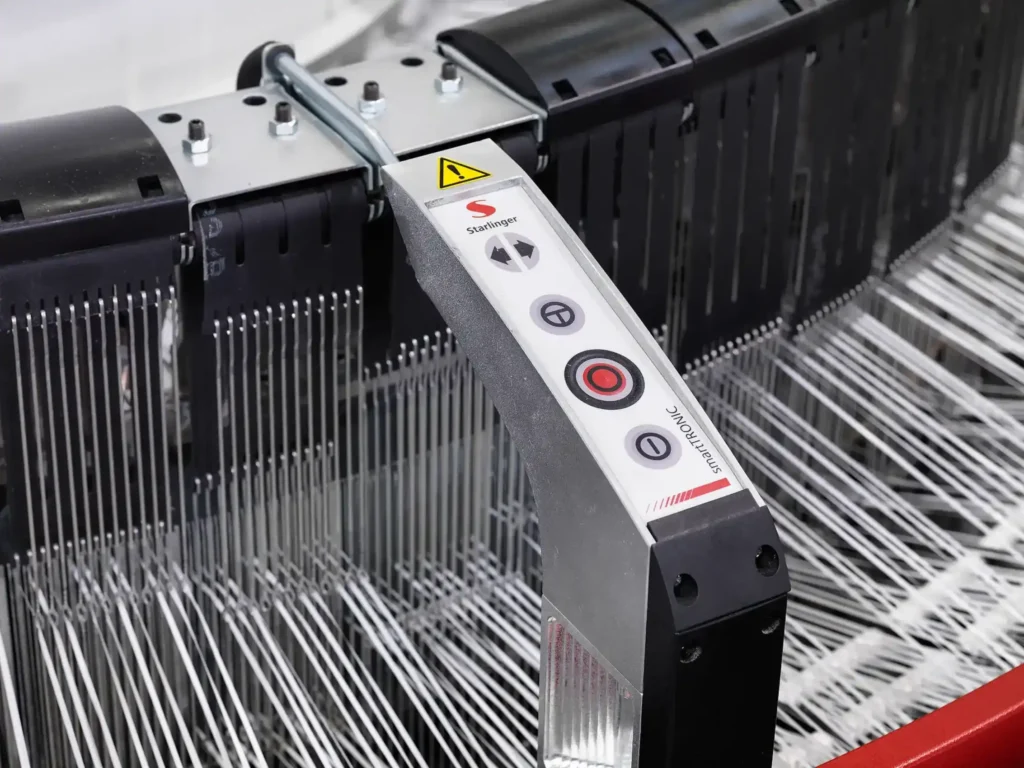
- Weaving: Starlinger circular looms (100+ units) produce 12×12 weaves/cm² with ±0.1 mm precision.
- Lamination: PE or aluminum foil coatings applied via 30+ lamination machines, achieving peel strength ≥3.5 N/cm.
2.2 Regional Adaptations: EU REACH and JIS Compliance
- EU REACH: VidePak’s bags use non-phthalate plasticizers and heavy metal-free inks (≤50 ppm), complying with Regulation (EC) No 1907/2006.
- Japan JIS Z 0208: Bags undergo UV stabilization testing (500+ hours exposure, ≤5% degradation) for outdoor storage resilience.
3. Technical Specifications and Customization
3.1 Product Parameters for Food Safety
| Parameter | Pet Food | Livestock Feed |
|---|---|---|
| PP Weave Density | 14×14/cm² | 12×12/cm² |
| Liner Thickness | 30 µm PE | 50 µm PE/Aluminum foil |
| Antimicrobial Coating | Silver-ion (ISO 22196) | Zinc oxide nanoparticles |
| Printing Resolution | 1200 dpi (FDA-compliant inks) | 600 dpi (branding focus) |
Data sourced from VidePak’s 2024 Quality Reports and GB/T 8947 standards.
3.2 Case Study: Poultry Feed Packaging in Southeast Asia
A Thai poultry feed supplier reported a 25% reduction in mold growth using VidePak’s ventilated woven bags with 0.5 mm micro-perforations. The design balances airflow (to prevent condensation) and pest resistance, adhering to ISO 22000 food safety protocols.
4. VidePak’s Competitive Edge: Technology and Scale
With $80M annual revenue and 526 employees, VidePak leverages:
- Starlinger AD*Star Looms: 200 RPM weaving speed, producing 12 million bags/month.
- Certifications: BRCGS for food safety, FSC-certified kraft paper liners, and OHSAS 18001 for workplace safety.
- Sustainability: 94% recyclable PP materials, reducing carbon footprint by 20% vs. competitors.
Global Market Penetration:
| Region | Key Clients | Customization Focus |
|---|---|---|
| North America | Pet food brands | Anti-static weaves (≤10⁹ Ω/sq) |
| Europe | Organic ingredient suppliers | REACH-compliant liners |
| Asia-Pacific | Rice and flour exporters | UV-resistant coatings |
5. FAQs
Q: How do heavy-duty bags compare in cost to traditional options?
A: VidePak’s bags cost 15–20% more than jute sacks but reduce replacement frequency by 40%, yielding 30% lower TCO over 5 years.
Q: Are these bags suitable for frozen ingredients?
A: Yes. LDPE liners maintain flexibility at -30°C, validated by ASTM D1790 testing.
6. Conclusion
Heavy-duty woven bags are not just packaging—they are a strategic asset in global food logistics. VidePak’s fusion of Starlinger technology, multi-regional compliance, and data-driven customization positions it as a leader in a market projected to grow at 4.8% CAGR through 2030. As sustainability mandates tighten, innovations like biodegradable PP blends will further redefine industry standards.
For insights into food-grade packaging innovations, explore our analysis of food-safe woven bag solutions, or learn how sustainability aligns with regulatory compliance.
References
- ASTM International. (2024). Standard Test Methods for Tensile Properties of Plastics.
- European Committee for Standardization. (2023). EN 15512: Static Storage Systems.
- GB/T 8947. (2024). Chinese National Standard for Composite Plastic Woven Bags.
- VidePak Internal Quality Reports. (2024). Certification Compliance Data.