
- What Are Multiwall Paper Bags and Why Do They Matter?
- Common Aliases and How Buyers Talk About Them
- Key Features and Performance Levers
- How Multiwall Paper Bags Are Manufactured
- Where Multiwall Paper Bags Are Used
- Technical Parameters and Selection Tables
- Design Logic: Liners, Coatings, and Mouth Styles
- Data-Enriched Case Illustrations
- Quality Plan and Audit Artifacts
- Frequently Asked Design Questions
- Quick Link for Teams Comparing Materials
- Why focus on Multiwall Paper Bags right now
- A systems map for Multiwall Paper Bags: people, physics, process, policy
- How Multiwall Paper Bags are manufactured—and why each step matters
- Strength mechanics of Multiwall Paper Bags: where performance comes from
- Barrier strategy for Multiwall Paper Bags: moisture, oxygen, aroma, light
- Markets and geographies that favor Multiwall Paper Bags
- Choosing a packaging scheme for Multiwall Paper Bags: a method, not a mood
- Data reinforcement: standards every Multiwall Paper Bags spec should cite
- Case studies that sharpen decisions for Multiwall Paper Bags
- Comparative reasoning: Multiwall Paper Bags versus laminated woven in varied climates
- Tables that convert talk into numbers for Multiwall Paper Bags
- RFQ checklist for Multiwall Paper Bags (copy, adapt, send)
- Troubleshooting map for Multiwall Paper Bags
- Sustainability, recycling, and end‑of‑life for Multiwall Paper Bags
- Frequently asked questions about Multiwall Paper Bags
- A practical resource on moisture‑managed formats
- Precision’s Role in **Multiwall Paper Bags**: Why Dimensional Control Governs Real-World Outcomes
- Benefits of Choosing **Multiwall Paper Bags** for High-Performance Packaging
- Exploring Custom Configurations of **Multiwall Paper Bags**: From Plies to Closures to Liners
- Standard Specifications and Test Anchors for **Multiwall Paper Bags** in Heavy-Load Logistics
- Pasting, Pinching, and Performance: Closure Choices for **Multiwall Paper Bags**
- Valve Filling in **Multiwall Paper Bags**: Fluidization, Air Paths, and Dust Discipline
- Key Components of **Multiwall Paper Bags**: From Cellulose Network to Functional Layers
- Performance Enhancements for **Multiwall Paper Bags**: Add-Ons That Change Results
- Supplier Selection for **Multiwall Paper Bags**: What to Examine Beyond Unit Price
- Evaluating the Quality of **Multiwall Paper Bags** Manufacturing: From Sheet to Shipment
- Precision Converting Techniques for **Multiwall Paper Bags**: How Equipment Choices Influence Results
- PBOM vs. PVB in **Multiwall Paper Bags**: A Comparative Framework
- Understanding the Valve-Fill Behavior of **Multiwall Paper Bags**: Sequencing for Speed and Cleanliness
- What Constitutes a “Grade” in **Multiwall Paper Bags**: Paper, Paste, and Performance Bands
- Applications of **Multiwall Paper Bags**: Where They Excel, Where They Need Help
- Ordering **Multiwall Paper Bags** in Bulk: RFQ Structure and Pilot Logic
- Pricing Structure for Custom **Multiwall Paper Bags**: Cost Drivers and Levers
- What Spare Components and Consumables Do Bagging Lines Rely On When Running **Multiwall Paper Bags**?
- How to Extend the Working Life of Packs Based on **Multiwall Paper Bags**: From Dock to Dealer
- Understanding the Complete Production Process for **Multiwall Paper Bags**: From Pulp to Pallet
- Advantages of **Multiwall Paper Bags** for Moisture- and Aroma-Sensitive Goods
- Exploring Different “Grades” of Sack Kraft and Their Impact on **Multiwall Paper Bags**
- Cross-Industry Lessons Applied to **Multiwall Paper Bags**: Horizontal Thinking Done Right
- Vertical Reasoning for **Multiwall Paper Bags**: From Symptoms to Root Mechanisms
- Data-Driven Tables for **Multiwall Paper Bags**: Turning Narrative into Numbers
- How to Integrate **Multiwall Paper Bags** into Modern Palletization: COF, Patterns, and Wrap
- Risk Management with **Multiwall Paper Bags**: Designing for the Failure Mode You Fear
- Internal Resource Link for Supplier Benchmarking
- References
What Are Multiwall Paper Bags and Why Do They Matter?
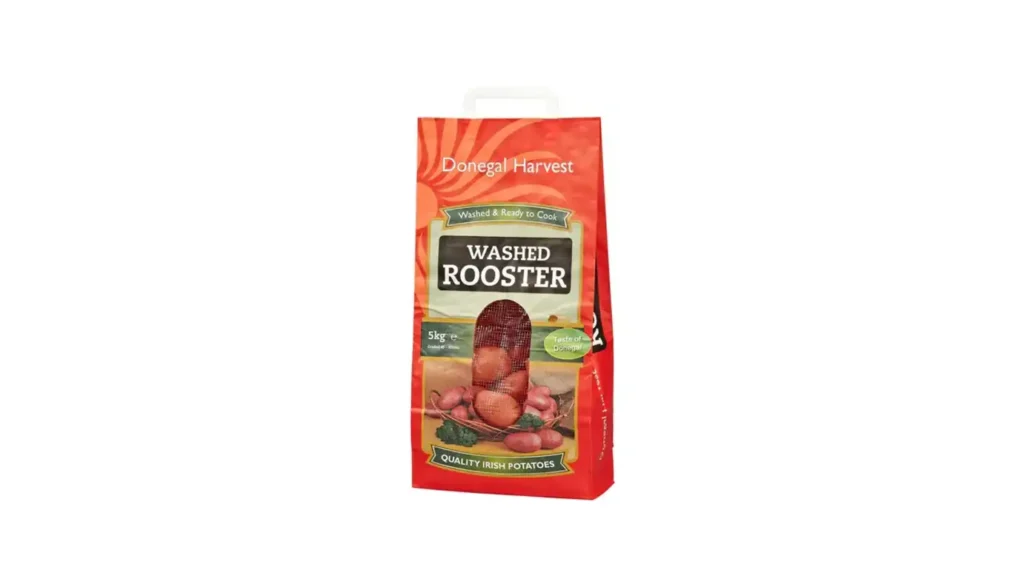
In modern distribution, the decisive difference between an efficient supply chain and an expensive one often comes down to packaging choices made months earlier. Multiwall Paper Bags are a quintessential example: deceptively simple to the eye, yet highly engineered in structure, closure, and barrier logic. They are built from layered sack kraft plies that are pasted, folded, and formed into a container that must absorb drop energy, survive clamp-truck compression, and protect the product against moisture, oxygen, grease, and dust—all while remaining printable, traceable, and acceptable under food-contact frameworks where relevant. When specified well, Multiwall Paper Bags increase line throughput, reduce sifting complaints, and hold stack shape across seasons; when specified poorly, they balloon at the filler, split at corners, and invite chargebacks. The point is not nostalgia for paper; it is a recognition that a multi-ply cellulose system can be tuned like any technical laminate to match the physics of a given SKU and route.
Common Aliases and How Buyers Talk About Them
To avoid confusion in RFQs and audits, keep a shared vocabulary. Below are frequently used aliases that typically point back to Multiwall Paper Bags:
- Pinch-bottom open mouth (PBOM)
- Pasted valve bag (PVB) / valve sack
- Multi-ply kraft sack / multi-layer paper sack
- Open-mouth pasted sack (OM)
- Extensible sack kraft bag (refers to ply type)
- Grease-proof paper sack (refers to coating)
- Paper sack with PE liner / foil-lined paper sack
- Food-grade paper sack (compliance shorthand)
Key Features and Performance Levers
It is tempting to say Multiwall Paper Bags “are strong” and stop there. Real-world performance, however, emerges from a handful of independent levers that interact. Adjust one, watch three others move. The grid below turns those levers into tangible design choices you can document, test, and defend.
Strength from layered fibers
Ply count (2–6), grammage (70–100 g/m² per ply), and ply orientation distribute drop energy. Alternating machine directions and adding an extensible ply raise edge-survival without huge mass penalties.
Closure architectures
PBOM delivers hermeticity via heat-reactivated hot-melt; PVB excels in speed on valve fillers. Choice impacts sifting control, aroma retention, and line OEE.
Barrier as a module
PE liners (40–80 μm) reduce WVTR; EVOH or foil laminates drop OTR to near zero for aroma- & oxygen-sensitive SKUs. Pair barrier with mouth style to maintain a continuous seal path.
Friction tuned for handling
Surface finish and lacquers target a COF window (e.g., 0.35–0.60, ASTM D1894). Too low and pallets skate; too high and denesting jams appear.
Print & identity
Direct flexo on matte kraft yields high contrast and minimal glare, boosting barcode hits. Matte “scan panels” and microtext near seams support QA traceability.
Sift-proof logic
PBOM with liner-through-mouth enables melt-sealed hermeticity; PVB relies on tight valve geometry and paste patterns. Both can reach near-zero leak rates with correct QA.
How Multiwall Paper Bags Are Manufactured
Production is a system of cause-and-effect. Each decision upstream—fiber choice, moisture content, paste chemistry—echoes downstream as a measurable KPI: drop height, seal strength, sifting rate. The process below is the minimum you should expect your converter to master and document.
1) Sack kraft preparation
Long-fiber, high-purity papers (70–100 g/m²) tested per TAPPI T410/T411/T494/T414. Porosity is balanced for air release without seam weakness. Moisture is controlled to keep sheet flatness and avoid curl.
TAPPI T410 TAPPI T414 TAPPI T4942) Ply build-up & pasting
Two to six plies combined on a tuber using starch or resin-modified pastes; paste width, bead weight, and zoning control both seam integrity and directed venting at the valve.
Starch/Hot-melt 5M2 water-resistant logic3) Valve design & insertion
Internal or external patches create a sleeve that opens under the spout and closes under product pressure. Geometry (stepped, slotted) governs fill speed versus dust control.
PVB Valve sleeve4) Bottoming & closure
PBOM adds a heat-reactivated hot-melt for post-fill sealing; PVB closes by pasting at both ends. Rounding corners and setting fold radii disperse stress in edge drops.
PBOM Hot-melt reactivation5) Functional layers
Grease-proof coats preserve appearance; PE or barrier liners (EVOH/foil) deliver WVTR/OTR control. Micro-perforations are a last resort in humid geographies.
ASTM F1249 ASTM D39856) QA & documentation
Finished-bag checks include ISO 7965-2 drop, ASTM F88 seal (PBOM/liner), ASTM D1894 COF, and ASTM D3078 bubble emission. Compliance mapping cites 21 CFR 176.170/176.180, 175.105, 177.1520; EU 10/2011; EU 1935/2004; BfR XXXVI.
ISO 7965-2 ASTM F88 ASTM D3078Where Multiwall Paper Bags Are Used
Applications fall into recognizable clusters. Each cluster values a slightly different mix of speed, barrier, aesthetics, and drop tolerance. Rather than listing markets, we’ll articulate the physics behind the choice so your team can map any SKU to an evidence-based spec.
Food powders & blends
Flour, sugar, starch, bakery mixes, and beverage powders favor valve filling and matte print surfaces. PBOM with PE liner is common when humidity or grease risk rises.
Minerals & chemicals
Fine minerals and benign chemicals benefit from sift-proof closures and controlled COF. Where hygroscopicity is high, liners are non-negotiable to avoid caking.
Seeds, feed, and agri-inputs
Pelleted or granular contents demand edge-abrasion tolerance and stable stack geometry. Rounded corners and PBOM sealing reduce edge splits and dusting.
Premium retail formats
Where shelf storytelling matters, the kraft surface’s low glare preserves color fidelity and elevates brand cues, while liners keep aroma and texture intact.
Short-route fast turns
In dry, inland logistics with quick inventory turns, paper-only builds (no liner) can hit cost and speed KPIs with tidy seams and clean presentation.
Export & mixed climates
Where seasons swing, a liner becomes the cheapest insurance policy against moisture. PBOM hermeticity plus QA’d seals is the standard play.
Technical Parameters and Selection Tables
Numbers end arguments. Use the parameter snapshots below to define acceptable bands in your RFQ and to align suppliers on the same test vocabulary.
| Dimension | Typical band | Test/Reference | Design implication |
|---|---|---|---|
| Ply grammage | 70–100 g/m² per ply | TAPPI T410/T411 | Higher grammage lifts tear & stiffness; watch fold memory |
| Ply count | 2–6 plies | — | More plies help drop absorption; marginal mass increases |
| Closure type | PBOM / PVB | — | PBOM = hermeticity; PVB = speed |
| Liner gauge | PE 40–80 μm; foil 6–9 μm (laminate) | ASTM F1249 / D3985 | Lower WVTR/OTR; pick based on hygroscopicity & aroma |
| Outer COF | 0.35–0.60 (static) | ASTM D1894 | Denesting & pallet stability |
| Drop performance | 1.0–1.2 m (20–25 kg) | ISO 7965-2 | Edge & corner survival proxy |
| Seal strength | ≥10–20 N/15 mm | ASTM F88 | Mouth integrity under handling |
| Leak tightness | Zero fails @ set pressure/time | ASTM D3078 | Sift-proof confirmation |
Design Logic: Liners, Coatings, and Mouth Styles
The right configuration is never an accident; it is a series of small, well-aimed choices. Use the matrix below to converge fast, then validate on a pilot run.
| Scenario | Recommended configuration | Reasoning |
|---|---|---|
| Hygroscopic salts/fertilizers | PBOM + PE liner 50–60 μm; rounded corners; matte scan panel | Liner tackles WVTR; PBOM secures hermeticity; corner geometry resists clamp-initiated tears |
| Premium spice blends (aroma-sensitive) | PBOM + foil laminate liner; light-shielding inks | Near-zero OTR; protect volatile notes; preserve brand optics |
| Dry, inland routes, fast turns | PVB; paper-only (no liner); micro-perfs tuned | Speed wins; cost control; acceptable humidity risk |
| Export with seasonal humidity | PBOM + PE liner 60–80 μm; anti-slip outer | Insurance against caking and pallet creep; maintain stack stability |
| Oily seeds or feeds | Grease-proof coat + PE liner; PBOM | Prevent staining; maintain mouth integrity; protect perceived hygiene |
Data-Enriched Case Illustrations
Case A: 10 kg bakery premix
Pain points: barcodes failing and corner sifting. Intervention: PBOM with PE 50 μm liner extended through mouth; matte scan panel. Results: Seal ≥ 12 N/15 mm (ASTM F88); barcode rejection < 0.2%; dock dusting incidents fell below audit threshold.
Case B: 25 kg seed blend
Pain points: seasonal corner tears under clamps. Intervention: Four plies including one extensible; rounded corner profile; grease-proof outer coat. Results: 1.2 m edge-drop pass (ISO 7965-2) repeatable across summer peak; no clamp-related splits recorded in 3 months.
Quality Plan and Audit Artifacts
Auditors and receiving teams do not want adjectives; they want documents and numbers. A tight plan for Multiwall Paper Bags pairs each risk with a method and a threshold.
- Drop & orientation: ISO 7965-2 with defined orientations and pass heights for each SKU weight class.
- Seal integrity: ASTM F88 targets by closure/liner; jaw temperature, dwell, and pressure logged at changeovers.
- Friction window: ASTM D1894 for static/dynamic COF; corrective lacquer weights if out of window.
- Leak paths: ASTM D3078 bubble test on corners, longitudinal seam, and mouth area; zero-fail sampling plan.
- Barrier verification: ASTM F1249 (WVTR) and ASTM D3985 (OTR) on liner/coating coupons at stated conditions.
- Regulatory file: Declarations aligned to 21 CFR citations, EU 10/2011, EU 1935/2004, and BfR XXXVI; CoA and migration test reports from SGS/Intertek/TÜV.
Frequently Asked Design Questions
Do micro-perforations always help? Only when air removal during filling is your bottleneck and ambient humidity is reliably low. In humid corridors, they become two-way moisture highways. Prefer tuned valve sleeves and liners.
Is foil mandatory for food? No. Most dry foods succeed with PE liners. Foil or EVOH coex enters the picture when oxygen or light is the real enemy.
How do I size ply count? Start from target drop height and handling severity; add an extensible ply if edge-drop failures dominate; verify by ISO 7965-2.
Can I keep the natural look and still resist grease? Yes—use grease-proof coatings or glassine interleaves without giving up kraft tactility.
Quick Link for Teams Comparing Materials
For a fast, practical comparison of fabric-backed kraft features and friction control—helpful when benchmarking surface behavior against paper faces—see Multiwall Paper Bags. Use it while drafting RFQs to calibrate COF, anti-slip strategy, and print durability targets before pilot runs.
Why focus on Multiwall Paper Bags right now
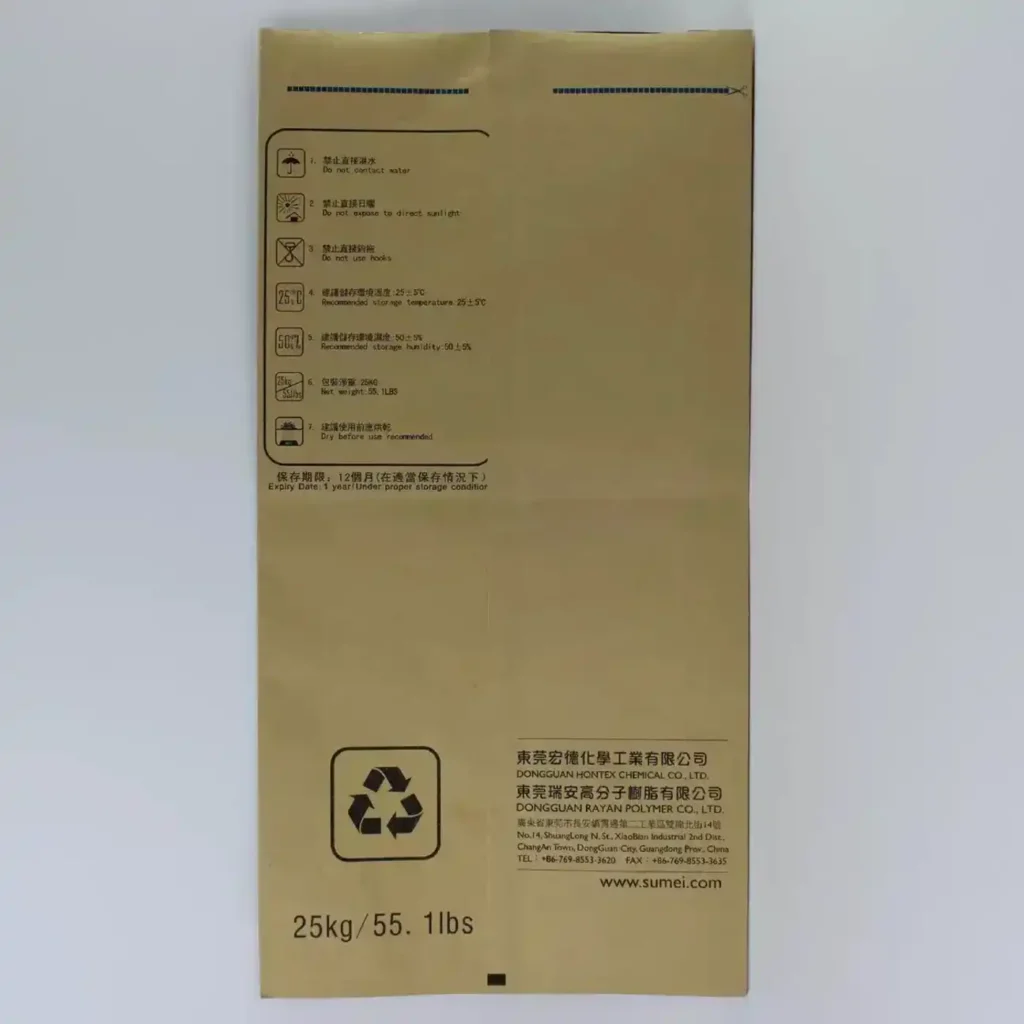
Global distribution is getting harsher, not kinder. Pallets ride longer, forklift clamps squeeze harder, warehouses grow more humid in summer and drier in winter. In that environment, packaging can be a risk amplifier or a risk absorber. Multiwall Paper Bags repeatedly prove to be risk absorbers when they are specified as a system rather than purchased as a commodity. The difference is subtle in the catalog and obvious on the dock: a bag that fills quickly without dust bursts, stacks square without doming, survives clamp handling without edge‑tear, and arrives without caking or sifting. When we treat Multiwall Paper Bags as an engineered ensemble—plies, pastes, closures, liners, coatings, print, test methods—outcomes become predictable instead of probabilistic.
This guide dissects that ensemble into manageable questions: How are Multiwall Paper Bags made and where do the failure modes originate? What strength and barrier properties can be verified with standards rather than adjectives? Which industries and geographies lean toward Multiwall Paper Bags, and which pivot to kraft‑paper‑laminated woven formats? When a customer asks about lamination, liners, foil, mouth style, and graphics, how do we translate vague preferences into a defendable specification? Throughout, we push beyond labels—data first, then decisions.
A systems map for Multiwall Paper Bags: people, physics, process, policy
A robust specification must satisfy four layers that pull in different directions—and yet must be reconciled.
- Human & brand layer. Operators want bags that denest, open, and present a stable mouth at speed. Auditors want clean seams and traceable materials. Shoppers, dealers, and end users want legibility, natural matte tactility, and an absence of dust. Multiwall Paper Bags have a surface that accepts high‑contrast print without glare, a detail that improves scanner performance and reduces relabeling.
- Physics layer. Airflow during filling, energy absorption during drops, stress at fold lines, and moisture diffusion through fibers are physical realities. Plied sack kraft carries load by a network of long cellulose fibers that stretch a little and then dissipate energy along the sheet. In the presence of humidity, hydrogen bonding in fibers shifts; tear can change; seams can either hold or unzip depending on paste design. Recognizing those behaviors, Multiwall Paper Bags use the number of plies, grammage, and paste architecture as levers, not decorations.
- Operations layer. On the line, two aspects dominate: speed and stability. Pasted‑valve designs feed powders rapidly with directed air release, while pinch‑bottom glue systems (PBOM) deliver hermeticity for sensitive goods. The right coefficient of friction (COF) on the outer face keeps pallets from skating and still lets stacks release under stretch wrap. When Multiwall Paper Bags are tuned to a numeric COF window, denesting jams plummet.
- Policy & compliance layer. Food‑contact scenarios bring regulatory texts to the table: 21 CFR 176.170 and 176.180 for paper and paperboard in contact with aqueous or fatty foods; 21 CFR 175.105 for adhesives; 21 CFR 177.1520 for polyolefin liners; EU 10/2011 for plastics; EU 1935/2004 as a framework; BfR XXXVI for paper and board; and, in transport, the UN 5M1/5M2 codes for multiwall constructions. A credible supplier of Multiwall Paper Bags aligns materials and test reports to these identifiers and operates under ISO 9001:2015—and where food adjacency exists, ISO 22000:2018 or BRCGS Packaging Materials.
How Multiwall Paper Bags are manufactured—and why each step matters
Production is not just a sequence of machines; it is a chain of cause and effect. Each step either preserves or undermines the integrity of the previous one. A bag fails where the process was casual.
Sack kraft: the structural backbone
High‑purity sack kraft papers are engineered, not improvised: long uncut fibers for strength, controlled porosity for air release, moisture content tuned for sheet flatness, surface sized to accept paste and ink. Grammages typically span 70–100 g/m² per ply. Mills validate with TAPPI T410 (basis weight), T411 (thickness), T494 (tensile), and T414 (tear). For Multiwall Paper Bags, the ply recipe is the first design decision—how many plies, which grammages, which extensible vs. straight kraft, and how to alternate machine direction (MD) to balance strength.
Ply build‑up and pasting
Two to six plies are combined on a high‑speed tuber. Adhesives carry a quiet burden: starch‑based pastes for sustainability and cost; resin‑modified starch or hot‑melt for humid corridors or when water resistance (5M2 logic) is required. The paste pattern can be continuous, spotted, or zoned to direct air release during filling without weakening seams. In Multiwall Paper Bags, thoughtful paste geometry (width, length, bead weight) protects the longitudinal seam from creep while still letting entrained air escape in the valve zone.
Tube formation and the valve module
The tube is formed with a pasted longitudinal seam. Valve patches—internal or external—are inserted to create a sleeve that opens under the filler spout and closes under product pressure. Valve geometry (stepped, slotted, sleeve‑within‑sleeve) regulates how Multiwall Paper Bags move air during fill: vent fast, retain product, and achieve a tidy closed mouth without add‑ons. The physics looks simple; the tuning is not. Too much air release and dust escapes; too little and bags balloon and topple.
Bottom forming: PVB vs. PBOM
On the bottomer, two classical closures appear. The pasted‑valve bag (PVB) closes both ends via pasting and creates an integrated valve opening. It excels in speed and consistency. The pinch‑bottom open mouth (PBOM) adds a heat‑reactivated hot‑melt strip that can be sealed after filling for hermeticity; PBOM thrives where aroma, grease, or moisture protection demands a continuous barrier path—especially when a liner is present. Selecting between PVB and PBOM in Multiwall Paper Bags is less about tradition and more about route risk and shelf‑life goals.
Optional modules and functional layers
Options are not toys; they are problem solvers. Grease‑proof coatings mitigate oil staining from high‑fat contents. PE coatings improve splash resistance. Film inserts or full liners manage moisture and oxygen. Micro‑perforations, used sparingly and intentionally, speed air release in powder fills but open a two‑way path for humidity; they are suited to dry inland routes, not coastal summers. Each option must be tied to a measurable risk in the use case for Multiwall Paper Bags.
Strength mechanics of Multiwall Paper Bags: where performance comes from
Why do some bags shrug off a 1.2 m edge drop while others split at the corner? The answer is structural mechanics, not luck.
Drop energy and load paths
Filled‑sack drop testing (ISO 7965‑2) exposes whether energy travels into the face panel, the bottom fold, or the longitudinal seam. In Multiwall Paper Bags, ply sequencing and bottom geometry determine whether the bag dissipates energy or concentrates it. A PBOM with well‑balanced plies often achieves repeatable 1.0–1.2 m passes for 20–25 kg fills on dry routes; in humid conditions, wet‑strength treatments and liner support become decisive.
Tear initiation and propagation
Tear begins at flaws: a nick from a clamp tooth, a scuff at a conveyor guide, a misaligned pallet board. TAPPI T414 (tear) reveals sheet‑level resistance; but seam design, fold radii, and corner reinforcement govern in‑bag outcomes. Multiwall Paper Bags improve edge tolerance by alternating MD across plies and by specifying corner pastes that distribute stress instead of creating a hard hinge.
Puncture and clamp handling
There is no single universal test for puncture on paper sacks comparable to dart impact on films. In practice, performance correlates with ply count, grammage, and local reinforcements. When clamp trucks dominate, the specification for Multiwall Paper Bags includes corner profile (rounded vs. sharp), outer‑face coatings for scuff resistance, and, where necessary, moving from PVB to PBOM to present a continuous seal path behind the mouth for added stiffness.
Barrier strategy for Multiwall Paper Bags: moisture, oxygen, aroma, light
Paper breathes; liners seal. The art is knowing when breathing is a friend and when it is a saboteur.
Moisture (WVTR)
Uncoated paper allows water vapor to move relatively freely. Coatings and PE laminations slow that movement, but the decisive lever for true moisture protection is an inner liner. A 40–80 µm LDPE or LLDPE liner—documented under ASTM F1249 at 38 °C/90 % RH when tested as a film—drops system‑level water vapor ingress dramatically for many dry goods. For Multiwall Paper Bags, that liner often extends through the mouth on PBOM to allow a heat‑sealed closure, while PVB relies on engineered pastes and valve sleeves for defense.
Oxygen and aroma (OTR)
PE is a poor oxygen barrier (hundreds to thousands of cc/m²·day under ASTM D3985). Many dry goods do not care. But spices, vitamin mixes, certain active ingredients, and light‑sensitive blends absolutely care. Here, Multiwall Paper Bags adopt an aluminum‑foil laminate (6–9 µm foil within a laminate) or a co‑extruded high‑barrier liner (e.g., EVOH balanced for humidity). OTR plummets to near zero, aroma stays inside, light exposure falls to negligible levels.
Grease and oil
Oil can discolor unprotected kraft and undermine perceived hygiene. Grease‑proof coatings or glassine interleaves solve this with minimal mass. For Multiwall Paper Bags carrying oily seeds or feeds, this small design choice preserves premium appearance without compromise to strength.
Sift‑proofing
Powder leakage at seams is the classic complaint that ruins otherwise good packaging. PBOM with reactivated hot‑melt delivers a continuous, truly sealed mouth. PVB relies on tight pasting logic and valve sleeves designed to close under product pressure. Both can be augmented by a PE or foil liner that extends into the mouth area to provide a melt‑seal path. Consequently, Multiwall Paper Bags can be made essentially sift‑proof when the closure and liner are specified as a pair.
Markets and geographies that favor Multiwall Paper Bags
Popularity is context, not dogma. A single plant can even run both formats depending on season.
Foods and fine powders in controlled climates
Flour, sugar, starches, premium spice blends, bakery mixes—these categories reward the natural, matte aesthetic and valve‑filling efficiency of Multiwall Paper Bags. PBOM delivers hermeticity where needed; PVB maximizes speed where line OEE is the first KPI. Retail branding benefits from the kraft face: high color fidelity without glare, easy barcode performance, and reliable adhesion of variable‑data labels.
Short routes, fast turns, strict cleanliness
Where pallets move quickly through dry depots, dust control and clean seams matter more than splash resistance. Multiwall Paper Bags shine here: tidy pasted bottoms, crisp edges, no frayed threads, no over‑stitch tails. These small details translate into fewer rejections at food plants and fewer retail complaints.
Moisture‑prone or clamp‑intense routes—where woven dominates instead
In coastal humidity, open yards, or clamp‑intense operations, kraft‑paper‑laminated woven formats begin to outperform—but even then, hybrids exist: Multiwall Paper Bags with inner liners and PBOM closures reclaim much of the moisture defense at competitive mass. The lesson is not to abandon paper; it is to deploy it with liners where humidity and dwell demand it.
Choosing a packaging scheme for Multiwall Paper Bags: a method, not a mood
Vague preferences (“make it stronger,” “keep it natural,” “no caking”) turn into solid engineering when mapped to levers. Use a stepwise method to converge on a spec that any qualified vendor can quote and your QA can verify.
Step 1 — Characterize product physics
Bulk density; particle size distribution; oil/grease content; hygroscopicity; dustiness; off‑gassing potential. Six descriptors, one truth: they predict which risks dominate. Hygroscopic materials like salt and certain fertilizers demand moisture defense; oils demand grease resistance; fine powders demand sift‑proof seams.
Step 2 — Map the route hazards
Route length; seasonal humidity profile; clamp‑truck frequency; pallet pattern; UV exposure during yard dwell. These decide where bags will be bruised, softened, or scuffed. Multiwall Paper Bags in humid seasons often add liners; in clamp yards they add corner reinforcements and avoid micro‑perfs.
Step 3 — Pick the outer structure and closure
For high‑speed valve filling of powders, choose PVB. For hermetic seals and aroma/grease defense, choose PBOM. A good specification for Multiwall Paper Bags will literally say: “PBOM with heat‑reactivated hot‑melt; liner extends through mouth; seal by heated bars; target F88 ≥ 15 N/15 mm.”
Step 4 — Decide on coatings and finishes
Grease‑proof or water‑repellent coatings where risk justifies; matte fields for barcode contrast; anti‑slip bands to hit a numeric COF window (ASTM D1894 static/dynamic). The finish is not cosmetic; it controls handling.
Step 5 — Choose the inner liner
None for dry, fast‑turn, low‑risk SKUs. PE (LDPE/LLDPE 40–80 µm) for moisture defense and heat‑sealability; aluminum‑foil laminate or high‑barrier coex for aroma and oxygen protection. Reference 21 CFR 177.1520 (PE) and EU 10/2011 in your documents.
Step 6 — Write acceptance tests instead of adjectives
Drop height by ISO 7965‑2; seal strength by ASTM F88; tear by TAPPI T414; COF by ASTM D1894; leak paths by ASTM D3078; WVTR (film) by ASTM F1249 where liners or coatings are used. Multiwall Paper Bags remain reliable when their qualities can be measured lot‑by‑lot.
Data reinforcement: standards every Multiwall Paper Bags spec should cite
When arguments grow subjective, numbers rescue the meeting. The following methods anchor both factory QC and incoming inspection.
- ISO 7965‑2 — Filled sack drop testing (orientation, height, number of drops).
- TAPPI T410, T411 — Basis weight and thickness of paper plies.
- TAPPI T494, T414 — Tensile and tear of paper sheets.
- TAPPI T403/T807 — Bursting strength and Mullen logic (where applicable).
- ASTM D1894 — Static/dynamic COF for outer face friction windows.
- ASTM F88 — Seal strength for PBOM melt seals and liner mouth seals.
- ASTM D3078 — Bubble emission (leak path detection) around seams and closures.
- ASTM F1249 / ASTM E96 — Water vapor transmission rate benchmarking for films and coatings associated with Multiwall Paper Bags.
- ASTM D3985 — Oxygen transmission rate for high‑barrier liners (EVOH/foil laminates).
Case studies that sharpen decisions for Multiwall Paper Bags
Stories persuade; data convinces. Use both.
Case 1 — 10 kg bakery premix, regional distribution
Situation: Premix producer used sewn‑top paper sacks and recorded sporadic sifting and barcode read errors. Intervention: Switched to PBOM Multiwall Paper Bags with a 50 µm PE liner extending through the mouth and specified matte print fields. Result: Fewer dusting incidents on line; seal strength verified at ≥ 12 N/15 mm (ASTM F88); scanned rejection rate dropped below 0.2%. Discussion: The liner created a continuous seal path; matte fields improved scan reliability; PBOM preserved hermeticity without sacrificing speed.
Case 2 — 25 kg seed blend, mixed climate
Situation: Seasonal humidity caused soft corners and occasional edge‑tears. Intervention: Upgraded to PBOM Multiwall Paper Bags with a grease‑proof outer coat and rounded corners; maintained four‑ply architecture (one extensible ply facing inward). Result: Repeatable 1.2 m edge‑drop pass (ISO 7965‑2) and no corner splits over the summer peak. Discussion: Ply sequencing plus corner geometry shifted stress away from a hard hinge, reducing tear propagation.
Case 3 — 5 kg premium spice, export retail
Situation: Aroma loss after three months at destination. Intervention: Adopted PBOM Multiwall Paper Bags with an aluminum‑foil laminate liner (approx. 7 µm foil in a PET/foil/PE stack), sealed by hot bars; light‑shielding ink densities specified around the window region. Result: OTR near zero (verified on liner by ASTM D3985); sensory panels detected retained top notes after five months. Discussion: High‑barrier liner plus hermetic PBOM closure neutralized oxygen and light risks without abandoning the kraft aesthetic.
Comparative reasoning: Multiwall Paper Bags versus laminated woven in varied climates
Parallel problems, different answers. On dry inland routes with short dwell, Multiwall Paper Bags deliver faster powder fills, adhesive‑tight seams, and tactile branding that sells. As humidity and clamp severity rise, laminated woven constructions improve drop repeatability and resist edge abrasion. But the gap narrows when Multiwall Paper Bags add liners and PBOM closures. The intelligent stance is not “either/or,” but “this family for that SKU, that family for this route.”
Tables that convert talk into numbers for Multiwall Paper Bags
Table 1 — Structural and process contrasts inside Multiwall Paper Bags
| Dimension | Option inside Multiwall Paper Bags | Role in performance |
|---|---|---|
| Ply grammage | 70–100 g/m² per ply | Drives sheet strength and tear behavior |
| Ply count | 2–6 plies | Controls drop energy absorption and stiffness |
| Ply orientation | Alternating MD directions | Balances MD/TD strength and reduces curl |
| Closure | Pasted valve (PVB) vs. pinch‑bottom open mouth (PBOM) | PVB = speed; PBOM = hermeticity and liner sealing |
| Paste type | Starch/resin‑modified/hot‑melt | Humidity tolerance and seam integrity |
| Coatings | Grease‑proof, water‑repellent | Surface hygiene and splash resistance |
| Liner | None / PE 40–80 µm / foil laminate | Moisture/oxygen barrier strategy |
Table 2 — Acceptance anchors for Multiwall Paper Bags (method‑based)
| Property | Typical target band | Method | Why it matters |
|---|---|---|---|
| Filled‑sack drop (20–25 kg) | 1.0–1.2 m pass (orientation set by QA plan) | ISO 7965‑2 | Confirms field robustness |
| Tear (sheet) | SKU‑specific; balance MD/TD | TAPPI T414 | Predicts edge‑nick tolerance |
| Bursting strength | SKU‑specific | TAPPI T403/T807 | Historic QC metric for paper face |
| COF (outer face) | Static/dynamic window declared, e.g., 0.35–0.60 | ASTM D1894 | Denesting and pallet stability |
| Seal strength (PBOM/liner) | ≥ 10–20 N/15 mm depending on weight | ASTM F88 | Mouth integrity |
| Leak paths | Zero failures at defined pressure/time | ASTM D3078 | Sift‑proofing and hermeticity |
| WVTR (film) | Single‑digit g/m²·day for 40–80 µm PE films | ASTM F1249 | Moisture defense where relevant |
Table 3 — Liner selection for Multiwall Paper Bags
| Scenario | Liner choice | Rationale |
|---|---|---|
| Hygroscopic salts/fertilizers | PE 50–60 µm | Moisture defense + heat‑sealability |
| Aroma/light‑sensitive spices | Foil laminate or EVOH coex | OTR/light near zero |
| Oily seeds/nuts | PE with grease‑proof paper coat | Prevents staining and preserves look |
| Dry, short‑route powders | None | Cost control with acceptable risk |
RFQ checklist for Multiwall Paper Bags (copy, adapt, send)
- Format: width × gusset × length; target pallet pattern and stack height.
- Structure: ply count and grammages; ply orientation strategy; paste type and pattern.
- Closure: PVB or PBOM; for PBOM, specify hot‑melt type and seal parameters; for PVB, specify valve sleeve geometry.
- Liner: none / PE (gauge, type) / foil laminate (construction); whether liner extends through mouth for sealing.
- Surfaces: COF window (ASTM D1894) and how achieved; grease‑proof or water‑repellent coatings; matte fields for scanning.
- Tests: ISO 7965‑2 drop; TAPPI T414/T403; ASTM F88; ASTM D3078; ASTM F1249 (if liners/coats used).
- Compliance: 21 CFR 176.170/176.180 for paper; 21 CFR 175.105 for adhesives; 21 CFR 177.1520 for PE liners; EU 10/2011; EU 1935/2004; BfR XXXVI.
- Documentation: supplier ISO 9001:2015; and where food‑adjacent, ISO 22000:2018 or BRCGS; third‑party lab reports (SGS/Intertek/TÜV) with method, instrument, conditions, specimens.
Troubleshooting map for Multiwall Paper Bags
- Ballooning at line exit? Reduce micro‑perfs; adjust valve sleeve design; verify paste pattern enables directed air release without uncontrolled venting.
- Sifting at corners? Increase paste coverage at bottom folds; consider PBOM with liner extension for a melt‑seal path; inspect fold radii.
- Barcode scan errors? Add matte print panels; reduce varnish gloss; verify ink density targets.
- Corner tears under clamps? Round corners; alter ply sequencing to avoid hard hinges; consider higher grammage on the outer ply.
- Moisture pickup in coastal season? Introduce PE liner; switch to PBOM; confirm F1249 numbers for film and F88 seal strength.
- Denesting jams? Re‑specify COF window numerically; adjust lacquer weight or texture; align bag count per bundle with vacuum cup capacity.
Sustainability, recycling, and end‑of‑life for Multiwall Paper Bags
Sustainability starts with damage avoidance—saving the product saves the footprint. Beyond that, Multiwall Paper Bags offer practical end‑of‑life paths. Paper‑only builds without wet‑strength resins flow more easily into fiber streams. Paper + removable PE liners can be designed for disassembly so that end users separate components. When hot‑melt, coatings, or liners are necessary, declare them transparently in your specification; clarity makes recycling agencies more cooperative. EPR pressures are intensifying globally; a design that prevents over‑packaging and reduces returns will almost always beat a lighter specification that triggers product loss.
Frequently asked questions about Multiwall Paper Bags
Q: Are micro‑perforations a free way to speed filling?
A: They vent both ways. In dry inland routes, they help. In coastal humidity, they import moisture. Prefer valve sleeve tuning and liners for humidity control.
Q: When do I choose PBOM over PVB?
A: When hermeticity, aroma retention, or grease resistance require a continuous seal path—especially with a liner. Choose PVB when speed and powder filling efficiency dominate.
Q: Do I need foil for food?
A: Not for most dry foods. PE liners solve the dominant moisture issue. Foil or EVOH comes into play for aroma‑ and oxygen‑sensitive goods.
Q: What’s the single most predictive test of field performance?
A: For finished bags, ISO 7965‑2 drop testing across orientations. For closures, ASTM F88 seal strength. For outer handling, ASTM D1894 COF. Numbers prevent surprises.
Q: Can I keep the natural kraft look and still protect against oil?
A: Yes. Grease‑proof coatings or glassine interleaves preserve tactile visuals while blocking staining.
A practical resource on moisture‑managed formats
For teams comparing moisture‑managed specifications across formats, this in‑house resource summarizes valve geometries and water‑resistant construction options that complement the choices described here: moisture‑proof Multiwall Paper Bags for hygroscopic powders. It’s a concise way to translate route humidity and product hygroscopicity into a defensible liner and closure plan for Multiwall Paper Bags.
Precision’s Role in **Multiwall Paper Bags**: Why Dimensional Control Governs Real-World Outcomes
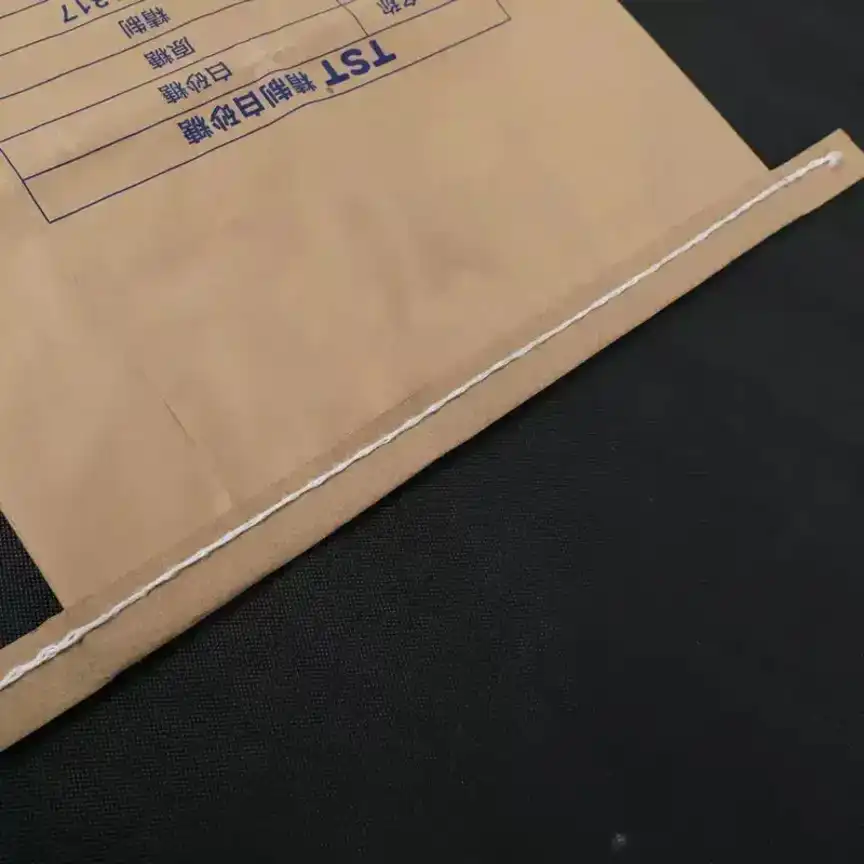
In packaging, precision is not vanity; it is logistics math. Dimensional tolerances on lay-flat width, gusset depth, and pinch geometry determine whether a filled sack will cube, whether a pallet will stay square, and whether warehouse scanners will read clean barcodes on a non-wrinkled face. When **Multiwall Paper Bags** are cut and formed within a tight tolerance band—think ±2 mm on lay-flat, ±1–2 mm on gusset symmetry, and repeatable fold radii—the gains ripple outward: denesting becomes predictable, valve spouts seat reliably, stretch wrap applies evenly, and clamp-truck jaws meet uniform edges instead of soft, overfilled corners. Precision here is both horizontal and vertical in its implications. Horizontally, it connects material science, converting mechanics, and palletization; vertically, it ties upstream sheet formation to midstream tube making and downstream closing, creating a closed loop in which every tolerance is there to protect a subsequent process step.
Consider the valve zone. On a pasted-valve build, the valve sleeve must open with minimal disruption to the mouth geometry, vent air in a controlled direction, then close under product pressure. If the sleeve cutout, paste pattern, or overlap shifts even a few millimeters, fill speed and dust control suffer. Within **Multiwall Paper Bags**, the precision story is therefore also a hygiene story: alignments reduce dust bursts, smudges, and rejects. Add the sustainability layer and the logic tightens again: tighter tolerances mean fewer reworks and less scrap, and often a lighter ply recipe can be held without raising the complaint rate.
Benefits of Choosing **Multiwall Paper Bags** for High-Performance Packaging
Short lists are persuasive; long lists are comprehensive. The advantages of **Multiwall Paper Bags** can be told both ways. They protect powder flows at high line speeds via pasted valves; they carry premium shelf cues through a natural matte aesthetic; they accept grease-proof and water-repellent coatings that keep appearances clean; they integrate liners for true moisture and oxygen defense; they close as tidy PBOM for hermeticity or as PVB for speed; they maintain printer-friendly surfaces that preserve barcode contrast; they arrive intact after pallet rides that would abrade or crease other substrates. Or say it another way: fast to fill, hard to scuff, easy to read, simple to seal, adaptable to climate, and credible to auditors. The reasons stack as deliberately as the plies themselves.
There is also an often-ignored business benefit: auditability. Because **Multiwall Paper Bags** reference well-known standards—ISO 7965-2 for drop tests; TAPPI T410/T411/T494/T414 for basis weight, thickness, tensile, and tear; TAPPI T403/T807 for burst; ASTM D1894 for outer-face friction; ASTM F88 for seal strength; ASTM D3078 for leak paths; ASTM F1249/D3985 for film barrier tests—buyers can write specifications that travel cleanly across borders and vendors, reducing ambiguity and accelerating supplier qualification.
Exploring Custom Configurations of **Multiwall Paper Bags**: From Plies to Closures to Liners
Customization in **Multiwall Paper Bags** is not an act of whimsy; it is a testable response to particular risks. Start with plies: two to six layers of sack kraft, typically 70–100 g/m², with choices between straight and extensible grades. Add orientation: alternating machine-direction across plies balances MD/TD performance. Proceed to pastes: starch-based for cost and sustainability; resin-modified starch or hot-melt where humidity and water exposure threaten seam creep. Move to closure type: pasted-valve bag (PVB) for sheer speed with powders; pinch-bottom open mouth (PBOM) for a heat-reactivated, hermetic seal after filling—especially potent when a liner extends through the mouth. Then tune the face: matte fields for scanner performance, anti-slip lacquers to hold a numeric coefficient of friction (COF) window, and grease-proof coatings for oily contents. Finally, choose a liner strategy: none for dry, fast-turn SKUs; PE (LDPE/LLDPE) for moisture defense and heat-sealability; foil laminate or EVOH coex for aroma, light, and oxygen control. Each choice should be traced to a method and a value in the RFQ.
Standard Specifications and Test Anchors for **Multiwall Paper Bags** in Heavy-Load Logistics
Specifications that survive shipping departments are written as verifiable thresholds. A pragmatic baseline for **Multiwall Paper Bags** used between 10–25 kg includes: ISO 7965-2 drop pass at 1.0–1.2 m across defined orientations; TAPPI T414 tear targets tuned to route severity (higher for clamp yards, balanced MD/TD); outer-face COF window 0.35–0.60 by ASTM D1894; PBOM or valve-region seal strengths at ≥10–20 N/15 mm by ASTM F88; leak-path zero-failure criteria by ASTM D3078; film barrier metrics (when liners/coatings are used) recorded at standard conditions (38 °C/90 % RH under ASTM F1249 for WVTR; 23 °C/0 % RH under ASTM D3985 for OTR). These anchors become acceptance criteria for incoming QC and supplier CoAs. When every attribute is tied to a method, quality conversations transform from “looks okay” to “meets method X at value Y.”
Pasting, Pinching, and Performance: Closure Choices for **Multiwall Paper Bags**
Choosing between PVB and PBOM defines how a pack behaves from filler to forklift to freezer. PVB excels in high-speed valve filling: the integrated sleeve admits the spout, directs air release, and closes by product mass and paste design. PBOM is the finisher’s friend: the hot-melt strip reactivates and seals after the dose, establishing a continuous barrier, especially when a liner lip is presented. What distinguishes the two in practice? Rate, risk, and regulatory objective. If your first KPI is line speed with powdery contents, PVB wins. If your first KPI is aroma retention, grease resistance, or moisture defense, PBOM takes the crown. In **Multiwall Paper Bags** portfolios, both are kept ready because routes and seasons change faster than plant layout.
Valve Filling in **Multiwall Paper Bags**: Fluidization, Air Paths, and Dust Discipline
Filling powders is an exercise in fluidization. The goal is swift product flow with controlled air escape, then instant re-solidification and seal integrity. Pasted-valve architectures in **Multiwall Paper Bags** shape that airflow through sleeve geometry, paste windows, and optional micro-perforations. The key is one-way logic: air out without letting humidity in. On dry inland routes, limited micro-perfs accelerate equalization; in coastal summers, they invite moisture and caking. Therefore, the more robust approach is usually valve sleeve tuning plus a liner for moisture defense, keeping barrier in place while preserving fill speed. Dust discipline follows from this: when air exits predictably, fugitive fines fall; when it doesn’t, dust blooms impose clean-up costs and quality complaints.
Key Components of **Multiwall Paper Bags**: From Cellulose Network to Functional Layers
Every component earns its keep. Sack kraft plies provide tensile backbone and tear resistance, with extensible plies adding stretch to absorb drop energy. Pastes knit the system together—starch where possible, resin-modified or hot-melt where humidity or hermetic needs arise. Closures (PVB or PBOM) translate production intent into field performance. Coatings—grease-proof, water-repellent, matte varnish—shape optics and cleanliness. Liners—PE for moisture and sealability, foil/EVOH for barrier—convert breathable shells into shelf-life engines. Finally, print systems, whether direct or under-film, combine brand fidelity with abrasion survival. In **Multiwall Paper Bags**, this stack is a small factory: every layer has a job, every job is tied to a test, and every test protects a logistics KPI.
Performance Enhancements for **Multiwall Paper Bags**: Add-Ons That Change Results
Not all add-ons are wise; some are indispensable. Rounded corner profiles reduce puncture initiation; anti-slip bands deliver a narrow COF window that stops pallets from skating while allowing denesting; batch windows preserve traceability without compromising print fields; UV-stabilized inks and varnishes protect outdoor-dwell pallets; foil or EVOH liners turn aroma-sensitive products from loss-makers into export-ready SKUs. The rule of thumb: add only what converts a specific risk into a measurable reduction in claims. In this way, **Multiwall Paper Bags** stay lean while achieving outsized protection.
Supplier Selection for **Multiwall Paper Bags**: What to Examine Beyond Unit Price
Prices differ by pennies; consequences differ by thousands. Vendor due diligence for **Multiwall Paper Bags** should extend beyond quotes into capabilities and controls: Does the supplier certify to ISO 9001:2015? Are food-adjacent facilities certified to ISO 22000:2018 or BRCGS Packaging Materials? Do they publish process capability (Cp/Cpk) on critical dimensions? Can they show lamination bond values and paste adhesion data across humidity soaks? Do they share full test reports from recognized labs (SGS, Intertek, TÜV) with method identifiers and conditions listed? When the answers are yes and the data are specific, the RFQ ceases to be a race to the bottom and becomes an engineering partnership.
Evaluating the Quality of **Multiwall Paper Bags** Manufacturing: From Sheet to Shipment
In a good factory, quality is staged, not inspected in at the end. Sheet-level tests—TAPPI T410/T411/T494/T414—establish ply credentials. Tube-level audits verify seam pasting, squareness, and valve placement. Bottomer checkpoints confirm fold symmetry and adhesive activation. Closure audits (PBOM seals or valve integrity) use ASTM F88 peel and ASTM D3078 bubble emission. Finished-pack trials apply ISO 7965-2 drops across orientations, followed by clamp-squeeze simulations where route data demand it. Shipping simulations test for wrap integrity and pallet creep under realistic COF. The result is not a pile of paper; it is a predictive model of how **Multiwall Paper Bags** will behave outside the factory gate.
Precision Converting Techniques for **Multiwall Paper Bags**: How Equipment Choices Influence Results
Machines leave fingerprints on product. Knife design affects edge nicking and tear starts; register control dictates print-to-fold alignment; paste application heads define bead width uniformity; valve inserters decide sleeve symmetry and repeatability. On PBOM lines, hot-melt temperature, dwell, and pressure shape seal strength distributions. On PVB lines, paste chemistry and sleeve overlap steer venting and close-out. Advanced lines integrate vision systems to reject mis-registered components before they become pallets of risk. For **Multiwall Paper Bags**, converting technique is a quiet differentiator that only becomes audible when logistics complaints disappear.
PBOM vs. PVB in **Multiwall Paper Bags**: A Comparative Framework
Both closures are excellent; they serve different masters. PBOM wins when the product or route demands hermeticity, aroma conservation, or oil/grease defense; it also simplifies end-user opening profiles via predictable seal curves. PVB wins when the filler is engineered for valve dosing at high OEE, especially for free-flowing powders. The negative spaces are equally important: PBOM on very fast lines may become the bottleneck if heat sealing is underpowered; PVB on humid, hygroscopic routes without liners risks moisture migration. The comparative test is simple: run a two-by-two pilot (PBOM vs. PVB) × (with liner vs. without), then lock in the path with the best combined score on drop tests, moisture pickup, sift claims, and wrap turns.
Understanding the Valve-Fill Behavior of **Multiwall Paper Bags**: Sequencing for Speed and Cleanliness
The choreography goes like this: present the mouth; seat the spout; open the valve sleeve; fluidize the powder; vent air through designed windows; dose to target; withdraw the spout; close by product pressure; finish with an external paste or fold as required. Each beat can be measured—airflow rates, pressure deltas, dust concentration near the spout, fill time to weight. When these beats are tuned, **Multiwall Paper Bags** become not just containers but collaborators, making high-speed filling repeatable without the mess usually associated with powders.
What Constitutes a “Grade” in **Multiwall Paper Bags**: Paper, Paste, and Performance Bands
Grades are combinations of plies, grammages, treatments, and closures calibrated to a usage profile. A common taxonomy: economy grade (2–3 plies, basic starch paste, PVB closure, no liner) for dry inland routes and low-risk granulars; standard grade (3–4 plies, selective grease-proof, PVB or PBOM, optional PE liner) for mainstream powders; premium grade (4–5 plies, resin-modified pastes, PBOM with PE or high-barrier liner, matte fields) for export, aroma-sensitive, or clamp-intensive routes. Each grade references the same test suite but sets its thresholds differently. Within **Multiwall Paper Bags**, grading is therefore a shorthand for a risk budget and a compliance envelope.
Applications of **Multiwall Paper Bags**: Where They Excel, Where They Need Help
Flour and bakery mixes thrive in PVB for speed and cleanliness; sugar enjoys the matte, non-glare print fields that keep scanning smooth; seeds and animal feed pellets benefit from rounded corners and higher tear targets; de-icer salts require liners and PBOM to survive humidity and yard dwell; premium spices demand foil or EVOH liners and carefully orchestrated light barriers. In more abrasive minerals, laminated-woven may counterbalance paper’s humidity sensitivity; in return, **Multiwall Paper Bags** win on brand clarity and dust discipline. The lesson is simple: each industry case converts into a set of thresholds tied to the same small menu of levers.
Ordering **Multiwall Paper Bags** in Bulk: RFQ Structure and Pilot Logic
RFQs that elicit comparable quotes have three attributes: they describe the product physics (density, particle size, oil content, hygroscopicity); they define route hazards (humidity profile, clamp frequency, pallet pattern, yard dwell); and they state method-based thresholds for bag performance. Include drawings for width × gusset × length, valve location, and bottom geometry. Declare closure choice (PVB vs. PBOM) and liner strategy. Specify COF windows and where anti-slip is applied. Require test reports with method names and conditions. Finish with a pilot protocol—two gauges × two closures × liner/no-liner, measured on drop, sift, moisture pickup, wrap turns, and inbound QC. When buying **Multiwall Paper Bags**, pilots are not indulgences; they’re insurance.
Pricing Structure for Custom **Multiwall Paper Bags**: Cost Drivers and Levers
Unit price is a sum of grams, seconds, and certs. Grams come from ply count and grammage, coatings, and liners; seconds come from line speed (PVB faster, PBOM slower unless heat-seal capacity is generous); certs come from compliance infrastructure (quality systems, audits, documented tests). Hidden drivers include scrap yield, paste consumption, and rework rate. Levers include optimizing ply recipes (e.g., inserting a single extensible ply may allow a lighter outer), narrowing COF windows to reduce anti-slip lacquer, and matching liner gauge to WVTR targets rather than folklore. Above all, TCO beats unit price: fewer returns and less product loss dwarf small increases in specification mass. This is why smart buyers of **Multiwall Paper Bags** pay for the properties they measure, not the adjectives they are sold.
What Spare Components and Consumables Do Bagging Lines Rely On When Running **Multiwall Paper Bags**?
Packaging lines do not fail at the bag; they fail at the interfaces. The spares list that keeps **Multiwall Paper Bags** humming includes: valve spout seals and gaskets sized to sleeve dimensions; hot-melt hoses, nozzles, and filter screens for PBOM; paste applicator diaphragms and meters for PVB; corona-treatment electrodes for under-film print systems; embossing rolls or lacquer heads for COF tuning; seal jaw PTFE covers and thermocouples for consistent F88 values; vacuum-cup pads matched to outer-face textures to avoid slippage. Keeping these components in tolerance is an indirect way to keep bag performance in tolerance.
How to Extend the Working Life of Packs Based on **Multiwall Paper Bags**: From Dock to Dealer
Longevity is half design, half behavior. Design delivers rounded corners, higher tear bands, robust pastes, and liners. Behavior delivers proper clamp positioning, pallet patterns that avoid overhang, wrap recipes that minimize top-layer doming, and storage conditions that respect humidity limits. Add training: teach clamp operators to approach along centerlines; teach warehouse teams to keep pallets square; teach QA to read numbers instead of adjectives. The working life of **Multiwall Paper Bags** is the shared output of all of these micro-decisions.
Understanding the Complete Production Process for **Multiwall Paper Bags**: From Pulp to Pallet
The long view helps. Mills refine pulp into sack kraft with targeted tensile and tear; converters align plies and apply pastes; tubers form tubes and insert valves; bottomers close ends via paste or pinch; printers apply graphics; coaters add functional surfaces; liner stations insert PE, EVOH, or foil as directed; quality teams sample and test; pallets assemble and wrap; outbound logistics assume custody. At each stage, a method stands ready to measure what matters. A specification that maps stage to method is the closest thing this industry has to a guarantee. That mapping is the operating system of **Multiwall Paper Bags**.
Advantages of **Multiwall Paper Bags** for Moisture- and Aroma-Sensitive Goods
Moisture-sensitive SKUs are not merely inconvenient; they are inventory risks. With PBOM plus PE liners, WVTR drops to a band compatible with salts, hygroscopic fertilizers, and many premixes. For aroma-sensitive or oxidation-prone goods, foil laminates or EVOH coex liners take OTR to near zero, especially when combined with light-shielding inks and careful window placement. The surprising upshot is that **Multiwall Paper Bags** can be engineered into high-barrier systems without abandoning their tactile brand value. The tradeoffs are well understood: cost, stiffness, and careful handling over tight folds. When these are planned, the result is export-grade shelf life in a familiar format.
Exploring Different “Grades” of Sack Kraft and Their Impact on **Multiwall Paper Bags**
Not all sack kraft is born equal. Straight kraft emphasizes tensile; extensible kraft adds stretch; wet-strength treatments preserve integrity under humidity; grease-resistant variants protect appearances. Combining these with intelligent ply orientation can deliver equal or better drop performance at lower total basis weight. In practice, that means a three-ply with one extensible inner may outperform a four-ply straight kraft stack in edge-drops while saving mass. For **Multiwall Paper Bags**, experimenting with paper grades is a rare instance where you can subtract grams and add robustness.
Cross-Industry Lessons Applied to **Multiwall Paper Bags**: Horizontal Thinking Done Right
Borrow liberally from neighbors. Valve technology echoes one-way venting from polymer bag formats and can be adapted to paper in specific hybrids. Anti-slip lacquer zoning borrows from film-laminate pallet science. Hermetic PBOM closures resemble pouch heat-seal logic, including the reliance on seal curves and jaw texture. Print-field matting mirrors label-industry best practices for scan contrast. When horizontal thinking is encouraged, **Multiwall Paper Bags** absorb proven tactics rather than reinventing fragile ones.
Vertical Reasoning for **Multiwall Paper Bags**: From Symptoms to Root Mechanisms
Start with the symptom—caking, sifting, doming, corner splits—then descend. Caking? Moisture ingress via two-way micro-perfs or non-hermetic closures; counter with PBOM and liners. Sifting? Weak seam paste windows at bottom folds or valve misbehaviors; counter with extended paste coverage and sleeve redesign. Doming? Trapped air from aggressive fills; counter with sleeve geometry and headspace policy. Corner splits? Hard hinge creation from sharp fold radii; counter with rounded corners and ply sequencing. In **Multiwall Paper Bags**, the fastest fixes come from correctly attributing mechanisms, not just swapping to heavier paper.
Data-Driven Tables for **Multiwall Paper Bags**: Turning Narrative into Numbers
| Category | Parameter | Typical Target/Band | Method | Why It Matters |
|---|---|---|---|---|
| Structure | Plies × grammage | 3–5 plies, 70–100 g/m² each | TAPPI T410/T411 | Drop energy absorption & sheet stability |
| Closure | PVB vs. PBOM | Speed vs. hermetic seal | ISO 7965-2; ASTM F88 | Line OEE vs. shelf-life objectives |
| Friction | COF (outer face) | 0.35–0.60 | ASTM D1894 | Denesting & pallet stability |
| Sealing | Seal strength | ≥10–20 N/15 mm | ASTM F88 | Mouth integrity under handling |
| Leak paths | Bubble emission | Zero fails at set pressure/time | ASTM D3078 | Sift-proofing confidence |
| Barrier | WVTR/OTR (liner films) | Single-digit g/m²·day (PE); near-zero OTR (foil/EVOH) | ASTM F1249/D3985 | Caking prevention & aroma retention |
How to Integrate **Multiwall Paper Bags** into Modern Palletization: COF, Patterns, and Wrap
Three numbers run pallet behavior: COF on the outer face, stack pattern geometry, and wrap tension. For COF, declare a target window for bag-to-bag interactions; for geometry, prefer interlocking patterns that reduce columnar overhang; for wrap, tune to minimize top-layer doming and avoid crushing valves or PBOM lips. The interface between **Multiwall Paper Bags** and pallets is where many invisible savings hide: fewer wrap turns, fewer corner protectors, fewer clamp marks.
Risk Management with **Multiwall Paper Bags**: Designing for the Failure Mode You Fear
Worried about moisture? Choose PBOM with PE liner and keep micro-perfs off the spec. Worried about dust? Tighten paste windows at bottom folds and specify bubble-emission checks post-conversion. Worried about clamp damage? Raise ply count modestly, round corners, and apply anti-slip bands to resist shear. Worried about brand scuffing? Reverse print under protective varnish fields. Each fear converts to a control. This is the logic that keeps **Multiwall Paper Bags** performing from dock to dealer.
Internal Resource Link for Supplier Benchmarking
If your sourcing project spans paper and woven formats and you need a quick directory to benchmark industrial sack makers, this internal reference will help: multi‑ply kraft sacks. Use it as a catalog of capabilities when mapping potential partners against the specification framework for **Multiwall Paper Bags**.
References
- ISO 7965-2: Sacks — Drop test
- ASTM D1894: Standard Test Method for Static and Kinetic Coefficients of Friction of Plastic Film and Sheeting
- ASTM F88: Seal Strength of Flexible Barrier Materials
- ASTM D3078: Determination of Leaks in Flexible Packaging by Bubble Emission
- ASTM F1249: Water Vapor Transmission Rate Through Plastic Film and Sheeting Using a Modulated Infrared Sensor
- ASTM D3985: Oxygen Gas Transmission Rate Through Plastic Film and Sheeting Using a Coulometric Sensor
- TAPPI Standards: T410/T411/T494/T414/T403/T807
- 21 CFR 176.170/176.180: Paper and paperboard in contact with aqueous/fatty foods
- 21 CFR 175.105: Adhesives
- 21 CFR 177.1520: Olefin polymers
- EU 10/2011 and EU 1935/2004: Plastics in food contact & framework regulation