
What are Kraft Paper Bags Laminated with PP Woven Fabric?
Kraft Paper Bags Laminated with PP Woven Fabric are hybrid industrial sacks that merge the tactile credibility of multi‑ply kraft paper with the tensile backbone of polypropylene (PP) woven fabric. In everyday language, the paper speaks to trust and clarity—ink sits sharply, graphics breathe, safety icons pop—while the woven PP layer quietly does the heavy lifting: resisting puncture, controlling tear propagation, and helping pallets arrive square rather than slumped. In different markets, Kraft Paper Bags Laminated with PP Woven Fabric are also called kraft–PP composite bags, paper–woven laminated sacks, kraft paper woven bags, or laminated kraft block‑bottom bags; the labels vary, the intent doesn’t.
Why bring Kraft Paper Bags Laminated with PP Woven Fabric to the fore now? Because supply chains have become longer, harsher, and less forgiving. Warehouses are dust‑sensitive; retailers are brand‑sensitive; regulators are data‑sensitive. This composite structure answers all three: the paper exterior manages shelf presence and print quality; the PP weave manages impact, clamp handling, and edge abrasion; the lamination is the handshake that keeps the duo in step. To ground the concept in a practical catalog view, see the family entry for Kraft Paper Bags Laminated with PP Woven Fabric.
Horizontally, compare across packaging families and the contrasts surface: classic sewn multi‑wall kraft breathes well but leaves stitch holes; mono‑material PE heavy‑duty film seals quickly but is more puncture‑sensitive at equal tare; pure woven PP without paper prints cleanly but lacks the tactile warmth many brands want. Vertically, trace cause to effect: fiber choice → paper basis weight → lamination chemistry and caliper → weave density and tape denier → seam geometry (stitch vs. heat‑seal) → pallet stability → claims rate. A gram here, a micrometer there, and somewhere down the road a forklift operator notices: fewer split corners, less sweep‑up, quicker audits. Coincidence? Hardly—materials science simply doing its work.
What are the features of Kraft Paper Bags Laminated with PP Woven Fabric?
Strength‑to‑weight that earns its keep. Oriented PP tapes, woven into a stable fabric, distribute stress like a truss bridges a span. In the 25–50 kg class common to industrial powders, the composite structure resists chute impact, belt transfers, and clamp lifts without shedding corners. Light where it can be, tough where it must be.
Moisture moderation with a printable face. The paper exterior accepts water‑based flexo or gravure with crisp halftones and high barcode contrast. The laminate at the paper‑PP interface reduces porosity compared with plain kraft, curbing moisture ingress and powder egress. On fast filling lines, controlled micro‑perforation can be introduced: vent when you must, seal when you can—so the bag leaves the filler clean rather than dust‑flecked.
Block‑bottom geometry that stacks like bricks. Brick‑shape bases create self‑standing, cube‑efficient packages: pallets load tightly in containers, stacks resist creep in warm, humid yards, and faces stay billboard‑flat for hazard pictograms and multilingual instructions. Retailers see order; forklift drivers feel control.
Options designed for plant reality. Anti‑skid textures raise bag‑to‑bag coefficient of friction (COF) so stacks don’t skate; easy‑open tapes enable tidy decanting without knives; window panels (where permitted) reveal contents and build trust; liners protect hygiene‑critical or hygroscopic cargos without changing the exterior experience.
ESG‑aligned material logic. Paper can be FSC®‑sourced; inks can be water‑based; tie layers can be polyolefin; the woven core defaults to virgin PP for performance but may route to polyolefin‑friendly recovery where infrastructure exists. Not a slogan—an engineering path.
Rhetoric that meets reality. Paper that looks premium, a weave that feels indestructible, and a laminate that marries them without glue squeeze‑out or stitch‑line dust trails. Form with function, not form versus function. Isn’t that the point?
From a lateral vantage point, you see families: paper for breathability, film for hermeticity, woven for mechanics. From a longitudinal vantage point, you see dominoes: lamination caliper sets stiffness; stiffness sets fold behavior; fold behavior sets seam survivability; seam survivability sets drop performance; drop performance sets customer complaints. The poetry of process—measured in claims avoided.
What is the production process of Kraft Paper Bags Laminated with PP Woven Fabric?
1) PP tape extrusion & orientation. Virgin PP resin is melted, slit into tapes, then drawn—typically 5:1–7:1—to align chains. Annealing locks orientation so strength is repeatable. Draw ratio and tape denier set the fabric’s modulus and tear path; UV packages and slip/anti‑block additives are dosed for the route ahead.
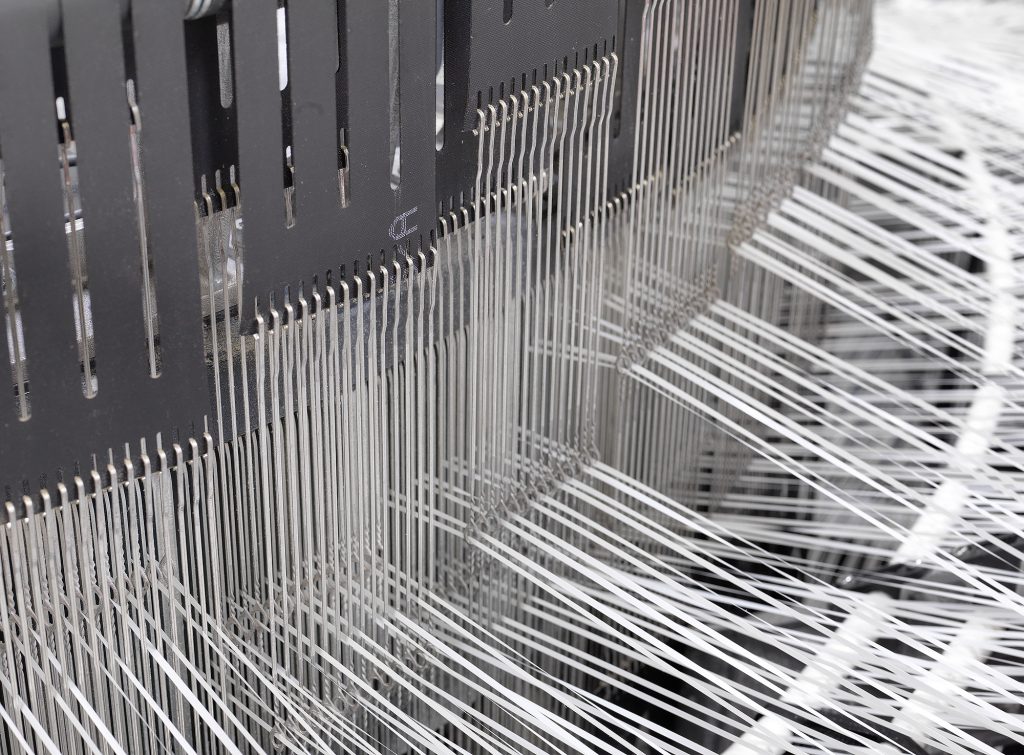
2) Fabric weaving. Tapes run on circular or flat looms to a target weave density, often 10×10 to 14×14 threads per inch. Loom tension and pick consistency drive surface flatness (for lamination) and dimensional stability (for converting). Anti‑skid textures can be designed into the fabric or applied later.
3) Paper selection & surface prep. Outer plies of natural or bleached kraft (typically 70–120 g/m²) and inner plies (60–90 g/m²) are balanced for stiffness and print fidelity. Corona treatment or primers may be used on either substrate to promote bond strength without over‑reliance on adhesives.
4) Lamination (extrusion or adhesive). The kraft and woven substrate are married via extrusion lamination using PP/PE tie layers—commonly 15–30 µm—or via modern solvent‑free adhesive systems where specified. Caliper uniformity governs curl, stiffness, and bond integrity; inconsistency risks gusset cracking or edge delamination.
5) Printing. Multi‑color flexographic printing is the industrial workhorse; rotogravure is selected for photographic branding. Tight registration protects barcode scan rates, QR readability, and hazard icon clarity under conveyor rub.
6) Converting & forming. Laminated webs are cut, tubed, and formed into block‑bottom (valve or open‑mouth) or pinch‑bottom structures. Stitching (chain/lock) suits traditional builds; heat sealing is used where film layers permit. Easy‑open tapes, anti‑skid coatings, document pouches, and label windows are added at this stage to match line needs.
7) Vent strategy & liner insertion. For fast‑fill products, micro‑perforation maps are engineered to deaerate during filling without smearing ink. Optional LDPE/HDPE liners (20–80 µm) are inserted for moisture control or food/feed hygiene, tied off to avoid migration.
8) Quality assurance. Routine controls include seam efficiency, tensile and burst strength, color ΔE versus proof, ink adhesion, COF (ASTM D1894), and drop tests (commonly 0.8–1.2 m with conditioned loads). Data loops upstream so extrusion, lamination, printing, and converting stay centered. Repeatability isn’t glamorous, but it’s how pallets arrive intact.
Throughout, VidePak runs this chain on top‑tier assets from Germany’s W&H and Austria’s Starlinger—hardware chosen for gauge stability, registration accuracy, and seam consistency. Capacity scales with >100 circular looms, 16 extrusion lines, and >30 lamination/printing machines; the outcome is not just volume, but volume with variance in check.
What is the application of Kraft Paper Bags Laminated with PP Woven Fabric?
Chemicals & intermediates. Resins, masterbatch, catalysts, pigments, and mineral fillers travel better when puncture resistance and print clarity co‑exist. Hazard panels remain legible, lot codes scan cleanly, and pallets don’t shed brick corners under clamp handling.
Agri‑inputs. NPK fertilizers and specialty blends demand dust control and weather tolerance. The hybrid structure resists scuff in bulk handling, stacks square for container loading, and keeps labels readable after long voyages.
Food & feed (where compliant). Flour, sugar, rice derivatives, and animal premixes gain paper’s familiar honesty with woven PP’s durability. Liners and hygiene controls suit moisture‑sensitive formulas; easy‑open features reduce workplace knife use.
Building materials & light minerals. Tile adhesive, grout, gypsum, and graded sands want seam strength, drop resilience, and clear safety icons. Block‑bottom geometry produces brick‑like stability; micro‑perfs prevent ballooning during fast fills.
Retail bulk & specialty goods. Charcoal, birdseed, pet food, and garden mixes benefit from paper’s shelf appeal and woven mechanics. Pretty outside, sturdy inside—why choose when you can have both?
Geographies matter. VidePak supports programs across the United States, Europe, Brazil and South America, Southeast Asia, Japan, Korea, Central Asia, the MENA Region, East Africa, and South Africa—localizing paper grades, laminate stacks, vent maps, and anti‑skid targets to climate, regulation, and route risk. With 568 employees and annual sales around US$80 million, we match enterprise ambition with an agile project cadence.
Typical Parameters for Kraft Paper Bags Laminated with PP Woven Fabric
The ranges below reflect widely used, real‑world specifications for kraft–PP composite sacks. Select to match filler design, product rheology, climate, and logistics. Values are application‑dependent and customizable.
| Parameter | Typical Options / Range |
|---|---|
| Product | Kraft Paper Bags Laminated with PP Woven Fabric (block‑bottom valve / open‑mouth / pinch) |
| Paper Basis Weight (outer ply) | 70–120 g/m² kraft (natural or bleached) |
| Inner Plies | 60–90 g/m² kraft; optional glassine/specialty barrier |
| Woven Substrate | PP fabric ~70–110 g/m² (application‑dependent) |
| Lamination Tie Layer | PP/PE ~15–30 µm (extrusion‑laminated) |
| Weave Density | 10×10 to 14×14 (warp×weft, threads/inch) |
| Bag Capacity | 5–50 kg common; 25–50 kg typical for industrial powders |
| Common 50‑kg Size | ≈50 × 80 cm (±1–2 cm by filler spec) |
| Micro‑Perforation | Zoned pin/laser perfs for deaeration during fast filling |
| COF (bag‑to‑bag) | ≈0.35–0.55 with anti‑skid textures |
| Printing | Flexo multi‑color; gravure optional; barcode/QR capable |
| Closures | Chain/lock stitch; hot‑melt or heat‑seal where film layers permit |
| UV Stabilization | Options up to ≈3,000 h (storage profile dependent) |
| Liner Options | LDPE/HDPE 20–80 µm loose liners (as required) |
Why VidePak for Kraft Paper Bags Laminated with PP Woven Fabric
- Engineering depth. We tune draw ratios, weave density, lamination caliper, seam geometry, and vent maps to your powder rheology and filler hardware—so seals hold, pallets square, and dust stays inside. Horizontal trade‑offs, vertical cause‑chains, one coherent spec.
- Equipment pedigree. Top‑tier W&H and Starlinger lines underpin repeatability in gauge control, registration, and seam efficiency across long runs. Week‑to‑week, country‑to‑country, the bag behaves like the last one that worked.
- Capacity that scales. 568 employees, annual sales around US$80 million, and equipment spanning >100 circular looms, 16 extrusion lines, and >30 lamination/printing machines—so multi‑SKU rollouts don’t bottleneck when demand spikes.
- Materials & customization. 100% virgin raw materials by default; FSC® paper options; multi‑color printing; anti‑skid, easy‑open, window panels, liners, and valve geometries tuned to region and route.
- Global reach. Programs operate across the US, Europe, Brazil, South America, Southeast Asia, Japan, Korea, Central Asia, MENA, East & South Africa with specs localized to climate, regulation, and logistics.
Partner with VidePak to specify Kraft Paper Bags Laminated with PP Woven Fabric that carry your product securely, carry your brand convincingly, and carry your cost targets forward—without carrying excess risk.
What Is Kraft Paper Bags Laminated with PP Woven Fabric?
Kraft Paper Bags Laminated with PP Woven Fabric are hybrid sacks that pair two worlds: the natural, brand‑friendly tactility of kraft paper and the rugged, load‑bearing strength of polypropylene (PP) woven fabric. The goal is simple yet demanding—look premium, run fast, survive hard routes. On automated or semi‑automatic lines, the package is formed, filled, and closed with repeatable geometry for 5–50 kg dry, flowable products. In different markets you may hear paper‑plastic composite bags, paper laminated woven polypropylene bags, kraft woven sacks, or paper‑laminated PP sacks. Many names, one intent: make packaging that sells on the shelf and performs on the floor. For readers comparing adjacent formats, explore the related family here: Kraft Paper Bags Laminated with PP Woven Fabric.
From a domain perspective, Kraft Paper Bags Laminated with PP Woven Fabric sit at the intersection of paper converting, textile mechanics, and flexible‑film science. Horizontally, the product borrows from each discipline—paper delivers stiffness and print body, woven PP supplies tear resistance and clamp tolerance, thin PE layers provide sealability and moisture control. Vertically, choices cascade from resin grade → tape denier → weave density → paper basis weight → lamination path → printing method → closure style → pallet behavior. A change in draw ratio alters denier; denier adjusts puncture performance; puncture performance shapes drop results; drop results determine how confident you feel shipping before monsoon. Does a bag merely contain? Or does it also convey, protect, persuade? With Kraft Paper Bags Laminated with PP Woven Fabric, the answer is yes, yes, and yes.
VidePak has produced Kraft Paper Bags Laminated with PP Woven Fabric since 2008. Our core team carries 30+ years in packaging engineering; 568 employees operate an equipment stack anchored by Germany’s W&H and Austria’s Starlinger—over 100 circular looms, 16 extrusion lines, and 30+ lamination/printing machines. We run virgin raw materials, keep spectrophotometric color libraries, and hold SPC on critical dimensions so a repeat order behaves like the signed golden sample—across the US, Europe, Brazil, South America, Southeast Asia, Japan, Korea, Central Asia, the MENA Region, East Africa, and South Africa.
What Are the Features of Kraft Paper Bags Laminated with PP Woven Fabric?
Strength‑to‑weight that pays its way. A PP tape lattice spreads load along warp and weft, resisting corner punctures and seam growth without over‑weighting the structure. The kraft shell contributes bending stiffness so pallets keep square edges and stack with confidence. You move more product per gram of packaging; you ship more certainty per pallet.
Built‑in moisture and light defense. Paper alone breathes, which is good for some goods and risky for others. Kraft Paper Bags Laminated with PP Woven Fabric integrate a thin PE coating between paper and fabric to create a continuous barrier, cutting water‑vapor ingress (WVTR) relative to paper‑only sacks. Where routes are coastal, humid, or temperature‑swinging, optional PE inliners—including black liners—add opacity and UV/light shielding for sensitive additives, fertilizers, or feed premixes. Light does not argue; it fades. The solution is not a speech but a layer.
Print that persuades—and survives. Kraft faces accept flexographic inks for bold solids and crisp text; when artwork demands photographic nuance, an outer BOPP film (matte for a soft sheen, pearlized for an opaque glow) can be applied with reverse printing. The ink lives under the film, not on the battlefield. Panels still look like your panels after forklifts do what forklifts do. Barcodes? We design quiet zones and contrast for real scanners in real warehouses.
Geometry that feeds machines, not headaches. Consistent tube width, gusset depth, and squareness prevent pleats on the forming shoulder and air‑trapping at the mouth. Anti‑slip stripes or matte finishes raise pallet friction; block‑bottom styles increase cube and stability. The point is practical: smoother feeding, higher bags/hour, fewer rewraps, calmer audits.
Compliance‑ready material mapping. Plastic elements can be aligned to major food‑contact regimes when required (e.g., GB 4806.7 for plastics; FDA 21 CFR 177.1520 for olefin polymers; EU 10/2011 for plastics in food contact). Paper components are chosen and documented under the relevant paper and board provisions (e.g., FDA 21 CFR 176 subparts). Kraft Paper Bags Laminated with PP Woven Fabric move through tenders and inspections with paperwork that answers questions before they are asked.
Capacity, customization, and control. VidePak’s scale means seasonality does not become a crisis. With 100+ looms, 16 extrusion lines, and 30+ lamination/printing units, we keep headroom for promotions or multi‑SKU rollouts. Custom sizes, gussets, pasted valve or sewn open‑mouth, easy‑open tapes, anti‑sift seams—Kraft Paper Bags Laminated with PP Woven Fabric can be tuned without derating throughput. Process capability is not a slogan; it’s a schedule that ships.
Horizontal & vertical reasoning at a glance. Horizontally, compare to paper‑only sacks (great print, weaker splash defense) and mono‑PE film bags (clean seals, less clamp tolerance): Kraft Paper Bags Laminated with PP Woven Fabric bridge the difference—kraft for aesthetics and stiffness, woven PP for muscle, PE for barrier. Vertically, track cause to effect: weave density → coating coverage → seal window → drop survival → claim rate.
Table — Representative Parameters for Kraft Paper Bags Laminated with PP Woven Fabric
| Parameter | Typical Range / Option | Notes |
|---|---|---|
| Capacity (for Kraft Paper Bags Laminated with PP Woven Fabric) | 5–50 kg | Choose by bulk density and pallet plan |
| Kraft paper basis weight | 70–100 g/m² (per ply) | Single or dual ply; higher basis for stiffer panels |
| Woven PP fabric weight | 60–110 g/m² | Higher GSM for abrasive minerals or tall stacks |
| Denier of PP tapes | 700D–1200D | Denser tapes = higher puncture/tear resistance |
| PE coating between layers | 18–30 g/m² (≈20–35 μm) | Barrier + heat‑seal interface |
| Optional inliner | Clear or black PE, 40–80 μm | Moisture + light defense; black adds opacity |
| Bag width (flat) | 320–600 mm | Sized to forming shoulder/valve spout |
| Cut length | 500–1100 mm | Planned to stack height and compression |
| Bottom style | Block bottom / pasted valve / sewn open‑mouth | Selected by filler technology |
| Printing | 1–6 colors (kraft flexo); up to 8 with BOPP film | Spectro‑controlled color; barcode/QR zones designed in |
| Anti‑slip features | Printed stripes / matte varnish | Improves pallet friction |
| UV stabilization (optional) | 200–300 h class | For sun‑exposed depots and yards |
Ranges reflect live, widely published windows on international B2B platforms and peer technical datasheets; final targets are proven by line trials and route testing.
What Is the Production Process of Kraft Paper Bags Laminated with PP Woven Fabric?
Resin to fabric: the mechanical backbone. Polypropylene pellets are extruded into tapes, then drawn to align polymer chains; this orientation lifts tensile modulus and tear resistance. Tapes are woven on circular looms into tubular fabric at the specified denier and pick density. A small choice here—say, raising denier—echoes downstream as better puncture tolerance and cleaner drop performance for Kraft Paper Bags Laminated with PP Woven Fabric.
Paper preparation: the printable face. Kraft paper reels are slit to width, moisture‑conditioned for dimensional stability, and corona‑treated or primed for ink adhesion. Color proofs are locked against spectrophotometric targets so reorders reproduce the approved hue and tone, not a near‑miss. The paper is not just a canvas; it is a calibrated instrument.
Lamination: marrying paper and woven. A PE coating or hot‑melt adhesive couples kraft to woven PP. Bond strength is checked so the structure will not delaminate during folding, filling, or clamp handling. For premium visuals, an outer BOPP film can be laminated atop the paper, enabling reverse printing and enhanced rub resistance while keeping the composite identity as Kraft Paper Bags Laminated with PP Woven Fabric. Corona treatment raises surface energy to help inks and adhesives wet out and stay put.
Printing, conversion, and closure. Artwork is applied by flexo on kraft (cost‑efficient, strong solids) or by gravure on BOPP (photo‑grade, reverse print). The web is gusseted, slit, and cut to length; closures are formed as pasted valve, sewn open‑mouth, or pinch‑bottom heat‑seal per specification. Anti‑slip stripes and matte coats are added where pallet friction is mission‑critical. Inline gauges check width, gusset, squareness, registration, and seal integrity so Kraft Paper Bags Laminated with PP Woven Fabric run cleanly on formers.
Testing and documentation: evidence beats assertion. Typical lab protocols include WVTR (ASTM E96) when moisture targets are specified; compression (ASTM D642) to validate stack height; drop (ASTM D5276) to qualify handling; rub (ASTM D5264 / TAPPI T 830) to benchmark print durability; bond‑peel to confirm lamination strength. Each report is linked to the SKU number so auditors can trace exactly how Kraft Paper Bags Laminated with PP Woven Fabric were qualified and released.
Scale and repeatability: production that keeps its promises. VidePak’s footprint—100+ looms, 16 extrusion lines, 30+ lamination/printing machines—absorbs seasonal surges without punted lead times. Virgin resins and maintained plate/cylinder libraries keep reorders on‑color and on‑caliper. Repeatability is not luck; it is design, discipline, and data.
What Is the Application of Kraft Paper Bags Laminated with PP Woven Fabric?
Fertilizers & soil amendments. Hygroscopic and sometimes light‑sensitive formulations benefit from the composite barrier and optional black inliners for opacity. Valve formats accelerate cycles; block bottoms stack square, travel far, arrive intact. In a sentence: agronomic integrity plus aisle‑side credibility—delivered by Kraft Paper Bags Laminated with PP Woven Fabric.
Animal feed & pet food (dry). Distribution is unkind—bins scrape, forklifts scuff, routes stretch. Kraft print carries the brand; woven PP carries the load. Where regulations require, plastic elements can be mapped to food‑contact regimes, ensuring Kraft Paper Bags Laminated with PP Woven Fabric pass audits without last‑minute paper chases.
Industrial minerals & pigments. Calcium carbonate, gypsum, and colored powders abrade films and test seams. The woven core resists scuff; kraft stiffness keeps edges sharp; optional PE inliners reduce dusting. Rail‑heavy corridors and trans‑shipment hubs expose weak packages quickly; Kraft Paper Bags Laminated with PP Woven Fabric have the field record to stay out of the rework pile.
Seeds, grains, and specialty flours. Breathability, when needed, is tuned by paper grade and lamination path; barcode windows and high‑contrast lot codes support fast WMS scans. Matte faces or anti‑slip stripes temper pallet slide in high‑bay racking, because safety is also a performance metric.
Resins & masterbatches. Pellets demand dust‑tight seams and robust clamp tolerance. Laminated kraft exteriors protect brand identity; the woven layer spreads clamp forces and improves chime strength. In mixed‑mode warehouses—chutes, conveyors, forklifts—Kraft Paper Bags Laminated with PP Woven Fabric are practical without being plain, premium without being precious.
Why VidePak. Beyond equipment pedigree (W&H, Starlinger), VidePak brings program discipline: virgin resins for predictable sealing, plate/cylinder libraries for art consistency, SPC for dimensional control, and a service model that includes on‑site line trials, route‑proof pilots, and seasonally adjusted specs. We meet markets where they are—from Southeast Asian monsoons to MENA heat—so Kraft Paper Bags Laminated with PP Woven Fabric work where they must, not only where they’re made.
- What are Kraft Paper Bags Laminated with PP Woven Fabric?
- What are the features of Kraft Paper Bags Laminated with PP Woven Fabric?
- What is the production process of Kraft Paper Bags Laminated with PP Woven Fabric?
- What is the application of Kraft Paper Bags Laminated with PP Woven Fabric?
- Typical Parameters for Kraft Paper Bags Laminated with PP Woven Fabric
- Why VidePak for Kraft Paper Bags Laminated with PP Woven Fabric
- What Is Kraft Paper Bags Laminated with PP Woven Fabric?
- What Are the Features of Kraft Paper Bags Laminated with PP Woven Fabric?
- What Is the Production Process of Kraft Paper Bags Laminated with PP Woven Fabric?
- What Is the Application of Kraft Paper Bags Laminated with PP Woven Fabric?
- The Rise of Kraft Paper Laminated with PP Woven Fabric
- Key Advantages of Kraft Paper Bags Laminated with PP Woven Fabric
- How Kraft Paper and PP Woven Fabric Are Laminated
- Applications of Kraft Paper Laminated with PP Woven Fabric
- Enhanced Design Features
- Sustainability and the Future of Packaging
- FAQs: Common Questions About Kraft Paper Laminated with PP Woven Fabric
- 1. How are these bags different from regular kraft paper bags?
- 2. Are these bags biodegradable?
- 3. Can these bags be customized with logos and designs?
- 4. What industries use these bags?
- 5. Are these bags recyclable?
- 6. Can these bags be used for food packaging?
- 7. What are the advantages in terms of cost?
- Conclusion
Packaging has always played a critical role in product safety, marketing, and convenience. But in recent years, as industries face mounting pressures from sustainability goals and cost-effectiveness, the demand for innovative packaging solutions has grown exponentially. One of the standout trends in modern packaging is the development of kraft paper bags laminated with polypropylene (PP) woven fabric, offering a blend of strength, durability, and eco-friendliness. This blog explores the unique advantages of this solution, the technology behind it, and answers some common questions about its design features and performance.
The Rise of Kraft Paper Laminated with PP Woven Fabric
Over the past decade, there has been a surge in the popularity of kraft paper laminated with PP woven fabric, particularly in the packaging of agricultural, industrial, and food products. Traditionally, kraft paper bags were favored for their ability to hold heavy goods due to their thickness and fiber structure. However, their limitations in durability, moisture resistance, and overall strength led to the development of laminated alternatives.
Laminating kraft paper with PP woven fabric adds several layers of protection, making the packaging more resistant to tears, punctures, and moisture, while also extending the shelf life of packaged goods. The result is a more robust, versatile, and sustainable packaging solution that meets the needs of a variety of industries.
Key Advantages of Kraft Paper Bags Laminated with PP Woven Fabric
The combination of kraft paper with PP woven fabric creates a packaging solution that brings together the best of both worlds: the eco-friendliness of paper with the strength and durability of woven polypropylene. Here are some of the key benefits:
| Feature | Benefit |
|---|---|
| Enhanced Durability | The PP woven fabric provides strength and resilience against punctures and tears. |
| Moisture Resistance | The laminated surface protects contents from moisture, ideal for storing agricultural products and chemicals. |
| Customizability | Flexible designs and printing options allow for brand differentiation and tailored sizes. |
| Sustainability | The use of kraft paper makes the packaging biodegradable, reducing environmental impact. |
| Cost Efficiency | The added strength reduces the need for additional packaging, lowering overall packaging costs. |
| High Load Capacity | The laminated design increases the bag’s ability to handle heavy loads, making it ideal for industrial use. |
How Kraft Paper and PP Woven Fabric Are Laminated
The process of laminating kraft paper with PP woven fabric involves several key steps. Typically, the process starts with producing a sheet of kraft paper, followed by the application of a layer of PP woven fabric on one or both sides of the paper. The PP layer is usually applied using extrusion lamination, where molten polypropylene is extruded onto the kraft paper and bonded under high pressure.
This multi-layered structure significantly improves the mechanical properties of the bag, providing:
- Enhanced Tear Resistance: The PP woven fabric is resistant to tearing and punctures, making the bags suitable for heavy-duty applications such as construction materials, grains, and fertilizers.
- Water and Moisture Protection: The laminated layer helps prevent moisture from penetrating the kraft paper, crucial for industries such as agriculture, chemicals, and food.
- Improved Printability: The surface of the laminated kraft paper is more receptive to high-quality printing, making it ideal for custom branding and product information.
Applications of Kraft Paper Laminated with PP Woven Fabric
This innovative packaging solution is increasingly being used in various industries where durability, moisture resistance, and custom branding are essential. Common applications include:
- Agricultural Packaging: For products like grains, seeds, and fertilizers, where both durability and resistance to environmental factors such as moisture are paramount.
- Construction and Industrial Packaging: Packaging for cement, sand, and other bulk materials that require strong, tear-resistant bags.
- Food Packaging: Bags for grains, sugar, flour, and pet food, where both hygiene and freshness are crucial.
- Chemical Packaging: For the safe containment of powders and granular substances, where resistance to moisture and contamination is important.
Enhanced Design Features
In addition to the strength and durability provided by the kraft paper and PP woven fabric, the packaging can be enhanced further with a variety of design features, such as:
- Multi-layer Coatings: To offer additional protection against moisture, dirt, and other external elements.
- Printing and Branding Options: The laminated structure provides a smooth surface for high-quality printing, allowing businesses to use eye-catching designs, logos, and product information to enhance brand visibility.
- Custom Sizes and Shapes: Whether it’s a small bag for retail or a larger bag for bulk industrial use, the bags can be tailored to meet the specific requirements of each application.
- Reinforced Seams: To further enhance the bag’s strength and ensure it can carry heavy loads without breaking or tearing.
Sustainability and the Future of Packaging
As sustainability becomes a central concern for both businesses and consumers, the development of kraft paper bags laminated with PP woven fabric presents a promising solution. The eco-friendly nature of kraft paper combined with the durability of PP woven fabric helps reduce the environmental impact while still meeting the demand for robust, long-lasting packaging.
In addition, manufacturers are continuing to explore ways to improve the recyclability and sustainability of these bags, including innovations in material sourcing and production processes. At VidePak, for example, we prioritize reducing waste during the manufacturing process and offer customers options for eco-friendly packaging solutions that adhere to global sustainability standards.
FAQs: Common Questions About Kraft Paper Laminated with PP Woven Fabric
1. How are these bags different from regular kraft paper bags?
Kraft paper laminated with PP woven fabric is significantly stronger and more durable than regular kraft paper bags. The addition of PP fabric provides enhanced tear resistance, moisture protection, and load-bearing capacity, making it suitable for heavier and more demanding applications.
2. Are these bags biodegradable?
Yes, the kraft paper used in these bags is biodegradable. However, the PP woven fabric layer is plastic-based and not biodegradable. Despite this, the combination of kraft paper and PP woven fabric still offers a more eco-friendly solution than traditional plastic bags.
3. Can these bags be customized with logos and designs?
Absolutely! The laminated surface allows for high-quality printing, which makes it easy to add logos, branding, and other designs. This is ideal for businesses looking to enhance their product packaging while maintaining functionality.
4. What industries use these bags?
These bags are used across various industries, including agriculture, construction, food packaging, and chemicals. Their strength, moisture resistance, and versatility make them ideal for heavy-duty packaging needs.
5. Are these bags recyclable?
The bags themselves are partially recyclable, as the kraft paper can be recycled. However, the PP woven fabric is not recyclable in most traditional paper recycling streams. Efforts are underway in many industries to improve the recyclability of the plastic layers used in such packaging solutions.
6. Can these bags be used for food packaging?
Yes, kraft paper laminated with PP woven fabric is commonly used in food packaging, especially for products such as grains, flour, sugar, and pet food. The moisture-resistant properties help preserve freshness and protect the contents from contamination.
7. What are the advantages in terms of cost?
While the initial production cost of these bags may be higher than standard kraft paper bags, the increased durability, moisture resistance, and load-bearing capacity can lead to cost savings in the long run by reducing breakage, waste, and the need for additional protective packaging.
Conclusion
Kraft paper bags laminated with PP woven fabric represent a significant advancement in the field of packaging, combining the eco-friendly qualities of paper with the strength and durability of polypropylene. Whether used for agricultural products, construction materials, or food packaging, these bags offer a versatile, sustainable solution to meet the evolving needs of industries worldwide.
For more information on innovations in kraft paper laminated packaging, visit Kraft Paper Laminated with Woven Fabric: Advanced Production Processes and VidePak’s Expertise.
Explore the future of eco-friendly packaging by checking out our article on Sustainability and Transparent Woven Bags: VidePak’s Commitment to Eco-Friendly Solutions.