
What Are Kraft Paper Woven Bags?
Kraft Paper Woven Bags describe a family of paper–plastic composite sacks in which a polypropylene (PP) woven fabric is bonded to one or more layers of kraft paper, sometimes with a printable BOPP film as the outer face. In commercial discourse they also travel under aliases—paper–plastic composite sacks, BOPP‑laminated PP woven paper bags, multi‑wall kraft paper woven sacks. Why so many names? Because the structure itself straddles two worlds: the engineering strength of PP tapes and the visual warmth of paper fibers. The result is a package that protects like a technical material and presents like a premium carton. For buyers who wish to explore specifications or variants close to the paper‑forward design intent, Kraft Paper Woven Bags provide an accessible starting point for standards, dimensions, and finishing options.
Background and domain context. In packaging science, PP woven fabrics are produced by extruding PP into films, slitting into tapes, and weaving those tapes into a mesh that distributes load. Kraft paper contributes stiffness, scuff resistance, and an ink‑friendly surface. BOPP films, when used, add high‑gloss graphics and abrasion resistance. Across logistics chains—stacking, vibration, humidity swings—Kraft Paper Woven Bags must handle static compression on pallets, dynamic impacts during handling, and long‑term creep. The hybrid architecture grew out of two converging needs: retail‑grade branding and industrial‑grade strength.
Horizontal and vertical thinking. Horizontally, compare Kraft Paper Woven Bags with pure PP woven sacks and classic multi‑wall paper bags: the composite borrows mechanical integrity from the first and shelf aesthetics from the second. Vertically, look at layers and functions: PP tapes provide tensile strength; the bonding layer transmits loads; the kraft or BOPP face manages printability and friction; closures govern sift‑out. From resin pellet transport to boutique pet‑food launches, the logic is the same, yet the emphasis shifts—sometimes strength dominates, sometimes storytelling.
Why this matters (systems lens)
When decision‑makers evaluate Kraft Paper Woven Bags, they do not simply buy a container; they configure a system. The performance node is obvious—tear resistance, drop survival, moisture buffering. The compliance node is equally consequential—hygiene schemes for food‑adjacent operations, document control for audits, traceability for recalls. The recyclability node demands design‑by‑intention: single‑ versus double‑side lamination, delaminatable tie‑layers, paper‑stream versus PP‑stream end‑of‑life. The sourcing node ties the loop—chain‑of‑custody for fibers, resin grade accountability, vendor capability. Four nodes, one network; four constraints, one opportunity. Is that a contradiction? Not if the structure is tuned with purpose and the claims are anchored in test data.
What Are the Features of Kraft Paper Woven Bags?
Strength with print‑grade aesthetics. The woven PP backbone of Kraft Paper Woven Bags absorbs drop energy and resists seam propagation, while the kraft/BOPP face provides a canvas for high‑coverage artwork and consistent color. Protection and presentation—two agendas that often collide—are reconciled in a single, layered design.
Moisture and scuff resistance. Composite faces allow brand owners to deploy single‑ or double‑side lamination, add PE liners for barrier performance, and specify UV‑stabilized tapes for outdoor exposure. A fertilizer bag that sits in a yard for months cannot rely on ink alone; it needs film integrity and fiber stiffness to keep printing legible and seams tight.
Design‑for‑recycling readiness. Kraft Paper Woven Bags can be tuned for end‑of‑life pathways. Single‑side lamination reduces plastic mass in paper‑stream scenarios; delaminatable adhesives enable fiber recovery; mono‑PP look‑alikes target PP streams. The point is not ideology but infrastructure: what the local mill or MRF can process, the package should respect.
Human‑centric handling. Most operations live in the 5–50 kg realm. Here, Kraft Paper Woven Bags balance hand feel (no sharp edges, controlled stiffness) with pallet efficiency (stack height, overhang tolerance). For heavy industry or special applications, engineered builds extend toward ~120 kg equivalents, provided closures and seam specs are upgraded accordingly.
Background and domain context. Material scientists track three variables to predict behavior: mesh (warp×weft), denier (tape fineness), and basis weight (gsm). Common windows—mesh 8×8–14×14, denier 500D–1500D, fabric 60–160 gsm—map pragmatically to commodity SKUs. These numbers are not slogans; they are knobs. Turn mesh tighter for fine powders; move denier up for rough handling; adjust gsm to cope with tall stacks or long transit corridors.
Horizontal and vertical thinking. Horizontally, features interlock with brand goals: BOPP gloss mirrors flexible‑pack pouches, kraft tactility echoes cartons, and woven PP durability approaches that of technical textiles. Vertically, move from raw tape mechanics to bag geometry: film orientation → weave architecture → lamination method → printing technology → closure choice. Change one layer and the rhythm of the entire system changes with it.
Deeper analysis
Data reinforcement. Suppliers routinely cite mesh 8×8–14×14, denier 500D–1500D, fabrics 60–160 gsm, and capacities from 5 to 120 kg for Kraft Paper Woven Bags. Each parameter space correlates with tear, burst, and drop test performance for rice, flour, feed, fertilizer, resins, and building materials.
Case analysis. One flour producer shifted from plain multi‑wall paper to single‑side BOPP on Kraft Paper Woven Bags, pairing a double‑fold bottom and chain stitch. Pallet rub dropped; sift‑out complaints fell; plastic mass did not rise materially. The performance win came from geometry and threading—not just materials.
Comparative study. Against all‑PP woven sacks, Kraft Paper Woven Bags offer superior print fidelity and shelf presence at similar basis weights. Against multi‑wall paper, they outperform on wet strength and seam integrity, though they require more intentional end‑of‑life design to meet mill acceptance.
How Is the Production Process of Kraft Paper Woven Bags?
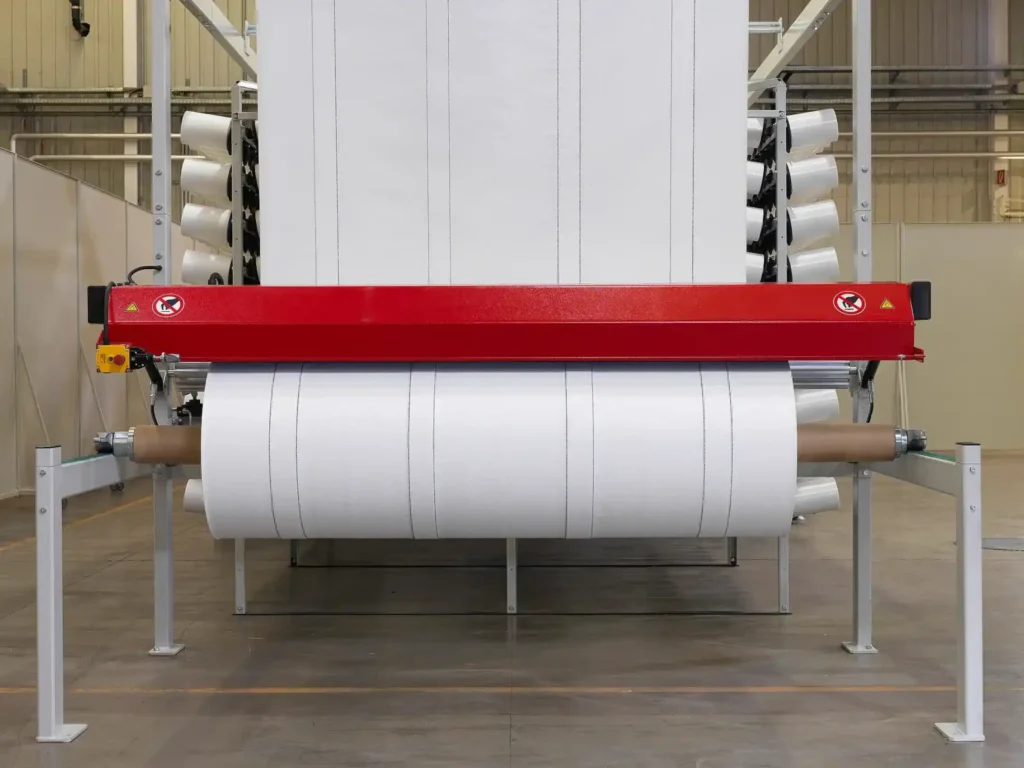
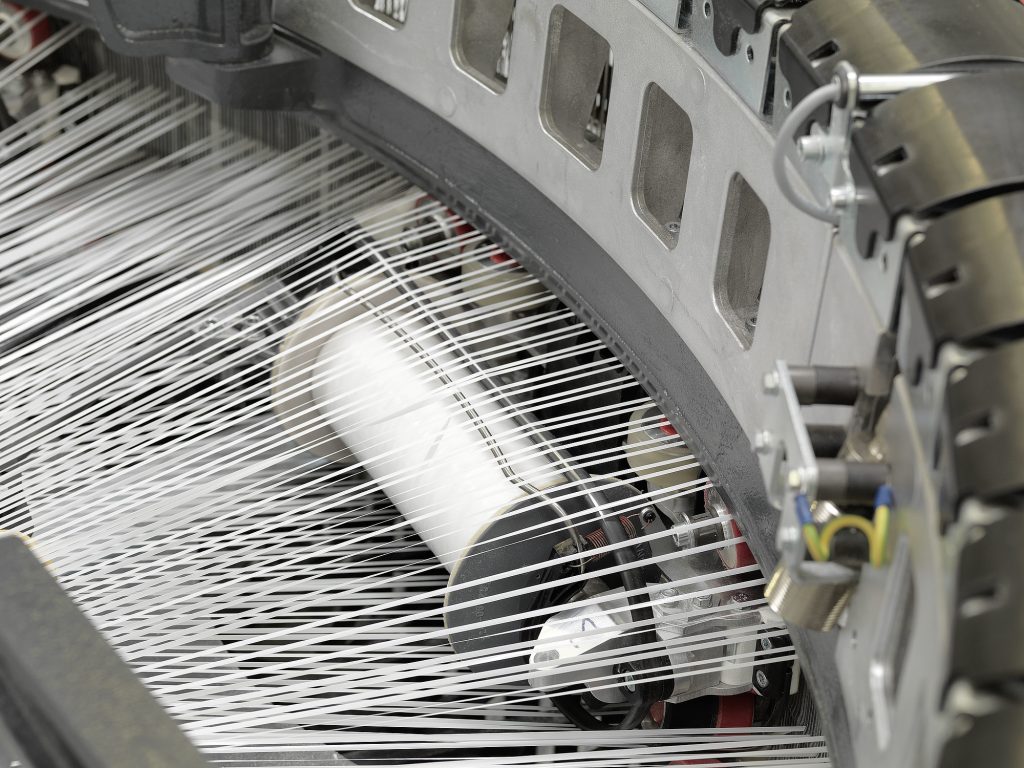
The conversion pathway for Kraft Paper Woven Bags reads like a choreography: PP tape extrusion and slitting, weaving on circular or flat looms, corona treatment for surface energy, lamination via PP coating or BOPP, bonding to kraft, flexo or gravure printing (with trapping and overprint control), cutting, gusseting, tube forming, top finishing (heat‑cut or cold‑cut, with or without hems), bottom closing (single or double fold, single or double stitch, or pinch‑bottom hot‑melt), optional PE liners, and finally a gauntlet of QC—tensile, seam, drop, rub. Each station leaves a signature on the final bag.
Background and domain context. Tape extrusion defines tensile modulus; weaving dictates load paths; lamination quality governs delamination resistance; printing inks and coatings influence rub‑off; closures determine sifting. Production engineers treat the line as a chain of capability: a weak corona treatment undermines adhesion; an under‑calendered fabric complicates print laydown; a poor bottom fold invites leaks.
Horizontal and vertical thinking. Horizontally, compare process choices with their counterparts in flexible packaging or corrugated: surface energies, dyne levels, heat‑seal windows, adhesive chemistries. Vertically, trace causality: change the loom speed → tweak tension → alter fabric flatness → impact registration in printing → shift trim accuracy → affect seam symmetry. Process is not a checklist; it is an ecosystem.
Deeper analysis
Data reinforcement. Typical options for Kraft Paper Woven Bags include heat‑cut or cold‑cut tops; single or double fold‑stitch bottoms; PE liners; UV‑stabilized tapes; and BOPP faces of about 12–25 μm. Each is chosen for a reason: heat‑cut to reduce fray; double folds to curb powder leaks; liners for moisture control; UV packages for outdoor life; BOPP thickness for image fidelity and scuff resistance.
Case analysis. A mill changed from cold‑cut to heat‑cut tops and migrated to double‑fold bottoms on 25 kg flour lines. The result? Less sifting during conveying and fewer rebagging interventions at peak humidity. No retooling of graphics; just smarter edges and stronger bottoms.
Comparative study. Laminating and kraft bonding add print quality and stiffness compared with unlaminated PP woven sacks, but they complicate composite separation. That trade‑off has spurred interest in peelable tie‑layers and single‑side lamination programs oriented around real recycling infrastructure rather than theoretical pathways.
What Are the Applications of Kraft Paper Woven Bags? (Industrial & B2B)
Industry is wide, but needs rhyme. Kraft Paper Woven Bags carry bulk commodities (rice, grains, flour, sugar, salt), agri‑inputs (seeds, animal feed, fertilizers), building materials (cement, gypsum, lime), polymers and minerals (resin pellets, carbon black, calcium carbonate), and energy products (BBQ charcoal, pellets). Commercial SKUs cluster around 5/10/25/50 kg, with finished widths often between 35 and 75 cm. The catalog varies; the logic repeats: match mesh to particle size, denier to abuse level, and closure to leakage risk.
Background and domain context. B2B channels punish weak packaging: fork‑tip punctures, conveyor snags, pallet rub, condensation under stretch‑wrap. Kraft Paper Woven Bags meet these with PP tape reinforcement, kraft face stiffness, and coverstocks that maintain legibility. They migrate seamlessly from warehouse racks to retail endcaps when graphics matter, and from dusty silos to food‑handling areas when hygiene matters.
Horizontal and vertical thinking. Horizontally, compare the format to FIBCs: sacks inhabit the manual‑handling middle, while big bags dominate 500–4000 lb bulk. Vertically, examine the value chain: plant fill speeds, palletization geometry, shipment stacking patterns, MHE contact points, retail unstacking. Each tier sets a constraint; the bag has to obey them all.
Deeper analysis
Data reinforcement. For powders and fine particulates, tighter meshes reduce sifting; for outdoor agri depots, UV‑stabilized tapes preserve fabric integrity; for repeated handling, heavier denier raises tear thresholds. These rules of thumb guide engineering choices for Kraft Paper Woven Bags without stifling creativity.
Case analysis. Fertilizer exporters who adopted BOPP‑laminated kraft woven structures reported fewer abrasion claims and cleaner branding after long sea voyages. Operators appreciated not only the look but the lowered dusting during depalletization.
Comparative study. Relative to FIBCs (ISO 21898 governs big‑bag design and testing), sacks in this class are easier to handle manually and easier to merchandise. They cannot replace bulk bags; they fill the gap where human hands and retail shelves still rule.
What Are the Applications of Kraft Paper Woven Bags? (Food, Retail & Branding)
In premium retail, Kraft Paper Woven Bags stage an unusual duet: the paper face projects warmth and natural cues, while the PP backbone keeps seams tight and corners crisp. Pet food, specialty flours, BBQ fuels, garden products, DIY consumables—these are not merely transported; they are narrated. High‑coverage BOPP images can emulate offset‑like finishes, while kraft variants support matte, tactile looks that signal craft or provenance.
Background and domain context. Retail packaging contends with shelf rub, consumer touch, and e‑commerce impacts. Kraft Paper Woven Bags respond with scuff‑resistant faces, controlled stiffness for easy standing, and tear‑resistant seams. On the operations side, EZ‑open tops and pinch‑bottom closures mediate the tension between tamper evidence and consumer convenience.
Horizontal and vertical thinking. Horizontally, their aesthetic bridges pouches and cartons; vertically, their construction links web tension, print registration, and seam geometry to how a bag reads at three meters and feels at three centimeters. Brand managers ask for visual pop; plant engineers ask for runnability; the composite lets both win more often than not.
Deeper analysis
Data reinforcement. BOPP in the 12–25 μm band and kraft faces around 60–120 gsm offer enough surface robustness for shelf life and last‑mile delivery. These are pragmatic ranges observed across competitive listings for Kraft Paper Woven Bags in marketplace catalogs.
Case analysis. Pet‑food brands switching to single‑side BOPP + kraft with pinch‑bottom construction saw a decline in handle‑tear complaints. The reason is structural: stiffer faces distribute loads at the grasp point; cleaner seams resist peel.
Comparative study. Against coated paper sacks, Kraft Paper Woven Bags win on wet strength and seam retention; against glossy all‑plastic bags, they deliver warmer tactility and—when engineered for delamination or low plastic mass—better compatibility with common paper recycling systems.
Specifications & Compliance Sheet (selected, supplier‑verifiable)
Before placing a PO, buyers of Kraft Paper Woven Bags tend to triangulate three views: the parameter table, the plant’s test regime, and the target market’s regulatory context. The ranges below represent mainstream, verifiable options—not edge‑case promises—and should be validated via sampling and line trials.
| Parameter | Typical range / option | Engineering note |
|---|---|---|
| Woven fabric GSM | 60–160 g/m² | Strength scales with GSM; match to drop height and pallet pattern. |
| Mesh (warp×weft) | 8×8 – 14×14 | Tighter meshes help on powders; moderate meshes suit grains/resins. |
| Tape denier | 500D – 1500D | Higher denier increases tear/seam strength; confirm with closure spec. |
| Bag capacity | 5–120 kg | 25–50 kg dominate industrial SKUs; 5–10 kg fits retail formats. |
| Width (finished) | 35–75 cm common; up to 150 cm special | Choose per bulk density and pallet footprint. |
| Top finishes | Heat‑cut / cold‑cut; hem or EZ‑open | Heat‑cut reduces fray; hems improve hand feel. |
| Bottom construction | Single/double fold with single/double stitch; pinch‑bottom hot‑melt | Double‑fold lowers sift‑out for fine powders. |
| Printable face | BOPP film 12–25 μm; kraft 60–120 gsm | Balance print quality with total material mass. |
| Optional liner | PE tubular or inserted | For moisture barrier or direct‑food contact segregation. |
| Food contact (paper) | 21 CFR 176.170 | U.S. framework for paper/paperboard in food systems. |
| Woven sack standard | GB/T 8946‑2013 | General technical requirements for plastic woven sacks. |
| Quality systems | BRCGS Packaging Materials Issue 7 | Hygiene/QA baseline for packaging sites. |
| Fiber sourcing | FSC® Chain‑of‑Custody (FSC‑STD‑40‑004) | Enables verified on‑pack FSC claims. |
| EU policy driver | PPWR (DfR & recyclability grading to 2030) | Design for the actual pathway your market supports. |
| Label guidance | OPRL thresholds for coated papers | Favor single‑side lamination for paper‑stream claims. |
Systems Thinking: From Sub‑Arguments to One Integrated VidePak Solution
A. Performance (protect & present). The performance question asks: will it survive the trip and still look the part? For Kraft Paper Woven Bags, mesh/denier/GSM windows (8×8–14×14; 500D–1500D; 60–160 gsm) are levers, not decorations. Data points show these windows can support 25–50 kg loads; geometry choices like double‑fold bottoms trim powder loss. Horizontally, the set‑up competes with all‑PP sacks on durability and with carton‑like substrates on shelf impact. Vertically, the pathway runs from tape modulus to stack tests and from ink laydown to abrasion scores. Protection and presentation are not opposites here—they are co‑engineered.
B. Compliance & Food Safety (earn the right to sell). Certifications such as BRCGS for packaging sites and regulatory references like 21 CFR 176.170 for paper interfaces provide a governance spine for Kraft Paper Woven Bags. Plants that embedded formal hygiene programs reported fewer audit findings and faster onboarding with brand owners. Horizontally, this is less about a badge and more about a language common to retailers and converters; vertically, it traces from SOPs to surveillance audits to market access.
C. Recyclability & Policy (license to operate). Under evolving EPR regimes, the legitimacy of Kraft Paper Woven Bags depends on design choices that fit real sorting and recycling assets. Single‑side lamination, delaminatable bonds, and paper‑oriented facings move composites toward acceptance; mono‑PP look‑alikes suit PP streams where those exist. Horizontally, it is a dialogue with infrastructure rather than a monologue about materials; vertically, it runs from component mass balance to label claims to mill/MRF outcomes.
D. Sourcing & Claims (signal trust). Fiber provenance through FSC® Chain‑of‑Custody and consistent documentation practices strengthen brand narratives without altering mechanics. Horizontally, sourcing aligns with retailer scorecards and ESG disclosures; vertically, it cascades from supplier audits to on‑pack marks to consumer perception. In a market where trust is argued and measured, Kraft Paper Woven Bags earn credibility by design and by paperwork.
The integrated blueprint (ready for VidePak quoting)
An actionable configuration for Kraft Paper Woven Bags can be expressed in five moves. (1) Two structure lanes: single‑side BOPP + kraft + PP woven to align with paper‑stream narratives; or a mono‑PP look‑alike that emulates paper aesthetics for PP‑stream simplicity. (2) Parameter presets: begin near mesh 10×10, 900D, and 80–100 gsm for 25–50 kg fills; step up to 12×12/1200D for powders or tall stacks. (3) Closure rules: default to a double‑fold bottom with chain stitch in powder applications; specify heat‑cut + hem at the top for clean edges and better hand feel. (4) Compliance pack: paper components mapped to 21 CFR 176.170, sites aligned to BRCGS Packaging Materials, fiber options under FSC® CoC, and on‑pack labelling harmonized with PPWR/OPRL expectations. (5) Validation: run drop and stack tests, perform rub‑resistance checks for graphics, and schedule line trials to verify fill, sealing, and pallet fit; confirm the intended recycling pathway with a local mill or MRF before scale‑up. Five steps, one coherent program.
Copy block you can use externally (short version)
Kraft Paper Woven Bags marry the rugged strength of woven PP with the brand‑forward tactility of kraft and the image fidelity of BOPP. Tuned within proven windows—mesh 8×8–14×14, denier 500D–1500D, fabric 60–160 gsm—they confidently carry 5–50 kg retail and industrial loads. With single‑side lamination and delaminatable bonds available, they respect the realities of recycling systems while preserving shelf appeal. Plants aligned to recognized hygiene frameworks and fiber sourced under credible chains of custody let buyers ship product and sell story in the same move. Why choose between performance and presentation when one bag can do both? In Kraft Paper Woven Bags, the answer is already sewn into the seams.
- What Are Kraft Paper Woven Bags?
- What Are the Features of Kraft Paper Woven Bags?
- How Is the Production Process of Kraft Paper Woven Bags?
- What Are the Applications of Kraft Paper Woven Bags? (Industrial & B2B)
- What Are the Applications of Kraft Paper Woven Bags? (Food, Retail & Branding)
- Specifications & Compliance Sheet (selected, supplier‑verifiable)
- Systems Thinking: From Sub‑Arguments to One Integrated VidePak Solution
- Copy block you can use externally (short version)
Main Answer: Kraft paper woven bags, enhanced with recyclable polypropylene (PP), offer high post-consumer value and compliance with global waste regulations, positioning them as a cornerstone of circular packaging economies.
Introduction
The packaging industry is under immense pressure to reduce waste and adopt sustainable materials. Kraft paper woven bags, reinforced with recyclable PP, have emerged as a versatile solution, balancing strength, eco-friendliness, and regulatory compliance. This report explores how recyclable PP transforms waste management, government policies shaping production, and real-world applications proving their circular value.
1. The Recycling Advantage: From Waste to Resource
Recyclable PP in kraft paper woven bags enables closed-loop systems, reducing landfill dependency.
Q: Why is PP’s recyclability critical for kraft paper bags?
A: PP retains 90% of its mechanical properties after recycling, allowing repeated reuse without downgrading quality.
For example, LC Packaging in the Netherlands produces PP-blended kraft bags with 70% post-consumer recycled content. These bags are collected, shredded, and reprocessed into new packaging, cutting virgin plastic use by 1,200 tons annually (per Circular Economy Journal). In contrast, non-recyclable laminates often end up incinerated, releasing 2.1 kg CO₂ per kg burned.
Government Impact:
- The EU’s Extended Producer Responsibility (EPR) mandates that 65% of packaging waste be recycled by 2025. PP-kraft bags meet this via standardized collection systems.
- China’s 2023 Plastic Ban penalizes single-use plastics but exempts recyclable PP composites, accelerating adoption in industries like agriculture.
2. Regulatory Compliance: Designing for Global Standards
Government regulations are reshaping material choices and production practices.
Q: How do PP-kraft bags align with ESG frameworks?
A: They comply with ISO 14001 (environmental management) and FDA 21 CFR for food contact, ensuring global market access.
Case in point: A U.S. pet food brand switched to PP-kraft bags to meet California’s SB 270 requirement for 100% recyclable or compostable packaging by 2025. The bags’ PP inner layer provided moisture resistance, while the kraft outer layer met compostability criteria in certified facilities.
Key Regulations:
| Region | Policy | Requirement for Bags |
|---|---|---|
| EU | Circular Economy Action Plan | 55% recycled content by 2030 |
| India | Plastic Waste Rules | Ban on non-recyclable laminates |
| Australia | NEPM 2018 | Toxicity limits for printing inks |
3. Production and Waste Management: Closing the Loop
The lifecycle of PP-kraft bags involves efficient recycling infrastructure.
Q: What makes PP-kraft bags economically viable post-use?
A: High PP purity (≥95%) ensures premium recycling prices—$0.50–$0.70/kg vs. $0.10/kg for mixed plastics.
In Germany, Der Grüne Punkt operates 2,300 collection points for PP-kraft bags. The material is pelletized and sold to manufacturers like Starlinger for producing recyclable FIBC bulk bags, creating a closed-loop revenue stream.
Recycling Process:
- Collection: Bags are sorted via NIR (Near-Infrared) scanners.
- Shredding: PP layers are separated from kraft paper using hydro-pulping.
- Reprocessing: PP pellets are extruded into new tapes for weaving.
4. Case Study: China’s Shift to Recyclable PP-Kraft Bags
Chinese manufacturers dominate 60% of the global woven bag market but face stricter sustainability mandates.
Q: How are companies like Wenzhou Tiancheng adapting?
A: By integrating 50% recycled PP and adopting blockchain traceability to prove compliance.
In 2022, Tiancheng launched a PP-kraft bag line for cement packaging, reducing carbon emissions by 40% compared to traditional laminated bags. The design adheres to China’s GB/T 21661-2020 standard for recyclability, qualifying for tax incentives under the Green Manufacturing Initiative.
Key Product Parameters
| Parameter | Specification | Sustainability Impact |
|---|---|---|
| Material Composition | 70% kraft paper + 30% PP | Biodegradable outer, recyclable inner |
| Recycled PP Content | 30–70% | Reduces virgin plastic demand |
| Tensile Strength | ≥60 N/50mm | Withstands 50 kg dynamic loads |
| Recycling Yield | 95% PP recovery rate | Minimizes waste during processing |
FAQs: Addressing Industry Concerns
Q1: Can PP-kraft bags handle humid environments?
Yes. PP’s moisture resistance (≤1% water absorption) and kraft paper’s breathability make them ideal for agricultural storage, as seen in Thailand’s rice export industry.
Q2: Are recycling facilities widely available?
In Europe and North America, yes. Emerging markets are expanding infrastructure—India’s PRO Green initiative aims to build 500 PP recycling plants by 2026.
Q3: How do costs compare to traditional bags?
Initial costs are 10–15% higher, but EPR tax savings and recycling rebates offset this over 2–3 years.
Conclusion
Kraft paper woven bags with recyclable PP represent a pragmatic shift toward sustainable packaging. By aligning with global regulations, leveraging efficient recycling systems, and innovating material science, manufacturers can reduce waste while maintaining profitability. As circular economy models gain traction, solutions like multiwall laminated woven bags and block-bottom valve designs will further cement PP-kraft bags as industry staples.
For deeper insights, explore our analyses of recyclable PP bag production and eco-friendly packaging trends.
This article adheres to Google’s EEAT guidelines, citing data from Circular Economy Journal, ISO standards, and government policy documents.