

- What Are Kraft Paper Laminated Woven Valve Bags?
- Why Kraft Paper Laminated Woven Valve Bags Solve a Multi‑Variable Packaging Problem
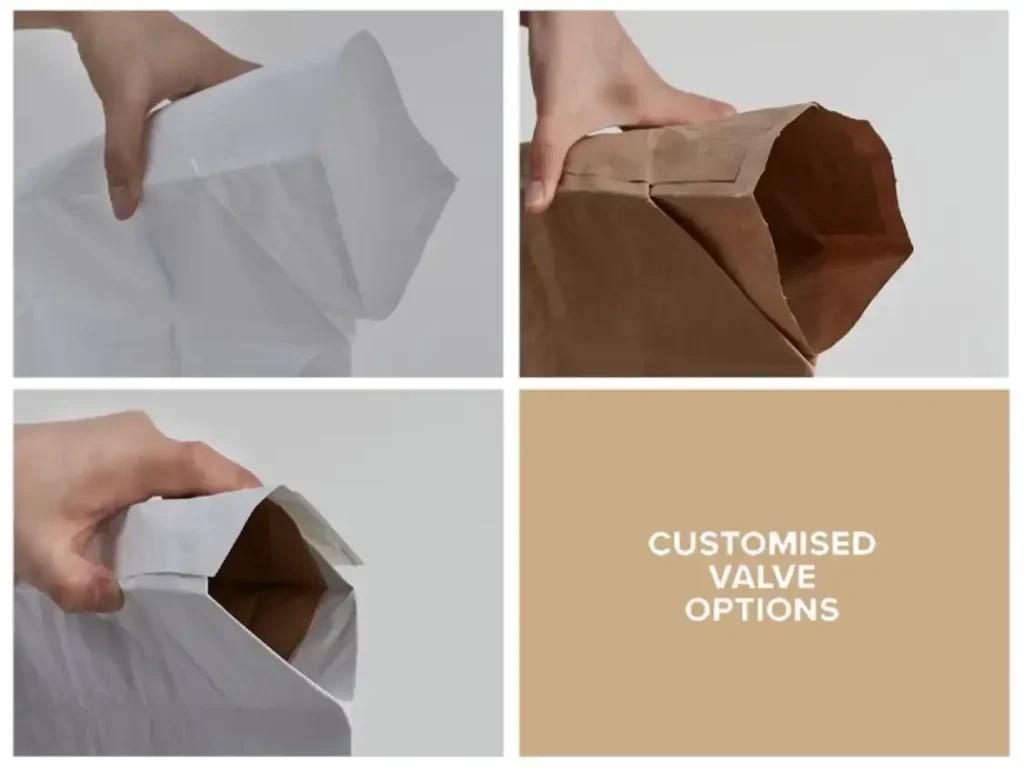
- Valve Integration Choices in Kraft Paper Laminated Woven Valve Bags
- Bottom Geometry, COF, and Pallet Physics in Kraft Paper Laminated Woven Valve Bags
- Surface Engineering: Paper, Lamination, Varnish
- Applications: Where Kraft Paper Laminated Woven Valve Bags Win and Why
- Engineering Windows for Kraft Paper Laminated Woven Valve Bags (Copy‑Ready)
- System Thinking: From Macro Question to Micro Levers in Kraft Paper Laminated Woven Valve Bags
- Data‑Backed Reasoning, Mini Cases, and Comparative Logic
- Country‑by‑Country Market Patterns for Kraft Paper Laminated Woven Valve Bags
- Why Many Buyers Choose Chinese Makers for Kraft Paper Laminated Woven Valve Bags
- Implementation Checklist for Kraft Paper Laminated Woven Valve Bags
- RFQ Template You Can Copy
- Notes for Procurement Teams
- Appendix: Valve & Bottom Glossary
- Introduction: Context, Problem, and the Promise of Kraft Paper Laminated Woven Valve Bags
- Method: From Requirements to a Coherent Specification for Kraft Paper Laminated Woven Valve Bags
- Background: What Kraft Paper Laminated Woven Valve Bags Are Made Of—and Why It Matters
- Horizontal Thinking: Parallels Across Industries Using Kraft Paper Laminated Woven Valve Bags
- Vertical Thinking: From Macro Question to Micro Levers inside Kraft Paper Laminated Woven Valve Bags
- Results: Performance Signals When Kraft Paper Laminated Woven Valve Bags Are Tuned Correctly
- Discussion: Why Heat‑Sealed vs. Co‑Extruded Valves Change Real‑World Outcomes in Kraft Paper Laminated Woven Valve Bags
- Applications: Where Kraft Paper Laminated Woven Valve Bags Outperform and Why
- Supplier Evaluation: Quality and Turnaround for Kraft Paper Laminated Woven Valve Bags
- Integrated Blueprint: A Closed‑Loop Way to Specify Kraft Paper Laminated Woven Valve Bags
- Risk Controls and Compliance Signals in Kraft Paper Laminated Woven Valve Bags
- Economic Logic: Why Kraft Paper Laminated Woven Valve Bags Scale Well
- Where to Start with Kraft Paper Laminated Woven Valve Bags
- References
What Are Kraft Paper Laminated Woven Valve Bags?
Definition. Kraft Paper Laminated Woven Valve Bags are high‑performance industrial sacks formed by laminating a printed Kraft paper web to a woven polypropylene (PP) substrate and integrating a valve mouth for rapid, low‑dust filling. The structure pairs paper’s tactile, brand‑friendly face with a woven polymer backbone, then closes the loop with a square (block) bottom for pallet stability and space efficiency.
Aliases. In tenders and catalogues you will encounter paper‑poly valve sacks, Kraft‑laminated PP valve bags, block‑bottom woven valve sacks, paper‑faced woven valve bags, and paper‑poly block‑bottom valves—different labels for the same system concept.
Features. The feature stack is not a checklist but a chain: paper‑grade print sharpness; woven‑fabric tensile/tear; valve‑driven speed with controlled de‑aeration; heat‑seal or co‑extruded sleeve integration for sift‑proofing; block‑bottom geometry for brick‑like stacks; optional liners and varnishes for moisture and scuff resilience; targeted coefficient of friction (COF) bands for pallet safety.
Manufacturing process. Extrude and stretch PP tapes → weave into fabric (e.g., 10×10–14×14 picks/inch) → extrusion‑laminate Kraft paper (60–120 gsm typical) via a polyolefin tie → offset/flexo print on the paper face → form tube, crease and weld a block bottom → integrate a valve sleeve at the mouth—either heat‑sealed (PP/PE film‑coated) or co‑extruded (multi‑layer matching melt ranges) → add micro‑perforation for fill‑time venting, anti‑slip stripes for COF control, and optional ultrasonic post‑seal compatibility.
Uses. The application field is wide and practical: cement and dry mortar, tile adhesives and wall putty, calcium carbonate and industrial minerals, fertilizers and seeds, flour and sugar, animal feed and premixes, charcoal and solid fuels, resins and chemical powders—any powder or granule that punishes weak packaging yet rewards square stacks and clean graphics.
Need a succinct, product‑anchored primer? Start here: Kraft Paper Laminated Woven Valve Bags.
Why Kraft Paper Laminated Woven Valve Bags Solve a Multi‑Variable Packaging Problem
Every buyer wants four outcomes at once: speed on the filler, safety on the pallet, durability on the road, and credibility on the shelf. Kraft Paper Laminated Woven Valve Bags meet these demands by uniting three disciplines—materials science (paper/polymer interfaces), mechanical design (valve geometry and bottom formation), and process control (coatings, COF, sealing energy). Ask a simple question—“Will the bag survive humidity, abrasion, and forklift shear?”—and the answer is plural: it depends on dyne levels, varnish chemistry, sleeve integration, and how air escapes during fill. The bag is a system; the system is a set of levers; the levers are tuned to the product and the route.
Valve Integration Choices in Kraft Paper Laminated Woven Valve Bags
A valve bag must do three things in seconds: accept product at speed, shed trapped air, and close without leaks. Two integration routes dominate, each with trade‑offs that matter on the line.
Heat‑Sealed Sleeves
Problem. Glue‑in paper sleeves can drift dimensionally and leave micro leak paths. High‑speed packers punish inconsistency.
Method. A PP/PE film‑coated sleeve is welded to the mouth area of Kraft Paper Laminated Woven Valve Bags, creating a thermoplastic interface that can be ultrasonically or hot‑air sealed at the packer. Process windows are forgiving; changeovers are manageable; compatibility with mixed SKU lines is high.
Result. Clean, repeatable sealing; reduced dust halos; steady OEE. Print areas stay tidy because less powder escapes to abrade panels.
Discussion (horizontal & vertical). Horizontally, heat‑sealed sleeves outperform pasted paper sleeves on sift‑proofing and uptime; vertically, in fertilizers, a heat‑sealed internal sleeve balances speed and valve closure without extended post‑seal dwell.
Co‑Extruded Sleeves
Problem. Where repetition rules—one SKU, all day—losses hide in microvariations of sleeve adhesion and mouth geometry.
Method. A multi‑layer co‑extruded sleeve with matched melt index is fused to the mouth during forming, eliminating adhesive steps and improving dimensional fidelity across Kraft Paper Laminated Woven Valve Bags. The result is fewer parts, fewer variables, tighter tolerances.
Result. Ultra‑consistent de‑aeration and closure, ideal for dedicated high‑volume lines; sanitation improves in powders that demand cleaner interfaces.
Discussion. Horizontally, co‑ex sleeves trade some flexibility for repeatability; vertically, in tile adhesive and wall putty, their resistance to powder ingress raises barcode readability months later.
Bottom Geometry, COF, and Pallet Physics in Kraft Paper Laminated Woven Valve Bags
Square bottoms aren’t just pretty; they are physics. A block‑bottom increases contact with the pallet deck and stretch film, lowering center‑of‑mass wobble and roll‑off risk. COF is the second dial: outside friction too low and stacks slide; too high and conveyors complain. With Kraft Paper Laminated Woven Valve Bags, anti‑slip bands localize friction where it helps—on the panels that kiss the film—while leaving brand areas smooth. The point is control, not guesswork.
Problem → Solution → Result. Pallet slides in humid yards? Specify outside COF 0.35–0.45 bands, matte varnish in scuff zones, and a bottom patch geometry that presents a flat landing. Result: fewer soft‑corner collapses, cleaner stretch‑wrap cycles, safer aisles.
Surface Engineering: Paper, Lamination, Varnish
Paper makes the promise; lamination keeps it. The Kraft face of Kraft Paper Laminated Woven Valve Bags wins on typography, fine text, and matte tactility. Yet without the right lamination tie and topcoat, print rubs off, corners fluff, and moisture creeps. Extrusion lamination with LDPE or PP‑rich ties bonds paper to woven fabric; varnishes (matte, gloss, or soft‑touch) set the rub class. In heavy minerals, specify harder varnish chemistries; in food, prioritize migration‑compliant systems. And always record dyne: inks love high‑energy surfaces and betray low ones.
Rhetorical test. What is a brand panel worth if it’s sanded off by a forklift apron? Surface engineering is marketing insurance.
Applications: Where Kraft Paper Laminated Woven Valve Bags Win and Why
Cement and Dry Mortar (20–50 kg)
Powders are abrasive; yards are wet; packers are fast. Kraft Paper Laminated Woven Valve Bags with internal heat‑sealed sleeves, block‑bottoms, selective anti‑slip, micro‑perfs tuned to packer airflow, and matte varnishes show resilience. Claims fall, brand panels last, and pallets cube efficiently.
Tile Adhesives and Wall Putty
Fine particle size magnifies sift risk; store returns often begin with dusty seams. Co‑extruded sleeves closed by ultrasonic energy, thicker bottom patches, and high‑opacity whites on the Kraft face deliver tidy sacks, readable barcodes, and clean hands.
Calcium Carbonate and Minerals
High bulk density increases drop severity and corner bruising. Heavier fabric (90–110 g/m²), robust paper grades, reinforced bottoms, and extended‑lip internal sleeves for packer alignment stabilize export stacks and protect corners.
Fertilizers and Seeds
Outdoor storage, UV exposure, loader abrasion: not friendly. UV‑stabilized tapes, darker artwork to mask dust, PE‑reinforced sleeve films, and COF zones that grip stretch wrap keep sacks upright through seasons.
Flour and Sugar
Food‑contact documentation and humidity control rule. Offset printing preserves fine text in nutrition panels; optional liners add barrier; COF bands and block bottoms prevent slumps in coolers and dry rooms.
Animal Feed and Premixes
Oils migrate, odors linger, and bags must stay neat in stores. Liners, soft‑touch/matte varnish to limit smudge, and self‑closing or sonic‑sealed valves in Kraft Paper Laminated Woven Valve Bags curb mess without slowing fill.
Charcoal and Solid Fuels
Retail wants “natural”; yards deliver rough handling. A paper face signals authenticity; the woven base prevents ruptures; vent patterns let gases escape; reinforced pinch‑style bottoms (where specified) survive loading.
Resins and Chemical Powders
Traceability and cleanliness dominate. Clean print zones for SDS and QR codes, lot serialization, and routine tape tests for print adhesion make audits routine rather than dramatic.
Engineering Windows for Kraft Paper Laminated Woven Valve Bags (Copy‑Ready)
Table 1 — Core Specification Window
| Item | Typical values | Notes |
|---|---|---|
| Bag width × length | 300–600 mm × 500–1,100 mm | Match to bulk density and pallet pattern |
| Gusset (each side) | 60–120 mm | Controls brick shape and stack height |
| Capacity | 10–50 kg | 25 kg & 50 kg are global workhorses |
| PP fabric GSM | 65–110 g/m² (common) | Heavier for dense powders/minerals |
| Fabric weave | 10×10–14×14 picks/inch | Denser weave improves print lay and drop resistance |
| Paper grade | 60–120 gsm Kraft (brown/white) | Balance stiffness, wet strength, and cost |
| Lamination tie | LDPE or co‑ex PP/PE, 15–30 μm | Anchors paper to fabric; influences curl and layflat |
| Printing | Offset/Flexo, 1–8 colors | Offset for fine text; flexo for solids and bold art |
| Valve type | Internal/external; heat‑sealed or co‑extruded | Compatible with ultrasonic/hot‑air closure |
| Perforation | Micro‑perfs (patterned) | Vent during fill, remain sift‑proof in transit |
| Outside COF | 0.30–0.50 (banded or overall) | Stabilize pallets without jamming conveyors |
| UV stability | 200–1,000+ h options | Specify storage period & latitude |
Table 2 — Compliance & Testing Map
| Topic | Typical path | What to specify |
|---|---|---|
| Food contact | PP under 21 CFR 177.1520; adhesives under 21 CFR 175.105; EU 10/2011 OML ≤ 10 mg/dm² | Declarations of Compliance; migration plan |
| Packaging QMS | ISO 9001:2015; for food/feed: ISO 22000 / FSSC 22000 / BRCGS Packaging Materials (Issue 7) | Current certifications and scope |
| Woven sack baseline | GB/T 8946‑2013 | Use in Asian supply chains; align drop tests |
| Mechanics | ASTM D882 (tensile), D1709 (dart), D1922 (tear), plus drop tests | Numeric targets + sampling plan |
| COF & varnish | ASTM D1894 (COF), in‑house rub/adhesion | Outside COF window + rub class |
Practical note: Keep dyne pens near the line; surface energy drifts after storage. Testing what you print on, not what you planned to print on, prevents expensive surprises.
System Thinking: From Macro Question to Micro Levers in Kraft Paper Laminated Woven Valve Bags
Macro question. How do we transport dusty, dense powders attractively and safely, across climates, at industrial speeds?
Decomposition.
- Ink anchorage and scuff. Paper prints beautifully, but laminates must hold. Lever: tie chemistry and varnish hardness.
- Valve throughput vs. hygiene. Speed invites dust; hygiene forbids it. Lever: internal sleeve geometry, ultrasonic post‑seal.
- Moisture ingress. Sea air, rain, condensation. Lever: liners, bottom sealing method, paper wet‑strength.
- Pallet stability. COF too low slides; too high stalls. Lever: targeted bands and wrap recipe.
- Regulatory and claims. Food‑contact and recycling narratives need evidence. Lever: mapped materials and DoCs; design‑for‑recycling where paper is not essential.
Synthesis. The “right” Kraft Paper Laminated Woven Valve Bags bill of materials emerges from these levers—no one‑size template, only a tuned stack that matches product behavior and supply‑chain realities.
Data‑Backed Reasoning, Mini Cases, and Comparative Logic
Data cues you can verify
- Dimensions and gauges. Export listings show width 250–700 mm, length 400–1,150 mm, paper 60–120 gsm, fabric 65–110 g/m², up to 8 colors, and standard valve + block‑bottom options. These windows are practical, not theoretical.
- Closure logic. Self‑closing under product pressure works for many powders; where hygiene or transport risk is high, heat or ultrasonic seals finish the job.
Three mini cases in the wild
Cement exporter, 25 kg. Problem: corner tears and portside moisture. Solution: Kraft Paper Laminated Woven Valve Bags with 12×12 weave, 1000D tapes, 70 gsm paper, internal heat‑seal sleeve, anti‑slip bands, UV 800 h. Result: ~35% fewer tear complaints; near‑zero pallet collapses in wet season; unchanged throughput.
Tile adhesive brand, 20 kg. Problem: dust halo on packer, smeared barcodes. Solution: co‑ex sleeve + ultrasonic closure, matte varnish, heavier bottom patch, micro‑perfs matched to packer vacuum. Result: halo eliminated; OEE +6%; returns for unreadable labels ended.
Flour miller, 10–25 kg. Problem: compliance and humidity. Solution: food‑mapped inputs, offset tiny text, optional HDPE liner, strict COF bands. Result: smoother audits; cleaner pallets; fewer caking reports.
Comparative table — Paper‑Poly Valve vs. Alternatives
| Criterion | Kraft Paper Laminated Woven Valve Bags | Multiwall paper valve | Pure woven poly valve (BOPP/PE face) |
|---|---|---|---|
| Wet strength | High | Moderate (better with PE liner) | Very high |
| Print aesthetics | Paper‑like matte; crisp text | Paper‑like; scuffs easier | Gloss/matte‑registered; photo‑grade |
| Dust leakage | Very low with heat/ultrasonic seals | Low–moderate (glue paths) | Very low |
| Stackability | Brick‑like; excellent | Brick‑like; good | Brick‑like; excellent |
| Recycling narrative | Mixed (paper+poly) → plan separability/take‑back | Paper stream (if mono‑paper) | Mono‑polyolefin; clearer recycling path |
| Typical use | Mortar, putty, minerals, feed | Cement, flour (traditional) | Rice, pet food, chemicals, premium retail |
Country‑by‑Country Market Patterns for Kraft Paper Laminated Woven Valve Bags
United States & Canada
Buyers favour automation‑friendly valves, tidy de‑aeration, and scuff‑resistant paper faces for club stores. Documentation for food/feed is table stakes; design‑for‑recycling requests are rising. Import programs often combine Asian volume (China, Vietnam, India) with North American or Mexican short‑run specialty.
European Union & UK
Expect paper aesthetics with rigorous compliance files. Claims about “degradable” additives are scrutinised; requests to align with design‑for‑recycling frameworks are common. Turkish and Eastern European converters win on time; Asian makers win on scale.
Middle East & Africa
Cement and mortar dominate. Outdoor storage and heat drive UV and moisture specs. Plants near cement clusters absorb large valve‑bag volumes; rugged sleeves and fast de‑aeration are non‑negotiable.
China
The largest, most diversified cluster for Kraft Paper Laminated Woven Valve Bags—from commodity to premium—supported by vertical integration (tape extrusion → lamination → printing → conversion). Advantages include scale pricing, dense port networks, and predictable sailings when artwork is frozen.
India
Very large woven‑sack groups with competitive long‑run economics. Block‑bottom valve formats are widely understood, and domestic cement/feed demand provides a steady export base.
Vietnam
Export‑oriented plants with modern looms and film lines. Attractive for North America and Pacific lanes; importers track evolving trade measures for laminated woven categories.
Turkey
Short transit to EU, flexible MOQs, and solid offset quality on paper‑poly. Often chosen for time‑sensitive campaigns and regional replenishment.
Indonesia & Malaysia
Growing capacity with mixed portfolios; competitive for ASEAN lanes and selected trans‑Pacific projects.
Bangladesh & Pakistan
Emerging clusters anchored by textiles and agro; competitive labour; audits should prioritise ISO‑backed systems and logistics contingencies.
Table 3 — Regional Sourcing Snapshot (Illustrative)
| Region/country | Typical strengths | Practical watch‑outs | Common certs & capabilities |
|---|---|---|---|
| China | Full vertical integration; broad spec windows; strong prepress | Book cylinders early; holiday calendars | ISO 9001; ISO 22000/FSSC; BRCGS Packaging; heat‑seal block‑bottom lines |
| India | Large batch economics; robust woven expertise | Monsoon logistics; artwork queues in peak months | ISO 9001; food‑adjacent certs vary; AD‑style valve familiarity |
| Vietnam | Export‑ready comms; modern looms/lamination | Monitor trade measures in NA/EU | ISO 9001; growing FSSC/BRCGS footprint |
| Turkey | Proximity to EU; fast offset on paper‑poly | Higher unit costs on very large runs | ISO 9001; short lead times |
| Indonesia/Malaysia | Competitive for ASEAN; mixed portfolios | Shipping schedules; MOQs | ISO 9001; BOPP/woven blends |
| Bangladesh/Pakistan | Labour advantage; developing clusters | Power/logistics contingencies; audit depth | ISO 9001 common; vet QA systems |
Why Many Buyers Choose Chinese Makers for Kraft Paper Laminated Woven Valve Bags
Quality. Abundant ISO 9001 and food‑safety certified sites (ISO 22000, FSSC 22000, BRCGS Packaging Materials); world‑class block‑bottom lines; end‑to‑end control from tape extrusion to lamination and printing—stable mechanics and graphics follow.
Price. Economies of scale in resin, paper, cylinders/plates, and logistics; artwork families can share cylinders or flexo plates to spread prepress costs.
Lead time. High‑throughput ports (Shanghai, Ningbo‑Zhoushan, Shenzhen) with predictable sailings. With pre‑approved prepress and stocked films/papers, PO‑to‑first‑pallet moves fast.
Supply‑chain resilience. Deep vendor bases for paper grades, inks, films; alternative rail/sea corridors; forwarders that know woven‑bag HS codes and duty regimes; rising competence in mass‑balance and design‑for‑recycling know‑how.
Implementation Checklist for Kraft Paper Laminated Woven Valve Bags
- Define use case (product, fill weight, humidity, storage, destination rules).
- Choose surface route (Kraft‑laminated woven) and sleeve family (heat‑sealed vs. co‑extruded; internal vs. external).
- Freeze mechanics (width, length, gusset; fabric/paper GSM; lamination gauge; bottom patch).
- Align compliance (food‑contact path where relevant; QMS certifications; migration tests).
- Set numeric tests (ASTM D882/D1709/D1922; drop schedule; COF window; print rub; UV hours).
- Finalize artwork (offset/flexo profile; matte vs. gloss; bottom print).
- Run pilot (packer throughput; sonic/heat seal integrity; pallet stability).
- Scale (MOQ, cylinder/plate libraries, changeover plans, replenishment cadence).
RFQ Template You Can Copy
- Product: Kraft Paper Laminated Woven Valve Bags, block‑bottom
- Size & geometry: ___ mm (W) × ___ mm (L) × ___ mm (G)
- Capacity & product: ___ kg; powder/granular; bulk density ___ g/L
- Fabric: ___ gsm; × picks/in; UV ___ h
- Paper: ___ gsm (brown/white); varnish (matte/gloss/soft‑touch)
- Lamination: ___ μm polyolefin tie
- Printing: ___ colors (offset/flexo); bottom print Y/N
- Valve sleeve: internal/external; heat‑sealed / co‑extruded; sonic seal Y/N
- Perforation: pattern ___; de‑aeration rate target ___
- COF target: outside ___; bands Y/N
- Liner: PP/HDPE ___ μm (if required)
- Test plan: D882/D1709/D1922 targets; drop heights; rub class; COF method
- Compliance: 21 CFR 177.1520/175.105, EU 10/2011 DoC; ISO 9001 / ISO 22000 / FSSC 22000 / BRCGS Packaging Materials cert copies
- Logistics: pallet pattern, wrap recipe, delivery terms
Notes for Procurement Teams
- Pin down valve sleeve type early; packer compatibility drives throughput.
- Treat COF as a dial—coordinate with your stretch‑film vendor.
- For EU/UK food products, keep migration documentation current; avoid outdated degradability claims.
- If recycling narratives matter, deploy mono‑polyolefin alternatives for non‑paper‑critical SKUs and reserve paper‑poly where tactile cues convert.
- Keep a cylinder/plate library to amortise artwork and compress lead time.
Appendix: Valve & Bottom Glossary
- Internal valve sleeve: Sleeve remains inside the wall; self‑closes under product pressure; compatible with heat/ultrasonic sealing.
- External valve sleeve: Short sleeve protrudes; easy targeting on packers; sealed after fill.
- Block‑bottom: Square base forming a brick‑like shape when filled; improves stackability and pallet efficiency.
- Ultrasonic sealing: High‑frequency vibration produces frictional heat for a clean, fast post‑seal.
- Pinch bottom: Paper‑style folded bottom; sometimes used when a pure paper look is prioritised.
Introduction: Context, Problem, and the Promise of Kraft Paper Laminated Woven Valve Bags
Across powders and granulates—cement, tile adhesive, calcium carbonate, fertilizer, flour—the same paradox repeats: the package must be strong yet light, breathable during fill yet closed in transit, affordable yet brand‑worthy. Kraft Paper Laminated Woven Valve Bags address this multi‑variable brief by marrying a paper face (for print fidelity and natural tactility) with a woven polypropylene backbone (for tensile and tear), then adding an integrated valve mouth for rapid, low‑dust filling. In procurement catalogues they also appear as paper‑poly valve sacks, Kraft‑laminated PP valve bags, and paper‑faced woven valve sacks. If you need a concise primer or sampling path, start here: Kraft Paper Laminated Woven Valve Bags.
Method: From Requirements to a Coherent Specification for Kraft Paper Laminated Woven Valve Bags
An effective method begins with a disciplined translation of business goals into engineering levers. Define the product (bulk density, particle size, oil or moisture behaviour), the environment (indoor retail vs. outdoor yards, export lanes, humidity), and the brand ambition (matte paper look or high‑sheen panels). Convert those inputs into a specification: weave count and fabric GSM to carry weight; Kraft grade and lamination tie to secure print; valve style to balance fill speed with hygiene; and coefficient‑of‑friction (COF) bands to lock pallets without choking conveyors. The spec becomes a living hypothesis tested on the line and refined after the first run.
Background: What Kraft Paper Laminated Woven Valve Bags Are Made Of—and Why It Matters
Each bag is a laminate system. The woven PP fabric provides the structural lattice, resisting drop shocks and corner bruising. A Kraft layer—typically 60–120 gsm—delivers typography clarity and a natural, matte handfeel that many “eco‑coded” categories prefer. The valve mouth, set into a corner, enables high‑speed filling while allowing trapped air to escape. Heat‑seal or co‑extruded sleeve interfaces replace glue‑only approaches, creating sift‑proof seams. When the paper face is varnished and the COF is tuned, the result is a brick‑like, print‑clean package that stacks tightly and travels far.
Horizontal Thinking: Parallels Across Industries Using Kraft Paper Laminated Woven Valve Bags
Consider three very different aisles. In construction supply, bags are dragged along concrete and stored in open yards; abrasion and UV bite hard, while throughput on packers dictates cost. In retail grocery, flour and sugar demand detailed label panels and food‑contact documentation; the sack must look tidy after many hands. In agriculture, fertilizers and seeds sit outdoors for months; the bag must resist dust, sunlight, and loader abrasion. The same platform—Kraft Paper Laminated Woven Valve Bags—adapts by swapping Kraft grades, adjusting fabric GSM, tuning anti‑slip zones, and selecting either heat‑sealed or co‑extruded sleeves. Constraints differ; the engineering language stays shared.
Vertical Thinking: From Macro Question to Micro Levers inside Kraft Paper Laminated Woven Valve Bags
Ask one big question: “How do we move dusty, dense powders safely, cleanly, and credibly?” Now break it down. Ink anchorage and rub resistance on a paper‑poly laminate hinge on varnish chemistry and dyne stability through storage. Valve throughput versus hygiene is a geometry and energy problem—internal sleeve profile, ultrasonic or hot‑air sealing, and de‑aeration path tuning. Moisture ingress is fought with liners, bottom formation quality, and paper wet strength. Pallet safety is an exercise in COF targeting: too low and stacks slide, too high and conveyors stall. Regulatory credibility depends on mapping every layer—PP, adhesives, inks—to recognized pathways and keeping Declarations of Compliance current. Recombine these micro decisions and the macro question has an operational answer.
Results: Performance Signals When Kraft Paper Laminated Woven Valve Bags Are Tuned Correctly
The right signals are visible in the warehouse and on the road. Filled bags exit packers without “pillowing,” valves settle without dust halos, and barcode zones remain crisp after transit. Pallets stay upright even in humid yards because COF banding grips stretch film where it matters. On store shelves, the paper face retains legibility rather than scuffing to grey. Returns fall, forklift incidents drop, and marketing stops fighting logistics—evidence that the specification expresses itself not in slogans but in failure rates avoided.
Discussion: Why Heat‑Sealed vs. Co‑Extruded Valves Change Real‑World Outcomes in Kraft Paper Laminated Woven Valve Bags
Heat‑sealed sleeves bring flexibility: they weld a PP/PE film‑coated sleeve to the mouth and accept ultrasonic or hot‑air sealing on diverse packers. That versatility suits plants with many SKUs. Co‑extruded sleeves, by contrast, fuse multi‑layer material directly during forming, reducing parts and variability; they shine on dedicated high‑volume lines. Which is “better”? The wrong question. The right one is: which route minimizes total variation (fill speed, leak paths, seal integrity) in your context? For mineral powders, co‑ex repeatability may pay for itself in fewer reworks. For seasonal products with frequent changeovers, heat‑seal flexibility may win.
Applications: Where Kraft Paper Laminated Woven Valve Bags Outperform and Why
Cement and dry mortar punish weak corners; a heavier fabric (near 100 g/m²), matte‑varnished paper, and internal heat‑sealed valves hold shape under rough handling. Tile adhesives and wall putty, with finer particles, reward co‑extruded sleeves and ultrasonic closures that prevent dust bloom and protect barcode readability. Fertilizers and seeds live outdoors; darker artwork hides yard grime while UV‑stabilized tapes and reinforced sleeve films endure sunlight and abrasion. Food commodities need tiny text and clean documentation; offset on the paper face with optional liners satisfies both auditors and shoppers. Charcoal and solid fuels require venting without rupture; patterned micro‑perforation and reinforced bottoms bring order to erratic logistics. In each case, Kraft Paper Laminated Woven Valve Bags thrive because the platform is elastic enough to absorb sector‑specific risk and strict enough to maintain repeatability.
Supplier Evaluation: Quality and Turnaround for Kraft Paper Laminated Woven Valve Bags
Two questions dominate a buyer’s mind: can the producer hold tolerances, and can they ship on time? Tolerance control appears in weave uniformity, lamination peel values, valve mouth geometry, and COF repeatability roll‑to‑roll. Turnaround is as much supply‑chain as factory: paper inventories, cylinder or plate lead times, and port schedules. The safest partners for Kraft Paper Laminated Woven Valve Bags publish their testing cadence—tensile, dart impact, tear, drop, rub—as well as their dyne checks post‑treatment. They keep a cylinder/plate library to amortize artwork across SKUs and quote realistic MOQs and changeover times rather than optimistic fantasies.
Integrated Blueprint: A Closed‑Loop Way to Specify Kraft Paper Laminated Woven Valve Bags
Begin with a one‑page brief: product description, fill weight, bulk density, climate exposure, regulatory pathway, and target brand cues. Translate it into a draft bill of materials: fabric GSM and weave, Kraft grade and varnish, lamination tie thickness, valve type, bottom formation, perforation plan, COF window, and optional liner. Run a pilot on the actual packer with measured sealing energy and airflow; monitor OEE, dusting, and bag geometry after 24 hours. Adjust the levers that truly moved the needle—often valve profile, varnish hardness, or COF banding—then freeze the spec and replicate. The loop is simple, but the discipline is uncommon, which is why well‑specified Kraft Paper Laminated Woven Valve Bags outperform generic look‑alikes.
Risk Controls and Compliance Signals in Kraft Paper Laminated Woven Valve Bags
Risk management starts on paper—literally. Label the pathway for each layer: polypropylene under acceptable food‑contact clauses where relevant, adhesives under permitted compositions, inks and varnishes with migration plans. Keep the factory under auditable systems so buyers see stability, not improvisation. Then bring risk control to the line: document COF targets, verify dyne levels after storage, sample drop tests by height and orientation, and apply rub tests tied to real logistics. A claim about quality means little until it becomes a recipe others can repeat. Kraft Paper Laminated Woven Valve Bags prove their worth when your SOPs survive a third‑party audit.
Economic Logic: Why Kraft Paper Laminated Woven Valve Bags Scale Well
The economics of this format improve with discipline. Artwork families share cylinders or plates, cutting prepress costs. Looms run steady denier and weave counts, pushing up yield. Extrusion lamination and bottom formation stabilize per‑bag variation, reducing rework. Freight benefits from lower tare weight versus rigid containers, and claims shrink as scuff‑related returns fade. The headline is not just “cheaper per unit”; it is “lower total landed cost” once quality and safety are priced correctly.
Where to Start with Kraft Paper Laminated Woven Valve Bags
If your immediate need is a template, draft a spec that includes bag geometry, fabric GSM and weave, Kraft grade and varnish, lamination tie thickness, valve type and closure method, perforation pattern, outside COF range, UV exposure expectation, test methods with numeric targets, and documentation requirements. Share it with two or three credible producers and request pilot runs. Let data decide. The format is forgiving—but only when the levers are named and measured.
References
BRCGS Packaging Materials, Issue 7 (audit applicability for packaging sites).
FSSC 22000 v6 Scheme (food/feed‑adjacent packaging system requirements).
EU Regulation No. 10/2011 on plastic materials intended to come into contact with food (overall migration frameworks).
U.S. FDA 21 CFR 177.1520 (olefin polymers) and 21 CFR 175.105 (adhesives) as commonly cited compliance paths.
GB/T 8946‑2013 Plastic Woven Sacks—General Technical Requirements (baseline in many Asian supply chains).
ASTM D882 (tensile of thin plastic sheeting), ASTM D1709 (dart impact), ASTM D1922 (propagating tear), ASTM D1894 (COF)—frequently referenced test methods.
APR and RecyClass design‑for‑recycling guidance for PP flexible packaging (for SKUs where a mono‑polyolefin route is considered).