##
What are Leakproof Woven Bags?
Leakproof Woven Bags are engineered polypropylene (or HDPE–PP composite) sacks designed to contain fine powders and hygroscopic blends without sifting, dusting, or moisture pickup. Day‑to‑day aliases include dust‑proof woven sacks, anti‑sift PP woven bags, laminated woven poly bags, and block‑bottom valve woven sacks. In contrast to conventional woven sacks, the central promise here is containment under stress: during forming, at the filler throat, across stacked pallets, and along multi‑modal routes.
The construction is a system, not a single choice. Yarn denier and mesh density set the frame; fabric GSM defines the baseline strength; seam architecture (double fold, multi‑row stitching, hot‑air welds) guards the weak lines; coatings and liners determine barrier; geometry—open mouth, gusseted, or block‑bottom valve—aligns with filling technology. When these pieces are orchestrated,
Leakproof Woven Bags deliver fewer short‑weights, cleaner aisles, steadier pallets, and less noise in audits and returns.
Callout — Why containment matters beyond cleanliness
Dust is a hygiene issue, a safety issue, and a cost issue. Containing fines preserves net content, protects operator health, and keeps barcodes legible—three wins from one disciplined specification of Leakproof Woven Bags.
##
Key features of Leakproof Woven Bags
Containment by design. The core objective is to control fines and micro‑dust. Practical measures include sift‑proof tapes beneath seams, inner top hems that block capillary channels, selective micro‑perforation only where de‑aeration is required, and coating weights calibrated to seal inter‑tape pinholes while preserving foldability.
Strength‑to‑weight efficiency. Woven polyolefin tapes supply high tensile capacity at low tare. Typical bodies run 70–110 gsm for 10–25 kg formats and 90–110 gsm for 25–50 kg cement‑adjacent applications. Tape denier commonly ranges 700D–1200D. Mesh densities of 10×10 to 14×14 balance tear resistance, printability, and permeability.
Moisture defense with options. Depending on climate and sensitivity, buyers select PP coating, PE or BOPP lamination, or an inner liner (40–80 μm LDPE or PP) to protect caking‑prone powders and retain performance through coastal storage and rainy seasons.
Valve‑top speed with dust control. For rotary packers, block‑bottom valve designs accelerate fill while valve throat geometry and fabric air‑permeability manage air release without throwing fines. On manual or semi‑automatic lines, open‑mouth formats with heat‑cut or hemmed tops resist fray and reduce spillage.
Stackability and pallet safety. Block‑bottom (square) bodies cube more efficiently than flat sacks, limiting bulge and overhang. Anti‑slip exterior varnishes or micro‑texture lacquers raise bag‑to‑bag friction, stabilizing mixed‑height pallets.
Print clarity and compliance. High‑contrast graphics (flexo up to 6–8 colors) plus rub‑resistant overprints keep lot codes, hazard marks, and pictograms readable after long hauls. Document pouches and QR trace panels simplify checks.
Hygiene and contact governance. Where outer‑pack hygiene is required, builds can align to ISO 22000 or BRCGS Packaging. If a liner provides direct food contact, declarations reference EU 10/2011 (plastics for food contact) and FDA 21 CFR 177.1520 for PP components.
Feature card — Sift‑proof seams
Double folds + 2–3 stitch rows + under‑seam tapes close needle tracks and capillaries.
Feature card — Barrier stack
PP coating 20–40 μm; optional PE/BOPP lamination; liners 40–80 μm for high‑risk climates.
Feature card — Pallet stability
Square bodies and anti‑slip lacquers prevent tilt and reduce wrap consumption.
Data reinforcement. Industry listings consistently show realistic bands: fabric GSM 70–110; mesh 10×10–14×14; denier 700D–1200D; coating 20–40 μm; liner 40–80 μm; 50 kg block‑bottom outline ~46 × 37 × 11 cm; flexo 6–8 colors.
Case analysis. A dry‑mix mortar plant adopting
Leakproof Woven Bags with double‑fold seams and under‑seam tape reduced bag‑house clean‑downs by 28% and cut under‑weight rejects tied to dust escape at the packer spout.
Comparative study. Paper‑laminated hybrids print beautifully but can delaminate in humidity; laminated PP maintains strength and print over time. Versus plain woven PP, leakproof variants rein in seam/mesh sifting at a modest premium that is often offset by housekeeping savings.
##
Production process for Leakproof Woven Bags
1) Tape extrusion and orientation. Polypropylene (optionally UV‑stabilized) is extruded into film, slit into tapes, and drawn to align polymer chains. Draw ratio sets tensile vs. elongation balance; too little draw raises creep, too much can initiate shock fractures at bends.
2) Fabric weaving. Circular or flat looms interlace tapes to target mesh. Leakproof performance depends on weave regularity and tape width uniformity so that pinholes remain predictable and sealable by the coating.
3) Coating or lamination. PP coating provides moisture and dust control; PE/BOPP lamination adds barrier and sharp print. Coating weight is tuned (20–40 μm) to close pinholes without choking de‑aeration during filling. Micro‑perfs near the valve zone re‑balance venting when needed.
4) Cutting and conversion. Heat‑cut edges resist fray. Bottoms are stitched or hot‑air welded. Leakproof builds use double‑fold seams with 2–3 stitch rows; sift‑proof tapes are inserted under seams to seal needle tracks.
5) Valve formation or mouth finishing. For block‑bottom valve designs, sleeves are cut, folded, and reinforced; throat geometry is matched to packer nozzles for clean fill. Open‑mouth formats receive hemmed or heat‑cut tops for clean sewing or heat sealing.
6) Printing and finishing. Flexo communicates brand/regulatory data; anti‑slip lacquers and matte/gloss overprints finalize handling and durability.
7) Quality assurance. Checks include seam strength, tear propagation, drop/creep performance, dimensional tolerance, and rub resistance. Where hygiene alignment is claimed, internal audits follow ISO 22000 or BRCGS Packaging. Cement‑grade variants are often built to IS 11652:2017 (HDPE/PP woven sacks for 50 kg cement) or IS 16709:2017 (PP woven laminated block‑bottom valve sacks); general methods reference ISO 23560:2015. Drop robustness can be validated with ASTM D5276 guidance.
Process map (textual)
Resin → Film → Slit tapes → Draw → Weave → Coat/Laminate → Convert (seams/valves) → Print & finish → QA → Palletize.
##
Applications of Leakproof Woven Bags
Cement and blended cements. 50 kg block‑bottom valve sacks with coating or lamination to keep moisture out and fines in.
Dry mortar and gypsum. Leakproof seams preserve powder integrity; square geometry builds retail‑ready stacks.
Mineral fillers and pigments. Calcium carbonate, talc, TiO₂—liners and sift‑proof seams protect dosing accuracy and plant air quality.
Agriculture and specialty feeds. Premixes with micro‑ingredients avoid cross‑contamination and maintain label clarity by reducing dust film.
Chemicals and salts. Hygroscopic salts, fertilizers, desiccants—barrier control plus clean discharge; antistatic treatments where dust is combustible.
Case analysis (applications). A gypsum producer reported fewer dusty‑pallet complaints and lower re‑wrap consumption after adopting laminated
Leakproof Woven Bags with anti‑slip exterior and dual seam tapes.
Comparative study (applications). Open‑mouth paper sacks breathe but lose strength in humidity, often forming “powder halos.” Leakproof woven designs maintain integrity through vibration and weather; versus FIBC for small customers, 25–50 kg leakproof sacks match manual handling while keeping fines contained.
##
“Adapting to Global Market Demands” — a structured view of Leakproof Woven Bags
Demand signals. More SKUs, tighter hygiene, harsher routes.
Leakproof Woven Bags compress dust control, moisture defense, and robust handling into one repeatable construction.
Data reinforcement. Across sourcing portals and peer factory sheets, the same core bands recur: 70–110 gsm fabrics, 10×10–14×14 meshes, 20–40 μm coatings, 40–80 μm liners, 6–8 color flexo. These track to real 10–50 kg powder SKUs.
Case analysis. A coastal cement distributor compared uncoated sacks to laminated
Leakproof Woven Bags through a wet season; moisture pickup complaints fell, and compressive strength in retained mortar blends stabilized.
Comparative study. Paper/PP hybrids can look premium but risk delamination in humidity; mono‑material PP with coating/lamination keeps strength and simplifies end‑of‑life streams.
##
Balancing barrier, breathability, and speed in Leakproof Woven Bags
Background. Powder packaging must vent air during filling yet block dust and moisture afterward. The balance is achieved with geometry and selective permeability rather than blanket porosity.
Data reinforcement. Micro‑perfs of controlled size near the valve throat vent the bulk of trapped air; coating weight and mesh density are tuned together—tighter meshes require less coating to close pinholes, while open meshes require more.
Case analysis. A dry‑mix line adopted a two‑zone scheme—higher coating at lower panels for stacking, micro‑perfs at the upper fill zone. Fill times held steady while dust complaints declined.
Comparative study. Full lamination boosts barrier and print but may slow de‑aeration; selective lamination or heavier coating at abrasion zones keeps speed while protecting the stack.
##
Compliance frameworks and third‑party references for Leakproof Woven Bags
Normative anchors. ISO 23560:2015 (woven PP sacks requirements and test methods); IS 11652:2017 (HDPE/PP woven sacks for 50 kg cement); IS 16709:2017 (PP woven laminated block‑bottom valve sacks). Where hygiene is claimed, ISO 22000 or BRCGS Packaging govern systems.
Testing references. Drop robustness via ASTM D5276 (free‑fall). Seam strength and tear checks mirror these frameworks in internal SOPs. For food‑adjacent liners, EU 10/2011 and FDA 21 CFR 177.1520 are cited in material declarations.
Data reinforcement. Buyers often require side‑seam pull > 200 N for 25–50 kg sacks (with method and strip width defined) and rub resistance to keep barcodes scannable after simulated transit rub.
Case analysis. Mandating documented seam architecture (double fold + two rows + under‑seam tape) and adding a friction minimum to POs reduced load shifts and label scuff‑outs across a building‑materials network.
Comparative study. Printing on laminated PP withstands rub better than on uncoated fabric yet may glare under warehouse lighting; matte topcoats and tuned anilox correct this.
##
Operations: filling, discharge, and palletization with Leakproof Woven Bags
Filling. Valve geometry must match packer nozzles to avoid blow‑back. Fabric air‑permeability and micro‑perfs prevent ballooning and short‑weights. Open‑mouth lines benefit from hemmed/heat‑cut tops that feed cleanly through sewing heads.
Discharge. At job sites, a clean cut without flake matters. Interior slip levels and liner choice influence flow; conical inserts can help stubborn powders.
Palletization. Block‑bottom geometry reduces bulge and overhang; anti‑slip lacquers raise static friction. Typical pallet height targets of 1.6–1.8 m keep center‑of‑gravity safe.
Data reinforcement. Plants that switched to square bodies with anti‑slip exteriors reported fewer tilt events and reduced stretch‑wrap usage while keeping pallet outlines within 46 × 37 × 11 cm for 50 kg cement.
Case analysis. A simple five‑point incoming check—fabric GSM, seam design, coating thickness, valve conformity, print rub—cut non‑conformances at receipt and shortened claim cycles.
Comparative study. Rotary packer + valve sacks dominate high‑speed cement/mortar; manual fill + open‑mouth bags remain competitive for diversified SKUs and seasonal runs.
##
Risk controls and continuous improvement in Leakproof Woven Bags
Material risk. UV embrittlement, seam creep, moisture ingress, and fine‑dust escape are checked with UV packages, reinforcement patches, optimized coating/lamination, and sift‑proof tapes.
Process risk. Variability in tape denier, weave density, stitch pitch, and coating weight is reduced via SOPs and inline checks. Tight thickness control prevents weak zones.
People risk. Better containment lowers operator exposure; clear pictograms for rigging and knife use reduce incidents.
Data program. Retain samples undergo drop and seam tests; tilt‑table checks on pallets offer early warnings before field failures.
Case analysis. A calcium carbonate packer added dust‑proof seam tape and matte overprint; housekeeping hours fell and barcode scan rates improved after long‑haul transit.
Comparative study. Aluminum liners add oxygen barrier but complicate recyclability; EVOH‑coex liners provide a middle path in non‑food industrial chains.
##
Sustainability and end‑of‑life for Leakproof Woven Bags
Resin efficiency. High‑orientation tapes and right‑sized GSM minimize resin per shipped ton. Square bodies reduce wrap and lower corner damage.
Mono‑material thinking. PP fabric with PP coating avoids mixed substrates. If liners are needed, PP liners can simplify sorting in some regions; where PE liners are standard, printed bale‑separation guidance aids recovery.
Reuse governance. In non‑food loops, limited re‑use under inspection (loop wear, seam integrity) can reduce total bag count without compromising risk.
Data reinforcement. Down‑gauging by 5–10 gsm while preserving leakproof details has delivered measurable packaging mass reductions in field deployments.
Case analysis. A regional distributor replaced paper/PE hybrids with laminated PP
Leakproof Woven Bags and initiated bale returns; recycler yield improved due to lower fiber contamination.
Comparative study. Paper sacks breathe and print well but degrade in humidity; laminated PP endures weather and remains scannable longer.
##
Color specification table — indicative ranges for Leakproof Woven Bags
| Attribute |
Typical Options / Values |
Notes |
| Capacity |
10 / 20 / 25 / 40 / 50 kg |
Match density and route |
| Fabric GSM |
70–110 gsm |
Heavier for abrasive loads |
| Mesh |
10×10 – 14×14 |
Tighter mesh reduces pinholes |
| Tape Denier |
700D – 1200D |
Higher for dense powders |
| Barrier |
PP coating 20–40 μm; PE/BOPP lamination; liner 40–80 μm |
Balance moisture vs. venting |
| Format |
Open‑mouth; Gusseted; Block‑bottom valve |
Manual vs. rotary packer fit |
| Seam Design |
Double fold; 2–3 rows; sift‑proof tape |
Seals needle tracks |
| Exterior |
Anti‑slip varnish; UV package |
Pallet safety and yard life |
| Dimensions (50 kg) |
~46 × 37 × 11 cm |
Common cement outline |
| Printing |
6–8 colors; rub‑resistant |
Lot code + QR trace |
| Compliance |
ISO 23560; IS 11652; IS 16709; ISO 22000/BRCGS |
Test plans on request |
##
Decision framework for specifying Leakproof Woven Bags
Powder fineness & hygroscopy
Define D50/D90 and moisture uptake risk; this sets mesh/GSM/denier and barrier.
Filling method
Rotary valve or open mouth? Tune valve throat, micro‑perfs, and air‑permeability.
Route & climate
Wet coastal vs. dry inland dictates coating/lamination thickness and liner need.
Pallet geometry
Square bodies + anti‑slip reduce wrap; lock height and overhang limits.
##
Internal link for further exploration
Explore valve options and square‑body formats related to
Leakproof Woven Bags and see how proper valve geometry supports dust control at high‑speed packers.
##
Implementation path for VidePak buyers
Step 1 — Define the risk envelope. List powder fineness, hygroscopicity, route humidity, and filling method. This sets mesh/GSM/denier, coating vs. lamination, and liner justification.
Step 2 — Map the line. Rotary packer or manual? Valve size or open‑mouth seam? Tune air‑permeability, micro‑perfs, and valve throat to prevent short‑weights and dust plumes.
Step 3 — Engineer the pallet. Choose block‑bottom geometry and anti‑slip finishes; lock pallet height and overhang; verify tilt and compression targets.
Step 4 — Validate and release. Run drop, seam, rub, and tilt tests; audit seam architecture; verify print durability. Align hygiene claims with ISO 22000/BRCGS where relevant.
Outcome — Predictable, clean, and compliant. With
Leakproof Woven Bags specified as a system, sacks fill quickly, stack squarely, travel cleanly, and open predictably—fewer claims and quieter audits across global routes.
Call to action
Share powder fineness (D50), target pack weight, filling method, and route climate. VidePak will return a tuned
Leakproof Woven Bags specification with seam architecture, coating/liner guidance, and a validation checklist aligned to ISO 23560, IS 11652/16709, and your in‑plant QA metrics.
Leakproof woven bags are indispensable for industries requiring protection against moisture, chemical spills, and contamination. With the global packaging market projected to grow at 5.8% CAGR through 2030, driven by stricter regulations and ESG demands, VidePak’s adoption of Austrian Starlinger and German W&H equipment positions it as a leader in delivering high-barrier solutions.
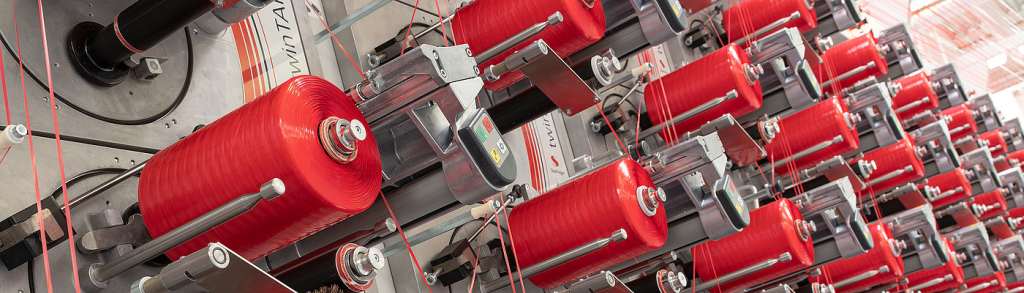
Virgin PP pellets are melted at 220–250°C in W&H extrusion lines, forming uniform films that are slit into tapes (0.04–0.06mm thickness).
Starlinger stretching units apply a 6:1 draw ratio, aligning polymer chains to achieve tensile strengths of 45–50 N/cm²—30% higher than non-stretched tapes.
VidePak’s 100+ circular looms weave tapes into fabrics with 10×10 to 12×12 strands per inch.
BOPP or PE films are heat-laminated to woven fabrics using Starlinger’s systems, achieving moisture vapor transmission rates (WVTR) as low as 2 g/m²/day.
High-resolution gravure printing (20+ colors) is applied before automated Starlinger bag-making machines stitch and seal bags with ultrasonic technology.
With 526 employees and 30+ lamination machines, VidePak’s competitive edge includes:
VidePak’s leakproof woven bags exemplify how precision engineering and automation can solve global logistics challenges. By mastering every production variable—from extrusion temperatures to seam sealing—the company sets benchmarks in both performance and sustainability.