
- What Are Multi‑ply Kraft Paper Bags?
- A Systems Map: From Problem to Architecture in Multi‑ply Kraft Paper Bags
- How Many Plies? What Changes from 2‑ply to 7‑ply
- Barrier and Venting in Multi‑ply Kraft Paper Bags
- Mouth Styles and Closures—Sewn, Pinch, Valve, Heat‑seal, Ultrasonic
- Sewing Engineering in Multi‑ply Kraft Paper Bags
- Mechanical Robustness: Drop, Tear, and Pallet Physics
- Compliance and Hygiene: Standards You Can Cite
- Operations Fit: Fillers, Speeds, and Dusting
- Sustainability: Paper, Liners, and the Real World
- Data‑Fortified Case Files in Multi‑ply Kraft Paper Bags
- Technical Parameters for Multi‑ply Kraft Paper Bags (Typical Ranges)
- Problem → Solution → Result: A Playbook for Multi‑ply Kraft Paper Bags
- Buyer’s Checklist for Multi‑ply Kraft Paper Bags
- Introduction — Framing the Need with Multi‑ply Kraft Paper Bags
- Methodology — Problem → Sub‑Problems → Integrated Plan for Multi‑ply Kraft Paper Bags
- Material Architecture — How Many Plies Do Multi‑ply Kraft Paper Bags Need, and Why?
- Barrier and Venting — The Inner Life of Multi‑ply Kraft Paper Bags
- Mouth Styles and Closures — Sewing, Pinch, Valve, Heat‑seal for Multi‑ply Kraft Paper Bags
- Measurement and Tolerances — How Multi‑ply Kraft Paper Bags Prove Their Claims
- Throughput, Dusting, and Pallet Physics in Multi‑ply Kraft Paper Bags
- Applications — Where Multi‑ply Kraft Paper Bags Win and Why
- Cost, RFQ, and Supplier Selection for Multi‑ply Kraft Paper Bags
- Risk Management — Failure Modes and Preventions in Multi‑ply Kraft Paper Bags
- Integrated Examples — From Hypothesis to Outcome with Multi‑ply Kraft Paper Bags
- Sources
What Are Multi‑ply Kraft Paper Bags?
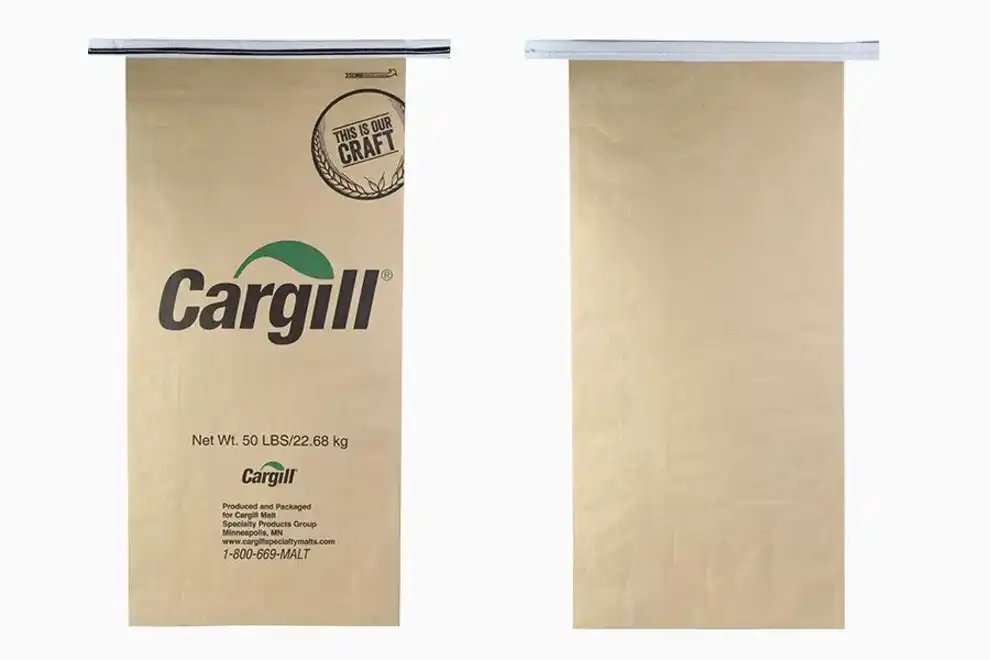
Multi‑ply Kraft Paper Bags are industrial paper packages engineered from two or more plies of sack‑grade kraft that are pasted, sewn, or heat‑sealed into a high‑strength container for 5–50 kg fills. You will also hear them called multiwall kraft sacks, pasted‑end paper sacks, Sewn‑Open‑Mouth (SOM) bags, Pinch‑Bottom Open‑Mouth (PBOM) bags, and valve paper bags—different names for families inside the same ecosystem. While the exterior looks like paper, performance comes from the architecture of layers: outer plies for scuff resistance and print quality, inner plies for tensile strength and, when specified, moisture and grease control via films or coatings.
Key features of Multi‑ply Kraft Paper Bags
• Layered strength that shares load across plies for improved Mullen burst, Elmendorf tear, and drop endurance.
• Configurable barrier by inserting PE liners, PE‑coated papers, or HDPE interleaves; optional micro‑perforations tune venting for fast filling.
• Mouth/closure variety—open‑mouth sewn, pinch‑bottom heat‑sealed, or valve styles to match filler technology.
• High‑impact branding with water‑based flexographic print (1–8 colors) on natural or bleached kraft.
• Compliance pathways for food‑adjacent use when specified to GB 4806.8‑2016, FDA 21 CFR 176.170, and EU 1935/2004.
How Multi‑ply Kraft Paper Bags are produced
Converters slit kraft (typically 70–120 gsm per ply) and form multi‑ply tubes on high‑speed sack lines. Plies are joined using starch or hot‑melt adhesives; ends are either pasted (for valve sacks), left open for sewing (SOM), or prepared for hot‑melt pinch (PBOM). Optional film liners (20–100 µm) or PE‑coated papers are inserted/laminated to manage moisture. Bottoms are formed (square or satchel), valves assembled when specified, and closures executed by sewing, pinch sealing, heat sealing, or ultrasonic welding. Quality gates measure basis weight (TAPPI T‑410), thickness (T411), tear (T414), burst (T810), and drop endurance (ISO 7965‑2 / ISO 2248 / ASTM D5276).
Where Multi‑ply Kraft Paper Bags are used
• Powdered foods (flour, starch, sugar blends), pet food, milk powder (with liners).
• Minerals & cements, pigments, fertilizers, gypsum, bentonite.
• Seeds and feed additives, micronutrients, agro‑inputs.
• Resins and rubber compounding agents, non‑hazardous chemicals with appropriate liners.
For a quick format and options overview, see the anchor: Multi‑ply Kraft Paper Bags.
A Systems Map: From Problem to Architecture in Multi‑ply Kraft Paper Bags
Engineering a bag is not a beauty contest of plies; it is a logic chain. We begin with failure modes—tearing, corner ruptures, moisture pickup, sifting at the seam, pallet instability, failed audits—then map subsystems to prevent them: (1) structure & layers, (2) barrier & venting, (3) mouth & closure, (4) mechanical robustness, (5) compliance & hygiene, (6) line compatibility & cost. Horizontally, we borrow insights from food science (water activity), logistics (stacking and drop physics), and materials (fiber direction, film gauges). Vertically, we trace causes from fiber and adhesive choices through to shelf‑life outcomes.
To keep the decision loop tight, we use a disciplined sequence: specify risk → translate into targets (burst, drop count, moisture gain) → pick the laminate and closure → validate on real lines. In other words, fewer assumptions, more measurements.
How Many Plies? What Changes from 2‑ply to 7‑ply
More layers can help, but more layers can also hurt. A well‑designed 3‑ply with a 60 µm PE liner can outperform a 5‑ply all‑paper sack for hygroscopic goods. The right choice depends on product density, particle shape, humidity cycles, and route severity.
2‑ply (Entry Industrial)
Structure: 2 × 70–90 gsm kraft.
Typical use: benign minerals, retail sand, coarse salt where handling is moderate and aesthetics are valued.
Data reinforcement: Mullen burst 300–500 kPa; Elmendorf tear in the medium band.
Comparative note: vs. woven PP, 2‑ply improves print/brand appeal yet may underperform in 1.2 m drops; pallet strategy must compensate.
Case: A stone supplier migrating to Multi‑ply Kraft Paper Bags for retail look reduced drop height and added anti‑skid varnish, recovering pallet stability without changing product price points.
3‑ply (The Workhorse)
Structure: outer 90 gsm / middle 80 gsm / inner 80 gsm (paper) or middle PE‑coated for modest barrier.
Typical use: flour, starch, feeds, pigments.
Data reinforcement: burst 450–700 kPa; improved survival in ISO 7965‑2 drop sequences.
Case analysis: A mill packing 25 kg flour into 3‑ply + loose 60 µm PE liner valve sacks saw dusting at the filler drop by a third, warehouse odors fall, and pallet hygiene improve—measurable operational wins.
4‑ply (Heavy‑Duty/Hygiene)
Structure: 3 paper plies + functional inner (40–80 µm PE, HDPE, or PE‑coated paper).
Typical use: lactose and milk derivatives, spice blends, hydrophilic chemicals, export SKUs.
Data reinforcement: burst 600–900 kPa; better edgewise compression and stack stability.
Case: Dairy co‑packer moved infant‑grade lactose to 4‑ply valve sacks with inner 60 µm PE; moisture gain over 8 weeks at 30 °C/75% RH dropped ~70% vs. 3‑ply control.
5‑ply (High‑Risk Logistics)
Structure: 4 paper plies + scrim/HDPE/PE‑coated reinforcing ply.
Typical use: monsoon sea freight, port rough handling, high stacking.
Data reinforcement: corner splits fall sharply; better survival in ISO 2248 / ASTM D5276 drops at 1.2 m.
Case: A pigment exporter reduced corner ruptures from 2.4% → 0.3% after adopting 5‑ply pinch‑bottom sacks with inner scrim reinforcement.
6–7‑ply (Specialty)
Structure: multiple paper plies plus one or more barrier plies; sometimes aluminum‑laminated paper for odor/light control in niche applications.
Typical use: moisture‑sensitive, high‑value powders; VCI interleaves for metal parts.
Data reinforcement: mechanical gains plateau; extra plies primarily provide barrier, segregation, or specialty functions.
Trade‑off: higher cost/mass; stricter forming to avoid wrinkling; watch hinge‑line stiffness at overlaps.
Barrier and Venting in Multi‑ply Kraft Paper Bags
We fight three battles: moisture ingress, aroma/grease migration, and trapped air during filling. Each has an engineering answer.
Film liners
A 20–100 µm PE liner may be inserted as a loose inner tube or laminated as PE‑coated paper. Loose liners give the highest barrier but need handling discipline; laminated inners integrate better with heat sealing. With a 60 µm liner, 25 kg flour sacks recorded ≤ 0.3% mass gain after 96 h at 38 °C/90% RH, vs. > 1% for all‑paper controls—numbers that translate directly to shelf‑life.
Grease‑resistant papers
Fluorine‑free sizing plus denser fibers moderate oil migration. Qualification via TAPPI T‑559 (Kit test) ensures the inner ply resists staining by fatty products (e.g., pet food).
Micro‑perforations
Perfs bleed air at the filler to speed cycles and seat valves cleanly. Density is tuned to particle size—too many and you risk sifting; too few and you trap air, bulging pallets. Good sack rooms calibrate perf density against packer back‑pressure and dusting behavior.
Comparative perspective
Metalized or foil interleaves are rare in industrial sacks because they complicate recyclability and add cost; they appear in specialty odor‑critical cases only. The mainstream barrier lever inside Multi‑ply Kraft Paper Bags remains PE.
Mouth Styles and Closures—Sewn, Pinch, Valve, Heat‑seal, Ultrasonic
Closures decide cleanliness, leak risk, and line speed. Choose the method to fit the product, not the other way around.
Sewn‑Open‑Mouth (SOM)
How it works: Fill through an open mouth, fold/hem the top, and sew using chainstitch (401) or lockstitch (301).
Thread choices: Polyester for strength/abrasion, polypropylene for economy/chemical resistance, cotton for traditional look and minor self‑sealing as fibers swell. Anti‑wick finishes help block capillary sifting.
Stitch density: 6–10 SPI; fine powders prefer 8–9 SPI with crepe tape underlay or BOPP tape overlay.
Pros: rugged, fast, low capex, easy field service.
Cons: not hermetic; needle holes are potential sift paths without tape.
Testing: seam per ASTM D2724; drops per ISO 2248/7965‑2.
Pinch‑Bottom Open‑Mouth (PBOM)
How it works: The mouth carries pre‑applied hot‑melt. After filling, the mouth is folded and heated to form a fiber‑to‑fiber bond.
Parameters: hot‑air 160–200 °C, dwell 0.5–1.5 s, adequate pressure; verify peel by an ASTM F88‑style method.
Pros: near‑siftproof, square for pallets, excellent printable billboard.
Cons: needs dedicated equipment and stable temperature control.
Use: food, pet food, sugar, premium powders—often with a PE inner.
Valve Sacks (Internal/External)
How it works: Tube with pasted ends and a corner valve; filler spout inflates the bag, product enters, air escapes through engineered porosity or perfs.
Options: self‑closing flaps; film‑sleeved valves to minimize sifting.
Pros: fastest fills; compact, cube‑like pallets.
Cons: valve geometry is critical; mismatch causes leaks.
Use: cement, minerals, pigments, high‑speed flours.
Heat‑seal and Ultrasonic Closures
When an inner PE‑coated ply or loose liner extends to the mouth, jaws can heat‑seal the thermoplastic. Ultrasonic can weld the inner layer without external heat where sensitive contents or outer graphics might be affected. Typical windows: 145–175 °C, 0.3–0.5 MPa, 0.6–1.0 s; ultrasonic amplitude/time tuned to liner gauge. Cleaner than sewing; capital cost higher; requires consistent liner presentation.
Sewing Engineering in Multi‑ply Kraft Paper Bags
Good stitches are a science, not an art.
Threads
• PES (polyester): high tensile, low creep; ideal for 25–50 kg.
• PP (polypropylene): economical, chemical‑resistant; avoid prolonged UV.
• Cotton: traditional, slightly self‑sealing with moisture; not for damp routes.
• Anti‑wick coatings: cut capillary channels along thread paths.
Needles & SPI
Choose needle sizes to minimize hole diameter in the paper stack. SPI 6–7 for coarse materials (less perforation), 8–10 for fine powders (more seam integrity). Too high an SPI weakens edges like a tear‑off ticket; too low and seams fail in transit.
Seal aids
Crepe‑paper tapes under stitches increase friction and seal; BOPP tapes add branding while sealing needle holes. Sealants (hot‑melt beads) under the stitch line help with powdered fats.
Verification
Measure seam strength via ASTM D2724; add drop tests (ISO 7965‑2) and visual AQL for stitch skips and bird‑nesting. The difference between “good enough” and “great” is consistent SPI and well‑kept needles.
Mechanical Robustness: Drop, Tear, and Pallet Physics
In the warehouse, gravity is the auditor. To pass, we manage corners, seams, and stack friction.
Corners
Rounded forming plates and optional corner patches reduce stress concentration. Hinge‑line stiffness from wide glue overlaps can turn corners into crack starters; specify overlap width and paper caliper to control this.
Plies and fiber direction
Alternating machine/cross‑direction across plies balances tear resistance, lowering the chance of long MD tears. Sack kraft with long fibers in outer plies improves scuff resistance.
Anti‑skid coatings
Coatings raise inter‑bag friction (measured via ASTM D1894), allowing higher safe stacking without slippage. On humid routes, anti‑skid is cheap insurance.
Numbers to aim for
4‑ply sacks at 25 kg typically survive ≥ 5 drops @ 1.0 m when seams are in spec; 5‑ply with scrim push that even higher. Always validate with your product because particle shape and density change energy transfer.
Compliance and Hygiene: Standards You Can Cite
Food‑adjacent or pet applications require paperwork as much as packaging.
Materials
Paper additives per GB 4806.8‑2016; adhesives per GB 4806.4‑2016; plastics (liners/coatings) route via GB 4806.7‑2016 and migration tests in GB 31604. EU frameworks reference (EC) 1935/2004 and EC 2023/2006 (GMP); US routes include 21 CFR 176.170 (paper/board), 175.105 (adhesives), 177.1520 (olefin polymers).
Testing
Package robustness via ISO 7965‑2, ISO 2248 / ASTM D5276; paper properties via TAPPI T‑410/T‑411/T‑414/T‑810; air permeability via ASTM D4521; coefficient of friction via ASTM D1894.
Third‑party labs
SGS, Intertek, TÜV—ask for report numbers tied to lot codes to enable traceability if a retailer audit appears.
Operations Fit: Fillers, Speeds, and Dusting
Bag performance is often limited by the line, not the laminate. Screw packers compact powders and benefit from valve sacks with perfs. Air packers inflate the tube; if perfs are too sparse, you trap air and bulge; too dense, you lose product as dust. Gravity fillers need clean, square bags that sit without rocking—PBOM’s billboard face helps with scanning and pallet wrap.
Dusting control
Valve geometry, perf density, and liner length all interact. Short liners speed sealing but can leave a powder path; extended liners are cleaner but require operator discipline to present consistently to sealing jaws.
Coding and traceability
Flat PBOM panels excel for high‑resolution inkjet; SOM seams can shadow codes; valve sacks keep faces clean. Decide based on your retailer’s scan‑ability requirements.
Sustainability: Paper, Liners, and the Real World
The paper story is easy; the liner story is harder. Multi‑material sacks challenge curbside recycling. Yet the dominant sustainability lever is product waste avoided. If a PE‑lined 4‑ply prevents caked flour or rancid kibble, total footprint per sellable unit often drops. For low‑risk routes, specify all‑paper 3‑ply to simplify recovery. For high‑risk humidity, accept the liner and document the rationale; some regions allow material recovery through industrial recycling streams.
A pragmatic roadmap: start with the lightest architecture that meets a measured shelf‑life target, then pilot mono‑material strategies (e.g., HDPE liners with compatible recycling) as infrastructure allows. Multi‑ply Kraft Paper Bags give you that tunability.
Data‑Fortified Case Files in Multi‑ply Kraft Paper Bags
Case 1 — Flour on a humid coast (25 kg)
Problem: moisture pickup, pallet dusting, retailer complaints.
Solution: 4‑ply valve sack with 60 µm PE liner, tuned perf density, anti‑skid outer; validate with GB 31604 migration for inner.
Result: moisture gain reduced to ≤ 0.3% under stress test; dusting at filler cut by ~30%; pallet claims fell.
Case 2 — Pigments via long sea freight (20 kg)
Problem: corner splits and seam bursts.
Solution: 5‑ply PBOM, inner scrim reinforcement, rounded forming plates, tighter SPI on stitch‑reinforced options.
Result: corner ruptures fell ~8× on 1.2 m cycles; pallets arrived square; rework costs collapsed.
Case 3 — Pet food with grease migration (15 kg)
Problem: staining on outer ply; retailer rejections.
Solution: PBOM with PE‑coated inner, peel target > 12 N/15 mm by ASTM F88; add easy‑open tear tape.
Result: stain‑free faces, cleaner shelves, higher repurchase.
Technical Parameters for Multi‑ply Kraft Paper Bags (Typical Ranges)
Values represent mainstream supplier COAs (e.g., Made‑in‑China/Alibaba listings) and mill specs. Validate against your exact product and route.
| Parameter | 2‑ply | 3‑ply | 4‑ply | 5‑ply | Notes / Tests |
|---|---|---|---|---|---|
| Ply basis weight (gsm each) | 70–90 | 70–100 | 80–110 | 80–120 | TAPPI T‑410 |
| Total bag mass (25 kg size) | 120–160 g | 150–210 g | 190–260 g | 230–320 g | Size/features dependent |
| Typical burst (kPa) | 300–500 | 450–700 | 600–900 | 700–1000 | TAPPI T‑810 |
| Elmendorf tear (mN) | 800–1500 | 1200–2000 | 1600–2500 | 1800–3000 | TAPPI T‑414 (MD/CD vary) |
| Drop survival (1.0 m, 25 kg) | 2–3 drops | 3–5 drops | 5–7 drops | 7–9 drops | ISO 7965‑2 typical |
| Valve / PBOM / SOM | ✓/–/✓ | ✓/✓/✓ | ✓/✓/✓ | ✓/✓/✓ | All styles possible |
| Optional liner (µm) | 20–40 | 30–60 | 40–80 | 50–100 | PE/HDPE; loose or laminated |
| Micro‑perfs | Optional | Common | Tuned | Tuned | Filling vs. sifting balance |
| Printing | 1–4 col | 1–6 col | 1–8 col | 1–8 col | Water‑based flexo |
Problem → Solution → Result: A Playbook for Multi‑ply Kraft Paper Bags
Scenario A — Hygroscopic spice blend, 25 kg, coastal warehouses
Problem: caking and aroma loss, fine powder sifts through sewn mouths.
Solution: 4‑ply valve sack with 50–60 µm PE liner, film‑sleeved valve, perf density matched to air packer, anti‑skid coat; add crepe tape only if stitch‑reinforced.
Result: cleaner pallets, stable texture, lower retailer deductions.
Scenario B — Cement, 20 kg, high throughput
Problem: need maximal bags/minute and square pallets.
Solution: 3‑ply valve with engineered porosity, no liner, higher perf density; robust pasted ends.
Result: speed maintained, dust controlled, lowest unit cost preserved.
Scenario C — Seed distributor, 15 kg, long trucking
Problem: punctures at pallet corners; occasional burst on cold mornings.
Solution: 5‑ply PBOM with corner reinforcement and rounded forming; inner heavier ply to resist brittle failure; anti‑skid outer.
Result: claim rate falls; stacking height rises safely.
Scenario D — Additive with mild fat content, 10 kg
Problem: light grease halo on outer faces after summer storage.
Solution: PBOM with PE‑coated inner, verify Kit rating by TAPPI T‑559, seal to > 12 N/15 mm.
Result: stain‑free faces, fewer returns, stronger brand.
Buyer’s Checklist for Multi‑ply Kraft Paper Bags
• Demand ply‑by‑ply composition and liner gauge on quotations; avoid generic “multiwall” labels.
• Insist on test method callouts on COAs: “TAPPI T‑810 burst, ISO 7965‑2 drop, ASTM D1894 COF.”
• For fine powders, specify crepe tape or move to PBOM to curb sifting.
• Simulate humidity: 38 °C/90% RH for 96 h and measure mass gain on real product.
• Manage pallets: anti‑skid coatings and corner protection unlock higher stacks—cheap control, expensive to ignore.
• Keep a living spec: when routes or SKUs change, revisit plies, perfs, and closures.
Introduction — Framing the Need with Multi‑ply Kraft Paper Bags
When the brief demands strength, speed, and cleanliness in 5–50 kg packaging, Multi‑ply Kraft Paper Bags step forward as a tunable system rather than a single product. What are Multi‑ply Kraft Paper Bags in practice? They are layered sacks built from sack‑grade kraft, optionally combined with PE liners or coated papers, formed into tubes and closed by sewing, hot‑melt pinch, heat sealing, or valves. Also known as multiwall kraft sacks, pasted‑end paper sacks, Sewn‑Open‑Mouth (SOM) bags, Pinch‑Bottom Open‑Mouth (PBOM) bags, and valve paper bags, they balance three forces—barrier, mechanics, and throughput. We pose the core question: how can Multi‑ply Kraft Paper Bags protect sensitive powders, run fast on existing lines, and arrive square on pallets—without needless cost?
Methodology — Problem → Sub‑Problems → Integrated Plan for Multi‑ply Kraft Paper Bags
The problem‑oriented loop begins with failure modes (moisture gain, sifting at seams, corner splits, slow filling) and converts them into four measurable targets: moisture gain (Δm), drop survival (n at 1.0–1.2 m), leak rate at mouth (ppm dust), and line speed (bags/min). We decompose Multi‑ply Kraft Paper Bags into subsystems: (1) ply architecture, (2) barrier & venting, (3) mouth/closure, and (4) pallet physics. Horizontally, we compare insights from food science (water activity), logistics (stack friction), and textile engineering (stitch density). Vertically, we trace causes from fiber orientation and adhesive choice up to audit outcomes and consumer complaints. The method ends where it should: a validated bill of materials and a closure spec that holds on your line—not just in a brochure.
Material Architecture — How Many Plies Do Multi‑ply Kraft Paper Bags Need, and Why?
Background: more plies can add strength; too many can add stiffness and cost. We ask: product density? particle size? humidity profile? route severity?
Approach: map those answers to three baseline stacks. Two‑ply Multi‑ply Kraft Paper Bags (2 × 70–90 gsm) suit benign minerals and retail sand where aesthetics trump extreme robustness. Three‑ply Multi‑ply Kraft Paper Bags (e.g., 90/80/80 gsm) are the workhorse for flour, feed, pigments; add a 30–60 µm PE liner when humidity spikes. Four‑ply Multi‑ply Kraft Paper Bags introduce a functional inner (40–80 µm PE or PE‑coated paper) for lactose and spice blends on export lanes.
Result: burst resistance rises from ~300–500 kPa (2‑ply) to 600–900 kPa (4‑ply), while drop survival at 1.0 m improves from 2–3 to 5–7 cycles, assuming seams are in spec.
Discussion: the vertical thread here is trade‑off management—enough paper to resist tearing, enough liner to control moisture, not so much rigidity that corners become crack starters.
Barrier and Venting — The Inner Life of Multi‑ply Kraft Paper Bags
Background: powders spoil from water and oxygen; pallets bloat when air cannot escape during filling.
Method: specify the barrier lever (loose PE liner 20–100 µm vs. PE‑coated inner), then set micro‑perforation density to bleed air without inviting sifting.
Result: with a 60 µm inner liner, Multi‑ply Kraft Paper Bags for 25 kg flour typically hold moisture gain to ≤ 0.3% under 96 h at 38 °C/90% RH, while all‑paper controls exceed 1%. Properly tuned perfs keep valve seating clean and boost bags/min on air packers.
Discussion: horizontally, compare barrier choices with rigid formats (drums, pails) that excel in protection but punish freight; vertically, link liner gauge to migration compliance, testability, and consumer freshness perceptions.
Mouth Styles and Closures — Sewing, Pinch, Valve, Heat‑seal for Multi‑ply Kraft Paper Bags
Background: the mouth decides cleanliness and speed; the wrong closure leaks in the truck and stalls at the filler.
Method: match product and line to four families. Sewn‑Open‑Mouth Multi‑ply Kraft Paper Bags use chainstitch/lockstitch; add crepe tape or BOPP tape and target 8–9 SPI for fine powders. PBOM Multi‑ply Kraft Paper Bags pinch hot‑melt‑prepped mouths at 160–200 °C for near‑siftproof seals and billboard‑flat faces. Valve Multi‑ply Kraft Paper Bags feed fastest; film‑sleeved valves tame dust with fine products. Heat‑sealed Multi‑ply Kraft Paper Bags weld the PE inner when hermeticity and hygiene outrank retrofit simplicity.
Result: with the right pairing, leak complaints fall, pallets cube better, and cycle time tightens.
Discussion: horizontally, weigh capital (pinch/heat tools) against consumables (tapes/threads); vertically, trace how stitch density and needle selection influence seam strength, sifting, and audit outcomes.
Measurement and Tolerances — How Multi‑ply Kraft Paper Bags Prove Their Claims
Background: packaging that “seems fine” fails at scale. Numbers matter.
Method: certify Multi‑ply Kraft Paper Bags with TAPPI and ISO/ASTM references: T‑410 (basis weight), T‑414 (tear), T‑810 (Mullen burst), ISO 7965‑2 (drop), ASTM D1894 (COF for anti‑skid), TAPPI T‑559 (Kit for grease). Record seal strength for PBOM via an F88‑style peel and seam strength for SOM via ASTM D2724.
Result: a COA that ties each lot to measurable performance and a plant that can trace failures back to a ply, a glue, or a temperature.
Discussion: vertical reasoning connects OTR/WVTR of liners to shelf‑life KPIs; horizontal reasoning contrasts paper/film composites with all‑paper sacks on recyclability and recovery options.
Throughput, Dusting, and Pallet Physics in Multi‑ply Kraft Paper Bags
Background: the best bag is the one that makes it through your line, onto your truck, and into your retailer without drama.
Method: calibrate perf density to packer back‑pressure; extend liners just enough to meet sealing jaws; specify anti‑skid outer coats to increase layer friction and stacking height.
Result: faster fills, square pallets, reduced rework at DCs.
Discussion: horizontally, borrow from pallet science—rounded corners and corner guards dissipate stress; vertically, observe how hinge‑line stiffness at glue overlaps can create crack initiators if left unmanaged.
Applications — Where Multi‑ply Kraft Paper Bags Win and Why
Background: not all powders behave alike; not all routes punish equally.
Use cases: Multi‑ply Kraft Paper Bags anchor flour and starch lines that demand cleanliness and speed; Multi‑ply Kraft Paper Bags carry cement, gypsum, and pigments where valve filling shines; Multi‑ply Kraft Paper Bags preserve pet food aesthetics by pairing PBOM with PE‑coated inners to block grease halos; Multi‑ply Kraft Paper Bags move seeds and micronutrients over long trucking routes that punish corners and seams. For formats and options at a glance, see the anchor: Multi‑ply Kraft Paper Bags.
Cost, RFQ, and Supplier Selection for Multi‑ply Kraft Paper Bags
Background: the cheapest bag can be the costliest when returns and rework enter the ledger.
Method: in RFQs, demand ply‑by‑ply composition, liner gauge, perf pattern, closure method, and test‑method callouts on COAs. Ask for standard numbers—T‑410, T‑414, T‑810, ISO 7965‑2—and lot‑tied third‑party reports (SGS/Intertek/TÜV). Request trial reels or short runs to measure real line speeds and leakage.
Result: apples‑to‑apples comparisons and fewer surprises on the dock.
Discussion: horizontally, benchmark suppliers on response time, print consistency, and root‑cause discipline; vertically, link their quality systems to your retailer audits and claim rates.
Risk Management — Failure Modes and Preventions in Multi‑ply Kraft Paper Bags
Background: what fails in the wild? Corners split; stitches sift; pallets slip; liners wrinkle.
Method: counter with rounded forming plates, alternating MD/CD fiber orientation across plies, anti‑wick threads, crepe under‑tapes, and defined glue‑overlap widths. For humidity, move from 3‑ply all‑paper to 4‑ply with a 50–60 µm liner; for brute handling, add scrim or shift to 5‑ply PBOM.
Result: fewer leakers, fewer insurance claims, calmer nights.
Discussion: horizontally, compare the same SKU over dry vs. monsoon routes; vertically, watch how a single change (SPI from 7→9) cascades from seam strength to customer complaints.
Integrated Examples — From Hypothesis to Outcome with Multi‑ply Kraft Paper Bags
Example 1 (Hygroscopic spice, coastal warehouses): choose a 4‑ply valve sack with a 60 µm liner, tuned perf density, and anti‑skid coat. Expect moisture gain ≤ 0.3% in stress tests and cleaner pallets at DCs.
Example 2 (Pigments by sea freight): adopt 5‑ply PBOM with inner scrim reinforcement and rounded corners; watch corner ruptures fall and stack heights rise safely.
Example 3 (Pet food with grease): specify PBOM plus PE‑coated inner and an F88‑style peel target > 12 N/15 mm; retailers accept stain‑free faces, consumers notice cleanliness, and repurchase follows.
Sources
• ISO 7965‑2 — Sacks: Drop test method for transport.
• ISO 2248 / ASTM D5276 — Package drop methods.
• TAPPI T‑410 / T‑411 / T‑414 / T‑810 — Basis weight, thickness, tearing, burst of paper.
• TAPPI T‑559 — Kit test for oil/grease resistance.
• ASTM D1894 — Coefficient of friction for anti‑skid surfaces.
• GB 4806.8‑2016 / GB 4806.4‑2016 / GB 4806.7‑2016; GB 31604 series — China food‑contact and migration testing.
• Supplier COAs and mainstream listings (Made‑in‑China, Alibaba) for multiwall sack parameters and liner gauges.