
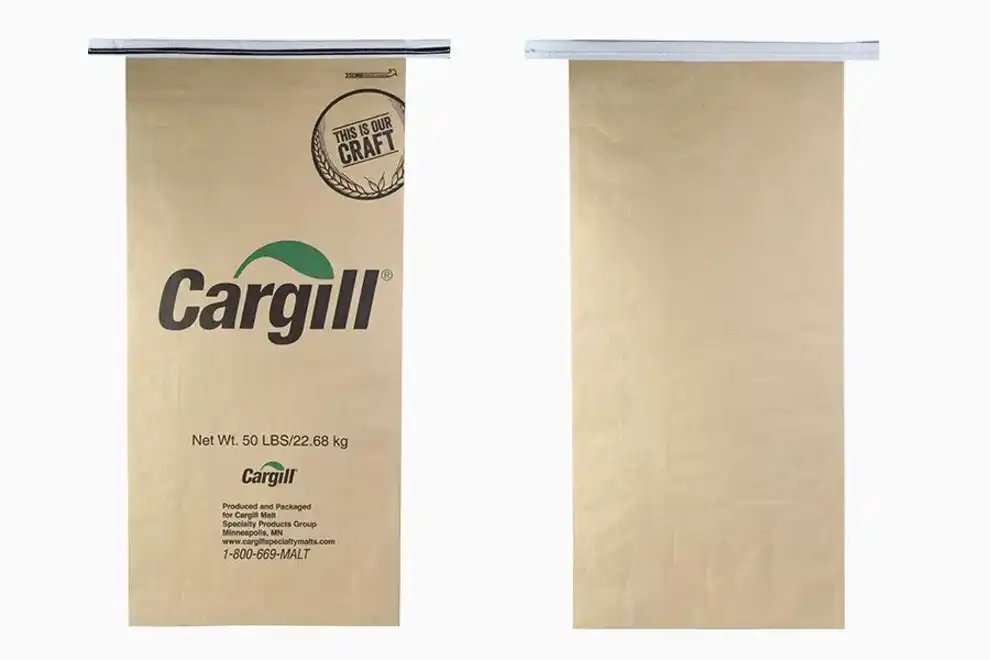
VIDEPAK Multi-ply Kraft Paper Bags: A Practical Product Guide for Stronger, Cleaner, Smarter Packaging
Industrial packaging has one basic duty: it must keep the product inside, keep outside risks away, and keep the filling line moving. Yet a good sack must do more. It must stack well, print clearly, open easily, close reliably, and arrive with the same professional shape it had when it left the packing plant. VIDEPAK designs Multi-ply Kraft Paper Bags around this full journey, not around one isolated test. Built from carefully selected layers of Kraft Paper, these sacks can be configured for powders, granules, pellets, seeds, feed ingredients, food ingredients, minerals, dry construction mixes, and many other products that normally move in packs from 2 kg to 60 kg. VIDEPAK offers brown, white, multiwall, coated, lined, valve, and open-mouth structures, with the paper body, barrier layer, bottom geometry, and top closure matched to the customer’s product and equipment.
Packaging principle: choose the structure as one system. The number of plies, the grade of Kraft Paper, the air-release path, the liner, the bottom, and the closure must work together. More material is not always better; better balance is better.
One Product Family, Several Performance Paths
Multi-ply Kraft Paper Bags are heavy-duty paper sacks made with two or more layers, or “plies,” of sack-grade Kraft Paper. Each ply has a job. The outer ply carries graphics and resists surface wear. Middle plies build strength, stiffness, and puncture resistance. The inner ply touches the product or supports a separate liner. When required, a PE-coated sheet or a loose, sleeve-in, or pasted PE liner can improve resistance to humidity and fine-powder leakage. In practice, VIDEPAK can engineer two- to five-ply structures, while common industrial designs often use paper in the range of roughly 70–100 g/m² per ply, selected according to load, product density, bag dimensions, and distribution stress.
The product family becomes easier to understand when the filling and closing method comes first. A Sewn open mouth sack is filled through a fully open top and then stitched. A Pinch bottom open mouth sack is also filled from the top, but its prepared mouth is folded and sealed with heat-activated adhesive. A Block Bottom Open Mouth sack adds a pasted, rectangular base that improves standing shape and pallet order, while the top remains open for filling and later closing. These forms share the same material platform—layered Kraft Paper—but they create different answers for speed, dust control, equipment investment, appearance, and logistics.
Fill with freedom
Sewn open mouth designs offer a wide opening, familiar equipment, and flexible use across coarse and mixed products.
Seal with precision
Pinch bottom open mouth designs create a neat, low-sift top without sewing holes.
Stack with order
Block Bottom Open Mouth designs create a stable footprint and cleaner pallet faces.
The format comparison reflects common open-mouth construction principles and VIDEPAK’s available opening and bottom options. Final suitability depends on the product, line, pack weight, and required barrier.
The Material Engine: How Layered Kraft Works
Why Kraft Paper Is the Starting Point
Sack-grade Kraft Paper is valued because it combines fiber strength, stretch, tear resistance, and controlled porosity. Long fibers and strong fiber bonding help the paper withstand shocks during filling, dropping, conveying, and transport. At the same time, suitable porosity allows displaced air to leave the sack while powder enters. That balance matters: a bag that cannot release air may fill slowly, swell, or create more dust around the filling point; a bag that releases air in an uncontrolled way may lose fine product. Industry research also shows that high-porosity sack paper can improve the filling speed of powder products, while official sector guidance connects strong paper, good sack design, and proper sealing with dust reduction.
VIDEPAK offers unbleached brown and bleached white Kraft Paper. Brown paper gives a natural, industrial appearance and retains the familiar kraft character. White paper gives higher print contrast and a cleaner visual field for brands that need bright colors, small text, or premium presentation. Long-fiber paper options can be selected when tear strength and seam durability are especially important. The choice is not simply brown versus white; it is transport strength versus graphic priority, natural tone versus clean contrast, or, in many projects, a careful combination of both.
From Two Plies to Five Plies
The correct ply count for Multi-ply Kraft Paper Bags depends on the packed product, not on a fixed market habit. A lighter, free-flowing product with short local distribution may perform well in a two-ply structure. A denser product, a sharp granule, a high stack, or a long export route may call for three, four, or five plies. Yet adding a ply changes more than strength: it changes stiffness, air release, folding behavior, closure response, empty-bag weight, and cost. VIDEPAK therefore treats each layer as a function, not as decoration. One ply prints. One reinforces. One supports the seal. One protects. One may be removed when it adds no useful value.
| Specification Area | Configurable Reference Range | Engineering Question |
|---|---|---|
| Nominal pack capacity | 2–60 kg | What is the net weight, bulk density, and filled volume? |
| Paper construction | Commonly 2–5 plies | Which ply provides strength, print, barrier support, or seal performance? |
| Typical paper basis weight | Often about 70–100 g/m² per ply | Can a stronger grade reduce total material while meeting tests? |
| Barrier | All-paper, coated ply, sleeve liner, or pasted inner liner | Is the main risk moisture, sifting, grease, oxygen, odor, or contamination? |
| Side shape | Flat or gusseted | What footprint and filled cross-section fit the pallet and filling spout? |
These figures are practical reference ranges, not automatic guarantees. VIDEPAK confirms the final construction after reviewing the product, bag dimensions, closure method, filling equipment, storage climate, and test plan.
Barrier Without Guesswork
Plain Kraft Paper supports strength, print, and controlled air release. A PE-coated ply or inner liner adds humidity and leakage protection, but it can also change air escape and end-of-life handling. VIDEPAK selects the barrier only after defining the real risk. Protect what must be protected; preserve breathability where breathability is needed.
Sewn Open Mouth: Direct, Flexible, Proven
How the Sewn open mouth Format Works
A Sewn open mouth sack arrives with one end already closed and the opposite end fully open. The packer places the bag under a gravity, auger, or other suitable filling system, doses the product, flattens or guides the top, and stitches the mouth through a reinforcing tape. The closure can use paper tape for a paper-led appearance, or an over-tape system that helps cover needle holes when fine-powder control needs improvement. VIDEPAK can also supply flat or gusseted bodies, stitched or pasted bottom arrangements, and optional liners to adapt the basic Sewn open mouth concept to different products and lines.
The appeal is immediate. The opening is wide. The process is easy to see. Operators can inspect the dose before final closure. Sewing equipment is common, maintenance is familiar, and format changes can be straightforward. For grains, seeds, feed, pellets, coarse chemicals, and dry blends that do not demand a fully adhesive top seal, Sewn open mouth Multi-ply Kraft Paper Bags can offer a strong balance of investment, speed, and versatility. Simple does not mean basic; simple means every part has a clear purpose.
Where Sewing Needs Careful Engineering
Needle holes are the key design point. With coarse products, they may have little practical effect. With very fine powders, they can become paths for sifting. The answer may be a tighter stitch setup, a stronger crepe or paper tape, an over-tape closure, a liner that can be sealed separately, or a move to Pinch bottom open mouth. The decision should come from product particle size, dust sensitivity, humidity risk, handling stress, and customer expectations—not from habit. The right seam holds; the wrong seam leaks. The right tape reinforces; the wrong tape only hides the problem.
Best Reasons to Select It
Wide-mouth filling, familiar sewing technology, flexible bag dimensions, and good compatibility with coarse or mixed dry products make Sewn open mouth a practical workhorse.
Questions to Settle First
How fine is the product? Does the liner need a separate seal? Will the seam tape support easy opening? Can the customer’s sewing head hold a stable stitch under real line speed?
Pinch Bottom Open Mouth: Clean Closure, Strong Presentation
How the Pinch bottom open mouth Format Works
A Pinch bottom open mouth sack uses a factory-made, pasted pinch construction at the bottom and a stepped, prepared mouth at the top. After filling, the top is folded along defined lines and the pre-applied adhesive is activated by a compatible sealer. The result is a flat, neat closure without sewing perforations. For fine powders, food ingredients, dry construction mixes, specialty chemicals, and branded products that need both process control and a polished pack, Pinch bottom open mouth Multi-ply Kraft Paper Bags offer a persuasive combination: open-mouth access before closing, then a tight adhesive seal after dosing.
The market value is visual as well as technical. A sewn top clearly looks industrial; a pinched top looks finished. The broad front and back panels remain cleaner, the closure can sit flatter, and the package can form a more uniform shape in the stack. This can support clearer branding and a stronger quality signal, especially when white Kraft Paper, high-contrast printing, and carefully controlled folds are used together. A package speaks before it is opened. A straight closure says control; a clean panel says care; a stable shape says reliability.
Equipment Fit Is Essential
A Pinch bottom open mouth bag should never be specified without checking the customer’s top-sealing process. The adhesive chemistry, activation temperature, dwell time, pressure, fold geometry, product dust at the seal area, and conveyor support all affect final integrity. If powder contaminates the bonding zone, or if heat and pressure are uneven, even a strong paper structure may not close correctly. VIDEPAK therefore reviews the filling and sealing line together with the bag design. The sack and the machine are partners; neither can compensate forever for the other.
The practical contrast above follows the closure structures described for open-mouth multiwall sacks. Actual dust resistance and seal strength must be verified with the customer’s product and equipment.
Block Bottom Open Mouth: Shape That Works
What Makes Block Bottom Open Mouth Different
A Block Bottom Open Mouth sack has a factory-pasted rectangular base. When product enters, the bottom opens into a stable footprint and the side panels form a more box-like body. The top remains fully open for filling and can then be sewn or closed by another compatible system. This geometry is the main difference: instead of behaving like a soft tube, the filled sack behaves more like a flexible brick. It stands more easily, aligns more consistently, and creates flatter pallet faces. VIDEPAK offers pasted block-bottom and self-opening satchel-type structures as part of its open-mouth portfolio.
That shape can create value at several points. On the packing floor, a stable base can improve bag presentation under the filler. In the warehouse, a repeatable footprint helps layers align. In transport, square stacks can be easier to stretch-wrap and count. In retail or professional trade channels, a standing pack can display graphics more clearly. The benefit is not only beauty and not only strength; it is order. Better geometry supports better handling, and better handling protects both product and brand.
How Block Bottom Open Mouth Relates to the Other Formats
Block Bottom Open Mouth describes bottom shape and filling access, while Sewn open mouth and Pinch bottom open mouth mainly describe the mouth and closure method. That is why features can overlap. A project may use a block bottom with a sewn top, producing a stable sack that closes on a standard sewing line. Another project may use a satchel-style base with a heat-sealable liner. Clear specifications should therefore name the body shape, bottom style, top style, liner, and final closure separately. One word rarely defines the whole bag. A complete drawing does.
Choose Block Bottom Open Mouth When the Footprint Matters
This format is especially attractive when customers want upright filling behavior, cleaner pallet geometry, stronger front-panel display, and a clear premium step above a simple flat tube. It should still be tested with the real product, because bulk density and flow determine how fully the base opens and how the side walls settle.
From Product Data to a Qualified VIDEPAK Bag
A Practical Development Flow
The fastest route to a reliable specification begins with facts. VIDEPAK first needs the product name, particle form, bulk density, target net weight, expected filled volume, moisture sensitivity, dust risk, storage climate, distribution route, pallet pattern, and filling-line details. Next comes the structural choice: number and grade of Kraft Paper plies, flat or gusseted body, Sewn open mouth, Pinch bottom open mouth, or Block Bottom Open Mouth, plus any coating or liner. Then the dimensions and artwork are checked against the forming and closing process. Samples are produced, filling trials are run, and the final bag is confirmed only after the closure, shape, print, and handling performance meet the agreed targets.
Weight, density, particle size, sensitivity
Plies, liner, gusset, bottom, mouth
Fill, close, drop, stack, inspect
Approved drawing, artwork, tolerances, QC plan
Quality Is Measured at the Material, Bag, and System Levels
For Multi-ply Kraft Paper Bags, appearance alone cannot prove performance. Paper basis weight, tensile and tear behavior, dimensions, fold position, adhesive application, seam integrity, liner fit, print registration, and finished-bag cleanliness all require control. Filled-bag trials should also reflect the real distribution hazards. Current international packaging standards include methods for measuring empty paper sacks, conditioning paper sacks before testing, sampling empty sacks, determining dimensional tolerances, assessing friction of filled sacks, and drop testing paper sacks. A drop test, in particular, is designed to show how a filled sack responds to vertical impact as part of a distribution environment.
VIDEPAK applies batch-based inspection and uses recognized quality and test frameworks for industrial packaging. The company’s published product information states that its Kraft Paper sack range is produced under an ISO 9001 quality system, with configurable structures, samples for evaluation, and final specifications covering material, size, print, and functional details. For standard custom orders, the published reference is generally 15–25 business days after requirements are settled, while the stated minimum order quantity is 10,000 pieces per specification. These commercial figures should be reconfirmed at quotation because artwork, material, season, and order complexity can affect the final schedule.
| Control Stage | What VIDEPAK Checks | Why It Matters to the Customer |
|---|---|---|
| Incoming paper and auxiliary materials | Grade, basis weight, visible defects, agreed performance data | Stable strength, print, folding, and sealing behavior |
| Printing and tubing | Color placement, registration, tube width, gusset, seam, perforation plan | Consistent branding and reliable filling geometry |
| Bottoming and mouth preparation | Fold position, adhesive coverage, stitching, tape, seal area cleanliness | Lower risk of leakage, opening, or poor line response |
| Finished-bag and filling trial | Dimensions, closure, drop behavior, stack shape, visual finish | Evidence that the complete pack works, not only the empty bag |
Why VIDEPAK Multi-ply Kraft Paper Bags Create Business Value
The central advantage of VIDEPAK Multi-ply Kraft Paper Bags is controlled choice. Customers do not have to force every product into one standard sack. They can select natural brown or bright white Kraft Paper; two, three, four, or five plies; flat or gusseted sides; an all-paper body or a moisture-control liner; a traditional Sewn open mouth closure, a clean Pinch bottom open mouth seal, or a stable Block Bottom Open Mouth structure. The goal is not variety for its own sake. The goal is a bag that fits the filling line, protects the product, carries the brand, and uses material with purpose.
That purpose also supports a more responsible material strategy. Industry studies report that properly emptied paper sacks can be recycled in conventional paper recycling processes, and that long sack-kraft fibers can improve the mechanical properties of recycled paper furnish. At the same time, recyclability depends on the full construction, local collection systems, product contamination, and the amount and type of non-paper barrier material. For this reason, VIDEPAK can help customers compare an all-paper structure with coated or lined alternatives instead of making a simple claim that every bag has the same end-of-life route. Use less where less is enough. Add protection where protection is necessary. Design for performance first, then simplify with evidence.
The VIDEPAK Promise in One Line
Multi-ply Kraft Paper Bags should be strong without being wasteful, protective without blocking the line, attractive without hiding weak structure, and customized without becoming complicated.
Specification Checklist for a Faster Quotation
With this information, VIDEPAK can turn a general request for Multi-ply Kraft Paper Bags into a clear technical proposal. The final result may be a cost-effective Sewn open mouth sack for robust granules, a tightly sealed Pinch bottom open mouth pack for fine powder, or a presentation-led Block Bottom Open Mouth design for orderly stacking and strong shelf impact. Different paths. One goal: packaging that works from the first filled bag to the last delivered pallet.
- VIDEPAK Multi-ply Kraft Paper Bags: A Practical Product Guide for Stronger, Cleaner, Smarter Packaging
- One Product Family, Several Performance Paths
- The Material Engine: How Layered Kraft Works
- Sewn Open Mouth: Direct, Flexible, Proven
- Pinch Bottom Open Mouth: Clean Closure, Strong Presentation
- Block Bottom Open Mouth: Shape That Works
- From Product Data to a Qualified VIDEPAK Bag
- Why VIDEPAK Multi-ply Kraft Paper Bags Create Business Value
- Introduction — Framing the Need with Multi‑ply Kraft Paper Bags
- Methodology — Problem → Sub‑Problems → Integrated Plan for Multi‑ply Kraft Paper Bags
- Material Architecture — How Many Plies Do Multi‑ply Kraft Paper Bags Need, and Why?
- Barrier and Venting — The Inner Life of Multi‑ply Kraft Paper Bags
- Mouth Styles and Closures — Sewing, Pinch, Valve, Heat‑seal for Multi‑ply Kraft Paper Bags
- Measurement and Tolerances — How Multi‑ply Kraft Paper Bags Prove Their Claims
- Throughput, Dusting, and Pallet Physics in Multi‑ply Kraft Paper Bags
- Applications — Where Multi‑ply Kraft Paper Bags Win and Why
- Cost, RFQ, and Supplier Selection for Multi‑ply Kraft Paper Bags
- Risk Management — Failure Modes and Preventions in Multi‑ply Kraft Paper Bags
- Integrated Examples — From Hypothesis to Outcome with Multi‑ply Kraft Paper Bags
- Sources
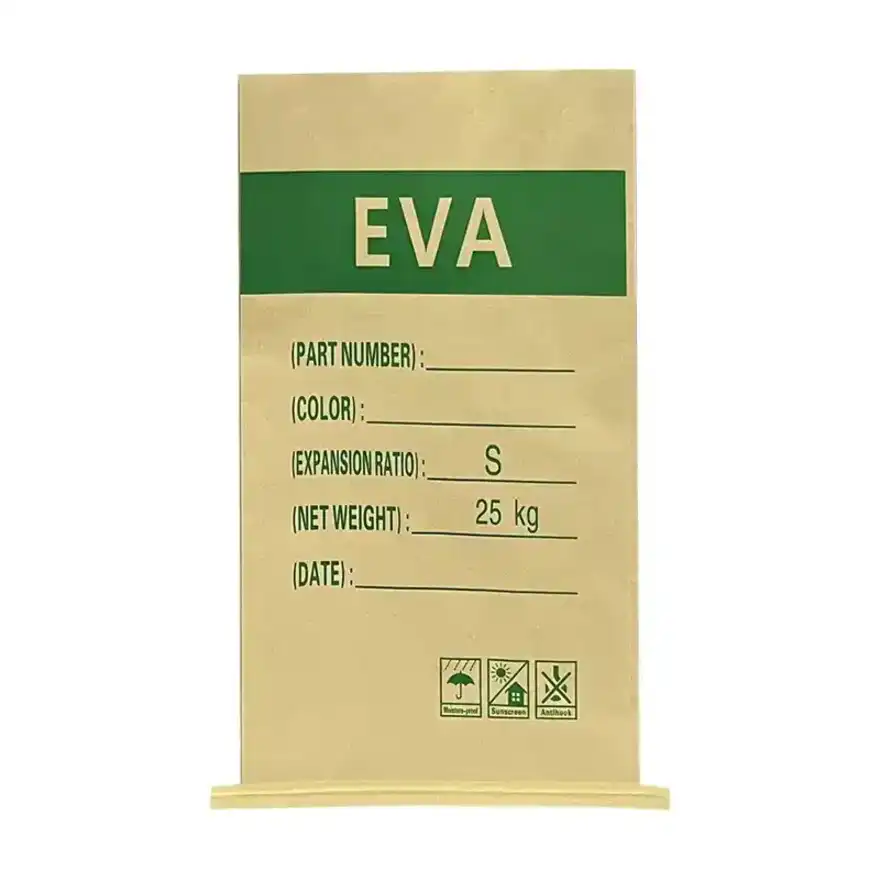
Introduction — Framing the Need with Multi‑ply Kraft Paper Bags
When the brief demands strength, speed, and cleanliness in 5–50 kg packaging, Multi‑ply Kraft Paper Bags step forward as a tunable system rather than a single product. What are Multi‑ply Kraft Paper Bags in practice? They are layered sacks built from sack‑grade kraft, optionally combined with PE liners or coated papers, formed into tubes and closed by sewing, hot‑melt pinch, heat sealing, or valves. Also known as multiwall kraft sacks, pasted‑end paper sacks, Sewn‑Open‑Mouth (SOM) bags, Pinch‑Bottom Open‑Mouth (PBOM) bags, and valve paper bags, they balance three forces—barrier, mechanics, and throughput. We pose the core question: how can Multi‑ply Kraft Paper Bags protect sensitive powders, run fast on existing lines, and arrive square on pallets—without needless cost?
Methodology — Problem → Sub‑Problems → Integrated Plan for Multi‑ply Kraft Paper Bags
The problem‑oriented loop begins with failure modes (moisture gain, sifting at seams, corner splits, slow filling) and converts them into four measurable targets: moisture gain (Δm), drop survival (n at 1.0–1.2 m), leak rate at mouth (ppm dust), and line speed (bags/min). We decompose Multi‑ply Kraft Paper Bags into subsystems: (1) ply architecture, (2) barrier & venting, (3) mouth/closure, and (4) pallet physics. Horizontally, we compare insights from food science (water activity), logistics (stack friction), and textile engineering (stitch density). Vertically, we trace causes from fiber orientation and adhesive choice up to audit outcomes and consumer complaints. The method ends where it should: a validated bill of materials and a closure spec that holds on your line—not just in a brochure.
Material Architecture — How Many Plies Do Multi‑ply Kraft Paper Bags Need, and Why?
Background: more plies can add strength; too many can add stiffness and cost. We ask: product density? particle size? humidity profile? route severity?
Approach: map those answers to three baseline stacks. Two‑ply Multi‑ply Kraft Paper Bags (2 × 70–90 gsm) suit benign minerals and retail sand where aesthetics trump extreme robustness. Three‑ply Multi‑ply Kraft Paper Bags (e.g., 90/80/80 gsm) are the workhorse for flour, feed, pigments; add a 30–60 µm PE liner when humidity spikes. Four‑ply Multi‑ply Kraft Paper Bags introduce a functional inner (40–80 µm PE or PE‑coated paper) for lactose and spice blends on export lanes.
Result: burst resistance rises from ~300–500 kPa (2‑ply) to 600–900 kPa (4‑ply), while drop survival at 1.0 m improves from 2–3 to 5–7 cycles, assuming seams are in spec.
Discussion: the vertical thread here is trade‑off management—enough paper to resist tearing, enough liner to control moisture, not so much rigidity that corners become crack starters.
Barrier and Venting — The Inner Life of Multi‑ply Kraft Paper Bags
Background: powders spoil from water and oxygen; pallets bloat when air cannot escape during filling.
Method: specify the barrier lever (loose PE liner 20–100 µm vs. PE‑coated inner), then set micro‑perforation density to bleed air without inviting sifting.
Result: with a 60 µm inner liner, Multi‑ply Kraft Paper Bags for 25 kg flour typically hold moisture gain to ≤ 0.3% under 96 h at 38 °C/90% RH, while all‑paper controls exceed 1%. Properly tuned perfs keep valve seating clean and boost bags/min on air packers.
Discussion: horizontally, compare barrier choices with rigid formats (drums, pails) that excel in protection but punish freight; vertically, link liner gauge to migration compliance, testability, and consumer freshness perceptions.
Mouth Styles and Closures — Sewing, Pinch, Valve, Heat‑seal for Multi‑ply Kraft Paper Bags
Background: the mouth decides cleanliness and speed; the wrong closure leaks in the truck and stalls at the filler.
Method: match product and line to four families. Sewn‑Open‑Mouth Multi‑ply Kraft Paper Bags use chainstitch/lockstitch; add crepe tape or BOPP tape and target 8–9 SPI for fine powders. PBOM Multi‑ply Kraft Paper Bags pinch hot‑melt‑prepped mouths at 160–200 °C for near‑siftproof seals and billboard‑flat faces. Valve Multi‑ply Kraft Paper Bags feed fastest; film‑sleeved valves tame dust with fine products. Heat‑sealed Multi‑ply Kraft Paper Bags weld the PE inner when hermeticity and hygiene outrank retrofit simplicity.
Result: with the right pairing, leak complaints fall, pallets cube better, and cycle time tightens.
Discussion: horizontally, weigh capital (pinch/heat tools) against consumables (tapes/threads); vertically, trace how stitch density and needle selection influence seam strength, sifting, and audit outcomes.
Measurement and Tolerances — How Multi‑ply Kraft Paper Bags Prove Their Claims
Background: packaging that “seems fine” fails at scale. Numbers matter.
Method: certify Multi‑ply Kraft Paper Bags with TAPPI and ISO/ASTM references: T‑410 (basis weight), T‑414 (tear), T‑810 (Mullen burst), ISO 7965‑2 (drop), ASTM D1894 (COF for anti‑skid), TAPPI T‑559 (Kit for grease). Record seal strength for PBOM via an F88‑style peel and seam strength for SOM via ASTM D2724.
Result: a COA that ties each lot to measurable performance and a plant that can trace failures back to a ply, a glue, or a temperature.
Discussion: vertical reasoning connects OTR/WVTR of liners to shelf‑life KPIs; horizontal reasoning contrasts paper/film composites with all‑paper sacks on recyclability and recovery options.
Throughput, Dusting, and Pallet Physics in Multi‑ply Kraft Paper Bags
Background: the best bag is the one that makes it through your line, onto your truck, and into your retailer without drama.
Method: calibrate perf density to packer back‑pressure; extend liners just enough to meet sealing jaws; specify anti‑skid outer coats to increase layer friction and stacking height.
Result: faster fills, square pallets, reduced rework at DCs.
Discussion: horizontally, borrow from pallet science—rounded corners and corner guards dissipate stress; vertically, observe how hinge‑line stiffness at glue overlaps can create crack initiators if left unmanaged.
Applications — Where Multi‑ply Kraft Paper Bags Win and Why
Background: not all powders behave alike; not all routes punish equally.
Use cases: Multi‑ply Kraft Paper Bags anchor flour and starch lines that demand cleanliness and speed; Multi‑ply Kraft Paper Bags carry cement, gypsum, and pigments where valve filling shines; Multi‑ply Kraft Paper Bags preserve pet food aesthetics by pairing PBOM with PE‑coated inners to block grease halos; Multi‑ply Kraft Paper Bags move seeds and micronutrients over long trucking routes that punish corners and seams. For formats and options at a glance, see the anchor: Multi‑ply Kraft Paper Bags.
Cost, RFQ, and Supplier Selection for Multi‑ply Kraft Paper Bags
Background: the cheapest bag can be the costliest when returns and rework enter the ledger.
Method: in RFQs, demand ply‑by‑ply composition, liner gauge, perf pattern, closure method, and test‑method callouts on COAs. Ask for standard numbers—T‑410, T‑414, T‑810, ISO 7965‑2—and lot‑tied third‑party reports (SGS/Intertek/TÜV). Request trial reels or short runs to measure real line speeds and leakage.
Result: apples‑to‑apples comparisons and fewer surprises on the dock.
Discussion: horizontally, benchmark suppliers on response time, print consistency, and root‑cause discipline; vertically, link their quality systems to your retailer audits and claim rates.
Risk Management — Failure Modes and Preventions in Multi‑ply Kraft Paper Bags
Background: what fails in the wild? Corners split; stitches sift; pallets slip; liners wrinkle.
Method: counter with rounded forming plates, alternating MD/CD fiber orientation across plies, anti‑wick threads, crepe under‑tapes, and defined glue‑overlap widths. For humidity, move from 3‑ply all‑paper to 4‑ply with a 50–60 µm liner; for brute handling, add scrim or shift to 5‑ply PBOM.
Result: fewer leakers, fewer insurance claims, calmer nights.
Discussion: horizontally, compare the same SKU over dry vs. monsoon routes; vertically, watch how a single change (SPI from 7→9) cascades from seam strength to customer complaints.
Integrated Examples — From Hypothesis to Outcome with Multi‑ply Kraft Paper Bags
Example 1 (Hygroscopic spice, coastal warehouses): choose a 4‑ply valve sack with a 60 µm liner, tuned perf density, and anti‑skid coat. Expect moisture gain ≤ 0.3% in stress tests and cleaner pallets at DCs.
Example 2 (Pigments by sea freight): adopt 5‑ply PBOM with inner scrim reinforcement and rounded corners; watch corner ruptures fall and stack heights rise safely.
Example 3 (Pet food with grease): specify PBOM plus PE‑coated inner and an F88‑style peel target > 12 N/15 mm; retailers accept stain‑free faces, consumers notice cleanliness, and repurchase follows.
Sources
• ISO 7965‑2 — Sacks: Drop test method for transport.
• ISO 2248 / ASTM D5276 — Package drop methods.
• TAPPI T‑410 / T‑411 / T‑414 / T‑810 — Basis weight, thickness, tearing, burst of paper.
• TAPPI T‑559 — Kit test for oil/grease resistance.
• ASTM D1894 — Coefficient of friction for anti‑skid surfaces.
• GB 4806.8‑2016 / GB 4806.4‑2016 / GB 4806.7‑2016; GB 31604 series — China food‑contact and migration testing.
• Supplier COAs and mainstream listings (Made‑in‑China, Alibaba) for multiwall sack parameters and liner gauges.