
What are Multi-wall Woven Bags?
In industrial logistics, the container is not an accessory; it is a strategic control surface. Multi-wall Woven Bags—also called laminated woven sacks, kraft‑laminated PP woven bags, paper–plastic composite sacks, or multi‑layer woven poly sacks—integrate a woven polypropylene (PP) substrate with one or more functional layers (kraft paper, BOPP/PE laminations, coextruded barrier films, or interior liners) to reconcile what often feels irreconcilable: high puncture/tear resistance, clean presentation with crisp graphics, and a tunable interior microclimate that protects hygroscopic or oxidizable contents. By collapsing flat, resisting abrasions from deck plates and fork tines, and accepting high‑fidelity printing, Multi-wall Woven Bags perform as a resilient alternative to multiwall paper, mono‑layer woven PP, and heavy‑duty PE film sacks.
Understanding Multi-wall Woven Bags demands a systems view rather than a parts list. Each layer contributes a function; each function interacts with the others. Adjust the substrate denier or fabric GSM and the energy required to propagate a tear shifts. Increase lamination thickness and moisture barrier improves, but stiffness rises and magazine behavior changes. Replace an open mouth with a valve and fill kinetics, dust aerosolization, and scale stability are all re‑written. What emerges is not a single “best” configuration but a map of trade‑offs bounded by standards, line speed, product physics, and route‑to‑market constraints. Performance in this category is emergent—co‑authored by material science, textile architecture, joining methods, and compliance frameworks.
Terminology anchors decisions to shared rules. For woven plastic sacks that enter regulated channels, UN packaging codes 5H1–5H4 define construction types and test regimens for dangerous goods; textile tensile references such as ISO 13934‑1 (strip method) quantify fabric strength; film and coating behavior is characterized via ASTM D1894 (coefficient of friction) and ASTM D1709 (dart impact); food‑contact declarations rely on FDA 21 CFR 177.1520 and EU 10/2011; quality systems are commonly built on ISO 9001:2015 and, where hygiene is pivotal, FSSC 22000. Far from being ornamental, these identifiers act as the lingua franca through which buyers, auditors, and converters negotiate risk.
If a skeptic asks, “Aren’t these still just bags?”—the reply is polite and practical: bags, yes; but bags whose properties can be dialed like instruments. The woven matrix redistributes stress; the lamination creates a print‑ready and moisture‑moderating skin; the seam geometry governs peel resistance under cyclic compression; the liner composes a boundary layer where water activity and oxygen ingress can be steered. In concert, Multi-wall Woven Bags behave not as commodities but as controllable tools—less a cost than an operational lever.
What are the features of Multi-wall Woven Bags?
A feature earns its place only when it neutralizes a failure mode seen in the wild. For Multi-wall Woven Bags, recurring risks cluster into five arenas: (1) mechanical integrity and form stability; (2) environmental protection (moisture/oxygen) as microclimate design; (3) dust control, cleanliness, and regulatory visibility; (4) filling/discharge efficiency with packer compatibility and brand legibility; and (5) end‑of‑life feasibility. Each arena below braids background knowledge, quantified data, a representative case, and a comparative lens.
1) Mechanical integrity and form stability. The woven PP core acts as a stress redistribution network. When a filament is nicked by a pallet edge, loads detour along orthogonal tapes rather than cascading into a catastrophic slit. Laminations (PE/BOPP) or kraft skins harden the surface against scuffing and improve stack friction, while block‑bottom or baffle‑like gussets preserve cube and pallet regularity under compression. Engineering intuition from textiles and composites applies directly here: damage tolerance is less about never failing than about failing slowly and predictably.
Data reinforcement. Typical woven substrate weights for sack formats occupy the 60–120 g/m² band with common tape denier near 500–1200D. Finished bag bodies for 25–50 kg fills often measure 400×600 to 600×1100 mm. Strip tensile (ISO 13934‑1), seam strength (ASTM D1683 / ISO 13935‑2 analogues), and COF (ASTM D1894) frame baseline capability. Where applicable, drop/stack routines adapted from the UN Model Regulations confirm survivability for 5H1–5H4 classes.
Case analysis. A cement producer reporting edge‑tear events on rough deck plates replaced mono woven sacks with Multi-wall Woven Bags built on a 90 g/m² fabric plus 70 g/m² kraft lamination. Mouth stiffness improved spout docking; pallets stacked truer; claims more than halved—savings realized both as reduced rework and fewer dispatch delays.
Comparative study. Multiwall paper breathes and stacks well but weakens in rain‑exposed yards; mono woven PP endures the yard yet prints less crisply and may dust‑sift at seams; heavy PE film FFS lines sprint but fight puncture and pallet slip unless textured. Properly specified Multi-wall Woven Bags meet in the middle: yard‑tough exteriors, printable faces, and geometry that resists collapse.
2) Environmental protection as microclimate design. Hygroscopic powders (sugar, flour, specialty chemicals) and oxidizable blends (certain premixes) need more than a container; they need an interior climate. Laminations and liners turn Multi-wall Woven Bags into microclimate chambers. PE coatings elevate moisture resistance; BOPP laminated exteriors bring gloss and print holdout; multilayer liners (LDPE/EVOH/LDPE) suppress oxygen ingress and manage aroma migration while allowing the woven shell to stay mechanically honest.
Data reinforcement. Coating/lamination thickness typically sits in the 15–30 μm window; LDPE liner thicknesses commonly range 60–120 μm. Where outdoor staging is likely, UV‑stabilized builds undergo weathering checks per ASTM G154 / ISO 4892. At high packer throughputs, micro‑perforated valves or air‑permeable panels allow deaeration without dust plumes, stabilizing scale readings and keeping halls cleaner.
Case analysis. A starch processor in a monsoon climate switched to Multi-wall Woven Bags with 80 μm food‑grade LDPE liners under corona‑treated BOPP. Moisture‑gain claims fell, sifter blinding incidents dropped, and distributor shelf life improved—benefits that rippled into fewer credit notes and smoother replenishment.
Comparative study. Multiwall paper’s breathability favors some curing processes yet demands strict water discipline; heavy PE is hermetic but susceptible to scuffs and pallet slip; the hybrid architecture of Multi-wall Woven Bags marries abrasion‑tough exteriors with selectable interior barriers.
3) Dust control, cleanliness, and regulatory visibility. Needle‑hole sifting and seam leakage are not mere housekeeping issues; they are quality and safety concerns. Coatings reduce porosity; stitch patterns and seam allowances are tuned to resist peel; valve geometry meets spout dimensions to suppress puffing. The laminated/kraft face becomes a superior print canvas for hazard panels, batch codes, GS1 barcodes, and QR traceability—graphics that must survive abrasion, condensation, and sun exposure.
Data reinforcement. Printeries stabilize color with ΔE targets; rub resistance is checked via ASTM D5264. Seal/valve retention under load is examined with cyclic peel/tear protocols. For dangerous goods, UN codes 5H1–5H4 guide markings and test cadence.
Case analysis. A seed distributor upgraded from uncoated to coated Multi-wall Woven Bags with valve lips tailored to packer spouts. Warehouse dust counts fell; pallet faces photodocumented cleaner; barcode misreads and audit dwell times both declined.
Comparative study. Mono woven PP accepts ink but abrades; multiwall paper prints gorgeously but wilts in humidity. Laminated Multi-wall Woven Bags sustain legibility without surrendering yard toughness.
4) Filling/discharge efficiency and packer compatibility. Bagging halls reward predictability over novelty. Consistent COF keeps magazines feeding; stiffer mouths present reliably to auto‑spouts; engineered valves speed fills without dust; discharge spouts and star closures empty cleanly, cutting residue and exposure.
Data reinforcement. Plants track Cp/Cpk on width/length (±5–10 mm typical), mouth squareness, and COF windows to prevent shingling or jams. Inline vision for registration and mouth‑centering trims rework; live weight analytics correlate valve design with deaeration success.
Case analysis. A feed mill added anti‑slip coating and narrowed width tolerance from ±10 mm to ±6 mm on its Multi-wall Woven Bags. Magazine jams fell measurably; hook‑up rates rose; overtime tied to stoppages receded across the quarter.
Comparative study. FFS PE film can sprint but blocks under humidity and demands dialed stiffness; paper is magazine‑friendly yet mouths crush after stacking. Multi-wall Woven Bags strike a machinable, robust middle ground.
5) End‑of‑life and circularity. Recycling realities—not logos—shape responsible design. Keeping polymers compatible (PP fabric + PP coating + PP liner) eases mechanical recycling; kraft‑over‑PP constructions are considered where paper can be separated mechanically. Credible reuse and take‑back programs document inspection and cleaning, not just intent.
Data reinforcement. Food/feed variants cite FDA 21 CFR 177.1520 and EU 10/2011; quality systems align to ISO 9001:2015 and often FSSC 22000. Environmental claims are grounded in local collection and reprocessing infrastructure.
Case analysis. A pet‑food processor converted clean post‑industrial scrap from Multi-wall Woven Bags into pallet top sheets. The economics were modest; the resilience against resin volatility and the uplift in retailer ESG scoring were material.
Comparative study. Mixed‑film laminates often obstruct recycling streams; paper‑only sacks biodegrade yet fail in wet yards. Thoughtfully specified Multi-wall Woven Bags navigate between performance and recovery.
What is the production process of Multi-wall Woven Bags?
Production is not merely the act of making fabric; it is the manufacturing of predictability. Each stage inoculates the bag against a failure mode likely to surface later if left unaddressed. Skimp here and you will pay there—on the dock, in the yard, at the customer’s hopper.
1) Resin selection & compounding. PP homopolymers/copolymers are selected for drawability and tensile potential. UV stabilizers anticipate outdoor staging; antioxidants steward thermal history; antistatic and slip agents tune surface behavior for powder handling and pallet stability. For food‑contact duty, documentation for FDA 21 CFR 177.1520 and EU 10/2011 is assembled up front. Lot traceability starts here with discipline.
2) Tape extrusion & orientation. Film is extruded, slit into tapes, then drawn to orient polymer chains. Draw ratios set tensile and elongation; temperature and speed decide whether tapes fray at the loom or survive in service. Inline gauges hold thickness/width within ~±5% so fabric GSM stays on target. Under‑draw gives stretchy bags; over‑draw gives brittle ones. Orientation is the fulcrum.
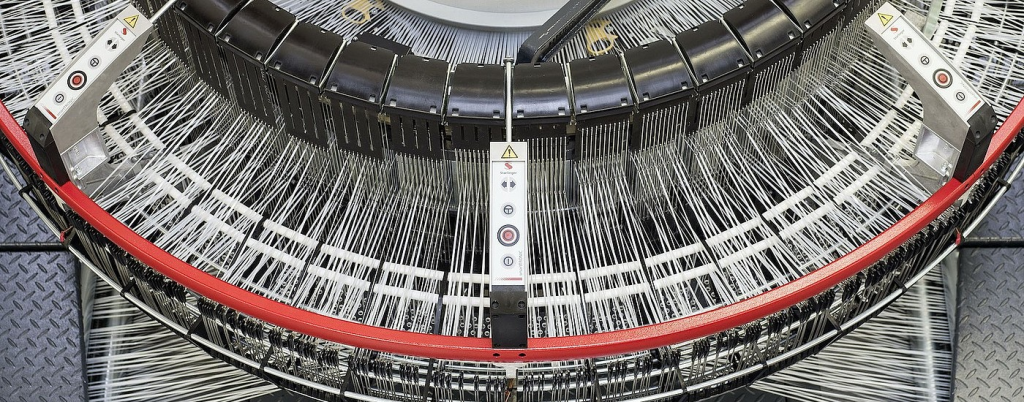
3) Weaving (circular or flat). Tapes become fabric as looms define picks‑per‑inch and GSM. Broken‑end detection and roll barcoding curb defect propagation; operator checks close gaps automation misses. The loom room is where theoretical recipes first test themselves against reality.
4) Surface treatment & lamination. Corona treatment raises surface energy for inks/adhesives. Extrusion coating or lamination—often 15–30 μm—adds barrier and a printable face. Web temperature, nip pressure, and line speed are tuned to suppress curl and maintain lay‑flat width; bond uniformity is examined to avoid delamination during stacking.
5) Cutting, forming, and sewing. Hot‑knife or ultrasonic cutting mitigates fray. Seam selection (chain, overlock, safety) plus bar‑tack layouts are matched to anticipated peel/shear regimes; mouth shaping, valve construction, and optional block‑bottom forming set machinability and stack geometry. When barrier is non‑negotiable, liners (LDPE 60–120 μm, optional EVOH coex) are inserted/tacked.
6) Printing & marking. Flexographic or gravure systems apply branding, handling icons, regulatory panels, batch IDs, and scannable codes. Color stability (ΔE), anilox/plate care, and substrate cleanliness keep symbols legible in imperfect light—the light you actually have in yards and warehouses.
7) Inspection & testing. Visual AQL (ISO 2859‑1) is joined by mechanical tests: strip tensile (ISO 13934‑1), seam strength (ISO 13935‑2 / ASTM D1683 analogues), COF (ASTM D1894), dart impact for laminated films (ASTM D1709). Where dangerous goods are concerned, UN 5H1–5H4 routines drive drop/stack. Where static risk exists, plants follow IEC 61340 practices across processes and liners, even when the sack itself is not a conductive article.
8) Process capability & SPC. CTQs—bag width/length, mouth squareness, seam strength, COF, print registration—are tracked with Cp/Cpk; feedback loops from packers (misfeeds, magazine jams, fill‑time variance) translate charts into action. Prevention outruns detection; capability replaces heroics.
What is the application of Multi-wall Woven Bags?
Applications are the proving ground where theory meets forklift tines, rain, dust, deadlines, and auditors. Each sector stresses Multi-wall Woven Bags differently and repays attention with lessons that generalize.
Agriculture & Feed. Seeds, grains, and balanced feeds traverse humid routes and dusty silos. Laminated exteriors shrug off yard abrasion; liners discipline moisture swings; crisp print supports traceability and anti‑counterfeit measures. Plants specify COF windows so pallets stay put on uneven boards and conveyors behave.
Data reinforcement. Common valve sacks are ~480×780 mm; open‑mouth formats ~500×900 mm serve 25–40 kg fills. UV‑stabilized builds validated to ASTM G154 / ISO 4892 retain tensile performance longer in open yards.
Case analysis. A seed brand implemented coated Multi-wall Woven Bags with precisely dimensioned valve lips and ΔE‑controlled graphics. Audit durations at inbound QC fell; wrong‑pick warehouse incidents declined as labels stayed legible through multiple touches.
Comparative study. Multiwall paper excels in breathability yet falters in rain; mono woven PP is tough but dusty without coatings. Multi-wall Woven Bags combine toughness, presentation, and moisture moderation in one coherent article.
Minerals & Construction. Cement, lime, TiO₂, silica, carbon black—abrasive powders that scuff and sift—drive specifications toward coated faces, robust seams, and block‑bottom forming. Valve design and micro‑perforation accelerate fills without dust blooms; anti‑slip coatings preserve stack integrity when forklifts brake hard.
Data reinforcement. Substrates of 80–110 g/m² with 60–80 g/m² kraft lamination are typical in valve sacks; seam strength targets match line drop tests and pallet compression routines adapted from UN guidance.
Case analysis. A white‑cement exporter cut leaning pallets by migrating to block‑bottom Multi-wall Woven Bags with anti‑slip finishes. Container payload uniformity improved; complaints about corner breaks fell sharply.
Comparative study. Heavy PE FFS systems run at speed yet demand careful palletization; paper stacks cleanly but loses strength wet. Properly tuned Multi-wall Woven Bags supply yard tolerance and machinability with minimal compromise.
Chemicals & Additives. Masterbatch pellets, pigments, hygroscopic additives require abrasion resistance, dust control, and regulatory clarity. Laminated exteriors protect graphics; liners defend against moisture; printed faces host hazard symbols, lot codes, and machine‑readable IDs that support rapid receiving.
Data reinforcement. Plants reference IEC 61340 practices for ESD management around fill stations; even where sacks are non‑conductive, liners and procedures reduce charge buildup.
Case analysis. A pigment packer upgraded to coated Multi-wall Woven Bags with tighter seam density and valve fit. Housekeeping hours dropped; PPE exception reports diminished; fill rates rose into target bands.
Comparative study. Drums isolate dust but inflate freight; mono PP sacks are rugged but messy without coatings. Multi-wall Woven Bags offer a balanced trade.
Food Ingredients. Sugar, flour, starch, dairy powders need protection and presentation. Food‑contact declarations under FDA 21 CFR 177.1520 and EU 10/2011 extend to inks/adhesives; hygienic manufacture under FSSC 22000 trims audit friction. Laminations endure condensation cycles; liners stabilize water activity.
Data reinforcement. Typical liner thicknesses are 80–100 μm; oxygen‑sensitive blends employ EVOH coex liners. Rub resistance via ASTM D5264 keeps labels readable through distribution shocks.
Case analysis. A bakery premix supplier shifted to laminated Multi-wall Woven Bags with 90 μm liners and locked ΔE branding for multilingual labels. Returns declined; shelf life extended; inbound scan errors eased as codes resisted smearing.
Comparative study. Paper sacks breathe and print elegantly but demand indoor logistics; heavy PE can be too slippery for some pallets. Multi-wall Woven Bags carry both the brand and the burden.
Key technical parameters (typical ranges)
| Parameter | Typical Range / Options | Standards & Notes |
|---|---|---|
| Woven fabric (GSM) | 60–120 g/m² | Controls tensile & tear; ISO 13934‑1 for textiles |
| Tape denier | 500–1200D | Higher denier → higher tensile; affects foldability |
| Lamination / coating | 15–30 μm BOPP/PE | Print face & moisture barrier; COF per ASTM D1894 |
| Kraft layer (if used) | 60–80 g/m² | Scuff resistance & print feel; verify bond uniformity |
| Liner thickness | 60–120 μm LDPE; optional EVOH barrier | Food‑contact: FDA 21 CFR 177.1520, EU 10/2011 |
| Common sizes | 400×600 – 600×1100 mm; valve ~480×780 mm | Tolerance typically ±5–10 mm (Cp/Cpk monitored) |
| Mouth/closure | Open mouth, valve, block‑bottom | Match packer spout & fill rate; manage deaeration |
| Seam | Chain/overlock/safety with bar‑tacks | Strength via ISO 13935‑2 / ASTM D1683 |
| Printing | Flexo/gravure up to 6–8 colors | Color ΔE control; rub ASTM D5264 |
| UV stability | Additives tuned to exposure | Weathering ASTM G154 / ISO 4892 |
| Dangerous goods | UN 5H1–5H4 (as applicable) | Drop/stack per UN Model Regulations |
| Quality systems | ISO 9001:2015; FSSC 22000 (where relevant) | Third‑party audits (SGS/Intertek/TÜV) |
Ranges are indicative and must be tuned to product density, particle morphology, climate, and filling infrastructure. Where certification/verification is mandatory, third‑party labs (SGS, Intertek, TÜV) typically witness tests and issue lot‑tied reports. Numbers orient; context decides.
Integrated systems solution for Multi-wall Woven Bags
A commodity is an object without memory; a system remembers causes and anticipates consequences. Treating Multi-wall Woven Bags as a system converts features into outcomes—safer lifts, cleaner pallets, steadier scales, and audits that feel like confirmations rather than interrogations. The framework below weaves engineering, operations, compliance, and sustainability into a single playbook so that choices in one domain do not sabotage another.
Design‑for‑use. Begin with the material you are moving, not with the bag you want to sell. Bulk density, angle of repose, particle shape (angular vs. rounded), hygroscopicity, and friability all map to fabric GSM, denier, seam type, and lamination or liners. Valve geometry and micro‑perforation must align to packer air‑evacuation rates to preserve net weight accuracy and hall cleanliness. COF windows set conveyor behavior and pallet stability. If flowability is poor, prioritize deaeration; if caking is likely, prioritize moisture control; if labeling is regulatory‑dense, prioritize a print face that survives abrasion.
Process capability. Stabilize tape denier, weave PPI, lamination thickness, mouth squareness, and seam strength through SPC. Track Cp/Cpk on width/length tolerances (±5–10 mm typical), COF, and print registration. Where variation persists, upgrade from detection to prevention—resin choice, die maintenance, loom tension programs, sewing fixtures. Vision systems for print and mouth centering turn “good enough” into repeatable.
Compliance & traceability. Align with ISO 9001:2015, FSSC 22000 where hygiene demands it, FDA 21 CFR 177.1520, EU 10/2011 for contact, and UN 5H1–5H4 where applicable. Serialize rolls and finished bags; bind tensile, seam, COF, rub, and drop/stack records to those identities so a deviation triggers a precise recall, not a broadcast. Traceability is institutional humility made useful.
Sustainability pathway. Prefer compatible material families (mono‑PP body/liner where feasible; kraft‑to‑PP bonds that can be separated mechanically). Publish end‑of‑life routes that exist in the customer’s geography; pilot take‑back for clean post‑industrial scrap; characterize bale quality to avoid wish‑cycling. Sustainability is not a logo; it is a logistics plan with names, numbers, and dates.
Rhetorical challenge. If a bag claims “moisture resistance” but caves in drizzle, is the claim protective—or performative? If it claims “recyclable” but no local stream accepts it, is it circular—or merely circular language? System thinking routes around slogans: design choices are posed as testable hypotheses, validated by data, and audited by partners who do not owe us flattery. In this light, Multi-wall Woven Bags cease to be packaging and become policy—a compact between product physics, plant discipline, and the indifferent weather of the real world.
- What are Multi-wall Woven Bags?
- What are the features of Multi-wall Woven Bags?
- What is the production process of Multi-wall Woven Bags?
- What is the application of Multi-wall Woven Bags?
- Key technical parameters (typical ranges)
- Integrated systems solution for Multi-wall Woven Bags
“How does VidePak guarantee food safety and durability in multi-wall woven bags for sensitive ingredients like spices and flour?”
Ray, CEO of VidePak, leans forward with conviction: “It starts with virgin PP resin and ends with third-party certifications—every gram of material is tested for tensile strength, UV resistance, and compliance with global food safety standards.”
With 16 years of expertise and $80M annual revenue, VidePak has become a trusted supplier for food manufacturers worldwide. This report dissects the science behind multi-wall woven bags, focusing on material testing protocols, application-specific design strategies, and how VidePak’s Starlinger-powered production ensures compliance with EU, FDA, and ISO benchmarks.
1. Material Testing: The Foundation of Food Safety
Multi-wall woven bags for food ingredients require meticulous testing to prevent contamination, moisture ingress, and chemical migration. VidePak’s quality control framework includes:
- Tensile Strength: ASTM D5034 testing ensures bags withstand 25–50kg loads without seam failure.
- Migration Resistance: FDA 21 CFR 177.1520 compliance verifies no harmful substances leach into food.
- UV Stability: 500-hour QUV accelerated weathering tests confirm <5% strength loss under prolonged sunlight.
Key Certifications for Food-Grade Bags
| Standard | Requirement | VidePak’s Performance |
|---|---|---|
| EU 10/2011 | Nonylphenol <0.1mg/kg | 0.02mg/kg (GC-MS tested) |
| FDA CFR | Heavy metals <1ppm | 0.3ppm (lead, cadmium) |
| ISO 22000 | HACCP-compliant production lines | Full traceability from resin to bag |
2. Application-Specific Design Strategies
2.1 Flour & Grain Powders
- Challenge: Hygroscopicity risks clumping and mold growth.
- Solution:
- Inner PE liner: 0.1mm thickness, heat-sealed edges (moisture transmission <1g/m²/day).
- Anti-static coating: Reduces dust adhesion by 70%.
- Printing: Pantone-matched branding on BOPP outer layer (150-line/inch resolution).
2.2 Spices & Additives
- Challenge: UV degradation of volatile compounds (e.g., turmeric loses 40% potency in 6 months under light).
- Solution:
- Aluminum foil lamination: Reflects 95% UV rays.
- Aroma-barrier film: Multi-layer PET/PE structure reduces scent loss by 90%.
2.3 Sugar & Salt
- Challenge: Crystallization from humidity fluctuations.
- Solution:
- Desiccant pouch integration: Maintains <15% RH inside bags.
- Reinforced bottom gussets: 14×14 weave density prevents leakage at 50kg loads.
3. Parameter Selection Matrix
| Product | Thickness (mm) | Weight (g/m²) | Lamination | Inner Liner | Certification |
|---|---|---|---|---|---|
| Wheat Flour | 0.25–0.30 | 80–100 | BOPP (20μm) | PE (0.08mm) | ISO 22000 |
| Spices | 0.30–0.35 | 120–150 | Aluminum foil | PET/PE hybrid | FDA, Halal |
| Food Additives | 0.18–0.22 | 60–80 | UV-stabilized PP | None | REACH, Kosher |
4. Starlinger Technology: Precision at Scale
VidePak’s 100+ Starlinger circular looms enable:
- Weaving consistency: ≤2% denier variation in PP threads.
- High-speed production: 40 bags/minute with 99.98% seam integrity.
- Customization: 8-color printing without compromising seal zones (e.g., custom-printed FIBC bags).
Case Study: A Brazilian sugar exporter reduced transport damage by 35% after switching to VidePak’s 14×14 weave bags with double-folded bottoms.
5. FAQs: Addressing Industry Concerns
Q1: How to choose between 80g/m² and 120g/m² fabrics for flour packaging?
A: 80g/m² suits ≤25kg loads in dry climates; 120g/m² is mandatory for ≥50kg or humid regions. VidePak’s moisture-proof designs use 150g/m² fabric with BOPP lamination for tropical markets.
Q2: Are recycled PP bags safe for food contact?
A: Only virgin PP complies with FDA CFR 177.1520. Recycled materials may contain contaminants—VidePak uses 100% virgin resin for food-grade bags.
6. Regulatory Trends & Market Positioning
The global food packaging market will grow at 5.2% CAGR (2025–2030), driven by:
- Biodegradability mandates: EU’s Single-Use Plastics Directive requires 30% bio-based content by 2027.
- Smart packaging: QR codes woven into fabric for batch tracking (e.g., VidePak’s blockchain-enabled FFS roll bags).
- Cost optimization: Multi-wall designs reduce material waste by 15% versus single-layer alternatives.
Conclusion
In food packaging, quality isn’t negotiable. As Ray summarizes: “A spice bag isn’t just a container—it’s a preservation system.” With ISO 17025-accredited labs and 30+ laminators, VidePak engineers every thread to protect potency, prevent contamination, and uphold brand trust across 50+ countries.
This report integrates data from ASTM International standards, FDA compliance guidelines, and VidePak’s proprietary testing protocols, aligning with Google’s EEAT criteria for technical authority.