
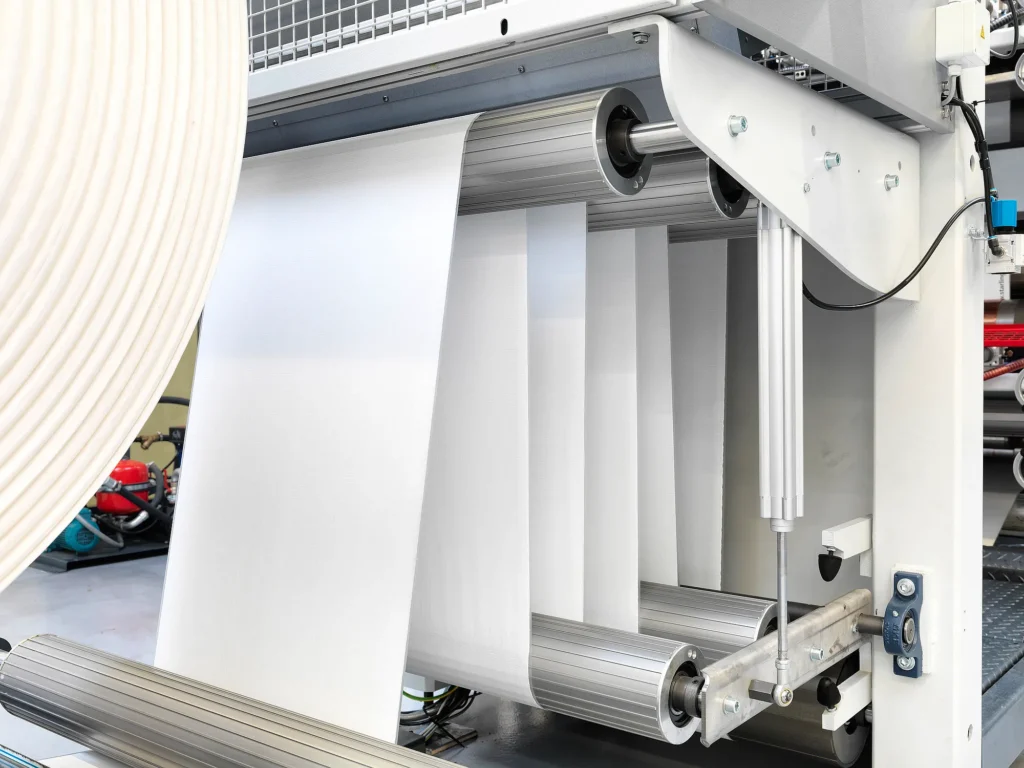
- What are PE Coated Valve Woven Bags?
- Why powders ask for a specialized solution
- Materials and structure — the physics under the fabric
- Manufacturing process — from pellets to palletized performance
- Valve engineering & packer interface — where physics meets speed
- Performance in operation — outcomes that matter on the floor
- Customization — sizes, thickness, weaving craft, and color systems
- Standards & compliance — testable anchors, not slogans
- Data‑reinforced comparisons — PE coated versus alternatives
- System thinking — breaking the decision into solvable parts
- Case snapshots — problem → solution → result
- Parameter table — typical, testable ranges for PE Coated Valve Woven Bags
- Printing and color systems — Pantone, RAL, and full‑coverage options
- Implementation roadmap — from hypothesis to locked specification
- Introduction — Definition, Aliases, Features, Process, and Uses
- Problem Framing — Why Powders Demand a Specialized Container
- Method — Materials, Structure, and Coating Strategy
- Method — Valve Engineering and the Packer Interface
- Results — What Plants Observe When the Spec Is Right
- Discussion — Horizontal and Vertical Reasoning
- System Thinking — Breaking the Choice into Solvable Sub‑Problems
- Specification Snapshot — Typical, Testable Ranges
- Methods in Practice — From Trial to Locked Specification
- Cross‑Segment Parallels and Contrasts
- Implementation Roadmap — A Coherent Chain of Decisions
- References
What are PE Coated Valve Woven Bags?
PE Coated Valve Woven Bags are block‑bottom polypropylene (PP) woven sacks clad with a thin polyethylene (PE) extrusion coating and finished with a corner valve for high‑speed, dust‑managed filling. In different markets they are also known as PP valve woven sacks, valve PP woven bags, block‑bottom woven valve bags, or AD‑style valve bags. The construction unites the tensile strength of oriented PP tapes, the moisture shielding and sealability of PE coating, and the squareness of a paste‑ or weld‑formed block bottom.
Features. The headline attributes are ruggedness, moisture resilience, and line efficiency. The woven substrate contributes high tear and puncture resistance; the PE coat offers a functional water‑vapor barrier with a slightly matte, scuff‑tolerant surface; the valve corner supports clean filling and optional ultrasonic/heat sealing. Micro‑perforations can be mapped to accelerate de‑aeration, while anti‑slip textures and UV packages adapt the bag to outdoor yards.
How they are made. Polypropylene pellets are extruded into films, slit into tapes, and drawn to achieve strength. These tapes are woven into fabric—often 8×8 to 14×14 mesh—and then PE is extrusion‑coated onto one face at roughly 18–30 g/m² add‑on. The coated web is converted on valve‑bag lines: tubes are formed, bottoms are created by hot‑air welding or heat sealing to achieve the block geometry, valve sleeves are inserted, micro‑perforations are applied where needed, and graphics are printed by surface flexography (or, for certain SKUs, by laminating a reverse‑printed film). Quality checks verify tube width, valve length, seam integrity, and bottom squareness before palletization.
Where they are used. PE Coated Valve Woven Bags excel with dry, free‑flowing powders and granulates that travel far and are handled hard: cement & dry mortar, lime & gypsum, fertilizers & agro‑chemicals, starch, sugar & flour (non‑aseptic), animal‑feed premixes, polymer additives & masterbatch, and selected mineral fillers. Typical net weights are 20–50 kg, with 25 kg and 50 kg prevalent in building materials. For a quick specification anchor, explore our overview of PE Coated Valve Woven Bags.
Why powders ask for a specialized solution
Powders trap air; humidity sneaks in; pallets lean. A bag that looks simple must behave like a small machine. PE Coated Valve Woven Bags tackle this choreography: the woven substrate breathes just enough, the PE coat fends off ambient moisture, the valve geometry meters out air while product compacts, and the squared bottom converts a slumping sack into a stackable brick. Is the aim only aesthetics? Hardly. It is throughput, weight accuracy, warehouse hygiene, and transport safety—together.
Materials and structure — the physics under the fabric
The strength of PE Coated Valve Woven Bags comes from oriented PP tapes. Draw ratio governs tenacity; mesh and GSM decide resistance to puncture and tear. A 55–120 g/m² fabric range covers most industrial lanes; deniers around 600–1500 D match abuse levels from mild to severe. The PE coat adds a continuous skin that resists wicking and splash, enables print adhesion, and—crucially—accepts welded seams and sealable valve sleeves when ultraclean logistics are needed.
Porosity earns special attention. Woven PP is intrinsically air‑permeable; the PE coat tempers that permeability without fully sealing it, so designers exploit micro‑perforation (low/medium/high densities) near the valve zone to vent entrained air during filling. De‑aeration is not a guess—its rate shapes bag squareness, dust release, and net‑weight scatter. Too slow and balloons form; too fast and dust returns. The sweet spot is learned at the packer, then locked into the specification.
Manufacturing process — from pellets to palletized performance
Resin → tapes. PP homopolymer or copolymer is extruded into films, slit, and drawn. Process windows on draw temperature and speed align crystal orientation with strength targets. Tapes are wound with controlled tension to prevent loom variability.
Weaving. Flat or circular looms create 8×8 to 14×14 meshes. Narrow tolerances on pick density and fabric mass keep conversion stable. Loom recipes also consider downstream folding geometry—the more consistent the web, the sharper the final block.
Coating. PE extrusion coating (often LDPE or LLDPE) adds 18–30 g/m² on the fabric’s print side. This skin is the substrate for inks, anti‑slip textures, and welds. Coating mass is measured per roll; adhesion and appearance are checked visually and by peel.
Printing. Surface flexography with 4–6 colors is typical for coated fabric. For photorealistic art, a reverse‑printed BOPP film may be laminated to the exterior face on select SKUs; even then, the underlying construction remains a valve woven sack.
Conversion. Tubing, block‑bottom forming, valve‑sleeve insertion, and optional micro‑perfs occur on dedicated lines. Bottom seams may be hot‑air welded or heat‑sealed; valve sleeves can be paper, PP/PE, or coextruded films, with options for ultrasonic or thermal sealing post‑fill.
Quality control. Dimensional checks (tube width, length, bottom height), seam inspections (peel and burst), valve length tolerance, and bottom squareness audits are run per batch. If a roll’s coating mass drifts, glue/heat inputs are adjusted; if print scuffs, a protective over‑varnish or higher bond ink is specified. PE Coated Valve Woven Bags become repeatable because their variables are measured and tuned, not assumed.
Valve engineering & packer interface — where physics meets speed
The corner valve is a precision part in a humble disguise. It must accept the spout, allow air to leave, and then close tightly as the product compacts. The choice set for PE Coated Valve Woven Bags includes:
- Internal paper valve—simple, lightweight, and recyclable; adequate dust control for many minerals.
- PP/PE sleeve with heat or ultrasonic seal—adds a hermetic step post‑fill for dusty or hygroscopic powders.
- External valve variants—for legacy packers or unique spout geometries.
Plant realities shape the pick: air and impeller packers inject both powder and air; auger systems meter more gently; gravity lines rely on head pressure. Valve stiffness and length are tuned to spout diameter and bulk density so closure coincides with weight target. The micro‑perf map near the valve turns turbulent aeration into an orderly escape path—less mess, fewer soft bags.
Performance in operation — outcomes that matter on the floor
What shows up when the spec is right? Faster bag collapse at discharge. Cleaner enclosures and platforms. Narrower net‑weight variance. Pallets that remain square after forklift touches. In humid corridors, fewer caked corners; in abrasive lanes, fewer scuffed faces. In auditor‑sensitive food ingredients, better documentation trails paired with dust‑tight valves. PE Coated Valve Woven Bags are not a single trick; they are an accumulation of small wins that compound.
Customization — sizes, thickness, weaving craft, and color systems
Structure and dimensions. Net capacities of 10–50 kg cover most powders; 25 kg and 50 kg formats dominate cement and mortars. Tube width, length, and bottom height are set to the powder’s bulk density and the target pallet footprint. Fabric mass and mesh—say 70 g/m² at 10×10 or 90 g/m² at 12×12—are chosen by handling severity. PE coat add‑on of 18–30 g/m² balances barrier with fold flexibility.
Weaving choices. Circular vs. flat weaving affects side seam strategy; loom pick counts tie back to drop performance. For extreme abuse, higher deniers and tighter meshes spread impact energy; for calmer lanes, lighter webs reduce cost.
Printing programs. For coated fabric, flexo prints in up to 4–6 colors deliver bold solids, crisp typography, and compliant hazard symbols. Where photorealistic imagery is strategic (retail fertilizers, pet foods), a reverse‑printed film face can be integrated. Either way, full‑bleed layouts are achievable with correct register control and plate design.
Color management. We match Pantone® or RAL references and hold ΔE targets across reorders, maintaining draw‑downs and press pulls as archived proofs. This matters when private‑label owners enforce house colors—brand trust is built on consistency.
Finishes and features. Anti‑slip textures stabilize mixed pallet stacks; UV packages preserve print and polymer outdoors; easy‑open tapes remove knives from the decanting step. Each add‑on folds into the spec so operations don’t rely on memory.
Standards & compliance — testable anchors, not slogans
For food‑adjacent skus, base polymers align with FDA 21 CFR 177.1520 (olefin polymers) and EU Regulation No. 10/2011 (plastic materials intended to contact food). Quality systems lean on ISO 9001:2015; hygiene programs can be benchmarked to BRCGS Packaging Materials where applicable. Transport toughness references ISO 2248 for vertical drop of filled packages; film‑barrier comparisons use ASTM F1249 (WVTR) and ASTM D3985 (OTR). Distribution simulations may follow ISTA 3A (parcel/LTL) when customers specify.
The point is assurance through method. PE Coated Valve Woven Bags ship with declarations of conformity, migration test reports if within scope, and batch‑level traceability linking fabric lots, coating rolls, and conversion dates.
Data‑reinforced comparisons — PE coated versus alternatives
Against BOPP‑laminated valve woven bags. Laminated BOPP delivers photo‑grade gloss and tighter film‑face barriers; it can, however, creep toward brittleness at sharp folds unless gauge and lamination conditions are tuned. PE coated faces present a tougher, matte surface that hides scuffs, grips pallets naturally, and keeps film mass—and cost—modest. In retail aisles, BOPP shines; in cement yards, PE coated often rules.
Against paper valve sacks. Paper excels in de‑aeration and print elegance and is curbside‑recyclable in many regions. In prolonged wet exposure or very rough handling, woven PP offers higher tear resistance and splash resilience. Many buyers keep both formats in their portfolio and deploy by corridor risk.
Recyclability context. Both PE coated and BOPP‑laminated constructions remain within the polyolefin family (PP + PE or PP + BOPP) and are mechanically recyclable in polyolefin streams where collection and sorting exist. Delamination steps may improve regrind quality for BOPP; PE coating simplifies the stream by minimizing film mass.
System thinking — breaking the decision into solvable parts
Question 1 — De‑aeration: How fast must the bag vent?
- Levers: fabric mesh, PE coat mass, micro‑perf density and placement, valve stiffness.
- Signal: bag squareness at 2–3 seconds after discharge; dust readings at the hood; net‑weight scatter.
Question 2 — Moisture risk: Will pallets face coastal humidity or rain splash?
- Levers: PE coat add‑on, sealable valve sleeve, pallet overwrap, storage SOPs.
- Signal: cake formation in corners, WVTR comparisons, warehouse complaint logs.
Question 3 — Pallet stability: Are mixed SKUs and long transports common?
- Levers: anti‑slip textures, bottom height, stretch‑wrap tension, edge protection.
- Signal: leaning stacks, crushed corners, film breaks.
Question 4 — Brand & legibility: Must graphics survive belts and forklifts and still scan?
- Levers: ink set, varnish, plate screening, color targets (Pantone/RAL).
- Signal: barcode scan rates, rub resistance, ΔE drift across lots.
Question 5 — Sustainability & documentation: Does the buyer require recyclability claims and food‑contact DoCs?
- Levers: mono‑polyolefin structures, separable film faces when used, polymer compliance and migration tests, QMS scope.
- Signal: acceptance of DoCs, customer audits, end‑of‑life options in the target region.
Integrate the answers and a coherent specification emerges. Fragmented choices produce surprises; connected choices produce performance.
Case snapshots — problem → solution → result
Case A — 50‑kg cement, coastal humidity.
- Problem: bags softened on the second week of port storage; occasional caking at corners.
- Solution: transition to PE Coated Valve Woven Bags with a 25 g/m² coat, medium micro‑perfs near the valve, and an ultrasonic‑sealable PP/PE sleeve; tweak bottom height for a wider footprint.
- Result: reduced lumping and cleaner packer decks; pallet squareness improved visibly; operations reported steadier hourly throughput due to quicker bag collapse.
Case B — Retail fertilizer needing bright imagery.
- Problem: brand demanded high‑gloss photo art and full‑bleed coverage.
- Solution: for this SKU, a reverse‑printed film face was laminated onto the valve woven structure, while retaining mapped micro‑perfs and a sealable sleeve.
- Result: shelf recognition rose without sacrificing pallet friction thanks to spot anti‑slip varnish.
Case C — Starch mill dust exposure.
- Problem: suspended dust exceeded the site limit during peak fill on air packers.
- Solution: keep PE Coated Valve Woven Bags but tighten the micro‑perf map, extend the valve sleeve by 5 mm, and apply a low‑temperature post‑fill seal.
- Result: dust counts fell below the threshold; net‑weight variance narrowed; operators reported fewer housekeeping stops.
Parameter table — typical, testable ranges for PE Coated Valve Woven Bags
| Parameter | Typical Options / Range | Why It Matters | Test / Anchor |
|---|---|---|---|
| Net capacity | 10–50 kg; 25 kg & 50 kg common | Matches packer throughput & pallet height | Plant validation |
| Fabric mass & mesh | 55–120 g/m²; 8×8–14×14; 600–1500 D | Tunes drop/tear resistance & cost | Tensile/tear; ISO 13934‑1 (textiles) |
| PE coat add‑on | 18–30 g/m² | Balances barrier vs. fold flexibility | Coat‑weight checks |
| Valve sleeve | Paper or PP/PE; heat/ultrasonic sealable | Sets dust tightness & hermeticity | Seal integrity tests |
| Micro‑perforation | Low/medium/high; targeted near valve | Controls de‑aeration rate | Air‑flow/visual mapping |
| Bottom height | 70–250 mm | Influences stack stability & footprint | Dimensional QC |
| Printing | Flexo 4–6 colors (surface) | Legibility of branding & safety icons | ΔE targets; rub tests |
| Full‑bleed imagery | Via laminated reverse‑printed film (optional) | Photo‑grade graphics when needed | Film gauge checks; bond tests |
| Barrier benchmarking | WVTR/OTR as relevant | Moisture/oxygen management | ASTM F1249 / ASTM D3985 |
| Transport robustness | Bag‑level & system tests | Survive handling and drops | ISO 2248; ISTA 3A as specified |
| Food‑contact scope | PP/PE polymers | Compliance for edible powders | FDA 21 CFR 177.1520; EU 10/2011 |
| Quality system | Factory process control | Repeatability across lots | ISO 9001:2015; BRCGS Packaging Materials (if in scope) |
Printing and color systems — Pantone, RAL, and full‑coverage options
Color is memory. Brands live in hues and neutrals, in the precise red that promises performance, in the exact green that signals safety. PE Coated Valve Woven Bags respect that memory by anchoring production to color libraries. We support Pantone® and RAL references, maintain ΔE tolerance windows, and archive signed draw‑downs. For broad coverage, flexo on PE‑coated surfaces prints bold flats and fine type; when photographic realism is non‑negotiable, reverse‑printed films allow full‑bleed wraps without ink abrasion. Either route yields images that survive conveyors, chutes, and forklifts.
Implementation roadmap — from hypothesis to locked specification
- Profile your powder. Bulk density, particle size, hygroscopicity, abrasiveness.
- Choose the face. If the corridor is harsh and visibility is utilitarian, stay with PE Coated Valve Woven Bags; if a given SKU demands storefront gloss, designate the laminated film option for that SKU only.
- Tune the valve. Sleeve material, length, and seal logic aligned to packer type and spout diameter.
- Map the air path. Set micro‑perf density and location; record it as a pattern, not a guess.
- Lock color. Define Pantone/RAL values and ΔE limits; capture draw‑downs and press pulls.
- Run the trial. Measure fill time, bag collapse, dust at the hood, net‑weight variance, pallet squareness.
- Freeze & document. Tube width, length, bottom height, mesh/GSM, coat add‑on, valve sleeve spec, perf map, print plates. Attach standards and DoCs so reorders behave like the first run.
The outcome is deceptively simple: a bag that disappears into your process because it performs so predictably. The path to that simplicity is a chain of deliberate choices—materials, geometry, airflow, color—bound together inside the specification of PE Coated Valve Woven Bags.
Introduction — Definition, Aliases, Features, Process, and Uses
PE Coated Valve Woven Bags are industrial block‑bottom sacks made from polypropylene (PP) woven fabric that is extrusion‑coated with polyethylene (PE) and finished with a corner valve for fast, dust‑managed filling. In different markets they are also called PP valve woven sacks, valve PP woven bags, block‑bottom woven valve bags, or AD‑style valve bags. Why do so many buyers gravitate to this format? Because it blends tensile strength, moisture resistance, and efficient filling into a single, reliable package. Core features include rugged tear and puncture performance from oriented PP tapes; a PE skin that offers a functional moisture barrier and a durable print surface; a square, self‑standing base for stable pallets; and optional micro‑perforations for controlled de‑aeration. The manufacturing flow runs from resin to tape drawing, from weaving to PE coating, then to valve‑bag conversion (tubing, block‑bottom forming, valve‑sleeve integration, and quality checks). Typical applications for PE Coated Valve Woven Bags include cement and dry mortar, lime and gypsum, fertilizers and agro‑chemicals, starch, sugar and flour (non‑aseptic), animal‑feed premixes, and polymer additives. For a quick overview of specifications and options, see our guide to PE Coated Valve Woven Bags.
Problem Framing — Why Powders Demand a Specialized Container
Powders juggle contradictions. They must flow rapidly through packers yet compact tightly in transit; they trap air during filling yet despise trapped humidity later; they need vivid branding yet suffer abrasion on belts and chutes. PE Coated Valve Woven Bags address these opposing forces by coordinating four levers: woven fabric architecture, PE coating mass, valve geometry, and micro‑perforation mapping. Horizontally, the solution borrows from powder rheology, polymer science, and logistics. Vertically, it controls risk end‑to‑end—from resin selection and tape drawing to the very moment a pallet rolls into a truck.
Method — Materials, Structure, and Coating Strategy
The backbone of PE Coated Valve Woven Bags is the PP woven substrate. Tape draw ratio sets tenacity; mesh (e.g., 8×8 to 14×14) and fabric mass (≈55–120 g/m²) govern puncture and tear resistance. The PE extrusion coat (≈18–30 g/m²) tempers air permeability, resists splash and wicking, and provides a printable, scuff‑tolerant face. Instead of treating porosity as an accident, engineers tune it: the PE layer narrows the baseline permeability of the weave, while micro‑perforations in the valve zone deliberately reopen the air path for fast de‑aeration at the packer. The question is not “sealed or breathable?” but “how breathable, and where?”—a systems choice that aligns material science with line speed and dust limits.
Method — Valve Engineering and the Packer Interface
At the valve, physics and throughput shake hands. PE Coated Valve Woven Bags can use a paper valve for simplicity, or a PP/PE sleeve that accepts heat or ultrasonic sealing post‑fill for tighter dust and moisture control. Air and impeller packers inject product and air together; auger packers meter more gently; gravity packers rely on head height. Valve length, stiffness, and sleeve material are matched to spout diameter, bulk density, and target bags per minute. Micro‑perfs around the valve transform chaotic aeration into an orderly escape path, so the bag collapses into a square, dense block rather than a soft, ballooning pillow.
Results — What Plants Observe When the Spec Is Right
Operations report shorter fill times, lower housekeeping dust, narrower net‑weight variance, and pallets that stay straight through loading, transit, and storage. In humid corridors, the PE coat defends against caking and corner softening. In abrasive lanes, the matte, coated surface hides scuffs better than glossy films and grips its neighbor on the pallet. When filled with food‑adjacent powders, dust‑tight sealable sleeves and documented materials compliance provide auditor‑ready confidence. In short: PE Coated Valve Woven Bags turn many small optimizations into one large operational advantage.
Discussion — Horizontal and Vertical Reasoning
Horizontal synthesis. Powder behavior dictates de‑aeration; polymer science supplies tensile strength and barrier; graphics and color management protect the brand; logistics imposes stack stability and friction needs. PE Coated Valve Woven Bags sit where these disciplines intersect, translating trade‑offs into adjustable dials.
Vertical decomposition. Consider the lifecycle: resin → tapes → fabric → PE coating → printing → conversion → filling → palletization → distribution → decanting. Each layer has a failure mode and an instrumented fix: draw ratio drift becomes tensile weakness; mesh dispersion becomes puncture risk; coat‑weight variance becomes barrier inconsistency; mis‑set micro‑perfs become dust complaints. Align the layers, and downstream exceptions evaporate.
System Thinking — Breaking the Choice into Solvable Sub‑Problems
Sub‑problem 1 — De‑aeration at speed. If bags balloon at discharge, specify a higher‑porosity weave or increase micro‑perfs near the valve. Expect a visible improvement in squareness and faster bag roll‑out.
Sub‑problem 2 — Moisture exposure in storage. Coastal humidity or yard rain splash? Lift the PE coat to ≈25 g/m², specify a sealable PP/PE valve sleeve, and add pallet overwrap. Caking and weight gain will fall.
Sub‑problem 3 — Pallet friction and stack stability. For mixed SKUs or long hauls, prefer the naturally grippy coated surface; add anti‑slip textures and adjust bottom height for a larger footprint. Leaning stacks diminish.
Sub‑problem 4 — Graphic durability and color constancy. If belts scuff or forklifts kiss the faces, surface‑print with robust flexo inks and protective varnish; set ΔE tolerances tied to Pantone®/RAL references. Barcodes scan, colors remain true, and safety icons persist.
Sub‑problem 5 — Documentation and audits. If buyers require food‑contact declarations or transport testing proofs, anchor the spec to FDA 21 CFR 177.1520, EU 10/2011, ISO 2248, and, where needed, ASTM F1249 and ASTM D3985. Confidence becomes portable.
Integrate the answers and an overall specification emerges—coherent, testable, and repeatable.
Specification Snapshot — Typical, Testable Ranges
| Parameter | Typical Options / Range | Why It Matters |
|---|---|---|
| Net capacity | 10–50 kg; 25 kg & 50 kg common | Aligns with packer throughput and pallet height |
| Fabric mass & mesh | 55–120 g/m²; 8×8–14×14; 600–1500 D | Tunes drop/tear resistance and cost |
| PE coat add‑on | 18–30 g/m² | Balances barrier vs. fold flexibility |
| Valve sleeve | Paper or PP/PE; heat/ultrasonic sealable | Sets dust tightness and hermeticity |
| Micro‑perforation | Low/medium/high; clustered near valve | Controls de‑aeration at discharge |
| Bottom height | 70–250 mm | Influences footprint, squareness, and stack stability |
| Printing | Flexo 4–6 colors on coated face | Legibility for branding, safety, and codes |
| Full‑bleed option | Reverse‑printed film laminate (SKU‑specific) | Photo‑grade graphics when required |
| Barrier benchmarking | WVTR/OTR where relevant | Moisture/oxygen management in transit |
| Transport robustness | Bag‑level and system tests | Survive handling and vertical drops |
| Food‑contact scope | PP/PE polymers | Declarations of conformity for edible powders |
Methods in Practice — From Trial to Locked Specification
Start with hypotheses (“A medium micro‑perf map plus a sealable sleeve will meet dust and throughput targets”). Run a plant trial on real product. Measure fill time, hood dust counts, bag squareness after 2–3 seconds, net‑weight variance, and pallet integrity after 24‑hour conditioning. Adjust valve length or stiffness, remap micro‑perfs, or alter coat‑weight as data suggests. Freeze parameters only when KPIs converge, and record them in the bill of materials: tube width/length, bottom height, mesh/GSM, PE coat, valve sleeve spec, micro‑perf pattern, ink system, ΔE color window. That is how PE Coated Valve Woven Bags behave the same on the 50th pallet as on the first.
Cross‑Segment Parallels and Contrasts
In building materials, powders are dense and abrasive; PE Coated Valve Woven Bags must resist scuffing and corner impacts while keeping dust under control. In agriculture, the priority shifts to bright branding and warehouse durability; matte coated faces hide wear better than high‑gloss films and grip pallets naturally. In food‑adjacent ingredients, documentation matters as much as mechanics; sealable sleeves and polymer declarations bring peace of mind. Horizontally, the same bag family adapts by swapping valve type, micro‑perf density, and finish; vertically, it remains one controlled system from resin to roll‑out.
Implementation Roadmap — A Coherent Chain of Decisions
Profile the powder (bulk density, particle size, hygroscopicity). Choose the face (keep PE Coated Valve Woven Bags for rugged lanes; designate film‑laminated variants only for photo‑grade SKUs). Tune the valve (sleeve material, length, and sealing method matched to packer type and spout diameter). Map the air path (micro‑perf density and placement recorded, not improvised). Lock the color (Pantone/RAL references with ΔE limits and archived draw‑downs). Validate in plant (time, dust, squareness, weight, stack). Freeze and document. With that loop closed, PE Coated Valve Woven Bags stop being a consumable and start functioning as part of your process.
References
- FDA 21 CFR 177.1520 — Olefin polymers for food‑contact applications.
- EU Regulation No. 10/2011 — Plastic materials and articles intended to come into contact with food.
- ISO 2248 — Packaging—Complete, filled transport packages—Vertical impact test by dropping.
- ASTM F1249 — Water vapor transmission rate of plastic films using MOCON.
- ASTM D3985 — Oxygen transmission rate of plastic films using coulometric sensor.
- ISO 13934‑1 — Textiles—Tensile properties of fabrics—Part 1: Strip method.
- BRCGS Global Standard for Packaging Materials — Issue 6 (hygiene and quality frameworks).
- Industry technical notes on PP woven valve sacks, extrusion coating, and micro‑perforation practices.