
What Are Poly Woven Bags? Definition, Aliases, and Boundaries
**Poly Woven Bags** are textile-like packaging solutions engineered from interlaced polymer tapes—chiefly polypropylene (PP) and, in some variants, high-density polyethylene (HDPE)—formed into flat or tubular fabrics and converted into sacks, totes, and bulk containers. In commercial shorthand they are also recognized as woven PP bags, woven poly sacks, laminated BOPP woven bags, ventilated woven bags, valve bags, and—at industrial scale—FIBC (Flexible Intermediate Bulk Container) woven bags. While pouches rely on thin films and paper sacks on fibrous sheets, **Poly Woven Bags** derive their ruggedness from a load-sharing weave that distributes forces across warp and weft, then layer on coatings or films to tune barrier, print quality, and sifting control.
For food ingredient logistics—sugar, rice, flour, coarse salt, starches, pulses, coffee, cocoa nibs, milk-powder blends, premixes—the category balances hygiene, speed, and total cost of ownership while meeting documentation requirements imposed by food-contact and quality standards. Engineers prefer the platform because it scales from 5–25 kg retail/foodservice formats to 500–1200 kg bulk FIBC using a unified ecosystem of tapes, looms, coaters, printers, and conversion lines.
The Materials of Poly Woven Bags: Resins, Additives, Films, Liners, Cost
The bill of materials behind **Poly Woven Bags** is a toolkit, not a template. Performance emerges from how each layer is chosen and combined—tapes that carry tensile load, skins that negotiate moisture and gas, inks and labels that communicate without contaminating, and closures that preserve hygiene while sustaining line speeds. Below we unpack each element and connect it to shelf life, machinability, and audit-readiness.
Core polymers and tapes. PP-H (homopolymer) yields stiffness and an elevated melting range (~160–165 °C) for crisp heat-cuts and dimensional stability; PP-R (random copolymer) injects ethylene units to temper brittleness in cold handling. Tapes drawn 5–8× concentrate strength along chain orientation. HDPE tapes, used selectively, trade higher modulus and lower moisture permeability for processing latitude; PP remains dominant thanks to its density advantage (~0.90–0.91 g/cm³) and cost-to-strength ratio. Recycled PP (rPP) is increasingly viable in non-contact layers; advanced recycled content can enter contact layers only under documented regulatory pathways.
Additives. HALS UV stabilizers are calibrated to climate and storage cycles (≈200–1200 h xenon-arc equivalent). Slip and antiblock tune the outer COF (≈0.25–0.45) to balance pallet stability against filler throughput. Processing aids and thermal antioxidants manage gels and oxidation, especially in rPP blends. White TiO₂ masterbatch dominates for print contrast and solar reflectance; NIR-detectable blacks are specified where optical sorting is part of end-of-life plans.
Skins and laminations. Extrusion-coated PP (12–25 g/m²) improves sift-proofness and provides flexo-ready surfaces. Reverse-printed BOPP (15–25 μm) laminated with polyolefin tie layers delivers abrasion-proof graphics while keeping the structure within the polyolefin family. Breathability can be reintroduced via micro-perforation or patterned coats for ingredients that respire or release residual moisture.
Liners and interfaces. LDPE/LLDPE form-fit or gusseted liners protect milk powders, starches, and fine salts from humidity; PP liners support mono-material objectives but demand revised sealing windows. Where oxygen and aroma protection is critical, removable coextruded barrier liners with EVOH/PA are labeled accordingly to preserve recyclability of the outer body.
Threads, labels, closures. High-tenacity PP threads keep BOMs mono-polyolefin; PP film labels with PP adhesives avoid paper fiber contamination. Closures span heat seals, ultrasonic seals, sewing, and valve modules; for food, design out loose fibers and lint around the product path.
Key Features of Poly Woven Bags: Strength, Barrier, Hygiene, Circularity
Oriented tapes deliver tensile & tear capacity with minimal mass.
Valve modules pair to gravity/air, impeller, or auger fillers.
Reverse-printed BOPP shields graphics and compliance text.
Strength at low mass. A 25 kg sugar bag built on 95–120 gsm fabric with a 15–25 μm BOPP face readily meets drop/stack targets when seams hit ≥75–90% efficiency. In bulk, FIBC SWLs span 500–2000 kg with 5:1 or 6:1 safety factors, provided lifting geometry and stitching are validated.
Tunable barrier and breathability. Flour and dairy powders push for moisture and oxygen moderation; roasted coffee or cocoa nibs benefit from controlled venting to avoid condensation. **Poly Woven Bags** let designers place impermeable faces where needed while reserving micro-perf windows in low-risk zones.
Hygiene by design. Smooth, sealed film on product-facing panels minimizes dust retention; low-lint construction keeps fibers away from the product path; migration-tested layers satisfy food-contact rules in destination markets.
Circularity. Mono-PP BOMs, removable liners, low-ash ink systems, and printed QR/recycling marks translate intent into operational recyclability and EPR reporting readiness.
Production Flow for Poly Woven Bags: From Pellets to Pallets
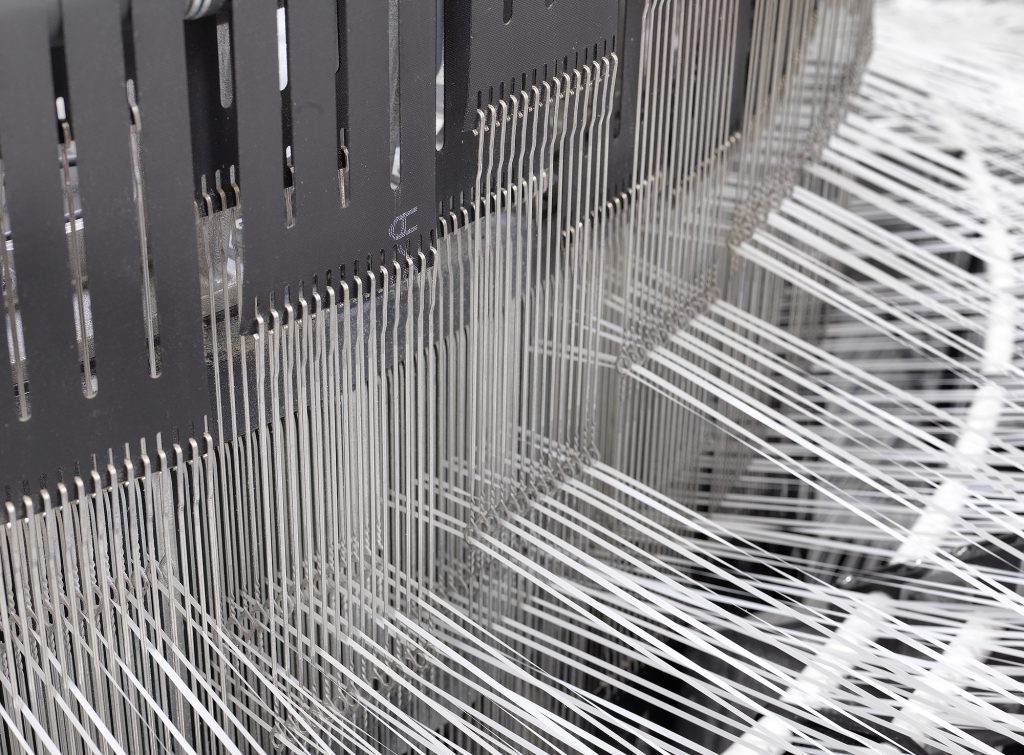
- Compounding & tape extrusion. Pellets are melted, cast, slit, and drawn 5–8×; annealing stabilizes orientation; oxygen control curbs yellowing when rPP is present.
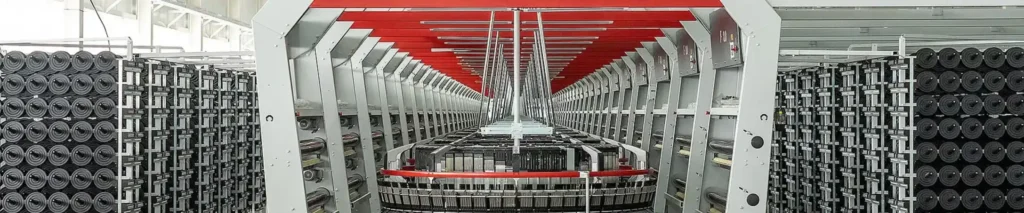
- Weaving. Circular or flat looms define gram weight and porosity; flat fabrics simplify block-bottom conversion; circular fabrics are gusseted for squareness.
- Heat setting. Stabilizes dimensions; reduces downstream shrink at sealing or lamination.
- Coating/lamination. PP coats (12–25 g/m²) or BOPP films (15–25 μm) add barrier and print surfaces; breathable micro-perfs are introduced as specified.
- Printing. Low-odor flexo or reverse-printed films carry branding, nutrition/ingredient statements, allergens, batch/lot codes, and handling icons.
- Conversion. Cutting, gusseting, block-bottom forming, valve installation, and mouth finishing. For FIBC: loop assembly (U-panel, circular, four-panel), spouts, and duffles.
- QA & release. Dimensional checks, seam pulls, drop/stack, burst, valve leak, migration, UV aging, and—if dusty hazards—electrostatic tests.
- Palletization & traceability. Bundling, wrapping, and scannable IDs that map to COAs, test lots, and production dates; hygiene zoning and metal detection where required.
Applications of Poly Woven Bags: Food Ingredients First
Dry staples. Rice, sugar, flour, pulses, coarse salt—where print clarity and stack stability are essential. Retail/foodservice runs favor 5–25 kg; upstream logistics pivot to 500–1200 kg FIBC.
Dairy & nutrition powders. Whole milk powder, whey proteins, premixes with strict migration and hygiene dossiers; linered designs dominate.
Beverage & confectionery inputs. Cocoa nibs, roasted coffee, sugar crystals; abrasion-resistant faces and optional breathability windows avoid condensation.
Bakery & starch derivatives. Wheat flour, corn starch, dextrose, maltodextrins; powder control, anti-static measures, and clean sealing curb dust and housekeeping loads.
Animal nutrition & feed additives. Premixes, amino acids, salt blends; labeling aligns to feed law; removable barrier liners for odor/corrosion control.
Reasoning from the Phrase “Poly Woven Bags: Tailoring Solutions for Food Ingredient Packaging”
A package is not a container alone; it is a negotiation among physics, compliance, and operations.
Three obligations follow from the phrase. First, commit to a woven polyolefin architecture and its consequences: orientation, seams, coatings, and recycling fate. Second, embrace tailoring—reject one-size-fits-all; sugar is not starch is not coffee. Third, honor the governance of food: hygiene, migration, traceability, and labeling. The resulting outline is practical: define the material stack, integrate with the line, model shelf-life physics, certify the hygiene envelope, and pre-plan end-of-life logistics.
Systems View: Decompose the Problem, Then Recompose the Program
Subsystem A — Product physics & shelf life. Hygroscopicity, particle size/shape, and residual heat set moisture uptake and caking trajectories. Design levers include film mass, WVTR targets, breathable windows, liner selection, anti-wick hems, and sealing windows. Metrics: moisture gain (%), caking index, WVTR, odor retention.
Subsystem B — Line integration & cleanliness. Gravity/air, impeller, and auger fillers interact differently with crystals vs. powders. Tune valve length/angle/slip, check-valve folds, and spout fit; specify antistatic treatments and low-lint zones. Metrics: dust (mg/m³), net-weight SD, throughput (bags/min), leak rates.
Subsystem C — Palletization & logistics. Many loads cube-out before weigh-out; stability and stack height drive cost-per-ton. Levers: block bottoms, friction skins (COF), corner boards, hood film, interlock vs. column patterns. Metrics: stack lean (mm), slip angle, safe layer count, in-transit damage rate.
Subsystem D — Compliance & certification. Food-contact, quality systems, hygiene codes, OH&S, and—where relevant—electrostatics converge. Levers: material DoCs, migration testing, hygiene zoning, allergen control, ESD measures. Metrics: audit scores, pass/fail to specified clauses, CAPA closure time.
Subsystem E — Circularity & EPR. Regulatory pressure demands credible end-of-life. Levers: mono-PP BOM, removable liners, compatible inks, QR-linked material IDs, bale density targets (≥250 kg/m³). Metrics: recyclability ratings, recovered kg/1000 bags, bale contamination %, CO₂e/ton delivered.
Standards, Certifications, and Third‑Party Signals (2024–2025)
- ISO 9001:2015 — quality management for document control, nonconformance, and change management.
- ISO 14001:2015 — environmental management for emissions, solvent handling, and scrap recovery.
- ISO 45001:2018 — occupational health & safety around sewing, ultrasonic sealing, heat-cutting, palletization.
- FSSC 22000 v6.0 and BRCGS Packaging Issue 6 — hygiene and GMP frameworks expected for food-adjacent manufacture.
- EU 10/2011 and FDA 21 CFR 177.1520 — plastics for food contact; migration documentation and supplier DoCs.
- IEC 61340‑4‑4 — electrostatics for FIBC (Type C/D) handling dusty powders.
- ISO 21898:2024 — FIBC for non-dangerous goods; informs lift/stack/drop/topple philosophies even for small sacks.
- UN performance packaging (49 CFR 178) — woven plastics bag codes 5H1–5H4, FIBC 13H series, where applicable.
- APR/RecyClass (2024–2025) — recyclability design guidance favoring mono-polyolefin BOMs and removable liners.
Technical Tables for Poly Woven Bags
| Category | Parameter | Typical Range / Option | Why It Matters |
|---|---|---|---|
| Fabric | Basis weight | 85–130 gsm | Strength vs. mass; higher for rough chains |
| Fabric | Picks per inch (PPI) | 28–42 | Openness, print quality, sifting |
| Film | PP extrusion coat | 12–25 g/m² | Sift‑proofness; printability |
| Film | BOPP thickness | 15–25 μm | Reverse‑printed, scuff‑resistant faces |
| Valve | Sleeve length/angle | 90–130 mm / 20–35° | Fill speed; dust containment |
| Seams | Seam efficiency | ≥75–90% of fabric tensile | Corner reliability and drops |
| Liners | Material/thickness | LDPE/LLDPE 50–120 μm; PP 40–80 μm | Moisture/O₂ control; mono-material targets |
| Hygiene | Metal detection | Risk-based (Fe/NFe/SS) | Foreign matter prevention |
| UV | Stabilization target | 200–800 h xenon‑arc equiv. | Outdoor storage durability |
| Recyclability | BOM | Mono‑PP; removable liners | Higher bale value & acceptance |
| Stage | Setting | Notes |
|---|---|---|
| Tape extrusion | 220–260 °C; draw 5–8× | Tensile/elongation balance |
| Weaving | 8–12 wefts/cm | Controls gsm and openness |
| Coating/lamination | 12–25 g/m² coat; 15–25 μm BOPP | Polyolefin adhesives favored |
| Printing | Low‑odor flexo; reverse BOPP | Protects inks; reduces scuff |
| Seaming | 2.5–3.5 stitches/cm | Target ≥80% seam efficiency |
| Sealing | By coat/liner pair | Define temp/dwell/pressure |
| Area | Reference | Verification |
|---|---|---|
| Food contact | EU 10/2011; FDA 21 CFR 177.1520 | DoCs; OML/SML results; supplier letters |
| QMS | ISO 9001 | Document control; change mgmt.; CAPA |
| FSMS | FSSC 22000 v6.0 or BRCGS Packaging | Hygiene zoning; foreign matter; allergens |
| ESD (bulk) | IEC 61340‑4‑4 | Type C/D tests; grounding continuity |
| UV/weathering | ISO 21898 philosophy | Xenon‑arc exposure; tensile retention |
| Recyclability | APR/RecyClass | BOM review; inks/labels; liner removal |
Five Arguments that Shape Every Poly Woven Bags Specification
1) Strength per gram is won in orientation but lost in weak seams. Stitch geometry, density, and allowances translate fabric tensile into system capacity; validate to ≥80% seam efficiency before shaving film mass.
2) Barrier vs. breathability is a continuum. Define WVTR and air-permeability windows, then place micro-perf faces where condensation is likely while protecting other panels with continuous film.
3) The filler dictates the valve. Gravity/air loves short, low-slip sleeves; augers demand longer reinforced lips; impellers reward abrasion-resistant edges. Tune length/angle/slip to real spout dimensions.
4) Hygiene is invented in design, not in cleaning. Low-lint zones, sealed faces on product sides, and migration-tested materials prevent foreign matter before it happens.
5) Circularity is a KPI, not a logo. Mono-PP BOMs, removable liners, compatible inks, QR-linked IDs, and ≥250 kg/m³ bale density are the operational ingredients of recyclability.
Case Scenarios: Sugar, Milk Powder, and Starch in Poly Woven Bags
Fine sugar in tropical depots. 110 gsm PP; 20 μm reverse BOPP front/back; 15 g/m² PP coat sides; anti-wick hems; heat-sealed mouth; optional 70 μm LDPE liner (tethered). Outer COF ≈0.35; UV ≈600 h. Measured outcomes: cleaner seals, taller stacks, reduced returns, bale density on-target once liner removed.
Milk powder blends for export. 100 gsm fabric; 20 g/m² PP coat; removable barrier liner with EVOH; valve sleeve for gravity/air filler; anti-static treatment; EU 10/2011 migration dossier; FSSC 22000 plant. Outcomes: tighter weight distributions, lower dust, shelf-life targets met, audits passed.
1,000 kg starch in Type C FIBC. 200 gsm PP with conductive grid; grounding tabs; vent strips aligned to airflow; removable PE liner; ISO 21898 lift/stack/drop; IEC 61340‑4‑4 ESD tests. Outcomes: safe handling, fewer condensation complaints, documented recycling path for mono-PP outer.
Implementation Roadmap and KPIs
- Define payload physics and storage climate; capture filler type/spout OD/speed and dust capture capabilities.
- Choose base architecture (mono-PP body + film faces; linered; breathable hybrids) with explicit recyclability goals.
- Engineer closure (open-mouth vs. valve) and sealing windows; pilot on the real filler; measure dust and net-weight SD.
- Specify seams (pattern/density/allowances/thread) to achieve ≥80% efficiency on real product.
- Select inks and labels (low-odor, low-ash, PP films/adhesives) and standardize the compliance panel.
- Document food-contact compliance (EU 10/2011/FDA; DoCs; migration). Align any advanced recycled content claims to mass-balance policy.
- Write pallet plan (pattern, layers, COF, corner boards, hooding) and validate via vibration/transit trials.
- Establish circularity (QR marks, bale density targets, liner removability, reprocessor agreements, EPR data model).
- Launch with KPIs (dust mg/m³, net-weight SD, drop/stack pass rate, moisture gain %, caking index, claims, recovery %, bale purity %, CO₂e/ton delivered) and review quarterly.
Risk Register and Controls
| Risk | Root Cause | Control | Evidence |
|---|---|---|---|
| Foreign matter in pack | Thread tails; film chips; equipment debris | Low-lint design; trimmed seams; metal detection; housekeeping | BRCGS/FSSC audit records; MD test logs |
| Allergen cross-contact | Shared lines with allergenic powders | Line clearance; validated cleaning; visual aids | Cleaning validation; changeover sign-offs |
| Dust explosion (bulk) | Powder cloud + ignition | Type C/D FIBC; grounding; dust capture | IEC 61340‑4‑4 records; maintenance logs |
| Caking/bridging | Moisture ingress; residual heat; stack pressure | Barrier/vent balance; anti-wick hems; pallet pattern | Climatic tests; caking indices; pallet trials |
| Label non-compliance | Incomplete ingredient/traceability text | Standardized label panels; pre-press QA | Artwork approvals; retained samples |
Vocabulary and Pocket Concepts
- BOPP — Biaxially Oriented Polypropylene; reverse-printed skins for durable graphics.
- FIBC — Flexible Intermediate Bulk Container; 500–2000 kg woven format.
- HALS — Hindered Amine Light Stabilizers; UV resistance additives.
- OML/SML — Overall/Specific Migration Limits under EU 10/2011.
- Seam efficiency — Seam tensile ÷ fabric tensile; key reliability metric.
- SWL — Safe Working Load for FIBC at specified safety factors.
- WVTR — Water Vapor Transmission Rate; barrier benchmark.
- What Are Poly Woven Bags? Definition, Aliases, and Boundaries
- The Materials of Poly Woven Bags: Resins, Additives, Films, Liners, Cost
- Key Features of Poly Woven Bags: Strength, Barrier, Hygiene, Circularity
- Production Flow for Poly Woven Bags: From Pellets to Pallets
- Applications of Poly Woven Bags: Food Ingredients First
- Reasoning from the Phrase “Poly Woven Bags: Tailoring Solutions for Food Ingredient Packaging”
- Systems View: Decompose the Problem, Then Recompose the Program
- Standards, Certifications, and Third‑Party Signals (2024–2025)
- Technical Tables for Poly Woven Bags
- Five Arguments that Shape Every Poly Woven Bags Specification
- Case Scenarios: Sugar, Milk Powder, and Starch in Poly Woven Bags
- Implementation Roadmap and KPIs
- Risk Register and Controls
- Vocabulary and Pocket Concepts
H1: Introduction
“Poly woven bags are not just containers—they’re engineered systems that balance protection, compliance, and branding,” says Ray, CEO of VidePak, during a 2024 global packaging summit. The critical factors in selecting poly woven bags for food ingredients revolve around material safety, load capacity, environmental resilience, and regulatory alignment. This report explores how VidePak’s 30+ years of expertise and Starlinger-driven production lines address these challenges, focusing on applications in flour, sugar, spices, and food additives.
H2: Key Requirements for Food Ingredient Packaging
Poly woven bags must meet stringent demands based on the product’s physical and chemical properties. Below are sector-specific requirements and VidePak’s tailored solutions:
H3: Flour Packaging
- Load Capacity: Flour bags often carry 25–50 kg loads. VidePak’s 120–150 g/m² polypropylene (PP) bags, reinforced with double-stitched seams, withstand stacking heights up to 8 meters (exceeding JIS Z 1539).
- Moisture Resistance: A 20-µm BOPP lamination reduces water vapor transmission to <5 g/m²/day (meeting EU EN 277).
- Cost Efficiency: Uncoated 90 g/m² PP bags are ideal for short-term storage in dry climates, reducing material costs by 25%.
H3: Sugar and Sweeteners
- Sealing Integrity: Sugar’s hygroscopic nature demands heat-sealed valves and PE inner liners to prevent clumping. VidePak’s ultrasonic sealing achieves 98% leak-proof performance in humid environments.
- Printability: High-resolution CMYK printing on BOPP-coated surfaces ensures branding clarity, critical for retail-ready packaging.
H3: Spices and Additives
- UV Protection: Turmeric and paprika require UV-stabilized PP with 2% carbon black additive, retaining 90% color integrity after 500-hour sunlight exposure.
- Aroma Retention: Multi-layer laminated bags with aluminum foil barriers minimize volatile compound loss, extending shelf life by 30%.
H3: Agricultural Powders (e.g., Starch, Protein Blends)
- Breathability: Micro-perforated bags allow controlled airflow, preventing anaerobic fermentation in soybean meal storage.
- Certification Compliance: FDA 21 CFR and EU Regulation 10/2011 certifications ensure migration limits for additives (e.g., <0.01 mg/kg lead).
H2: Parameter Selection Guide
H3: Material and Structural Parameters
| Parameter | Flour | Sugar | Spices | Additives |
|---|---|---|---|---|
| Grammage (g/m²) | 120–150 | 100–130 | 90–110 | 110–140 |
| Lamination | BOPP (20 µm) | PE inner liner | Aluminum foil | PE/BOPP hybrid |
| Seam Type | Double-stitched | Ultrasonic sealed | Heat-sealed | Double-lock stitch |
| Certifications | ISO 9001, JIS Z | EU EN 277, FDA | FDA, Halal/Kosher | REACH, EU 10/2011 |
H3: Cost-Benefit Analysis
- Uncoated PP Bags: $0.15–0.20 per unit (ideal for bulk grains).
- BOPP-Laminated Bags: $0.25–0.35 per unit (premium moisture protection).
- Multi-Layer Foil Bags: $0.50+ per unit (niche applications like organic spices).
H2: Regulatory and Environmental Considerations
H3: Global Standards
- EU: EN 277 mandates ≤5 g/m²/day moisture transmission; VidePak’s PE-coated bags achieve ≤3 g/m²/day.
- US: ASTM D5265 requires ≥350 kPa burst strength; VidePak’s 150 g/m² PP bags exceed 400 kPa.
- Japan: JIS Z 1539 specifies ≥6-meter stacking; reinforced block-bottom designs prevent seam failure.
H3: Sustainability Initiatives
- Recycled PP: VidePak’s 30% post-consumer recycled PP bags reduce carbon footprint by 1.2 kg per bag.
- Biodegradable Blends: Pilot projects with 20% PLA starch composites aim for 50% biodegradability in 24 months.
H2: Case Study: VidePak’s Custom Solution for a Global Spice Exporter
A 2024 project required bags to preserve saffron’s color and aroma during 6-month maritime shipping:
- Design: 110 g/m² UV-stabilized PP + aluminum foil lamination.
- Sealing: Nitrogen-flushed valve bags with oxygen scavengers.
- Outcome: 0% quality complaints, achieving a 15% premium market price.
H2: FAQs on Poly Woven Bags
Q1: How does grammage affect cost and durability?
Higher grammage (e.g., 150 g/m²) increases tear resistance by 60% but raises material costs by 20%.
Q2: Are PE liners necessary for sugar packaging?
Yes. PE liners reduce moisture absorption by 85%, preventing clumping in humid climates.
Q3: What certifications apply to EU-bound products?
EU 10/2011 for additive migration limits and EN 277 for moisture barriers are mandatory.
H2: Future Trends
- Smart Packaging: QR codes for traceability and RFID tags for real-time humidity monitoring (piloted in 2025).
- Circular Economy: VidePak targets 50% recycled content in all bags by 2030, aligning with UN Sustainable Development Goals.
H2: Conclusion
Poly woven bags are evolving into precision tools for food ingredient logistics. VidePak’s Starlinger-powered production and R&D focus position it as a leader in compliant, high-performance solutions. For businesses, prioritizing parameters like grammage, lamination, and regional standards is critical to balancing cost and quality.
External Links:
- Explore how moisture-proof liners enhance shelf life in humid climates.
- Learn about FDA-compliant PP materials for global exports.
This report synthesizes data from EN, ASTM, and JIS standards, alongside VidePak’s operational insights, to guide decision-making for food manufacturers and logistics providers.