
1) What Are Polypropylene Bags? A Refined Definition, Useful Aliases, and Real-World Boundaries
Polypropylene Bags are engineered packaging articles that employ polypropylene (PP) as the principal load-bearing polymer, presented in woven textiles, oriented films (BOPP), cast films, or hybrid stacks that merge these layers with functional liners and closures. The family spans open‑mouth sacks, valve sacks, block‑bottom square sacks, laminated BOPP woven sacks, breathable/ventilated woven sacks, FFS tubular woven rolls for automated lines, heavy‑duty retail totes, and bulk containers such as FIBCs. In procurement lists and factory SOPs the same concept appears under different aliases: woven PP bags, woven poly sacks, PP laminated sacks, PP valve sacks, PP block‑bottom sacks, PP shopping totes, PP liner‑in‑bag systems, and—at the upper end—PP‑based FIBC with lift loops. Across that variety, the common thread is the oriented PP matrix, which converts low density into high specific strength and stable machinability.
What distinguishes Polypropylene Bags from paper sacks or thin mono‑film pouches is the architecture: drawn PP tapes distribute load across warp and weft with minimal mass, while coats, laminates, and liners tune moisture/oxygen ingress, dust discipline, and seal reliability. The result is not a single SKU but an adaptable stack designed to run cleanly on modern fillers, hold its cube on pallets, and present clean faces for branding and regulation—even after long, abrasive routes. This article rewrites the familiar storyline with a focus on 2024–2025 expectations: faster lines, stricter migration evidence, clearer on‑pack recycling cues, and credible metrics for end‑of‑life.
2) The Material Stack of Polypropylene Bags: Chemistry, Architecture, Trade‑offs, and Cost Logic
Designing Polypropylene Bags is less like buying a commodity and more like composing a formula. Each layer has a role; each interface has physics; each choice shifts speed, shelf life, safety, and recyclability. The subsections below separate the stack into manageable dials so trade‑offs become explicit rather than accidental.
Core polymers
- PP‑H (homopolymer polypropylene) — higher melting range (~160–165 °C) and stiffness; slit‑film tapes drawn 5–8× create a textile with exceptional specific strength and clean heat‑cut edges that minimize fray during conversion.
- PP‑R (random copolymer polypropylene) — small ethylene comonomer content increases low‑temperature impact resistance; designers trade a touch of modulus for winter toughness and better fold endurance at the mouth.
- HDPE tapes (select) — used where slightly lower moisture permeability and a stiffer hand are needed; PP remains dominant for machinability and PP‑stream compatibility.
- Recycled PP (rPP) — judiciously placed in non‑contact layers or outer faces; advanced recycled grades can migrate into food‑adjacent roles only with documented regulatory clearance and robust odor control.
Coats, films, and skins
- PP extrusion coats (≈12–30 g/m²) — sealing surface, sift‑proof layer, and WVTR dial. Mass uniformity across the web is essential to avoid hot spots and seal scatter.
- BOPP laminations (≈15–25 μm) — reverse‑printed to protect inks; polyolefin‑compatible tie layers keep the assembly in the mono‑polyolefin family, supporting recovery in PP‑accepting streams.
- Breathable skins — micro‑perforated films or patterned/partial coats that allow controlled vapor/air passage for respiring goods or warm powders while preserving dust discipline.
Liners and inners
- LDPE/LLDPE liners — general moisture/oxygen control for hygroscopic powders; form‑fit geometry reduces creases that trap residue.
- PP liners — used when mono‑PP construction is prioritized; require re‑tuned seal windows due to different melt behavior versus PE.
- Barrier liners — EVOH/PA coextrusions or metallized films for aroma/oxygen‑sensitive products; best specified as removable and clearly labeled to protect recyclability.
Threads, labels, closures
- Threads — high‑tenacity PP threads maintain mono‑PP discipline; PET threads persist where sewing assets are optimized for polyester.
- Labels — PP film labels with PP adhesives retain polyolefin purity; paper labels are common but can reduce regrind quality and optical sort yield.
- Closures — heat‑sealed open‑mouths, sewn seams (double chain/lock), and engineered valves for gravity‑air, impeller, or auger fillers; consumer‑facing totes employ zippers or drawstrings.
Cost tracks mass and complexity. Resin + fabric weaving contribute roughly 50–70% of unit cost; coats/laminations and printing add 20–40%; conversion and QA account for the balance. Ironically, while a single Polypropylene Bags unit may price above a commodity paper sack, total cost of ownership tends to fall through higher filler speeds, tighter net‑weight control, cleaner plants, and fewer pallet failures. Designs that keep the bill of materials mono‑polyolefin—fabric, coats, threads, labels, and where feasible liners—tend to trade at better bale values in PP‑accepting markets.
3) Feature Anatomy: How Polypropylene Bags Perform When the Forklifts Start Moving
Attributes do not live alone; they argue with one another. More barrier can mean less breathability. Higher friction can slow bag‑on‑bag flow. Downgauging can trim freight mass yet jeopardize drop resistance at cold temperatures. The point of customization is to reconcile these tensions rather than to pretend they don’t exist.
Strength at modest mass
Drawn PP tapes confer tensile and tear resistance per gram that paper cannot match at similar basis weights. A 25 kg sugar sack built with 95–120 gsm fabric plus a 15–25 μm BOPP face typically clears 0.8–1.2 m drop tests when seams deliver ≥75–90% of fabric tensile. Bulk analogs routinely hit 500–2,000 kg SWL with 5:1 or 6:1 safety factors. More performance from less material is not just an ecological virtue; it’s freight math.
Moisture and oxygen control with optional breathability
WVTR is tuned via coat mass and film selection, while micro‑perforation can enable controlled venting for respiring produce or warm powders. Because condensation is a time‑of‑day problem as much as a humidity problem, validation under cyclic conditions is worth more than a single chamber point.
Machinability at speed
Valve sleeves balanced to filler type cut dust and narrow weight distributions. Open‑mouth seals rely on disciplined temperature × time × pressure windows. On FFS lines, roll OD tolerance, splice frequency, and edge profile often decide uptime more than any fabric metric does.
Regulatory surfaces and brand fidelity
Four planar faces carry dense compliance copy, GS1 codes, and serialized QR without sacrificing aesthetics. Reverse‑printed BOPP protects inks from abrasion, preserving scan quality after conveyor scuffing or warehouse re‑stacking.
Hygiene and food‑contact integrity
Contact layers and liners are qualified under EU 10/2011 and/or FDA 21 CFR 177.1520 as applicable. Low‑odor inks, trimmed thread tails, and hygiene zoning help maintain audit scores under FSSC 22000 v6.0 or BRCGS Packaging.
Electrostatics and dust safety
While small sacks rarely need Type C/D classification, dusty product streams benefit from antistatic masterbatch and good grounding practice—an approach formalized in bulk formats under IEC 61340‑4‑4.
Circularity by design
Mono‑PP bills of materials, removable liners, NIR‑friendly colors, and low‑ash inks convert aspiration into accepted bales. QR‑linked material IDs and bale density targets (≥250 kg/m³) make recovery measurable rather than rhetorical.
A strong fabric does not guarantee a strong bag. Seam architecture and seal windows translate laboratory tensile into real‑world reliability. Secure ≥80% seam efficiency; then consider down‑gauging.
4) From Pellets to Pallet‑Ready: The Production Journey
- Compounding & tape extrusion. PP pellets, pre‑dosed with UV/slip/color, are melted, cast as thin sheet, slit into tapes, and drawn 5–8× over heated plates. Draw profile sets tensile/elongation balance and governs creep under stacked loads.
- Weaving. Tapes interlace on circular or flat looms to target gsm and planarity. Flat fabrics support crisp fold lines for block bottoms; circular fabrics are gusseted to square up.
- Heat setting. Thermal stabilization locks dimensions, reduces shrink at sealing temperatures, and improves print register.
- Coating/lamination. PP coats or BOPP films build barrier and printable faces; micro‑perforation introduces controlled breathability when needed.
- Printing. Flexo on PP coats or reverse printing on BOPP delivers durable, low‑odor graphics and regulatory panels.
- Conversion. Cutting to register, gusseting, block‑bottom forming, valve installation, and mouth finishing by sewing or heat‑sealing. FFS tubular rolls are slit/gusseted and wound with strict OD and splice control.
- QA & release. Dimensional checks (±2–3 mm), coat mass/bond, COF, tensile/tear, seam efficiency pulls, seal leak tests, drop/stack, UV aging, and migration testing where applicable.
- Palletization & traceability. Bundles are strapped and labeled to bind lot, raw‑material COAs, and QA data; moisture‑sensitive shipments may be shrouded or desiccated.
5) Application Map: Where Polypropylene Bags Earn Their Keep
- Food staples & ingredients — rice, sugar, flour, pulses, starches, salt, cocoa nibs, roasted coffee; requirements vary from high barrier for powders to measured breathability for roasted goods.
- Agriculture — fertilizers (urea, NPK, potash), seeds, feed premixes; valve formats and block bottoms dominate for uptime and pallet cube.
- Construction materials — cement, mortar, tile adhesive, gypsum; dust control, scuff resistance, and stack integrity matter in hot/humid chains.
- Industrial minerals & salts — soda ash, de‑icing salts, bentonite; abrasion resistance and puncture strength are decisive.
- Chemicals & polymers — resins, masterbatches, additives; clean filling and serialized QR support inventory and safety.
- Reusable retail totes — woven PP with BOPP faces enable hundreds of reuse cycles with vivid branding.
- Waste & take‑back — color‑coded sacks and FIBC facilitate sorter‑friendly post‑consumer collection loops.
6) Reasoning from the Title: “Polypropylene Bags: Customization for Diverse Needs”
The title is a compass. It anchors on polypropylene as the platform, then demands customization across geometry, barrier, breathability, closures, friction, and graphics. Finally, it insists we confront diversity honestly: climates differ, fillers differ, laws differ. What looks elegant on a drawing has to survive forklifts, monsoon humidity, winter drops, and retail handling.
Form
Weave density, gussets, and block‑bottom geometry determine squareness and layer stability. The bag that stands like a brick stacks like a dream; the one that bulges requires excess hood film and becomes a safety risk.
Function
Sealing windows, WVTR targets, and COF tuning govern line speed and shelf life. Anti‑wick hems and micro‑perf patterns tackle condensation without ceding dust control.
Figure
Graphics must respect physics: heavy dark panels absorb heat and can soften the skin, affecting COF; reverse‑printed films shield inks from abrasion and flake.
Fate
Mono‑PP bills of materials, removable liners, NIR‑detectable colorants, and on‑pack QR IDs transform recyclability statements into accepted bales with measurable contamination thresholds.
7) Systems Thinking: Break the Problem Apart, Tune Each Dial, Recompose a Coherent Program
Subsystem A — Product–Package Interaction
Background. Hygroscopicity, particle shape, and residual heat create caking, condensation, and dusting risks. Levers. Coat mass, breathable fields, liner thickness/material, anti‑wick hems, seam geometry, and inner surface roughness. Metrics. Moisture gain (%), caking index after compression, WVTR, optional air permeability, seal leak rate.
Subsystem B — Line Integration & Throughput
Background. Gravity–air fillers favor short, low‑slip sleeves; augers love longer reinforced mouths; impellers demand abrasion‑resistant lips. Levers. Valve geometry, seal‑assist strips, roll OD tolerance and splice frequency, inner/outer COF, hood airflow. Metrics. Bags/min, net‑weight SD, mg/m³ dust, leak rate, unplanned stops.
Subsystem C — Palletization & Transport Safety
Background. Many lanes cube out before they weigh out; stack stability dominates delivered cost. Levers. Block‑bottom geometry, outer COF via skins/finishes, corner boards, hood film gauge, interlock vs. column. Metrics. Stack lean (mm), max safe layers, top‑load compression, pallet damage PPM, film consumption per pallet.
Subsystem D — Compliance & Hygiene
Background. Food‑adjacent programs require documented migration performance; dusty plants must manage ESD in bulk formats; every site benefits from QMS discipline. Levers. DoCs per EU 10/2011 or FDA 21 CFR 177.1520, FSSC 22000 v6.0/BRCGS Packaging, IEC 61340‑4‑4, ISO 9001/14001/45001. Metrics. Audit scores, CAPA closure days, pass rate for migration and UV aging, labeling accuracy.
Subsystem E — Circularity & EPR Readiness
Background. Credible end‑of‑life requires design discipline and operational follow‑through. Levers. Mono‑PP BOMs, removable liners, low‑ash inks, QR‑linked IDs, bale density ≥250 kg/m³, recycler agreements, APR/RecyClass alignment. Metrics. Recovered kg per 1,000 bags, bale contamination (%), recycler acceptance notes, CO₂e per delivered ton.
8) Standards, Certifications, and Audit Anchors (2024–2025)
Technical files that cite current frameworks shift conversations from claims to evidence. For Polypropylene Bags in food‑adjacent or industrial service, the following anchors appear consistently in tenders and audits:
- ISO 9001:2015 — quality management; document control, nonconformance, change management.
- ISO 14001:2015 — environmental management; solvent/ink handling, emissions, scrap recovery.
- ISO 45001:2018 — occupational health & safety; weaving, cutting, sealing, sewing, palletization.
- FSSC 22000 v6.0 or BRCGS Packaging Issue 6 — hygiene, foreign‑matter control, traceability for packaging manufacture.
- EU Regulation No 10/2011 — plastics intended to contact food; OML/SML with Declarations of Compliance for contact layers.
- FDA 21 CFR 177.1520 — olefin polymers for food contact in the United States.
- IEC 61340‑4‑4 — electrostatics test methods for FIBC; informs dust‑safety practice even for small sacks.
- ISO 21898:2024 — FIBC for non‑dangerous goods; lift/stack/drop philosophies guide QA regimes.
- UN Performance Packaging (49 CFR 178; ADR/RID/IMDG) — woven plastics bag codes 5H1–5H4 and FIBC 13H for regulated solids.
- APR/RecyClass (2024–2025) — design‑for‑recycling guidance favoring mono‑polyolefin constructions, compatible inks/labels, removable liners, and clear on‑pack cues.
9) Color Tables — Specification Ranges and Process Windows
| Category | Parameter | Typical Range / Option | Why It Matters |
|---|---|---|---|
| Fabric | Basis weight | 85–130 gsm | Strength vs. mass; higher for rough chains |
| Fabric | Picks per inch | 28–42 | Openness, sifting, planarity |
| Film | PP coat mass | 12–25 g/m² | WVTR and sealing window |
| Film | BOPP thickness | 15–25 μm | Protected, photo‑quality print |
| Valve | Sleeve length/angle | 90–130 mm / 20–35° | Speed and dust containment |
| Seams | Seam efficiency | ≥75–90% of fabric tensile | Field reliability at corners |
| Liners | Material/thickness | LDPE/LLDPE 50–120 μm; PP 40–80 μm | Moisture/oxygen control; mono‑PP aim |
| UV | Xenon‑arc target | 200–1,000 h equivalent | Outdoor storage durability |
| Stage | Setting | Notes |
|---|---|---|
| Tape extrusion | 220–260 °C; draw 5–8× | Tensile/elongation balance; anneal for creep |
| Weaving | 8–12 wefts/cm | Governs gsm and openness |
| Coating/lamination | 12–25 g/m² coat; 15–25 μm BOPP | Polyolefin‑compatible ties favored |
| Printing | Low‑odor flexo; reverse BOPP | Legibility and scuff resistance |
| Seaming | 2.5–3.5 stitches/cm (if sewn) | Target ≥80% seam efficiency |
| Sealing | Window by coat/liner pair | Define temperature × time × pressure |
10) Five Arguments that Decide Most Specs — With Implications
- Strength per gram wins on paper; seams and seals win in the field. Lock ≥80% seam efficiency and robust seal windows before down‑gauging.
- Permeability is a map. Specify WVTR and, when relevant, air permeability. Validate under climate cycles representative of the route.
- The filler dictates the valve; the product dictates the spout. Tune sleeves by observing flow on your actual line and measuring dust (mg/m³) and weight SD.
- Hygiene is designed, not cleaned. Reverse‑printed films, low‑lint zones, trimmed thread tails, and qualified inks reduce contamination; documentation turns good practice into audit readiness.
- Circularity is operational. Mono‑PP BOMs, removable liners, compatible inks, QR material IDs, and bale density targets transform narratives into measurable recovery.
11) Composite Scenarios — Translating Choices into Outcomes
Case A — 25 kg Fine Sugar, Hot–Humid Warehouses
Problem. Moisture sensitivity, scuffed graphics, intermittent seal leaks. Spec. 110 gsm fabric; 20 μm reverse‑printed BOPP on front/back; 15 g/m² PP coat on sides; anti‑wick hems; open‑mouth heat seal with validated temperature × dwell × pressure; optional 70 μm LDPE liner tethered for removal. Outcome. Cleaner seals, chamber shelf‑life success, taller safe stacks, better bale purity.
Case B — 20 kg Milk‑Powder Blend, Export Lane
Problem. Oxygen/moisture sensitivity; dust at filler; strict audits. Spec. 100 gsm PP with 20 g/m² PP coat; removable barrier liner (EVOH) labeled for sorting; gravity‑air valve sleeve with low‑slip exterior; antistatic package; FSSC 22000 v6.0 plant. Outcome. Tight weight distributions, cleaner floors, approved migration documentation, drop in customer claims.
Case C — 1,000 kg Starch (Type C FIBC) Feeding 25 kg Sacks
Problem. Dust explosion risk; seasonal condensation. Spec. 200 gsm PP with conductive grid (Type C under IEC 61340‑4‑4); grounding tabs; vent patches aligned to airflow; removable PE liner; small sacks with antistatic masterbatch. Outcome. Documented ESD performance; lower condensation complaints; synchronized QR traceability across bulk and small packs.
12) Implementation Roadmap — RFQ → SOP → Quarterly Improvement
- Define payload & climate — granule size, cohesiveness, hygroscopicity, residual heat; temperature/RH profiles for the route.
- Select architecture — fabric gsm/PPI/denier; coat mass; laminate faces; breathable zones; liner policy; recyclability target.
- Engineer closures — valve vs. open‑mouth; seal windows; check‑valve features; on‑line pilots to capture dust and weight SD.
- Specify seams — pattern, density (2.5–3.5 stitches/cm), allowances, thread polymer; validate ≥80% efficiency under real orientations.
- Tune friction — inner/outer COF via skins/additives; confirm with incline/slide tests and pallet trials.
- Author compliance pack — Declarations of Compliance, migration reports, ink/adhesive specs, GS1 barcodes; certificates (ISO/BRCGS/FSSC).
- Define pallet plan — pattern, layer count, corner boards, hood film, vibration tolerance; monitor damage PPM.
- Operationalize circularity — on‑pack QR IDs; liner removability; bale density ≥250 kg/m³; recycler agreements; EPR data model.
- Launch KPIs — throughput, net‑weight SD, dust mg/m³, seal leak rate, drop/stack pass %, moisture gain %, claims PPM, recovery %, bale purity %, CO₂e per ton delivered.
- Quarterly reviews — adjust gsm, coat mass, valve geometry, pallet pattern, or liner policy under change control.
13) Risk Register — Controls, Evidence, Ownership
| Risk | Root Cause | Control | Evidence |
|---|---|---|---|
| Seal leaks | Narrow window; contaminated jaws | Seal‑assist strips; jaw cleaning SOP; temperature × time × pressure audits | Leak‑down logs; AQL records |
| Pallet slump | Low squareness; COF mismatch | Gusset optimization; friction skins; pattern switch | Vibration tests; stack‑lean records |
| Dust exposure | Poor hood capture; spout gap | Spout alignment; anti‑sift folds; airflow tuning | mg/m³ logs; housekeeping metrics |
| Foreign matter | Thread/film chips; label fibers | Mono‑PP labels; trimmed seams; metal detection | BRCGS/FSSC audits; MD logs |
| Recyclability shortfall | Mixed BOM; fixed liners | Mono‑PP BOM; removable, labeled liners | Bale purity %; recycler acceptance notes |
14) Vocabulary — A Pocket Reference
BOPP — biaxially oriented polypropylene film, often reverse‑printed for durable graphics.
COF — coefficient of friction; governs machinability and pallet stability.
FIBC — flexible intermediate bulk container; 500–2,000 kg woven format with lift loops.
HALS — hindered amine light stabilizers; UV protection additives for PP.
OML/SML — overall/specific migration limits under EU 10/2011 for food‑contact plastics.
PPI — picks per inch; fabric openness and planarity indicator.
SWL — safe working load (bulk formats) with 5:1 single‑trip or 6:1 multi‑trip safety factors.
WVTR — water vapor transmission rate; barrier benchmark central to shelf life.
- 1) What Are Polypropylene Bags? A Refined Definition, Useful Aliases, and Real-World Boundaries
- 2) The Material Stack of Polypropylene Bags: Chemistry, Architecture, Trade‑offs, and Cost Logic
- 3) Feature Anatomy: How Polypropylene Bags Perform When the Forklifts Start Moving
- 4) From Pellets to Pallet‑Ready: The Production Journey
- 5) Application Map: Where Polypropylene Bags Earn Their Keep
- 6) Reasoning from the Title: “Polypropylene Bags: Customization for Diverse Needs”
- 7) Systems Thinking: Break the Problem Apart, Tune Each Dial, Recompose a Coherent Program
- 8) Standards, Certifications, and Audit Anchors (2024–2025)
- 9) Color Tables — Specification Ranges and Process Windows
- 10) Five Arguments that Decide Most Specs — With Implications
- 11) Composite Scenarios — Translating Choices into Outcomes
- 12) Implementation Roadmap — RFQ → SOP → Quarterly Improvement
- 13) Risk Register — Controls, Evidence, Ownership
- 14) Vocabulary — A Pocket Reference
H1: Introduction
“The future of polypropylene (PP) bags lies in balancing customization with industrial scalability,” asserts Ray, CEO of VidePak, during a 2025 global packaging summit. Three pillars drive this evolution: advanced material engineering, automated manufacturing systems, and data-driven cost optimization. This report explores how VidePak’s 30+ years of expertise and Starlinger-driven production lines address these demands, focusing on applications in agriculture, construction, and retail while aligning with global sustainability goals.
H2: Historical Evolution of Polypropylene Bag Customization
Polypropylene bags have evolved from generic packaging to precision-engineered solutions tailored to industry-specific needs. Key milestones include:
- 1990s: Introduction of basic woven PP bags for bulk agricultural products, with limited customization (e.g., single-color printing).
- 2000s: Adoption of BOPP lamination for moisture resistance, enabling use in chemical and fertilizer packaging.
- 2010s: Rise of block-bottom valve bags with ultrasonic sealing, improving stacking stability by 40% for cement and construction materials.
- 2020s: Integration of IoT-enabled production lines, reducing material waste by 15% through real-time monitoring.
VidePak’s Starlinger circular looms and 30+ lamination machines exemplify this progression, enabling rapid shifts between custom designs (e.g., UV-resistant bags for Australian mining clients or FDA-compliant food-grade liners).
H2: Material Innovation and Technical Processes
H3: PP Resin Selection for Custom Performance
| Resin Type | Key Properties | Applications | Cost ($/kg) |
|---|---|---|---|
| High-MFI PP | Melt Flow Index: 12 g/10 min | Fast extrusion for thin films | 1.45–1.65 |
| UV-Stabilized PP | 90% tensile retention after 1k UV hours | Outdoor storage (e.g., fertilizers) | +20% premium |
| Recycled PP | 30% post-consumer content, ISO 14064-certified | Eco-friendly retail packaging | 1.20–1.40 |
VidePak uses ExxonMobil PP 3155 for ASTM D5265-compliant bags (burst strength ≥350 kPa) and Prime Polymer BC03B for JIS Z 1539 stacking requirements (≥8-meter height).
H3: Advanced Manufacturing Techniques
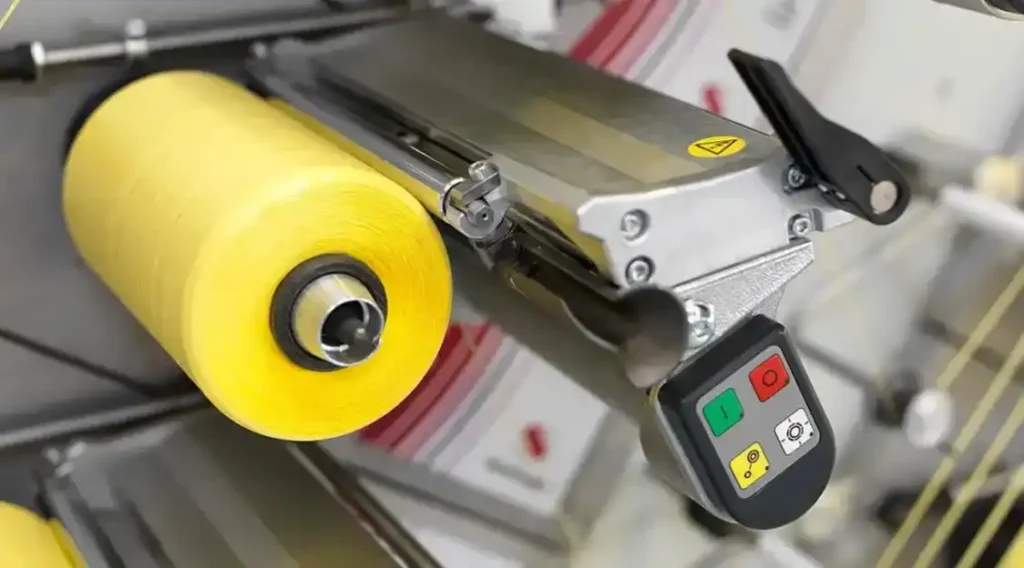
- Multi-Layer Extrusion: Combines virgin PP with additives (e.g., 2% carbon black for UV resistance) using Starlinger’s 16 extrusion lines, achieving pore sizes <0.1 mm to prevent powder leakage.
- Digital Printing: CMYK+ technology supports 1200 dpi resolution for branding on BOPP-laminated surfaces, critical for retail differentiation.
- Seamless Automation: IoT sensors in circular looms adjust tension in real-time, reducing fabric defects by 25%.
H2: Cost Control Strategies
H3: Material Efficiency
- Bulk Procurement: VidePak sources PP resins at $1.45–1.65/kg via partnerships with ISO 9001-certified suppliers like Jiangtai Plastic.
- Waste Reduction: Starlinger’s closed-loop recycling reclaims 80% of production scrap, lowering raw material costs by 12%.
H3: Operational Optimization
| Parameter | Traditional Process | VidePak’s Automated Process | Savings |
|---|---|---|---|
| Production Speed | 200 bags/hour | 600 bags/hour | 67% time reduction |
| Energy Consumption | 15 kWh/kg | 9 kWh/kg | 40% lower |
| Labor Costs | $0.30/bag | $0.12/bag | 60% reduction |
H2: Future Trends in Automation and Sustainability
H3: Smart Manufacturing
- AI-Driven Predictive Maintenance: Reduces Starlinger loom downtime by 30% through vibration analysis.
- 3D Printing Integration: Pilot projects with SLS-printed PP valve components cut prototyping costs by 50%.
H3: Circular Economy Initiatives
- Bio-Based PP: Partnerships with biotech firms to develop 20% PLA-blended resins, targeting 50% biodegradability by 2030.
- Carbon-Neutral Production: Solar-powered extrusion lines reduce CO₂ emissions by 1.8 kg per bag.
H2: Case Study: Custom Fertilizer Bags for EU Market
A 2024 project required bags compliant with EN 13432 (biodegradability) and EN 277 (moisture barrier ≤5 g/m²/day):
- Design: 3-layer structure (recycled PP/kraft paper/PE liner).
- Outcome: 30% cost savings vs. virgin PP, with 98% client retention due to certification alignment.
H2: FAQs on Polypropylene Bag Customization
Q1: How does UV stabilization affect costs?
UV additives increase material costs by 20% but extend bag lifespan by 3+ years in sunny climates, yielding 18-month ROI.
Q2: Can recycled PP match virgin material performance?
Yes. Advanced blending ensures 95% tensile strength retention (35 MPa) while reducing carbon footprint.
Q3: What certifications apply to US food packaging?
FDA 21 CFR and ASTM D5265 are mandatory; VidePak’s BOPP-laminated bags exceed both.
H2: Conclusion
Polypropylene bags are transitioning from standardized commodities to bespoke solutions. VidePak’s Starlinger-powered automation and R&D focus position it as a leader in sustainable, high-performance customization. For businesses, prioritizing resin selection, automation, and circular design is critical to balancing cost and compliance.
External Links:
- Explore advanced material blends for industry-specific customization.
- Learn how sustainable practices reduce environmental impact.
This report synthesizes data from ASTM, EN, and JIS standards, alongside VidePak’s operational insights, to guide strategic decisions for manufacturers and logistics providers.