
Understanding Multiwall Laminated Woven Bags and Their Many Aliases
Multiwall Laminated Woven Bags are layered industrial sacks engineered to balance strength, barrier protection, and brand-forward graphics. At their core sits a woven polypropylene substrate that supplies mechanical resilience; wrapped around or bonded to this backbone are laminates that provide moisture resistance, print fidelity, and—when required—additional barrier functions. In warehouses that hum with palletizers, in mills that meter powders and granules, and in retail aisles where packaging must sell at a glance, Multiwall Laminated Woven Bags stand out for doing many jobs at once. They are sometimes called BOPP laminated woven polypropylene bags, PP woven valve sacks, block-bottom valve bags, pinch-bottom woven sacks, or paper–woven hybrid sacks, depending on the exact construction and closure format. Different names, one idea: combine a high-toughness woven base with specialty plies to meet distinct operational and marketing goals.
Callout • Why layers matter: The woven layer bears the load. The laminated film protects and prints. Optional liners seal. Together, they create a bag that stacks, seals, and sells.
Because these bags serve both heavy industry and premium consumer categories, the language in this guide alternates between plant-floor pragmatism and brand-management priorities. By design, Multiwall Laminated Woven Bags bring those worlds together: a rugged workhorse in motion on fast fillers; a crisp billboard at rest on a retail shelf.
Constituent Materials, Structure Logic, and Cost Drivers
At first glance the architecture of Multiwall Laminated Woven Bags looks simple: a woven fabric plus a laminate. Look closer and you see a design space with dozens of tunable variables: tape denier, pick density, film thickness, adhesive chemistry, surface energy, closure type, and perforation patterns. Each decision reflects a compromise among mechanical performance, moisture protection, aesthetics, line speed, and end-of-life preferences.
Woven Polypropylene Substrate
The base is a fabric made from extruded polypropylene tapes—flat yarns drawn to align polymer chains for higher tensile strength. Looms (circular or flat) interlace these tapes into a fabric with predictable load paths. The woven substrate gives the bag its backbone: tensile strength for lifting, tear resistance for edge abuse, and puncture tolerance for sharp granules.
Dialing performance is a matter of gsm (grammage), tape width, and picks per inch. Higher gsm and tighter weaves increase bursting and drop resilience but add resin cost. Outdoors, UV-stabilized masterbatches extend life; indoors, antistatic and slip-modifier packages tune handling on magazines, conveyors, and pallet surfaces.
BOPP or Similar Printable Laminates
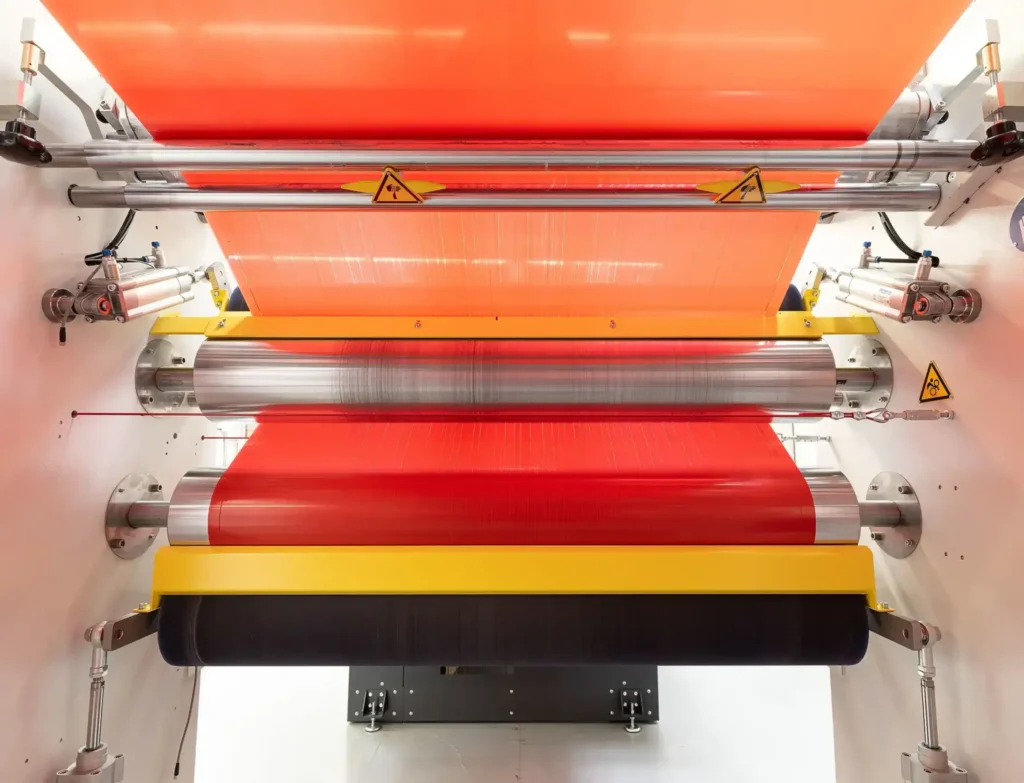
A biaxially oriented polypropylene film, reverse-printed for scuff-safe graphics, is extrusion-laminated to the fabric. The film’s stiffness and gloss create a retail-ready face, while the laminate shields the weave from moisture, grime, and abrasion. Matte and tactile variants temper gloss when a natural look is desired, and metallized or coextruded barrier versions protect light- and oxygen-sensitive goods. Film thickness typically ranges from the mid-teens to a few tens of microns—thin enough to save weight, thick enough to survive logistics.
Printing method matters. Rotogravure on the film yields photographic detail; flexography on paper plies offers bold spot colors and speed. Color consistency, ink adhesion, and solvent retention are not abstract topics; they are quality variables with measurable thresholds and line implications.
Hybrid Paper–Woven Constructions
Some users prefer the familiar stiffness and stackability of sack kraft. Paper plies can be adhered to the woven substrate by extrusion coating or via specialized adhesives, forming a paper–woven hybrid that looks traditional yet retains the strength of woven polypropylene. The trade-off is mass and end-of-life complexity: paper adds weight and often changes recycling pathways. Still, for flours, sugars, and certain regulated categories, the paper surface remains a market expectation.
Inner Sealants, Liners, and Barrier Layers
Where hermeticity or de-aeration control is essential, an inner sealant—or even a discrete liner—comes into play. Sealants based on PP or PE enable pinch-bottom closures with consistent seal strength, while coextruded structures can embed barrier resins to limit oxygen ingress or aroma egress. Metallized films offer high light barrier but complicate recyclability; clear high-barrier coex can be a middle path where design-for-recycling goals exist.
- Mono-PP laminate: woven PP + PP tie layer + reverse-printed BOPP; optional inner PP sealant for pinch sealing. Prioritizes a single-polymer pathway.
- Paper–woven hybrid: exterior paper ply adhered to woven PP; may include inner paper or film. Emphasizes stiffness and conventional appearance.
- High-barrier variant: woven PP + printed BOPP + metallized or coex barrier + sealant; designed for sensitive seeds or specialty feeds.
Feature Set Mapped to Real-World Needs
The promise of Multiwall Laminated Woven Bags is not merely that they are strong; it is that their strength is directed, their surfaces are communicative, and their closures are compatible with high-speed filling. Consider the feature set not as a checklist but as a portfolio of levers—tuned differently for cement versus rice, for fertilizer versus pet food.
- Strength at low mass: The woven base translates polymer orientation into usable load-bearing capacity; drops and edge abuse become manageable rather than catastrophic.
- Printable, scuff-safe facings: Reverse-printed film protects graphics during shipping and handling, allowing retailers to receive bags that still look like billboards.
- Moisture and dust control: Laminates repel incidental water and reduce dusting; engineered micro-perforations evacuate trapped air during filling without turning bags into sieves.
- Format flexibility: Valve, pinch-bottom, and open-mouth formats each solve distinct problems—line speed, hermeticity, or simplicity.
- Operational synergy: Tuned coefficients of friction, anti-slip embossing, and gusset geometries support both magazine feeding and pallet stability.
- Compliance pathways: When the pack touches food ingredients, documented food-contact compliance and credible hygiene programs move from nice-to-have to non-negotiable.
- Design-for-recycling options: Mono-PP builds align with regional PP recycling streams where infrastructure exists; hybrid constructions are specified when legacy expectations rule.
From Resin to Pallet: A Production Flow That Works
Manufacturing Multiwall Laminated Woven Bags can be visualized as a chain; each link is measurable, controllable, and improvable. The value emerges when the links are synchronized: extrusion tuning reduces loom breaks; loom stability eases lamination; lamination quality protects print; converting accuracy lowers filler stoppages.
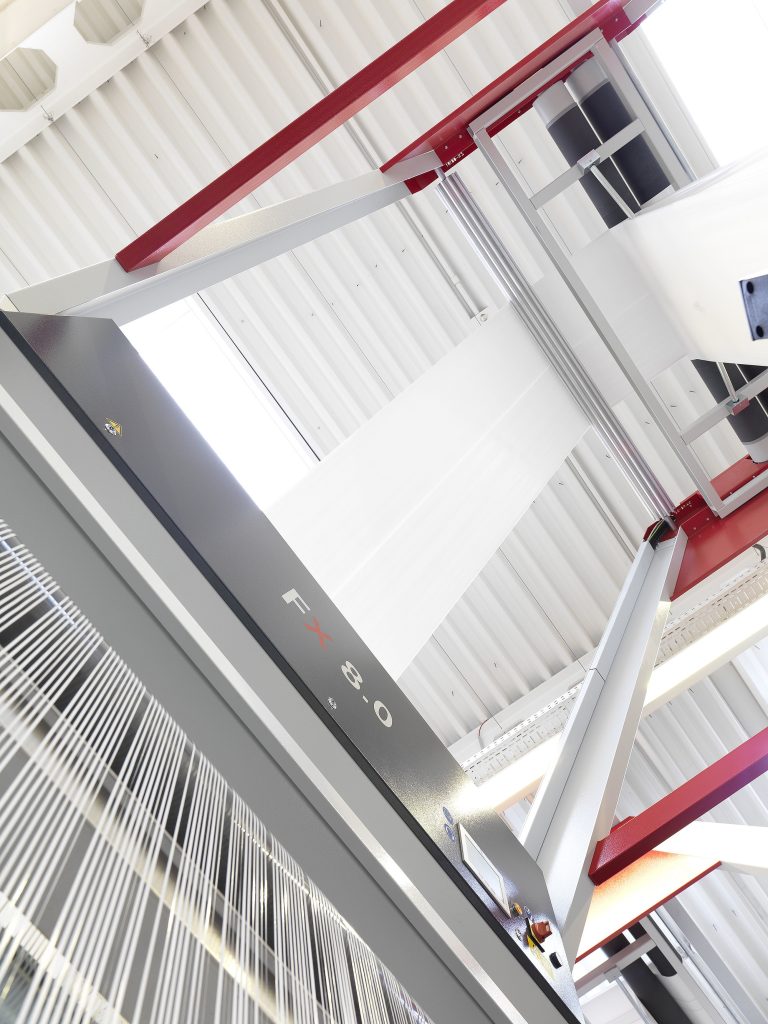
- Tape extrusion and stretching: Polypropylene pellets are melted, slit, and drawn into tapes with precise denier. Orientation raises tensile strength; thermal profiles lock in crystallinity. The output is not just tape; it is a specification with targets for width, tensile, and elongation.
- Weaving: Circular or flat looms convert tapes into fabrics. Pick density, warp tension, and knot management determine fabric gsm and porosity. The fabric’s job is mechanical: lift, hold, and resist tearing.
- Surface preparation and lamination: Corona treatment and primers elevate surface energy so molten tie layers can bond films to the fabric. Peel strength and blocking behavior are measured and trended, not assumed.
- Printing: Film routes often use rotogravure to deliver photographic artwork; paper routes typically rely on flexography for economic runs and bold solids. Registration, color ΔE, and ink rub resistance are monitored.
- Converting: Webs are cut, gusseted, folded, and formed into valve, pinch-bottom, or open-mouth bags. Valve sleeves and micro-perforations are added as required. Dimensional tolerances are held to millimeter-level limits to fit automated fillers.
- Closure and finishing: Pinch seams are heat-sealed with compatible sealants; valve bags self-close or are ultrasonically sealed after filling. Anti-slip textures and COF tuning support stable stacking and smooth magazine feeding.
- Final QA and palletization: Bundles are counted and wrapped; lot traceability binds finished pallets to resin lots, film rolls, inks, and process settings.
| Stage | Primary Controls | Key Outputs |
|---|---|---|
| Extrusion | Denier, draw ratio, melt temp, chill roll, MFR match | Tape tensile/elongation, width tolerance |
| Weaving | Picks/inch, warp tension, stop rates | Fabric gsm, porosity, defect density |
| Lamination | Corona level, tie coat weight, nip temp/pressure | Peel strength, COF, blocking behavior |
| Printing | Registration, ΔE, ink adhesion | Graphic fidelity, rub resistance |
| Converting | Cut length, gusset width, valve sleeve dimensions | Dimensional fit, seal strength, micro-perf pattern |
Applications Seen Through Multiple Lenses
Why do so many sectors converge on Multiwall Laminated Woven Bags? Because the same bundle of properties—toughness, printability, moisture control, and line compatibility—solves different problems across categories. Consider these use cases and their logic.
Cement and Building Materials
Block-bottom valve formats accelerate filling, reduce dust clouds, and stack flat. Anti-slip textures protect towers of bags from slipping during transit.
Fertilizers and Agrochemicals
Moisture sensitivity meets UV exposure. The response: laminated facings, UV-stabilized tapes, and micro-perf recipes that let air exit without powder escape.
Seeds, Grains, and Rice
Premium graphics carry brand value, while robust weaves survive handling from farms to stores. Optional barriers protect germination quality in seeds.
Animal Feed and Pet Food
Consumer sizes benefit from billboard-quality print and optional reclosable features; industrial sacks prioritize pallet stability and dust control.
Minerals, Salts, Resin Pellets
Puncture resistance and seam integrity matter most; gusset geometry and COF tuning keep stacks tight through long hauls.
Quality Assurance in Production: A System, Not a Slogan
Treating quality as a system means tracing requirements to measurements. For Multiwall Laminated Woven Bags, five sub-systems interlock: material integrity, process capability, functional testing, hygiene and compliance (when food contact applies), and sustainability alignment. We can read them in isolation, but they work best as a loop.
Sub-System A — Material Integrity and Compliance
Resins, films, papers, inks, and adhesives arrive with certificates, but certificates are starting points, not proofs. Incoming QC verifies MFR bands for resin, thickness for films, basis weight for papers, and adhesion or primer specs where relevant. Traceability is granular: lot codes link input reels to finished pallets.
Sub-System B — Process Capability and In-Line Controls
Critical-to-quality variables align with each unit operation: tensile on tapes, PPI and gsm on fabrics, peel and COF on laminates, registration and ΔE in printing, cut length and valve geometry in converting. SPC charts reveal drift before failures appear; capability studies (Cp/Cpk) validate new artworks or barrier stacks.
Sub-System C — Mechanical and Functional Testing
Real hazards get real tests: dart impact for laminate toughness, tensile and tear for the fabric, seal strength for pinch seams, COF for stacking behavior. Climatic conditioning explores high humidity and heat; moisture ingress simulations separate robust designs from fragile ones.
Sub-System D — Hygiene and Food-Contact Controls
When bags touch ingredients directly, hygiene programs and regulatory declarations step forward. Good manufacturing practice, zoning, allergen control, and taint/odor checks are documented. Migration testing supports food-contact claims where required, preventing surprises in audits and markets.
Sub-System E — Sustainability and End-of-Life
Design-for-recycling is a design constraint, not a postscript. Mono-PP designs simplify sorting where PP streams exist; hybrid paper–woven constructions deliver stiffness and familiarity where that matters most. Labels and claims are aligned with regional guidance, and energy intensity is tracked as a continuous-improvement metric.
| Test / Metric | Purpose | Typical Targets |
|---|---|---|
| Dart impact (laminate) | Abuse resistance | Application-tuned (e.g., 80–250 g; method dependent) |
| Peel strength (lamination) | Delamination resistance | > 2.0–3.5 N/15 mm for PP/PP bonds (indicative) |
| Coefficient of friction (surface) | Stacking and line flow | 0.25–0.45 typical; asymmetry optional |
| Fabric tensile (MD/CD) | Load bearing | Linked to gsm, weave; validated against pallet height |
| Seal strength (pinch) | Hermetic integrity | > 10–15 N/15 mm (sealant dependent) |
| Ink rub / Color ΔE | Graphic durability / color fidelity | Pass specified rub cycles; ΔE under brand threshold |
Reasoning Across Disciplines: How the Pieces Connect
Packaging is a multidisciplinary problem. Mechanical engineering asks for tensile and tear margins; polymer science explains how draw ratios create them. Graphic design requests saturated reds and crisp halftones; printing science translates that into ink density and surface energy. Operations demands fewer stoppages; process engineering answers with COF tuning and valve geometry. Sustainability teams push for mono-material futures; converting teams request realistic sealing windows. Multiwall Laminated Woven Bags live at the junction of these forces, which is why their design feels less like an equation and more like a conversation.
We can look at the same property from different angles: Is a stiffer laminate better for stacking, or does it crack in cold-chain exposure? Should micro-perforations prioritize rapid de-aeration, or will that invite dust leakage? Do bright gloss films sell better, or will matte finishes hide scuffs during long transport? The answers depend on density of contents, route-to-market, filler technology, and retailer expectations. Consequently, the optimal bag is not a fixed product but a tuned configuration.
From Small Questions to a Cohesive Specification
Turning needs into drawings starts with small questions and ends with a cohesive spec for Multiwall Laminated Woven Bags.
- Will it survive handling? Choose fabric gsm, pick density, and film thickness; verify with dart impact, tensile, and tear tests.
- Will it control moisture and dust? Add sealant layers and micro-perf recipes; validate via moisture ingress tests and dust migration checks.
- Will it run fast on fillers? Specify valve sleeve dimensions, COF windows, and de-aeration features; run line trials.
- Will it meet category rules? Confirm food-contact declarations and hygiene programs when contents demand it.
- What is its end-of-life path? Align structure with regional recycling guidance; simplify materials where possible.
The result is not merely a bag but a documented set of acceptance criteria. Drawings list tolerances; material specs list resin grades and film thicknesses; quality plans list sampling and test methods. When the document set is right, production feels routine and audits become storytelling rather than firefighting.
Practical Fine Points for Line Success
- Valve geometry is destiny for fill speed and dust rebound; collaborate with filler OEMs early.
- COF asymmetry (one side grippier) stabilizes pallets without jamming magazines.
- Corona decay between treatment and lamination is real; track time windows.
- Ink systems influence odor and set-off; capture residuals data when new artworks launch.
- UV stabilization should match storage reality; more is not always better.
- Perforation patterns must respect powder rheology, or puffing and panel bulge will appear at the worst moment.
- Pre-creasing improves gusset memory and pallet cube; cooling control during converting helps bricks stay brick-like.
- Seam choice (pinch vs. stitched) trades hermeticity and speed; stitch cover tapes reduce sifting where sewing persists.
Keyword Ecology and Natural Phrasing
Throughout this document the principal term Multiwall Laminated Woven Bags appears in natural contexts and is supported by synonymous or closely related phrases: BOPP laminated woven polypropylene bags, PP woven valve sacks, pinch-bottom laminated woven sacks, multiwall paper–woven hybrids, laminated WPP packaging, recyclable woven polypropylene packaging, and high-barrier laminated woven sacks. These phrases map to real buyer intent by application, function, and compliance needs.
- Understanding Multiwall Laminated Woven Bags and Their Many Aliases
- Constituent Materials, Structure Logic, and Cost Drivers
- Feature Set Mapped to Real-World Needs
- From Resin to Pallet: A Production Flow That Works
- Applications Seen Through Multiple Lenses
- Quality Assurance in Production: A System, Not a Slogan
- Reasoning Across Disciplines: How the Pieces Connect
- From Small Questions to a Cohesive Specification
- Practical Fine Points for Line Success
- Keyword Ecology and Natural Phrasing
By integrating advanced material science, precision engineering, and rigorous quality control protocols, multiwall laminated woven bags have become indispensable for industries requiring durable, safe, and sustainable packaging. This report examines critical quality parameters—thickness, weight, size, anti-static properties, and load capacity—while highlighting how VidePak’s expertise and Starlinger-driven production ensure global compliance and customer satisfaction.
Core Quality Parameters: Thickness, Weight, and Size
Multiwall laminated woven bags are engineered to meet diverse industrial demands. VidePak’s product specifications align with global standards while offering customization:
1. Thickness and Grammage (GSM)
- Thickness Range: 0.15–0.5 mm, achieved through multi-layer lamination (2–5 layers).
- GSM Range: 80–250 GSM, balancing strength and cost efficiency. For example:
- 80–120 GSM: Lightweight retail packaging (e.g., pet food).
- 150–200 GSM: Industrial use (e.g., cement, fertilizers).
- 200+ GSM: Heavy-duty applications (e.g., construction debris).
2. Size Customization
- Standard Sizes: 30 cm × 50 cm to 100 cm × 150 cm.
- Custom Dimensions: Tailored for automated filling systems, such as 45 cm × 90 cm for FIBC jumbo bags in chemical transport.
Case Study: A European agrochemical firm required 1,200 GSM bags with 1.2-meter widths for bulk pesticide storage. VidePak’s 30+ lamination machines enabled rapid prototyping, reducing lead time by 40% compared to competitors.
Anti-Static Technology: Safeguarding Sensitive Materials
Static electricity poses risks of ignition in flammable environments (e.g., coal dust, powdered chemicals). VidePak’s anti-static woven bags employ two mechanisms:
- Conductive Additives: Carbon nanotubes (CNTs) or metallic fibers are blended into polypropylene (PP) during extrusion, creating a conductive network that dissipates charges. Tests show a surface resistivity of ≤10⁸ Ω/sq, complying with IEC 61340 standards.
- Laminated Coatings: BOPP films with anti-static agents (e.g., glycerol monostearate) reduce static accumulation by 85% in humid conditions.
Key Insight from Industry Experts
Ray, CEO of VidePak, explains:
“For a Middle Eastern client storing lithium battery components, we engineered bags with 0.5% CNT-doped PP layers, achieving 99% static dissipation. This eliminated fire risks during transport, saving $500,000 annually in safety costs.”
Load Capacity and Structural Integrity
Multiwall laminated bags are designed to withstand extreme weights and environmental stress:
| Parameter | VidePak Standards | Industry Average |
|---|---|---|
| Static Load | 50–1,000 kg | 30–800 kg |
| Dynamic Load | 25–500 kg (drop-test certified) | 15–400 kg |
| Seam Strength | ≥300 N/cm (double-stitched) | ≥200 N/cm |
Case Study: A Brazilian mining company reported zero ruptures in VidePak’s 1,000 kg-capacity bags during iron ore transport, despite 15-meter drops onto conveyor belts.
Quality Assurance Framework at VidePak
VidePak’s QA system combines technology, training, and sustainability:
1. Advanced Testing Protocols
- Tensile Strength: ASTM D5034 tests validate 35–50 N/cm² tensile strength.
- Moisture Resistance: Bags withstand 72-hour humidity cycles (95% RH) without delamination.
- Anti-Static Validation: Surface resistivity measured via ASTM D257.
2. Sustainable Production
- Solar-Powered Facilities: A 2MW rooftop system powers 60% of operations, reducing CO₂ emissions by 1,200 tons/year.
- Circular Economy: 98% PP waste is recycled via Starlinger’s RecoStar system.
3. Workforce Training
- 5S Methodology: Reduced defect rates to 0.2% through standardized workflows.
- ISO 9001 Certification: Annual audits ensure compliance with global QA benchmarks.
FAQs: Addressing Critical Concerns
Q1: How do anti-static bags prevent dust adhesion?
A: Conductive additives neutralize static charges, reducing dust attraction by 70–90%.
Q2: What is the maximum temperature these bags withstand?
A: Bags retain integrity at -30°C to 80°C, ideal for Arctic logistics or tropical storage.
Q3: Are laminated layers recyclable?
A: Yes. VidePak’s BOPP-PP laminates are 100% separable and recyclable under EU EN 13432.
Strategic Advantages and Market Positioning
VidePak’s 100+ Starlinger circular looms and 16 extrusion lines enable:
- High-Speed Production: 12,000 bags/hour, 3x faster than manual systems.
- Custom Printing: 8-color HD prints for branding and regulatory labels.
External Resources
- Explore how multiwall laminated bags ensure safety in volatile environments.
- Learn about rigorous quality testing for industrial packaging.
Conclusion
Quality assurance in multiwall laminated woven bags demands a synergy of material innovation, precision engineering, and sustainability. VidePak’s Starlinger-driven production, anti-static expertise, and solar-powered operations position it as a global leader, transforming packaging from a cost center to a value driver. As industries prioritize safety and ESG compliance, VidePak’s solutions exemplify how quality and responsibility can coexist seamlessly.
Word count: 1,050