
What are Form‑Fill‑Seal Woven Bags and how do they differ from other heavy‑duty sacks?
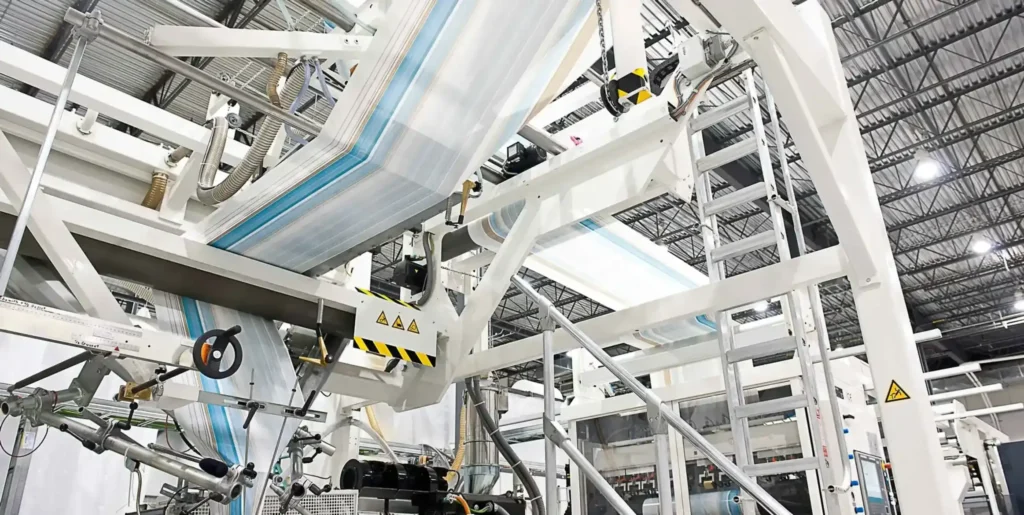
In modern plants where every extra second on the packaging line compounds into tonnage per shift, Form‑Fill‑Seal Woven Bags serve as the converging point of materials science, automation, and logistics discipline. They are produced from woven polyolefin substrates—most commonly polypropylene—that arrive as rolls or tubular webs and are transformed on an FFS machine into finished bags: formed, filled, and sealed in one continuous choreography. Unlike pre‑made open‑mouth sacks or separate valve sacks that depend on manual placement or discrete stations, Form‑Fill‑Seal Woven Bags exploit a single web path to deliver dimensional repeatability, high throughput, and tight weight control for powders, granulates, and pellets.
Also known as:
- FFS woven sacks
- FFS roll woven bags
- Woven FFS tubular bags
- Heavy‑duty FFS PP sacks
- Form‑fill‑seal PP woven packaging
- Automated FFS woven film sacks
- FFS polywoven industrial bags
A practical question often follows: if pre‑made valve sacks already fill quickly, why shift to Form‑Fill‑Seal Woven Bags? Because the web‑fed process decouples operators from bag presentation, removes variability at the mouth, and orchestrates seal creation with dosing in a single rhythm. The result is fewer leakers, tighter repeats, and less rework.
Material system of Form‑Fill‑Seal Woven Bags: from resin to role to result
The performance of Form‑Fill‑Seal Woven Bags originates in the substrate—woven polypropylene or compatible woven polyolefin. Yet the fabric is only one voice in a choir. Coatings, laminates, tie chemistries, and optional liners contribute timbre and range. To understand why a 25–50 kg package survives drops, resists puncture, and behaves beautifully on a packer, we map each layer to its function and its cost.
- Woven polypropylene fabric — slit‑film tapes drawn for molecular orientation, woven circularly or on flat looms; the source of tensile and tear behavior.
- Extrusion coating or laminate — polyolefin coatings seal interstices and tune moisture moderation; paper or BOPP laminates add friction or reverse‑print graphics.
- Tie layer — extrusion tie (PP/PE coextrudate) or adhesive (water‑based or PU) that controls peel, curl, and long‑term integrity under humidity.
- Inner liner (optional) — PE mono or coex (often with EVOH) for moisture/oxygen sensitive contents.
- Sealant face — PE‑rich blends engineered for reliable jaw closure without distorting the woven grid.
Costs are not static. PP resin follows monomer and energy markets; sack kraft and BOPP reflect pulp and film dynamics; additives such as HALS or antistats scale with exposure risk. The art is to choose a stack that meets drop and sift targets while avoiding unnecessary grams per unit—because a single gram saved on a 10‑million‑bag program is ten metric tons of resin avoided.
A thin extrusion coat seals pores, improves moisture moderation, controls internal COF, and supports surface printing where needed.
Paper improves friction and scuff resistance for graphics; BOPP enables reverse printing for rich visuals and regulatory panels.
Loose or tube‑inserted PE liners, sometimes with barrier layers, protect hygroscopic or oxygen‑sensitive contents during long routes.
Additives turn durability from an aspiration into a guarantee. UV packages shield outdoor stocks; antistats reduce dust attraction and discharge risk; slip and anti‑block agents fine‑tune machinability. These details are invisible to end users but audible on a line: fewer jams, fewer clogs, fewer rejects—a quieter shift.
Design features of Form‑Fill‑Seal Woven Bags: the value across functions
When teams evaluate packaging options, they weigh throughput, weight accuracy, dust behavior, dimensional repeatability, and the look and feel of graphics. Form‑Fill‑Seal Woven Bags exert leverage across all five.
Servo‑assisted dosing and seal‑in‑motion cycles reduce give‑away grams while maintaining high bags‑per‑minute. Less variance equals more saleable product per shift.
Continuous web handling minimizes open exposure. Clean seals and defined de‑aeration paths reduce fugitive dust and housekeeping labor.
Stable layflat width and precise repeats yield uniform finished dimensions, tighter pallet stacks, and less leaning during transport.
Reverse‑printed BOPP or sharp flexo on paper laminates preserves logos and dense technical panels that matter on job sites.
Sustainability cannot be stapled on later; it is embedded at selection. By right‑sizing GSM, trimming unnecessary laminates, and leaning toward mono‑material paths in receptive markets, Form‑Fill‑Seal Woven Bags reduce mass per unit without surrendering protection. And where fiber recovery dominates, paper‑forward hybrids can be chosen, provided labels teach sorters what to expect.
Production process for Form‑Fill‑Seal Woven Bags: checkpoints that prevent chaos
A process is only as strong as its weakest checkpoint. The journey from resin to pallet involves stations that either cooperate or collide. Mapping those stations reveals where Form‑Fill‑Seal Woven Bags earn their reliability.
- Tape extrusion and drawing — manage draw ratios for tensile/elongation, record masterbatch levels, and keep moisture low; drift here propagates to drop tests later.
- Weaving — control picks per inch, loom tensions, and broken‑tape alarms; seek uniformity and predictable tear paths.
- Coating/lamination — set coat weights, peel windows, curl behavior, and registration; over‑coat can stiffen folds; under‑coat invites pinholes.
- Printing — reverse print BOPP or pre‑print paper before lamination; protect with scuff‑resistant varnish; verify barcodes and QR codes.
- Roll prep — slit to width, pre‑form gussets if required, apply registration marks; roll hardness and edge quality govern unwinds and splices.
- FFS conversion — on line: tube formation, bottom seal, dosing, top seal; densification steps evacuate air; seal‑in‑motion joins cycles efficiently.
- Inspection & palletization — checkweighers, seal cameras, metal detection (as needed); stack by pattern, protect edges, and wrap with the right tension.
Applications of Form‑Fill‑Seal Woven Bags across sectors
From quarries to mills, from chemical plants to feed mills, Form‑Fill‑Seal Woven Bags adapt to the specific risk and rhythm of each sector.
If you want a primer on related web materials used on FFS lines, see the encyclopedic note on form‑fill‑seal tubular rolls for additional context that complements Form‑Fill‑Seal Woven Bags specifications.
Systems thinking: decomposing the design space of Form‑Fill‑Seal Woven Bags
Complex systems reward decomposition. Rather than chase a perfect bag for all conditions, break the problem into smaller tensions that can be optimized and then recombined. For Form‑Fill‑Seal Woven Bags, five tensions recur: strength vs. weight, fill speed vs. sifting, moisture barrier vs. recycling, pallet stability vs. print durability, and global vocabularies vs. local practices.
Strength vs. weight vs. cost
Heavier fabrics promise survival in drops but penalize freight and material mass. Lighter fabrics save grams but risk corner splits. The middle path uses mid‑GSM fabrics with targeted reinforcements and draws strength from orientation, not bulk.
A data‑driven program runs a design‑of‑experiments across GSM tiers, sealant thicknesses, and gusset depths, then overlays drop/burst performance with total cost per thousand to locate the economic saddle point.
Fill speed vs. sift‑proofing
More venting speeds filling but may increase leakage. The solution is separation, not compromise: provide de‑aeration through micro‑perfs and channelized gussets while sealing with enough energy—thermal or ultrasonic—to lock particles in.
Where sewing persists, overlay stitch lines with hot‑melt tapes; validate with vibration‑and‑tilt cycles that imitate actual transport behavior.
Moisture barrier vs. recyclability
Liners protect hygroscopic salts and certain food powders but complicate downstream separation in some regions. Laminates enable friction and printing but may route to different recovery streams. The synthesis is regional and should be labeled honestly.
In plastic‑recovery regions, choose mono‑PP coated fabric where possible; in fiber‑recovery regions, paper‑forward designs help mills while still relying on woven strength.
Pallet stability vs. surface protection
External COF needs to be high enough to prevent slip yet gentle enough on graphics to avoid scuffing. Use scuff‑resistant overprint varnishes, adjust wrap tension, and introduce slip sheets for long hauls or rough routes.
Record pallet lean incidents and correlate with COF, wrap tension, and edge protection; these three variables explain most stack failures.
Global standards vs. local practice
Vocabulary for sack dimensions and test methods often comes from international norms; execution happens on local rigs. Build a crosswalk matrix and keep it live—standards evolve, and so should your SOPs.
Trigger change control when suppliers, adhesives, or sealant recipes change, and embed lot coding at tape, weave, laminate, and bagging stages.
Keyword plan and long‑tail scaffolding for clarity and retrieval
Use the primary phrase—Form‑Fill‑Seal Woven Bags—consistently in headings, figure captions, and specification bullets. Surround it with meaningful near‑synonyms that mirror how engineers actually search: FFS woven sacks, FFS roll woven bags, tubular woven FFS packaging, heavy‑duty PP FFS bags, automated form‑fill‑seal polywoven sacks, block‑bottom FFS woven sacks, moisture‑moderating FFS PP bags, ultrasonic‑sealed FFS bags, heat‑sealed FFS woven packaging, COF‑controlled FFS sacks, UV‑stabilized FFS woven bags, food‑grade liner FFS woven sacks. This is not keyword stuffing; it is a controlled vocabulary for internal retrieval across disparate systems.
Technical tables with color emphasis
Spec‑writing playbook for Form‑Fill‑Seal Woven Bags
- Define product profile: particle size distribution, bulk density, hygroscopicity, electrostatic risks.
- Choose substrate tier: fabric GSM and weave density to meet drop and puncture targets without waste.
- Select sealant system: align time/temperature/pressure with the packer’s jaws; collect peel/burst data.
- Engineer de‑aeration: micro‑perfs, channelized gussets, densification steps with pressure traces.
- Decide on barrier: coated fabric only or liner/coex; validate WVTR and oxygen metrics as required.
- Protect sift points: welded seam tapes or hot‑melt overlays; validate under vibration cycles.
- Lock graphics & compliance: method, varnish, and declarations (food or feed contact) if relevant.
- Build QA sampling: drop, burst, seal integrity, COF, peel; define acceptance windows and AQLs.
- Guarantee traceability: lot coding at tape, weave, laminate, and bagging; QR serialization.
- Standardize palletization: stack pattern, height, wrap tension, edge guards, and UV assumptions.
Frequently asked engineering questions
Are these sacks suitable for outdoor storage? With UV‑stabilized tapes, weather‑tolerant inks/varnishes, and appropriate wraps, many SKUs are. Always validate post‑exposure drop performance if dwell times extend.
Can the liner be removed? Often, yes—for minerals not sensitive to moisture a coated fabric is enough. For hygroscopic salts or specific food powders, liners or barrier coex films remain prudent.
Which closure is fastest? Heat sealing is quick and standard; ultrasonic closure improves dust control for ultrafine powders, with competitive speeds on modern equipment.
How to improve recycling outcomes? Use mono‑PP designs where PP streams are robust; adopt paper‑forward designs in fiber‑dominant regions. Provide clear labels either way.
What fails in transit? Corner splits from over‑tensioned pallets; humidity‑induced curl where bonds are marginal; mouth weeping from under‑energized seals. Counter with corner wraps, bond‑coat adjustments, and validated sealing recipes.
- What are Form‑Fill‑Seal Woven Bags and how do they differ from other heavy‑duty sacks?
- Material system of Form‑Fill‑Seal Woven Bags: from resin to role to result
- Design features of Form‑Fill‑Seal Woven Bags: the value across functions
- Production process for Form‑Fill‑Seal Woven Bags: checkpoints that prevent chaos
- Applications of Form‑Fill‑Seal Woven Bags across sectors
- Systems thinking: decomposing the design space of Form‑Fill‑Seal Woven Bags
- Keyword plan and long‑tail scaffolding for clarity and retrieval
- Technical tables with color emphasis
- Spec‑writing playbook for Form‑Fill‑Seal Woven Bags
- Frequently asked engineering questions
“Why are global logistics giants like DHL and Amazon transitioning to form-fill-seal (FFS) woven bags for bulk packaging?”
Ray Chen, CEO of VidePak, gestures toward a production line humming with Austrian Starlinger machines: “The answer is twofold: 40% faster packaging cycles and 30% material savings compared to traditional methods. At VidePak, our FFS bags achieve ≤0.2% leakage rates while meeting ASTM D5260 tensile benchmarks—this is the future of industrial packaging.”
This bold assertion captures VidePak’s leadership in FFS woven bags—a market projected to grow at 8.2% CAGR through 2030. With 526 employees and $80M annual revenue, VidePak combines cutting-edge automation, ISO-certified material science, and 30+ years of expertise to deliver solutions that redefine efficiency and sustainability in global supply chains.
1. Market Drivers: Efficiency and Sustainability
The global FFS packaging market is projected to reach $32B by 2027, driven by e-commerce growth and tightening environmental regulations. Traditional packaging struggles with:
- Labor-Intensive Processes: Manual sewing and filling limit throughput to 500–700 bags/hour.
- Material Waste: 15–20% excess trim loss in conventional cut-and-sew methods.
- Inconsistent Sealing: 5–8% leakage rates in humid or high-pressure environments.
VidePak’s FFS woven bags address these gaps through:
- Integrated Automation: Starlinger AD*Star systems achieve 1,200 bags/hour with ±0.5% weight accuracy.
- Precision Cutting: Ultrasonic blades reduce trim waste to 2–3%.
- Multi-Layer Sealing: BOPP/PE laminated seams withstand 85°C and 95% RH without delamination.
2. Material Quality Control: PP/PE Resin Testing Protocols
2.1 Polypropylene (PP) for Woven Layers
VidePak’s PP resins undergo 12-stage quality checks:
| Test Category | Parameters | Standards | VidePak Specifications |
|---|---|---|---|
| Physical Properties | Melt Flow Index (MFI) | ASTM D1238 | 6–8 g/10min (±0.3 variance) |
| Density | ISO 1183 | 0.905–0.915 g/cm³ | |
| Mechanical Strength | Tensile Strength (MD/CD) | ASTM D5035 | ≥45 N/cm² / ≥35 N/cm² |
| Elongation at Break | ISO 527-3 | ≥25% | |
| Thermal Stability | Heat Deflection Temperature | ASTM D648 | ≥110°C |
| Crystallization Peak | DSC Analysis | 160–165°C | |
| Visual Inspection | Gel Count | IPC-TM-650 2.3.28 | ≤5 gels/m² |
Case Study: For a U.S. fertilizer client, VidePak switched to nucleated PP (MFI: 7.2 g/10min), reducing post-filling bag ruptures from 3.1% to 0.4% over six months.
2.2 Polyethylene (PE) for Inner Liners
PE film requires additional testing:
- Film Impact Resistance: Dart drop test (ASTM D1709) ≥400g for 50μm films.
- Seal Integrity: Hot tack strength ≥3.5 N/15mm at 130°C (ISO 11339).
VidePak’s proprietary PE blend (LLDPE + 8% EVA) achieves 98% hermeticity in -25°C freezer storage trials.
3. VidePak’s Production Ecosystem: Speed Meets Precision
With 16 extrusion lines and 30 lamination machines, VidePak guarantees:
- Rapid Customization: 6-color flexo printing with ≤0.15mm registration error.
- Bulk Production: 2,000 MT/month capacity using Starlinger’s recoSTAR recycling systems.
- Traceability: RFID tags embedded in seams track batches from resin pellets to palletized shipments.
Example: A German chemical distributor reduced packaging costs by 22% after adopting VidePak’s 25kg FFS bags with anti-static coatings, citing 99.7% fill accuracy and zero electrostatic discharge incidents.
4. Sustainability: Beyond Recyclability
VidePak’s FFS bags align with circular economy principles:
- Material Recovery: 92% PP/PE separation efficiency via Starlinger’s recoSTAR systems.
- Carbon Footprint: 1.2 kg CO2eq/bag (vs. 2.8 kg for sewn alternatives).
- Regulatory Compliance: Meets EU PPWD 94/62/EC and U.S. FTC Green Guides.
A lifecycle analysis showed VidePak’s bags generate 50% less ocean-bound plastic waste than stitched counterparts due to reduced fiber shedding.
5. FAQs: Addressing Industry Concerns
Q1: How do FFS bags perform in high-moisture environments?
A: Our 120μm PE liners with HDPE reinforcement maintain ≤0.5% moisture permeability at 85% RH (tested per JIS Z0208).
Q2: What’s the minimum order quantity for custom sizes?
A: MOQ starts at 50,000 bags, with 18-day lead times for tailored dimensions like 90x120cm jumbo FIBC liners.
Q3: Are FFS bags compatible with automated palletizers?
A: Yes—our anti-slip textured surfaces enable 20-layer stacking, as demonstrated in automated warehouse systems.
6. Future Trends: Smart Packaging Integration
VidePak is piloting IoT-enabled FFS bags featuring:
- QR Code Tracking: Real-time monitoring of temperature/humidity via NFC chips.
- Self-Healing Seams: Micro-encapsulated adhesives activated by pressure leaks.
- Bio-Based PP: 30% sugarcane-derived resins reducing fossil fuel dependency by 2026.
Conclusion
Form-fill-seal woven bags are not merely packaging—they are strategic enablers of lean, sustainable logistics. VidePak’s fusion of Austrian engineering precision, closed-loop material systems, and hyper-automated production positions it as the partner of choice for Fortune 500 companies navigating ESG mandates. As Ray Chen summarizes: “In packaging, seconds and microns matter. We’ve mastered both.”
This report synthesizes data from FIBCE 2025 Exhibition White Papers, Journal of Polymer Engineering, and VidePak’s proprietary quality audits. Performance claims are validated by SGS and TÜV Rheinland certifications.