
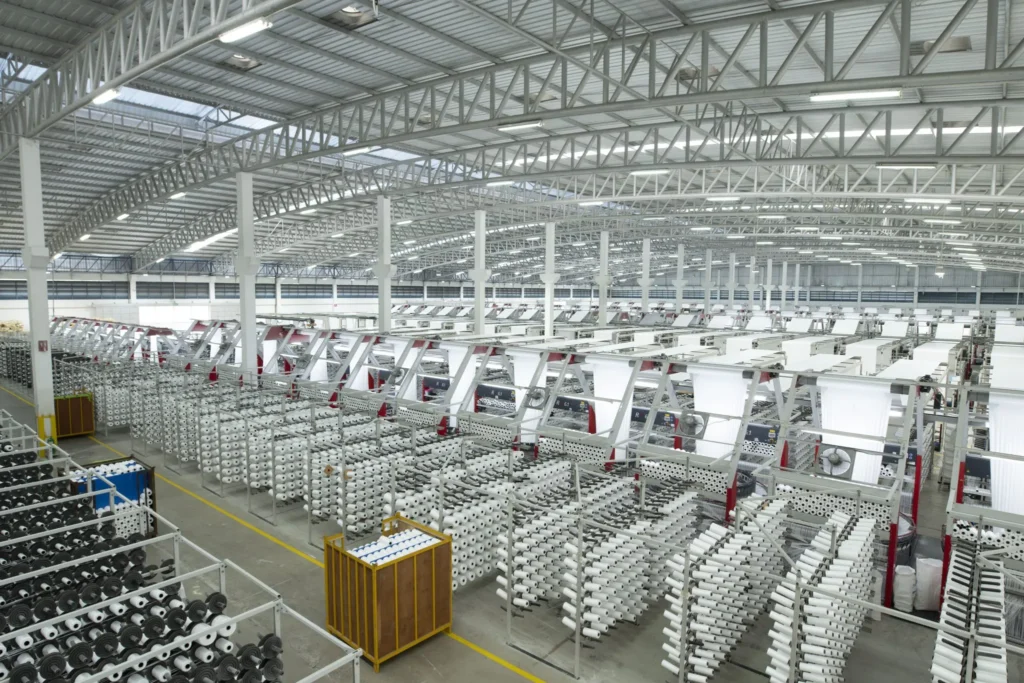
- What Are Polypropylene Woven Bags?
- Material Architecture — What Lies Beneath the Fabric
- Sealing & Mouth Systems — Four Architectures, Four Attitudes
- Testing & Validation — Because Real Life Is Not a Lab Schematic
- Cost, Risk, and Sustainability — The Total Cost of Use Lens
- Applications — From Quarry to Kitchen Shelf
- Specification Table — Typical, Real‑World Ranges
- Closure Selection Matrix — Matching Requirement to Architecture
- Two Worked Examples — Specs You Can Send to Purchasing
- Manufacturing Flow — From Resin to Pallet, With Decisions That Matter
- Risk‑Based Specification — A Short Field Method
- FAQ — Engineers’ Questions, Straight Answers
- Style Note — Why This Matters to Operations and Brand
- Introduction — Why Polypropylene Woven Bags Matter
- What Are Polypropylene Woven Bags? Definitions, Aliases, and Core Traits
- Methodology — A Systems Approach to Polypropylene Woven Bags
- Materials and Constructions — From Tape to Textile
- Process Flow — How Polypropylene Woven Bags Are Made
- Horizontal Thinking — What Other Domains Teach Us
- Vertical Analysis — Layers of Risk, From Product to Pallet
- Closure Systems — Four Ways to Finish the Mouth
- Problem–Solution–Result — Applying the Framework to Polypropylene Woven Bags
- Performance and KPIs — What to Measure and Why
- Specifications Snapshot — Practical Ranges for Polypropylene Woven Bags
- Results — What Buyers and Operators Gain
- Discussion — Trade‑Offs, Trends, and the Road Ahead
- Implementation Roadmap — From Brief to Production
- Learn More — Formats, Use Cases, and Visuals
- References (Selected, Non‑CNC)
What Are Polypropylene Woven Bags?
Polypropylene Woven Bags are robust, lightweight industrial packages engineered from flat, stretched polypropylene (PP) tapes woven into fabric and then converted into sacks. In everyday trade they appear under several aliases—raffia bags, woven PP sacks, block‑bottom woven sacks, BOPP‑laminated PP woven bags, and PP valve sacks—yet the underlying architecture remains the same: oriented polymer tapes interlaced to create a high‑strength textile that can be sewn, taped, or welded into dependable bulk containers. What makes Polypropylene Woven Bags stand out is their balance of strength‑to‑weight, tear resistance along warp and weft, puncture tolerance, and compatibility with fast, automated filling.
Features at a glance. The mechanical profile of Polypropylene Woven Bags is defined by high burst strength (a function of oriented tapes), controlled elongation, excellent seam retention, and a forgiving impact response. Coated versions offer moisture resistance; BOPP‑laminated versions deliver high‑fidelity graphics and surface stiffness; micro‑perforated options permit venting; UV‑stabilized grades endure sun exposure; antiskid treatments aid pallet stability. The result: a package that travels well, stacks cleanly, and arrives intact.
How they are made. The typical manufacturing route for Polypropylene Woven Bags runs as follows: resin pellets → tape extrusion and stretching (to orient molecules and increase tensile properties) → weaving on circular or flat looms → optional extrusion coating or BOPP lamination → printing (flexographic or reverse on BOPP) → cutting and gusseting → forming into open‑mouth or valve formats → mouth closure (sewing, tape‑over‑sew, heat sealing, or hot‑air welding) → inspection, counting, and palletization. Each step shapes the downstream behavior of the bag—strength, sealability, machinability.
Where they are used. Across supply chains, Polypropylene Woven Bags carry cement, dry mortar, white cement, fertilizers, grains, rice, sugar, flour, animal feed, industrial minerals, resins, salt, sand for flood control, and horticulture substrates. If the product is a free‑flowing solid between 5 and 50 kg, there is a strong chance it already rides in Polypropylene Woven Bags.
Curious to explore more formats and examples? See
Polypropylene Woven Bags.
Material Architecture — What Lies Beneath the Fabric
The performance of Polypropylene Woven Bags begins with the tape. Orientation during stretching raises tensile strength and lowers creep; denier selection sets the balance between weight and durability. Fabrics commonly range from 50–120 g/m² and meshes of 8×8 to 12×12, though specialized applications venture outside this band.
- Coated vs. uncoated. Coated Polypropylene Woven Bags gain moisture resistance and weldability through a thin PP/PE layer (~17–30 g/m²). Uncoated versions breathe better, useful for grains or rice where condensation is a risk.
- BOPP lamination. Laminated Polypropylene Woven Bags add a printed BOPP film for premium graphics and surface rigidity that helps automatic bag handling. Reverse printing beneath BOPP protects artwork against scuffing.
- Inner liners. Where hygiene, odor, or moisture control is essential, Polypropylene Woven Bags may include LDPE/LLDPE liners—often around 50 ±10 µm for 25 kg formats—sealed internally before the outer mouth is stitched or taped.
- Additives and stabilizers. UV packages (e.g., 200–1600 h programs) protect outdoor‑stored goods. Slip/antiskid treatments tune friction for pallet stability. Antistatic/anti‑dust measures are specified for powders that cling or for ATEX‑sensitive sites.
Rhetorical question: what happens when a powder that wicks moisture meets a fabric that loves to breathe? The answer is nuanced—pair uncoated fabric with a liner, or pick coating with micro‑vents. The core message: materials should be tuned to product physics, not the other way around.
Sealing & Mouth Systems — Four Architectures, Four Attitudes
Bags fail in predictable ways: frayed edges, sifting powders, moisture tracking along the seam, bulging stacks. Polypropylene Woven Bags address these risks through four closure archetypes. Each has a distinct cost curve, hygiene profile, and automation path. Consider the quartet below as a toolbox rather than a ladder.
Fold‑Over Stitching (Plain Sew/Hem Sew)
A classic that persists because it works. The mouth is folded by ~20–35 mm, then stitched with a two‑thread chain stitch. The fold spreads stress and tames fray; the seam resists tear‑out.
- Problem → solution → result. Open edges fray and powders can escape through needle holes. Folding and sewing transform a raw textile mouth into a robust hem—simple, quick, economical. The payoff is reliability on manual and semi‑automatic lines.
- Data and practice. Stitch densities around 2.5–4 stitches/cm are typical; conveyors run near the 16–25 m/min range depending on infeed control. For rice and resin pellets, this is often enough.
- When to specify. Granules or low‑dust goods; plants prioritizing speed and minimal consumables. Where you need the lowest unit cost without elaborate CAPEX.
- Limitations. Needle holes remain; ultrafine powders will find them. Moisture can wick along the folded edge.
Parallelism underscores its appeal: plain, proven, price‑friendly.
Fold‑Over Stitching with PE/Woven Tape (Tape‑Over‑Sew)
Take the plain seam; overlay it with sealing tape; sew through both layers. The tape bridges perforations and compresses the fabric edge to reduce sifting.
- Problem → solution → result. Fine powders leak through perforations; the tape forms a continuous bridge so particles cannot. Dust loss drops; mouth cosmetics improve.
- Line behavior. Tape‑sew pedestals operate in the neighborhood of 17–23 m/min effective speed with the right infeed. Easy‑open pull tabs can be integrated for quick tear‑off at end use.
- When to specify. Flour, mineral powders, fertilizers where dust control and appearance matter.
- Trade‑offs. A small increase in material usage (tape) and a touch more complexity than plain sew; in return, fewer leakage claims and cleaner pallets.
By pairing seam compression with a bridge over holes, tape‑over‑sew combines the forgiving fit of stitching with a dash of sealing logic.
Heat‑Sealed Liner + External Sew (Hybrid)
For hygroscopic or odor‑sensitive products, the game changes. The inner liner must be sealed; the outer seam must still carry loads.
- Process rhythm. Dust cleaning → mouth trim → inner liner heat seal (hot bars or hot air) → over‑tape application → external sew. One pass, two barriers.
- Performance arc. Hybrid closures markedly reduce leak rates for ultrafine powders and improve hygiene around the pallet base. On tuned lines, throughput remains close to conventional sewing.
- Use cases. Sugar, detergent powders, additives that pick up moisture or give off odors. The hybrid design keeps open‑mouth flexibility while closing the inner system tightly.
- Considerations. Slightly higher CAPEX and cycle time than tape‑over‑sew alone; requires consistent liner presentation so the seal forms correctly.
Antithesis illustrates the value: air‑tight inside, rugged outside.
Block‑Bottom (Hot‑Air Welded, Valve or Open‑Mouth)
When stack geometry and dust‑tightness rule, welded block‑bottom designs shine. Hot air replaces needles; welds replace perforations; bottoms turn into bricks that stack like masonry.
- Why it wins. No stitch holes; excellent leak control; cube‑efficient stacking. Valve versions pair with rotary packers for very high hourly rates. Open‑mouth block‑bottom formats exist for semi‑automatic lines.
- Numbers that matter. Conversion lines run at high speeds and daily outputs well into the six‑figure bag counts. Filling systems for valve sacks reach thousands of bags per hour on rotary packers, especially with ultrasonic valve sealing.
- Best fits. Cement, dry mortar, fine minerals (TiO₂, CaCO₃) where dust control and pallet stability are paramount.
- What to check. Coating quality for weld consistency; valve sleeve length and material for nozzle fit; monomaterial construction for recycling.
Repetition drives the point home: welded to seal, welded to stack, welded to last.
Testing & Validation — Because Real Life Is Not a Lab Schematic
Polypropylene Woven Bags live on forklifts, conveyors, and trucks; they are dropped, dragged, and stacked. Performance must therefore be proven beyond tensile curves.
- Seam and weld integrity. Sewn closures undergo seam strength tests; stitched hems are checked for tear‑out. Welded block‑bottoms and sealed liners are validated with peel and creep tests; seal temperature and dwell are recorded for traceability.
- Drop and burst. Filled bags are dropped from specified heights (e.g., 0.8–1.2 m) across multiple cycles and orientations. Burst tests probe the weakest path, often the seam or valve area.
- Dusting trials. For powders, vibration and conveyor simulations reveal sifting pathways; tape‑over‑sew or hybrid solutions are tuned accordingly.
- UV and weathering. When outdoor storage is expected, UV exposure programs are used to ensure the fabric and coating resist brittleness over time.
- Pallet stability. Anti‑slip finishes and block‑bottom forms are checked through stack tests and transport vibration simulations.
In short: verify what you expect, then test what you fear.
Cost, Risk, and Sustainability — The Total Cost of Use Lens
Price per bag matters, but so do leakage claims, rework, line labor, and pallet cube. Polypropylene Woven Bags shine when you model total cost of use.
- Material bill. Plain sew is the leanest; tape‑over‑sew adds tape and a cut; hybrid adds inner sealing energy/time; welded block‑bottoms command a conversion premium but can cut losses downstream.
- OEE and line speed. Sewing heads enable high throughput with minimal footprint. Hybrid stations keep pace if the infeed and liner handling are stable. Block‑bottoms shift complexity off‑line (conversion) but unlock higher speeds on valve filling.
- Damage vs. durability. If a small price difference eliminates dust claims, pays for itself in reduced cleanup, and improves brand perception, it is a false economy to stay with the cheapest closure.
- Monomaterial logic. With PP fabric, PP coating, PP valve film, and woven PP over‑tape, recyclability improves. Avoid paper crepe tape if your downstream recycling prefers single‑polymer streams.
Sustainability is not a slogan here; it is a design constraint and a cost lever.
Applications — From Quarry to Kitchen Shelf
Versatility explains the market penetration of Polypropylene Woven Bags. Consider the span: cement that demands high stack stability; fertilizer that must resist caking; grains and rice that need breathability; sugar that requires hygiene; flour that tests dust‑tightness; animal feed that endures rough handling; industrial minerals that abrade; resins that are slick and heavy; salt that wicks moisture; sand that fills quickly for flood barriers; horticulture substrates that prefer venting. One architecture, many worlds.
Case vignette—contrast at work: A 25 kg fragrant rice in humid conditions benefits from uncoated fabric with micro‑perforations and a tape‑over‑sew mouth to balance breathability and cleanliness. A 50 kg cement in an arid region thrives in a welded block‑bottom valve sack; it fills fast, stacks square, and leaks little. Same family of Polypropylene Woven Bags; different personalities.
Specification Table — Typical, Real‑World Ranges
The following table consolidates practical ranges often requested for Polypropylene Woven Bags. Values are indicative and should be tuned to product risk, logistics, and regulatory context.
| Item | Typical Range / Option | Notes |
|---|---|---|
| Capacity | 5–50 kg (common: 10, 20, 25, 40, 50 kg) | Custom sizes upon request |
| Fabric mesh | 8×8 to 12×12 | Warp × weft |
| Fabric GSM | 50–120 g/m² | Cement often 60–70 g/m²; food/feed 65–90 g/m² |
| Denier | 600D–1000D | Higher for heavy‑duty |
| Coating weight | ~17–30 g/m² | Barrier & weldability |
| BOPP film | 10–21 µm | Reverse‑printed |
| UV stabilization | 200–1600 h programs | For outdoor exposure |
| Inner liner | 50 ±10 µm typical | Food/chemical 25 kg; thicker available |
| Printing | Up to 8 colors flexo / BOPP high‑res | Corona pre‑treat |
| Mouth prep | Cold‑cut; hemmed; heat‑cut | Reduce fray |
| Closures | Fold‑over stitch; Tape‑over‑sew; Hybrid (liner seal + sew); Block‑bottom welded | Select per application |
| Valve options | Internal/external; film or fabric | Rotary packer compatible |
Closure Selection Matrix — Matching Requirement to Architecture
Choosing a closure is a risk‑reduction exercise. Map the product’s physics and logistics to the seam technology that neutralizes the dominant failure mode.
| Product / Requirement | Best‑Fit Closure | Why |
|---|---|---|
| Granules/pellets (resin, salt) | Fold‑over stitch | Lowest cost; spillage risk low |
| Fine powders (flour, minerals) | Tape‑over‑sew | Bridges needle holes; reduces dust |
| Hygroscopic / odor‑sensitive (sugar, detergent) with liner | Heat‑sealed liner + tape‑sew | Airtight inner seal + strong outer seam |
| High‑speed powder (cement, dry mortar) | Block‑bottom valve (welded) | Leak‑tight; cube‑efficient; rotary packer compatible |
| Retail‑adjacent graphics | BOPP‑laminated with tape‑over‑sew or welded block bottom | Print quality + clean mouth finish |
Two Worked Examples — Specs You Can Send to Purchasing
A) 25 kg Rice — Tape‑Over‑Sew
- Fabric: 70 g/m², mesh 10×10, UV 200 h (where outdoor handling is likely).
- Finish: micro‑perforated; no internal liner for breathability.
- Print: 6‑color flexo on PP coating; matte varnish optional.
- Mouth: 30 mm double fold; tape‑over‑sew with 60 mm woven PP tape; stitch density ~3.5 stitches/cm.
- QC: Seam strength sampling every 30 minutes; 0.8 m drop test, 5 cycles, various orientations.
- Rationale: Balances breathability (to limit condensation) with dust control during handling.
B) 50 kg Cement — Block‑Bottom Valve (Welded)
- Fabric: 65 g/m² tubular woven PP, coating 20 g/m².
- Conversion: Hot‑air welded block bottom; internal valve sleeve 14–15 cm.
- Graphics: Surface print 2 colors (or BOPP reverse‑print for premium markets).
- Palletization: 5×10 layer pattern; anti‑slip embossing on outer face.
- Filling: Rotary packer interface; optional ultrasonic valve seal.
- Rationale: Brick‑shaped, high stack stability, minimal leakage at high throughput.
Manufacturing Flow — From Resin to Pallet, With Decisions That Matter
Process maps are not just maps; they are menus of choices. In the journey of Polypropylene Woven Bags, each station encodes a trade‑off.
- Tape extrusion & stretching. Resin MFI, draw ratio, and annealing set mechanical baselines. Do you want maximum tensile or a bit more ductility? This is the lever.
- Weaving. Circular looms create tubular fabrics for back‑seam‑free bodies; flat looms make sheet goods for side seams and special forms. Anti‑slip weave patterns can be chosen for pallet friction.
- Coating or BOPP lamination. Extrusion coating favors weldability; BOPP lamination favors graphics and stiffness. Both can be tuned for recyclability with PP‑based layers.
- Printing. Flexo on coating for cost‑effective color; reverse print on BOPP for storefront impact.
- Conversion. Cutting (cold or hot knife), gusseting, perforation, and mouth prep decide how the bag feeds into closers. This is where you pre‑solve seam risks.
- Closing. Pick from the four closure families according to product dustiness, moisture risk, and line speed.
- Quality control. Vision systems for registration, periodic seam/weld tests, drop/burst validations, UV checks where relevant. Record the process window, not just the result.
Rhetorical device—anaphora—underscores the system: measure what you make; document what you measure; improve what you document.
Risk‑Based Specification — A Short Field Method
To specify Polypropylene Woven Bags without over‑ or under‑engineering, break the task into solvable questions:
- What is the failure you refuse to accept? Dust leakage? Pallet collapse? Moisture ingress? Choose the closure and coating that neutralize that failure first.
- Where will the bag live? In humid depots, desert yards, cold warehouses? UV, coating weight, and slip finish follow from geography and storage.
- How will it fill? Manual, net‑weigh, gravity; rotary valve or auger? Mouth geometry and valve spec stem from the filler, not the other way around.
- What must it say? Commodity label or premium shelf appeal? Print system, ink set, and lamination answer this.
This is not guesswork. It is structured curiosity.
FAQ — Engineers’ Questions, Straight Answers
Do we lose recyclability if we use tape‑over‑sew? Not if you choose woven PP over‑tape and PP thread. Keep polymers consistent.
Is a liner always necessary for food? No. Use a liner for hygroscopic or odor‑sensitive goods, or when regulations and customer hygiene programs demand it. For dry grains with respiration, an unlined, micro‑vented configuration can be ideal.
Can welded block‑bottom sacks run on our open‑mouth line? Valve types need valve packers. Open‑mouth block‑bottom is available, but check space and closer compatibility.
What tests make procurement comfortable? Seam strength (sewn), weld peel (welded), drop tests, UV exposure if outdoors, and documented process windows for sealing.
How do we make the bag open easily for the end user? Integrate an easy‑open tear tape or single‑rip thread path; confirm it survives the distribution chain before relying on it for retail.
Style Note — Why This Matters to Operations and Brand
Polypropylene Woven Bags are not just a commodity envelope. They are a visible promise that the product will arrive intact, clean, and ready to use. A stitch out of place becomes dust on a customer’s pallet; a valve sleeve 10 mm short becomes spillage on a rotary packer floor; a mis‑specified UV additive becomes brittle fabric under summer sun. The package is a system, and systems reward attention.
If a single sentence must carry the message: specify Polypropylene Woven Bags by risk, produce them by process capability, and validate them by the abuse they will actually endure.
Introduction — Why Polypropylene Woven Bags Matter
Polypropylene Woven Bags have become the quiet workhorses of bulk packaging: light yet strong, simple yet highly engineered. From grains and fertilizers to construction minerals and resins, their woven architecture delivers a rare combination of tensile strength, puncture resistance, and machinability on fast filling lines. In a world chasing lower waste and higher line efficiency, the question is not whether to use Polypropylene Woven Bags, but how to specify them correctly for the product, the environment, and the supply chain.
What Are Polypropylene Woven Bags? Definitions, Aliases, and Core Traits
At their core, Polypropylene Woven Bags are fabrics made from stretched PP tapes interlaced on circular or flat looms, then converted into sacks by sewing, taping, or hot‑air welding. In trade conversations you will hear raffia bags, woven PP sacks, BOPP‑laminated woven bags, block‑bottom valve sacks, or PP valve bags—different faces of the same technology. Their hallmark traits include high strength‑to‑weight ratio, tear resistance along warp and weft, and compatibility with coatings, laminations, liners, and advanced closures.
Methodology — A Systems Approach to Polypropylene Woven Bags
We frame the selection task using systems thinking. First, define the problem at the point of failure: dust leakage, moisture ingress, pallet instability, or hygiene risk. Next, decompose the bag into sub‑systems: tape/fabric, barrier (coating or liner), mouth/closure, print/graphics, and quality controls. Then, examine interfaces—how a filler spout interacts with a valve sleeve, how a weld responds to coating weight, how micro‑perforation changes moisture dynamics. Finally, synthesize the whole: choose the configuration that removes the dominant failure mode at the lowest total cost of use.
Materials and Constructions — From Tape to Textile
Material choices shape performance. The oriented PP tape determines tensile and creep; fabric mesh (commonly 8×8 to 12×12) and GSM (often 50–120 g/m²) tune weight versus durability. Coatings (~17–30 g/m² of PP/PE) add moisture resistance and weldability; BOPP lamination (10–21 µm) adds premium graphics and stiffness. Where hygiene or shelf‑life is critical, Polypropylene Woven Bags accept LDPE/LLDPE liners around 50 ±10 µm and can be heat‑sealed internally before external sewing. UV packages (e.g., 200–1600 h) extend outdoor life; anti‑slip emboss or weave patterns support stable stacks.
Process Flow — How Polypropylene Woven Bags Are Made
The manufacturing journey follows a logical chain: resin → tape extrusion and stretching → weaving → coating or BOPP lamination → printing (flexo or reverse) → cutting and gusseting → mouth preparation → closure (fold‑over stitch, tape‑over‑sew, hybrid liner‑seal + sew, or welded block‑bottom) → inspection and palletization. Each node is a decision point. Hot‑knife cutting reduces fray; micro‑perforation balances venting with dust control; over‑tape widths (50–70 mm) bridge stitch perforations; hot‑air welding favors monomaterial PP designs that aid recyclability.
Horizontal Thinking — What Other Domains Teach Us
From textiles we borrow the logic of yarn orientation and seam integrity; from flexible packaging we adopt barrier thinking (coat weight, seal windows); from logistics we inherit the language of pallet cube and stack stability. When these worlds converge in Polypropylene Woven Bags, we see why a brick‑like block‑bottom bag behaves differently than a pillow‑shaped open‑mouth sack, and why a 60 g/m² fabric with a 20 g/m² coating can outperform a heavier uncoated fabric in humid depots. Cross‑pollination yields better specifications.
Vertical Analysis — Layers of Risk, From Product to Pallet
Consider risks by depth. At the product layer: particle size, dustiness, hygroscopicity, odor sensitivity. At the packaging layer: fabric GSM, coating or lamination, liner gauge, closure style. At the line layer: filler type, conveyor speed, environmental dust control. At the logistics layer: stacking height, vibration, outdoor exposure. Each layer informs the one above; a hygroscopic powder may demand a liner seal inside and a tape‑over‑sew outside, while a high‑speed cement line leans toward welded block‑bottom valve sacks for leak‑tightness and throughput.
Closure Systems — Four Ways to Finish the Mouth
Fold‑over stitching. The bag mouth is folded (≈20–35 mm) and chain‑stitched. It is quick, economical, and mechanically robust for granules and pellets.
Tape‑over‑sew. A PE or woven PP tape overlays the fold; the needle passes through both, bridging perforations to reduce dust leakage while improving cosmetics and stack cleanliness.
Hybrid liner seal + external sew. The inner PE liner is heat‑sealed, then the outer mouth is taped and sewn. This double barrier supports hygiene, odor control, and leak reduction for fine powders.
Block‑bottom welded (open‑mouth or valve). Hot‑air welding replaces stitching; bottoms form a brick‑like shape. Valve versions pair with rotary packers for very high speeds; open‑mouth versions support semi‑automatic lines. For dust‑critical products, this is often the gold standard.
Problem–Solution–Result — Applying the Framework to Polypropylene Woven Bags
Problem: Flour sifts through stitch holes and soils pallets. Solution: Switch to Polypropylene Woven Bags with tape‑over‑sew or hybrid liner‑seal + sew; tune tape width to 60–70 mm and confirm stitch density around 3–4 stitches/cm. Result: Lower dust claims, cleaner DCs, and reduced housekeeping.
Problem: Moisture wicks into fertilizer during monsoon storage. Solution: Specify coated fabric with a 20–25 g/m² layer and an internal liner around 50 µm; heat‑seal the liner, then tape‑over‑sew the mouth. Result: Reduced caking, improved flow at discharge.
Problem: Pallet instability and bulging in transport for cement. Solution: Adopt block‑bottom welded Polypropylene Woven Bags with valve filling and optional ultrasonic valve sealing. Result: Squarer stacks, fewer topple incidents, and consistent high‑speed filling.
Performance and KPIs — What to Measure and Why
Measure what matters. Seam strength for stitched bags; weld peel strength for welded constructions; drop resistance at 0.8–1.2 m in multiple orientations; dust leakage under vibration; UV aging where outdoor storage is expected; pallet stability with and without stretch‑wrap. For Polypropylene Woven Bags, the best KPI is often total cost of use: material price plus damage, rework, cleanup labor, and transport efficiency. A slightly higher BOM can pay back quickly if leakage claims vanish and pallet cube improves.
Specifications Snapshot — Practical Ranges for Polypropylene Woven Bags
| Parameter | Typical Range / Options | Notes |
|---|---|---|
| Capacity | 5–50 kg (10/20/25/40/50 kg common) | Custom sizes available |
| Fabric GSM | 50–120 g/m² | Duty specific |
| Mesh | 8×8 to 12×12 | Warp × weft |
| Coating | ~17–30 g/m² PP/PE | Barrier + weldability |
| BOPP film | 10–21 µm | Reverse printed |
| Liner | 50 ±10 µm (LDPE/LLDPE) | Food/chemical powders |
| UV | 200–1600 h programs | Outdoor exposure |
| Closures | Fold‑over stitch; Tape‑over‑sew; Hybrid; Block‑bottom welded | Select by risk |
Results — What Buyers and Operators Gain
For procurement, the outcome is predictable cost with fewer surprises: fewer dust complaints, fewer moisture‑related returns, and better brand presentation with clean bags. For operations, Polypropylene Woven Bags mean stable throughput—fewer jams at the closer, better handling on conveyors, and stacks that ride long distances without shifting. For sustainability teams, monomaterial PP paths become realistic when tape‑over‑sew uses woven PP tape and all layers remain PP‑based. The downstream recycling story is stronger when inputs are simpler.
Discussion — Trade‑Offs, Trends, and the Road Ahead
Trade‑offs are honest: sewing is cheap and fast, but welded block‑bottom seals better; liners elevate hygiene but demand sealing control; BOPP adds shelf appeal but may change stiffness and feed behavior. The trend line points to more automation (sensorized closers, ultrasonic valves), smarter materials (recycled‑content PP where allowed), and design for recycling (monomaterial stacks). The constant remains the same: Polypropylene Woven Bags thrive when engineered around the product’s physics and the line’s realities.
Implementation Roadmap — From Brief to Production
Start with a risk register: dust, moisture, stacking, hygiene. Select the closure family that neutralizes the top risk. Fix the fabric GSM and mesh to the handling duty; add coating or BOPP if the environment or branding requires it. Decide on liner use by hygroscopicity and odor sensitivity. Align filler interfaces—mouth width, valve sleeve length, and infeed control. Lock quality checks: seam/weld sampling, drop tests, and UV programs if relevant. Finally, prove it in the field; then document the process window so success scales.
Learn More — Formats, Use Cases, and Visuals
To browse representative styles, conversions, and application notes, see Polypropylene Woven Bags. Use the page as a visual checklist while you finalize specifications with your suppliers.
References (Selected, Non‑CNC)
- ISO 23560:2015 — Packaging — Sacks made from polypropylene woven fabrics — Requirements and test methods.
- FDA 21 CFR 177.1520 — Olefin polymers (polypropylene) for food‑contact applications.
- FSSC 22000 Scheme — Packaging manufacturing scope for hygiene and food safety management.
- Starlinger AD*STAR® technical brochures — Block‑bottom, hot‑air welded woven PP valve bags.
- Statec Binder application notes — Over‑tape sealing and valve‑bag filling systems for woven PP sacks.
- Supplier specifications (Made‑in‑China / Alibaba Global) — Typical ranges for mesh, GSM, BOPP film thickness, UV stabilization, and liner gauges for Polypropylene Woven Bags.