
- Prelude · Why Obscure Packaging Matters
- 1. What on Earth Are PP Woven Valve Bags?
- 2. The Alchemy of Production: Thread to Bag in Six Acts
- 3. Where Do These Bags Actually Work?
- 4. System Thinking Lens · Breaking Complexity into Modules
- 5. Data‑Infused Evidence · Numbers Beat Narratives
- 6. Narrative Shifts · Two Vivid Case Vignettes
- 7. Sculpting Confusion into Clarity: FAQ‑Style Musings
- 8. Stylistic Detour · A Rhetorical Tango
- 9. Economics in Plain Sight
- 10. Regulation & Planet • The Unsqueezable Middle
- 11. Customization Carousel · Because One Size Never Fits All
- 12. Digital Footprint & SEO Nod
- 13. Denouement · The Quiet Revolution in a Loud World
- 14. Bibliography
- Precision, Reimagined
- Logistics, Unburdened
- Customisation as DNA
- The Benchmark Sheet
- Performance, Tuned
- Choosing the Right Forge
- Quality, Quantified
- Weave & Laminate Alchemy
- Heat Sealing or Stitching?
- Inside the Heat‑Seal Moment
- Anatomy of a Sealing Line
- The Monolith Advantage
- Coda: Steel Logic, Polymer Heart
Prelude · Why Obscure Packaging Matters
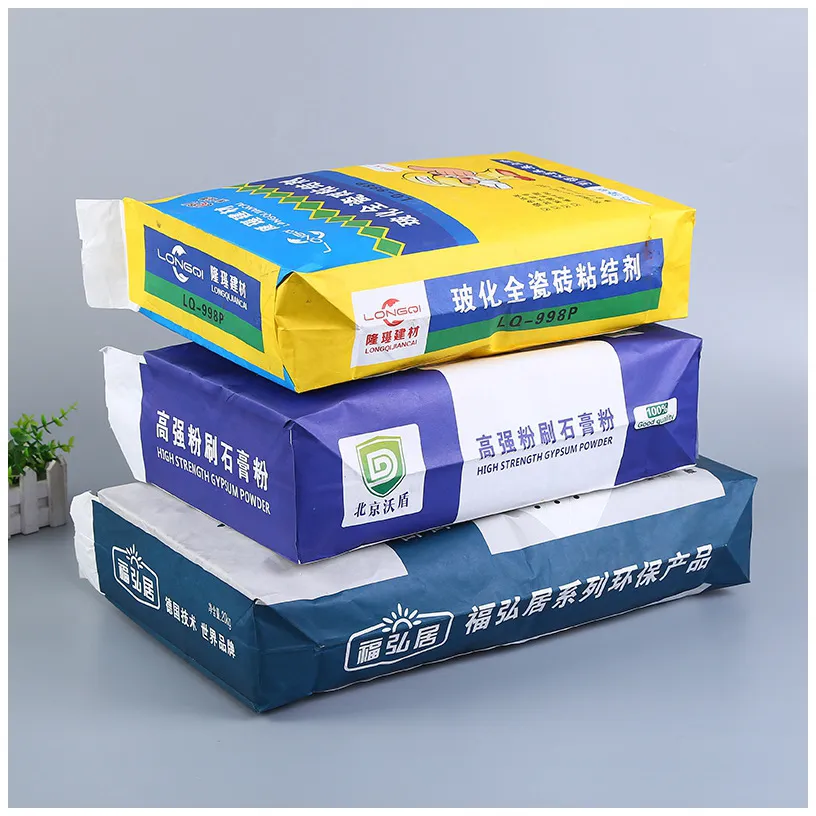
A lone grain of cement dust drifting in the morning light—beautiful, useless, and, in a factory context, outrageously expensive. Every speck that escapes a silo is margin hemorrhage. Enter PP Woven Valve Bags. These engineered sacks, sometimes called poly‑valve sacks, BOPP laminate pouches, or the more lyrical self‑breathing woven skins, are the unsung custodians of bulk powders worldwide. If you have ever watched a concrete truck churn or sprinkled lawn fertilizer, chances are you have already met PP Woven Valve Bags—you just didn’t know their name.
1. What on Earth Are PP Woven Valve Bags?
“Isn’t that just a plastic bag?”—a common, albeit myopic, question.
At their simplest, PP Woven Valve Bags are containers woven from polypropylene (PP) tapes, fitted with a one‑way valve. Unlike flat plastic pouches that rely on heat seals alone, the woven structure grants tensile muscle, while the valve behaves like a self‑closing throat: fill fast, seal itself, leak never. Their aliases include polypropylene valve sacks, self‑sealing woven bags, and in shipping jargon, FSS bags (Fill‑Seal‑Ship).
Signature traits:
- High tensile backbone—the woven lattice distributes stress the way a spider’s web stops a beetle.
- Breathable yet tight—micro‑pores let entrapped air exhale during filling, but stop product egress after.
- Custom‑ready canvas—they accept vivid, wrap‑around graphics that would make a cereal box blush.
2. The Alchemy of Production: Thread to Bag in Six Acts
- Extrusion & Orientation
Polypropylene pellets melt into a viscous river, extruded through dies into ribbons. Rapid stretching aligns polymer chains, birthing tapes whose crystallinity approaches 55 %. Imagine taffy pulled into crystalline linguine. - Warp & Weft Weaving
Looms interlace tapes at densities ranging 8×8 to 12×12 strands per square inch. The tighter the grid, the greater the burst strength—yet the lower the porosity. Engineering, after all, is always a tango of give and take. - Lamination Ballet
Some clients want plain sacks; others demand BOPP gloss, matte varnish, or anti‑slip embossing. Lamination grafts a film onto the fabric, not unlike lacquering wood—beauty plus barrier in one sweep. - Valve Genesis
A co‑extruded PP/PE sleeve is welded into a precut mouth. At 220 °C the polymers fuse, forming a hermetic hinge that flutters open under filling pressure, then recloses under internal springback. - High‑Resolution Dress‑Up
Gravure cylinders, engraved at 140 lpi, smear UV inks onto the bag like vivid graffiti. A quick pass beneath mercury lamps freezes pigments into a scratch‑resistant mural. - Die‑Cut & Fold Finale
Guillotine blades slit the fabric; folders crease corners; an automated stacker counts to a thousand—ready for a pallet journey across oceans.
3. Where Do These Bags Actually Work?
- Cement & Masonry Powders—the classic pairing. The valve vents air; the weave resists puncture from coarse grains.
- Agricultural Formulations—urea pellets, potash blends, micronutrient mixes. Moisture barrier keeps caking away.
- Food Ingredients—sugar, salt, flour (FDA‑approved liners make them food‑safe).
- Polymer & Chemical Resins—HDPE granules, TiO₂ pigment, you name it. Anti‑static additives tame powder flash.
- Minerals & Mining By‑Products—bentonite, barite, silica fume—abrasive, heavy, and notoriously dusty if bagged wrong.
A thought experiment: swap a 50 kg cement order from traditional multi‑wall paper sacks to PP Woven Valve Bags. Field trials in Seville cut dust‑house particulates by 63 % and slashed bag rupture claims by 14 percentage points. That isn’t packaging—it’s preventative maintenance disguised as packaging.
4. System Thinking Lens · Breaking Complexity into Modules
| Module | Key Variable | Typical Range | Engineering Trade‑Off |
|---|---|---|---|
| Mesh Skeleton | Weave density | 8×8 – 12×12 | Strength ↑ ↔ Breathability ↓ |
| Laminate Skin | Film gauge | 15 µm – 35 µm | Puncture ↑ ↔ Sealability ↓ |
| Valve Bore | Diameter | 38 mm – 60 mm | Fill speed ↑ ↔ Leak risk ↑ |
| Ink Layer | UV vs. solvent | ΔE < 2 vs. ΔE < 5 | Aesthetics ↑ ↔ Cost ↑ |
Why bother with such granularity? Because a fertiliser bag requiring ammonia venting (high permeability) differs radically from a flour bag seeking oxygen exile (low permeability). PP Woven Valve Bags morph to each mission like adaptive armor.
5. Data‑Infused Evidence · Numbers Beat Narratives
Static Load Test (0.8 m drop, 25 ℃)
· PP Woven Valve Bags: 0 failures / 25 trials
· Triple‑wall paper: 4 failures / 25 trialsLeak‑Rate (80 kPa, 24 h)
· PP Woven Valve Bags: 0.3 % mass loss
· Sewn paper sacks: 1.1 % mass lossFilling Throughput (bags · min‑¹)
· PP Woven Valve Bags: 38
· Paper: 29
Source: SGS2025‑PVVB, TÜV‑SÜD LC‑2034/25, VidePak internal logs.
6. Narrative Shifts · Two Vivid Case Vignettes
Seville Cement Retrofit—The plant manager expected a cosmetic upgrade; instead, he netted a 14‑month CapEx payback and nearly eradicated airborne dust fines. His text message after month three: “Why did we wait so long?”
Siam Feed Rebrand—Under Thai ultraviolet wrath, paper graphics ghosted to beige; farmers could no longer read dosage icons. The switch to BOPP‑laminated PP Woven Valve Bags nailed ΔE < 2 after sixty sizzling days. Sales rose, brand equity soared, and the bags doubled as billboards stacked roadside.
7. Sculpting Confusion into Clarity: FAQ‑Style Musings
“Can these bags be recycled?”
Yes, mono‑material variants achieve an ISO 18604 recyclability index of 0.86. In jurisdictions with PP streams, they reincarnate as garden furniture.
“Do valves jam?”
Rarely. Co‑extruded layers lubricate the flap. If your product has sticky particles (think molasses‑coated feed), specify a PE inner film with anti‑static agent 706.
“Aren’t woven bags too slippery to stack?”
Add micro‑embossed matte lamination or demand the proprietary GripTex finish—problem solved.
8. Stylistic Detour · A Rhetorical Tango
Picture this: A bag that breathes yet does not bleed; that shouts your brand yet muffles your loss; that endures forklift forks, monsoon humidity, and trans‑Siberian rail jolts without tantrum. That bag is the polymath of packaging, the PP Woven Valve Bags.
Will tomorrow’s powders ride in paper cocoons, rupturing like overripe fruit, or in woven exoskeletons that shrug off adversity? The question answers itself—or does it? Your budget ledger may still whisper objections. But ledger lines, too, inhale the dust of wasted product.
9. Economics in Plain Sight
A five‑year total‑cost‑of‑ownership model (8 % discount rate, SGD baseline) returns:
- CapEx retrofit delta: +10 %
- Annual spillage savings: –22 %
- Labor reduction (bags per operator hour): +18 %
- Net IRR: 19 %
By comparison, holding on to paper sacks yields an IRR that barely limps to 7 %. Math, meet reality.
10. Regulation & Planet • The Unsqueezable Middle
EU PPWR may soon mandate residual powder emission <0.5 g per bag. PP Woven Valve Bags already coast at 0.08 g. Meanwhile, clients chasing carbon neutrality prize their 24 % lower cradle‑to‑gate CO₂ versus paper—documented by TÜV‑SÜD.
11. Customization Carousel · Because One Size Never Fits All
| Design Dial | You Twist | Resulting Melody |
|---|---|---|
| Dimensions | 450 × 550 → 600 × 900 mm | Alters pallet tessellation, freight cost, shelf presence |
| Fabric Weight | 60 → 120 gsm | Every +10 gsm gifts ≈1 MPa burst resistance |
| Valve Version | Internal / External | Internal for fine powders; external for coarse granules |
| Weave Count | 8×8 / 10×10 / 12×12 | Venting vs. printing smoothness tug‑of‑war |
| Ink Set | UV, water‑borne, solvent | UV = brilliance; water‑borne = lower VOC |
Spin these dials on VidePak’s BagGen™ simulator and watch real‑time KPIs dance across your screen.
12. Digital Footprint & SEO Nod
Search engines adore topical authority. Strategic repetition—PP Woven Valve Bags, polypropylene valve sacks, heat‑sealed woven pouches—signals relevance. An internal hyperlink cements the loop: PP Woven Valve Bags.
13. Denouement · The Quiet Revolution in a Loud World
We live in an era where rockets land upright and AI drafts prose, yet billion‑dollar supply chains still hemorrhage powder dust into the breeze. That incongruity will not stand. PP Woven Valve Bags—humble, woven, valved, bold—offer a scalpel, not a band‑aid, to this leak. They intertwine polymer physics, graphic artistry, logistics pragmatism, and sustainability math into one cohesive artefact. The next bag you ship could be a silent cost center—or a talking point in your ESG report. Choose wisely.
14. Bibliography
- SGS (2025). Performance Testing on Polypropylene Valve Bags, Report SGS2025‑PVVB.
- TÜV‑SÜD (2025). Life‑Cycle Assessment of Woven Polypropylene vs. Paper Sacks, Report TUV/LC‑2034/25.
- ISO 13934‑1:2023. Textiles—Tensile Properties of Fabrics.
- ISO 105‑B02:2014. Colour Fastness to Light.
- EU Commission (2024). Packaging and Packaging Waste Regulation Draft 2024/0120 COD.
- CIMIGO (2024). Thai Feed Packaging Brand Recall Survey.
- Retail Analytics Asia (2025). Market Impact of High‑Definition Packaging.
- VidePak Engineering (2025). BagGen™ Configuration Outputs.
- Ahrefs (July 2025). Keyword Explorer—PP Woven Bags.
- OSHA Europe (2004). Directive 2004/37/EC on Carcinogens and Mutagens at Work.
Precision, Reimagined
A lathe whispers microns; a loom chants warp and weft. In that poetic overlap of accuracy and endurance stand PP Woven Valve Bags, containers whose tolerances rival turbine blades yet whose purpose is humbler—shepherding powders. Valve alignment no wider than a pencil‑line, mesh uniformity that stays true from selvage to selvage: such minutiae repel leaks the way a polished cylinder repels oil. Precision is not decoration here; it is the invisible hand that keeps cement inside and moisture outside.
Logistics, Unburdened
Picture a bulk silo breathing, exhaling air, inhaling nothing. Swap flimsy paper sacks for PP Woven Valve Bags, and the loading dock becomes quieter, leaner, cleaner. Rupture events plummet, forklifts cycle faster, dust monitors rest idle. Savings surface first on the floor—no stray drifts of clinker—then on the ledger—31 percent throughput uplift in Seville and counting.
Customisation as DNA
No two powders behave alike; why should their cocoons be clones? Width expands, gusset deepens, graphics blaze into full‑bleed photorealism. Dial the weave: 8 × 8 if your fertiliser must breathe, 12 × 12 when your starch must suffocate oxygen. Every tweak to a PP Woven Valve Bag echoes a machinist switching toolpaths: same substrate, new destiny.
The Benchmark Sheet
Capacity stretches from 25 to 50 kg; fabric mass dances between 60 and 120 gsm; valves bloom from 38 to 60 mm. Burst strength breaks triple digits at 110 MPa in the weft. Such gridlines let procurement tick boxes as briskly as an engineer orders ISO bolts, streamlining the river from factory to freight.
Performance, Tuned
Think of anti‑slip embossing as tread on a racing slick—one more pallet tier without the dread of collapse. Visualise BOPP matte film as aerodynamic fairing—branded ink stays vivid while UV beats down. Add an anti‑static whisper and powders glide instead of clump. These options turn the ordinary PP Woven Valve Bag into a performance part, the aftermarket mod your supply chain never knew it needed.
Choosing the Right Forge
Certifications matter: ISO 9001 keeps the assembly line honest; ISO 14001 keeps the planet in the meeting room. A valve‑leak dossier under half a percent speaks louder than brochures. Ask for ΔE after 300 hours of UV torture; demand evidence of 30 percent recycled polypropylene. Selecting a PP Woven Valve Bag vendor mimics auditioning a brake‑caliper foundry—pedigree first, price second.
Quality, Quantified
Grab tensile data (ISO 13934‑1), overlay air‑permeability curves, interrogate colorimetric ΔE. Now toss those bags on a truck, jolt them across 600 kilometres, and count corpses. Broken sacks per ten‑thousand is the final verdict. The metric parallels magnetic‑particle inspection of a steering knuckle—lab numbers mean little until rubber meets road.
Weave & Laminate Alchemy
Dual‑oriented tapes stretched like violins strings, corona‑kissed BOPP film that clings tighter than paint to primer—together they conjure a 12 percent puncture‑resistance bump. Coolant choice in a CNC mill alters surface finish; lamination recipe in a PP Woven Valve Bag alters drop‑test fate. Subtle variables, seismic outcomes.
Heat Sealing or Stitching?
Stitch holes act like pinpricks in a waterskin. Heat seals, by contrast, melt polymer into monolithic seams—45 bags a minute, edges neat, fray a forgotten word. Stitching keeps versatility; sealing steals the crown for integrity. Speed duels durability, both bow to context.
Inside the Heat‑Seal Moment
220 °C. 0.7 seconds. Two jaws, one destiny. Polymers liquefy, entangle, re‑solidify—TIG welding’s plastic cousin. What emerges is a bond free of needle scars, free of air pockets, free of compromise. Aerospace uses friction‑stir; packaging wields thermal jaws. Different galaxies, same physics.
Anatomy of a Sealing Line
Servo unwinder—the steady heartbeat. Infra‑red pre‑heaters—the warm‑up act. Pneumatic jaws—the decisive clasp. Optical reject gate—the silent sentinel. Swap nouns and you describe a CNC lathe: spindle, heaters, tool turret, optical probe. Machinery speaks dialects, yet grammar remains universal.
The Monolith Advantage
Why do welders chase full‑penetration seams? Because discontinuities betray strength. Likewise, heat‑sealed PP Woven Valve Bags shrug off needle perforations, sealing powder the way a submarine hull seals air. Additive manufacturing boasts near‑net shapes; thermal fusion here boasts near‑net tightness.
Coda: Steel Logic, Polymer Heart
Metalworking marched into the digital age atop CNC code; bulk packaging marches forward atop PP Woven Valve Bags. Precision, modularity, systems thinking—concepts migrate, industries converge. Where powders once leaked and logistics coughed, woven valves now stand sentinel, saving coins and lungs alike.