
The packaging of agricultural products plays a crucial role in ensuring their quality, longevity, and market appeal. Among the various packaging solutions available, Printed BOPP Woven Bags have gained significant traction in recent years. These bags are not only durable and versatile but also offer branding opportunities through high-quality printing. This article explores the application of Printed BOPP Woven Bags in the packaging of various agricultural products, such as flour and rice, while emphasizing their benefits and unique features.
Definition, Scope, and Everyday Reality
In the most practical sense, Printed BOPP Woven Bags are engineered sacks that combine a reverse‑printed biaxially oriented polypropylene film with a woven polypropylene substrate, then convert that laminate into either open‑mouth or valve‑style formats. The fabric carries the loads; the film carries the image; the interface between them carries the promise that artwork will survive forklifts, conveyors, sun, and sweat. In agricultural corridors—grain elevators, seed plants, feed mills, fertilizer depots—this composite bag has become the working dialect of packaging: strong without being heavy, presentable without being fragile, adjustable without being exotic. What looks like a simple sack is in fact a tuned system.
A composite packaging format made by laminating a reverse‑printed BOPP film to woven PP fabric, then converting into fill‑ready bags with sewn or heat‑sealed closures. When we say Printed BOPP Woven Bags, we mean a system of materials, processes, and controls—not a commodity part.
What Are Printed BOPP Woven Bags? Aliases, Use‑Cases, and Why Names Matter
Ask three plants for a quote and you may get five names for the same object. Clarity reduces mistakes. The product at the center of this guide is Printed BOPP Woven Bags. In daily speech, the same format appears under near‑synonyms that can confuse procurement, test plans, or artwork notes. Naming things correctly is not pedantry; it is quality control by another name.
- BOPP‑laminated woven polypropylene bags
- Printed woven PP sacks
- BOPP film laminated PP bags
- BOPP coated woven sacks
- BOPP graphic woven packaging
Different labels, same physics: a woven PP base for strength and puncture resistance; a reverse‑printed BOPP face for graphics, scuff resistance, and added moisture control; a closure that can be sewn (classic and fast) or heat‑sealed (clean and audit‑friendly). In short, Printed BOPP Woven Bags specialize in translating agricultural rough‑and‑tumble into stable pallets and readable brands.
Where They Are Seen
Bulk grains, seed varieties, feed rations, mineral supplements, fertilizers, soil amendments, and agricultural additives. When units of 5–50 kg must move safely and look credible, Printed BOPP Woven Bags are the default.
What They Replace
Uncoated woven sacks (tough but dusty), paper sacks (print‑friendly but tear‑prone), and film‑only bags (beautiful but fragile under bulk handling). Printed BOPP Woven Bags reconcile these trade‑offs.
Why Names Matter
A missed alias can misalign coating weights, seal windows, or barcode zones. Use unambiguous phrases in purchase orders, test plans, and artwork notes.
Material Architecture of Printed BOPP Woven Bags: Resin, Film, Interface, Finish
A bag is not a single material but a conversation among materials. Printed BOPP Woven Bags rely on four voices that must harmonize: woven PP fabric, BOPP film, the tie/coating interface, and the functional finish at seams and mouths. Add a liner only when physics insists. The right construction is the one that outperforms the route with the least mass and the fewest surprises.
1) Woven Polypropylene (Structural Substrate)
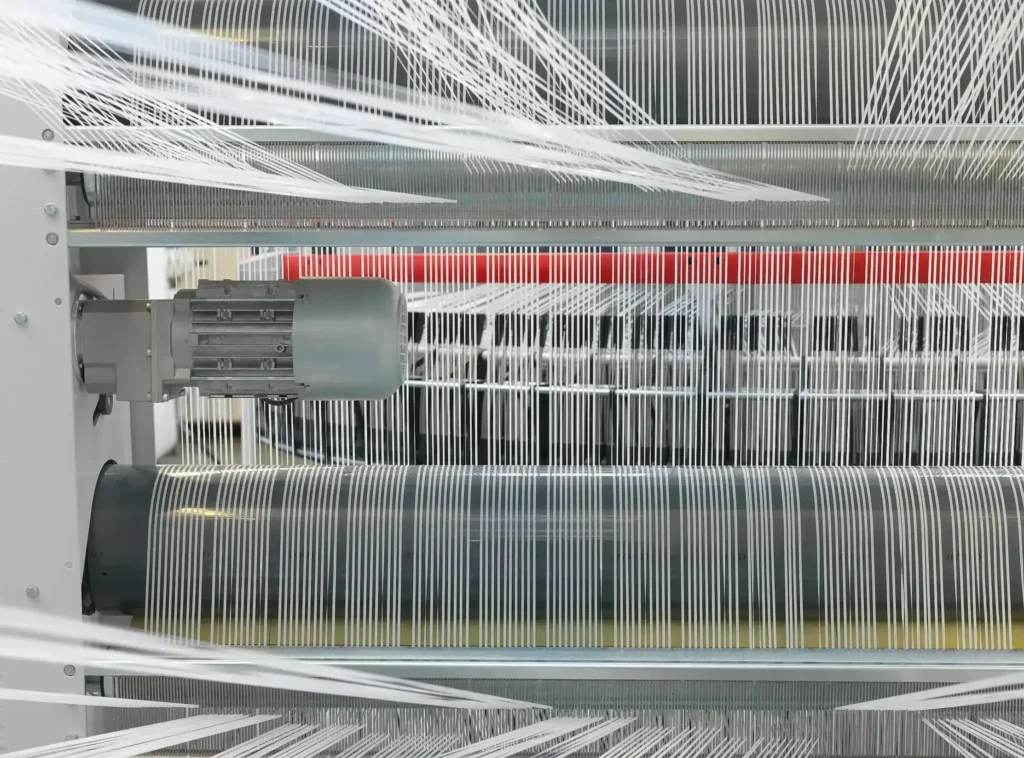
Isotactic polypropylene is extruded as a film, slit into narrow tapes, and drawn to raise tenacity. Those oriented tapes are woven into tubular or flat fabrics on circular or Sulzer‑type looms. The fabric’s GSM, pick density, and tape geometry together set tensile and tear—quiet numbers that loudly determine pallet behavior.
- Properties: high strength‑to‑mass, low specific gravity (~0.9 g/cm³), fatigue resistance, chemical tolerance against salts and fertilizers.
- Cost levers: GSM and loom uptime dominate; grams are cheap compared with claims.
- Where it lives: the backbone beneath the film, carrying the weight and most of the impact shocks.
2) BOPP Film (Graphics, Surface, Supplementary Barrier)
Biaxially oriented polypropylene brings clarity, stiffness, and dimensional stability. Reverse printing traps ink between film and fabric so graphics outlast rubs, weather, and stacking. Corona treatment raises dyne for ink anchorage, preserving data plates and barcode grades longer than direct print on rough fabric ever could.
- Typical thickness: 15–30 μm depending on stiffness and print ambition.
- Trade‑off: better scuff resistance and print holdout vs. potential increase in surface slipperiness; anti‑slip mitigations handle the latter.
3) Tie Layer / Extrusion Coating (Bond and Sealability)
An LDPE/LLDPE or PP coating bonds film to fabric, tunes stiffness, closes pores, and—when extended to the mouth—enables heat‑sealing. Too little and you get delamination; too much and you pay in stiffness and cost. The right weight is the one that passes peel tests and survives the route.
4) Functional Finish (Threads, Tapes, Anti‑Slip, Easy‑Open)
Stitches and tapes close the bag and decide housekeeping at the closer. Anti‑slip stripes put friction where gloss removes it. Easy‑open tear cords replace knives and reduce contamination risks at mills and farms.
5) Optional Liner (Barrier Insurance)
A loose or form‑fit PE liner at 40–80 μm stabilizes moisture and odor for monsoon routes or highly hygroscopic powders. Use when history—not hope—demands it.
Feature Set of Printed BOPP Woven Bags: What the Format Actually Does
Lists are easy; performance is earned. The following features are not marketing ornaments but operational advantages that repeat across plants and seasons. Each feature is a lever; together they form a control panel. The more fluently teams operate that panel, the calmer their pallets—and their mornings—become.
Strength‑to‑Mass
Woven PP fabric gives Printed BOPP Woven Bags tear and puncture resistance far higher than paper or film‑only peers at similar mass. More safety headroom, less resin per unit shipped.
Surface Intelligence
Reverse‑printed BOPP preserves artwork and codes behind a smooth, scuff‑resistant face. Labels survive rubs; scanners see the truth.
Moisture Governance
Coating weights, seal strategies, and optional liners create a ladder of barrier options for hygroscopic powders. Climb only as high as the route demands.
Dust Discipline
Sift‑proof seams and sealed stitch paths cut fugitive dust. Cleaner closers, clearer lungs, happier audits.
Pallet Stability
Anti‑slip stripes or lacquers give glossy film the grip it lacks. Stacks sit square, rides end quiet.
Closure Choice
Sewn for speed and ubiquity, heat‑seal for cleanliness and tamper evidence. Printed BOPP Woven Bags do both; you choose.
If pallets slide only on plastic decks, you do not have a fabric problem; you have a friction problem. Specify COF or stripe anti‑slip; avoid redesigning what already works.
From Resin to Pallet: The Production Process for Printed BOPP Woven Bags
Quality is not a final exam; it is a series of quizzes. Every step that turns resin into Printed BOPP Woven Bags is an opportunity to create stability—or sabotage it. The path below is more than a sequence; it is a control philosophy.
Front‑End — Raw Materials and Verification
- Resins: PP for tapes (define melt flow for drawing), LDPE/LLDPE or PP for coatings (define seal curves). Verify COAs, odor, contamination.
- BOPP film: thickness and corona level chosen for reverse print fidelity; confirm dyne retention after storage.
- Masterbatches: UV packages for sun exposure; antistatic for fine powders; high‑contrast pigments for readability.
- Threads and tapes: tensile, elongation, adhesive bond on the actual laminate; alignment for sift‑proof seams.
- Compliance: food/feed declarations where relevant; low‑odor ink/adhesive systems.
Conversion — Making the Laminate, Forming the Bag
- Tape extrusion & drawing → control width, thickness, tenacity, elongation with SPC; wind packages for long loom runs.
- Weaving → hit GSM and pick density; balance edge and center tension to minimize curl.
- Film printing → reverse print with registration discipline; verify rub and barcode grade after simulated handling.
- Coating & lamination → set die gap, nip, and speed; measure adhesion, g/m², and curl; treat surfaces for ink and label zones.
- Cutting, gusseting, bottom formation → length tolerances, gusset symmetry, double‑chain stitches with sift‑proof tapes; engineer welds on film bodies when specified.
- Mouth configuration → sewn (fast), heat‑sealed (clean). Validate the seal window on the actual laminate stack‑up.
- Finishing → anti‑slip stripes, document pockets, easy‑open cords; bundle and palletize with corner boards.
Back‑End — Quality Control and Release
- Dimensions & mass → cut length, width, GSM, coating weight windows.
- Seam integrity → stitch density and tape alignment; peel tests for heat‑seals.
- Barrier spot checks → WVTR targets by route; dyne levels where labels adhere.
- Handling simulation → drop/impact above nominal mass; COF on exterior; rub testing for print durability.
- Storage discipline → dry, UV‑controlled areas; rotate stock to minimize sun time.
VidePak runs Austrian Starlinger platforms for extrusion, weaving, and coating/lamination, paired with German W&H conversion and print technologies. Narrower process windows—tape tenacity, GSM, coating g/m², cut length, stitch density—translate into calmer lines and steadier yields.
Applications: Where Printed BOPP Woven Bags Shine in Agriculture
Application fit is not accident; it is alignment between physics and format. Printed BOPP Woven Bags are comfortable where rough handling meets identity‑critical inventory.
Seed & Grain
Variety identity, treatment status, and lot traceability depend on labels that stay readable. Laminate faces protect codes and graphics through the season.
Fertilizers & Soil Amendments
Hygroscopic blends need barrier and sift‑proof seams; optional liners guard long, humid routes.
Feed & Mineral Supplements
Abrasion tolerance and pallet stability at high throughput, plus retail‑grade faces when brands meet aisles.
Starches, Meals, Additives
Fine powders favor sealed stitch paths and heat‑sealed mouths; laminate faces keep data plates legible.
Explore adjacent constructions and options in this curated overview of laminated BOPP woven bag solutions.
How VidePak Guarantees Quality: Four Steps That Add Up
Quality assurance is a system, not a slogan. VidePak’s method is simple to say and demanding to do: build to standards, source prime inputs, run proven machines, and layer inspections.
- Build to mainstream standards. Specifications reference ISO/ASTM/EN/JIS families for seam strength, drop/impact, WVTR/barrier, COF, print rub, and seal integrity. Pilot lots mimic worst‑case routes before anything scales.
- Use all‑new raw materials from audited producers. Virgin PP/PE resins, compliant pigments, and UV packages arrive with COAs; identity checks repeat in‑house. Food/feed contexts add migration and odor/taint validation.
- Run best‑in‑class equipment. Austrian Starlinger for extrusion/weaving/coating and German W&H for printing/conversion anchor narrow process windows—tape tenacity, GSM, coating g/m², cut length, stitch density, and seal curves.
- Layer inspections from incoming to finished goods. Incoming checks (resin MFR, masterbatch dispersion), in‑process control (tenacity, GSM, coating g/m², dyne), and finished‑goods tests (drop/impact, seam strength, heat‑seal peel, WVTR spot checks, COF, print rub) catch variance early.
Thinking Through the Topic: A System Map for “Printed BOPP Woven Bags: Their Function in Agricultural Product Packaging”
How do we reason from title to specification without getting lost? Start with a system map, break it into sub‑problems, then integrate solutions. The point is not to sound clever, but to make decisions that stand up in a storm, a heat wave, or a rough shift.
Sub‑Problem A: Moisture & Caking
Humidity turns powders into bricks. Printed BOPP Woven Bags fight this with heavier coatings, sealed stitch paths, and liners when routes prove hostile. Validate with WVTR checks and post‑storage flow tests.
Sub‑Problem B: Dust at Closers
Fast fills, poor venting, and unsealed needle holes create haze. Use extraction, spout fit, crepe/hot‑melt tapes, or heat‑seal mouths on coated builds; measure particulate at speed.
Sub‑Problem C: Pallet Slides
Glossy film lowers COF; plastic decks magnify it. Stripe anti‑slip, tune stack heights, improve deck friction, and standardize fill heights.
Sub‑Problem D: Label & Barcode Survival
Rub, dyne, ink systems, and protective windows decide scannability. Reverse print helps; discipline finishes the job.
Sub‑Problem E: UV Embrittlement
Sun eats polymer at folds and mouths. UV packages, pigment choices, shading, and stock rotation keep bags elastic.
Integration — A Coherent Specification
Translate sub‑solutions into one document: fabric GSM by stack height and abrasiveness; BOPP thickness by graphics and stiffness; coating g/m² by route humidity and seal choice; liner only when caking persists; seam spec with sift‑proof tape or validated heat‑seal curves; exterior COF policy and anti‑slip plan; artwork with protected data plates and barcode zones; QA matrix with drop/impact, seam strength, WVTR, COF, rub, and seal peel; SOPs for filling, closing, palletizing, and storage. That is how Printed BOPP Woven Bags go from idea to inventory that behaves.
Parameter Tables and Reference Builds
Numbers do not replace judgment; they discipline it. Use the following tables as starting lines and move them with evidence.
Reference Build A — Fertilizer Export, Tropical
- 75 g/m² PP fabric + 25 μm BOPP reverse‑printed
- 25 g/m² coating; heat‑sealed mouth; sift‑proof bottom
- Anti‑slip stripes; optional 50 μm PE liner
Reference Build B — Seed & Feed, Retail‑Facing
- 70 g/m² PP fabric + 20 μm BOPP reverse‑printed
- 22 g/m² coating; sewn mouth with easy‑open; protected data window
- Anti‑slip lacquer; barcode grade target ≥ B at ship
Human Factors, Rhetoric, and the Reality Check
Why do good bags fail? Often it is not the bag. It is the moment when a spout does not fit, a seam wanders off center, an extractor is off, or a pallet deck changes without warning. We blame materials; physics blames us. “What is measured is managed” is a cliché because it keeps winning. Measure the few numbers that decide outcomes: GSM, coating g/m², dyne, stitch density, COF, seal peel. Then act quickly when they drift. Prevention costs grams and minutes; failure costs pallets and trust.
- Confirm sealer temperature/pressure/time or sewing SPI and thread spec.
- Check spout fit and bag support; verify extraction airflow at the closer.
- Audit anti‑slip presence on first ten bags; reject rockers with uneven fill height.
Keyword Layout and Natural Variants (Human‑Centric)
Primary phrase used throughout: Printed BOPP Woven Bags. Natural companions that match how professionals search and speak include laminated BOPP woven polypropylene sacks, printed woven PP agriculture bags, moisture‑resistant laminated PP sacks, seed packaging BOPP woven bags, heat‑sealed BOPP woven bags, anti‑slip laminated polypropylene sacks for pallets, food‑grade printed woven polypropylene packaging, UV‑stabilized BOPP woven bags, sift‑proof laminated woven sacks. The goal is clarity for humans first, discoverability by consequence.
October 20, 2025
Overview of Printed BOPP Woven Bags
Printed BOPP Woven Bags are made from Biaxially Oriented Polypropylene (BOPP), a material known for its exceptional strength, durability, and resistance to moisture. The BOPP film is woven into a bag that can be printed with vibrant graphics and branding information, making it an attractive packaging solution for a wide range of agricultural products.
- Durability: BOPP material is highly resistant to tearing and puncturing, making it suitable for packaging heavy or bulky products.
- Moisture Resistance: The water-resistant nature of BOPP helps protect contents from moisture, which is crucial for products like flour and rice that can spoil when exposed to humidity.
- Branding Opportunities: The ability to print high-quality graphics allows producers to enhance their brand visibility and convey essential information about the product.
Applications of Printed BOPP Woven Bags
The versatility of Printed BOPP Woven Bags makes them suitable for various agricultural products. Below are some specific applications where these bags are commonly used:
1. Flour Packaging
Flour is a staple ingredient in many households and is used extensively in baking and cooking. The packaging of flour not only needs to ensure freshness and prevent contamination but also needs to appeal to consumers.
- Protective Barrier: Printed BOPP Woven Bags provide an excellent barrier against moisture, ensuring that the flour remains dry and free from clumps.
- Visibility: The high-quality printing allows for vibrant colors and designs that attract consumer attention on retail shelves.
- Information Display: These bags can accommodate nutritional information, usage instructions, and branding details, aiding consumers in making informed choices.
2. Rice Packaging
Rice, another essential food product, requires effective packaging to maintain its quality throughout its shelf life. The characteristics of Printed BOPP Woven Bags make them ideal for this purpose.
- Strength: The woven structure of BOPP bags can handle the weight of rice without tearing, making them reliable for bulk storage and transport.
- Moisture Protection: The moisture-resistant properties help to preserve the quality of rice, preventing spoilage caused by humidity.
- Customizable Designs: Producers can use printed designs to reflect cultural significance, promote branding, or communicate special qualities, such as organic certification.
Common Features and Benefits
To better understand the advantages of Printed BOPP Woven Bags, let’s summarize their key features and benefits:
| Feature | Description |
|---|---|
| Material Strength | Made from durable BOPP, providing excellent tensile strength and puncture resistance. |
| Moisture Barrier | Effective in preventing moisture ingress, essential for products like flour and rice. |
| High-Quality Printing | Allows for vibrant colors and designs, enhancing brand visibility and consumer appeal. |
| Versatility | Suitable for a wide range of agricultural products, from grains to animal feed. |
| Eco-Friendly Options | Available in recyclable materials, promoting sustainability in packaging. |
| Customization | Producers can customize bag size, shape, and printing to meet specific product needs. |
The Printing Process
The printing process for Printed BOPP Woven Bags typically involves several steps to ensure high-quality results. This process includes:
- Design Creation: Graphic designers create visually appealing designs that incorporate branding elements, colors, and product information.
- Printing: Advanced printing technologies, such as flexographic printing, are employed to transfer the design onto the BOPP film.
- Laminating: In some cases, a layer of lamination is added to enhance the durability of the print and protect it from scratches and moisture.
- Cutting and Sewing: Once printed and laminated, the BOPP material is cut into the desired shape and sewn into bags, ready for filling.
Environmental Considerations
As sustainability becomes increasingly important in the packaging industry, the environmental impact of packaging materials is under scrutiny. Printed BOPP Woven Bags can be produced with eco-friendly practices:
- Recyclability: BOPP is recyclable, and manufacturers can implement recycling programs to encourage consumers to return used bags.
- Reduced Material Usage: The strength of BOPP allows for thinner bags without compromising quality, which can reduce material usage and waste.
Choosing the Right Packaging
When selecting packaging for agricultural products, several factors should be considered:
- Product Characteristics: The nature of the product (moisture sensitivity, weight, etc.) will influence the choice of packaging material.
- Shelf Life Requirements: Packaging must provide the necessary barrier properties to maintain the product’s quality over its intended shelf life.
- Market Appeal: Eye-catching designs and informative labeling can help products stand out in a competitive marketplace.
Future Trends in Agricultural Packaging
As consumer preferences evolve, the demand for innovative packaging solutions continues to grow. Future trends in agricultural packaging may include:
- Smart Packaging: Incorporating technology such as QR codes or NFC tags for enhanced consumer interaction and information sharing.
- Sustainable Materials: Increased focus on biodegradable and compostable materials to reduce the environmental footprint.
- Customizable Solutions: Tailored packaging solutions that cater to specific consumer needs or product features.
Conclusion
Printed BOPP Woven Bags are transforming the way agricultural products like flour and rice are packaged and marketed. With their durability, moisture resistance, and vibrant printing capabilities, these bags offer an effective solution for producers seeking to enhance their brand visibility while ensuring product quality. As the industry continues to evolve, the role of packaging in the agricultural sector will remain vital, driving innovation and sustainability.
In summary, the versatility and advantages of Printed BOPP Woven Bags position them as a preferred choice for packaging various agricultural products, meeting both consumer demands and industry standards.