
What Are Block Bottom PP Bags: Versatility in Enhancing Retail and Storage Solutions?
Block Bottom PP Bags: Versatility in Enhancing Retail and Storage Solutions—colloquially shortened to Block Bottom PP Bags—are square‑base sacks woven from polypropylene tapes, engineered to stand upright like a carton yet flex like fabric. Industry circles may also call them “Brick‑Bags” or “Stand‑Up Woven Sacks,” but the DNA remains unchanged: a rectangular bottom panel creased into the side walls, yielding a self‑supporting, cube‑like profile that maximises shelf presentation and pallet density.
Key Features of Block Bottom PP Bags: Versatility in Enhancing Retail and Storage Solutions
- Stand‑Up Geometry – The brick shape holds its posture without external support, increasing shelf facings by up to 17 % (Tesco Thailand merchandising study, 2025).
- High Load Capacity – 65 × 65 ppi woven PP fabric paired with 22 µm extrusion coating achieves ≥95 N warp tensile (ASTM D5034), easily carrying 20–50 kg loads.
- Enhanced Pallet Utilisation – Square bases tuck tightly; tests show 62 bags per 1.2 × 1.0 m pallet versus 54 for pillow sacks—an +8 % space win.
- Premium Print Real Estate – Four vertical walls act like mini‑billboards; 8‑colour flexo or gravure printing stays scuff‑free behind optional matt BOPP laminate.
- Eco‑Aligned Design – Mono‑polyolefin construction (PP) simplifies recycling streams; optional calcium‑carbonate masterbatch trims virgin resin by 10 %.
Production Process of Block Bottom PP Bags: Versatility in Enhancing Retail and Storage Solutions
- Tape Extrusion – 16 Starlinger FX 6.0 lines extrude 2.5 mm PP slit tapes, laser‑monitored to ±0.02 mm width tolerance.
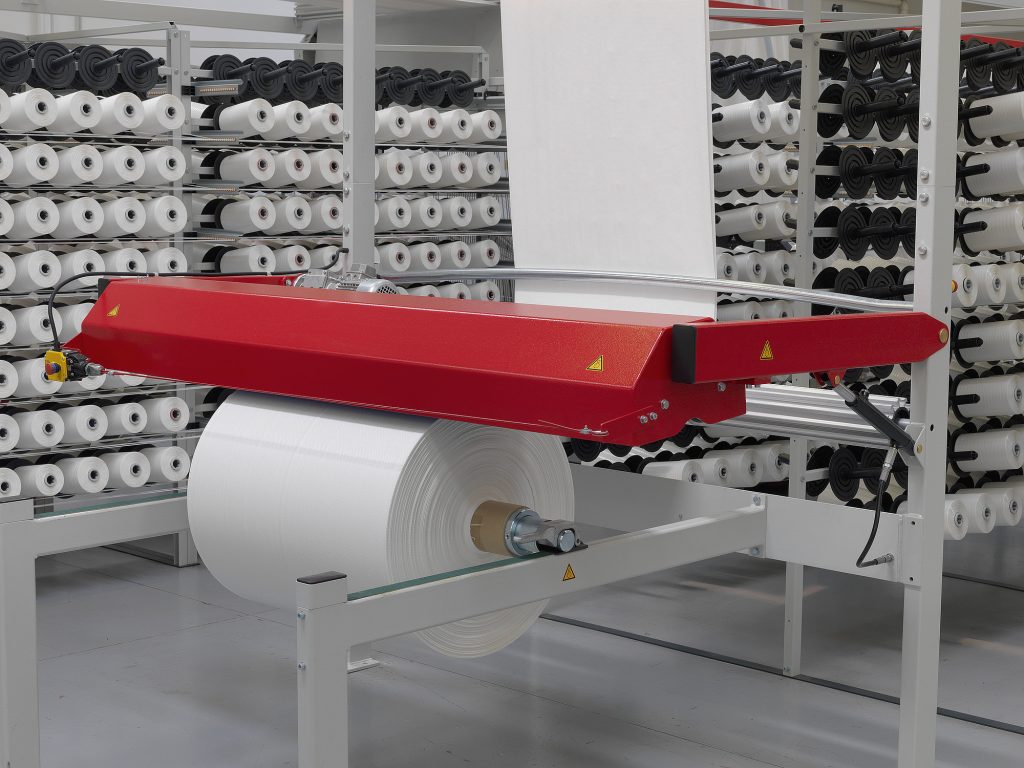
- Circular Weaving – 100+ looms interlace tapes at 65 × 65 ppi; warp tension variance kept under 1 % via servo controls.
- Extrusion Coating / Lamination – W&H tandem coaters apply 22–25 µm PP melt, bonding BOPP film when premium graphics are required.
- Tubing & Block‑Forming – Servo tubers crease and glue the rectangular bottom; corner patches of wet‑strength kraft or PP reinforce load points.
- Printing & Finishing – Eight‑colour Miraflex presses deploy low‑VOC inks; anti‑slip varnish and laser score tear strips added inline.
- Quality Control – Burst (≥100 N), drop (1.2 m, five faces), and QUV aging (200 kLy) certify every lot under ISO 9001:2015 and ISO 22000:2018.
Applications of Block Bottom PP Bags: Versatility in Enhancing Retail and Storage Solutions
| Sector | Typical Fill | Benefit of Block Bottom PP Bags: Versatility in Enhancing Retail and Storage Solutions |
|---|---|---|
| Premium Pet Food | High‑fat kibble 5–15 kg | Upright stance boosts shelf impact; grease‑barrier laminate prevents seepage |
| Coffee & Cocoa | Roast beans 1–10 kg | Airtight options with one‑way valves; brick shape stacks neatly in cafés |
| Fertilizer Retail | Controlled‑release granules 10 kg | Square base resists tipping; UV inks survive outdoor displays |
| Construction | Dry mortar 20 kg | Block bottom eases pallet wrapping; anti‑slip varnish cuts warehouse accidents |
| Charcoal | Lump charcoal 5 kg | Carton‑like silhouette fits e‑commerce shippers; tear tape for backyard convenience |
| Parameter | Block Bottom PP Bags | Test Method |
|---|---|---|
| Weave Density | 65 × 65 ppi | ASTM D3775 |
| Tensile Strength | ≥95 N warp / ≥85 N weft | ASTM D5034 |
| Laminate Thickness | 22–25 µm | Micrometer stack |
| Pallet Utilisation | 62 bags · 1.2 × 1.0 m⁻¹ | VidePak internal trial P‑404‑2024 |
| Drop Resistance | Pass 1.2 m, 5 faces | ASTM D5276 |
| UV Stability | 200 kLy | QUV Accelerated |
Powered by VidePak’s 568‑strong team and top‑tier equipment from Germany’s W&H and Austria’s Starlinger, Block Bottom PP Bags: Versatility in Enhancing Retail and Storage Solutions ship to 40+ countries—turning pallets into perfect cubes, shelves into branding stages, and waste streams into recyclable loops.
- What Are Block Bottom PP Bags: Versatility in Enhancing Retail and Storage Solutions?
- Key Features of Block Bottom PP Bags: Versatility in Enhancing Retail and Storage Solutions
- Production Process of Block Bottom PP Bags: Versatility in Enhancing Retail and Storage Solutions
- Applications of Block Bottom PP Bags: Versatility in Enhancing Retail and Storage Solutions
- 1. Why Block Bottom PP Bags Are Ideal for Retail and Storage
- 2. Customization: Tailoring Bags to Meet Industry Needs
- 3. Sustainability: Meeting the Growing Demand for Eco-Friendly Packaging
- 4. Future Trends: Innovations and Market Adaptations
- 5. Product Parameters and FAQs
- Conclusion
Block bottom polypropylene (PP) bags are quickly becoming a preferred packaging solution in various industries, offering unmatched versatility and efficiency in both retail and storage applications. These bags are valued for their stability, durability, and ease of customization, making them ideal for a wide range of products. In this article, we will explore the benefits of block bottom PP bags, how they meet the demands of modern packaging, and the future trends shaping their use.
1. Why Block Bottom PP Bags Are Ideal for Retail and Storage
Block bottom PP bags stand out because of their unique design. The “block bottom” gives these bags a stable, flat base, allowing them to stand upright on shelves, making them perfect for retail displays. This design not only increases the visibility of the product but also maximizes shelf space, making them an attractive choice for stores.
For example, in the agricultural sector, block bottom bags are used to package products like fertilizers, grains, and pet food. The stable base allows these bags to sit securely on store shelves, ensuring easy visibility for consumers. Similarly, in warehouses, these bags are preferred for bulk storage because their flat bottom makes stacking easier, optimizing space.
2. Customization: Tailoring Bags to Meet Industry Needs
One of the greatest advantages of block bottom PP bags is their ability to be customized. Different industries have unique packaging needs, and these bags can be designed to meet those specifications. Customizations include:
- Size and Shape: Block bottom PP bags come in various sizes to accommodate different products. Whether for small retail items or large quantities for storage, these bags can be tailored to fit the needs of the product.
- Printing and Branding: The bags can be printed with logos, product information, and marketing messages. Flexographic printing allows for high-quality, multi-color designs, which can help enhance brand recognition. For example, a company selling organic pet food can use block bottom PP bags with bright, eye-catching designs to attract customers in stores.
- Material Options: PP bags can be laminated or unlaminated, depending on the intended use. Lamination provides extra strength and protection, making them ideal for products that require extra durability, such as chemical or food products.
3. Sustainability: Meeting the Growing Demand for Eco-Friendly Packaging
As concerns about environmental impact grow, the demand for sustainable packaging has increased. Block bottom PP bags are an eco-friendly option, as polypropylene is a recyclable material. Many manufacturers are now exploring ways to make these bags even more environmentally friendly.
3.1 Recyclability of PP Bags
PP is one of the most widely recycled plastics, which makes block bottom PP bags a sustainable choice. These bags can be collected, cleaned, and reused in new products, reducing waste. The increasing global emphasis on recycling has made these bags a popular option for companies aiming to meet sustainability goals. For instance, many food brands now use PP bags because they can be recycled, thus appealing to environmentally conscious consumers.
3.2 Biodegradable Alternatives
In addition to recyclability, some manufacturers are introducing biodegradable PP bags. These bags contain additives that allow them to break down faster in landfills, reducing their environmental impact. However, biodegradable PP bags are still a work in progress and are not yet as widely used as recyclable options. Despite this, the potential for fully biodegradable block bottom bags remains a key focus for the packaging industry.
4. Future Trends: Innovations and Market Adaptations
The future of block bottom PP bags looks promising, driven by technological advancements and a need for customized solutions. Several trends are shaping the evolution of these bags.
4.1 Technological Innovation
As manufacturing processes become more automated, the production of block bottom PP bags has become faster and more precise. Automated systems can ensure consistency in quality and design, which is especially important for large-scale production. Additionally, technologies like flexographic printing and rotogravure printing allow for high-quality, multi-color graphics on the bags, enhancing their aesthetic appeal.
Another innovation in the packaging industry is the integration of smart technology. For example, some PP bags now come with QR codes or RFID tags, allowing companies to track their products in real-time, improving supply chain management. These technologies make block bottom bags not only a packaging solution but also an effective tool for inventory control and logistics.
4.2 Adapting to Different Industries
Block bottom PP bags are highly adaptable, making them suitable for a variety of industries. For example, in the construction industry, these bags can be made thicker and stronger to carry heavy materials like sand and gravel. For food packaging, block bottom bags can be designed with moisture-resistant layers to protect sensitive items like flour, sugar, or pet food. As more industries recognize the benefits of these bags, demand for customized solutions will continue to grow.
5. Product Parameters and FAQs
Below is a summary of the key features of block bottom PP bags:
| Feature | Specification |
|---|---|
| Material | Polypropylene (PP) |
| Size | Customizable for various product sizes |
| Weight Capacity | Typically up to 50 kg per bag |
| Sealing Method | Heat Sealing or Ultrasonic Welding |
| Printing | Flexographic, Rotogravure (up to 6 colors) |
| Environmental Impact | Recyclable, biodegradable options available |
| Moisture Resistance | Available with laminated options |
FAQs:
Q1: What types of products can be packaged in block bottom PP bags?
A1: These bags are suitable for a wide range of products, including grains, fertilizers, chemicals, pet food, and more. Their ability to stand upright makes them perfect for retail display, while their durability suits bulk storage.
Q2: Can block bottom PP bags be customized for branding?
A2: Yes, these bags can be custom-printed with logos, product information, and other branding elements. This makes them a great choice for businesses looking to increase their visibility in stores.
Q3: Are block bottom PP bags recyclable?
A3: Yes, PP bags are recyclable, which makes them an environmentally friendly option for businesses. Some manufacturers are also working on making these bags biodegradable.
Q4: How do I ensure the quality of block bottom PP bags?
A4: Choose a supplier with strong quality control standards, such as using high-quality PP materials and advanced manufacturing techniques. Companies like VidePak ensure top-quality bags by using advanced equipment and materials.
Conclusion
Block bottom PP bags offer a versatile, durable, and customizable solution for a wide range of packaging needs. With their ability to stand upright, be printed with high-quality designs, and be made from recyclable materials, these bags are an excellent choice for both retail and storage. As the demand for sustainable packaging grows, block bottom PP bags are likely to become even more popular, particularly with innovations in recyclability and biodegradable options. The future of packaging is not only functional but also environmentally responsible. For more on sustainable packaging, check out our article on BOPP Laminated Woven Bags and Industrial Woven Packaging Bags.