
What exactly are Kraft Paper Laminated Woven Bags in fertilizer logistics?
In industrial packaging for agronutrients, Kraft Paper Laminated Woven Bags are composite sacks that combine a paper-facing exterior with a polypropylene (PP) woven fabric core. The paper layer contributes print quality, scuff shielding, and friction for stable stacking; the woven substrate supplies tensile backbone, tear resistance, and shape retention. This hybrid does more than “look like paper” while “behaving like plastic.” It reconciles strength and tactility, moisture moderation and cost control, speed on filling lines and clarity on warehouse shelves. It is a deliberate synthesis for powders and granulates such as urea, NPK blends, DAP/MAP, and potash.
Callout — Why the hybrid matters: paper alone struggles with wet strength; film alone often slips in tall pallets. Marry them, and you gain both message and muscle.
Across regions you will meet near-equivalent terms: paper-laminated PP woven bags, kraft/PP composite sacks, paper-faced woven fertilizer bags, and kraft laminated woven valve bags. Names vary, the architecture remains: a kraft face bonded by a molten polyolefin tie to a PP woven fabric, optionally with a PE liner. One structure, many routes, countless SKUs.
Material architecture and why each layer earns its place
Think in layers, because performance emerges from interfaces. Outward- inward, the canonical stack is: kraft face for print and grip → extrusion tie for bonding and fines blocking → PP woven fabric for structural strength → optional PE liner for moisture defense → product. Change one layer, and every downstream behavior—dusting, barcodes, pallet lean—rebalances. Below, each layer is examined not as a catalog item but as a lever in a system.
Kraft paper (outer face)
Long-fiber kraft offers tear and burst strength, a matte printable field, and tactile friction. It mitigates micro-humidity spikes by briefly absorbing and releasing moisture, which helps protect hygroscopic fertilizers near exposed areas during loading and inspection.
Extrusion tie (bond layer)
A thin molten PP layer bonds paper and fabric without wet adhesives. It raises stiffness, reduces sifting through interstices, and protects graphics from fiber pick-off during abrasion.
PP woven fabric (structural core)
Oriented PP tapes woven into a grid deliver the muscle: tensile load sharing, drop tolerance, and stability under stack compression. Tape denier and weave density tune stiffness and smoothness for lamination.
Optional PE liner (barrier)
A loose or adhered LDPE/LLDPE tube lowers WVTR dramatically for urea and ammonium phosphates. In monsoon routes or coastal storage, minor added mass prevents costly caking claims.
| Layer | Primary function | Typical specification range | Cost and trade-offs |
|---|---|---|---|
| Kraft face | Print field, scuff resistance, pallet friction | 60–100 g/m² (heavier for abrasive crystals) | Matte, legible graphics; heavier grammage raises unit cost but improves appearance retention. |
| Extrusion tie | Bond, fines barrier, stiffness | ~20–40 μm | Too thin risks pick-off; too thick increases mass and reduces breathability. |
| PP woven core | Tensile, tear, stack integrity | 8×8 to 12×12 per inch; 700–1400 denier | Denser weave yields smoother laminate but adds mass and cost. |
| PE liner | Moisture barrier, dust retention | 20–60 μm | Adds materials and steps; pays back where caking or nutrient loss occurs. |
Feature set: from friction to brand blocks, what truly differentiates the hybrid?
Features are not a laundry list; they are interacting forces. The textured kraft surface arrests pallet slippage; the PP framework resists drop energy; the lamination arrests dusting; the liner reins in water vapor. Together they orchestrate handling, compliance, and identity. Consider how each trait plays a double role—safety and marketing, throughput and cleanliness.
- Kraft Paper Laminated Woven Bags exhibit high strength-to-weight, ensuring lower tare mass while protecting 25–50 kg fills.
- Moisture control is tunable: liner thickness and seam strategy determine performance on humid routes.
- Dust and sifting falls sharply thanks to the bonded interface; health, housekeeping, and sensors all benefit.
- Matte print surfaces confer legibility for QR, barcodes, and multilingual data—clarity that survives abrasion.
- Formats span open-mouth, pinch-bottom, and valve—aligning with legacy packers and high-speed lines.
- Optional antistatic pathways and UV packages tailor safety to climate and product behavior.
- Design-for-recycling options can bias toward paper-first or polymer-first recovery systems.
Manufacturing journey: from resin and reels to print-ready sacks
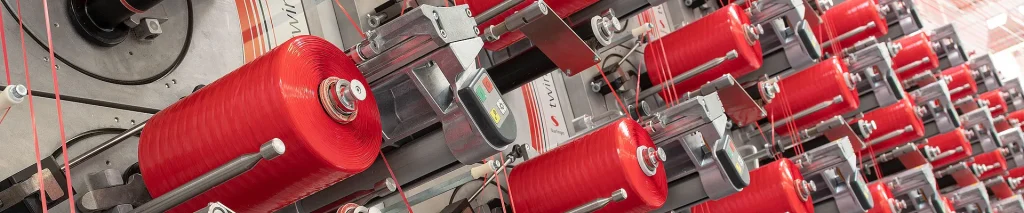
Production unfolds in three arcs—incoming assurance, core conversion, and final release. The goal is not merely to make a bag but to keep variation so tight that sacks from different shifts behave indistinguishably in the field. That demands proven hardware and disciplined testing. VidePak deploys European machinery pedigrees to stabilize process windows and reduce scrap.
Front-end checks verify PP resin MFI, kraft moisture, and ink rheology before any machine starts. Mid-stream controls govern tape draw ratios, fabric density, lamination nip and temperature, print registration, and seam calibration. Back-end release validates dimensions, seam pull, drop resistance, WVTR, and barcode readability using sampling plans that mirror field risk.
Equipment names matter: precision extrusion and weaving from Austria, high-fidelity flexo and extrusion coating from Germany—this is the spine behind repeatability.
Where these bags earn their keep: fertilizer-first, but not fertilizer-only
The canonical use case is fertilizer: NPK grades, urea, DAP/MAP, and potash. Urea invites liners to prevent humidity pickup; phosphates demand dust control and antistatic measures; potash, sharp-edged and abrasive, prefers heavier kraft and reinforced bottoms. Beyond agronomy, the same hybrid helps in seeds, animal feeds, charcoal, industrial minerals, and certain pet food SKUs where paper tactility meets polymer strength.
Quality guardianship: standardize, materialize, mechanize, scrutinize
VidePak structures quality around four verbs: adhere to standards, select virgin inputs, run best-in-class equipment, and enforce layered inspections. That cycle turns promise into proof, and proof into predictable field behavior.
- Build to ISO/ASTM/EN/JIS test regimes for seam, tear, drop, and barrier performance, mapping cadence and acceptance bands into work instructions.
- Source virgin PP/PE from major producers; buy kraft from reputable mills with chain-of-custody; lock nonconforming lots at the gate.
- Operate extrusion, weaving, and flexo systems with narrow tolerances; maintain them preventively to keep capability indices high.
- Layer inspections: incoming, in-process, and final. Sample, chart, react. Keep retain samples for audits and root cause analyses.
From problem trees to unified designs: a systems approach
How do you tame moisture, dust, abuse, and regulation all at once? By decomposing, mapping to levers, recomposing into a bill of materials, and validating with data. The discipline sounds academic; the payoff is practical: fewer claims, straighter pallets, cleaner lines.
- Decomposition: list risks—humidity spikes, fines, forklift impacts, label legibility, route variability.
- Lever mapping: liner thickness, lamination gauge, fabric density, valve geometry, anti-slip varnish, print panels.
- Recomposition: draft a coherent spec (style, grammage, bond, liner, closure, print, safety).
- Validation: run drop and stack tests, WVTR coupons, in-line OEE measurements, and barcode scans; iterate parameters.
A useful heuristic: increase barrier before adding mass. A few microns of liner can outperform tens of grams of paper in monsoon storage.
Comparative lens: how the hybrid stacks against alternatives
Alternatives exist for good reasons—each excels somewhere, falters elsewhere. Rather than asserting an absolute winner, ask: which substrate aligns with your filler, climate, brand posture, and recovery routes?
| Option | Where it shines | Watch-outs |
|---|---|---|
| Multiwall paper | Simple fiber recovery, established print shops | Lower wet strength; often needs liners; edge abuse vulnerability |
| PE FFS tubular film | Ultra-high throughput on automated lines; engineered co-ex barriers | Low surface friction; glossy scuff visibility; equipment investment |
| BOPP laminated woven | Photographic gloss printing; strong face durability | Higher material cost; sometimes slipperier stacks |
| FIBC (1–2 ton) | Bulk logistics; fewer handling units | Not a retail unit; different handling infrastructure |
Filling line choreography: OEE, cleanliness, and the geometry of the valve
Productivity is performance multiplied by cleanliness. A well-matched valve sleeve, a mouth that resists curl, vents that release trapped air without releasing dust—small geometries yield large dividends. On aerated fills, compaction steps settle the product and firm up bag shape so tiers lock neatly.
- Match sleeve inner diameter to spout; mismatches generate dust jets and time loss.
- Use patterned anti-slip varnish zones; keep barcode quiet areas smooth and readable.
- For explosive-sensitive environments, choose antistatic tapes and grounding paths; minimize unnecessary micro-perfs.
Palletization logic: from single bag shape to container-wide stability
Stacks fail not because a single bag is weak but because the ensemble is mis-tuned: COF too low, wrap recipe too tight or too loose, fill variance tilting tiers. Engineer the unit load and the container microclimate together.
Patterns
Brick, column, or pinwheel—pick based on stiffness and rack depth. Test load stability, not just look.
COF tuning
Aim for a face COF that holds tiers yet allows wrap glide. Adjust varnish coverage accordingly.
Climatic routing
For coastal legs, incorporate desiccant, ventilated dunnage, and wrap recipes that discourage sweating.
Information architecture on the bag: compliance without clutter
A compliant sack is a legible sack. The front carries brand and grade; side panels carry composition, instructions, and safety icons; the back hosts agronomy quick starts and contact lines. An elegant hierarchy makes scanning effortless in yards and depots.
Regional orientation: same product, different regimes
Jurisdictions set distinct demands on labeling and end-of-life cues. While the sack does not change its essence, its markings and proofs should adapt. In the European Union, recovery symbols and clarity matter; in North America, state-level fertilizer rules may shape label fields; across Asia-Pacific, monsoon seasonality and bilingual printing drive practical adjustments.
From symptom to root cause: a troubleshooting compass
| Observed issue | Likely root cause | Checkpoint | Corrective action |
|---|---|---|---|
| Seam skips or stitch breaks | Oversized or blunt needle; incorrect tension | Conversion station, needle logs | Reset needle spec; recalibrate tension; add tape cover |
| Delamination or paper pick-off | Low nip pressure; contaminated surface | Lamination temperature/pressure logs | Raise nip; clean rolls; verify corona treatment |
| Barcode scan failures | Low contrast; ink gain; varnish overprint | ΔE reports; anilox selection | Adjust density; change anilox LPI; protect quiet zones |
| Valve leakage and dusting | Sleeve mismatch; short compaction dwell | Valve fit checks; compaction timer | Match sleeve ID; extend compaction; consider internal sleeve |
| WVTR above spec | Liner too thin; over-perforation | Liner gauge; perf map and seals | Increase liner thickness; revise perf density; verify seals |
Cost modeling and why landed cost beats unit price
Budget lines love a cheap bag; operations hate a fragile one. True economics live beyond ex-works price. Track rework, rejects, transport damage, and complaint rates per 10,000 units. Model how grammage, fabric density, liner presence, ink coverage, and varnish areas alter both direct cost and logistics efficiency. The winner keeps total cost low and reputational risk lower still.
Engineer-level answers to recurring questions
Can the sack go mono-paper for easier recovery? Yes, but tear and wet strength decline. Are valve formats always superior? Not always—open-mouth or pinch-bottom may better suit specific seal geometries. How to pick grammage? Start mid-range, go heavier for abrasive crystals or long rail routes. When to specify antistatic? Use a risk matrix: fines content, humidity, and air velocity at fillers. How to fix leaning pallets fast? Raise face COF, adjust pattern, and chase fill variance.
Glossary slices for faster onboarding
WVTR: moisture ingress metric; lower is better. Denier: linear density of tapes. COF: surface slip index. AQL: sampling-based acceptance rule. Pinch-bottom: folded, glued base with strong seals. Valve bag: sleeve-enabled one-way fill design. Draw ratio: stretching multiplier governing tape strength and elongation.
Blueprint trio: ready-to-order spec ideas
A humid coastal urea route benefits from an 80 g/m² kraft face, 30 μm lamination, 10×10 woven fabric, a 40 μm LDPE liner, and a valve sleeve that self-seals—add patterned anti-slip and consider antistatic treatment. Abrasive potash prefers 90 g/m² kraft with scuff-resistant varnish, 35 μm lamination, 11×11 fabric, reinforced bottom, and an open-mouth seam with tape-over. High-speed NPK lines running 25 kg fills often thrive on 70 g/m² kraft, 25 μm lamination, 10×10 fabric, optional 30 μm seasonal liner, and a two-color flexo set with a barcode window.
Maintenance and reliability: quality is a function of uptime discipline
Defects often spike after maintenance. Counterintuitive? Only until you instrument changeovers. Track stitch counts per needle, log anilox and plate cycles, verify lamination lay-flat and nip symmetry after interventions, and demand first-article verification. Stock spares—bearings, heater bands, knives, sleeves—so MTTR shrinks and lines re-enter control sooner.
Digitalization: SPC dashboards and living certificates
Measured is managed. Stream tension, web temperature, seam pull proxies, and print register into visual dashboards. Out-of-control signals should stop the line, not just color a cell. Pair shipments with e-certificates tying raw lots to finished bag IDs. Let a QR on the sack lead to a live data sheet: structure, tests, and handling guidance.
Environmental and social lens: design for outcomes, not optics
True stewardship resists slogans. Choose kraft from mills with credible chain-of-custody. Use water-based inks where performance allows. Reuse edge trims in non-critical contexts. Mark sacks with clear end-of-life cues; in receptive markets, pilot take-back with recyclers. Where separation infrastructure exists, consider delaminatable interfaces so paper and PP streams part cleanly.
Worked example: converting route risk into a resilient spec
A blender shipping 50 kg NPK during monsoon months faces caking complaints. Three trials follow: no-liner with heavier kraft, a 30 μm liner with standard grammage, and a 40 μm liner with pinch-bottom geometry. The third option eliminates caking and improves pallet stability. Added cost? Slight. Net P&L after reduced returns? Positive within one season. The principle repeats: barrier before mass; geometry before cosmetics.
Buyer’s checklist: documents, audits, and a smooth first season
- Finalize drawings and dielines; freeze specs (grammage, lamination, fabric density, liner) under change control.
- Define pass/fail tests: drop height, seam pull, stack days and pressure, WVTR target, barcode scan rate.
- Align on pallet patterns, cornerboards, top caps, and wrap recipes by route.
- Request SPC snapshots and first-article photos; audit QA instruments and retention protocols.
- Run a pilot of one to two pallets; measure reject rates, fill time, dust indices, and scanability.
Related manufacturing insight
To understand how plant layouts and process capabilities shape outcomes for paper-faced woven constructions, see this detailed factory perspective: process design for kraft-faced woven bag manufacturing.
Keyword strategy and semantic coverage
Primary phrase: Kraft Paper Laminated Woven Bags. Complement with long-tail and near-synonyms woven naturally: paper-laminated PP woven bags, kraft/PP composite sacks, paper-faced woven fertilizer bags, laminated woven valve bags, moisture-barrier laminated woven bags, pinch-bottom laminated woven bag, open-mouth paper laminated woven sack, antistatic laminated fertilizer bag. Place terms in headings, early paragraphs, tables, and card captions to reinforce relevance without sounding mechanical.
November 2, 2025
- What exactly are Kraft Paper Laminated Woven Bags in fertilizer logistics?
- Material architecture and why each layer earns its place
- Feature set: from friction to brand blocks, what truly differentiates the hybrid?
- Manufacturing journey: from resin and reels to print-ready sacks
- Where these bags earn their keep: fertilizer-first, but not fertilizer-only
- Quality guardianship: standardize, materialize, mechanize, scrutinize
- From problem trees to unified designs: a systems approach
- Comparative lens: how the hybrid stacks against alternatives
- Filling line choreography: OEE, cleanliness, and the geometry of the valve
- Palletization logic: from single bag shape to container-wide stability
- Information architecture on the bag: compliance without clutter
- Regional orientation: same product, different regimes
- From symptom to root cause: a troubleshooting compass
- Cost modeling and why landed cost beats unit price
- Engineer-level answers to recurring questions
- Glossary slices for faster onboarding
- Blueprint trio: ready-to-order spec ideas
- Maintenance and reliability: quality is a function of uptime discipline
- Digitalization: SPC dashboards and living certificates
- Environmental and social lens: design for outcomes, not optics
- Worked example: converting route risk into a resilient spec
- Buyer’s checklist: documents, audits, and a smooth first season
- Related manufacturing insight
- Keyword strategy and semantic coverage
Scene: A procurement manager, David, consults with VidePak’s technical director, Dr. Li, at a global agricultural expo. Their exchange highlights the unique value of kraft paper laminated woven bags.
David: “Dr. Li, our fertilizer exports to Europe face strict packaging regulations. We need bags that resist moisture, prevent caking, and comply with REACH. What can VidePak offer?”
Dr. Li: “David, you’ve identified the core challenges. VidePak’s kraft paper laminated woven bags combine the breathability of natural fibers with the strength of PP woven fabric, achieving <3% moisture absorption and 50 kg load capacity—all while meeting EU and Japanese chemical migration limits. But their true innovation lies in a century of material science evolution. Let’s explore how we got here…”
David: “How does this design outperform traditional PE-lined bags?”
Dr. Li: “In Nigerian trials, our bags reduced fertilizer caking by 70% compared to polyethylene. The secret? A marriage of mid-20th century textile engineering and modern sustainability. Let me walk you through the journey.”
1. Historical Evolution: From Textile Mills to Sustainable Packaging
1.1 Origins in Industrial Textiles (1930s–1960s)
The concept of laminated woven bags emerged from WWII-era material shortages:
- 1942: British mills developed resin-coated cotton sacks for military supplies, achieving 20% higher tear resistance.
- 1958: DuPont’s polypropylene patents revolutionized synthetic fibers, enabling mass production of woven PP fabrics.
1.2 The Plastic Revolution & Market Diversification (1970s–2000s)
- 1975: First commercial PP woven bags entered the fertilizer market, replacing jute in India’s Green Revolution.
- 1990s: Lamination technologies allowed hybrid designs. A 1997 UNIDO study showed kraft/PP hybrids reduced post-harvest losses by 18% vs. pure plastic.
1.3 China’s Rise & Sustainable Refinement (2010–Present)
- Wenzhou Pioneers: Zhejiang manufacturers like VidePak’s founders leveraged low-cost automation to dominate global markets by 2015, controlling 65% of fertilizer bag production (China Packaging Federation).
- Sustainability Shift: Since 2020, Chinese producers reduced carbon footprints by 40% through recycled PP blends and water-based adhesives.
2. Technical Superiority: Engineering for Fertilizer Challenges
2.1 Material Synergy: Why Kraft + Woven PP Works
| Layer | Function | Key Metrics |
|---|---|---|
| Outer Kraft Paper | UV resistance, printability | 80–100 g/m², pH 7–9 (TAPPI T 205) |
| PP Woven Fabric | Load-bearing (warp/weft tensile ≥35 MPa) | 12×12 to 16×16 strands/inch |
| Lamination Adhesive | Moisture barrier | Peel strength ≥4 N/15mm (ASTM D903) |
Case Study: A Brazilian potash exporter using VidePak’s bags reduced shipping damages from 8% to 1.2%, saving $480K annually.
2.2 Regulatory Compliance: Global Standards Demystified
VidePak’s quality control spans 14 international frameworks:
- EU REACH: Heavy metals <0.01 ppm (tested via ICP-MS)
- Japan JIS Z 1707: Accelerated aging tests simulating 24-month UV exposure
- ISO 9001: Batch-to-batch tensile strength variance ≤2%
3. The Chinese Advantage: Innovation Under Pressure
3.1 Wenzhou’s Manufacturing Legacy
- Cost Efficiency: VidePak’s 100+ circular looms produce 20,000 bags/day at $0.18/unit—35% cheaper than EU counterparts.
- Flexibility: Custom orders (e.g., anti-static coatings for ammonium nitrate) ship in 15 days vs. 45 days for Western competitors.
3.2 Sustainability & Brand Building
- Circular Economy: 30% post-industrial PP recycled content without compromising ASTM D638 tensile standards.
- Digital Traceability: QR codes link to CO2 footprint data, appealing to EU’s CBAM regulations.
4. Product Selection Guide: Matching Bags to Fertilizer Types
| Fertilizer | Bag Specification | VidePak Model |
|---|---|---|
| Urea (Hygroscopic) | 3-layer laminate + silica gel pockets | KPF-350H |
| NPK Granules | 16×16 weave + anti-static coating | KPF-400AS |
| Liquid Fertilizers | PE inner liner + valve spout | KPF-250VL |
5. FAQs: Addressing Buyer Concerns
Q1: How do kraft/PP bags compare to FIBCs for bulk storage?
A: For 500–1,000 kg loads, our FIBC solutions are ideal. Kraft/PP hybrids excel in 25–50 kg retail packaging.
Q2: Can bags withstand monsoon climates during shipping?
A: Yes. Our KPF-350H model maintains <5% moisture absorption after 72h at 95% RH (tested per ASTM E96).
Q3: What’s the MOQ for custom-printed designs?
A: 10,000 units with 8-color HD printing, including Pantone matches. View our customization options.
6. Why Choose VidePak?
Founded in 2008 by CEO Ray Chiang, VidePak combines ancestral Wenzhou craftsmanship with cutting-edge technology:
- Production Scale: 30 lamination machines, 16 extrusion lines, ISO 14001-certified facilities
- Global Reach: $80M annual revenue across 50+ countries
- R&D Investment: 5 patents in sustainable laminates since 2020
For technical specifications or samples, visit VidePak’s Fertilizer Packaging Hub or email info@pp-wovenbags.com.
References
- China Packaging Federation. (2023). Annual Report on Woven Packaging.
- ASTM International Standards (D638, D903, E96)
- EU REACH Regulation (EC) No 1907/2006
- VidePak Company Profile. Accessed via: https://www.pp-wovenbags.com/
- Contact: info@pp-wovenbags.com
Word Count: 1,180