
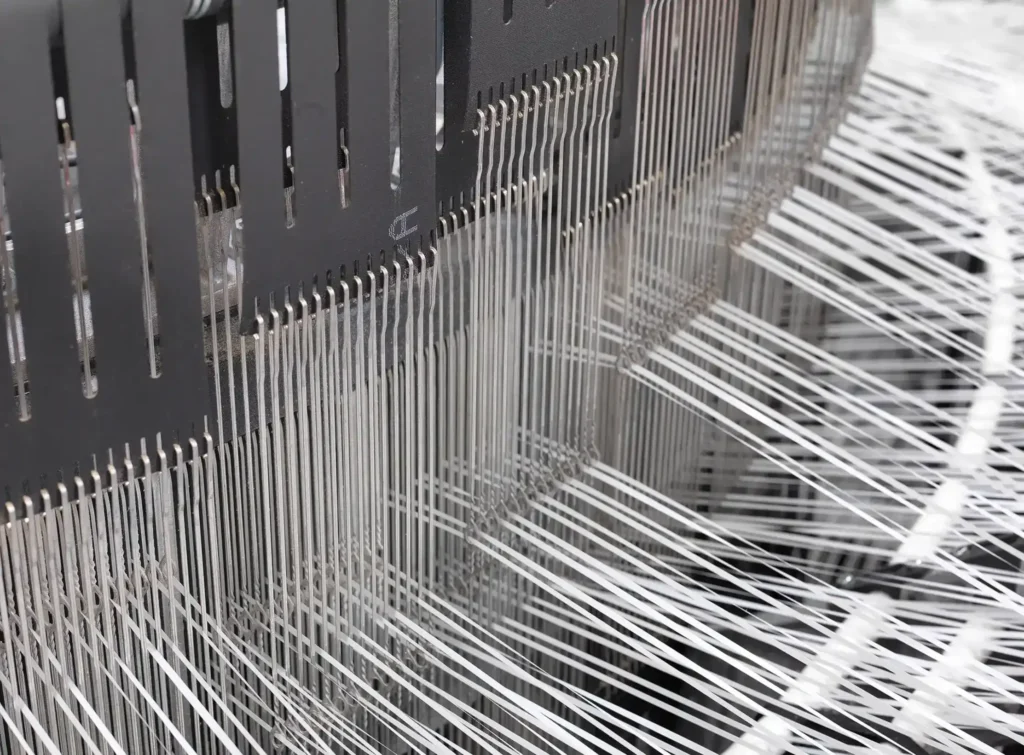
Primary focus: PP Woven Fabric Bags for agriculture — also called PP Woven Sacks, Polypropylene Woven Bags, and Woven Polypropylene Fabric Bags. This article explores materials, features, production, applications, quality systems, and specification practice with a systems lens. It emphasizes VidePak’s use of European equipment (Starlinger, W&H) and embeds practical checklists, cards, and colored tables for fast decision‑making.
What Are PP Woven Fabric Bags?
Agriculture moves mass, but it also moves promises. Grain must arrive clean, seed must preserve germination, feed must resist caking, and labels must remain legible. The container that quietly bears these promises is the humble yet engineered PP Woven Fabric Bags platform: a sack woven from oriented polypropylene tapes, optionally laminated, often lined, and purpose‑shaped for open‑mouth or valve filling. It is strong without being heavy, customizable without being fragile, and economical without being crude. When designed with intent and produced with discipline, PP Woven Fabric Bags turn complex routes into predictable ones.
Terminology shifts across regions and sectors. Buyers and line operators may use alternate labels for the very same structure. For clarity, here is an alias roster for PP Woven Fabric Bags frequently seen in agricultural tenders, mill catalogs, and depot manifests:
- PP Woven Sacks
- Polypropylene Woven Bags
- Woven Polypropylene Fabric Bags
- PP Grain Bags
- PP Rice Bags
Different names; same objective: strong, stackable, customizable packaging for crops, feed, fertilizers, and milled products exposed to rough handling and mixed climates. The beauty of the format is not in novelty but in reliability: it works again and again, from field stations to ports, from silos to storefronts.
Guiding idea: Treat the bag as a system, not a fabric. Structure carries the load, liners govern vapor, laminates protect print and add abrasion resistance, closures police leak paths, and geometry stabilizes pallets. When each element has a target and a tolerance, PP Woven Fabric Bags become predictable rather than hopeful.
The Materials of PP Woven Fabric Bags
From far away, a sack is just fabric and thread. Up close, PP Woven Fabric Bags are composite assemblies where each layer earns its keep with a specific function. What follows maps the component stack, what it is made of, what it does, where it lives, and how it affects cost.
1) Structural substrate — oriented polypropylene fabric
Extruded PP is slit into tapes, drawn for molecular orientation, and woven into a grid that spreads stress. Low density (~0.90 g/cm³) yields strong‑to‑weight efficiency; higher denier and tighter weave improve tear resistance and print flatness. Fabric GSM (e.g., 80–140 g/m²) is the principal mass lever; choose it by bulk density, pallet height, and route roughness.
2) Barrier over‑layer — BOPP lamination (optional but common)
A thin biaxially oriented polypropylene film laminates onto the fabric by extrusion or adhesive methods. It hardens the surface, guards graphics (reverse printing), and shaves water‑vapor ingress. Film gauges around 18–35 µm balance scuff resistance with cost; matte/gloss finishes tune friction for conveyors and pallets.
3) Primary vapor shield — polyethylene liner
A tubular or inserted PE sleeve (LDPE/LLDPE/HDPE blends) lines the woven shell. Thickness steps of 10–20 µm can meaningfully alter WVTR and seal times. Executions include loose inserts, stitched‑in liners, or form‑fit tubes for valve bags. For grain and seed, liners protect flavor, flowability, and germination potential.
4) Additives & surface engineering
UV stabilizers preserve strength in sun‑exposed yards. Anti‑slip packages tune coefficient of friction for safe stacks without choking line speed. Anti‑static systems reduce charge around dust. Color masterbatches organize SKUs and brands by crop, grade, or treatment.
5) Closures & geometry
Stitched tops/bottoms are economical; heat‑sealed edges eliminate needle holes; valve modules accelerate filling and contain dust; block‑bottom forms create brick‑like stacks and generous label real estate. Each decision interacts with the liner plan and route risks.
Procurement tip: Mass and complexity drive cost. Fabric GSM, BOPP thickness, and liner gauge are the primary dials. The right configuration is the lightest one that still meets strength, shelf‑life, and print‑durability targets for your crop and route.
What Are the Features of PP Woven Fabric Bags?
Features matter when they neutralize real risks. The following capabilities of PP Woven Fabric Bags translate directly into fewer claims, safer pallets, cleaner warehouses, and crop quality that stays inside specification.
- Strength‑to‑weight efficiency — Oriented tapes and woven grids resist tears and seam peel at 25–50 kg fills without excess resin mass.
- Tunable vapor control — Pairing liners and laminates lets you set practical WVTR targets for storage windows from weeks to months.
- Abrasion resistance — BOPP skins protect reverse‑printed graphics, maintain barcode readability, and reduce rework from scuffed labels.
- Closure versatility — Stitched, heat‑sealed, or valve configurations match fillers and dust profiles; inner heat seals keep needle holes from becoming moisture paths.
- Pallet stability — Block‑bottom shapes and friction tuning prevent shear and collapse; consistent geometry accelerates stacking.
- Customization at scale — Sizes, colors, QR/lot codes, and multilingual artwork standardize operations across regions while respecting local regulations.
- Sustainability levers — Optimized GSM and mono‑material thinking aid recovery streams where available; durability prevents product waste.
When humidity is high
Favor thicker liners and inner heat seals; manage port dwell with pallet top sheets.
When abrasion dominates
Reverse‑printed BOPP and over‑varnishes preserve graphics through conveyors and rail yards.
When dust control matters
Valve formats and correctly sized liners reduce fugitive fines and improve worker safety.
What Is the Production Process of PP Woven Fabric Bags?
Manufacturing credibility is built upstream, stabilized in process, and proven downstream. VidePak runs precision extrusion, weaving, lamination, printing, and conversion equipment sourced from Austria’s Starlinger and Germany’s W&H. That choice is not ornamental; it narrows tolerance bands, tightens control windows, and shortens the distance between specification and reality.
Upstream — raw‑material selection and verification
- Virgin PP with documented melt‑flow index and low ash; random moisture checks; sieve tests for gels/contaminants.
- LDPE/LLDPE/HDPE blends selected by seal window, density, and WVTR; verify haze and slip for liners.
- BOPP films specified for gauge tolerance, corona level, and COF; audit rolls for optical defects.
- Masterbatches (UV, anti‑static, color) qualified for thermal stability across extrusion and lamination temperatures.
- Inks/adhesives trialed for adhesion and rub resistance prior to long press runs.
Core stages — from tape to fabric
Extrude and quench PP; slit into tapes; draw to orient polymer chains; weave on circular or flat looms to the target GSM and weave density (e.g., 10×10 to 14×14 per inch). Monitor tension and tape quality to suppress weak spots and maintain a flat lamination bed.
Surface & barrier — lamination and graphics
Bond BOPP via extrusion or adhesive lamination; manage nip pressure, melt temperature, and line speed. Reverse‑print artwork under the film; verify registration, color density, and rub resistance; consider over‑varnish for abrasive routes.
Conversion — cutting, liners, closures, geometry
Cut to length; integrate liners (loose, stitched‑in, or form‑fit); shape open‑mouth, valve, block‑bottom, or gusseted forms; choose stitched or heat‑sealed closures. Validate heat‑seal dwell, pressure, and jaw temperature windows on the actual filler.
Downstream — inspection and lot release
Dimensional checks; GSM and weave density control; tensile and seam tests; drop tests at specified heights and orientations; MVTR and seal integrity verification; print rub and barcode readability; full traceability with lot IDs and machine settings.
Equipment advantage: Starlinger looms and W&H converting/printing platforms are engineered for capability, not just capacity. Tighter gauges, cleaner registration, steadier seals — fewer variables left to luck.
What Is the Application of PP Woven Fabric Bags?
Because the format is tunable, PP Woven Fabric Bags span a wide arc of agricultural goods. The goal is not to choose a generic bag but to pick a configuration with a rational link to the crop’s failure modes and the route’s hazards.
| Use case | Dominant risk | Recommended configuration | Notes |
|---|---|---|---|
| Staple grains (rice, wheat, maize) | High bulk density; long inland hauls | Higher‑GSM fabric; block‑bottom; optional BOPP; COF tuned for stacking | Label legibility speeds depot sorting; UV package if outdoor storage likely |
| Flour & milled cereals | Dust and moisture drift | Valve fill; PE liner with inner heat seal; reverse‑printed BOPP | Reduce rebagging by guarding graphics and seals |
| Seeds (field crops, vegetables, oilseeds) | Germination sensitivity to humidity | Medium GSM; PE liner sized for separate inner heat seal; high‑contrast print | Traceability and date codes are critical for returns and audits |
| Animal feed & premixes | Abrasion; odor containment | Robust BOPP; reliable seals; anti‑slip exterior; block‑bottom | Color coding simplifies SKU segregation at busy warehouses |
| Fertilizers & soil amendments | Chemical exposure; rough handling | UV‑stabilized fabric; dense weave; stitched acceptable if long inner liner is sealed | Define drop orientations and acceptance rules up front |
Related resource: Explore compatible multi‑layer architectures that extend shelf‑life and print durability in agricultural routes: advanced multi‑layer woven bag designs.
How VidePak Controls and Guarantees Quality
Quality is not a slogan; it is a stack of deliberate choices. VidePak’s program for PP Woven Fabric Bags rests on four pillars—standards, materials, equipment, and inspection—each reinforcing the others.
- Standards‑aligned production & testing — Operating procedures reference mainstream norms (ISO/ASTM/EN/JIS as applicable). Methods for tensile, seam, drop, print rub, and WVTR are defined, trained, and audited.
- Virgin raw materials from major producers — Virgin PP stabilizes tape draw; certified BOPP and PE resins deliver predictable barrier/sealing. Supplier qualification and incoming verification keep variance from entering the line.
- Best‑in‑class equipment — Starlinger looms and W&H converting/printing systems are chosen for capability and repeatability, not merely throughput. Tighter tolerances produce fewer surprises.
- Layered inspection — Incoming checks → in‑process audits (GSM, gauge, rub, seal dwell) → final lot release on dimensions/strength/barrier → periodic sampling for drift detection.
Callout — Why equipment choice matters
Uniform tape draw. Stable weave geometry. Consistent lamination gauge. Clean print registration. Predictable seals. Each trait is a small story; together, they are the narrative of reliability in PP Woven Fabric Bags.
System Thinking for Agricultural Packaging
One format cannot satisfy every crop. That is not a shortcoming; it is physics. A rational path uses system thinking: decompose the problem into smaller questions, solve each with evidence, then integrate into a spec that a factory can hold and a route can survive.
A. Moisture sensitivity & failure modes
What does excess humidity do—cake flour, dull flavor, depress germination? Set an allowable moisture gain and back‑calculate a WVTR budget; assign most of it to the liner, the rest to laminate and closure integrity.
B. Mechanicals & stacking
Pallet heights, drop orientations, conveyor abrasion—these determine fabric GSM, seam design, and geometry (block‑bottom for stability, gussets for volume utilization).
C. Filling line compatibility
Gravity fillers often prefer valve bags; auger fillers reward tidy inner seals. If stitching remains for economy, extend the liner for a separate inner heat seal.
D. Regulatory & labeling clarity
Food‑contact requirements, barcode scannability, multilingual iconography—protect them with reverse‑printed BOPP and high‑contrast layouts.
E. Sustainability & cost‑to‑serve
Optimize GSM and lamination thickness; favor mono‑material strategies where recovery streams exist; remember that preventing product loss is the biggest sustainability win.
F. Integration & documentation
Freeze drawings, materials, and process windows; align inspection plans with the highest‑impact risks; retain samples for audits.
Technical Parameters and Colored Tables
Numbers anchor decisions. The following tables summarize typical ranges and their practical consequences for PP Woven Fabric Bags. Adapt them to your crop, route, and filler.
Table A — Baseline specification matrix
| Parameter | Typical range | Function | Notes |
|---|---|---|---|
| Fabric GSM | 80–140 g/m² | Load & stack strength | Scale with bulk density and pallet height |
| Weave density | 10×10 to 14×14 / inch | Dimensional stability | Flatter lamination bed; cleaner cuts |
| Tape denier | 600–1200 D | Tensile & seam retention | Inline tensile checks on drawn tape |
| BOPP laminate | 18–35 µm | Scuff resistance; print protection | Reverse printing preferred; topcoat optional |
| PE liner | 50–120 µm | Primary vapor barrier | Step test 10–20 µm increments |
| Electrostatics (if used) | 10^6–10^11 Ω/sq | Dust ignition control | Grounding at fillers is essential |
Table B — Design knobs and consequences
| Design knob | Primary benefit | Secondary effects | Typical trade‑offs |
|---|---|---|---|
| Increase fabric GSM | Higher drop survival | Reduced seam creep; stiffer hand | Adds resin cost and loom time |
| Thicker BOPP film | Better scuff resistance | Minor WVTR gain; shinier finish | Slight cost increase; COF changes |
| Thicker PE liner | Longer shelf‑life | More heat energy/time to seal | Marginal cost increase; line tuning |
| Heat‑sealed closures | Leak path elimination | Cleaner warehouses | Requires sealing hardware & QA |
| Block‑bottom geometry | Stable stacks | More billboard area | Tighter conversion tolerances |
Scenario Cards: Patterns That Travel Well
Patterns simplify repetitive choices. The following cards show common configurations for PP Woven Fabric Bags mapped to route and product realities.
Card 1 — Rice export through humid ports
Fabric ≈120 g/m²; block‑bottom; 30 µm BOPP; 80–100 µm PE liner; valve fill; anti‑slip exterior. Rationale: strength for stacks, barrier for dwell, protection for graphics, and speed on fillers.
Card 2 — Seed distribution with strict viability targets
Medium GSM; reverse‑printed BOPP; PE liner with inner heat seal; QR/lot codes; desiccant in master cartons. Rationale: control WVTR, protect labels, preserve traceability.
Card 3 — Flour to urban bakeries with high cadence
Valve woven bags; robust BOPP; reliable inner seals; block‑bottom near the line. Rationale: dust control, speed, tidy stacks.
Card 4 — Fertilizer blends via rough inland routes
UV‑stabilized fabric; dense weave; stitched closure acceptable with long inner liner seal; anti‑slip exterior. Rationale: resist sun, puncture, and pallet shear.
Implementation Roadmap: From RFQ to First Article
A disciplined launch sequence shortens the journey from trial to success and clarifies responsibility at each gate.
- Define the use case: crop, bulk density, climate, shelf‑life target, regulatory needs.
- Draft a baseline: GSM, weave density, film/liner gauges, closure type, geometry, print layout, traceability marks.
- Pilot on the actual filler: record fill speed, dust, seal time, pallet stability, and label readability.
- Qualify in the lab: tensile, seam, drop, abrasion, WVTR; verify food‑contact and labeling where relevant.
- Freeze the spec: drawings, materials, process windows, acceptance criteria, sampling plans, and corrective‑action playbooks.
- Approve the first article: verify conformance and pack‑out schemes; retain samples.
- Monitor in production: SPC on GSM, lamination gauge, and seal dwell; periodic re‑qualification; feed field observations into CAPA.
Troubleshooting Checklist
Symptoms point to causes; causes point to dials you can turn. Use this table to shorten the path from observation to correction in PP Woven Fabric Bags programs.
| Symptom | Likely cause | Countermeasure |
|---|---|---|
| Caking after port dwell | Thin liner; poor inner seal | Increase liner gauge; enforce inner heat seal; add pallet top sheets |
| Unreadable labels | Surface printing scuffed | Reverse print under BOPP; consider over‑varnish; tune COF |
| Dust around fillers | Valve misfit; short liner; needle holes | Optimize valve geometry; extend liner; shift to heat‑sealed closures |
| Pallet shear/collapse | Low COF; inconsistent bag geometry | Anti‑slip finishes; block‑bottom; standardize stack patterns |
Frequently Asked Questions
- Is BOPP only cosmetic? No. It provides abrasion resistance, shelters reverse‑printed graphics, and contributes incremental barrier performance.
- Do stitched closures still make sense? Yes, particularly for cost‑sensitive SKUs. Use a longer inner liner with a separate heat seal to minimize vapor pathways.
- How do I choose liner thickness? Start with acceptable moisture gain over the storage window, convert to a WVTR budget, then step test 10–20 µm increments while measuring seal times.
- What about recyclability? Where PP/PE streams exist, mono‑material or compatible constructions simplify recovery. The largest sustainability gain remains preventing product loss.
Keyword Strategy: Synonyms and Long‑Tail Phrases
To align search intent with buyer language while keeping prose natural, this article deliberately repeats variations such as PP Woven Fabric Bags, PP Woven Sacks, Polypropylene Woven Bags, Woven Polypropylene Fabric Bags, PP Grain Bags, and PP Rice Bags. Complementary phrases include BOPP laminated woven bags for agriculture, PE‑liner woven sacks for moisture control, valve woven bag for flour mills, block‑bottom woven bag for pallet stability, and anti‑static woven packaging for dusty feed premixes.
2025-10-25
- What Are PP Woven Fabric Bags?
- The Materials of PP Woven Fabric Bags
- What Are the Features of PP Woven Fabric Bags?
- What Is the Production Process of PP Woven Fabric Bags?
- What Is the Application of PP Woven Fabric Bags?
- How VidePak Controls and Guarantees Quality
- System Thinking for Agricultural Packaging
- Technical Parameters and Colored Tables
- Scenario Cards: Patterns That Travel Well
- Implementation Roadmap: From RFQ to First Article
- Troubleshooting Checklist
- Frequently Asked Questions
- Keyword Strategy: Synonyms and Long‑Tail Phrases
In the realm of packaging solutions, PP Woven Fabric Bags have emerged as a cornerstone for industries, particularly in the agricultural sector. Their durability, versatility, and eco-friendliness make them ideal for packaging various agricultural products, such as flour, rice, and other processed goods. This article delves into the one-stop supply of different types of PP Woven sacks and their applications in packaging agricultural products.
Understanding PP Woven Fabric Bags
PP Woven Fabric Bags are made from polypropylene (PP), a thermoplastic polymer that is known for its strength and resistance to moisture. These bags are produced by weaving together strands of polypropylene, resulting in a sturdy and flexible fabric. The manufacturing process involves extrusion, weaving, and sometimes lamination, which adds to the strength and durability of the bags.
One of the key advantages of PP Woven sacks is their ability to be customized for various applications. They can be produced in different sizes, shapes, and colors, making them suitable for a wide range of products. Additionally, these bags can be printed with logos and branding, which enhances their appeal in the marketplace.
Advantages of Using PP Woven Sacks
The use of PP Bags in agricultural packaging offers numerous benefits:
- Strength and Durability: These bags can hold heavy weights without tearing, making them ideal for products like grains and flour.
- Moisture Resistance: The polypropylene material is resistant to moisture, protecting the contents from spoilage.
- Customization: Businesses can tailor the size, color, and printing on the bags to meet their specific needs.
- Eco-Friendly: Being recyclable, Polypropylene Bags contribute to sustainable practices in packaging.
Applications in Agricultural Processing
The application of PP Woven Sacks extends to various agricultural products. Here are some prominent examples:
- Flour Packaging: The strength and moisture resistance of PP Woven bags make them perfect for packaging flour, ensuring it remains fresh and uncontaminated.
- Rice Packaging: These bags can withstand the weight of large quantities of rice while providing adequate ventilation to prevent spoilage.
- Seed Packaging: When storing seeds, the protective qualities of PP Bags ensure that they remain viable for planting.
Product Parameters and Key Insights
The following table summarizes the parameters and key insights regarding PP Woven Fabric Bags:
| Product Type | Material | Weight Capacity | Customization Options | Applications |
|---|---|---|---|---|
| PP Woven Bags | Polypropylene | Up to 50 kg | Size, Color, Print | Flour, Rice, Seeds |
| PP Woven Sacks | Polypropylene | Up to 100 kg | Size, Color, Print | Grains, Animal Feed |
| Polypropylene Bags | Polypropylene | Up to 25 kg | Size, Color, Print | Fertilizers, Pet Food |
Quality Assurance in Manufacturing
At VidePak, quality is paramount. We utilize state-of-the-art equipment from renowned suppliers like Starlinger to ensure our PP Woven Fabric Bags meet international standards. With over 30 years of industry experience, our team emphasizes quality control throughout the manufacturing process, from raw material selection to final product testing.
Sustainability and Future Trends
As global awareness regarding sustainability increases, the demand for eco-friendly packaging solutions grows. PP Woven Sacks are recyclable, making them an attractive option for environmentally-conscious consumers. The shift towards sustainable practices in agriculture calls for innovative packaging solutions that not only protect products but also reduce environmental impact.
The future of PP Woven Fabric Bags looks promising. Innovations in biodegradable materials and advancements in manufacturing technology are expected to enhance their appeal further. Companies that invest in sustainable practices will likely gain a competitive edge in the market.
Conclusion
In conclusion, PP Woven Fabric Bags play a crucial role in agricultural packaging. Their strength, durability, and versatility make them an ideal choice for various products, including flour, rice, and seeds. As the industry evolves, VidePak remains committed to providing high-quality, customizable packaging solutions that meet the needs of our clients. With our advanced manufacturing capabilities and focus on sustainability, we aim to lead the way in the use of PP Woven sacks for agricultural products.
References
- R. G. Bhandari, “The Role of Polypropylene in Sustainable Packaging,” Journal of Polymer Science, 2020.
- L. M. Smith et al., “Performance of Woven Polypropylene Bags in Agricultural Packaging,” International Journal of Agriculture and Biology, 2021.
- T. J. Nguyen, “Innovations in Biodegradable Packaging Solutions,” Packaging Technology and Science, 2022.
This article has highlighted the significant role of PP Woven Fabric Bags in agricultural packaging, emphasizing their benefits and applications in the industry. Through continued innovation and a commitment to quality, companies can ensure they meet the growing demand for effective and sustainable packaging solutions.