
Block bottom valve bags in the wider landscape of industrial packaging
In contemporary bulk packaging, where every pallet position is counted, every dust particle is scrutinised, and every handling step is measured, block bottom valve bags have quietly evolved from a niche solution into a strategic format. They are not only containers but interfaces, not only sacks but structural units within complex logistics systems. When a pallet of cement, fertiliser, resin or pigments arrives at a plant, the customer may see only neat brick like stacks; behind that visual simplicity lies an engineered combination of geometry, material science and process control. Why do so many industries converge on this specific bag geometry? Why does the same rectangular base with a compact valve keep reappearing in cement mills, chemical warehouses and feed plants around the world? The answer is that block bottom valve bags sit at the intersection of product protection, operational efficiency and branding, solving several different problems at once.
At first glance, one might assume that all industrial sacks behave more or less the same. Yet experience on filling lines tells a different story. Open mouth bags require sewing, gusseted sacks may bulge and lean, and tubular film bags can behave like unstable cylinders. In contrast, block bottom valve bags are deliberately engineered to form square, self supporting units that behave like modular bricks rather than soft pillows. This subtle shift in shape and closing method has cascading consequences: it influences de aeration during filling, stability during stacking, dust emissions in the warehouse and even the way forklift operators manoeuvre palletised loads. To understand why this format is gaining ground, it is useful to look closely at what these bags are, how they are built and where their advantages are most significant.
Key idea: block bottom valve bags transform a flexible sack into a quasi rigid unit that aligns with the geometry of pallets, racks and containers, turning packaging from a passive shell into an active structural element of the logistics chain.
What exactly are block bottom valve bags and how are they named
At their core, block bottom valve bags are industrial sacks with a square or rectangular base and an integrated valve opening located in the top or at one corner. The body of the sack is usually made from woven polypropylene fabric, although similar constructions can be achieved with other technical fabrics. The key is the way the bottom is folded and sealed. Instead of a simple pinch or sewn bottom, a set of creases and glued or welded overlaps create a block like base. When the bag is filled, this base opens out, allowing the filled package to sit upright with a stable footprint. The valve opening mates with a filling spout; once the material has been dosed into the bag, the internal pressure of the product, often combined with a sealing step, closes the valve and locks the contents inside.
From the perspective of a packaging engineer, this format offers a clever compromise. The bag remains flexible and lightweight while empty, occupying minimal storage space and flowing easily through automated feeding magazines. Once filled, the same bag behaves like a quasi rigid unit, resisting rolling and collapsing. It is precisely this duality that makes block bottom valve bags so appealing for powders and granules in the ten to fifty kilogram range. They arrive flat, they run fast, they stack well. Few traditional sack styles can match this balance.
In different markets and technical discussions, block bottom valve bags are described with a variety of overlapping names. Engineers, buyers and operators may talk about block bottom bags, block bottom valve sacks, square bottom valve bags, valve woven bags, valve PP bags, PP woven block bottom valve bags or BOPP laminated block bottom valve bags. Each of these labels emphasises a slightly different aspect: the block like bottom, the presence of the valve, the use of woven polypropylene, or the laminated outer film. Yet the underlying concept remains the same: a square profile woven sack with a block style base and a high speed valve filling system.
Typical naming variants for the same concept
- block bottom bags
- block bottom valve sacks
- square bottom valve bags
- valve woven bags
- valve PP bags
- PP woven block bottom valve bags
- BOPP laminated block bottom valve bags
The variety of names is not a sign of confusion but evidence of adoption across different sectors. Cement producers emphasise the valve and the square bottom that keeps pallets stable on rough building sites. Fertiliser suppliers prefer the woven PP description, highlighting strength and moisture resistance. Brand managers in retail oriented channels focus on BOPP laminated block bottom valve bags, framing them as printable mini billboards. In practice, these phrases converge to describe one versatile platform that can be tuned for many applications.
Material architecture of block bottom valve bags
The distinctive behaviour of block bottom valve bags does not come from geometry alone. It is also the result of a layered material architecture that treats the bag as a small engineered system rather than a simple film or sheet. Instead of asking what the bag is made of in a single word, it is more accurate to ask how the structural layer, the surface layer, the valve components, the liners and the adhesives work together. Each part contributes a different function: strength, barrier, friction control, printability, sealability. When these functions are carefully balanced, the result is a bag that is light yet robust, flexible yet dimensionally stable, permeable enough for fast de aeration yet tight enough to protect the product.
Woven polypropylene as structural backbone
Most block bottom valve bags use woven polypropylene fabric as their primary structural layer. Polypropylene granules are melted, extruded into a thin film, slit into tapes and then drawn in a controlled manner so that the polymer chains become oriented. These oriented tapes are woven on circular or flat looms into a fabric with a defined density and weight. Typical fabric weights for valve PP sacks fall in the range of eighty to one hundred thirty grams per square metre, with the exact value tuned according to product density, required drop test performance and planned stacking height.
Choosing the right fabric weight is a balancing act. Heavier fabric increases tensile strength and tear resistance, reduces the risk of splitting during rough handling and allows more aggressive pallet stacking. At the same time, every extra gram adds cost and increases the tare weight that must be transported and eventually discarded or recycled. A well engineered block bottom valve bag therefore uses the lightest woven PP fabric that still maintains comfortable safety margins for its intended use. This is where system level thinking matters: the goal is not simply to build the strongest sack possible but to build one that is strong enough for real conditions while remaining cost efficient and resource efficient.
Woven PP offers a distinctive combination of properties: high tensile strength relative to weight, good resistance to tearing and puncture, low moisture absorption compared with paper, excellent flex durability on conveyors and palletisers, and compatibility with UV stabilisers, slip agents and anti static additives. This is why woven polypropylene has become almost synonymous with modern valve woven bags and many other industrial sack formats.
Surface laminations: BOPP films and kraft paper
The outer surfaces of block bottom valve bags are often engineered independently of the structural fabric. A biaxially oriented polypropylene film can be laminated onto the fabric, creating what the market typically calls BOPP laminated block bottom valve bags. This film, usually in the fifteen to thirty five micron range, delivers several simultaneous benefits. It provides a smoother and more uniform printing surface, it improves moisture barrier, and it allows high resolution graphics that appeal to brand owners and end users. Depending on the formulation, the BOPP surface can be glossy or matte, highly slippery or intentionally roughened with micro textures that increase friction between stacked bags.
In other cases, a layer of kraft paper is laminated on top of the woven PP. The result is a paper faced valve sack that still enjoys the strength of a plastic fabric. Customers who prefer the traditional look and tactile feel of multi wall paper bags often choose this configuration. The paper outer layer accepts conventional printing inks, while the underlying woven PP resists moisture and tearing. For cost sensitive and highly breathable applications, the woven fabric can also be left unlaminated, sometimes combined with a thin coating that suppresses dust without fully sealing the surface.
The decision between BOPP film, paper lamination and uncoated fabric is not merely aesthetic. Each option influences how quickly air escapes during filling, how much friction exists between stacked bags, how the bag behaves in humid climates and how easy it is to recycle or reclaim material at end of life. By adjusting this surface architecture, the same base fabric can be transformed into a highly decorated consumer facing sack, a robust outdoor storage bag or a simple industrial workhorse.
Valve components as precision interfaces
The valve area of block bottom valve bags is a small but critical interface between packaging and machinery. It must open quickly, seal reliably, guide the product flow and accommodate small misalignments without tearing. Typical valve constructions use a lighter PP fabric or polyethylene film as the valve sleeve. Inside, an additional layer of polyethylene may be included to provide a heat sealable or ultrasonic sealable surface. For powders that are sensitive to static electricity or explosion risk, anti static layers or additives may be added.
The best performing block bottom valve sacks manage an elegant compromise: the valve is stiff enough to stay open on the filling spout, flexible enough to collapse when the bag is discharged onto a conveyor, and sealable enough to close into a tight plug. Poorly designed valves, by contrast, can undermine an otherwise sound bag construction. They may leak dust, jam in automated holders or fail to close consistently. This is why valve design is treated as an engineering topic in its own right rather than an afterthought.
Inner liners, coatings and barrier control
Many products that rely on block bottom valve bags are sensitive to moisture, oxygen or cross contamination. Examples include hygroscopic fertilisers, speciality chemicals, food ingredients and pigments whose performance changes when exposed to ambient humidity. For these products, the base woven sack is often combined with a polyethylene liner or with co extruded films that offer enhanced barrier properties. Liners can be loose inserts, shaped inner bags or attached tubes that move with the main fabric during forming and filling.
In less demanding situations, a simple in line coating applied to the woven fabric may be enough to reduce dust migration or improve seal strength at the seams and bottom. Again, the objective is not to create maximum barrier in all cases but to tune barrier performance to the actual shelf life, storage and regulatory needs of the product.
Additives, inks and adhesives as silent contributors
The less visible ingredients in block bottom valve bags are often the ones that protect performance over time. UV stabilisers extend the life of bags stored outdoors. Slip and anti slip agents control the coefficient of friction so that bags stack securely but still move on conveyors. Anti static agents reduce the risk of spark ignition in dusty environments. High bond adhesives hold the block bottom folds together, while solvent based or water based inks carry branding, handling instructions and regulatory icons.
When VidePak designs PP woven block bottom valve bags, these materials are not chosen in isolation. They are treated as a coordinated package. A change in ink may affect lamination bond strength. A different slip level on the BOPP film may require adjustments in pallet wrapping. System thinking is needed to avoid local optimisations that introduce new problems elsewhere in the value chain.
Functional features and performance advantages
The rise of block bottom valve bags across multiple sectors is not accidental. It is driven by a set of features that solve structural, operational, safety and sustainability challenges in a single packaging format. To appreciate these advantages, it is helpful to examine how the bags behave on the pallet, on the filling line, in transport and in the warehouse.
Structural geometry and stackability
The most visible feature of block bottom valve sacks is their square footprint. When the bag is filled, the folded base opens into a rectangular surface that resists the tendency to bulge into a rounded shape. Stacks of these square bottom valve bags resemble neatly arranged bricks rather than a pile of cushions. This geometry allows higher and more stable stacking on pallets and in racking systems. Because the bags stay within the pallet footprint, the risk of edge overhang and accidental tearing during handling is reduced.
This may sound like a minor warehouse detail, yet it has real financial consequences. More stable stacking means fewer damaged bags, less product loss, and less time spent reworking unstable pallets. It also means that freight capacity can be used more efficiently. A truck or container filled with well behaved square bottom valve bags carries more saleable product per trip than one filled with irregular, bulging sacks that require conservative stacking.
Operational performance during filling
On the filling line, block bottom valve bags demonstrate another important advantage: speed with cleanliness. Because the bag is gripped and centred on the filling spout through its valve sleeve, filling cycles are consistent and repeatable. Entrained air can escape through vents in the fabric, through micro perforations or through engineered leak paths in the valve area. The result is a controlled, relatively dust free filling process. Traditional open mouth sacks, particularly when filled with fine powders, tend to generate more dust because the mouth remains open to the surrounding atmosphere during filling and because sewing can disturb the settled product.
A key operational benefit of valve woven bags is that they make high speed filling compatible with good housekeeping. Plants do not have to choose between fast production and clean air; with the right bag design and filling technology, they can achieve both.
Many modern designs rely on self closing valves that are pressed shut by the product mass as the bag is discharged onto a conveyor. Others incorporate heat sealing or ultrasonic sealing steps that close the inner PE layer of the valve. In both cases, sewing yarns and open stitch holes are eliminated. This not only reduces dust emissions but also improves tamper resistance and simplifies downstream processes, because there are no loose threads to interfere with pallet wrapping or bag opening at the customer site.
Protection, safety and compliance
Protection in block bottom valve bags begins with mechanical strength. Woven PP fabric, reinforced corners and robust bottom seams allow the sacks to withstand rough handling, drops and impacts in warehouses and on construction sites. At the same time, laminated surfaces and liners provide barrier against moisture pickup and contamination. For cement, gypsum, fertilisers and many speciality chemicals, small changes in moisture content can lead to caking, loss of flowability or changes in chemical performance. By shielding the product from ambient humidity and dirt, BOPP laminated block bottom valve bags and paper laminated variants help maintain product integrity throughout storage and transport.
Dust control is another crucial safety aspect. Excessive airborne dust can lead to respiratory risk for workers, housekeeping challenges, and even explosive atmospheres in extreme cases. Because block bottom valve sacks enclose the filling spout and can be designed with controlled venting, they significantly reduce the amount of fugitive dust compared with poorly designed bag formats. This supports compliance with stricter workplace exposure limits and environmental regulations.
Branding potential and information density
Although functionality is paramount in heavy duty packaging, appearance and information delivery cannot be ignored. Flat, stiff panels on block bottom valve bags act as miniature billboards. With BOPP laminated surfaces, it is possible to print high definition images, subtle brand colours, matte and gloss contrasts and detailed instructions. For pet food, speciality fertilisers or construction chemicals sold through retail channels, this is not a trivial bonus but a way to differentiate products, support correct use and reduce the risk of error.
Beyond simple logos, the large, flat surfaces of square bottom valve bags accommodate multi language instructions, pictograms, dosage tables and safety icons. Modern designs may also incorporate QR codes or machine readable tags that integrate packaging into digital traceability systems. In this way, the bag becomes a carrier of data as well as material, helping both producers and customers track batches, monitor expiry dates and recall information quickly when needed.
Resource efficiency and sustainability
Discussions about industrial packaging inevitably touch on resource efficiency. Well engineered block bottom valve bags can support sustainability goals in several ways. First, the woven construction makes efficient use of polymer: oriented tapes provide high strength at relatively low material usage compared with thick blown films. Second, the low damage rate associated with stable pallets and robust seams means that less product is wasted due to broken sacks, which often has a greater environmental footprint than the packaging itself.
Third, single polymer constructions, particularly all PP structures, are easier to recycle than multi material composites. Where regulations and performance requirements allow, recycled content can be introduced into liners or outer fabrics without compromising safety. Finally, the ability to print clear instructions and safety information helps end users handle and dispose of packaging more responsibly.
From resin to sack: process engineering behind block bottom valve bags
The apparent simplicity of block bottom valve bags masks a sophisticated production process. Quality does not emerge spontaneously at the end of the converting line; it is built step by step, starting with resin selection and extending through extrusion, weaving, lamination, printing, tube forming, valve insertion, block bottom folding and final inspection. VidePak organises this chain into three broad stages: raw material selection and testing, precision manufacturing using advanced equipment and post production quality assurance.
Defining requirements and selecting raw materials
Every project begins with a simple but demanding question: what must the block bottom valve bag actually do in real life? The answer includes product type, particle size, bulk density, filling temperature, required shelf life, maximum stacking height, climate conditions and regulatory constraints. From this starting point, engineers specify resin grades, fabric GSM, weave density, lamination type, valve structure and any liners or special treatments.
Polypropylene and polyethylene resins are sourced from established producers with reliable quality documentation. Each lot is checked for melt flow index, contamination and basic mechanical performance before release. BOPP films, kraft papers, adhesives and inks undergo similar checks for thickness, surface tension and compatibility. Additives and masterbatches are tested for consistent dispersion. Trial runs on pilot equipment allow VidePak to validate that the chosen raw materials can achieve the desired combination of strength, de aeration and print quality.
Extrusion, weaving and lamination on Starlinger and W&H platforms
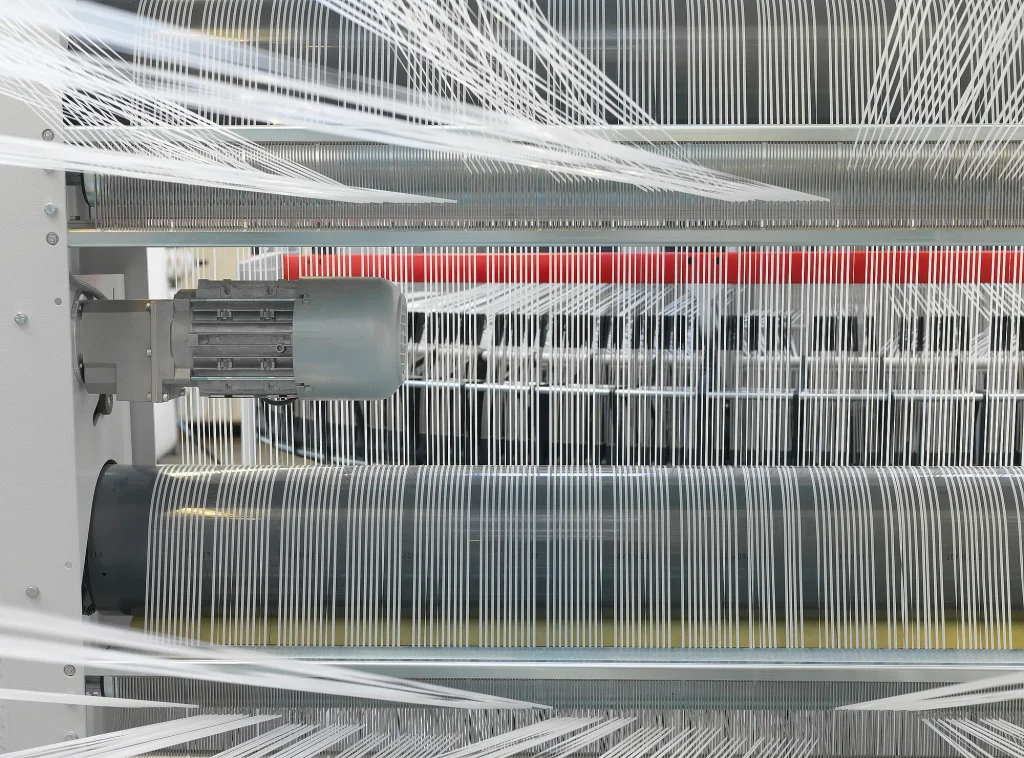
Once raw materials are approved, they move into the heart of the process. VidePak relies on Austrian Starlinger equipment for tape extrusion and weaving and on German W and H technology for film conversion and printing. Starlinger extruders melt the polypropylene, form a thin film, cool it rapidly, slit it into tapes and draw these tapes to achieve the targeted tenacity and elongation. The resulting tapes are woven on circular or flat looms, where tension, picks per inch and fabric width are tightly controlled.
For BOPP laminated block bottom valve bags or paper laminated variants, lamination lines bond the films or papers to the woven fabrics. Adhesive coat weight, drying conditions and nip pressure are monitored to avoid wrinkles, bubbles or weak bonds. The goal is to create a composite material that behaves as one unified sheet under mechanical stress while still delivering the printing and barrier benefits of the outer layer.
Printing, tube forming and block bottom creation
Printed fabric for block bottom valve bags passes through wide web flexographic or gravure presses, often based on W and H designs. Here, artwork, safety markings and data matrices are applied with careful control of register and colour. Any misalignment that might seem small on a single bag becomes dramatically visible when hundreds of filled bags are stacked on a pallet; precise printing is therefore both a branding and a quality requirement.
After printing, the fabric is formed into tubes, and valve elements are inserted. Depending on the design, the valve may be located in the top corner or centred on the top panel. Hot air welding, ultrasonic welding or high bond adhesives secure the valve sleeve. Next, dedicated forming machines create the block bottom. Through a precise sequence of creases, folds and sealing points, the once flat tube is transformed into a geometry that will open into a stable base at the moment of filling.
Inspection, palletisation and readiness for use
Before block bottom valve sacks are released to customers, they pass through a series of inspections. Dimensions such as bag width, length, bottom width and valve size are measured. Fabric GSM and lamination thickness are checked against specifications. Seam and bottom strength are verified through drop tests or tensile tests. Print quality is evaluated for clarity and register. Valve functionality is tested by simulating filling conditions on representative samples.
The resulting bags are stacked, wrapped and palletised in ways that prevent deformation. Because the geometry of square bottom valve bags is so important to their performance, even the empty bags are handled with care to avoid creasing in the wrong places. When these pallets reach the customer, the bags are ready to run on high speed lines with minimal adjustment.
Applications of block bottom valve bags across industries
The versatility of block bottom valve bags becomes clear when we look at their applications. From grey cement to brightly coloured pigments, from animal feed to speciality fertilisers, the same basic bag architecture appears again and again. The details differ, but the logic stays similar: the need for clean filling, robust transport and efficient storage.
Cement, gypsum and building materials
Perhaps the most iconic image of block bottom valve sacks is the pallet of cement on a construction site. Cement is dense, abrasive and often filled at elevated temperatures. It demands very strong, tear resistant packaging that can endure being dropped, dragged and stacked outdoors. Square bottom valve bags provide the necessary muscular performance while maintaining a neat cubic form that fits well on pallets and truck beds. Laminated surfaces shield the powder from rain and humidity, helping to prevent caking and preserving performance.
Dry mortars, tile adhesives, plasters and joint fillers follow similar logic. Their powder formulations may be finer, more sensitive or value added, but they still require controlled filling, minimal dust and reliable storage. For these products, BOPP laminated block bottom valve bags offer an additional advantage: the ability to present detailed application images, colour codes for product families and multilingual instructions that contractors can consult directly at the job site.
Fertilisers and agrochemicals
Fertilisers and agrochemicals pose a different set of challenges. They may be hygroscopic, corrosive, dusty or odorous. They must be labelled clearly to avoid dosing mistakes and to meet regulatory demands. Paper laminated or BOPP laminated valve woven bags provide a printable canvas for nutrient breakdowns, application rates and safety warnings. Optional liners or co extruded barriers help ensure that the active ingredients remain stable during storage, while robust seams prevent leakage during transport.
In this field, the square footprint of block bottom valve bags also simplifies stacking in agricultural warehouses and distribution centres. Products can be organised by nutrient type, brand or crop segment, with clear visual cues provided by the printed designs. The bags thus support not only logistics but also sales and agronomic communication.
Animal feed and pet food
Pelleted animal feed, premixes and some pet foods are increasingly packed in block bottom valve sacks because these bags run smoothly on automated filling and palletising systems while still offering attractive branding surfaces. For pet food in particular, customers expect rich imagery and clear feeding instructions. BOPP laminated square bottom valve bags deliver that retail friendly look without sacrificing mechanical strength.
Food grade applications require careful choice of liners, inks and adhesives, along with appropriate certifications. PP woven block bottom valve bags for these markets are designed to minimise fines release and cross contamination, supporting animal health and consistent nutrition.
Plastic resins and industrial chemicals
Many plastic resins, masterbatches and industrial chemicals are shipped as pellets or granules that must remain free flowing and clean. For these products, block bottom valve bags deliver high tear resistance and low risk of sudden rupture. Anti static features can be integrated into fabrics or liners to reduce static build up during pneumatic conveying or rapid filling. Colour coded printing and clear grade identifiers reduce the risk of mixing different resin grades in the same production run.
Minerals, pigments and speciality powders
Calcium carbonate, titanium dioxide, silica, pigments and other speciality powders often have high value and strict performance requirements. At the same time, they may be extremely fine and dusty. Here, block bottom valve sacks are optimised with tight dimensional tolerances and carefully engineered valves. The bags must interface reliably with high speed robotic filling systems and maintain cleanliness in environments where even small spills can cause contamination.
From building materials to fertilisers, from resins to pigments, block bottom valve bags share a common purpose: to move large volumes of particulate materials safely, cleanly and efficiently through the value chain.
Quality governance and process control at VidePak
For block bottom valve bags to function as dependable links in critical supply chains, they must be produced under a robust quality framework. VidePak approaches quality as a continuum rather than a checkpoint. International standards provide the backbone, premium raw materials provide the muscle, Starlinger and W and H equipment provide the nervous system and layered inspection provides the senses.
Designing to recognised standards
VidePak designs and tests valve woven bags against recognised frameworks such as ISO, ASTM, EN and JIS, depending on customer needs and market regulations. These standards cover tensile and tear strength, drop performance, print durability, dimensional stability and other critical parameters. By aligning with them, VidePak ensures that block bottom valve sacks can be qualified by global brands and certification bodies without the need for adhoc testing protocols.
Using virgin raw materials from reputable sources
For primary structural layers, VidePak prioritises virgin polypropylene and polyethylene. Consistent resin quality is essential to maintaining predictable extrusion, weaving and lamination performance. Large, established polymer suppliers are chosen not only for material quality but also for their ability to deliver stable grades over time. Similar sourcing discipline applies to BOPP films, kraft papers, adhesives and inks. When customers request recycled content or post consumer recycled material, VidePak integrates it carefully into parts of the bag where it will not compromise structural safety or regulatory compliance.
Leveraging advanced equipment for stability
By relying on Starlinger lines for extrusion and weaving and W and H platforms for printing and film processing, VidePak secures a high level of process stability. These machines offer precise control over parameters such as tape draw ratios, loom tension, print register and lamination conditions. Automated monitoring and feedback systems detect deviations early, reducing scrap and protecting consistency from batch to batch.
Layered inspection from incoming goods to finished pallets
Quality assurance at VidePak is layered. Incoming resins, films, papers and additives are checked against specifications before being released to production. In process control covers fabric GSM, tape width, lamination bond strength and print register. Finished block bottom valve bags undergo drop tests, seam strength tests, visual inspection and valve functionality checks. Sampling schemes ensure that pallets leaving the plant meet the agreed acceptance criteria. This way, customers receive not only a well designed product but a statistically consistent one.
Systems thinking: block bottom valve bags in the logistics chain
An effective way to grasp the strategic value of block bottom valve bags is to see them not as isolated objects but as nodes within a broader system. They sit between upstream converting processes and downstream filling, storage, transport and end use. Changes in their design ripple outward, sometimes in surprising ways. A small adjustment to valve length can influence filling speed and dust levels; a slight change in surface friction can alter how pallets behave during transport; a tweak to bag dimensions can determine whether a full truck can be loaded within regulatory weight limits.
Interfaces with filling and palletising equipment
On the filling line, the interface between block bottom valve sacks and machinery defines productivity. The ease with which a bag can be picked, opened and seated on the spout affects cycle times. The way air escapes through fabric or vents affects how quickly the product can settle. The stiffness and shape of the valve influence how reliably it closes and seals. Optimising these interfaces is often more cost effective than simply buying faster machines, because it unlocks latent capacity in existing equipment.
Warehouse geometry and inventory management
In the warehouse, the square geometry of square bottom valve bags aligns well with racking systems and pallet footprints. Better cube utilisation means more product per pallet position, fewer partial pallets and easier inventory counting. Clear printing on bag faces supports visual management: warehouse staff can identify product types and grades at a glance, while scanning systems can use QR or barcodes printed on each sack to maintain digital traceability.
Transport and end user handling
During transport, the mechanical benefits of block bottom valve bags translate into practical advantages. Loads are less likely to shift, lean or collapse. Stretch film can be used more efficiently, sometimes in lower quantities, because the stack itself is cooperative. At the end user site, stable bags are easier to store and handle. Some users even prefer to reuse empty valve PP bags for secondary purposes, which is easier when the original packaging arrives intact.
Comparing block bottom valve bags with alternative packaging formats
To evaluate whether block bottom valve bags are the right choice for a given application, it is useful to compare them with alternative formats. Open mouth woven bags, multi wall paper sacks, and form fill seal tubular film bags all have their strengths. The question is not which format is absolutely better but which format best aligns with the needs of a particular product, plant and market.
A quick comparison card
| Format | Key strengths | Typical limitations |
| Open mouth woven bags | Simple, versatile, compatible with many filling methods | Require sewing, higher dust, less stable stacking |
| Multi wall paper sacks | Good printability, traditional appearance | Sensitive to moisture, lower wet strength |
| FFS tubular film bags | Very high filling speed, good barrier | Require dedicated equipment, cylindrical shape less stable |
| Block bottom valve bags | Stable stacking, clean high speed filling, strong mechanical performance | More complex bag making process, requires compatible filling equipment |
Against this backdrop, block bottom valve sacks often emerge as the preferred option where stability, cleanliness and branding are all important. In other words, whenever stakeholders are unwilling to sacrifice operational efficiency for visual appeal or vice versa, square bottom valve bags tend to occupy the middle ground that satisfies both.
For customers who need broader flexibility across many packaging styles, VidePak also supports other woven bag solutions. A particularly relevant concept is described in the companys work on custom polypropylene sacks, where VidePak customizable polypropylene packaging illustrates how bag geometry, fabric weight, lamination and printing can be tuned to specific product and branding needs. This philosophy of thoughtful customisation applies equally to block bottom valve bags and to related woven sack formats.
Design parameters and decision matrix for block bottom valve bags
Specifying block bottom valve bags for a project requires more than stating a nominal capacity. Engineers and buyers benefit from a structured parameter map that links design choices to performance outcomes. The following table summarises key parameters and their typical effects.
| Parameter | Typical values or options | Impact on performance |
| Bag capacity | 10 to 50 kilogram | Influences dimensions, handling weight and stacking pattern |
| Fabric weight | 80 to 130 grams per square metre | Higher weight increases strength but also cost and tare weight |
| Weave density | 10 by 10 to 14 by 14 tapes per inch | Denser weaves improve barrier and print base, affect stiffness and de aeration |
| Lamination type | BOPP film, kraft paper, or none | Controls graphics quality, moisture resistance and surface friction |
| Valve size and type | 40 to 100 millimetres, self closing or sealable | Affects filling speed, dust control and sealing method |
| Bottom width | 8 to 18 centimetres | Influences stability and pallet layout |
| Liner presence | None, loose PE, attached PE | Provides moisture and contamination control for sensitive products |
| UV stabilisation | 200 to over 1000 hours equivalent | Extends outdoor storage life |
| Surface friction | Customised coefficient of friction | Balances safe stacking with smooth conveying |
| Branding and coding | 1 to 8 colours, codes, bands | Supports traceability, marketing and warehouse identification |
By treating these parameters as interdependent rather than independent, VidePak and its customers can craft block bottom valve bags that fit their processes rather than forcing processes to adapt to generic packaging.
Failure modes and optimisation strategies
Even the best designed block bottom valve bags can run into difficulties if they are misapplied, mishandled or manufactured outside their intended process window. Understanding common failure modes is therefore essential for continuous improvement. Every ripped bag, every unstable pallet, every dusty loading bay can be analysed not as random misfortune but as data about where design, production or application can be strengthened.
Bulging, leaning stacks and pallet instability
One frequent complaint about heavy duty sacks is belly bulge, when the central part of the bag balloons outward. In block bottom valve sacks, excessive bulging can undermine the advantage of the square base and lead to leaning stacks. Typical root causes include fabric GSM that is too low for very dense products, insufficient bottom width, inadequate de aeration, or overfilled bags. Remedies range from modest adjustments, such as reducing filling weight or optimising vent patterns, to more structural changes, such as increasing fabric weight or altering the bag geometry.
Valve leakage and dust emissions
Another potential issue is leakage at the valve. If valve length, stiffness or seal design are not well matched to the filling spout and product, dust can escape during or after filling. Poorly sealed valves can also leak during palletising or transport. Countermeasures include fine tuning the valve dimensions, adopting heat sealable or ultrasonic sealable valve constructions, or upgrading filling equipment to hold and position the bag more precisely on the spout.
Delamination and print damage
In laminated block bottom valve bags, delamination or scuffed prints can appear if the lamination bond is weak or if pallets experience excessive sliding and abrasion during transport. Tackling these problems may involve improving surface preparation before lamination, adjusting adhesive formulations and coat weights, or redesigning palletisation patterns and stretch wrapping regimes so that bags move as a unit rather than rubbing against each other.
Unexpected breakage and tear propagation
Sudden bag breakage is rare in well controlled systems but cannot be ignored. It often originates from local defects in fabric, poor seam construction, sharp impacts from forklift tines or contact with protruding elements in the warehouse. VidePak minimises such events by combining rigorous incoming inspection with realistic drop and impact tests that simulate the roughest handling conditions expected in the field.
Every failure mode is also a design opportunity. By systematically investigating the causes of damage, leakage or instability, users and producers of block bottom valve bags can refine specifications, process parameters and handling practices, gradually moving from reactive troubleshooting to proactive optimisation.
Implementation roadmap from concept to stable supply
Moving from the abstract idea of using block bottom valve bags to a stable, productive reality requires a structured implementation roadmap. VidePak typically follows a sequence that starts with requirements mapping, passes through concept design and trials, and culminates in validated standards and continuous improvement.
Requirements mapping and problem framing
The first step is a dialogue. What materials will be packed, in which plant, using which filling equipment, under which climate constraints, for which customers? Is the primary aim to reduce dust, improve pallet stability, support branding, or reconcile several goals at once? By framing the problem clearly, VidePak and its customers avoid treating block bottom valve sacks as off the shelf commodities and instead treat them as tailored components of a broader system.
Concept design, material selection and simulation
Based on this mapping, engineers develop one or more design concepts. Each concept specifies fabric GSM, weave, lamination, valve type, liner options and printing strategy. Where necessary, simulation tools and historical data are used to predict how the proposed block bottom valve bags will behave in filling, stacking and transport. Trade offs are made explicit. Should the bag be slightly heavier to withstand extraordinary rough handling, or lighter to reduce cost and environmental impact? Should the surface be smoother for conveyor flow or rougher for pallet stability? These questions are not abstract; they reflect concrete operational realities.
Prototyping, line trials and feedback loops
Prototype bags are produced and tested on the customers filling lines. Observations are gathered about filling speed, dust levels, bag positioning accuracy, pallet appearance and damage rates. Often, the first iteration already delivers clear improvements over previous packaging formats. Still, there is value in fine tuning. Small changes to valve dimensions, venting patterns or surface friction can unlock additional performance. Feedback loops between plant operators and VidePak engineers ensure that the final design reflects realities on the shop floor rather than assumptions in a design office.
Validation, standardisation and continuous refinement
Once a design has performed reliably over multiple runs and seasons, it is locked in as a standard, with detailed documentation of materials, dimensions, tolerances, printing and inspection protocols. Production scheduling on Starlinger and W and H lines is then aligned with customer demand patterns. Over time, incremental refinements are made as new feedback, regulatory requirements or sustainability targets arise. In this way, block bottom valve bags evolve along with the systems they serve.
Future directions for block bottom valve packaging
Looking ahead, block bottom valve bags are likely to remain central to powder and granule logistics, but their design priorities will shift as sustainability, digitalisation and automation advance. Material scientists are exploring bio based polymers and higher levels of recycled content that can still maintain strength and processability. Designers are rethinking how to simplify bag structures so that they remain robust yet easier to recycle at scale.
At the same time, more sophisticated filling lines and warehouse systems create opportunities for closer integration between packaging and machinery. Smart coding, embedded sensors or scannable patterns may allow valve woven bags to interact with robots and automated storage systems more directly. In such a context, the square geometry, stable stacking and reliable valve behaviour of block bottom valve sacks become even more valuable. They provide predictable, machine friendly units in a world where variability is the enemy of automation.
In short, while materials and printing technologies will evolve, the fundamental logic that made block bottom valve bags successful will continue to apply. They turn flexible materials into structured, stackable units. They combine high speed filling with low dust and strong protection. They offer brand visibility without sacrificing mechanical performance. And they give engineers, buyers and operators a versatile tool to optimise entire systems, not just individual components.
2025-11-23
- Block bottom valve bags in the wider landscape of industrial packaging
- What exactly are block bottom valve bags and how are they named
- Material architecture of block bottom valve bags
- Functional features and performance advantages
- From resin to sack: process engineering behind block bottom valve bags
- Applications of block bottom valve bags across industries
- Quality governance and process control at VidePak
- Systems thinking: block bottom valve bags in the logistics chain
- Comparing block bottom valve bags with alternative packaging formats
- Design parameters and decision matrix for block bottom valve bags
- Failure modes and optimisation strategies
- Implementation roadmap from concept to stable supply
- Future directions for block bottom valve packaging
- 1. Structural Superiority: Why Block Bottom Valve Bags Dominate Industrial Packaging
- 2. Customization for Warehouse Efficiency: Color Coding and Smart Labeling
- 3. Technical Specifications: Balancing Durability and Cost Efficiency
- 4. Warehouse-Optimized Designs: Beyond Color Coding
- 5. FAQs: Addressing Procurement Concerns
- 6. Global Success Stories
- References
VidePak’s block bottom valve bags enhance warehouse efficiency by 25% through customizable color-coded labeling, achieve 99.9% dust-free filling rates, and withstand loads up to 50 kg—supported by ISO 9001-certified production lines and Starlinger weaving technology that delivers 15 million bags monthly to global clients. Founded in 2008 under CEO Ray’s leadership, VidePak leverages 30+ years of expertise to dominate the industrial packaging sector, serving industries from construction to agriculture. This article explores how block bottom valve bags outperform traditional sacks, how VidePak’s design innovations streamline inventory management, and actionable insights for optimizing specifications like fabric weight, valve placement, and color-coding systems.
1. Structural Superiority: Why Block Bottom Valve Bags Dominate Industrial Packaging
Block bottom valve bags feature a flat, rectangular base and self-sealing valve, enabling high-speed filling (200–300 bags/hour) and stable stacking. Constructed from polypropylene (PP) woven fabric with tensile strengths of 30–40 MPa, they resist tearing, moisture, and UV degradation, making them ideal for granular materials like cement, fertilizers, and pet food.
Key Design Innovations:
- Flat Base Stability: Eliminates toppling risks, increasing pallet capacity by 20–25% compared to gusseted sacks.
- Valve Precision: PE-lined valves ensure airtight closure, reducing spillage by 90% during pneumatic filling.
- Reinforced Seams: Ultrasonic welding achieves seam strength >15 N/mm², critical for 25–50 kg loads.
Case Study: A Vietnamese rice exporter reduced shipping costs by 18% using VidePak’s 90 gsm BOPP-laminated bags with color-coded blue stripes for premium-grade rice, enabling instant visual categorization in warehouses.
2. Customization for Warehouse Efficiency: Color Coding and Smart Labeling
VidePak’s bags integrate customizable color bands (red, blue, green, yellow) and QR-code labels to streamline inventory tracking. These features address critical pain points in bulk storage:
A. Color-Coded Bands
- Product Differentiation: Assign specific colors to product categories (e.g., red for flammable chemicals, green for organic fertilizers).
- Case Example: A Brazilian construction supplier uses yellow-striped bags for rapid identification of sand-filled units, cutting sorting time by 30%.
B. Smart Labeling Solutions
- QR Codes: Embedded codes link to batch numbers, expiry dates, and safety data sheets (SDS), reducing manual logging errors by 40%.
- RFID Tags: Optional RFID-enabled liners enable real-time stock monitoring in automated warehouses.
3. Technical Specifications: Balancing Durability and Cost Efficiency
VidePak’s 100+ Starlinger circular looms produce fabrics with 12×12 strands/inch density, while 30+ lamination machines apply BOPP layers (15–60 microns) for moisture resistance. Key parameters include:
| Parameter | Range | Application Example |
|---|---|---|
| Fabric Weight | 80–150 gsm | 100 gsm for cement (UV-resistant) |
| Bag Dimensions | 50×80 cm to 60×100 cm | 50×90 cm for 25 kg fertilizers |
| Valve Size | 40–100 mm | 60 mm for powdered additives |
| Color Bands | 4–6 options | Red for hazardous materials |
Example: A Nigerian agrochemical supplier uses 110 gsm bags with red bands and QR codes to comply with UN packaging standards, achieving 22% faster customs clearance.
4. Warehouse-Optimized Designs: Beyond Color Coding
A. Stackability Features
- Anti-Slip Coatings: Silicone-treated surfaces prevent pallet shifts during transit, reducing damage claims by 15%.
- Reinforced Edges: Double-stitched corners withstand forklift handling, extending reuse cycles by 3x.
B. Eco-Friendly Options
- 30% PCR Content: Recycled PP reduces carbon footprint by 22% while maintaining load capacity.
- Kraft Paper Lamination: Enhances biodegradability for compostable product lines.
5. FAQs: Addressing Procurement Concerns
Q1: How do color-coded bands withstand harsh environments?
VidePak’s UV-stable inks resist fading for 12+ months outdoors, tested under ISO 4892-3 standards.
Q2: Can bags operate in -20°C to 50°C ranges?
Yes. PP formulations retain flexibility at -30°C and resist melting up to 160°C.
Q3: What’s the lead time for custom designs?
Standard orders ship in 4–6 weeks; expedited 20,000-unit orders deliver in 2–3 weeks.
6. Global Success Stories
- Germany: A chemical plant reduced labeling errors by 35% using VidePak’s RFID-tagged bags.
- Canada: Green-striped BOPP bags with anti-static coatings improved safety in explosive dust environments.
References
- VidePak. (2025). Understanding Block Bottom Valve Bags: A High-Performance Solution for Industrial Packaging.
- Made-in-China. (2024). Polypropylene Woven Bags: Technical Specifications and Market Analysis.
- Springer. (2023). Advanced Materials in Industrial Packaging. DOI: 10.1007/978-3-031-21066-3.
Contact VidePak:
- Website: https://www.pp-wovenbags.com/
- Email: info@pp-wovenbags.com
Data validated as of March 2025. Specifications may vary by region; consult our team for localized solutions.
External Links:
- Discover how valve bag technology enhances filling efficiency.
- Explore BOPP lamination’s role in moisture resistance.