
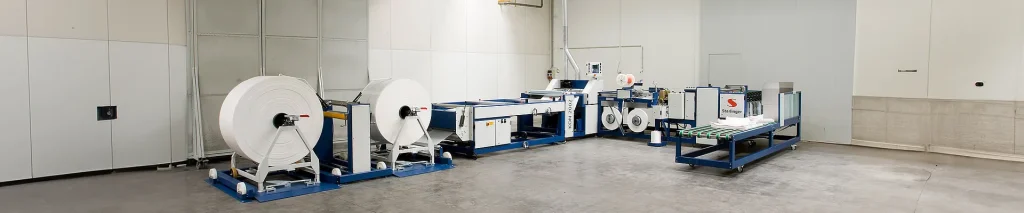
1. Understanding FFS Roll Bags for Chemical Powders
In contemporary chemical powder logistics, packaging has moved far beyond the role of a simple container. It has become an active component in a larger engineered system that links automated dosing equipment, form-fill-seal machinery, warehouse operations, and global transport networks. Within this system, FFS Roll Bags play a pivotal role. They are not merely flexible films wound onto a core; they are carefully designed machine-compatible materials that coordinate with high-speed lines, safely hold aggressive or sensitive powders, and support traceability and sustainability expectations.
At its core, a roll of FFS Roll Bags is a continuous tubular or gusseted web of plastic film or laminated woven fabric that is fed into a form-fill-seal unit. The machine forms a bag, fills it with a precise mass of powder, and seals it again and again in a steady rhythm. Instead of operators handling separate sacks, the entire operation becomes a continuous choreography of web transport, registration marks, sealing jaws, and dosing systems. Where older systems relied on pre-made open-mouth bags and sewing machines, modern powder lines increasingly rely on form-fill-seal roll packaging for powders to achieve consistency, hygiene, and output targets.
When the substrate is engineered for industrial duty, FFS Roll Bags can carry demanding materials such as mineral fertilisers, PVC resins, technical pigments, and a wide spectrum of other chemical powders. Typical fill weights range from 5 kilograms for smaller retail or intermediates up to 50 kilograms for industrial sacks, with some specialised variants adapted to even heavier loads. These bags must withstand static loads in high stacking regimes, dynamic impacts during conveying and truck transport, and the internal pressure shocks that occur when fine powders are dropped at speed into a partially filled sack.
Across industry literature and product catalogues, this family of packaging appears under several related names and long-tail expressions. Common aliases for FFS Roll Bags include the following:
- FFS PP Bags
- FFS Roll sacks
- FFS Woven Bags
- Tubular Woven bags
- Form-fill-seal roll packaging for powders
- Chemically resistant FFS roll bags for bulk materials
These terms highlight slightly different design angles. Some focus on substrate chemistry, such as FFS PP Bags that emphasise polypropylene as the principal material. Others highlight structure, such as Tubular Woven bags, which remind the reader that the bag is created as a seamless tube on circular looms. Still others stress functionality, such as chemically resistant FFS roll bags for bulk materials, signalling that specific chemical interactions and safety requirements have been considered. Yet all of them describe the same fundamental concept: a continuous roll of engineered packaging that matches the mechanical rhythm and process windows of automated lines.
Key idea
FFS Roll Bags are not an afterthought added at the end of a process. They are part of the process itself, designed to function as machine components, containment systems, and logistics units at the same time.
From a systems perspective, FFS Roll sacks occupy three overlapping roles. They operate as precise machine components that must track, seal, and cut reliably at high speed. They serve as containment systems that control dust generation, manage electrostatic charges, and regulate moisture ingress and egress. Finally, they act as logistical units that can be stacked, palletised, wrapped, and shipped through demanding international supply chains without tearing or leaking. Any weakness in one of these roles quickly shows up as downtime, product loss, or safety incidents, which is why the design of FFS Woven Bags demands both engineering rigour and practical field experience.
2. Material System and Structural Design of FFS Roll Bags
Because FFS Roll Bags are exposed to abrasive particles, hygroscopic ingredients, and sometimes corrosive chemicals, their material design has to be more sophisticated than a simple commodity film. Every layer, from the inner sealing surface to the mechanical backbone and outer print laminate, contributes to mechanical strength, chemical resistance, machinability, and recyclability. It is this layered material strategy that allows a roll of packaging to run for hours at high speed without curling, blocking, or tearing.
2.1 Polyolefin backbone: polypropylene and polyethylene
Most industrial FFS Roll Bags are built on a polyolefin backbone, predominantly polypropylene (PP) and polyethylene (PE). These polymers have become the workhorses of heavy-duty packaging because they combine robust mechanical properties, favourable processing behaviour, and an acceptable cost structure. They are also widely recognised and processed in established recycling streams, which matters increasingly as regulations and brand owner commitments tighten.
Polypropylene provides a high stiffness-to-weight ratio, excellent tensile strength when oriented into tapes or stretched films, and reliable heat resistance for sealing operations. This makes PP a natural candidate for FFS PP Bags that use woven tapes as their structural skeleton. Polyethylene, especially high-density and linear low-density grades, offers outstanding impact resistance, toughness at low temperatures, and excellent sealability. It is therefore a common inner layer and coating material in chemically resistant FFS roll bags for bulk materials, where strong and fast seals are non-negotiable.
Polyolefin comparison card
| Polymer | Typical role in FFS Roll Bags | Key advantages |
|---|---|---|
| Polypropylene (PP) | Woven tapes, structural layers in FFS Woven Bags | High stiffness, good heat resistance, strong tensile properties |
| Polyethylene (PE) | Inner sealing layers and extrusion coatings in FFS Roll sacks | Excellent impact strength, low-temperature toughness, reliable sealability |
From a cost perspective, both PP and PE occupy a favourable position. They are produced at large scale around the world, and their pricing is more stable compared with niche engineering polymers. This matters because FFS Roll Bags are often used in large annual volumes; even small cost differences per kilogram can add up to significant budget impacts. Using polyolefins also makes it easier to design mono-material structures where recyclability is a practical, not just a theoretical, attribute.
2.2 Woven versus film-based structures
Within the universe of form-fill-seal roll packaging for powders, two structural families dominate: woven substrates and film-based substrates. Woven designs start with PP granules that are extruded into thin sheets, slit into tapes, and drawn to align molecular chains. These tapes are then woven on circular or flat looms to form a fabric that becomes the mechanical backbone of Tubular Woven bags. Film-based designs use mono-layer or co-extruded films, typically based on PE or hybrid PP/PE systems, and are converted into tubular or gusseted webs.
The choice between woven and film structures reflects a balance between strength, barrier performance, machinability, and tactile properties. FFS Woven Bags deliver exceptional tear resistance and dimensional stability, which is invaluable when powders are abrasive, feed silos operate at high discharge speeds, or pallets are stacked several layers high. Film-based FFS Roll Bags, on the other hand, offer extremely smooth surfaces, low dust adhesion, and excellent moisture and oxygen barriers when co-extrusion technology is used. They are often preferred where cleanliness and print clarity are paramount, such as for detergents or high-value speciality chemicals.
In real projects, engineers rarely ask, “Which option is universally better?” Instead, they ask, “For this specific powder, in this processing plant, under these transport conditions, which structure is adequate, robust, and economical?” Answering that question correctly requires understanding how mechanical loads, environmental conditions, and line layouts interact with the structure of the chosen FFS PP Bags or film-based rolls.
2.3 Laminates, coatings, and functional barrier layers
Chemical powders often react strongly to moisture or certain gases, which means the base substrate typically needs help from barrier layers. A small change in relative humidity can cause hygroscopic salts to clump; a small ingress of water can cause cement or reactive blends to pre-hydrate. For these reasons, many FFS Roll sacks include laminates or coatings that enhance barrier performance while still allowing smooth seal formation and clean bag opening.
One widely used approach is BOPP lamination. A biaxially oriented polypropylene film is laminated to a woven PP fabric, creating a composite that combines the strength of raffia-style fabric with the glossy, low-permeability surface of BOPP. This structure is common in premium chemically resistant FFS roll bags for bulk materials used for fertilisers and building materials. Another approach is PE extrusion coating, where molten polyethylene is applied directly onto the fabric and then rapidly cooled. This layer fills the pores of the fabric, improving moisture protection and providing a clean sealing surface for the form-fill-seal jaws.
For fully film-based FFS Roll Bags, co-extruded structures allow different layers to perform distinct functions. An inner layer is tailored for sealing, a middle layer for mechanical strength, and an outer layer for print reception and abrasion resistance. Slip agents and anti-block additives can be incorporated selectively so that the outer surface glides smoothly over machine components while the inner surface retains enough friction to maintain stable pallets.
2.4 Additives, anti-static systems, and colour management
Beyond base polymers and barrier layers, FFS Roll Bags rely heavily on additive packages. Anti-static agents are especially crucial when handling fine, dry powders that rapidly build up charge. Without them, operators can experience shocks, and in extreme cases, electrostatic discharges can trigger dust explosions in confined environments. Carefully dosed anti-static additives reduce surface resistivity to safe ranges, typically around 1010 to 1012 ohms per square, providing a controlled discharge path for built-up charge.
UV stabilisers are another important additive family. When FFS Woven Bags are stored outdoors or in partially sheltered areas, solar radiation can break polymer chains and embrittle the fabric. UV stabilisers slow this degradation, preserving tensile strength over the intended storage period. Slip and anti-block agents ensure that films can be wound, stored, and unwound efficiently without sticking together, yet without becoming so slippery that pallets destabilise during transport.
Colour masterbatches, dispersed in PP or PE carriers, provide the visual identity of the bag. For chemical powders, colour coding often corresponds to product families, hazard levels, or brand lines. Using masterbatches that share the polymer base of the substrate keeps the structure closer to mono-material design, supporting better recyclability for FFS PP Bags and their film-based counterparts.
2.5 Typical cross-section of a heavy-duty FFS roll structure
A heavy-duty design for FFS Roll Bags used in demanding chemical applications might include the following layers:
- An inner sealing layer of PE or PP adapted to the specific seal temperatures and dwell times of the form-fill-seal equipment.
- A core mechanical layer: either a woven PP fabric or a thick, oriented film that carries tensile loads and resists punctures.
- An outer laminate, such as BOPP or printed PE, delivering barrier performance, scuff resistance, and a high-quality print surface.
- Functional additives distributed throughout the layers to manage electrostatics, UV exposure, and handling behaviour.
Each layer is engineered with a clear task in mind. Together they create a roll that runs cleanly on machinery, resists environmental stress, and satisfies branding, safety, and regulatory communication needs.
3. Functional Features and Performance Advantages of FFS Roll Bags
The true value of FFS Roll Bags becomes visible when they are judged against the real-world requirements of high-throughput powder lines. Speed, consistency, worker safety, and lifecycle cost all matter simultaneously. It is not enough for a bag to survive a static tensile test; it must perform hour after hour on dynamic lines where tiny instabilities can snowball into downtime and lost production.
3.1 High-speed automation and integrated operations
Compatibility with automation is one of the defining features of FFS Roll sacks. Modern form-fill-seal equipment, especially when equipped with Austrian Starlinger or German W&H technology, can process hundreds of bags per minute in smaller formats or dozens of heavy-duty sacks per minute. Web tracking systems, registration mark sensors, and servo-driven sealing jaws all depend on predictable web behaviour. A small variation in thickness or stiffness can cause misregistration; a slip in sealing performance can cause leaks or bursts.
By contrast, well-designed FFS Roll Bags minimise such variation. The result is shorter changeover times, less adjustment of forming shoulders and sealing parameters, and fewer unscheduled stops. Inline printing systems can apply batch codes, QR symbols, and production data to each bag, converting packaging from a static shell into a carrier of process information and traceability.
Reflection
Faster lines, fewer stoppages, more uniform seals: the very metrics used to judge modern packaging lines are strongly influenced by the design quality of the underlying FFS Woven Bags and film rolls.
3.2 Powder handling, dust control, and workplace hygiene
Powder handling is often accompanied by clouds of dust that obscure visibility, contaminate surfaces, and pose explosion risks. By forming tight seals at the top and bottom of each sack, FFS Roll Bags reduce dust release drastically compared with loosely sewn or manually closed bags. In many plants, this improvement is perceived immediately: air feels clearer, filters clog less frequently, and housekeeping requirements fall.
Smooth inner surfaces in film-based FFS PP Bags help powders slide during discharge, minimising residues. When residues do remain, they tend to be clustered rather than spread over seams and stitches. Combined with properly designed filling nozzles and dust extraction, the packaging shifts the system towards cleaner, more controlled operations.
3.3 Moisture protection and product stability
Many chemical powders change behaviour dramatically when exposed to moisture. Hygroscopic fertilisers can cake into hard lumps; cement can partially hydrate; reactive blends can lose activity. Through the intelligent use of BOPP laminates, PE extrusion coatings, or co-extruded film barriers, FFS Roll Bags can achieve moisture vapour transmission rates tuned to the sensitivity of each product.
When powders are extremely sensitive, multi-layer structures might be justified even if they make recycling more complex. For moderately sensitive products, laminated FFS Woven Bags can strike an effective balance between barrier strength, resource use, and end-of-life options. The important point is that barrier performance is deliberately engineered and tested rather than guessed.
3.4 Mechanical strength, impact resistance, and stack stability
The mechanical performance of FFS Roll Bags is often the last line of defence between a stable warehouse and a costly spill. For a single 25 or 50 kilogram sack, small tears may seem manageable, but when entire pallets start to lean or collapse, the implications include product loss, safety incidents, and disruption across loading docks and storage aisles.
To avoid these outcomes, tensile, tear, and seam strength are carefully specified and verified. Woven designs often target higher-than-average strengths for both machine direction and cross direction performance, while film-based structures are engineered with puncture resistance and elongation at break that prevent brittle failure. Friction coefficients on the outer surfaces of Tubular Woven bags are tuned to limit slippage yet allow de-palletising and warehouse handling without excessive effort.
3.5 Branding, hazard information, and digital traceability
Surface design matters. On one hand, chemical packaging must carry legally mandated hazard pictograms, handling instructions, and safety statements. On the other, it needs to support brand communication and product differentiation. High-definition flexographic and gravure printing on the outer layers of FFS Roll Bags helps reconcile these demands. Colour accuracy and rub resistance ensure that key information remains legible throughout transport and storage.
Digital traceability adds a further layer of functionality. QR codes or other machine-readable symbols printed on FFS Roll sacks can link directly to safety data sheets, production records, or customer portals. In this way, each bag becomes a node in a broader digital system, not merely a silent container.
3.6 Operational economics and lifecycle cost
The economic argument for form-fill-seal roll packaging for powders reaches beyond the unit cost of each bag. Higher line speeds reduce labour and overhead per tonne of material packed. Reduced bag failures translate into fewer re-bagging operations and fewer product write-offs. Better stack stability cuts damage and claims along the supply chain. Intelligent energy management on modern conversion equipment further lowers the energy footprint per kilogram of packaging produced.
When all these factors are added up over months and years, well-designed FFS Roll Bags frequently deliver a lower total cost of ownership than apparently cheaper but less robust alternatives.
4. Production Workflow: From Pellets to Precision FFS Roll Bags
The performance of FFS Roll Bags is deeply rooted in their manufacturing process. Each stage, from raw material selection to final inspection, shapes the behaviour of the finished roll on high-speed lines. VidePak emphasises that the entire chain is supported by advanced machinery from Austria's Starlinger and Germany's W&H, translating process stability into predictable field performance.
4.1 Raw material selection and verification
The journey starts with virgin PP and PE resins tailored to extrusion requirements, along with BOPP films, masterbatches, and functional additives. These inputs are not accepted blindly. They undergo melt flow index testing, moisture analysis, and spectral checks to verify colour and additive content. If data fall outside specified ranges, materials are quarantined and investigated rather than fed into the heart of the FFS PP Bags production process.
Process insight card
Every deviation in resin quality, however small, can echo through to extrusion, weaving, sealing, and finally to how FFS Roll Bags perform when filled with chemical powders. Input control is therefore the first quality gate.
4.2 Extrusion and filament or film formation
Once verified, polymers are melted in extrusion lines where tight temperature windows are maintained. For woven designs, PP melts are cast into thin sheets, slit into tapes, and drawn over heated and cooled sections to align molecular chains. Draw ratios and cooling profiles are not arbitrary; they are tuned so that the final tapes used in Tubular Woven bags have consistent width, thickness, and tensile strength.
For film-based FFS Roll sacks, co-extrusion allows multiple layers to be formed in a single pass. Each layer has a specific recipe, including base polymer, additives, and thickness. Minor changes in formulation can have marked effects on seal behaviour, impact resistance, and machinability, so process control systems continuously monitor film thickness and gauge variation.
4.3 Weaving and fabric formation for FFS Woven Bags
When tapes are destined for FFS Woven Bags, they are fed into circular or flat looms that interlace warp and weft to create fabric. Loom tension, pick density, and defect detection systems all influence the final quality. Advanced Starlinger looms incorporate real-time monitoring that can identify broken tapes, missed picks, or pattern anomalies. Defective sections are flagged and removed so that only stable fabric proceeds to lamination.
Fabric gram weight is another carefully controlled parameter. A higher gram weight increases strength but also adds cost and resource use. Engineers therefore aim for the lightest fabric that still meets tensile, tear, and drop test requirements for the planned use of the FFS Roll Bags.
4.4 Lamination, coating, and creation of functional surfaces
Lamination and coating turn basic fabrics or films into the sophisticated structures required by demanding powders. In BOPP lamination, a pre-made BOPP film is bonded to woven fabric under controlled temperature and pressure. The laminate must be strong enough to resist delamination during forming and filling, yet flexible enough to fold and crease without cracking.
In PE extrusion coating, molten polyethylene is applied onto fabric and then chilled quickly. Line speed, die gap, and cooling conditions determine coating thickness and adhesion. Properly executed, these processes create chemically resistant FFS roll bags for bulk materials that maintain barrier properties and mechanical strength over their service life.
4.5 Printing and graphic customisation
Before conversion into rolls, outer surfaces are often printed using flexographic or gravure presses, many supplied by W&H. Modern presses can apply high-resolution graphics, hazard labels, and traceability codes at speeds that match or exceed the upstream lamination lines. Colour management systems ensure that branding colours remain accurate, while the choice of ink systems reflects regulatory requirements for chemical packaging and recyclability considerations for FFS Roll Bags at end-of-life.
4.6 Bag converting, slitting, roll formation, and inspection
The printed web is then slit into the specific widths required by different form-fill-seal machines and converted into tubular or gusseted formats. Longitudinal seams are formed, often using ultrasonic or thermal sealing, and pre-gusseting may be applied to facilitate block-bottom formation on the filling line. Web edges are trimmed, and registration marks or eye marks are added for optical tracking.
Finally, the web is wound into FFS Roll Bags with carefully controlled tension and roll diameters. Poor winding can cause telescoping, looseness, or core crushing, all of which reduce productivity at the user's site. Before shipment, rolls undergo dimensional checks, visual inspections, and targeted mechanical tests. Only when these criteria are met are the rolls cleared for delivery.
5. Application Landscape of FFS Roll Bags in Powder Industries
Because they balance strength, barrier performance, and automation compatibility, FFS Roll Bags have become a backbone packaging option across many powder-intensive industries. Each sector imposes specific requirements, and the versatility of the technology allows structures to be tuned accordingly.
5.1 Commodity chemical powders and mineral products
Bulk inorganic chemicals such as soda ash, caustic flakes, mineral fillers, and neutral salts rely on FFS Roll sacks for safe, efficient packaging. These powders are typically produced on large scales, with continuous output that strongly benefits from high-throughput automated lines. Packaging must provide adequate moisture barrier and mechanical strength, but the cost per sack also matters greatly due to high volumes.
For such applications, laminated FFS PP Bags or film-based structures with modest barrier performance often strike the right balance. They maintain product integrity during normal storage and transport while keeping gram weights, and therefore costs, under control.
5.2 Fertilisers and agrochemical powders
Granulated and powdered fertilisers, soil conditioners, and certain agrochemicals present a different set of challenges. Many of these products are strongly hygroscopic and may be stored outdoors. The packaging must therefore offer stronger barrier protection and UV resistance, while printing must carry clear usage instructions and safety information.
Laminated FFS Roll Bags with UV-stabilised outer layers and robust seams are well-suited to this environment. For some specific agrochemical formulations, valve-based solutions or specialised bag styles, such as advanced PE valve bags, may be used alongside form-fill-seal roll packaging for powders to cover different product lines. The common requirement is that the packaging must not allow leakages or moisture ingress that could compromise performance in the field.
5.3 Building materials and construction chemicals
Cement, dry mortar, tile adhesive, grout, and other construction chemicals are packaged and handled under particularly rough conditions. Bags may be dragged over concrete, thrown from trucks, or stacked on uneven surfaces. Tubular Woven bags laminated with BOPP or coated with PE are commonly used to meet these challenges. They offer robust tear resistance and good impact tolerance, while moisture barrier performance preserves the reactivity of binders.
The capacity of chemically resistant FFS roll bags for bulk materials to withstand this harsh treatment is one reason they are so prominent in the building materials sector. In combination with robust pallet wrapping and transport practices, they ensure that products arrive at construction sites in workable condition.
5.4 Detergents and household chemical powders
Powder detergents and household cleaning powders introduce additional constraints. Packaging must be robust enough to withstand logistics networks but also visually attractive and pleasant to handle in retail environments. Film-based FFS Roll Bags with high-resolution printing and optional easy-open features meet these expectations. Barrier requirements include protection against moisture and sometimes containment of fragrance components.
For these products, the line between industrial and consumer packaging blurs. The same FFS Roll sacks might be seen both on high-speed production lines and later in supermarket aisles, reinforcing the importance of graphic quality and tactile feel.
5.5 Engineering plastics, masterbatches, and speciality resins
Many engineering plastics and additive masterbatches are supplied as powders or fine granules. Packaging must keep them dry, clean, and free from contamination that could affect downstream processing or product performance. FFS Roll Bags and FFS PP Bags with anti-static properties, robust seals, and clean inner surfaces help maintain dosing accuracy and protect sensitive formulations.
Because these materials often carry high value per kilogram, extra emphasis is placed on avoiding contamination and ensuring traceability. High-quality printing and durable web structures allow such powders to travel globally while retaining their specified properties.
6. VidePak Quality Framework for FFS Roll Bags
To deliver consistently high-performing FFS Roll Bags, VidePak follows a multi-pillar quality framework. Rather than rely on end-of-line checks alone, the company designs quality into materials, processes, and equipment choices from the outset.
6.1 Standards-based design and validation
Product design for FFS Woven Bags and film rolls references international standards for plastic films, sacks, and packaging performance. Tensile, tear, impact, and seal strength are measured according to defined methods so that results are comparable across time and across different production batches. Environmental and safety regulations for chemical packaging also influence design decisions, especially with regard to inks and additives.
6.2 Use of virgin, big-brand raw materials
For packaging that must protect hazardous or high-value chemical powders, VidePak prioritises virgin resins and masterbatches from reputable producers. This choice reduces variability in mechanical performance and processing behaviour, both of which matter for high-speed FFS Roll sacks. It also ensures that reclaimed material from clean post-industrial streams retains sufficient quality to be recycled into other applications.
6.3 Best-in-class equipment: Starlinger and W&H
Another foundation of consistency lies in the use of advanced equipment from Starlinger and W&H. Tape extrusion lines with finely tuned temperature profiles, weaving looms with integrated defect detection, lamination lines with precise nip and temperature control, and high-definition printing presses all contribute to predictable outputs. For users of FFS Roll Bags, this means fewer surprises when new roll batches arrive at their plants.
6.4 Layered inspection: incoming, in-process, and final checks
Inspection runs through the entire process chain. Incoming resin, film, and masterbatch batches are tested before use. During production, parameters such as film gauge, fabric gram weight, coating thickness, and seal quality are monitored with both manual and automated tools. Finished FFS Roll Bags undergo sampling, with tests focusing on tensile and tear strength, seal integrity, moisture barrier, and anti-static behaviour where relevant.
This layered approach allows VidePak to detect deviations early, adjust process parameters quickly, and maintain the high consistency required for global chemical packaging projects.
7. System Thinking: FFS Roll Bags in a Wider Packaging Ecosystem
To fully appreciate FFS Roll Bags, it helps to consider them as elements of a larger ecosystem rather than isolated products. System thinking invites designers to focus on interactions: between powders and packaging, between rolls and machinery, between pallets and transport, and between packaging choices and regulatory or sustainability frameworks.
7.1 Packaging and product interaction
The behaviour of a powder inside chemically resistant FFS roll bags for bulk materials is shaped by particle size distribution, surface chemistry, moisture sensitivity, and flowability. Fine, dusty powders can leak through poorly sealed seams; large, angular granules can cause punctures. By matching packaging stiffness, barrier performance, and seams to the characteristics of the powder, designers can prevent many issues before they occur.
7.2 Packaging and machinery interaction
The relationship between FFS Roll sacks and form-fill-seal machinery is equally critical. Web tracking, registration mark reading, and sealing all depend on predictable web behaviour. Rolls that telescope, curl, or exhibit variable stiffness force operators into constant adjustment. Stable rolls allow machines to run near their optimum performance point, which is one of the main reasons why process consistency in manufacturing is so important.
7.3 Packaging and worker interaction
Even in highly automated plants, people interact with FFS Roll Bags. They change rolls, inspect seals, move pallets, and respond to alarms. Ergonomic roll weights, clear hazard labelling, and dust-tight designs help protect workers from strains, chemical exposure, and electrostatic shocks. When packaging reduces physical and chemical hazards, it supports better occupational safety outcomes.
7.4 Packaging, logistics, and environment interaction
At the logistics level, FFS Woven Bags and film rolls influence pallet stability, vehicle loading patterns, and warehouse efficiency. Correctly sized sacks fit pallet footprints efficiently, while friction-balanced surfaces prevent excessive slipping or sticking. When bags resist tears and leaks, they reduce contamination incidents, both in warehouses and in the broader environment. Designing for recyclability, where infrastructure allows, further aligns packaging choices with waste reduction and circular economy goals.
8. Technical Parameter Matrix for FFS Roll Bags
To support engineering and procurement teams, it is helpful to express typical parameter ranges for FFS Roll Bags in a structured matrix. These ranges are not rigid specifications but starting points for dialogue between users and suppliers.
| Parameter | Typical range or target | Functional impact | Notes |
|---|---|---|---|
| Bag capacity | 5–50 kg per sack; higher for aggregates | Defines tensile and seam strength requirements | Higher capacities require stronger substrates in FFS Roll sacks |
| Substrate type | Woven PP, PE film, or hybrid structures | Balances strength, barrier, and flexibility | Choice depends on powder behaviour and logistics |
| Fabric gram weight | 80–150 g/m² for FFS Woven Bags | Controls tensile strength and tear resistance | Higher weights improve robustness but add cost |
| Film thickness | 80–200 μm total for film-based designs | Influences puncture resistance and seal strength | Co-extruded layers tailor strength and barrier |
| Laminate thickness | 18–30 μm BOPP or comparable films | Provides print surface and moisture barrier | Common in premium FFS PP Bags |
| Coating thickness | 50–100 μm PE on woven fabrics | Enhances chemical resistance and sealability | Used widely for corrosive or aggressive powders |
| Tensile and tear strength | Above typical industry averages | Ensures safe handling and stacking | Measured in both machine and cross directions |
| Moisture vapour transmission rate | Single-digit g/m²/day for laminated structures | Protects hygroscopic powders | Test conditions should mimic storage environments |
| Surface resistivity | Around 1010–1012 Ω/sq where required | Reduces static charge build-up | Important for dust explosion control |
| Coefficient of friction | Tuned between low and high extremes | Affects pallet stability and machine feeding | Measured for bag-to-bag and bag-to-pallet interactions |
These parameters offer a structured way for buyers and engineers to discuss the capabilities of FFS Roll Bags and define bespoke specifications that match their powders, plants, and distribution networks.
9. Sustainability, Regulation, and Future Directions
In any modern discussion of packaging for chemical powders, sustainability and regulatory compliance are central themes. FFS Roll Bags occupy an interesting position: they are made from plastics that must be managed carefully at end-of-life, yet they also enable material efficiency, reduce product losses, and can be designed for recyclability where infrastructure exists.
Mono-material structures based on PP or PE are compatible with many existing recycling streams, especially when they avoid complex multi-material laminates and incompatible adhesives. Reducing gram weight through structural optimisation further lowers resource demand. At the same time, improved moisture protection and mechanical strength help reduce the volume of wasted product, which often has a larger environmental footprint than the packaging itself.
On the regulatory side, chemical packaging must align with transport rules, hazard communication regulations, and increasing expectations regarding recycled content and recyclability. Inks, additives, and stabilisers used in FFS Woven Bags and film rolls must comply with chemical safety requirements, while labelling must communicate hazards clearly in multiple jurisdictions. Extended producer responsibility schemes and packaging waste directives in several regions are pushing suppliers and users to consider the entire lifecycle of FFS Roll sacks rather than only their performance during transport.
Looking ahead, technological pathways such as integrating high-quality post-consumer recycled polyolefins into outer layers, linking every roll to digital systems for lifecycle tracking, and further simplifying structures towards easily recyclable designs are all under active development. In all of these initiatives, FFS Roll Bags serve as an adaptable platform on which improvements in material science, process engineering, and sustainability policy can converge.
2025-11-22
- 1. Understanding FFS Roll Bags for Chemical Powders
- 2. Material System and Structural Design of FFS Roll Bags
- 3. Functional Features and Performance Advantages of FFS Roll Bags
- 3.1 High-speed automation and integrated operations
- 3.2 Powder handling, dust control, and workplace hygiene
- 3.3 Moisture protection and product stability
- 3.4 Mechanical strength, impact resistance, and stack stability
- 3.5 Branding, hazard information, and digital traceability
- 3.6 Operational economics and lifecycle cost
- 4. Production Workflow: From Pellets to Precision FFS Roll Bags
- 5. Application Landscape of FFS Roll Bags in Powder Industries
- 6. VidePak Quality Framework for FFS Roll Bags
- 7. System Thinking: FFS Roll Bags in a Wider Packaging Ecosystem
- 8. Technical Parameter Matrix for FFS Roll Bags
- 9. Sustainability, Regulation, and Future Directions
**At VidePak, FFS (Form-Fill-Seal) roll bags are engineered to meet the rigorous demands of chemical powder packaging, combining **load capacities up to 1,500 kg, moisture barrier rates ≤5 g/m²/day, and production speeds exceeding 200 bags per minute. Leveraging Austrian Starlinger and German W&H machinery, our ISO 9001-certified processes achieve filament tensile strength consistency within ±2% and energy savings of 15–20% compared to industry averages. With 30+ years of expertise and a global client base spanning 50+ countries, VidePak delivers precision, scalability, and sustainability for industries requiring uncompromised performance.
1. Precision Manufacturing: The Starlinger and W&H Advantage
VidePak’s FFS roll bags are produced using state-of-the-art equipment from Starlinger and W&H, ensuring unmatched control over critical parameters like melt temperature and draw ratios.
1.1 Extrusion: Mastering Melt Temperature
Starlinger’s extrusion lines heat virgin PP granules to 200–240°C, maintaining a tolerance of ±1.5°C via AI-driven thermal sensors. This precision prevents polymer degradation and ensures uniform melt flow indices (MFI 3–6 g/10 min, ASTM D1238).
- Case Study: A 2023 audit revealed that VidePak’s PP filaments exhibited 98.7% diameter consistency across 10,000 meters, directly attributable to Starlinger’s temperature control systems.
1.2 Filament Drawing: Optimizing Draw Ratios
W&H’s godet units apply draw ratios of 1:5 to 1:7, aligning polymer chains to achieve tensile strengths ≥5.5 g/denier (ASTM D2256). Higher draw ratios increase orientation but require precise cooling rates (25–30°C water baths) to prevent brittleness.
Quality Impact:
- Draw ratio variability ≤±2% ensures tear resistance ≥18 N/mm² (ISO 13937-2).
- Improper ratios cause elongation inconsistencies (>10%), leading to seam failures under load.
2. Production Workflow: From Granules to Finished Bags
VidePak’s FFS roll bags undergo seven critical stages, each monitored by IoT-enabled quality checks.
2.1 Weaving and Fabric Formation
- Circular Looms: 100+ Starlinger CT-F8 looms weave 14×14 threads/inch fabric at 200 rpm, with real-time defect detection rejecting 99.8% of substandard rolls.
- Fabric GSM Control: Laser micrometers adjust weaving tension to maintain 80–150 GSM within ±3% tolerance.
2.2 Lamination and Coating
- BOPP Lamination: W&H laminators apply 20 µm films at 180°C, achieving moisture barriers ≤5 g/m²/day (ASTM E96).
- PE Extrusion Coating: For chemical resistance, 50–100 µm PE layers are added with dart impact resistance ≥500 g (ASTM D1709).
Case Study: A South African agrochemical client reduced product clumping by 60% using VidePak’s PE-coated bags, which maintained ≤0.1% moisture ingress in 85% RH environments.
2.3 Printing and Customization
- High-Definition Flexography: 30+ presses deliver 1440 dpi resolution using REACH-compliant inks, supporting QR codes for traceability.
- Color Consistency: Pantone-matching accuracy ≤ΔE 1.5, verified by spectrophotometers.
2.4 Bag Converting and Sealing
- FFS Roll Formation: Ultrasonic side seals achieve burst strengths ≥35 psi (ASTM D3786), critical for 25–50 kg powder fills.
- Valve Integration: Anti-static valves (surface resistivity ≤10¹² Ω/sq, IEC 61340-4-1) prevent dust explosions in flammable environments.
3. Technical Specifications and Performance Metrics
Product Parameters
| Parameter | VidePak Standard | Industry Average |
|---|---|---|
| Load Capacity | 500–1,500 kg | 300–1,000 kg |
| Moisture Barrier | ≤5 g/m²/day (BOPP laminated) | ≤15 g/m²/day |
| Print Durability | 4/5 Sutherland Rub Test (500 cycles) | 2/5 |
| Energy Consumption | 0.8 kWh/kg of PP | 1.0–1.2 kWh/kg |
FAQs
Q: How does temperature control during extrusion affect bag quality?
A: Precise melt temperatures (±1.5°C) prevent MFI variations >±0.2 g/10 min, ensuring uniform weaving and seam strength.
Q: Can FFS bags withstand acidic chemical powders?
A: Yes—our PE-coated variants resist pH 1–14 exposure for 6+ months (ASTM D543).
Q: What’s the MOQ for custom designs?
A: 10,000 units, with samples delivered in 10 days and full production within 25 days.
4. Sustainability and Regulatory Compliance
VidePak’s FFS bags align with global environmental mandates while reducing operational costs:
- Recyclability: 100% PP composition enables 5–7 reuse cycles, diverting 12,000+ tons/year from landfills.
- EU REACH Compliance: All inks and additives meet SVHC-free standards (Annex XVII).
- Energy Efficiency: Solar-powered facilities in Jiangsu, China, reduce CO₂ emissions by 8,000 metric tons/year.
Future Trend: Pilot projects with 30% post-consumer recycled PP show tensile strength retention ≥95%, targeting 2025 commercialization.
References
- VidePak Official Website: https://www.pp-wovenbags.com/
- Email: info@pp-wovenbags.com
- Related Articles:
- FFS Roll Bags: Navigating Global Market Demands and Diverse Applications
- Understanding FFS Woven Bags: Key Parameters and Specifications
Authored by VidePak’s Engineering and Sustainability Teams | Updated: March 19, 2025