
What Are Aluminum Foil Composite Bags?
In industrial and food packaging, invisible forces do visible damage: molecules leak out, moisture creeps in, flavors fade, colors bleach, powders cake, and the bottom line suffers. Aluminum Foil Composite Bags are engineered to intercept those forces before they touch the product. They combine three functions into one composite: a structural carrier that survives handling and presents graphics; a metallic layer that blocks oxygen, water vapor, aroma, and light almost entirely; and an inner sealant surface that closes the system hermetically, repeatedly, and cleanly. When the route is long, the climate is harsh, and the product’s value depends on aroma, potency, or flow, these bags are not a luxury; they are the short bridge between lab‑grade protection and factory‑speed reality.
- Aluminum Foil Composite Bags
- Aluminum Foil Woven Bags
- Aluminum Laminated Woven Bags
- Foil‑Lined Woven Polypropylene Bags
- Composite Woven Bag / Composite Woven Sack
- Multi‑Wall Woven Bags (foil‑integrated variants)
- Valve Aluminum Foil Woven Bags
- Poly‑Paper Laminated Woven Sacks (with metallic barrier)
Different names, one idea: a true aluminum foil barrier bonded to a printable film or PP woven fabric, finished with a polyolefin sealing interface. The label varies by emphasis (“foil” for barrier, “woven” for strength, “composite” for convertibility), but the architecture remains coherent.
Rule of thumb: if oxygen, humidity, or light measurably alters your product during storage or transit, your baseline spec should include an aluminum foil layer. Printing strategy, seam format, and valve geometry are then tuned around that baseline.
Material Science and Stack Architecture
The performance of Aluminum Foil Composite Bags emerges from the interaction of layers. Each layer contributes a distinct property; together they produce barrier, strength, printability, and seal integrity. The design art lies in proportioning those layers so that the composite performs on the shelf, on the line, and on the route—consistently, not occasionally.
- Function: drives oxygen transmission toward zero, pushes water‑vapor transmission to extremely low values, and fully blocks visible and UV light.
- Thickness window: ~7–20 μm. Thinner gauges reduce weight and cost but demand careful handling to avoid flex‑crack; thicker gauges increase durability and cost while increasing stiffness.
- Design controls: winding tension, adhesive coat‑weight, and fold radii. Micro‑pinhole density is a critical KPI; small numbers per m² can undermine barrier disproportionately.
- PP woven fabric (≈70–120 g/m²) provides high tensile strength, tear resistance, and puncture resistance; gussets preserve cubic efficiency for 10–50 kg formats.
- BOPP or PET faces (12–25 μm) deliver high‑definition print, abrasion control, and controllable gloss/matte aesthetics for retail‑visible sacks and pouches.
- Selection logic: woven for forklifts and pallets; oriented films for photographic branding and scuff resistance. Both pair well with foil.
- Resins: LDPE, LLDPE, MDPE, HDPE, or CPP. The choice sets the seal initiation temperature (SIT), hot‑tack behavior, and peel strength.
- Gauge: typically 40–100 μm for sack liners; thicker gauges support rugged routes, thinner gauges support cost and flexibility.
- Options: antistatic modifiers for dust control, slip tuning for automation, and FDA/EU‑compliant contact formulations.
- Extrusion lamination: polyolefin tie layers provide a molten interface that bonds foil to fabric or film.
- Solventless polyurethane: two‑component adhesives deliver high bond strength without solvent emissions when correctly cured.
- Critical variables: adhesive coat‑weight, nip pressure, web temperature, and cure schedule; the reward is high peel without curl or tunneling.
Finishes complete the system: gloss or matte OPVs for scuff control, anti‑slip textures for pallet stability, UV stabilizers for outdoor depots, and low‑migration ink systems for food‑contact programs. The objective is not to win a lab test once but to pass it every time under realistic abuse: fork tines, pallet edges, long dwell at humidity, repeated handling, and variable warehouse lighting.
Barrier Mechanics: Oxygen, Moisture, Aroma, and Light
The case for a metallic barrier is rooted in physics. Quality loss follows only a few pathways; block those, and you protect value. The metallic layer in Aluminum Foil Composite Bags offers direct intervention on all four.
In polymers, oxygen migrates via solution–diffusion; in metal foil, oxygen meets a lattice that is effectively impermeable unless defects exist. The difference between “low” and “near‑zero” OTR is not semantic; it is the difference between rancidity proceeding slowly and rancidity being held at bay.
Hygroscopic powders re‑equilibrate with ambient humidity; caking and lumping follow. Foil drives WVTR toward the floor. Of equal importance is seam and valve integrity—edge leaks can cancel the barrier you just paid for.
Volatile aromatics are small, non‑polar, and mobile. Filmic barriers slow them; metallic barriers stop them. Coffee, spice blends, flavors, and essential oils therefore gravitate to foil cores when signature notes must survive months of logistics.
Photolysis breaks bonds, fades colors, and degrades potency. A metallic core blocks the spectrum rather than merely attenuating it, preserving labels, hue, and actives even in sun‑exposed storage.
If your QA team observes measurable drift in aroma, color, potency, or flow after four weeks at 38°C/90% RH, or under continuous light exposure, a true foil layer is rarely optional. It becomes the control variable; all other parameters are optimization.
From Resin to Pallet: Manufacturing at Scale
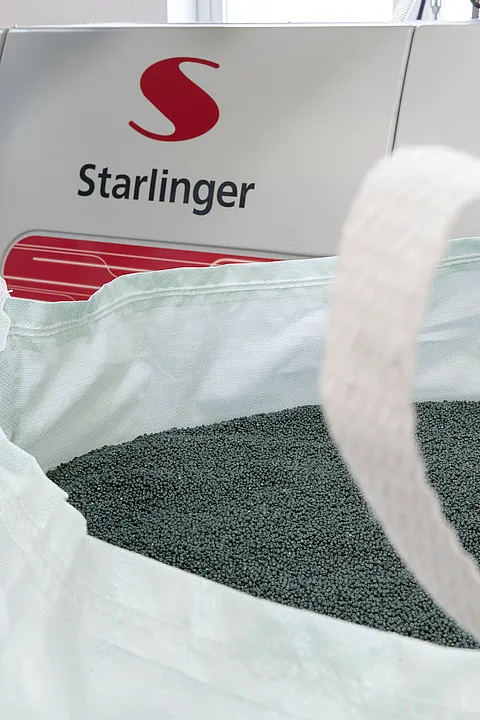
Repeatable barrier and robust handling are made, not wished. VidePak builds Aluminum Foil Composite Bags on European platforms—Starlinger (Austria) for extrusion, weaving, coating/lamination, and W&H (Windmöller & Hölscher, Germany) for high‑register printing and converting—so the tolerances that determine outcomes do not drift with volume. The following sequence traces the path from raw resin to audited pallet.
Upstream: raw‑material selection and incoming verification
- Supplier approval with COAs: PP resin (MFI, density, ash), foil thickness and pinhole maps, PE/PP sealants (SIT, hot‑tack, dart impact), ink/OPV migration and odor, adhesive monomer limits.
- Food‑contact risk controls: HACCP mapping, allergen and contaminant declarations, traceability aligned to lot IDs.
- Pilot studies: tape draw windows for tenacity, lamination mini‑runs to set coat‑weights and nip temperatures, seal‑window scouting on the actual filler’s temperature–pressure–dwell profile.
Core converting and bag‑making
- Extrusion & tape drawing (Starlinger) — PP pellets are cast into film, slit, and oriented 5–7× to achieve target tenacity. Laser gauges and closed‑loop controls suppress thin‑spot initiation sites.
- Weaving — tapes are woven into tubular or flat fabric (often 10–14 ends/cm). Tension profiles are tuned for flatness and dimensional stability to support later print registration and square cutting.
- Lamination — aluminum foil is bonded to coated fabric or to BOPP/PET via extrusion lamination or solventless polyurethane adhesives. The aim: high peel strength, low curl, no tunneling.
- Printing (W&H presses) — flexography or gravure on BOPP/PET or coated foil; corona treatment and viscosity control hold ΔE within set guardbands.
- Cutting, forming, and gusseting — hot or cold cutting to length; gusset formation for cubic efficiency; geometries prepared for open‑mouth, pinch‑top, or valve construction.
- Seaming & closures — chain or lock stitches with crepe tape (where specified) or thermal sealing for pinch‑top designs; valve formation for high‑speed dosing with de‑aeration paths.
- Liner insertion — loose or tubular PE/PP liners are added where hygiene and seal robustness matter; antistatic profiles are tuned to the filler and product.
- Finishing & packing — anti‑slip textures, micro‑perforation when controlled venting is essential, palletization patterns engineered for route stability, bundles labeled for full digital genealogy.
Downstream: quality control and release
- In‑process control: GSM, tape tenacity, pick density, lamination peel, COF after varnish, print registration and ΔE monitoring.
- Finished‑goods testing: tensile/tear (ISO/ASTM), seam pull and creep, drop/compression with filled samples, WVTR/OTR spot checks for foil stacks, odor/migration for food‑contact, UV stability where applicable.
- Release discipline: AQL per ANSI/ASQ Z1.4, certificate of conformance, retain libraries, and lot genealogy linking raw lots to finished pallets.
Tight orientation, flat webs, crisp registration, stable COF—these are platform outputs, not slogans. Starlinger and W&H platforms limit invisible variance that later appears as seam leaks, filler jams, or brand color drift. The result is not just a better bag; it is a more predictable operation.
Features and Outcomes: What You Actually Buy
You are not buying layers; you are buying outcomes. When a specification for Aluminum Foil Composite Bags is executed correctly, the following are observable, measurable benefits:
OTR approaches the detection floor; WVTR is depressed to the low hundredths g/m²·day range depending on construction. Water activity remains stable; aroma profiles survive long routes.
Metallic cores block visible and UV light outright, preventing photolysis of dyes, vitamins, and light‑sensitive actives and keeping printed brand elements intact.
Woven carcasses resist puncture and drop shock; gussets preserve cubic efficiency. Valve or pinch‑top geometry protects seams under compression.
Polyolefin sealants deliver repeatable closure at industrial speed. Seal windows are wide when resins and dwell are matched to the line.
BOPP/PET faces enable photographic print, matte–gloss contrast, and traceability features (microtext, QR) without sacrificing barrier.
- Customization menu: open mouth, pinch‑top, valve, tamper features, easy‑open tapes, anti‑slip textures.
- Automation fit: COF tuning, cut squareness, mouth stiffness, and valve geometry dialed to filler windows.
- System integrability: inline coding, de‑aeration for powder dosing, and pallet stabilization strategies.
Applications and Sector Patterns
Where value is threatened by humidity, oxygen, or light, Aluminum Foil Composite Bags repay their premium. Patterns repeat across sectors; designs can be templated yet tailored.
Coffee, cocoa, tea, and aromatic foods
Signature flavors are carried by volatile molecules that tend to escape through ordinary films. A retail stack like BOPP 20 // AL 9–12 // PE 70 with matte/gloss OPV pairs brand impact with protection. For fresh‑roasted coffee, one‑way degassing valves are integrated without creating bypass paths around the valve land.
Construction chemicals and mineral powders
Tile adhesive, grout, waterproofing blends, and admixtures are susceptible to humidity. A woven body (≈100 g/m²) combined with AL 7–9 μm and PE liner in valve format preserves flow in monsoon depots and supports fast dosing through de‑aeration channels.
Agrochemicals and fertilizers
Seed treatments and hygroscopic fertilizer blends require darkness and dryness. Foil‑lined woven bodies with UV‑stable inks and anti‑slip textures hold up in outdoor storage while tamper evidence and QR traceability support stewardship.
Pharmaceutical and nutraceutical intermediates
Light‑sensitive actives degrade quickly; regulated contact drives documentation. PET 12 // AL 12–20 // PE 80 with validated ink/adhesive systems provides darkness, dryness, and cleanability, with pinch‑top seals and humidity indicators reinforcing chain‑of‑custody.
Electronics, kits, and moisture‑sensitive assemblies
Low WVTR stacks, static‑dissipative liners, desiccants, and humidity cards keep assemblies safe through humid routes. Mechanical standoff protects against punctures that would nullify barrier.
Pigments, carbon black, and fine powders
High‑abrasion OPVs and robust seams are paired with foil cores to prevent staining and dusting, maintaining warehouse hygiene and reducing returns.
How VidePak Controls and Guarantees Quality
ISO 9001 for quality and ISO 14001 for environment define the process spine. Food‑contact programs align with EU 1935/2004, EU 10/2011, FDA 21 CFR, and GMP (EC) 2023/2006. Test references include ASTM F1249 / ISO 15106‑2 for WVTR, ASTM D3985 for OTR, ASTM D1894 for COF, ASTM D5276/D642 for drop/compression, and ISO 12647 for color.
Virgin PP for tapes and fabrics, certified foil stock with pinhole limits, PE/PP sealants with documented SIT windows, low‑migration inks and OPVs, and approved adhesives/tie layers. COAs are verified and tied to digital genealogy.
Starlinger extrusion/weaving/coating and W&H printing/converting reduce variance where it matters—orientation, flatness, register, and COF—so seam strength and color do not wander during scale‑up.
Incoming COA checks; in‑process GSM/pick/peel/COF/ΔE; finished‑goods mechanical, barrier, and hygiene testing; AQL sampling; pallet‑level drop/tilt; retain libraries for stability; SPC with Cp/Cpk; 8D and FMEA to codify learning.
System Thinking: From Sub‑Problems to an Integrated Spec
Engineering without a decision framework drifts into guesswork; procurement without it drifts into cost‑only optimization. A modular framework decomposes the choice of Aluminum Foil Composite Bags into solvable pieces and then recombines them into one coherent specification.
Quantify expected loss from caking, oxidation, or aroma fade. If the modeled loss exceeds the bag premium, you are already late to foil. Levers include foil gauge (7–20 μm), foil defect control, OPV scuff resistance, inner sealant gauge, and closure type.
Map pallet corners, container racking, and lift‑truck habits. Choose fabric GSM, anti‑slip textures, and corner‑board plans; validate seam creep under compression. Robustness is cheaper than rework.
Valve geometry, mouth stiffness, and COF are throughput levers. Tune the bag to the filler, not vice versa. Pilot 200–500 bags at speed and log jam codes before freezing the BOM.
Maintain a global core spec (ink set, adhesives, liner resin) with market‑specific annexes for migration limits and labeling. Avoid ingredient drift between markets unless required.
Pick BOPP/PET faces, gloss/matte OPVs, and abrasion targets that match real handling. Guard ΔE with spectrophotometry; your brand color is a quality attribute.
Foil and polyolefins complicate recycling. Where feasible, design for separation, publish bale specs, and document recovery routes. A credible end‑of‑life plan is part of product value.
Technical Tables and Colored Data Blocks
Note: indicative values measured under standard film test conditions; whole‑package performance depends on seam design, valve/liner integrity, pinhole control, and storage climate.
Automation, COF, and Filler Throughput
A bag that wins in the lab can still lose on the line. The usual culprits are familiar: coefficient of friction drifting outside the filler’s window; skew or curl from lamination tension; and cut‑length variation that confuses sensors or misaligns valves. Each problem has a measurable fix.
- Define the filler’s COF window (often 0.30–0.45 kinetic) and tune varnish/slip chemistry accordingly.
- Guard squareness with angle gauges; even small skew multiplies misfeeds and valve misalignment at speed.
- Pilot on the real line: 200–500 bags at target speed with jam codes logged; do not settle for pass/fail anecdotes.
- Track OEE, jam codes per thousand, seam breaks, liner seal failures, and ΔE distributions between print lots.
Risk Management: Mini‑FMEA for Foil Laminates
Troubleshooting in the Field
Increase foil gauge, verify liner seal land, add anti‑slip to stabilize stacks and prevent micro‑leaks from friction. Capture RH histories; consider pallet covers.
Audit the degassing valve seal, inspect foil pinholes, and check OPV scuffing. Ensure the valve integration does not create a bypass around the metallic barrier.
COF has likely drifted; tune varnish/slip and add patterned textures. Validate tilt angle on the real pallet sheet system.
Lock ink sets and viscosity/temperature windows; enforce ΔE guardbands and keep retain plaques for rapid troubleshooting.
Comparative View: Foil vs Metallized Films vs Mono‑PE/PP High‑Barrier
When your roadmap emphasizes high‑impact graphics and brand storytelling on woven substrates, consider a complementary read on printed PP woven sacks for retail‑grade presentation. Comparing both approaches clarifies how much barrier you need and how much print latitude you want.
Sizing, Palletization, and Route Engineering
Keyword Deployment and Semantic Variants
For search clarity and buyer intent, deploy the primary and related terms naturally across specifications, data tables, and field notes. Keep density human and relevant.
- Primary: Aluminum Foil Composite Bags.
- Variants: Aluminum Foil Woven Bags, Aluminum Laminated Woven Bags, Composite Woven Bag, Composite Woven Sack, Foil‑Lined Woven Polypropylene Bags, Valve Aluminum Foil Woven Bags, Poly‑Paper Laminated Woven Sacks.
- Long‑tails: high‑barrier foil‑lined valve sacks for tile adhesive; foil composite pharma bulk bags; moisture‑proof aluminum foil woven packaging; UV‑blocking aluminum foil composite sacks for pigments.
Field Narratives: Where the Premium Pays Back
Equatorial coffee exports
Aroma fade and moisture pickup lowered cupping scores in a premium blend. A revised spec—BOPP 20 // AL 12 // PE 70 with matte/gloss OPV and validated valve lands—stabilized water activity and preserved sensory profiles through extended port congestion.
Tile adhesive in monsoon depots
Standard woven liners showed unacceptable caking. A woven 100 g/m² + AL 9 μm + vented valve, with anti‑slip exterior, maintained flow for six months and improved line OEE measurably.
Nutraceutical light‑sensitive actives
Potency drops triggered batch holds. PET 12 // AL 20 // PE 80 with tamper evidence and migration documentation preserved actives and simplified audits.
Carbon black pigments
Warehouse staining and return claims spiked. Foil‑lined woven bodies with abrasion‑resistant OPV and pinch‑top seals reduced dusting and improved cleanliness KPIs.
Execution Roadmap: From Pilot to Standard Pack
- Start with the product hazard profile: moisture, oxygen, light, static, aroma, oil/fat content.
- Map the logistics envelope: climate zones, dwell times, pallet transfers, storage practices.
- Select the stack: foil gauge; structural layer (woven PP vs PET/BOPP); sealant gauge; adhesive system.
- Engineer seams: pinch‑top vs sewn; valve geometry; de‑aeration; expected creep under compression.
- Validate on the real line: seal window; COF tuning; pilot 200–500 bags and log jam codes.
- Qualify compliance: migration limits, heavy metals screen, odor/organoleptics where relevant.
- Publish end‑of‑life notes: separation guidance, bale specs, recovery partners.
- What Are Aluminum Foil Composite Bags?
- Material Science and Stack Architecture
- Barrier Mechanics: Oxygen, Moisture, Aroma, and Light
- From Resin to Pallet: Manufacturing at Scale
- Features and Outcomes: What You Actually Buy
- Applications and Sector Patterns
- How VidePak Controls and Guarantees Quality
- System Thinking: From Sub‑Problems to an Integrated Spec
- Technical Tables and Colored Data Blocks
- Automation, COF, and Filler Throughput
- Risk Management: Mini‑FMEA for Foil Laminates
- Troubleshooting in the Field
- Comparative View: Foil vs Metallized Films vs Mono‑PE/PP High‑Barrier
- Sizing, Palletization, and Route Engineering
- Keyword Deployment and Semantic Variants
- Field Narratives: Where the Premium Pays Back
- Execution Roadmap: From Pilot to Standard Pack
Client Inquiry:
“Our coffee bean exports to Europe are experiencing moisture damage and insect infestations during transit. How can VidePak’s Poly-BOPP bags address these issues while ensuring compliance with EU sustainability standards?”
VidePak’s Answer:
Poly-BOPP woven bags combine multi-layered barrier technologies, precision ventilation, and UV-resistant materials to protect sensitive goods like seeds, grains, and coffee beans, reducing spoilage rates by up to 35% while meeting global regulatory benchmarks. With ISO 9001-certified production and solar-powered manufacturing, VidePak delivers solutions that balance durability, sustainability, and cost efficiency.
Tailoring Poly-BOPP Bags for Diverse Agricultural and Food Applications
From seeds requiring controlled respiration to coffee beans demanding UV protection, Poly-BOPP (biaxially oriented polypropylene) bags are engineered to meet the unique challenges of perishable goods. At VidePak, our bags are customized through advanced material science and strict adherence to international standards like EU EN 277, US ASTM D5265, and JIS Z 1539.
1. Application-Specific Design Requirements
- Seeds:
- Breathability: A porosity of 5–10 cm³/m²/day allows oxygen exchange, critical for seed viability. VidePak’s mesh-weave PP fabric (12×12 strands/cm²) maintains germination rates above 95%, as per 2023 FAO guidelines.
- Moisture Control: PE liners (20 µm) limit moisture ingress to <0.05 g/m²/day, preventing fungal growth.
- Coffee Beans & Nuts:
- UV Protection: Black PE inner layers block 99% of UV rays, preserving oils and aromas.
- Anti-Insect Features: Laminated BOPP outer layers with ≤0.1 mm gaps deter pest penetration, validated by USDA entomology studies.
- Grains (Wheat, Corn):
- Load Stability: Reinforced seams withstand 8-layer palletizing (≤2,000 kg/m² pressure), minimizing burst risks during transport.
2. Material Innovations: Balancing Barrier and Breathability
- Multi-Layered Construction:
Layer Function Material
Outer Abrasion resistance, branding 90 g/m² PP + BOPP laminate
Middle Moisture barrier, UV protection 30 µm PE film
Inner Anti-static, food-grade safety FDA-approved PP coating Fine-Yarn Weaving: Using Starlinger’s 0.03 mm filaments, we achieve a tensile strength of 80–100 N/5cm, 40% higher than industry averages. Global Standards and Parameter Selection Guide 1. Regional Compliance Requirements Region Key Standards VidePak Specifications EU EN 277 (≥50 kg load, ≤0.5% seam failure) 70 kg capacity, 0.2% defect rate USA ASTM D5265 (≥500 Taber abrasion cycles) 800 cycles (BOPP-coated variants) Japan JIS Z 1539 (≥4,000 mm hydrostatic head) 5,500 mm (PE-lined bags) Australia AS 2070 (UV resistance ≥1,200 hours) 1,800 hours (carbon-black additives) 2. Parameter Selection for Optimal Performance- Thickness & Weight:
- Seeds: 90 g/m² PP with 15 µm PE liner for breathability.
- Coffee: 120 g/m² PP + 30 µm black PE liner for UV/ moisture protection.
- Inner Liners:
- Black PE: Blocks light, reduces oxidation (ideal for nuts, coffee).
- Transparent BOPP: Allows visual inspection (grains, rice).
- Size & Palletizing:
- Custom sizes (25–100 cm height) with anti-slip coatings for stable stacking.
A: For humid climates, BOPP lamination offers superior moisture resistance (0.02 g/m²/day). In dry regions, unlined PP bags reduce costs while maintaining breathability. Q2: Can these bags withstand tropical monsoons during shipping?
A: Yes. Our 150 g/m² PP bags with PE liners achieve a hydrostatic head of 6,000 mm, exceeding AS 2070 by 25%. Q3: Are biodegradable options available for EU markets?
A: Yes. Our oxo-degradable PP blends degrade 90% within 24 months under industrial composting, aligning with EU Circular Economy mandates. Q4: How does VidePak ensure insect resistance in grain bags?
A: Anti-insect additives are integrated into BOPP layers during lamination, certified by USDA APHIS standards. VidePak’s Global Leadership in Sustainable Packaging Founded in 2008 by CEO Ray Chiang, VidePak combines 30+ years of expertise with cutting-edge technology:- Production Capacity: 16 extrusion lines and 100+ Starlinger looms produce 120 million bags annually.
- Market Reach: Serving 45+ countries with $80M annual revenue, including Fortune 500 clients in agriculture and food processing.
- Certifications: ISO 9001, ISO 14001, and Global Recycled Standard (GRS) for closed-loop systems.
- Food and Agriculture Organization (FAO). (2023). Guidelines for Seed Packaging and Storage.
- U.S. Department of Agriculture (USDA). (2024). Insect-Resistant Packaging Standards.
- European Plastics Converters Association. (2024). Moisture Barrier Testing Protocols.
- Website: https://www.pp-wovenbags.com/
- Email: info@pp-wovenbags.com