
What Are Printed BOPP Woven Bags and Why Do So Many Names Point to the Same Thing?
Printed BOPP Woven Bags are industrial and retail sacks that combine a tensile load‑bearing backbone with a high‑fidelity printed skin. The backbone is a woven polypropylene (PP) fabric produced from drawn tapes; the skin is a biaxially oriented polypropylene film (BOPP) reverse‑printed with artwork and then laminated to the fabric. The resulting laminate merges two ambitions that often work at cross‑purposes—strength and beauty—so brands can move heavy goods while projecting premium shelf presence. Are they strong? Yes. Are they photogenic? Also yes. The surprise is that these two truths coexist inside a single mono‑polymer platform.
The product family has accumulated many aliases over time—different catalogs, different regions, same structure. For buyers and engineers who keep encountering new terms, a numbered roster helps.
- BOPP laminated woven polypropylene bags
- BOPP laminated PP woven sacks
- BOPP PP woven bags
- BOPP‑coated woven bags
- Printed WPP (woven polypropylene) bags
- Photo‑quality printed woven sacks
- Laminated raffia bags
Call them what you like; the architecture remains the same: a woven PP substrate plus a reverse‑printed BOPP film, converted into open‑mouth, pinch‑bottom, block‑bottom, or valve styles. One platform, many guises. One recipe, many flavors.
The Material Stack Behind Printed BOPP Woven Bags
If you peel the laminate and look layer by layer, you do not find a single “bag material.” You discover a deliberate stack that turns molecular alignment into tensile strength, surface energy into printable beauty, and seam engineering into drop survivability. The stack is simple to name yet rich in consequences: woven PP substrate; printed BOPP film; a tie system that makes the marriage last; and converting details that transform a web into a three‑dimensional container. Each layer is a lever; pull one and you feel the others move.
Woven PP Substrate
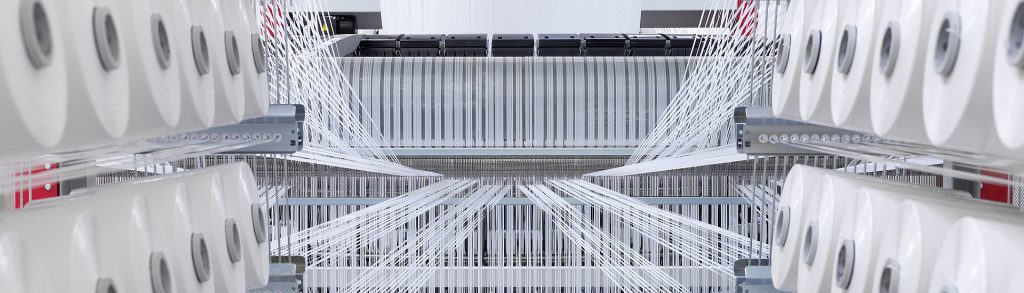
Tapes are extruded from PP homopolymer, slit, and drawn to orient polymer chains. Orientation raises tenacity while moderating elongation and creep. Tapes are then woven on circular or flat looms at a target mesh (for example, 10×10, 12×12, 14×14 ends × picks per inch). Three dials dominate: denier (a proxy for tape thickness), weave density (mesh), and base GSM (fabric mass). Tilt denier upward and tensile capacity rises—but so do resin usage and stiffness. Increase mesh and you flatten the surface for better lamination, lengthen puncture pathways, and reduce powder sifting.
BOPP Film
Biaxial orientation imparts clarity, gloss control, and scuff resistance. Films come in glossy for “pop,” matte for rub‑masking, white/pearlized for opacity, metallized for barrier, and ultra‑clear for transparent windows. Gauge—often 15–35 µm—mediates between crease whitening, scuff survival, and cost. Reverse printing positions ink beneath the film, and optional tactile lacquers or selective matte/gloss effects can be registered for premium visual texture.
Tie & Lamination
Two routes dominate. Extrusion coating drops a thin PP or PE/PP layer between film and fabric to create a mono‑polymer stack with strong peels and a straightforward recycling story. Solventless polyurethane adhesive lamination builds uniform bonds at low coating weights and very low odor. In both cases, peel strength must be ductile, not brittle, especially where hems fold the laminate and sewing needles puncture it.
Conversion Finishes
UV stabilizers mitigate outdoor strength loss; anti‑slip lacquers tune outer COF for pallet stability; micro‑perforations vent trapped air during high‑speed filling; EZ‑open tear tapes lift user experience; optional liners in LDPE or co‑ex PE add heat‑sealability and barrier. Threads and filler cords complete the seam program that ultimately decides the bag’s drop behavior.
| Layer | Primary Function | Key Dials | Typical Ranges |
|---|---|---|---|
| Woven PP substrate | Load‑bearing tensile, tear resistance | Denier, mesh, GSM | 600–1500D; 10×10–14×14; 60–120 g/m² |
| BOPP film | Graphics, scuff shield, barrier tuning | Gauge, finish, dyne | 15–35 µm; gloss/matte/white/metallized/ultra‑clear |
| Tie/lamination | Bond integrity, peel ductility | Coat weight, route, nip | Extrusion tie or solventless PU; peel to spec |
| Conversion finishes | COF control, venting, sealability | Anti‑slip, micro‑perfs, EZ‑open, liner | Configured to route and filler |
Feature Set and Trade‑Offs in Printed BOPP Woven Bags
Strength without bulk, graphics without scuffs, moisture tolerance without mess—those are the headliners. Yet each advantage hides a trade‑off: higher denier improves cut‑through resistance but adds mass; glossy films dazzle but reveal rub marks; matte films hide rub but dim vibrancy; anti‑slip lacquer stabilizes pallets but can snag in automated magazines. Packaging, like engineering generally, refuses one‑sided wins. So ask: which outcome matters most, on which route, for which customer? Then aim the dials accordingly.
- High strength‑to‑weight ratio: woven PP provides tensile reserve per gram that rivals heavy PE films and outlasts paper under humidity.
- Photographic artwork protection: reverse‑printed films keep ink under a scratch‑resistant shell.
- Moisture tolerance and wipe‑clean surfaces: damp warehouses are less frightening; accidental splash is not a disaster.
- Line runnability: tuned COF and micro‑perfs make magazines feed reliably and pallets stand straighter.
- Customization depth: transparent windows, soft‑touch finishes, registered matte/gloss effects, easy‑open features, and die‑cut handles.
- Recyclability pathway: mono‑PP stacks offer clearer end‑of‑life stories where PP streams exist.
Manufacturing Workflow: From Resin to Pallet in Printed BOPP Woven Bags
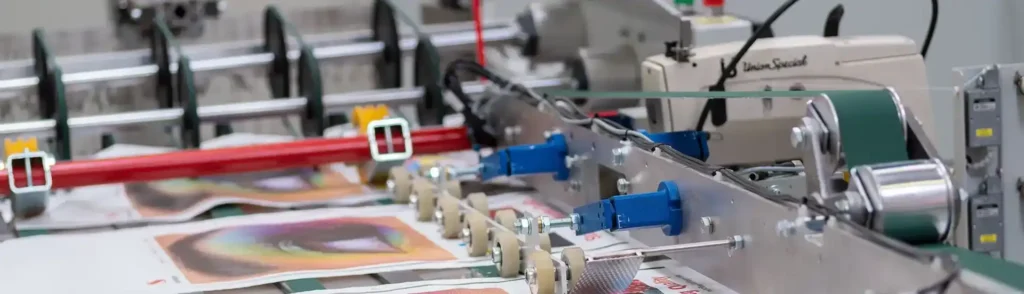
Start with polymer pellets and end with stacked pallets that survive corner drops—how does the journey unfold? In a sequence whose simplicity belies its sensitivity: tape extrusion and drawing; weaving; reverse printing on BOPP; lamination; slitting and gusseting; bottoming and valve forming; sewing or heat sealing; then validation and packing. A single nip pressure out of range; a single draw ratio mis‑set; a single seam bite too small—any one can unravel a week of otherwise perfect work. Process windows are not footnotes; they are the map.
- Tape extrusion and drawing — Denier and draw ratio decide the substrate’s tensile species; draw too little and the tapes creep; draw too much and they snap.
- Weaving — Mesh dictates surface flatness and puncture paths; miss‑picks become tear invitations; loom settings become seam tests in disguise.
- Reverse printing — Gravure or high‑definition flexo lays artwork on the film’s inner face; color management, register, and dot gain control decide the brand’s fate.
- Lamination — Extrusion tie or solventless PU adhesive bonds film to fabric; peel must be ductile at hems and needle points.
- Slitting, gusseting, cutting — Web becomes blanks with memory; edges predict how folds will live under load.
- Conversion — Open‑mouth sewn; pinch‑bottom sealed; valve and block‑bottom formed for de‑aeration and self‑standing geometry.
- Quality control — Tensile, peel, seam rupture, dimensional checks, and instrumented drop series from corners, edges, faces—because gravity never forgets.
Pitfall Box — Seam‑Limited Failures
Corner splits with intact fabric? That is the seam speaking, not the substrate. Increase seam bite, tighten stitch density, and confirm lamination peel at the hem fold. Many “weak fabric” complaints are really “hungry seams.”
Pitfall Box — Rub on Glossy Film
Gloss amplifies scuffs; matte hides them. If your route includes abrasive conveyors or rough bins, choose a matte or soft‑touch film, or raise gauge. Beauty and durability are not enemies; they just prefer a truce.
Applications Map for Printed BOPP Woven Bags
Grocery aisles and grain depots; feed mills and fertilizer yards; resin silos and cement warehouses—the geography is wide, but the reasoning is narrow: reliable strength, tight seams, readable brands. Examples help translate theory to route.
- Food staples and retail grains — Rice, flour, sugar, pulses. Moisture tolerance, sift‑proof seams, photo‑quality graphics for retail lighting.
- Animal nutrition and seeds — Abrasion‑resistant skins, venting for fluffy mixes, windows for visual confirmation.
- Fertilizers and agrochemicals — Higher denier, denser mesh, and anti‑slip exteriors for stable pallets in open yards.
- Industrial minerals and pellets — Block‑bottom valves improve cube and de‑aeration; matte films protect visuals in B2B logistics.
- Dry construction materials — Cement, grout, dry mix. Aggressive filling, sharp particles, high stack loads—seams and peels become the battlefield.
Key Parameters in Printed BOPP Woven Bags and Why They Matter
Parameter thinking is systems thinking. Denier walks with mesh; film gauge walks with finish; peel strength walks with seam bite. Choose in isolation and the pallet will teach you the cost. Choose together and the stack behaves like a single, predictable material.
| Parameter | What It Is | Why It Matters | How to Pick | Interactions |
|---|---|---|---|---|
| Tape denier | Linear mass of tapes (e.g., 600D–1500D) | Tensile and cut‑through resistance scale with denier | Anchor to fill mass and particle aggressiveness | Higher denier can offset lower mesh; affects GSM |
| Weave density | Ends × picks per inch (10×10–14×14) | Surface flatness, puncture path, seam anchoring | Raise for premium print or aggressive contents | Denser mesh may permit lighter denier |
| Base GSM | Fabric mass per area | Structural reserve vs. cost | Common 25 kg corridor ≈ 90–110 g/m² | Balances denier/mesh; drives weight and feel |
| BOPP film gauge & finish | Thickness and visual texture | Scuff survival, crease whitening, brand aesthetics | 20–25 µm robust for 25 kg; matte for rough routes | Finish choice changes perceived scuffing |
| Surface energy (dyne) | Ink and adhesive wetting window | Prevents ink pick‑off and delamination | ≈38–42 dyne/cm for PP films | Ages over time; re‑treat if needed |
| Lamination route & peel | Extrusion tie vs. solventless PU | Seam survivability; hem fold ductility | Specify min peel and coat weight | Peel brittleness causes corner cracks |
| Seam program | Stitch pattern, bite, stitches per dm, cords | Most frequent failure point in drop tests | Double chain; bite ≥ 25 mm; ~14 ± 2 stitches/dm | Filler cords improve sift‑proofing |
| Geometry & style | Open‑mouth, pinch‑bottom, valve block‑bottom | Cube efficiency, de‑aeration, line speed | Map to product aeration and filler type | Style changes pallet face and handling |
| Outer COF | Friction of outside surface | Pallet stability and shingling performance | Anti‑slip lacquers or low‑slip films | Tune to conveyors and stacking angle |
| Venting & micro‑perfs | Small perforations to vent air | Prevents ballooning; cleaner pallets | Use only for aerating powders | Unneeded perfs invite dust ingress |
| UV stabilization | Additives to resist sunlight | Retains tensile during outdoor staging | Target hours matched to real exposure | Verify with accelerated weathering |
| Liner strategy | LDPE or co‑ex PE inner bags | Heat seal, moisture and odor control | Use for sensitive or food‑grade content | Design for recyclability and QA sampling |
Systems Thinking in Printed BOPP Woven Bags: From Sub‑Problems to One Solution
Break the big decision into smaller, solvable questions: route, substrate, film and finish, lamination windows, geometry and seam rules, validation. Then stitch answers back into one coherent spec. Why this order? Because logistics defines risk; risk defines substrate; substrate defines film demands; film and fabric together define the bond; the bond constrains seam design; and the whole stack either passes validation—or it does not. Circular, yes; but practical.
Consider a rhetorical experiment: what if we chose every maximum—highest denier, densest mesh, thickest film, heaviest lacquer? Would the bag be unbreakable? Or simply expensive, stiff, and hard to run? Engineering is not the pursuit of maxima; it is the art of sufficiency. Enough to pass the drop regime. Enough to survive the route. Enough to delight the brand manager. No more, no less.
Economics of Printed BOPP Woven Bags: Where Cost Lives and How It Moves
The unit price hides three drivers: resin mass, conversion complexity, and printing amortization. Resin mass lives in denier, mesh, and film gauge. Conversion complexity lives in geometry (block‑bottom, valve), registered windows, specialty lacquers, and line speeds. Printing amortization lives in cylinders or plates and in how many SKUs chase the same base artwork. Push one, and the price moves—even if the quote sheet lists a hundred other line items.
- Reducing denier by 10% often reduces substrate mass by a similar fraction—but only if seams are not the true limiter.
- Moving from 20 µm to 25 µm film adds ~25% to film mass and raises nip load requirements.
- Block‑bottom valves add steps but return cubic efficiency and de‑aeration at high fill rates.
- Matte films reduce complaint rates in abrasive routes; gloss may suit protected retail corridors.
Quality Assurance for Printed BOPP Woven Bags: A High‑Signal Test Plan
A lean test suite catches real drift and ignores noise. Measure tensile on tapes and fabric; measure peel across web lanes and after crease conditioning; measure seam rupture with bite and stitch counts recorded; map outer COF so pallets stay honest; run instrumented drops—corner, edge, face—at heights that reflect your risk appetite. Add UV retention where staging under sun is expected. Then run live line trials and turn observations into specifications. That, not wishful thinking, is how complaints vanish.
| Checkpoint | Metric | When to Test | Signal |
|---|---|---|---|
| Tape/fabric tensile | Strip, grab | Incoming and post‑conditioning | Substrate reserve present |
| Lamination peel | N/25 mm; failure mode | Across lanes; after folding cycles | Ductile, not brittle |
| Seam rupture | Force at failure; bite; stitches/dm | Per style and SKU | Corner drops survive |
| COF mapping | Outer/inner COF | Before line trials | Stable pallets; smooth shingling |
| Drop series | Corner/edge/face @ 1.0–1.2 m | Pilot and PPAP runs | Seams and peels verified |
Sustainability and End‑of‑Life for Printed BOPP Woven Bags
A mono‑PP construction offers a clearer after‑use path than mixed substrates. Extrusion‑tied PP/PP laminates align with PP recycling streams where infrastructure exists. Liners introduce functional benefits but also separation needs. Light‑weighting cuts resin mass but must never precede re‑validation: if the seam is the limiter, reducing denier is cosmetic at best and risky at worst. Better to strengthen the seam and then remove mass. Reuse is often practical because inks sit beneath film; graphics wear slowly, structures last.
Use‑Case Specifications: Three Worked Paths in Printed BOPP Woven Bags
25 kg Jasmine Rice
900D tapes; 12×12 mesh; ~95 g/m² base; 20 µm matte film; extrusion tie +25 g/m²; open‑mouth sewn or block‑bottom; minimal micro‑perfs; optional anti‑slip.
50 kg Fertilizer
1000–1200D; 12×12 or 14×14; 25 µm film with anti‑slip; valve block‑bottom; double chain seam with filler cord; 1.2 m drop target.
Premium Pet Food
800–900D; 12×12 mesh; 25–30 µm matte/soft‑touch; solventless PU lamination; registered window; EZ‑open tear tape.
Troubleshooting Library for Printed BOPP Woven Bags
- Graphics scuffing → film too thin or gloss too unforgiving → increase to 25 µm matte; verify dyne and lamination.
- Corner splits → seam bite too small or peel brittle → enlarge bite; raise stitches/dm; insist on ductile peel.
- Pallet pyramids → outer COF too low or inconsistent → add anti‑slip or switch film; confirm on live conveyors.
- Ballooning at fill → insufficient venting → add micro‑perfs or choose valve style with engineered sleeves.
- Powder leakage → missing filler cords or low stitch density → add cords; increase stitches/dm; check seam crush.
Glossary Snapshot for Printed BOPP Woven Bags
BOPP — biaxially oriented polypropylene film. Denier — grams per 9,000 m of tape. GSM — grams per square meter, a mass proxy. COF — coefficient of friction. Reverse printing — artwork on the inner film face protected by lamination. Pinch‑bottom — heat‑sealed bottom. Valve block‑bottom — self‑standing, cubic sack with internal valve.
A Thought Experiment on Mass in Printed BOPP Woven Bags
Spec A uses 900D, 12×12, ~95 g/m² base with 20 µm matte film and extrusion tie; Spec B uses 800D, 12×12, ~88 g/m² base, 25 µm matte film, and adhesive lamination. Which wins? If your failure is seam‑limited, Spec B may pass at lower total mass because crease‑friendly peel protects the seam; if puncture by sharp grains is the true limiter, Spec A’s heavier substrate is wiser. Moral: find the limiter first, move the dial second.
Storage, Handling, and Palletization for Printed BOPP Woven Bags
- Acclimate materials; avoid edge dents from over‑tight straps.
- Tune anti‑slip rather than relying on wrap tension to hold unstable stacks.
- Rotate inventory to limit UV; mark outdoor staging durations on pallet labels.
- Gauge seam bite and stitches/dm on the line; small habits prevent big failures.
Buying Checklist for Printed BOPP Woven Bags
- State the product and style clearly: Printed BOPP Woven Bags, open‑mouth/pinch‑bottom/valve block‑bottom.
- Declare fill mass, product density, and whether content aerates.
- Choose denier and mesh corridors with a rationale (for example, 900D, 12×12 for 25 kg rice).
- Pick film gauge and finish; note any transparent windows.
- Specify lamination route and minimum peel with failure‑mode language.
- Lock a seam program: stitches per dm, seam bite, filler cords.
- Set dyne targets pre‑ and post‑treatment and how they are verified.
- Include UV packages and the exposure hours they must survive.
- Lay out the QA test plan and acceptance bands, including drops.
- Run a pilot and pallet validation before rolling out widely.
- What Are Printed BOPP Woven Bags and Why Do So Many Names Point to the Same Thing?
- The Material Stack Behind Printed BOPP Woven Bags
- Feature Set and Trade‑Offs in Printed BOPP Woven Bags
- Manufacturing Workflow: From Resin to Pallet in Printed BOPP Woven Bags
- Applications Map for Printed BOPP Woven Bags
- Key Parameters in Printed BOPP Woven Bags and Why They Matter
- Systems Thinking in Printed BOPP Woven Bags: From Sub‑Problems to One Solution
- Economics of Printed BOPP Woven Bags: Where Cost Lives and How It Moves
- Quality Assurance for Printed BOPP Woven Bags: A High‑Signal Test Plan
- Sustainability and End‑of‑Life for Printed BOPP Woven Bags
- Use‑Case Specifications: Three Worked Paths in Printed BOPP Woven Bags
- Troubleshooting Library for Printed BOPP Woven Bags
- Glossary Snapshot for Printed BOPP Woven Bags
- A Thought Experiment on Mass in Printed BOPP Woven Bags
- Storage, Handling, and Palletization for Printed BOPP Woven Bags
- Buying Checklist for Printed BOPP Woven Bags
- 1. Defining Fine vs. Coarse Yarns in BOPP Woven Bags
- 2. Strategic Applications: Matching Yarn Types to Industries
- 3. Equipment Excellence: Starlinger and W&H Machines
- 4. Cost-Benefit Analysis of Yarn Selection
- 5. Regulatory Compliance and Testing
- FAQs: Addressing Critical Client Concerns
- 6. Future Trends: Smart Packaging and Automation
“Why should manufacturers prioritize BOPP laminated woven bags for heavy-duty applications?” asked a logistics director during a packaging industry summit. “Because their structural integrity, print fidelity, and adaptability to diverse environments make them unmatched in balancing cost and performance,” replied Ray, CEO of VidePak. This exchange highlights the critical role of material science and advanced manufacturing in BOPP (Biaxially Oriented Polypropylene) woven bags—a market projected to grow by 6.8% annually, reaching $14.2 billion by 2030, driven by demand for durable, customizable packaging solutions.
1. Defining Fine vs. Coarse Yarns in BOPP Woven Bags
The performance of BOPP woven bags hinges on the polypropylene (PP) yarn specifications, categorized into fine yarns (1.5–2.5 mm width) and coarse yarns (3.0–5.0 mm width). These parameters directly influence functional attributes:
| Parameter | Fine Yarns | Coarse Yarns |
|---|---|---|
| Tensile Strength | 8–10 N/mm² | 12–15 N/mm² |
| Surface Finish | Smooth (ideal for high-res printing) | Textured (limited print clarity) |
| Weight | 80–100 g/m² | 120–150 g/m² |
| Flexibility | High (reduces brittleness) | Moderate |
| Cost | 15–20% higher | 10–15% lower |
Example: Fine yarns reduce ink bleed by 30% in premium retail packaging, while coarse yarns dominate in construction material transport, where abrasion resistance outweighs aesthetics.
2. Strategic Applications: Matching Yarn Types to Industries
2.1 Fine Yarns: Precision-Driven Use Cases
- Food & Pharmaceuticals: Smooth surfaces prevent particle adhesion, critical for FDA compliance.
- Retail Branding: 8-color flexo printing on BOPP laminates achieves Pantone-matched logos, as seen in VidePak’s pet food packaging.
- Lightweight Logistics: Reduced bag weight lowers shipping costs by 12–18% for e-commerce sectors.
2.2 Coarse Yarns: Heavy-Duty Durability
- Construction: Withstands 1,500 kg/m² stacking loads, exceeding ASTM D5265 standards.
- Chemical Transport: Resistant to sulfuric acid permeation, validated by ISO 22434 testing.
- Agriculture: UV-stabilized yarns maintain integrity under 500 hours of sunlight exposure.
VidePak’s dual-yarn production lines, powered by Austrian Starlinger circular looms, achieve thread densities of 14×14 per inch for fine yarns and 10×10 for coarse variants, optimizing strength-to-weight ratios.
3. Equipment Excellence: Starlinger and W&H Machines
VidePak’s $25 million investment in Starlinger’s AT-12 looms and W&H extrusion lines enables:
- Precision Weaving: ±0.1 mm yarn width tolerance, eliminating weak seams.
- High-Speed Production: 12,000 bags/hour, supported by 100+ circular looms.
- Custom Coatings: BOPP lamination thickness controlled to ±2μm, critical for moisture barriers in humid climates.
Case Study: A German chemical firm required UN-certified bags with anti-static liners. VidePak’s Starlinger-equipped lines produced 50,000 bags with 99.8% seam integrity, passing 6:1 safety factor tests.
4. Cost-Benefit Analysis of Yarn Selection
4.1 Material and Production Costs
| Factor | Fine Yarns | Coarse Yarns |
|---|---|---|
| Raw Material | 100% virgin PP (high clarity) | 70% virgin + 30% recycled PP |
| Energy Consumption | 18 kWh/100 bags | 15 kWh/100 bags |
| Labor Efficiency | 10% slower due to precision | 20% faster for bulk orders |
4.2 Sustainability Initiatives
- Recycled PP: 30% post-industrial content reduces CO₂ emissions by 1.2 tons per 10,000 bags.
- Biodegradable Additives: Oxo-degradable films decompose within 24 months, aligning with EU Directive 2019/904.
5. Regulatory Compliance and Testing
VidePak’s QA process ensures adherence to global standards:
- ISO 9001: 4-stage checks including MFI (Melt Flow Index) tests and 5-cycle drop simulations.
- FDA 21 CFR 177.1520: Food-grade PE liners for direct contact with grains and spices.
- EU REACH: BOPP coatings free from phthalates and heavy metals.
Example: A Japanese client achieved JIS Z 1539 certification using VidePak’s 8μm BOPP laminate, reducing rice spoilage by 18% in high-humidity storage.
FAQs: Addressing Critical Client Concerns
Q1: What is the minimum order quantity (MOQ)?
MOQ starts at 50,000 units, with 10-day lead times for designs under 5 Pantone colors.
Q2: How do BOPP bags compare cost-wise to HDPE alternatives?
BOPP bags cost 20–25% more upfront but offer 50% longer lifespan and 30% lower leakage rates.
Q3: Are these bags suitable for automated filling lines?
Yes. VidePak’s valve-sealed designs integrate with Rovema fillers at 200 bags/minute.
6. Future Trends: Smart Packaging and Automation
VidePak is piloting IoT-enabled bags with humidity sensors (2026 rollout) for real-time quality monitoring. Additionally, AI-driven defect detection on Starlinger lines has reduced waste by 18%.
Conclusion
Printed BOPP woven bags are redefining industrial packaging through precision engineering and material innovation. VidePak’s integration of Starlinger automation, global certifications, and circular design principles positions it as a leader in the $14.2 billion flexible packaging market. As Ray emphasizes: “In packaging, every thread counts. With our BOPP solutions, clients don’t just ship products—they deliver uncompromised reliability.”
This report integrates insights from Smithers Pira’s Global Flexible Packaging Market 2025 and ISO technical guidelines. For further details on sustainable practices, explore our analysis of multiwall laminated solutions and high-efficiency Starlinger systems.