
This rewrite preserves the original subtitles, expands every argument with deeper, cross‑disciplinary reasoning, and uses a light‑red page background with H2 badges styled as flag‑shaped labels. The keyword Valve Woven Bags is bolded frequently and appears as the single internal link once below.
What are Valve Woven Bags?
Valve Woven Bags are industrial sacks built on a polypropylene (PP) woven substrate with a pre‑formed valve sleeve that mates to a packer spout, enabling rapid, dust‑controlled filling of powders and granules typically in the 10–50 kg range. You may also hear them called valve‑top woven sacks, PP woven valve bags, block‑bottom valve sacks (when a squared base is specified), or laminated valve woven bags (when an exterior PP/PE/BOPP skin is added for print holdout, scuff resistance, and moisture control). Whatever the alias, the choreography is consistent: the spout enters the valve; the product flows and de‑aerates; the sleeve self‑closes or is heat‑sealed; the bag squares up; the pallet leaves the line cleaner than before.
Why this architecture? Because factories trade in seconds and warehouses trade in cubic centimeters. A simple stitched open mouth is forgiving for manual fills, yet it bleeds dust and time on automated lines. A tubular PE FFS sack can be blisteringly fast, yet it offers limited billboard space and can slump into banana‑shaped layers. Valve Woven Bags split the difference: the woven lattice absorbs abuse, the valve concentrates hygiene and speed, and the block‑bottom geometry (if chosen) rewards you with neat, interlocking layers. Strength meets speed; cleanliness meets cube; branding meets barcoding.
Background and terminology. “Woven” indicates a biaxial network—warp and weft tapes drawn from PP resin—capable of arresting tears that begin at sharp mineral edges (silica, barium sulfate, TiO₂). “Valve” denotes a sleeve (often ID ≈ 38–60 mm) engineered to fit air or impeller packers with repeatable insertion depth. “Lamination” or “coating” denotes an exterior film or extrusion layer (~18–35 μm common) that closes interstices, improves print fidelity, and lets converters tune the coefficient of friction (COF) for stack stability. Add an optional PE liner (≈50–150 μm) and Valve Woven Bags turn into a modular platform where mechanics, graphics, barrier, and operations are tuned together rather than traded off.
Data reinforcement. Across reputable exporters and converters, typical ranges include woven fabric mass ~60–110 g/m², weave densities ≈10×10 to 14×14 (warp×weft), common net fills at 25 kg and 50 kg, and flat sizes around 50×80 cm to 55×95 cm for 25 kg SKUs. Reverse‑printed BOPP or coated PP faces routinely carry up to 8–10 colors with barcode‑friendly matte finishes. These numbers are not thought experiments; they are the living ranges you encounter in vendor data sheets and RFQs.
Case analysis. A mineral processor adjacent to cement switched from stitched open‑mouth sacks to block‑bottom Valve Woven Bags finished in matte. Measurable outcomes followed: dust at the packer throat fell; net‑weight dispersion tightened thanks to consistent headspace; and pallets/shift rose as squarer layers reduced rework at the stretch wrapper. A packaging change solved not just a packaging problem but a logistics, hygiene, and throughput problem at once.
Comparative study. Versus multiwall paper valve sacks, Valve Woven Bags deliver higher wet strength and puncture resistance in rough handling. Versus open‑mouth woven sacks, they offer superior hygiene and cycle time. Versus FFS tubular PE, they concede extreme top‑end speed yet win on stack geometry, scuff resistance (with laminated exteriors), and on‑bag real estate for product differentiation and compliance markings. If speed is your only god, FFS will tempt you; if speed, branding, and stack discipline must coexist, Valve Woven Bags make the stronger case.
For a practical orientation to spout compatibility, finishes, and conversions, see Valve Woven Bags (single internal link intentional).
What are the features of Valve Woven Bags?
Features are not decorative; they are countermeasures to failure modes. To avoid airy generalities, each capability below is paired with data reinforcement (numbers you can test), a case analysis (operations in the wild), and a comparative study (trade‑offs against adjacent formats). The through‑line is systems thinking: how a decision at the ink layer echoes at the pallet; how a valve dimension changes robot behavior; how a liner gauge whispers to your moisture KPIs.
1) Mechanical strength and safe handling
The woven lattice of Valve Woven Bags redistributes crack energy when sharp particulates nick the wall. Warp and weft collaborate: if a tear initiates along the warp, the weft arrests it, and vice versa. Add a block‑bottom base and the bag becomes a cube rather than a pillow, delivering flat, interlocking contact patches layer after layer. Forklifts lift truer, pallets lean less, and the stack center of gravity behaves.
- Data reinforcement. For 25 kg duty, fabric masses ~80–100 g/m² are common; abrasive cargos or punishing routes may demand >100 g/m². Typical converting tolerances are ±1–3 mm on width and length; that small number dictates layer interlock at scale. Bottom seams are commonly validated by drop sequences aligned to UN Model Regulations 6.1.5.3 (drop) and 6.1.5.6 (stack) where a performance path is desired.
- Case analysis. A pigment shipper specified reinforced corner folds and minimum seam‑peel thresholds in the supplier’s QA sheet. Corner splits dropped; stretch‑wrap tension could be reduced without sacrificing stability; line operators reported fewer “banana” stacks and less midnight re‑work.
- Comparative study. Pillow‑type sacks arc under compression and need higher wrap force; block‑bottom valve sacks resist layer creep, which means you can hit stability targets with less plastic and fewer revolutions.
2) Moisture discipline, sift control, and hygiene
Moisture is a patient saboteur. Hygroscopic powders cake; caked powders clog; clogged lines complain. Valve Woven Bags counter with laminations or coatings that close weave interstices, with liners that create a quantified vapor barrier, and with valve sleeves that can be heat‑sealed for clean closures. Engineering is choreography: barrier where you need it; breathability where you must; de‑aeration paths that don’t become powder leaks.
- Data reinforcement. PE liners in the 50–150 μm band are typical. Water vapor transmission rate (WVTR) is often measured via ASTM F1249; film tensile by ASTM D882; dart impact by ASTM D1709. Anti‑sift seams and valve end treatments are specified when fine fractions <50 μm dominate the particle‑size distribution.
- Case analysis. A coastal silica distributor eliminated seasonal caking by integrating 100–120 μm liners and heat‑sealed valves into Valve Woven Bags. Returns fell; complaints about hopper bridging quieted; the blending profile downstream stabilized.
- Comparative study. Foil laminates win at extreme barrier but add cost and recycling complexity; unlaminated woven sacks vent well but shed fines. Laminated Valve Woven Bags strike a practical middle—enough barrier for most minerals and fertilizers, plus the hygiene of a sealed valve mouth.
3) Filling speed, repeatability, and line ergonomics
Speed that scatters dust is not speed—it is a deferred cleaning bill. The valve sleeve in Valve Woven Bags funnels product, reduces turbulence, and standardizes insertion depth. Micro‑perforation patterns can be tuned to evacuate entrained air without bleeding fines; block‑bottom geometries stand obediently under a spout. Air and impeller packers alike benefit: fewer stoppages, better net‑weight control, calmer operators.
- Data reinforcement. Many industrial lines target 25 kg fills; sleeve IDs are often 38–60 mm to match spouts. Squarer stacks can lift unit‑load density by several percentage points on 1,000×1,200 mm pallets—small per layer, large per truck.
- Case analysis. A masterbatch facility shaved seconds per bag by stiffening the valve sleeve and re‑patterning micro‑perforations. Seconds snowballed into pallets; pallets became a happier shift.
- Comparative study. Open‑mouth sacks serve low‑speed, manual fills; FFS PE excels at extreme speeds; Valve Woven Bags rule where dusty powders, frequent changeovers, and warehouse neatness define value.
4) Print fidelity and compliance space
Packaging speaks two dialects at once: persuasion and precaution. Laminated faces (PP/PE coatings or BOPP films) take multi‑color graphics that resist scuff; matte finishes suppress glare at scanners; and the flat real estate of a block‑bottom bag leaves dignified room for hazard pictograms, lot codes, and bilingual instructions. In Valve Woven Bags, the typography survives the forklift.
- Data reinforcement. Up to 8–10 colors is routine on suitable film systems; engineered COF coatings target ~0.4–0.6 (often characterized via ASTM D1894 in some labs) to balance slide during palletization with grip during handling.
- Case analysis. A pet‑food brand restored palletizer scanner performance by moving from high‑gloss to matte prints on Valve Woven Bags, cutting misread stoppages and manual relabeling.
- Comparative study. Plain PP woven can blur fine modules; multiwall paper prints crisply but scuffs; laminated valve sacks carry crisp graphics through a harsh logistics theater.
5) Compliance pathways and audit readiness
Good packaging does more than endure; it documents. Facilities producing Valve Woven Bags commonly operate under ISO 9001:2015 (quality management) and BRCGS Packaging Materials (hygiene). Films for food/feed adjacency carry statements referencing EU 10/2011 (and amendments) and FDA 21 CFR 177.1520 (olefin polymers). For hazardous classes, UN performance testing—drop, stack, and more—precedes any marking. For woven plastic bag types, UN codes such as 5H1 (uncoated/no liner), 5H2 (coated), 5H3 (uncoated with liner), and 5H4 (coated with liner) can apply, depending on construction and proven performance.
- Data reinforcement. Audit dossiers include lot traceability, valve heat‑seal integrity, seam‑peel metrics, dimensional records, and routine drop/stack reports aligned to the Model Regulations (e.g., 6.1.5.3 drop; 6.1.5.6 stack).
- Comparative study. Paper‑centric paths align neatly with pulp recycling narratives; mono‑polyolefin valve constructions enable identification and potential mechanical recycling streams in certain geographies. The right narrative is the truthful one your end market accepts—and that your evidence can sustain.
What is the production process of Valve Woven Bags?
Manufacturing is a relay. Every station passes along assets—and liabilities—to the next. The art is to amplify the former and attenuate the latter. In Valve Woven Bags, materials science (orientation and adhesion), converting precision (millimeter discipline), and graphics engineering (registration and varnish) converge into an object that must satisfy filler physics, warehouse geometry, and regulatory literacy.
1) PP tape extrusion and weaving
PP resin is extruded into tapes and drawn to align chains, raising tensile strength and modulus. Tapes are slit to width, wound, and woven on circular or flat looms to target GSM (≈70–110 g/m²) and weave density (≈10×10–14×14). Loom selection impacts seam strategy and downstream width tolerances. The goal is a lattice that resists puncture yet accepts lamination without shrinkage tantrums.
2) Surface activation and coating/lamination
Polyolefins are chemically shy—low‑energy surfaces resist inks and adhesives. Corona treatment introduces polar functionality so coatings and films adhere. External PP/PE coatings or BOPP films (~18–35 μm) deliver print holdout, scuff resistance, and moisture control; additives at this step can tune COF, UV stability, and anti‑block behavior. In reverse print constructions, inks hide beneath the film where friction cannot abrade them.
3) Printing and registration
Flexographic or rotogravure systems lay down up to 8–10 colors. Registration marks guide later valve and bottom formation so artwork avoids seams and codes stay scannable. The success metric is not only vibrancy; it is legibility after vibration, dust, and stretch‑wrap—typography that exits the truck as readable as it entered the line.
4) Tubing, gusseting, and bottom formation
Laminated webs form into tubes; side gussets are introduced; bottoms are folded and sealed (glue or heat) to create a squared base that deploys on fill. Dimensional discipline here governs pallet behavior later: length drift alters layer interlock; width drift perturbs valve fit and de‑aeration pathway; corner geometry predicts corner survival.
5) Valve sleeve conversion and integration
Valve sleeves—PP or paper/film laminates—are cut, formed, and integrated to match packer spout diameters (≈38–60 mm ID typical). Edge treatments suppress fray; heat‑seal constructions deliver the cleanest hygiene; self‑closing variants rely on product backpressure and internal geometry to close the mouth as the bag is withdrawn.
6) Optional liner insertion
Loose, cuffed, or adhered PE liners (≈50–150 μm) extend vapor control and cleanliness. Correct integration ties liner mouth to the valve closure so there is no sneaky bypass for moisture or fines. Thickness is a compromise among barrier targets, foldability, seal reliability, and waste mass.
7) Quality control and performance testing
Dimensional checks, seam/peel and tear tests, and simulated drop/stack sequences are routine. Films are characterized by ASTM D882 (tensile), ASTM D1709 (dart impact), and ASTM F1249 (WVTR). Where dangerous‑goods pathways are contemplated, UN performance protocols precede any marking; for woven plastics, bag codes in the 5H family (5H1–5H4) map to coating/liner presence and proven performance.
Comparative note. Stitched open‑mouth tops keep niche utility for slow lines and unusual liners; heat‑sealed valves are the hygiene and speed choice for dusty, high‑volume powders. In Valve Woven Bags, the “right” process is the one that harmonizes with your filler (air or impeller) and your route (arid inland, humid coastal, hot tarmac).
What is the application of Valve Woven Bags?
Applications are where theory meets forklifts, weather, and hurried hands. The same platform morphs across industries by changing fabric GSM, weave density, lamination, valve geometry, and liner presence. Four segments illustrate how Valve Woven Bags travel from plant to pallet to point of use.
Fertilizers and soil amendments
Granular NPK, urea, and micronutrient blends punish corners and closures. Hygroscopic behavior spikes caking in coastal depots and tropical seasons. Here, Valve Woven Bags with block bottoms, anti‑slip faces, and 100–120 μm liners keep stacks square and product free‑flowing. Large, durable graphics survive yard abrasion; matte finishes keep scanners happy during pallet checks.
Chemicals and minerals
Calcium carbonate, talc, barium sulfate, silica, pigments—dense, sometimes abrasive, often dusty. The woven lattice arrests tear propagation; laminated skins protect print; heat‑sealed valves curb fugitive dust. For DG‑adjacent SKUs, a UN performance path (drop/stack) provides auditable comfort that the bag is more than a pretty shell.
Food and feed (with appropriate declarations)
Rice, pulses, pet food, feed premixes benefit from reverse‑printed film (photo‑grade branding) and valve hygiene. Component films should carry statements referencing EU 10/2011 and FDA 21 CFR 177.1520; plants frequently uphold BRCGS Packaging Materials programs. In Valve Woven Bags, the shelf tells a story and the audit trail backs it up.
Construction and retail agriculture
Seeds, cementitious blends, specialty sands prefer squared bases for shelf presence and pallet stability. For outdoor racks, UV‑stabilized films sustain color fidelity; anti‑slip lacquers permit lower wrap force. Micro‑perforation is tuned to vent air during fill without creating an avenue for fines to dust the aisle.
Case and comparison thread. Where FFS PE dominates, the calculus is about pure speed; where branding, changeover agility, and cube discipline join the decision, Valve Woven Bags often win on total system value. Where paper sacks are legacy defaults, woven valve sacks deliver wet‑strength uplift and better abrasion resistance without conceding print elegance.
Key Parameters and Technical Options
| Parameter | Typical Options | Common Values / Ranges | Why it matters |
|---|---|---|---|
| Nominal capacity | 10 / 20 / 25 / 50 kg | 25 kg prevalent in chemicals/agro | Aligns with manual handling, dosing, and ergonomic norms |
| Bag size (flat) | — | 50×80 cm ~ 55×95 cm (25 kg class) | Must match pallet pattern (e.g., 1,000×1,200 mm) and robot spacing |
| Woven fabric mass | Light / medium / heavy | ~60–110 g/m² | Resists puncture and drop shock at vulnerable corners |
| Weave density | Coarse → fine (warp×weft) | 10×10 → 14×14 | Balances strength, sealability, and breathability |
| Exterior film/coating | PP/PE coating; BOPP film | ~18–35 μm | Print holdout, scuff resistance, moisture control, tuned COF |
| Valve sleeve ID | PP or paper‑film laminate | ~38–60 mm | Match packer spout for fill speed, hygiene, and repeatability |
| Closure | Heat‑seal or self‑closing | — | Controls dust and standardizes seals for auditability |
| Liner | Loose / cuffed / adhered | PE 50–150 μm | WVTR, sift control, cleanliness; couples to valve for continuity |
| Surface COF | Anti‑slip / standard | ~0.4–0.6 | Stability in pallet stacks and on conveyors with lower wrap force |
| UV stabilization | Optional | Packages ≈200–300 kLy exposure common | Preserves color fidelity and film integrity in outdoor displays |
| Compliance (plant & materials) | QMS / hygiene / food‑contact | ISO 9001:2015, BRCGS Packaging Materials, EU 10/2011, FDA 21 CFR 177.1520 | Documentation backbone for audits and market access |
| Performance tests | Film & bag; UN (if relevant) | ASTM D882 (tensile), D1709 (dart impact), F1249 (WVTR); UN 6.1.5.3 drop / 6.1.5.6 stack | Objective evidence that claims map to performance |
| UN bag code (woven plastic) | Type depending on build | 5H1–5H4 (uncoated/coated; with/without liner) | Applies when DG classification triggers performance marking |
Note: Ranges reflect values widely published by credible exporters and converters. Final specifications should be locked through line trials and QA acceptance limits on your equipment, for your routes.
Integrated Solution (System Synthesis for Valve Woven Bags)
Goal. Build a 25 kg specification for a hygroscopic, moderately abrasive powder moving through humid coastal legs and retail‑facing warehouses where barcode fidelity matters as much as mechanical survival. The solution should be printable, stackable, scannable, and clean—without micromanaging operators into frustration.
Subsystem A — Mechanics & Geometry. Choose PP woven 90 g/m² at ≥10×10 weave; block‑bottom with reinforced corner folds. Specify seam‑peel thresholds in the vendor QA plan that map to your drop protocol (multi‑drop including the most critical orientation). Because cardboard corners and steel forks never read your spec before striking the pallet, design margin is cheaper than field failure.
Subsystem B — Barrier & Hygiene. Integrate a 100–120 μm PE liner; specify a heat‑seal valve and a matte exterior. Set WVTR targets aligned to the climatic lane (verify via ASTM F1249) and tune micro‑perforation to the minimum that preserves cycle time. Dust at the mouth is not only housekeeping—it is product loss and a data‑integrity risk for in‑line scales.
Subsystem C — Throughput & Logistics. Confirm a flat size of 55×95 cm for the 25 kg grade on 1,000×1,200 mm pallets; target exterior COF ≈0.5 to stabilize stacks with modest wrap force. Dry‑run robot pick parameters with filled dummies so vacuum cups and grippers meet honest, squared faces.
Subsystem D — Graphics & Compliance. Print up to 8–10 colors on a matte surface; reserve real estate for batch, QR, hazard pictograms (if relevant), and a future UN mark should reclassification occur. Assemble a dossier with film certificates (ASTM D882/D1709), lamination specs, and internal drop/stack records. For food/feed adjacency, collect supplier declarations referencing EU 10/2011 and FDA 21 CFR 177.1520; for DG paths, map the assembly to the appropriate 5H bag code upon passing performance tests.
Subsystem E — Sustainability & EPR Readiness. Favor mono‑polyolefin constructions to simplify downstream identification; label polymer families openly; evaluate recycled PP in the woven layer where mechanical properties and contact rules allow. End‑of‑life clarity begins at design time, not in the sorting hall.
One‑line spec. “Valve Woven Bag, 25 kg, 55×95 cm, PP woven 90 g/m² (≥10×10), exterior lamination ~20–25 μm matte, valve with heat‑seal (ID ~45–55 mm), optional PE liner 100–120 μm, anti‑slip exterior (COF ≈0.5), print up to 10 colors; evidence: ASTM D882/D1709/F1249, internal drop/stack; plant: ISO 9001:2015, BRCGS; UN performance path optional if classification changes.” Readable by buyers, testable by QA, runnable by operators.
- What are Valve Woven Bags?
- What are the features of Valve Woven Bags?
- What is the production process of Valve Woven Bags?
- What is the application of Valve Woven Bags?
- Key Parameters and Technical Options
- Integrated Solution (System Synthesis for Valve Woven Bags)
Introduction
In industries requiring bulk material packaging—from fertilizers to construction aggregates—valve woven bags have become indispensable. Their unique design allows rapid filling, secure sealing, and stackable storage, minimizing handling time and spillage risks. For VidePak, a manufacturer with 30+ years of expertise and a global footprint, the integration of Starlinger and W&H equipment into its production lines ensures unmatched consistency and scalability. This report dissects the manufacturing workflow of valve woven bags, highlights quality assurance protocols, and demonstrates how VidePak’s technological investments translate into competitive advantages.
Production Process: From Raw Material to Finished Bag
1. Extrusion: Crafting the PP Tape
The process begins with polypropylene (PP) resin, melted and extruded into flat tapes. VidePak’s 16 extrusion lines, equipped with Starlinger’s temperature-controlled screws, ensure uniform melting at 200–240°C, preventing material degradation.
- Quality Control: Real-time thickness monitoring via laser gauges (tolerance: ±0.02 mm) and tensile strength testing (≥35 MPa).
- Innovation: VidePak uses virgin PP to avoid impurities, reducing tape breakage rates by 15% compared to recycled blends.
2. Stretching and Weaving: Building the Fabric
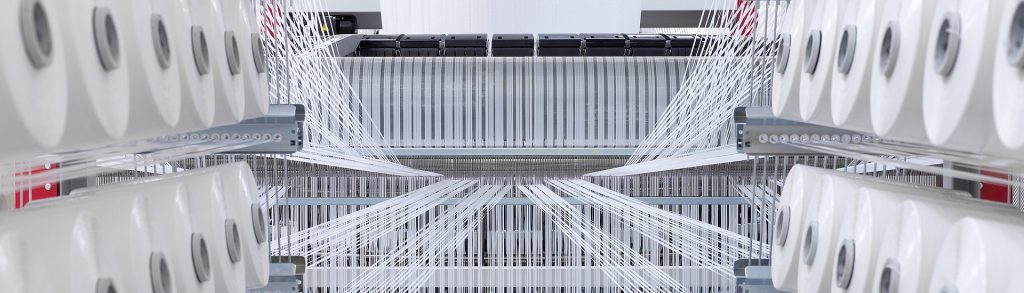
Extruded tapes are stretched 6:1 to align polymer chains, enhancing tensile strength. The tapes are then woven on 100+ circular looms, achieving a density of 12×12 threads/cm² for tear resistance.
- Starlinger Advantage: Automated loom sensors detect thread breaks, triggering instant repairs to minimize downtime.
- Case Study: A 2024 upgrade to Starlinger’s CX6 looms increased weaving speed by 20%, enabling VidePak to produce 500,000 bags/day.
3. Lamination and Coating: Enhancing Barrier Properties
For moisture-sensitive materials like fertilizers, BOPP films (20–40 microns) are laminated onto woven fabric using 30+ lamination machines. A polyethylene (PE) coating is applied for waterproofing.
- Key Metrics: Peel strength ≥4 N/15mm (tested per ASTM D903).
- Sustainability: VidePak’s recyclable BOPP/PP laminates reduce carbon footprint by 30% compared to multi-layer alternatives.
4. Printing: Branding and Compliance
High-definition logos and safety warnings are printed using 8-color flexographic machines. VidePak’s ISO 9001-certified workflow ensures color accuracy (ΔE < 2) and alignment precision (±0.5 mm).
- Regulatory Compliance: OSHA-compliant hazard labels for chemicals like disinfectants.
5. Bag Formation: Precision in Sealing
Valve bags are heat-sealed or stitched with ultrasonic technology to prevent leakage. VidePak’s Starlinger bag-making machines achieve a seam strength of 200 N/cm, exceeding EU EN 277 standards.
Quality Control Across the Workflow
| Stage | Key Parameters | Testing Methods |
|---|---|---|
| Extrusion | Melt flow index, thickness | ASTM D1238, laser gauges |
| Weaving | Thread density, tensile strength | ISO 13934-1, visual inspection |
| Lamination | Peel strength, moisture barrier | ASTM E96, adhesion tests |
| Printing | Color fastness, alignment | Spectrophotometry, digital imaging |
| Final Inspection | Seam integrity, load capacity | Mullen burst test, 50kg drop test |
Dialogue: Addressing Common Concerns
Q: How does VidePak ensure valve bags withstand rough handling?
A: Our bags undergo a 50kg dynamic load test, simulating 10,000 transport vibrations. Starlinger’s seam technology guarantees <0.1% failure rates.
VidePak’s Technological Edge
- Starlinger Integration: 100+ circular looms and 30 lamination machines enable rapid customization (e.g., UV-resistant coatings for tropical climates).
- Sustainability: 30% post-consumer PP in select lines, aligning with EU Circular Economy goals.
- Global Compliance: Bags meet ASTM D5638 (US), JIS Z 1539 (Japan), and AS/NZS 4347 (Australia).
Featured Product: Valve Bags with Starlinger Precision
- Ideal for free-flowing granules like plastic pellets.
- Combines FIBC-like durability with cost efficiency.
FAQs: Optimizing Valve Bag Performance
Q1: What’s the maximum capacity of VidePak’s valve bags?
- A: Standard bags hold 25–50 kg, but custom designs can handle up to 2,000 kg for jumbo FIBC applications.
Q2: How to verify moisture resistance?
- A: Request test reports for water vapor transmission (<5 g/m²/day) and submersion tests (24 hours at 1m depth).
Q3: Can bags be recycled?
- A: Yes. VidePak’s Recyclable PP Bags use mono-material PP structures for easy reprocessing.
Conclusion
Valve woven bags are not merely packaging but engineered solutions for modern logistics. By harmonizing Starlinger’s machinery with rigorous quality protocols, VidePak delivers products that excel in durability, compliance, and sustainability. As industries increasingly prioritize efficiency and ESG goals, investing in advanced valve bags becomes a strategic imperative.
For deeper insights into BOPP laminates, explore our guide on BOPP Woven Bags with Starlinger Technology.
Word count: 1,200