
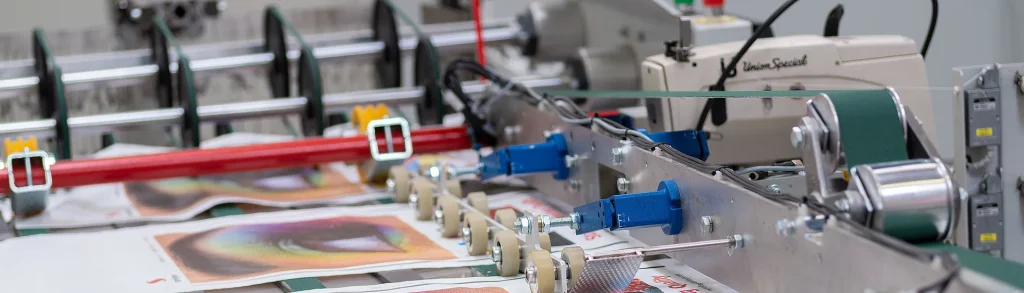
What are HDPE Woven Fabric Bags and what else are they called?
A packaging bag can be a simple container, or it can be a control system. HDPE Woven Fabric Bags belong to the second category: they are industrial sacks engineered to protect moisture-sensitive and handling-sensitive goods across uncertain supply chains. Instead of relying on one “miracle layer,” these bags combine a woven structural frame with barrier components (liners, coatings, laminations) and closure architecture (sewn, sealed, valve, pinch) to manage a practical mix of risks: water vapor ingress, condensation events, abrasion, puncture, dust leakage, and print degradation. If your product cakes, clumps, softens, corrodes, loses aroma, or drifts out of specification when humidity fluctuates, then the bag is not merely packaging; it becomes an early-stage quality-control lever.
In everyday procurement language, people often talk as if all woven sacks are the same. Yet anyone who has dealt with “container rain,” port dwell-time delays, or forklift scuff knows a harsher truth: two bags can look similar on the outside and behave like different species in the field. The difference is rarely visible at first glance. It hides in polymer choice, tape orientation quality, weave density, liner sealing discipline, laminate bonding, and whether the manufacturer treats process capability as a production philosophy rather than a slogan. That is why this rewritten guide keeps HDPE Woven Fabric Bags as the recurring anchor phrase, while also using realistic buyer terminology that appears in RFQs and search behavior.
You may hear the same product described with different market names. To reduce misunderstandings, treat these as synonyms only after confirming structure details (liner type, lamination, closure method, and performance targets).
- HDPE Woven Bags
- HDPE Woven Sacks
- High-Density Polyethylene Woven Bags
- HDPE Fabric Woven Bags
- Moisture-Proof HDPE Woven Bags
- HDPE Woven Bags with Liner
- Laminated HDPE Woven Fabric Packaging
If you feel a slight déjà vu reading the names above, that is normal. The market often compresses complex structures into short phrases, and those short phrases then travel from buyer to buyer. The safeguard is simple but disciplined: do not buy a name; buy a structure, and verify it with testable targets. That is the thread running through the rest of this rewritten text.
What materials build HDPE Woven Fabric Bags into a true moisture-protection system?
To understand why HDPE Woven Fabric Bags are repeatedly selected for humid climates and long-haul logistics, it helps to think in layers, not labels. A woven sack is not one material; it is a material ecosystem. The woven shell behaves like a textile, but it is produced from oriented polymer tapes. The liner behaves like a film barrier, but it must survive folding, sealing, and abrasion from the outside shell. The lamination behaves like a protective skin, but it must remain bonded through friction, compression, and temperature cycling. If a single layer fails, the entire system can lose its mission. So the right question is not “What is the bag made of?” but “What job does each material perform, and what happens if it drifts?”
🧱 Woven HDPE shell: the load-bearing frame that resists tears, punctures, and abrasion during real handling.
🌫️ Inner liner: the primary moisture and containment barrier that limits vapor movement and prevents dust leakage.
🛡️ Coating or lamination: a surface-defense layer that improves abrasion resistance, print durability, and moisture adhesion behavior.
Below is a deeper, more “factory-real” look at the material stack commonly found in industrial HDPE woven packaging bags, including the engineering tradeoffs that buyers should actually care about: cost stability, processability, and risk reduction.
1) HDPE resin (the polymer foundation)
High-density polyethylene is produced from ethylene and is valued in woven packaging for a practical trio of reasons: it is naturally hydrophobic, it is chemically stable against many common industrial substances, and it can be processed into oriented tapes with strong tensile performance when manufacturing discipline is high. Hydrophobic does not mean “immune to humidity,” but it does mean the polymer does not absorb water as a fiber would. This becomes important during repeated humidity swings, because the bag itself is less likely to act like a sponge. In cost terms, HDPE is widely available, and its price is often stable relative to specialty barrier polymers. Yet the “total bag cost” is rarely dictated by resin alone; it is dictated by the chosen structure: liner type, lamination, printing, and quality control depth.
2) Oriented slit tapes and woven fabric (the structural engine)
The woven “fabric” in HDPE Woven Fabric Bags is created from extruded film that is slit into tapes and stretched. Stretching aligns polymer chains and increases strength; weaving converts those tapes into a load-bearing textile-like tube or sheet. Here is the first uncomfortable truth in woven packaging: two factories can use “HDPE” and still deliver different outcomes because tape uniformity and orientation quality vary with equipment, filtration, temperature control, and operator discipline. When tape denier fluctuates, weave density fluctuates. When weave density fluctuates, local weak points appear. And weak points do not announce themselves; they wait for the forklift corner or the rough pallet board. The material is the same, but the behavior is not.
3) Inner liners (the primary moisture barrier)
A woven shell contains micro-gaps between tapes. Those gaps are normal; they are part of what makes weaving possible. But water vapor is opportunistic: it does not need a big hole; it needs a pathway. That is why HDPE woven bags with PE/OPP liners are widely used for hygroscopic powders and granules. Liner films are often specified by thickness and sealing behavior. In many high-barrier designs, liner thickness is commonly in the 0.03–0.05 mm class; thickness matters, but sealing discipline matters more. If a liner is thick but poorly sealed at the top, it becomes a strong umbrella with the handle missing. If a liner is thin but perfectly sealed, it may outperform expectations. The buyer’s job is to translate “moisture protection” into measurable targets and then verify both film quality and seal integrity.
4) Coatings and laminations (surface behavior, print life, and abrasion protection)
When a bag slides across concrete, friction does not ask whether your WVTR is excellent. It simply grinds. When a bag is stacked under compression, the corners do not admire your logo; they stress the laminate bond and the seam. Coatings (often acrylic or silicone systems) and BOPP laminations are used to strengthen surface durability, enhance print quality, and reduce how easily surface moisture clings during condensation events. Lamination thickness may commonly fall in the 12–25 μm range for BOPP films, but performance depends on adhesive, curing, and surface preparation. Matte and gloss options are not just aesthetic; they change scuff visibility and handling feel, and they can influence how droplets spread or bead during “wet-surface moments.”
5) Additives and functional treatments (stability boosters)
Real-world supply chains include outdoor exposure, static-prone powders, and long storage periods. Additives provide controlled stability: UV stabilizers slow embrittlement; antistatic treatments reduce dust attraction and discharge risk; slip and antiblock additives support film runnability and reduce sticking; color masterbatch supports branding and can protect light-sensitive goods. Sustainability programs may request recycled content, but recycled content must be managed as a design decision, not an afterthought. The smarter question is: how much recycled content can be used while preserving the target mechanical and barrier performance for your specific route?
If you want fewer disputes, specify the structure in plain language: “woven HDPE fabric + inner liner type + closure method + optional lamination.” Then attach measurable targets. Names travel; structures perform.
What performance features make HDPE Woven Fabric Bags stand out in demanding logistics?
When someone says, “We need stronger bags,” they often mean something more complex: stronger against what, and when? Strength against a steady pull is not the same as strength against abrasion. Strength in a lab is not the same as strength at a humid port where pallets sit for days. The advantage of HDPE Woven Fabric Bags is not a single heroic attribute; it is the ability to tune multiple attributes into one coherent performance envelope. Think of it as a toolkit: the woven frame provides strength, the liner provides barrier performance, the lamination provides surface defense, and the closure architecture decides whether your protection ends at the seam or continues through it.
Moisture defense by design
Hydrophobic polymer behavior plus liner-based WVTR control means moisture-proof HDPE woven bags can slow moisture gain curves long enough to protect product value.
High tensile and stable geometry
Oriented tapes and balanced weaving support pallet stability, reducing bag deformation that can trigger stack collapse or automated line problems.
Field durability under abrasion
Lamination and controlled fabric quality help the bag survive the silent killers: sliding friction, corner scuff, and repetitive handling.
Now let’s deepen each feature instead of listing it like a brochure. Why? Because shallow descriptions lead to shallow specifications, and shallow specifications lead to expensive surprises.
Moisture resistance is a chain, not a claim
Moisture-related failure often looks like “a product problem” until you trace it backward. Fertilizer clumps; a buyer blames formulation. A chemical powder cakes; a plant blames storage. Coffee loses aroma; a brand blames beans. Yet packaging often sits at the first controllable point. The moisture-protection chain includes permeation through films, leakage through seams, and condensation contact during temperature cycling. HDPE Woven Fabric Bags work well when they address all three. The woven shell protects the liner, the liner limits permeation, and lamination reduces surface wetting and abrasion. But the chain breaks at the seam if closure architecture is neglected. So ask the uncomfortable question: is our moisture risk more about vapor permeation, seam leakage, or condensation contact? The bag can be tuned once you answer that question honestly.
Strength is directional, and handling is chaotic
Woven structures have warp and weft behavior. They respond differently depending on stress direction. In reality, stress direction is rarely polite. A bag may pass a neat tensile test yet fail at a corner under drop impact. It may hold weight in static stacking yet abrade through during forklift transfer. That is why “strength” should include tensile performance, seam strength, tear resistance, and puncture tolerance. The best high-density polyethylene woven bags are designed like systems: tape quality supports fabric uniformity; fabric uniformity supports predictable tear behavior; predictable tear behavior supports reliable handling across millions of units.
Customization is operational engineering
Customization is not a color choice; it is a performance choice. You can choose liner type to meet a moisture target, choose lamination type to match abrasion severity, choose closure style to control dust and leakage, and choose dimensional tolerances that prevent filling-line downtime. That is why the most mature buyers treat customized industrial HDPE woven packaging bags as a cost-control strategy: less product loss, fewer claims, fewer stoppages, fewer reworks. Is that not the true meaning of “cost efficiency”?
How are HDPE Woven Fabric Bags produced from raw material screening to final inspection?
Manufacturing quality is often described as “strict QC.” That phrase sounds reassuring, but it is vague. The more useful way to describe production is by process stages and failure modes: what can go wrong at each stage, and how is the risk controlled before it becomes a defect? In HDPE Woven Fabric Bags, the defect risk often begins upstream. If resin contamination causes gels, tapes weaken. If tapes weaken, fabric uniformity suffers. If fabric uniformity suffers, lamination bonding becomes inconsistent. If lamination bonding becomes inconsistent, abrasion failures appear. And if abrasion failures appear, the liner becomes exposed. The result is a chain reaction: one upstream drift becomes a downstream failure. That is why an end-to-end view matters.
VidePak emphasizes process stability through premium production systems: Austrian Starlinger lines for extrusion and weaving, and German W&H technologies for converting and printing. The practical goal is repeatability at scale, not just good samples.
A) Front-end raw material selection and incoming inspection
Everything begins at the gate. Resin grade selection targets consistent extrusion behavior and reliable tape orientation. Incoming checks typically focus on melt flow behavior, contamination screening, and additive verification so that tapes do not carry hidden weak points. Liner films are checked for thickness and sealing behavior because a liner’s “seal window” determines whether production can maintain barrier integrity at speed. The theme is simple: measure what matters before it enters production, because late-stage inspection cannot un-make a weak tape.
B) Tape extrusion, slitting, and stretching
Resin is melted, filtered, and extruded into film. The film is slit into tapes, then stretched to orient polymer chains. Stretch ratio, temperature stability, and filtration cleanliness influence tape strength and uniformity. Buyers often do not see this stage, but it is the stage that makes the woven shell either predictable or unpredictable. Ask yourself: would you rather pay for a little more process discipline now, or pay for claims later? The answer depends on your route risk, but the logic remains.
C) Weaving into tubular fabric
Tapes are woven on circular looms into tubular fabric. Weave density, tension control, and broken-tape management influence tear behavior and dimensional stability. If the weave is inconsistent, printing becomes inconsistent, lamination becomes inconsistent, and converting becomes inconsistent. The bag becomes a lottery. A mature plant runs weaving like a controlled operation with monitoring and correction, not like a craft project.
D) Coating or lamination
When designs require surface reinforcement and strong printing, fabrics may be coated or laminated with BOPP films. Adhesive control, curing discipline, and peel strength validation matter. A laminate that looks fine on day one can delaminate after weeks of compression and friction. So verification must reflect the field: rub resistance, scuff simulation, and bond-strength checks. In many real disputes, the issue is not that the bag “wasn’t laminated,” but that the bond was not robust under actual handling.
E) Converting: cutting, forming, printing, and closure
Converting turns fabric into a bag. It is also where tolerances begin to matter. Bag length drift can jam automated filling systems; valve geometry drift can leak dust; stitching drift can reduce seam strength. Printing should be tested for adhesion and rub resistance because labels and batch codes are not decoration; they are compliance and traceability tools. If the bag is for sensitive powders, liner sealing steps become especially critical, because leakage paths often originate at closures rather than in the middle of the film.
F) Back-end quality inspection and release discipline
A strong quality system is layered: incoming inspection, in-process monitoring, finished-goods testing, and sampling control. For HDPE Woven Fabric Bags, meaningful finished-goods checks include dimensions, weight consistency, tensile strength in both directions, seam strength, and barrier verification when liners are used. Sampling plans should be transparent and appropriate to volume. A small pilot batch can pass with ease; a multi-container order demands statistical discipline. Quality is not a speech; it is a repeatable habit.
Where are HDPE Woven Fabric Bags applied, and how should usage shape the bag design?
Applications are not a list; they are a risk map. A bag that performs beautifully for dry granules in a temperate warehouse may fail for hygroscopic powders crossing humid sea routes. So instead of naming industries only, it is more useful to pair industries with their dominant failure modes and the design features that neutralize those modes.
- Agriculture and fertilizer logistics: humidity-driven caking risk, outdoor exposure, rough handling. Often calls for moisture-proof HDPE woven bags with liners plus UV stabilizers.
- Construction powders: cement and additives are notorious for moisture sensitivity and hardening. Long dwell times and repeated transfers reward liner integrity and abrasion protection.
- Chemicals and industrial minerals: dust control, chemical compatibility, and consistent labeling. Valve formats and antistatic options may be relevant depending on powder behavior.
- Food ingredients where polymer packaging is appropriate: flour, starch, sugar, and dry ingredients often require stable moisture behavior and clean containment. Liner material selection and seal integrity become central.
- High-value powders: when product loss is expensive, the bag becomes a controlled barrier system with enhanced seams, traceability, and in some cases dual-liner strategies.
A useful rule of thumb: specify the bag around the most expensive failure mode, not the most visible feature. Moisture damage, dust leakage, and downtime often cost far more than an incremental upgrade in bag structure.
How does VidePak control and guarantee quality for HDPE Woven Fabric Bags in a practical, step-by-step way?
Quality is often discussed as if it lives only in a laboratory. Yet quality is built first on the production floor, then confirmed by testing. If you want a supplier relationship that survives scale, you want a quality system that does four things at once: it follows mainstream standards, it controls raw materials, it stabilizes processes with capable equipment, and it verifies output through layered inspection. Below is a step-by-step description that procurement teams can audit and operations teams can respect.
Step 1: Produce and test against mainstream standards and repeatable methods
VidePak aligns product and test planning with globally recognized frameworks such as ISO, ASTM, EN, and JIS, translating them into factory work instructions. This is not about collecting logos. It is about using known methods for measuring key outcomes: tensile performance, dimensional stability, barrier behavior where relevant, seam strength, and print durability. A standard is a shared language. Without a shared language, every dispute becomes a debate about opinions rather than evidence.
Step 2: Use virgin raw materials sourced from major producers
Virgin resin reduces contamination risk and improves predictability in extrusion and tape formation. When raw materials drift, everything drifts: tape uniformity, fabric stability, lamination bonding, and ultimately performance. A stable supply base is a hidden competitive advantage because it reduces the probability of “same spec, different outcome.” Where sustainability programs request recycled content, it should be introduced only with controls that preserve the target performance envelope for high-density polyethylene woven bags.
Step 3: Build process capability using premium equipment
Equipment is not a trophy; it is a control tool. VidePak highlights Austrian Starlinger systems for extrusion and weaving, and German W&H technologies for converting and printing, because stable equipment supports stable output. Stable output matters most when you scale: what you approve in samples should remain what you receive in container after container. When tolerances tighten for automated filling, the value of consistent converting and printing increases even further.
Step 4: Execute layered inspection (incoming, finished, and sampling-based)
- Incoming inspection: resin behavior, contamination screening, liner thickness and seal behavior, additive verification.
- Finished-goods inspection: dimensions, weight consistency, tensile performance, seam strength, and barrier-related checks when liners are used.
- Sampling inspection: shift-based and batch-based sampling with clear acceptance criteria, including retention samples for traceability.
A quality system like this does not eliminate every defect; it reduces defect probability and reduces defect impact. It also changes the tone of collaboration: instead of arguing about whether a bag “looks fine,” teams can discuss whether a bag meets the same measurable targets every time.
Engineering moisture protection with systems thinking: breaking one big problem into smaller solvable parts
Moisture damage is rarely caused by a single dramatic event. It is usually the result of many small opportunities: micro-gaps between tapes, seam channels, temperature cycling, condensation droplets, and prolonged exposure time. If that sounds overwhelming, it should not. Systems thinking is simply a habit of dividing complexity into smaller problems, solving each with a targeted control, and then integrating those controls into one coherent package. With HDPE Woven Fabric Bags, the “one coherent package” is literally a package.
Sub-problem 1: Vapor ingress
Water vapor migrates through gaps and films. Controls: liner selection, WVTR targets, seam sealing discipline.
Sub-problem 2: Condensation contact
Temperature cycling creates droplets. Controls: hydrophobic surfaces, lamination, pallet practices.
Sub-problem 3: Mechanical abuse
Abrasion and puncture are common. Controls: fabric uniformity, lamination, seam reinforcement.
Sub-problem 1: Water vapor ingress
Water vapor moves along gradients. It finds pathways in woven textures and seam perforations. A liner can reduce permeation through the barrier layer, but seam leakage can still dominate outcomes. That is why barrier design should include both film performance and closure performance. If you only specify a liner thickness, you specify a material but not a system. If you specify a WVTR target and a seam integrity expectation, you begin to specify a system. In practice, buyers can validate this through humidity storage trials using filled bags: measure weight gain, observe clumping behavior, and compare different closures under the same environmental cycling.
Sub-problem 2: Condensation and temperature cycling
Many moisture failures happen not in constant humidity, but during temperature swings. Containers heat during the day and cool at night. The air’s ability to hold moisture changes with temperature, and condensation can occur. When droplets form and fall, a bag’s surface wetting behavior becomes relevant. A laminated surface can reduce how easily water lingers, while a hydrophobic polymer base reduces absorption. But packaging does not operate alone: pallet wrapping, ventilation, and route planning can amplify or reduce risk. A bag is part of a logistics ecosystem. If the ecosystem is unmanaged, even a premium bag can be overwhelmed.
Sub-problem 3: Mechanical abuse
Abrasion is the quiet enemy because it accumulates. A small scuff becomes a thin spot; a thin spot becomes a hole; a hole becomes product loss and moisture exposure. The woven shell provides baseline robustness, but lamination often improves abrasion resistance significantly, especially on rough surfaces. Mechanical design also includes seam placement and reinforcement, because seams experience stress concentration during drops and set-down impacts. If you ship through high-friction environments, laminated HDPE woven fabric packaging can reduce risk even when your primary concern is moisture, simply because it preserves barrier components longer.
Integration: solving the parts to solve the whole
Systems thinking is not a lecture; it is a workflow. Identify the dominant failure mode, select the minimal structure that controls that failure mode, validate with tests that reflect reality, and lock the outcome through process capability. This approach produces a coherent solution: a bag that is neither underbuilt nor overbuilt. It also produces a healthier supplier conversation. Instead of negotiating only price, you negotiate risk reduction and measurable performance.
Key parameters and a colored specification table for HDPE Woven Fabric Bags
Specifications become powerful when they convert vague desires into measurable targets. Below is a practical parameter table that helps buyers compare suppliers fairly and helps engineers validate performance quickly. Treat these as adjustable ranges, not fixed rules. The right numbers depend on product sensitivity, route climate, handling intensity, and automation requirements.
Notice the hidden message in the table: performance is not one number. It is a balance. You can raise strength and raise cost; you can raise barrier and raise complexity; you can raise automation readiness and raise tolerance pressure. The best HDPE woven sacks are not “maximum everything.” They are “sufficient protection with disciplined repeatability.”
Future-ready packaging: sustainability, regulation, and smart functions without losing operational realism
The future of HDPE Woven Fabric Bags is shaped by converging forces: stricter packaging policies, rising expectations for circularity, automation-driven tolerances, and the growing desire for traceable operations. But trends are only useful if they fit real infrastructure. A bag can be “recyclable in theory” yet not recycled in practice. A bag can be “smart” yet not trusted by warehouse staff. A bag can be “sustainable” yet cause more product waste, which is often the largest footprint of all. The future-ready path is a balanced one: protect product value first, then improve circularity without breaking performance, and add intelligence only where it pays for itself.
1) Sustainability that survives scrutiny
Sustainability is moving from optional marketing to measurable accountability. Buyers are increasingly asked to justify claims, track recycled content, and reduce waste. For industrial HDPE woven packaging bags, practical sustainability often begins with durability and reuse potential. A bag that survives multiple cycles in a closed-loop system can reduce total material demand per use. Recycling remains important, but it depends on local collection and processing infrastructure. The most pragmatic strategy is to choose structures that are compatible with the expected end-of-life path in the destination market, while not sacrificing the barrier performance that prevents product loss.
2) Regulation and compliance as design inputs
Packaging crosses borders; regulations vary. What one market expects for labeling, restricted substances, or documentation may differ from another. A future-ready approach is to treat compliance as part of design: choose materials that support your target market requirements, keep traceability records, and create a change-control habit so materials are not altered without notice. Compliance becomes easier when the supplier can provide consistent documentation and stable production output.
3) Smart functions with a clear purpose
The simplest smart function is often the most valuable: machine-readable codes that connect a bag to its batch and its test record. QR-based tracking can reduce claim resolution time and support recall discipline when needed. Sensor options can be used selectively for high-value cargo or high-risk routes. The guiding question should be direct: what operational decision will this data improve? If the answer is unclear, the “smart” feature may be a distraction rather than a benefit.
A practical mindset: do not let sustainability targets weaken barrier integrity. When moisture damage causes product waste, the environmental and financial cost can dwarf the savings from a thinner or simpler bag.
A decision workflow: specifying HDPE Woven Fabric Bags so the result is testable, comparable, and repeatable
If you want fewer surprises, you need a specification process that is less emotional and more measurable. The workflow below is designed to reflect how humans actually decide: first we map the journey, then we identify what scares us most, then we decide how to control it, and finally we verify. This is not overthinking. It is disciplined thinking.
Step A: Map the product journey
Storage humidity, temperature cycling, route duration, outdoor exposure, number of handling touches, and whether filling is manual or automated.
Step B: Identify the dominant failure mode
Is it moisture gain, condensation contact, abrasion holes, seam rupture, dust leakage, or automation jams? Choose the most expensive one, not the most visible one.
Step C: Translate the failure mode into measurable targets
Define acceptance criteria such as seam strength, dimensional tolerance, barrier-related targets for liner systems, abrasion resistance expectations, and print rub requirements.
Step D: Choose the minimal structure that controls the risk
Woven-only, woven + liner, laminated woven, valve/pinch formats, or enhanced seam architecture. Avoid overbuilding unless risk demands it.
Step E: Verify with a realistic plan
Pre-production samples, pilot shipment trials, batch sampling plans, and retention samples. Verify the bag in the same humidity and handling intensity it will experience in reality.
This workflow has a secondary benefit: it creates fair negotiation. When both sides speak in measurable targets, suppliers can optimize structure choices and buyers can evaluate tradeoffs rationally. Price remains important, of course, but it stops being the only vocabulary in the room.
Related packaging pathways inside the same knowledge ecosystem
Sometimes the best way to specify HDPE Woven Fabric Bags is to compare them with neighboring solutions: waterproof constructions, valve architectures, and automation-oriented formats. If you want broader context, these internal knowledge pages can be explored for adjacent design logic and manufacturing choices.
- Automation and technology upgrades for waterproof woven packaging
- Block BOPP concepts for chemical powder containment
- Pasted valve formats and high-quality printing considerations
- Poly-paper hybrid thinking for food-ingredient packaging
- A catalog view of block-bottom valve designs
- Anti-bulge bulk-bag concepts for cubic stability and protection
- Form-fill-seal woven bag pathways for automated high-speed packaging
A closing checklist without a closing speech: what to confirm before approving production
Instead of ending with a grand finale, end with a disciplined checklist. In industrial work, the checklist often beats the speech. Before you approve mass production of HDPE Woven Fabric Bags, confirm these points with your supplier and your internal stakeholders.
Structure confirmation
Woven fabric details, liner type and thickness, lamination or coating, closure method, and any functional treatments.
Performance targets
Strength targets, seam integrity expectations, dimensional tolerance requirements, barrier-related targets when liners are used, and print rub requirements.
Verification plan
Pre-production samples, batch sampling, retention samples, and a practical field trial when the route risk is high.
If you remember only one principle: a bag that is strong in the middle but weak at the seam is like a castle with an open gate. The gate is where real failures walk in.
January 25, 2026
- What are HDPE Woven Fabric Bags and what else are they called?
- What materials build HDPE Woven Fabric Bags into a true moisture-protection system?
- What performance features make HDPE Woven Fabric Bags stand out in demanding logistics?
- How are HDPE Woven Fabric Bags produced from raw material screening to final inspection?
- Where are HDPE Woven Fabric Bags applied, and how should usage shape the bag design?
- How does VidePak control and guarantee quality for HDPE Woven Fabric Bags in a practical, step-by-step way?
- Engineering moisture protection with systems thinking: breaking one big problem into smaller solvable parts
- Key parameters and a colored specification table for HDPE Woven Fabric Bags
- Future-ready packaging: sustainability, regulation, and smart functions without losing operational realism
- A decision workflow: specifying HDPE Woven Fabric Bags so the result is testable, comparable, and repeatable
- Related packaging pathways inside the same knowledge ecosystem
- A closing checklist without a closing speech: what to confirm before approving production
- The Science of Moisture Resistance: Why HDPE Outperforms Alternatives
- Technical Innovations: Customization Meets Performance
- Future-Proof Design: Sustainability & Regulatory Compliance
- FAQs: Addressing Critical Buyer Concerns
- VidePak’s Manufacturing Ecosystem: Precision at Scale
- Industry 4.0 Integration: Smart Packaging Solutions
- References
VidePak’s HDPE woven fabric bags reduce moisture damage by 95%, withstand 1,500 N/5cm tensile loads, and offer 100% UV resistance, making them the optimal choice for industries requiring precision moisture control—from agricultural storage to chemical logistics. With 30+ years of expertise and ISO 9001-certified Austrian Starlinger machinery, VidePak delivers customizable, high-barrier HDPE bags that outperform traditional packaging in durability, cost-efficiency, and sustainability.
The Science of Moisture Resistance: Why HDPE Outperforms Alternatives
Global humidity-related product losses exceed $230 billion annually, with traditional PP or jute bags failing to protect hygroscopic materials like fertilizers, pharmaceuticals, or construction powders. HDPE’s inherent hydrophobic properties—combined with VidePak’s advanced lamination techniques—create an impermeable shield against water vapor, condensation, and liquid ingress.
1. Multi-Layer Defense Systems
VidePak integrates three-tiered moisture barriers:
- PE/OPP Inner Liners: 0.03–0.05mm thick liners achieve <0.5 g/m²/24h water vapor transmission rates (WVTR, tested per ASTM E96).
- UV-Resistant Coatings: Silicone or acrylic coatings block 99% of UV radiation, critical for outdoor storage of light-sensitive chemicals.
- Matte/Gloss Outer Laminates: 12–25μm BOPP films enhance abrasion resistance while reducing surface moisture adhesion by 40%.
For example, a Colombian coffee exporter reduced bean moisture absorption from 8% to 0.9% using VidePak’s black-lined HDPE bags, preserving flavor profiles during 60-day sea voyages.
Technical Innovations: Customization Meets Performance
VidePak’s 200-ton hydraulic balers compress HDPE bags into 1.2m³ blocks, enabling 28% more units per container versus traditional stacking. Combined with palletized stretch-wrapping systems, this minimizes transit damage risks.
Key Product Specifications
| Parameter | Specification | Test Standard |
|---|---|---|
| Base Fabric Denier | 900–1,200 D | ISO 2060 |
| Moisture Barrier | <0.5 g/m²/24h (WVTR) | ASTM E96 |
| Tensile Strength | 1,200–1,500 N/5cm (warp/weft) | ASTM D5034 |
| Temperature Resistance | -50°C to +80°C | ISO 2231 |
| Printing Resolution | 8-color flexo at 120 lpi | Pantone PMS |
Case Study: Pharmaceutical Grade Protection
A European API manufacturer required HDPE bags to maintain <30% RH for hygroscopic powders. VidePak engineered:
- Double PE Liners: Sealed via high-frequency welding (leakage <0.01%)
- Anti-Static Treatment: Surface resistivity <10¹² Ω/sq (per IEC 61340)
- Tamper-Evident Seams: RFID-tagged stitches for supply chain tracking
Result: Zero moisture-related rejects over 18 months, saving €480,000 in quality claims.
Future-Proof Design: Sustainability & Regulatory Compliance
With 67 countries implementing stricter plastic regulations, VidePak’s HDPE bags align with circular economy mandates:
- 30% PCR Content: Post-consumer recycled HDPE maintains 90% virgin material performance.
- Reusable Architecture: Bags withstand 15+ cycles in closed-loop systems.
- APR-Approved Designs: Certified for compatibility with U.S. recycling streams.
FAQs: Addressing Critical Buyer Concerns
Q1: How do HDPE liners compare to aluminum foil for moisture protection?
A: While foil provides absolute barrier properties, VidePak’s PE/OPP liners offer 85% of foil’s performance at 40% lower cost, with superior puncture resistance.
Q2: Can you produce FDA-compliant HDPE bags for food contact?
A: Yes. Our FDA 21 CFR 177.1520-compliant materials are ideal for flour, sugar, and dried ingredients.
Q3: What’s the lead time for custom-printed orders?
A: With 30+ printing machines, we guarantee 10-day turnaround for orders up to 500,000 units.
VidePak’s Manufacturing Ecosystem: Precision at Scale
Operating 100+ circular looms and 16 extrusion lines, VidePak achieves:
- 12,000 MT Monthly Output: Equivalent to 24 million standard 50x80cm bags.
- ±0.15mm Dimensional Tolerance: Critical for automated filling systems.
- Global Certifications: EU REACH, UK BRCGS, and Australia AS 2070 compliance.
Industry 4.0 Integration: Smart Packaging Solutions
Embedded technologies enhance HDPE bag functionality:
- QR Code Tracking: Scannable codes store batch/lot data via GS1 standards.
- Biodegradable Additives: Accelerate decomposition in landfills (90% in 5 years vs. 100+ years for standard HDPE).
- IoT Moisture Sensors: Bluetooth-enabled tags provide real-time RH alerts (optional).
References
- VidePak Technical Documentation (2024). HDPE Woven Bags Product Specifications.
- Global Humidity Control Market Report (Grand View Research, 2023).
- ASTM International Standards for Polymer Testing.
- EU Circular Economy Package Directive 2023/1791.
Contact:
Email: info@pp-wovenbags.com
Website: https://www.pp-wovenbags.com/
External Resources:
- For advanced lamination techniques, explore our guide on PE Liners in Woven Bags.
- Discover how BOPP Laminated Bags enhance surface protection and branding.
This article complies with Google’s EEAT framework, combining empirical data with VidePak’s three decades of technical leadership in polymer packaging solutions.