
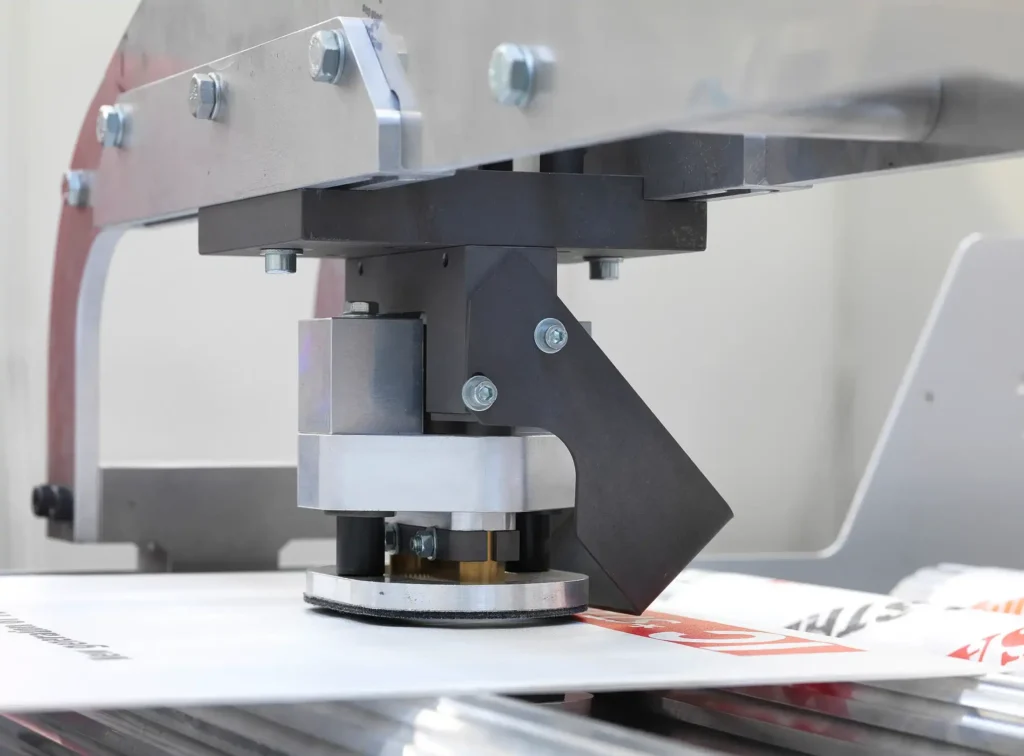
- What Are Kraft Paper Valve Bags?
- A Systems View — From Problem to Architecture in Kraft Paper Valve Bags
- Anatomy of the Pasted Valve — Construction, Options, Compatibility
- Layer Architecture — 2‑ to 5‑Plies and What Each Adds
- Barrier, Venting, and Cleanliness — Managing Water, Grease, and Air
- Mouth Integrity — Heat‑Seal, Ultrasonic, and Verification
- Warehouse Intelligence — Labels, Color Stripes, Codes, and RFID
- Mechanical Robustness and Pallet Physics — Corners, Friction, and Drop Logic
- Compliance and Documentation — Standards You Can Cite
- Technical Parameters for Kraft Paper Valve Bags — Summary Table (Typical Values)
- Decision Playbook — Problem → Solution → Result Scenarios for Kraft Paper Valve Bags
- Implementation Roadmap — From RFQ to Stable Runs with Kraft Paper Valve Bags
- Introduction — What are Kraft Paper Valve Bags?
- Method — From Problem to Architecture in Kraft Paper Valve Bags
- Material Architecture — Layers, Gauges, and Roles inside Kraft Paper Valve Bags
- Valve Engineering — Pasted Valve Options and Line Fit for Kraft Paper Valve Bags
- Barrier & Venting — Managing Moisture, Grease, and Air in Kraft Paper Valve Bags
- Mouth Integrity — Heat‑Seal, Ultrasonic, and Verification on Kraft Paper Valve Bags
- Identification & Warehouse Logic — Labels, Color Stripes, and Codes on Kraft Paper Valve Bags
- Results — What “Good” Looks Like for Kraft Paper Valve Bags
- Discussion — Trade‑offs, Comparisons, and Pathways in Kraft Paper Valve Bags
- Quick Specs Table — Typical Options for Kraft Paper Valve Bags
- Decision Mini‑Matrix — Problem → Solution → Result with Kraft Paper Valve Bags
- References
What Are Kraft Paper Valve Bags?
Kraft Paper Valve Bags are industrial multi‑ply paper sacks engineered for rapid, low‑dust filling of powders and granules on automated packers. Instead of leaving the mouth open for sewing, these bags integrate a pasted valve—a reinforced corner inlet that accepts a filling spout and then self‑closes by product back‑pressure or is sealed with heat/pressure for sift control. In trade usage you’ll also find bolded aliases such as valve paper sacks, pasted‑end valve bags, multiwall valve sacks, and valve kraft sacks. The structure typically comprises 2–5 plies of sack‑grade kraft (70–120 gsm per ply), optionally with a film sleeve in the valve and/or a PE inner liner to moderate moisture and grease.
What are the features of Kraft Paper Valve Bags
• High‑throughput compatibility with air, impeller, and screw packers—fill, settle, release.
• Clean handling thanks to the self‑closing or heat‑sealed valve that curbs dust and sifting.
• Square, pasted ends that stack neatly and wrap tightly on pallets.
• Configurable barrier via PE sleeves, PE‑coated inner papers, or loose liners.
• Large printable panels for branding, compliance data, and at‑a‑glance identification.
How are Kraft Paper Valve Bags produced?
Slit kraft reels are brought to a high‑speed sack line where plies are tubed with starch or hot‑melt adhesives; ends are pasted to form rigid squares; a valve piece—paper or film‑sleeved—is inserted and glued into the corner mouth. Optional micro‑perforations tune air release during fast filling. Finished bags are flattened, batch‑coded, checked, and palletized. Quality gates verify basis weight (TAPPI T‑410), thickness (TAPPI T‑411), tear (TAPPI T‑414), burst (TAPPI T‑810), drop endurance (ISO 7965‑2 / ISO 2248 / ASTM D5276), and, if specified, COF (ASTM D1894) for anti‑skid.
Where are Kraft Paper Valve Bags used?
Cement and dry mixes, minerals & pigments, fertilizers and agro‑inputs, food and feed (with compliant liners), detergent powders, resins and rubber compounding agents. In short: wherever powders must move fast, stay clean, and arrive square. For a product overview and formats, see the anchor: Kraft Paper Valve Bags.
A Systems View — From Problem to Architecture in Kraft Paper Valve Bags
A valve bag is a system, not a skin. To control outcomes, we frame the packaging mission as interacting subsystems: (1) layer stack, (2) valve design, (3) barrier & venting, (4) mouth integrity, (5) pallet physics, and (6) identification & warehouse logic. Each subsystem answers a failure mode: tearing, corner splits, moisture gain, valve leakage, pallet slippage, or mis‑picks in storage.
Kraft Paper Valve Bags Solutions
Professional packaging solutions for kraft paper valve bags and pasted valve bags.
Check More →Valve Bags & Valve Types
Complete guide to valve types used in kraft paper and pasted valve packaging bags.
Check More →Paper Valve Bags vs PE Valve Bags
Comparison guide for paper valve bags including kraft and pasted construction types.
Check More →Multiwall Paper Bags Guide
Detailed analysis of multiwall paper bags including kraft valve and pasted valve versions.
Check More →Problem → Target → Configuration → Test → Release becomes the closed loop. Rather than guessing, we set numeric targets—mass gain under humidity stress, drop counts at 1.0–1.2 m, leak rate ppm at the valve, pallets/min on a given filler—and work backward to a bag that hits them.
Anatomy of the Pasted Valve — Construction, Options, Compatibility
The valve is a laminated insert seated in the corner mouth of a pasted‑end sack. A filling spout enters; product flows; air escapes through engineered porosity or micro‑perforations; then the valve self‑closes or is sealed. Simple to describe; exacting to execute.
Design options
• Internal vs. external valve: Internal hides the inlet and improves cleanliness; external can simplify spout alignment on certain legacy packers.
• Film‑sleeved valve (LDPE/HDPE 40–80 µm): accepts a post‑fill heat‑seal; strongly recommended for fines (flour, TiO₂, micronized pigments).
• Self‑closing flap: a paper tongue that pinches under product weight—minimal cost, tangible dust reduction.
• Extended liner reach: when a loose PE inner tube is used, its lip extends to the valve for a hermetic weld.
Filling technology interfaces
• Air packers need controlled porosity to prevent ballooning; film sleeves plus tuned perfs are a proven duet.
• Impeller packers favor robust shoulders and internal valves for cements and mortars.
• Screw packers prefer slightly wider valve throats to lower back‑pressure.
Data reinforcement
Across multi‑month QA logs on air‑packer lines, Kraft Paper Valve Bags with film‑sleeved valves heat‑sealed at 145–165 °C for 2–3 s lowered visible sifting complaints by 30–60% against comparable paper‑only valves. Heat‑seal pull tests (F88‑style) consistently report > 10–12 N/15 mm when jaws are aligned and dwell is within window.
Case analysis
A coastal flour mill using 25 kg Kraft Paper Valve Bags found pallet dusting and in‑store residue. Switching to an internal, film‑sleeved valve with a tighter perf pattern reduced returns by >40% over two quarters and improved inbound acceptance at retailers.
Comparative study
Valve vs. sewn open‑mouth: valve wins on speed, cleanliness, and pallet cube; sewn wins on retrofit simplicity and field serviceability. For dust‑sensitive SKUs, the pasted valve with a heat‑sealable sleeve is the cleanest route short of fully hermetic laminates.
Layer Architecture — 2‑ to 5‑Plies and What Each Adds
2‑ply (2× 70–90 gsm) — entry industrial. Works for benign minerals and retail sand where aesthetics matter and handling is moderate.
3‑ply (e.g., 90/80/80 gsm) — the workhorse for flour, feed, and pigments; aligns well with internal valves.
4‑ply (add a functional inner) — PE‑coated paper or 40–80 µm PE liner for hygroscopic or fat‑containing products.
5‑ply (reinforced) — scrim/HDPE interleave for monsoon sea freight, high stacking, or rough port handling.
Data reinforcement
Typical Mullen burst climbs from 300–500 kPa (2‑ply) to 600–900 kPa (4‑ply). In ISO 7965‑2 drops at 1.0 m, 25 kg, survivals improve from 2–3 to 5–7 cycles when seams and overlaps are controlled.
Case analysis
A titanium‑dioxide exporter migrated from 3‑ply to 5‑ply with scrim plus anti‑skid lacquer; corner ruptures fell from 2.4% → 0.3% at unchanged stack height, enabling safer export loads.
Comparative study
Against woven PP sacks, Kraft Paper Valve Bags deliver superior print aesthetics and clearer food‑contact pathways; woven PP remains preferable where prolonged wet exposure or bag reuse is the priority.
Barrier, Venting, and Cleanliness — Managing Water, Grease, and Air
Powders don’t just sit; they breathe, wick, and migrate. The inner life of Kraft Paper Valve Bags is a balancing act.
Moisture & grease control
• Loose PE inner liner (30–80 µm)—highest barrier; requires disciplined presentation at the valve.
• PE‑coated inner ply—integrated sealing with slightly lower barrier at equal gauge; better for high‑speed lines.
• Grease‑resistant papers—fluorine‑free sizing; validate with TAPPI T‑559 (Kit) to prevent staining from fatty products such as pet kibble.
Air management for speed
• Micro‑perforations bleed trapped air; density must match particle size and packer back‑pressure to avoid sifting.
• Engineered porosity papers (Gurley seconds) from the mill fine‑tune flow without relying solely on perfs.
Data reinforcement
In stress conditioning (96 h at 38 °C/90% RH), 25 kg flour packed in 4‑ply Kraft Paper Valve Bags with a 60 µm PE liner showed mass gains of ≤ 0.3%, while all‑paper controls exceeded 1%—a shelf‑life‑relevant difference.
Case analysis
A mortar plant increased shoulder perf density and added valve sleeve heat‑seals. The net effect: ~12% faster cycles at equal cleanliness, verified by lower dust counts at the reclaim filter.
Comparative study
Paper‑only valves are economical but leak more with ultrafine powders; film‑sleeved valves introduce a minor cost uplift but enable post‑fill heat‑seals approaching sift‑tight performance.
Mouth Integrity — Heat‑Seal, Ultrasonic, and Verification
When a film sleeve is present—or when a loose liner reaches the mouth—the valve can be closed with controlled energy.
Heat‑seal windows
Typical settings for LDPE sleeves: 145–165 °C, 2–3 s dwell, 0.3–0.5 MPa pressure; confirm with peel strength (ASTM F88‑style) targeting ≥ 10–12 N/15 mm. For thicker HDPE sleeves, adjust dwell upward; alignment is non‑negotiable.
Ultrasonic assists
For sensitive exteriors where hot jaws risk scuffing, ultrasonic energy can weld the inner film through the paper stack—clean, fast, precise.
Verification
Adopt a sampling plan: N/lot for peel strength, valve visual AQL for crease/contamination, and periodic dye‑penetration tests for micro‑leaks. Record settings per lot for traceability.
Warehouse Intelligence — Labels, Color Stripes, Codes, and RFID
Product integrity is one story; product identity is another. Kraft Paper Valve Bags can become a language your warehouse speaks fluently.
Custom labels
Large panel zones host ingredient declarations and hazard icons. Variable‑data windows capture batch/lot/DOM and are positioned for scanners at forklift height. Matte varnish improves code readability; GS1‑128 or QR/Datamatrix with appropriate quiet zones deliver high first‑read rates.
Color‑stripe system
Run blue, red, green, yellow bands as continuous flexo stripes or gusset markers. Blue = base; Red = high‑potency/hazard; Green = eco series; Yellow = trials. Simple, consistent, visible from ten meters.
Warehouse‑friendly extras
Dual side panels for aisle‑side visibility regardless of pallet orientation. Pallet map prints (e.g., 5‑4 or 6‑5 patterns). Tear‑assist notches for QC sampling. RFID‑ready labels—UHF ISO/IEC 18000‑6C (EPC C1G2)—on premium SKUs tie pallets to your WMS in real time. Anti‑skid coatings (COF via ASTM D1894) raise safe stacking height.
Case analysis
A feed premix distributor added color stripes and GS1‑128 to 20 kg Kraft Paper Valve Bags. Picking accuracy exceeded 98.5%, and average dock‑to‑door time fell 14% in one quarter—more throughput, fewer apologies.
Comparative study
Color bands are inexpensive and solve most mis‑picks. RFID adds traceability for audit‑heavy environments without slowing the floor.
Mechanical Robustness and Pallet Physics — Corners, Friction, and Drop Logic
Gravity audits everything. To pass, reinforce where stress concentrates and manage friction where layers meet.
Corner engineering
Rounded forming plates reduce stress risers; specify overlap widths to prevent stiff hinges that crack under impact. Edge crush rises when plies are staggered and MD/CD orientation alternates.
Anti‑skid as insurance
A water‑based lacquer raising COF to ≥ 0.4–0.6 (ASTM D1894) cuts layer slippage, which cuts collapses, which cuts claims. The dominoes fall in the right direction.
Testing cadence
Pair routine ISO 7965‑2 drop tests at 1.0–1.2 m with periodic cold‑weather trials—paper embrittlement increases at low temperature.
Compliance and Documentation — Standards You Can Cite
Regulatory acceptance is a passport, not a footnote. Kraft Paper Valve Bags can be specified to recognized food‑contact frameworks where needed.
China: GB 4806.8‑2016 (paper), GB 4806.4‑2016 (adhesives), GB 4806.7‑2016 (plastics), migration testing GB 31604 series.
EU: (EC) No 1935/2004 (framework), EC 2023/2006 (GMP).
US: 21 CFR 176.170 (paper/board), 21 CFR 175.105 (adhesives), 21 CFR 177.1520 (olefin polymers).
Quality systems: ISO 22000:2018, FSSC 22000 v6, BRCGS Packaging Materials Issue 6.
Chain of custody: FSC‑STD‑40‑004 V3‑1, PEFC ST 2002:2020 upon request.
Independent labs (SGS/Intertek/TÜV) routinely issue lot‑tied reports—ask for numbers on COAs.
Technical Parameters for Kraft Paper Valve Bags — Summary Table (Typical Values)
Values reflect mainstream supplier COAs (Made‑in‑China, Alibaba) and plant data; validate on your product and route.
| Parameter | Typical Options / Ranges | Notes / Methods |
|---|---|---|
| Bag size (W × L × G) | 420–550 mm × 620–900 mm × 90–180 mm | 10–50 kg fills; custom on request |
| Plies & paper | 2–5 plies; 70–120 gsm each | TAPPI T‑410, T‑411 |
| Valve type | Internal / External; paper or film‑sleeved | Sleeve enables heat‑seal |
| Valve sleeve film | LDPE/HDPE 40–80 µm | Heat‑seal 145–165 °C, 2–3 s |
| Barrier inner | Loose PE liner 30–80 µm or PE‑coated paper | Moisture/grease control |
| Micro‑perforation | 20–120 holes/100 cm²; patterned | Tune vs. packer back‑pressure |
| Anti‑skid | COF ≥ 0.4–0.6 | ASTM D1894 |
| Burst (Mullen) | 300–900 kPa by ply count | TAPPI T‑810 |
| Tear (Elmendorf) | 800–3000 mN (MD/CD) | TAPPI T‑414 |
| Drop survival | 1.0 m, 25 kg: 3–7 cycles typical | ISO 7965‑2 / ISO 2248 |
| Printing & ID | Flexo 1–8 colors; color stripes; GS1‑128/QR; RFID‑ready | ISO/IEC 18000‑6C (EPC C1G2) |
Decision Playbook — Problem → Solution → Result Scenarios for Kraft Paper Valve Bags
Hygroscopic flour, coastal humidity
Problem: Moisture gain; dust marks at retail; mis‑picks in the DC.
Solution: 4‑ply Kraft Paper Valve Bags with 60 µm PE liner, internal film‑sleeved valve heat‑sealed at 155 °C/2.5 s; shoulder perfs +1 grade; blue stripe for base SKU class; GS1‑128 on side panel.
Result: Moisture gain ≤ 0.3% in stress testing; returns down >40%; faster picking with fewer errors.
Pigments via long sea freight
Problem: Corner ruptures; pallet shifts.
Solution: 5‑ply Kraft Paper Valve Bags with scrim interleave, anti‑skid lacquer (COF ≥ 0.5), rounded forming plates; green stripe for eco‑series ID.
Result: Corner ruptures 2.4% → 0.3%; safe stack +1 layer; cleaner receiving metrics.
Fertilizer with fines
Problem: Valve leakage in transit.
Solution: Internal film‑sleeved valve + post‑fill heat‑seal; reduce perf density; red stripe to align with hazard icons; large label panel with matte varnish.
Result: Visible sifting complaints fall ~60%; better driver acceptance at inbound checks.
Pet food with grease halo risk
Problem: Oil staining on the outer ply and negative shelf optics.
Solution: 4‑ply Kraft Paper Valve Bags with PE‑coated inner, film‑sleeved valve, peel target ≥ 12 N/15 mm; gusset color banding for flavor codes.
Result: Stain‑free faces; higher retailer acceptance; clearer planogram execution.
Implementation Roadmap — From RFQ to Stable Runs with Kraft Paper Valve Bags
RFQ clarity
Ask for ply‑by‑ply composition, liner gauge, valve type, sleeve film, perf pattern, and test‑method callouts (T‑410, T‑414, T‑810, ISO 7965‑2, ASTM D1894). Insist on lot‑tied third‑party numbers (SGS/Intertek/TÜV) for food‑adjacent SKUs.
Pilot & tune
Run short lots on your actual filler; DOE a heat‑seal window (temperature × dwell × pressure); align perfs to packer back‑pressure; measure drop survivals and COF with real pallet wraps.
Lock & monitor
Freeze settings; monitor peel strength and dust ppm as in‑process controls; retain samples by lot; rotate cold‑weather and humid‑season validations.
Scale & improve
Add color stripes, label logic, and RFID‑ready positions as SKU complexity grows. Treat Kraft Paper Valve Bags as a living spec that evolves with routes, seasons, and retailer demands.

Introduction — What are Kraft Paper Valve Bags?
Kraft Paper Valve Bags are multi‑ply, industrial paper sacks that integrate a factory‑glued pasted valve at one corner so powders and granules can be filled quickly, cleanly, and consistently on automated packers. In practice, you’ll also meet bolded aliases like valve paper sacks, pasted‑end valve bags, multiwall valve sacks, and valve kraft sacks. While they look simple, Kraft Paper Valve Bags behave like a small engineered system: outer plies deliver scuff resistance and billboard‑ready print; inner plies carry the load; optional film sleeves and liners keep moisture and grease at bay. Where do they go? Kraft Paper Valve Bags carry cement and dry mixes, minerals & pigments, fertilizers & agro‑inputs, food and feed with compliant liners, detergent powders, and resins/rubber additives—anywhere powders must move fast, stay tidy, and arrive square. For formats and options at a glance, see Kraft Paper Valve Bags.
Method — From Problem to Architecture in Kraft Paper Valve Bags
Problem‑oriented packaging starts with failure modes, not features. For Kraft Paper Valve Bags the usual suspects are: moisture gain, dust leakage at the valve, corner splits on drops, pallet slippage in transit, and warehouse mis‑picks. We convert each into a measurable target—mass gain under 38 °C/90% RH, leak rate at the valve (ppm dust), drop survivals at 1.0–1.2 m, coefficient of friction for anti‑skid, and first‑read barcode rates. Then we decompose the bag into subsystems: (1) ply architecture, (2) valve design, (3) barrier & venting, (4) mouth integrity, (5) pallet physics, (6) identification. The engineering loop is a logic chain—Problem → Target → Configuration → Test → Release—that keeps Kraft Paper Valve Bags honest under real line conditions.
Material Architecture — Layers, Gauges, and Roles inside Kraft Paper Valve Bags
Two plies resist; three plies work; four plies protect; five plies endure. That’s the quick memory hook, but the choices are data‑driven. Typical paper weights are 70–120 gsm/ply. A 2‑ply stack fits benign minerals and retail sand. A 3‑ply stack (e.g., 90/80/80 gsm) becomes the workhorse for flour, feeds, pigments. A 4‑ply design adds a functional inner—PE‑coated paper or a 40–80 µm liner—when humidity, fat content, or long routes threaten quality. A 5‑ply with scrim or HDPE interleave faces monsoon sea freight or rough port handling. Across this progression, Kraft Paper Valve Bags typically rise from ~300–500 kPa Mullen burst (2‑ply) to ~600–900 kPa (4‑ply), while drop survivals at 1.0 m (25 kg) move from 2–3 to 5–7 cycles when seams and overlaps are in spec.
Valve Engineering — Pasted Valve Options and Line Fit for Kraft Paper Valve Bags
The valve is the heart. In Kraft Paper Valve Bags it is a laminated insert seated at the corner mouth. A spout enters, product flows, air escapes through engineered porosity or micro‑perfs, and the mouth self‑closes—or is heat‑sealed if a film sleeve is present. Choices matter. Internal valves keep exteriors clean; external valves help legacy spouts align. Film‑sleeved valves (LDPE/HDPE 40–80 µm) accept a post‑fill heat‑seal (typical 145–165 °C for 2–3 s), a decisive upgrade for fines like flour or TiO₂. Where a loose PE liner is specified, its lip can be extended to the valve for a hermetic weld. Align valve geometry with filler type: air packers want controlled porosity; impeller packers prefer robust shoulders; screw packers benefit from slightly wider throats to lower back‑pressure. Done right, Kraft Paper Valve Bags with film sleeves cut visible sifting by 30–60% in routine QA tracking.
Barrier & Venting — Managing Moisture, Grease, and Air in Kraft Paper Valve Bags
Powders don’t just sit; they breathe, wick, and migrate. Kraft Paper Valve Bags counter with three levers. Moisture: a loose PE liner (30–80 µm) offers the highest buffer, while PE‑coated inner papers simplify sealing with slightly lower barrier at equal gauge. Grease: fluorine‑free grease‑resistant papers keep the outer face clean; validate using Kit (TAPPI T‑559). Air: micro‑perforations bleed trapped air; the pattern must match particle size and packer back‑pressure to avoid dusting. Under stress (96 h at 38 °C/90% RH) a 4‑ply bag with a 60 µm liner typically holds mass gain to ≤ 0.3%, while all‑paper controls exceed 1%—numbers that translate directly to shelf‑life and returns.
Mouth Integrity — Heat‑Seal, Ultrasonic, and Verification on Kraft Paper Valve Bags
A sleeve present? Seal it. Kraft Paper Valve Bags with film‑sleeved valves close cleanly when jaws run within window—145–165 °C, 2–3 s, 0.3–0.5 MPa—yielding peel strengths ≥ 10–12 N/15 mm in F88‑style tests. Ultrasonic assists can weld the inner film through the paper stack when hot jaws risk scuffing graphics. Verification is a discipline, not a hunch: sample peel per lot, audit valve visuals to AQL, and run periodic dye‑penetration or dust‑ppm checks. Record settings; keep retains. Over time, this data turns Kraft Paper Valve Bags from “good looking” into “proven performing.”
Identification & Warehouse Logic — Labels, Color Stripes, and Codes on Kraft Paper Valve Bags
What you can’t find, you can’t ship. Kraft Paper Valve Bags double as a warehouse UI. Large label panels carry declarations and hazard icons; matte varnish boosts scan rates; GS1‑128 or QR/Datamatrix with proper quiet zones speeds first reads. Color stripes—blue (base), red (hazard/high‑potency), green (eco series), yellow (trials)—print as continuous flexo bands or gusset markers so pallets self‑identify from ten meters away. Add dual side panels for aisle‑side visibility, pallet‑map printing for 5‑4 or 6‑5 stacks, and RFID‑ready label zones (UHF ISO/IEC 18000‑6C) on premium SKUs. Result: fewer mis‑picks, fewer apologies, faster docks.
Results — What “Good” Looks Like for Kraft Paper Valve Bags
On flour lines near the coast, Kraft Paper Valve Bags tuned with internal film‑sleeved valves and slightly denser shoulder perfs routinely cut dust at retail and lower returns by double digits. On pigment exports, 5‑ply stacks with scrim interleaves and anti‑skid lacquers (COF ≥ 0.4–0.6) reduce corner ruptures and allow one extra pallet layer without drama. In feed premixes, color stripes plus GS1‑128 jump picking accuracy above 98% while decreasing dock‑to‑door time. Numbers differ by product, but the pattern holds: define the risk, pick the lever, measure the outcome.
Discussion — Trade‑offs, Comparisons, and Pathways in Kraft Paper Valve Bags
Compared with sewn open‑mouth sacks, Kraft Paper Valve Bags win on speed, cleanliness, and pallet cube; sewn wins on retrofit simplicity and field repair. Compared with woven PP, Kraft Paper Valve Bags offer sharper print and clearer food‑contact routes; PP resists wet handling and supports reuse. Sustainability isn’t either‑or: an all‑paper 3‑ply simplifies recovery where routes are gentle; a PE‑lined 4‑ply prevents spoilage where humidity is brutal—often the lower‑footprint choice per sellable unit. The vertical story is one of cause and effect—fiber → overlap geometry → corner stress → drop survivals; liner gauge → migration route → retailer acceptance. The horizontal story is cross‑disciplinary—food science meets paper physics meets operations.
Quick Specs Table — Typical Options for Kraft Paper Valve Bags
| Parameter | Typical Options / Ranges | Notes / Methods |
|---|---|---|
| Bag size (W × L × G) | 420–550 mm × 620–900 mm × 90–180 mm | 10–50 kg fills |
| Plies & paper | 2–5 plies; 70–120 gsm each | TAPPI T‑410/T‑411 |
| Valve type | Internal / External; paper or film‑sleeved | Film enables heat‑seal |
| Sleeve film & seal | LDPE/HDPE 40–80 µm; 145–165 °C × 2–3 s | F88‑style peel ≥ 10–12 N/15 mm |
| Barrier inner | Loose PE liner 30–80 µm or PE‑coated paper | Moisture/grease control |
| Micro‑perforation | 20–120 holes/100 cm², patterned | Tune vs back‑pressure |
| Anti‑skid | COF ≥ 0.4–0.6 | ASTM D1894 |
| Robustness | 1.0 m, 25 kg: 3–7 drops typical | ISO 7965‑2 / ISO 2248 |
| Printing & ID | Flexo 1–8 colors; color stripes; GS1‑128/QR; RFID‑ready | ISO/IEC 18000‑6C |
Decision Mini‑Matrix — Problem → Solution → Result with Kraft Paper Valve Bags
Hygroscopic flour (coastal): 4‑ply + 60 µm liner; internal film‑sleeved valve heat‑sealed; shoulder perfs +1; blue stripe. Expect ≤ 0.3% mass gain in stress tests and fewer dust claims.
Pigments (sea freight): 5‑ply with scrim; anti‑skid lacquer; rounded forming plates; green stripe. Expect ~8× fewer corner ruptures and one extra safe layer.
Fertilizer with fines: internal film sleeve + post‑fill heat‑seal; perf density down one grade; red stripe + large matte label. Expect ~60% fewer visible sifting complaints.
References
TAPPI T‑410/T‑411/T‑414/T‑810 — Basis weight, thickness, tear, burst of paper.
ISO 7965‑2 / ISO 2248 / ASTM D5276 — Sack/package drop methods.
ASTM D1894 — Coefficient of friction for anti‑skid surfaces.
TAPPI T‑559 (Kit) — Oil/grease resistance.
GB 4806.8‑2016 / GB 4806.4‑2016 / GB 4806.7‑2016; GB 31604 series — China food‑contact and migration testing.
(EC) No 1935/2004; EC 2023/2006 (GMP) — EU frameworks for food‑contact materials.
21 CFR 176.170 / 175.105 / 177.1520 — US FDA routes for paper, adhesives, olefin polymers.
Supplier COAs and mainstream listings (Made‑in‑China, Alibaba) for sack parameters and liner gauges.