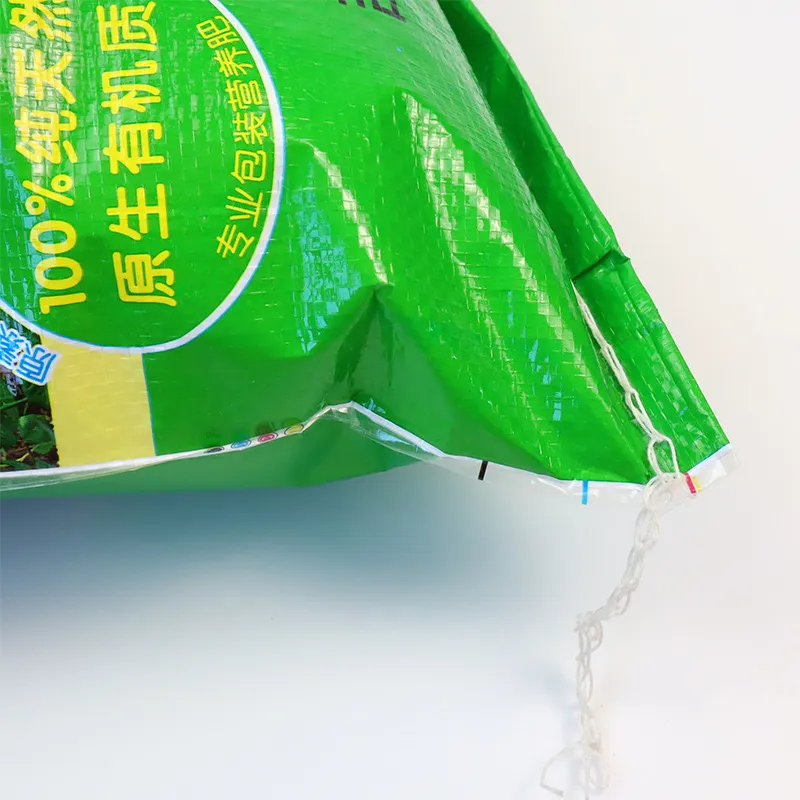
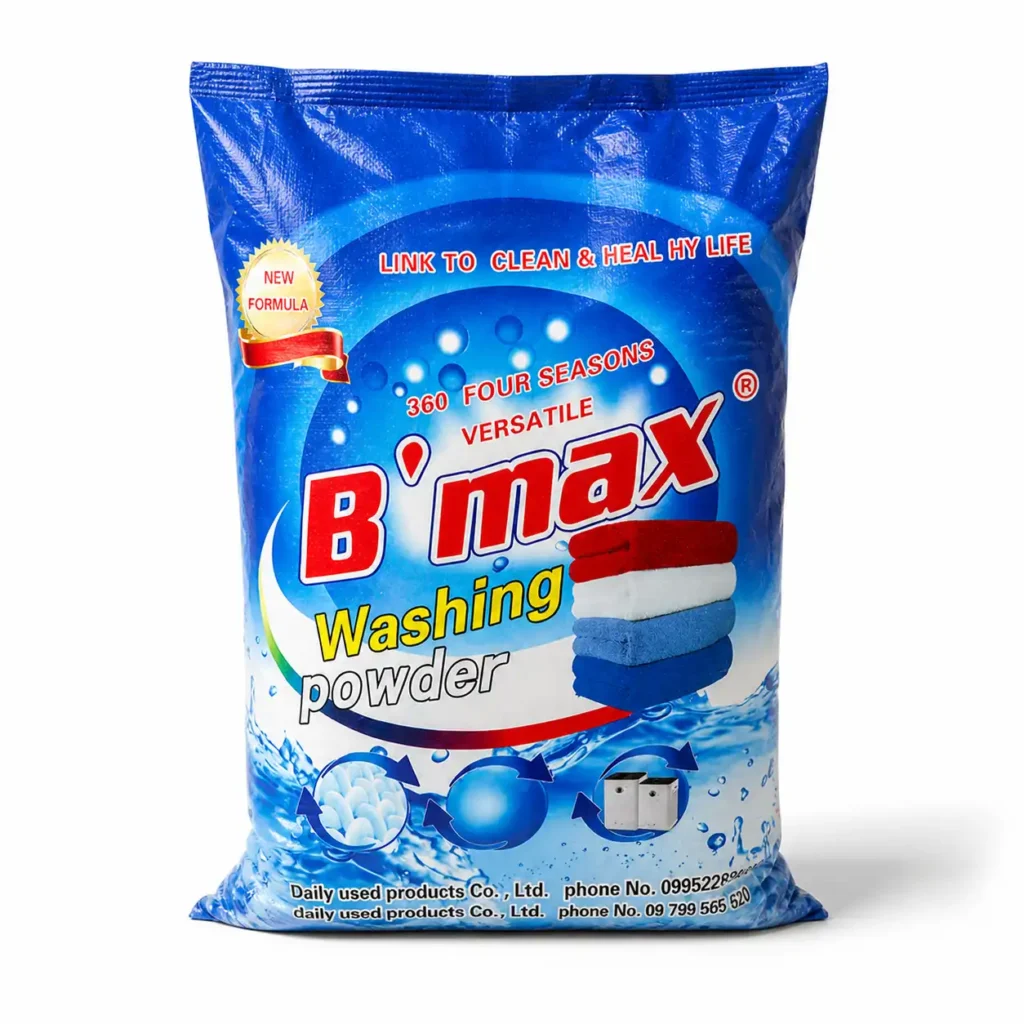
VIDEPAK Product Analysis of BOPP laminated PP woven bags
A bag is never just a bag. In industrial packaging, it is a filling interface, a transport shell, a moisture shield, a stack on a pallet, and, when the product reaches the shelf, a silent salesperson. That is exactly why BOPP laminated PP woven bags matter. They combine woven polypropylene strength with a printable BOPP film, so the pack can carry weight, resist handling, and still present sharp graphics that look clean and premium. On VIDEPAK’s current product pages, this family sits inside a broader PP woven range built around 100% virgin polypropylene and commonly serves 5 kg to 50 kg packaging programs. The original source article also frames the product in the same practical logic: first understand the structure, then the layer count, then the choices of mouth, bottom, shape, and feature options that turn one bag family into many commercial solutions.
Marketing takeaway: for VIDEPAK, BOPP laminated PP woven bags are not sold on one feature alone. They win because they do many jobs at once: better print, stronger mechanics, cleaner sealing options, better stack behavior, and optional retail features such as a Transparent Window. In short: strong enough for the route, polished enough for the shelf, flexible enough for many filling systems.
What BOPP laminated PP woven bags really are
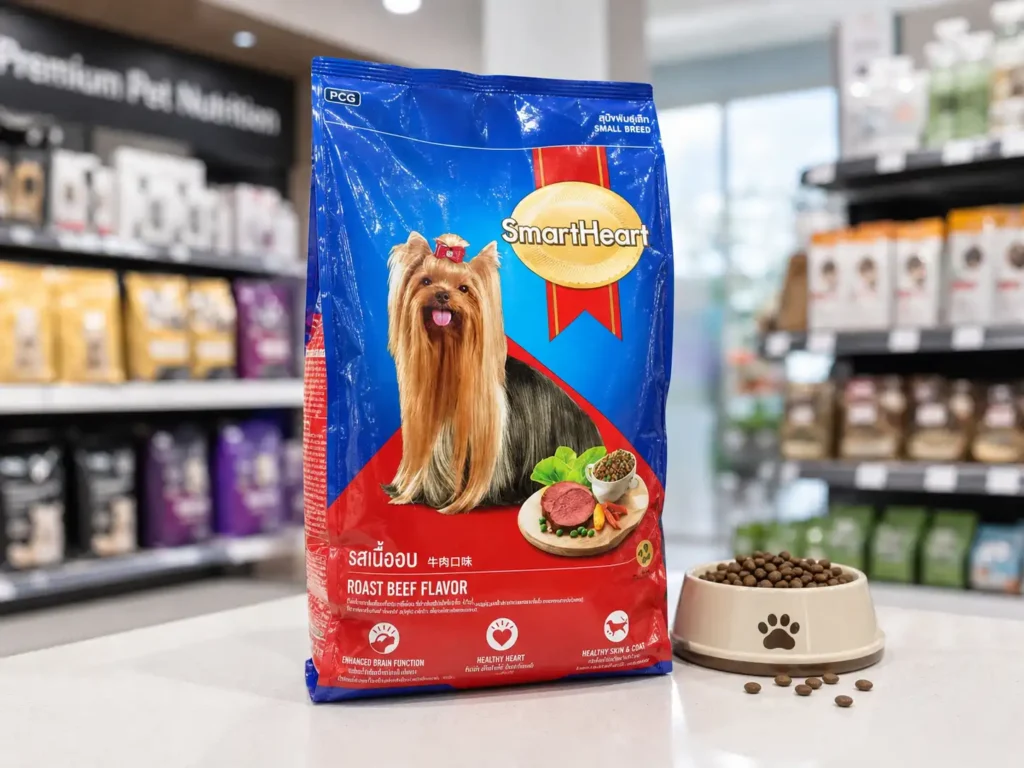
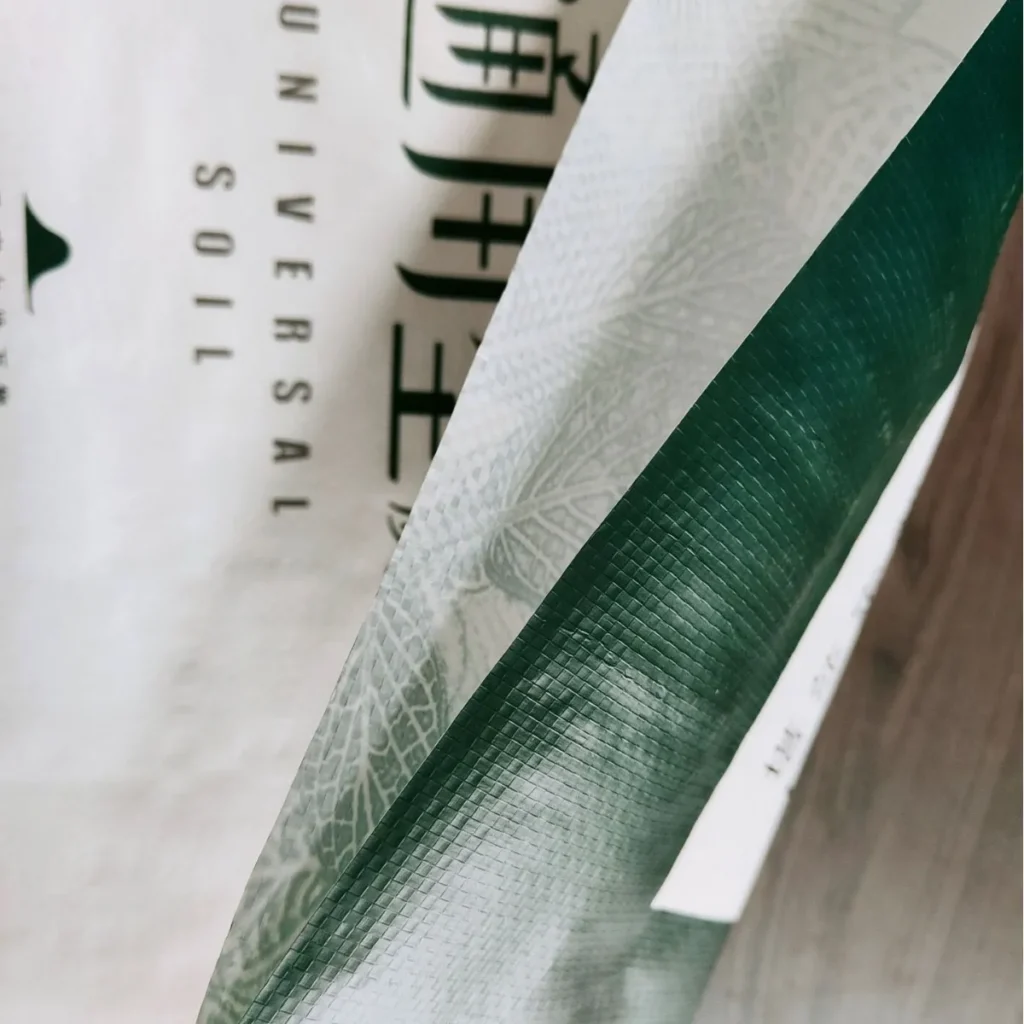
BOPP laminated PP woven bags, also searched in the market as BOPP polypropylene woven bags, are built from a woven PP base fabric plus a BOPP film face. The woven fabric carries load, resists puncture, and gives the pack its backbone. The BOPP face gives flatness, gloss or matte aesthetics, print clarity, and a cleaner external barrier. BOPP itself is polypropylene film stretched in two directions, which improves strength, flatness, clarity, and printability. In practical bag converting, the film is often reverse-printed and then laminated to the woven base so the artwork sits beneath the outer layer and is better protected from abrasion.
From the VIDEPAK angle, this structure is attractive because it bridges two worlds that buyers often want at the same time but rarely get from plain sacks: industrial durability and retail-grade appearance. Common VIDEPAK references place the woven base of this family often around 60–120 GSM, while broader PP woven guidance on the current site expands into heavier industrial bands up to roughly 60–200 g/m² depending on duty, product risk, and bag size. The BOPP face on current technical guidance commonly falls around 18–40 μm, while other VIDEPAK material notes describe BOPP lamination as often using film in the 20–30 μm range. This is why the format can be tuned rather than merely selected: stronger fabric for harder handling, thicker film for more scuff resistance, and optional liners where barrier demands go beyond what the outside laminate alone should handle.
Load-bearing layer
Woven PP fabric provides tensile strength, puncture resistance, and dimensional control. VIDEPAK’s wider PP woven guidance places many industrial bags in 10–50 kg formats, with mesh, denier, and GSM selected to match the filling weight and route stress.
Branding layer
The BOPP face gives the pack a smoother printable surface, enabling vivid graphics, sharper registration, and a more premium look than plain woven fabric can usually offer. VIDEPAK also highlights glossy or matte finishes and printing up to vibrant multi-color presentation.
Protection layer
BOPP adds moisture-facing performance and surface durability, while optional PE liners or additional inner layers are used when the cargo is fine, hygroscopic, aroma-sensitive, or hygiene-critical. Because the structure can stay inside the PP/PE polyolefin family, it may support a cleaner recycling pathway than mixed-material packs, although local recycling rules still decide the real end-of-life route.
Another point matters, especially in export sales: layer counting is not perfectly standardized in market language. One supplier may call a woven PP plus BOPP face a two-layer structure; another may count the extrusion tie layer or inner barrier separately and call it three layers. The safe approach, and the approach VIDEPAK should keep promoting, is simple: do not buy the name alone, buy the actual layer sequence. Ask for fabric GSM, film gauge, liner presence, closure style, and intended filling method. Terms sell the story; drawings protect the order.
This table follows the source article’s logic: define the pack not by a vague sales label, but by the real layer sequence and the job each layer performs.
Common constructions and detailed option analysis
Below is the part buyers care about most, and the part sellers must explain best. A woven bag program can fail not because the material is wrong, but because the conversion choice is wrong. The same fabric can become a low-cost utility pack, a clean powder pack, or a retail-facing premium pack depending on how the mouth, bottom, and side geometry are built. That is why the options below should be marketed as engineering choices, not cosmetic extras.
Double Fold Double Stitched
Double Fold Double Stitched construction is the stronger sewn bottom answer in many standard woven programs. The bottom edge is folded more than once and closed with two stitch lines, so the seam spreads stress across more material and gives better security under tough handling than a simpler one-fold, one-stitch seam. Current VIDEPAK wording already describes folded bottom seams as the most widely used construction and notes that one or two parallel threads are selected according to load demand; industry stitching shorthand also commonly distinguishes DFDS from lighter sewn variants. For customers packing 25 kg to 50 kg goods on long routes, this option is dependable, familiar, and cost-efficient. It is not glamorous. It is simply hard to argue with.
Single Fold Single Stitched
Single Fold Single Stitched is the leaner, simpler sewn option. It uses less conversion work and less seam build-up, so it suits lower stress routes, lighter fills, and price-sensitive programs where the bag will not be dragged through harsh warehouse cycles. It is also common on plain or lightly laminated sacks and can still perform well when the product is not aggressive and the pallet height is controlled. The key is honesty: this option is good value, but it should not be oversold as a premium seam. When buyers want lower cost and adequate performance, it fits. When they want extra seam insurance, it is wiser to step up.
Pinch bottom with PP tape
Pinch bottom with PP tape is a useful market phrase, but VIDEPAK should explain it carefully because naming is not always standardized. In practice, buyers usually mean a seal bottom or pinch bottom concept combined with PP tape or laminated strip reinforcement in a high-stress seam zone. On current VIDEPAK references, two nearby ideas are clearly defined: the sealed pinch bottom used with laminated bags to reduce leakage of fine powders, and the hemmed/tape-reinforced bottom where PP tape is stitched into the seam to improve moisture resistance and reduce tearing risk. For marketing, the best approach is to confirm the drawing: is the customer asking for a sealed pinch bottom, a tape-covered sewn seam, or both? Clarify first; produce second.
Block Bottom
Block Bottom is where packaging performance becomes visible even from a distance. A Block Bottom bag forms a flat, rectangular base, stands more upright, stacks more squarely, and uses pallet cube more efficiently than loose pillow-style sacks. VIDEPAK’s current pages describe the format as self-standing and space-efficient; related references call it brick-like, disciplined in stacking, and especially strong when paired with powder-filling systems. From a marketing standpoint, this shape sells twice: first to operations teams because it handles well, then to brand teams because it presents well. It is geometry doing the work of engineering and design at the same time.
Open Mouth
Open Mouth bags remain one of the world’s most common industrial filling formats, and that popularity is not accidental. A true Open Mouth bag presents a full top opening to the filler, then closes by sewing, heating, or gluing depending on the material and the hygiene target. Packaging equipment specialists note that pre-made open-mouth bags dominate some sectors because they are easy to handle, easy to fill, and compatible with multiple closure systems. Grain-sector guidance likewise notes that Open Mouth bags can be sealed tightly and handled well downstream. For VIDEPAK, the message should be simple: when flexibility matters, when product flow is less predictable, or when the customer wants a familiar closing method, Open Mouth is still a very strong answer.
Valve
Valve bags are built around a smaller corner sleeve or spout entry rather than a wide top opening. Product is filled through that sleeve, and internal product pressure helps the Valve close after filling. This is why the format is valued for fast, clean filling of powders and free-flowing materials. On current sector references, Valve bags are linked to reduced dust, lower spillage, less added labor, and neater compact pack shapes when paired with the right equipment. Yet a good marketing message should not make them sound universal. They are excellent for suitable products and high-speed systems, but they are less flexible than Open Mouth when product flow is difficult or when the packer wants more closure choices. Fast where they fit, limited where they do not. That is the honest story.
Hemmed Open
Hemmed Open top construction gives the mouth a cleaner finished edge. In technical practice, hemming folds and finishes the cut edge so the mouth guides better on filling equipment, looks tidier, and can tear more cleanly when easy-open features are added. VIDEPAK’s current references describe heat-cut and hemmed top variants and also note that mouths may be hemmed for spout guidance and tear cleanliness. For marketing teams, Hemmed Open should be presented as a small feature with outsized value: it improves appearance, supports machine handling, and signals a better-finished bag to the customer.
Gusset
Gusset means the bag has folded sides, often an M-side profile, so it can expand into a more structured shape after filling. VIDEPAK lists flat and gusseted types today, and wider packaging guidance notes that side-fold bags become more block-like and stack more easily once filled. This makes Gusset valuable when extra volume needs to sit inside a controlled footprint, when pallet shape matters, or when the customer wants a pack that looks fuller and more regular. It is one of the quiet heroes of bag design. You do not notice it when it works. You notice the stack when it does not.
Transparent Window
Transparent Window is where packaging engineering meets shopper psychology. On VIDEPAK’s current pages, the feature is positioned as a way to let users see and check the contents; related BOPP references note that the window area is intentionally left more translucent or unprinted so product visibility is preserved. The marketing value is even stronger than the physical value. Recent academic research found that transparent windows or cut-outs can increase psychological ownership and purchase intention, especially for visually appealing products bought for oneself. For rice, pet food, grains, seeds, or premium feed, a Transparent Window is not only a visual proof point; it is a trust device. Let the product speak. Let the bag frame it, not hide it.
Important keyword note for product pages: not all customer search terms are technical standards. Phrases like Double folded pinch bottom or Pinch bottom with PP tape may reflect market buying language rather than a fully standardized bag drawing. The best commercialization method is to keep the keyword for search visibility, then immediately translate it into the real spec sheet: mouth style, bottom style, fold depth, stitch count, tape reinforcement, liner, and laminate gauge. That turns search traffic into correct orders.
Reading the product through the source article logic
Following the logic of the source article, the right way to explain BOPP laminated PP woven bags is not to start with color or printing. It is to start with the system. First, what is the structure? A woven PP chassis plus a BOPP face, often reverse-printed for artwork protection. Second, how are layers counted? Ask for the actual sequence because labels like “2-layer” or “3-layer” vary. Third, how is the product filled? That leads to Open Mouth, Valve, pasted mouth, or pinch-style variants. Fourth, how does it stand and travel? That leads to seam type, Block Bottom, gusseting, anti-slip, and related choices. Fifth, what must the customer see? That leads to gloss, matte, and Transparent Window. This order is clear because it matches the buyer’s real risk map: function first, conversion second, aesthetics third, and only then cost comparison.
That framework is commercially powerful for VIDEPAK because it prevents a common sales mistake: quoting a bag as if it were a fixed product. It is not. BOPP laminated PP woven bags are a configurable family. A rice pack and a fertilizer pack may share the same outer material class but still need very different sealing, venting, graphics, and barrier choices. Current VIDEPAK technical references show this range clearly: bag weight classes from smaller retail packs to 50 kg formats, mesh options, tape denier bands, film gauge options, liner options, and different closure methods. In other words, one product family, many engineered outcomes.
It also explains why BOPP polypropylene woven bags hold a premium position in many categories. If plain woven sacks are honest, durable workwear, then BOPP laminated PP woven bags are the tailored jacket: still strong, but sharper; still practical, but more persuasive; still industrial, but better at carrying a brand. The BOPP surface improves image quality and surface cleanliness, while the woven base keeps the mechanical backbone buyers still need. That dual promise—strength inside, story outside—is the core commercial value VIDEPAK should keep emphasizing.
In plain English, this means the decision flow should move like this: Is the product granular, powdery, hygroscopic, or dusty? Then choose the right filling interface: Open Mouth or Valve. Does the customer want tighter stacks and better display? Then choose Block Bottom or a controlled Gusset layout. Is leakage or wicking a concern? Then upgrade the seam to a stronger sewn format, a tape-reinforced seam, or a sealed pinch construction. Is shelf trust important? Then add better print finishing or a Transparent Window. This is the difference between selling a bag and solving a packaging problem.
Specification matrix for faster customer understanding
For WordPress and SEO use, this matrix also helps VIDEPAK create cleaner product-page logic. Instead of one long generic description, each section can link need to feature, feature to structure, structure to use case. That is good for readers and good for search intent. Customers do not search only for a bag; they search for a problem solved by a bag. They search Open Mouth for easy filling, Valve for speed, Block Bottom for stability, and Transparent Window for visibility. The content architecture should mirror that behavior.
Why this product family remains a strong VIDEPAK growth story
The reason is straightforward. BOPP laminated PP woven bags fit the modern packaging market because they balance cost, durability, customization, and brand presentation better than many simpler sacks do. VIDEPAK’s public product pages repeatedly position the family for food, feed, seed, fertilizer, sugar, rice, sand, cement, and other dry bulk categories, precisely because those markets value this balance. Some products need strong mechanics. Some need clean graphics. Some need both. This format answers that “both” better than plain woven alternatives.
From a marketing department viewpoint, that means the winning message should not be vague or decorative. It should be concrete. Explain the structure. Explain the conversion. Explain the application. Explain the trade-off. Say when Open Mouth is better than Valve. Say when Double Fold Double Stitched is worth the extra seam security. Say when a Transparent Window can strengthen retail trust. Say when Block Bottom improves stack discipline enough to justify the upgrade. Clear language builds buyer confidence, and confidence shortens the path to order.
Final positioning sentence for VIDEPAK: BOPP laminated PP woven bags are best presented as a configurable premium woven-packaging system that combines the strength of PP fabric, the print quality of BOPP film, and the flexibility to scale across sewn, pinch, Open Mouth, Valve, Block Bottom, gusseted, and windowed formats for both industrial and retail-facing dry bulk products.
BOPP Laminated PP Woven Bags Solutions
Complete packaging solutions for BOPP laminated polypropylene woven bags with custom design and production.
Check More →BOPP Woven Bags With Transparent Windows
Premium BOPP laminated woven bags featuring transparent windows for product visibility and attractive display.
Check More →BOPP Woven Bags
High-quality BOPP woven bags with excellent printability, waterproof performance and durable construction.
Check More →Laminated PP Woven Bags
Professional laminated PP woven bags with enhanced strength, moisture resistance and customizable printing.
Check More →- VIDEPAK Product Analysis of BOPP laminated PP woven bags
- What BOPP laminated PP woven bags really are
- Common constructions and detailed option analysis
- Reading the product through the source article logic
- Specification matrix for faster customer understanding
- Why this product family remains a strong VIDEPAK growth story
- Bottom Options
- BOPP Woven Bag Bottom Types
- 1. Single folded bottom & double folded stitching bottom
- 2. Block bottom – Box bottom and AD*STAR
- 3. Pinch bottom
- 4. Hemmed bottom with PP tape
- Single folded bottom or double folded stitching bottom
- Block bottom – Box bottom and AD*STAR
- Pinch bottom for stronger sealing and better sifting control
- Hemmed bottom with tape for reinforcement
- Options for Top and Opening
Bottom Options
BOPP Woven Bag Bottom Types
PP woven bags have several bottom constructions, affecting stability, sealing, and suitability for different products. The main types are described below:
1. Single folded bottom & double folded stitching bottom
The folded bottom seam remains dominant due to simplicity, scalability, and cost-effectiveness. Typically, the bottom is folded about 3 cm and sewn with one or two parallel stitches. Works well for grains, feeds, many fertilizers, and dry goods, especially with open-mouth filling. Tradeoff: needle penetration may allow fine powders to sift.
2. Block bottom – Box bottom and AD*STAR
Block bottoms form a rectangular base, allowing upright standing, predictable stacking, and efficient pallet usage. ADSTAR bags are block bottom valve sacks, suitable for cement, building materials, fertilizers, chemicals, granules, flour, sugar, and animal feed. Offers stability for bulk storage and transport.
3. Pinch bottom
Pinch bottom bags use bonded sealing instead of needle sewing. Factory-sealed base plus open top for filling, closure activated with adhesive or sealing tape. Ideal for fine powders, premium dry bulk, and retail-facing packaging. Requires good surface prep, stable process control, and proper adhesive chemistry.
4. Hemmed bottom with PP tape
Hemmed bottoms reinforced with tape improve seam strength and reduce leakage. Suitable for fine, moisture-sensitive, or high-value products. Helps prevent sifting, product loss, or pallet collapse. Balances economics of folded-and-stitched with enhanced performance.
Reminder: Select the bottom type based on product size, filling method, and handling needs. Folded bottoms suit coarse, clean products; block bottoms ensure upright stacking; pinch bottoms provide dust control; hemmed bottoms prevent leakage. Correct choice mitigates sifting, rework, pallet instability, and product damage.
Single folded bottom or double folded stitching bottom
The folded bottom seam remains the dominant construction because it is simple, scalable, and cost-effective. One common PP woven bag specification reference describes it directly: the bag bottom is folded up about 3 cm and sewn with one or two parallel stitches. VidePak similarly describes a folded bottom seam as the most widely used construction, suitable for typical bulk loads in its range.
This bottom works well for “general packaging”—grains, feeds, many fertilizers, and other dry goods—especially when the filling line is open mouth and sewing is already part of the process. The tradeoff is also well known: sewing requires needle penetration, which can turn into sifting paths for very fine powders.
Block bottom – Box bottom and AD*STAR
Block bottom formats create a rectangular base so the bag can stand upright, stack more predictably, and use pallet cube more efficiently. Industry guides describe block bottom designs as offering greater stability when standing upright, which is particularly useful for bulk storage and transport. This is not a minor comfort feature: stability reduces the probability of leaning stacks and pallet collapse, and it improves how automated systems “see” and handle the unit load.
In the ADSTAR family, Starlinger describes ADSTAR as a block bottom valve sack made of coated PP fabric, patented and produced exclusively on Starlinger machines, and notes that it can be designed as either a valve sack or an open top sack with a block bottom. Starlinger also lists typical applications—cement, building materials, fertilizers, chemicals and granules, as well as flour, sugar, and animal feed—explicitly tying the format to free-flowing bulk goods and powders.
Independent packaging discussions echo the same use alignment: block bottom BOPP woven bags are often positioned for cement, flour, and powdered chemicals where clean handling and efficient packing matter.
Pinch bottom for stronger sealing and better sifting control
“Pinch bottom” in BOPP laminated woven Bags is best understood as a shift away from needle-dependent sealing toward bonded sealing. Starlinger’s PP*STAR materials explain the rationale: in bags, weak points often lie where materials are folded and bonded (top, bottom, back seam), and hot‑melt bonding can deliver strong bonding without the puncture damage of sewing or the thermal stress of high-temperature welding.
From a user standpoint, pinch bottom open-mouth concepts are commonly described as having a factory sealed base and an open top for filling; after filling, the closure can be activated with heat-sensitive adhesive or sealing tape for a dust-tight finish. That combination—flat, bonded base plus controlled sealing logic—is why pinch bottom formats are often associated with fine powders, premium dry bulk goods, and retail-facing packaging where cleanliness and appearance are both part of the specification.
The practical tradeoff is not “better vs worse,” but “different risk”: bonded seams require good surface preparation, stable process control, and correct adhesive chemistry.
Hemmed bottom with tape for reinforcement
Hemmed bottoms reinforced with tape are a pragmatic middle ground: keep folded-and-stitched economics, then reinforce the seam with an additional PP tape or film layer to improve strength and reduce leakage at the stitch line. VidePak describes “Hemmed Bottom with Tape” as reinforcing the bottom seam with PP tape (or paper tape) during stitching, especially for laminated bags, to enhance moisture resistance and reduce tearing risk in demanding transport and storage. VIDEPAK likewise lists bottom seam options that include fold-over stitching with PE tape and over‑tape seam sealing for stitched seams, reflecting the industry practice of upgrading seams when leakage or moisture ingress is a concern.
The decision logic is simple: if your product is fine enough to find stitch holes, or valuable enough that product loss is not tolerated, do not treat the seam as an afterthought. Reinforce it, seal it, or redesign it.
A quick buyer’s heuristic helps avoid “over‑engineering in the wrong place.” If your product is coarse and the filling environment is clean, a folded seam is often enough; if your product creates fines, prioritize seam sealing, liners, or bonded/welded constructions; if your pallets must stand tall and square, prioritize block bottom geometry; and if your product must also sell at retail, prioritize the formats that stand upright and present well. These are not marketing preferences—they are cost controls, because each choice eliminates a specific, recurring loss: sifting, rework, pallet collapse, damaged shelf appearance.
Options for Top and Opening
If the bottom governs stacking, the top governs throughput. The opening is the interface between your bag and your filling equipment, and later between your bag and your customer. That is why opening constructions should be chosen with two “users” in mind: the filling line operator and the end user.
The table below summarizes the four opening configurations requested.
| Opening construction | Typical filling method | Primary closure mechanism | What it optimizes |
| Open mouth | Manual or semi-automatic filling | Sewing after filling | Flexibility and low complexity |
| Open mouth with double folded edge (top hemmed) | Manual to semi-automatic; improved handling | Sewing after filling | Mouth strength and clean finish |
| Valve top (often with block bottom) | Automated valve filling spout | Self-closing; optional sonic/heat/ultrasonic seal | Speed, dust control, repeatability |
| Easy-open strip | Depends on bag type | Tear tape / laser-defined easy-open | Tool-free opening and better user safety |
Open mouth tops for manual and semi-automatic operations
Open mouth sacks keep the top fully open for easy filling, then close by sewing. VidePak explicitly positions “Sewn Open Mouth Bags (SOM)” as a cost-effective solution for manual and semi‑automatic operations, closed by sewing after filling. This opening is compatible with many bottom choices, from the basic folded seam to reinforced seams or block bottom constructions.
However, sewing still means needle holes, which can be a leakage pathway for powders. For fine materials, open mouth bags are often paired with liners or seam sealing to improve performance, rather than relying on stitches alone.
Open mouth with double folded edge
A double folded edge at the mouth is essentially top hemming: the cut edge is folded and sewn to prevent fraying and provide a clean finish. Technical descriptions of woven bags define top hemming as a fold-and-sew process that prevents fraying and note that hemming can aid liner integration at the mouth when liners are inserted and secured.
Why does this matter? Because the mouth is a stress hotspot. It is pulled open, rubbed by filling spouts, clamped during filling, and compressed during sewing. A hemmed mouth spreads stress and improves handling feel. It also supports the “brand moment” when a retail customer handles the bag: the difference between a crisp edge and a frayed edge can be the difference between “professional” and “cheap,” even when the fabric strength is identical.
Valve Tops for high-speed filling
Valve bags are designed to be filled through a valve sleeve with an automated spout, then closed through self‑sealing behavior and/or a sealing operation. Southern Packaging describes valve bags as packed with equipment that deposits material via a horizontal filling spout and notes that forces generated by the product allow the valve opening to self-seal after filling. For dust-sensitive products, additional sealing can be used to further limit leakage and contamination.
Valve design is not one-size-fits-all. VIDEPAK differentiates tuck‑in sleeve valves (manually tucked after filling) and sonic sealed valves (pressed and heated to seal; often paired with fully automated bag fillers), highlighting how valve sleeve option should match line automation. When you need a truly closed package, ultrasonic sealing is a mature industrial approach:
To make the valve choice more explicit, think in “closure tiers.” An extended or tuck–in sleeve gives an extra physical overlap; it improves security but usually asks an operator to tuck the sleeve, so it is practical when labor is available. A self‑closing valve relies on product pressure and sleeve geometry, which is why it can work without post-closure labor in many dry bulk products. Ultrasonic or heat/sonic–sealable valve sleeves are the “highest containment tier”: they can create a more airtight closure, improve cleanliness, and reduce dust in handling—but they must be paired with compatible valve materials and sealing equipment, and that pairing must be proven at line speed, not assumed.
In block bottom valve formats such as ADSTAR, the bottom and the top are designed as a pair: stable “brick” geometry plus controlled filling. Starlinger positions ADSTAR as effective in markets for bulk goods and powdered products.
Starlinger’s AD*STAR page also provides a useful specification frame: filling volume is stated as 9 to 75 liters, and the format can be tuned from almost airtight to highly air‑permeable; it even references micro-perforation units designed to increase air permeability while preventing product escape. This is a reminder that “block bottom” is not only about shape; it is also about how the bag vents during fast filling and how it protects product during storage.
Easy-open Strip for safer opening and better end-user experience
Easy-open strip answers a practical and safety-driven need: many bulk bags are opened with knives, and knives are efficient at both opening packs and causing injuries. Starlinger’s PP*STAR materials describe Easy‑Open as a one-time opening solution that can be customized in shape and position and applied inline at full production speed, using laser and label application.
Industry reporting also notes that Starlinger’s easy-open feature for PP*STAR pinch bottom bags can be used on packaging made of BOPP laminated polypropylene tape fabric laminated with reverse‑printed BOPP film, positioning it for a wide range of retail-sold dry bulk goods. If your product competes on consumer trust, then the opening experience is part of the product. Why build a premium bag that asks the customer to bring scissors?