
What Are PP Woven Bags?
PP Woven Bags are industrial packaging sacks made from interlaced polypropylene (PP) flat tapes that are extruded, oriented, and woven to deliver high tensile strength at low mass. In daily operations you may hear PP Woven Bags called PP woven sacks, raffia bags, poly woven bags, or PP fabric sacks—different names for the same durable, lightweight architecture. Built to carry 5–50 kg duties, PP Woven Bags combine a tough load path with a print‑ready surface (via PP/PE coating or BOPP lamination) so barcodes, instructions, and brand assets stay legible from filler to destination.
What Are the Features of PP Woven Bags?
Strength without unnecessary weight. Oriented PP tapes create an efficient skeletal network that resists tearing, clamp‑truck pressure, and corner abrasion while keeping resin grams lean for better freight yield.
Moisture moderation and dust control. Optional PP/PE coatings or PE liners reduce water‑vapor ingress; anti‑sift seam designs curb powder leakage—a real advantage for hygroscopic goods like cement additives, salt, and mineral fillers.
Friction engineered by panel. A lower coefficient of friction (COF) on the machine‑facing panel helps PP Woven Bags glide through formers; a higher COF on the pallet face stabilizes stacks in transit. Glide on the line, grip on the truck.
Graphics that endure. Reverse‑printed BOPP (matte, gloss, or registered matte/gloss) traps inks beneath film, yielding photo‑grade imagery in up to 8–10 colors and preserving small type that must still scan after rain and rub.
Woven Fabric PP Bags Features
Premium PP woven bags with strict material control, delivering exceptional durability and performance.
Check More →Breathable PP Woven Bags Factory
High-quality breathable PP woven bags manufactured under rigorous material selection standards.
Check More →Polypropylene Woven Bags Specifications
Complete PP woven bag specifications with standardized material control for superior quality.
Check More →Heavy-Duty Woven Bags Guide
Professional guide to high-strength PP woven bags with strict quality and material management.
Check More →Quality you can audit. Well‑run programs validate COF (ASTM D1894), tensile/elongation (ASTM D882), tear (ASTM D1922), dart impact (ASTM D1709), print rub (ASTM D5264), and filled‑bag drop (ASTM D5276). Lot traceability links resin, film, ink, and adhesive to each shipment.
Credible sustainability. With a mono‑polyolefin build (PP fabric + PP/PE coatings), PP Woven Bags align with PP‑dominant recycling streams where available. Intelligent lightweighting trims grams and emissions without sacrificing performance.
What Is the Production Process of PP Woven Bags?
Tape extrusion & draw. Virgin PP resin is extruded as a sheet, slit into flat tapes, and oriented to align polymer chains—raising tenacity without adding mass. Resin MFI windows are chosen to balance throughput and tape stability.
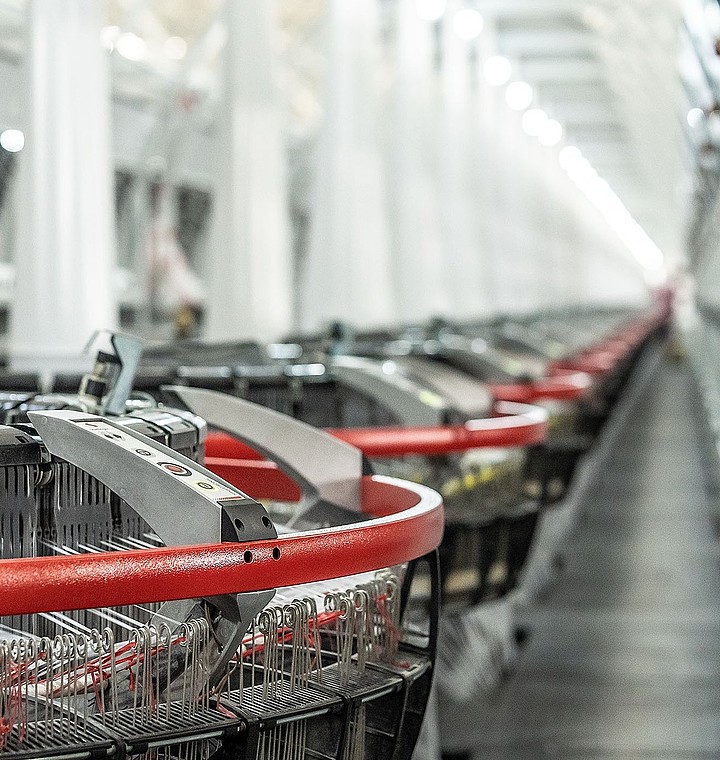
Weaving. Circular or flat looms interlace warp and weft tapes (typical meshes 10×10 to 14×14), balancing seam capture with a flat print face.
Surface preparation & printing. Fabrics receive corona/primer to elevate surface energy; artwork is printed either directly via HD CI‑flexo or reverse‑printed on BOPP via gravure so inks live under film.
Coating/lamination & conversion. PP/PE coatings (~15–30 g/m²) or 12–25 μm BOPP films are applied for moisture beading and graphic fidelity. Cloth is cut, gusseted, tubed, and finished into sewn open‑mouth (SOM) or block‑bottom valve (AD‑style) formats. Vent patterns are tuned so trapped air exits quickly without escorting fines.
Quality control. Panel‑wise COF, laminate bond, seam pull, and filled‑bag drop performance are checked to spec; barcode legibility is verified under rub (ASTM D5264) so codes scan at destination.
What Is the Application of PP Woven Bags?
Building materials & minerals. Cement, dry mortar, gypsum, lime, silica sand, and mineral fillers rely on dust‑tight filling, robust corners, and labels that survive yard exposure.
Staple foods & agriculture (case‑by‑case). Rice, flour, pulses, grains, and seeds benefit from scuff‑resistant graphics and square stacking when compliant structures are specified.
Home & garden. Fertilizers, compost, soil, and de‑icing salts demand moisture defense and yard‑worthy durability—the woven substrate is built for it.
Pet nutrition & retail‑adjacent. Kibble and seed mixes need puncture resistance and branding that resists shelf abrasion; easy‑open tapes improve user experience.
Product Parameters — Summary for PP Woven Bags (Typical, Real‑World Ranges)
| Parameter | Typical Range / Spec | Technical Note |
|---|---|---|
| Product | PP Woven Bags | PP woven sacks for 5–50 kg duties |
| Fabric mesh | 10×10 to 14×14 | Higher pick density → flatter print face & stronger seams |
| Fabric mass (GSM) | ~60–120 g/m² | Tuned to duty: food vs. minerals vs. garden |
| Coating mass | ~15–30 g/m² (PP/PE) | Drives water beading & print hold‑out |
| BOPP film gauge | 12–25 μm (matte/gloss/registered) | Reverse‑printed for rub‑resistant, full‑bleed graphics |
| Common 25–50 kg size | W 48–55 cm × L 75–95 cm | Block‑bottom valve or sewn open‑mouth |
| COF targets (panel‑wise) | Machine 0.25–0.35; Pallet 0.45–0.60 | Glide in machine, grip on pallet |
| UV stabilization | 200–1000 h xenon‑arc equivalence | For outdoor yard dwell & retail displays |
| Print colors | Up to 8–10 | HD gravure or CI‑flexo; barcode quiet zones maintained |
Values mirror widely listed specifications on Made‑in‑China, Alibaba, and peer supplier datasheets. Tune to product density, humidity, and route conditions. No MOQ is discussed by design.
Why VidePak for PP Woven Bags
Founded in 2008, VidePak’s core team brings 30+ years of industry experience and a workforce of 568. We specialize in PP Woven Bags, BOPP‑laminated woven sacks, valve bags, and kraft‑paper woven bags, supplying customers across the United States, Europe, Brazil, South America, Southeast Asia, Japan, Korea, Central Asia, the MENA Region, East Africa, and South Africa.
Equipment pedigree. We operate top‑tier assets from W&H (Germany) and Starlinger (Austria): 100+ circular looms, 16 extrusion lines, and 30+ lamination/printing machines. This guarantees process stability, flat weave, and repeatable coating/lamination.
Materials & customization. We run 100% virgin raw materials, support custom dimensions, gussets, liners, and multi‑color artwork, and govern color with Pantone/LAB tolerances. Registered anti‑slip, matte/gloss contrasts, and easy‑open features are routine.
Quality governance. Each SKU carries a one‑page spec—dimensions/tolerances, panel‑wise COF windows, seam‑pull targets, laminate bond, rub life, and filled‑bag drop criteria—paired with strict change‑control on inks, adhesives, and coatings.
Scale you can trust. With annual sales around USD 80 million, VidePak has the capacity and discipline to deliver PP Woven Bags that run fast on your former, stack square on your pallet, and arrive legible at your customer.
- What Are PP Woven Bags?
- What Are the Features of PP Woven Bags?
- What Is the Production Process of PP Woven Bags?
- What Is the Application of PP Woven Bags?
- Product Parameters — Summary for PP Woven Bags (Typical, Real‑World Ranges)
- Why VidePak for PP Woven Bags
- 1. Understanding PP Woven Bags: A Brief Overview
- 2. The Importance of Raw Material Quality
- 3. Controlling Material Quality: Rigorous Testing and Monitoring
- 4. The Role of Technology in Material Control
- 5. Customization and Flexibility: Meeting Diverse Market Needs
- 6. Sustainable Practices in PP Woven Bag Production
- 7. FAQs About PP Woven Bags
- 8. Conclusion: Ensuring Quality Through Rigorous Material Control
Polypropylene (PP) woven bags are an indispensable component in the packaging industry due to their strength, versatility, and recyclability. From industrial goods to agricultural products, PP woven bags serve a wide range of applications, making them a popular choice across various sectors. However, ensuring superior quality in PP woven bags requires a commitment to rigorous material control throughout the production process. This article will delve into the factors that contribute to the quality of these bags, the steps taken to control materials, and the resulting benefits for manufacturers and customers alike.
1. Understanding PP Woven Bags: A Brief Overview
PP woven bags are made from polypropylene, a thermoplastic polymer. They are woven using a high-strength fabric that provides durability, flexibility, and resistance to various environmental factors such as moisture, dust, and wear. These bags are available in a range of designs and can be customized to suit specific applications, including industrial packaging, food packaging, agricultural storage, and waste management.
2. The Importance of Raw Material Quality
The foundation of any high-quality PP woven bag begins with the selection of the raw material—polypropylene pellets. The quality of these pellets directly affects the tensile strength, tear resistance, and overall durability of the final product. In the production of PP woven bags, it is essential to source high-grade, virgin polypropylene resin rather than recycled material to ensure consistent quality. Recycled polypropylene may contain impurities that can degrade the performance of the bag.
Key Parameters of High-Quality Raw Materials:
- Polypropylene Resin Type: The choice of polymer grade affects the tensile strength, elongation, and heat resistance of the bags.
- Additives and Stabilizers: The inclusion of stabilizers, antioxidants, and UV inhibitors can improve the longevity and resistance of the bags to environmental factors.
- Colorants and Pigments: When custom printing or dyeing is involved, the quality of colorants used must be high to avoid fading or cracking over time.
The following table outlines the typical specifications for polypropylene raw materials used in woven bags:
| Specification | Description |
|---|---|
| Melt Flow Index (MFI) | Typically between 10-15 g/10 min for optimal strength and processability. |
| Tensile Strength | 25-30 MPa, ensuring high durability. |
| UV Resistance | Additives used to improve UV stability for outdoor storage. |
| Elongation at Break | 100-150%, providing flexibility and tear resistance. |
| Impact Resistance | High resistance to impact, preventing punctures or tears. |
3. Controlling Material Quality: Rigorous Testing and Monitoring
Quality control in the production of PP woven bags goes beyond the initial selection of raw materials. Continuous monitoring and testing are required at various stages of production to ensure that the bags meet industry standards and customer expectations. Rigorous testing is carried out to evaluate factors such as tensile strength, puncture resistance, UV stability, and moisture resistance.
Material Testing Methods:
- Tensile Testing: This test measures the force required to pull the material apart, indicating its strength.
- Puncture Resistance Testing: Helps evaluate how well the material can withstand sharp objects without tearing.
- UV Stability Testing: Ensures that the woven bags will maintain their integrity when exposed to sunlight, especially for outdoor applications.
- Moisture Resistance Testing: Evaluates how well the bags perform when exposed to humid or wet environments.
Manufacturers use state-of-the-art equipment to perform these tests, ensuring that the materials comply with international standards, such as ISO 9001 certification.
4. The Role of Technology in Material Control
Advancements in technology have played a significant role in improving the quality and efficiency of PP woven bag production. One of the key technological advancements in recent years is the use of Starlinger machinery, which is renowned for its precision and efficiency in producing woven fabrics. These machines provide uniformity in fabric thickness, ensuring that each bag meets the required specifications.
Additionally, multi-layer extrusion technology enables the creation of bags with enhanced protection against moisture, chemicals, and UV radiation. This is especially crucial in sectors such as construction and agriculture, where PP woven bags need to withstand harsh environmental conditions.
Automation has also improved the consistency of the production process, reducing human error and ensuring that each bag produced meets the same high standards.
5. Customization and Flexibility: Meeting Diverse Market Needs
One of the biggest advantages of PP woven bags is their versatility. They can be customized in various ways to meet the unique needs of different industries. This includes customization in terms of:
- Bag Size: PP woven bags can be made in various sizes, from small bags for retail packaging to large bulk bags for industrial use.
- Printing and Branding: Custom printing allows businesses to use woven bags as a medium for branding and marketing. This customization can include logos, product information, and even intricate designs.
- Closure Type: Open-mouth, valve, and pinch-bottom designs are commonly used, depending on the product being packaged.
- Lamination: For added strength, moisture resistance, and a smooth surface, PP woven bags can be laminated with additional layers of material such as BOPP (Biaxially Oriented Polypropylene).
Here is a table summarizing the different customization options for PP woven bags:
| Customization Feature | Benefits |
|---|---|
| Size | Tailored to specific product requirements. |
| Printing | Branding and marketing through high-quality custom prints. |
| Closure Type | Ensures secure closure based on product type (e.g., valve or open-mouth). |
| Lamination | Added protection against moisture and chemicals, and enhances the appearance of the bags. |
6. Sustainable Practices in PP Woven Bag Production
Sustainability is becoming an increasing focus in the packaging industry. Consumers and businesses alike are looking for eco-friendly alternatives to traditional packaging materials. PP woven bags are a step in the right direction, as they are reusable, recyclable, and can be produced using sustainable practices.
At VidePak, we have embraced sustainability by offering transparent woven bags, which not only provide a more eco-friendly solution but also allow consumers to see the contents of the bags without compromising quality. Laminated PP woven bags are another solution, providing superior protection and ensuring the bags remain durable over time, even under extreme conditions.
For more information on sustainable solutions in the woven bag industry, check out this article for insights on VidePak’s eco-friendly approach.
7. FAQs About PP Woven Bags
Q1: What industries use PP woven bags?
PP woven bags are widely used in industries such as agriculture (for grain and seed storage), food packaging (flour, sugar, etc.), construction (for bulk materials), and waste management (for recyclable materials).
Q2: How are PP woven bags made?
PP woven bags are made by weaving polypropylene yarns into a fabric and then sewing or sealing the fabric into the desired bag shape. Depending on the application, additional layers or lamination may be added.
Q3: Are PP woven bags waterproof?
While polypropylene itself is water-resistant, certain types of PP woven bags can be laminated or coated with additional materials to enhance their water-resistant properties.
Q4: Can PP woven bags be customized?
Yes, PP woven bags can be fully customized in terms of size, color, printing, and closure types to meet the specific needs of different industries.
Q5: Are PP woven bags recyclable?
Yes, PP woven bags are recyclable, and their environmental impact can be minimized when properly recycled. Many bags are made from virgin polypropylene, making them fully recyclable at the end of their lifecycle.
8. Conclusion: Ensuring Quality Through Rigorous Material Control
The production of high-quality PP woven bags requires strict material control, advanced manufacturing technologies, and consistent testing throughout the production process. By focusing on the selection of premium raw materials, utilizing cutting-edge equipment, and offering customizable solutions, manufacturers like VidePak can provide bags that meet the highest standards of strength, durability, and sustainability.
For more information on the versatility and quality of PP woven bags, visit this detailed exploration to see how VidePak continues to innovate in the field.
By prioritizing quality control at every step of production, businesses can ensure that their PP woven bags not only meet the specific demands of their industry but also contribute to a more sustainable and efficient packaging solution.