
What Are Polypropylene Bags? (Definition & Common Aliases)
When packaging must be light yet strong, printable yet durable, economical yet engineered, Polypropylene Bags step out of the commodity shadow and into the role of calibrated components. Built from interlaced polypropylene (PP) tapes that form a textile‑like fabric, then finished with a purpose‑chosen surface—extrusion‑coated PE, laminated BOPP, or paper laminate—Polypropylene Bags combine tensile strength, moisture discipline, and brand‑ready graphics in a single structure. In catalogs and buying guides they also appear as PP woven bags, WPP sacks, polypropylene woven sacks, BOPP‑laminated woven bags, and paper‑laminated PP bags. These aliases point to the same idea: tune the “skeleton” (fabric GSM, mesh, denier) and the “skin” (coating/laminate/print) so the container suits the product, the plant, and the pallet.
To understand why Polypropylene Bags matter, trace their horizontal lineage and vertical logic. Horizontally, the format borrows from three worlds at once: textiles (denier arithmetic, creep behavior, seam load paths), flexible packaging (seal windows, dyne level, coefficient of friction), and logistics (stacking geometry, pallet friction, barcode scannability). Vertically, the performance ladder reads resin → tape → fabric → surface → print → conversion → QA. Shift one rung—say, draw ratio at extrusion—and the echoes travel: denier stability changes, weave planarity shifts, coating laydown wanders, seal latitude narrows, and suddenly a readable barcode becomes a rumor. The message is plain: Polypropylene Bags are systems, not sacks.
For format and tolerance references, explore Polypropylene Bags. That link is not decoration; it is the bridge from adjectives to numbers, from claims to parameters.
What Are the Features of Polypropylene Bags?
Strength‑to‑weight that protects payload and margin. The woven PP base typically spans ~60–120 g/m² for 5–50 kg lanes, delivering high tensile and tear resistance at low tare. By selecting tape denier (≈600–1,200 D) and mesh (10×10 to 14×14) with intent, Polypropylene Bags convert material grams into reliable drop survival and calm handling—less overpack, more product per pallet.
PP Woven Bags Manufacturer
Innovative polypropylene bag designs delivering improved efficiency and industrial performance.
Check More →Woven Fabric PP Bags Features
Evolution of polypropylene materials with enhanced design for superior packaging efficiency.
Check More →BOPP Woven Bags
Advanced polypropylene woven bags with innovative structures for optimized operational efficiency.
Check More →Heavy-Duty Woven Bags Guide
Modern polypropylene bag evolution featuring innovative designs and high-efficiency packaging.
Check More →Moisture and dust control designed in, not bolted on. Extrusion‑coated PE layers (~20–40 μm) bridge inter‑tape voids to widen the heat‑seal window and curb wicking. Where hermeticity is critical, inner liners or collar welds are specified; where speed rules, micro‑perforation bands—20–60 holes/cm² in a narrow top zone—vent headspace air without turning the bay into a snow globe. The horizontal analogy to pouch technology is clear: seal windows and vent paths are process variables, not afterthoughts.
Print surfaces built for brand and barcodes. Corona‑treated faces (≥38 dynes) accept high‑definition flexo (6–8 colors) or rotogravure (8–9 colors). Laminated BOPP (15–30 μm, clear/white/matte) lifts ink holdout and rub resistance, while matte whites mitigate scanner glare so GS1 barcodes, data matrices, and QR codes pass on the first scan. The vertical cause‑and‑effect shows up here too: low dyne → poor wet‑out → mottled solids → barcode failures at receiving.
Handling stability on lines and pallets. Coefficient of friction (COF) packages are tuned—inner ~0.18–0.30 for smooth feed through formers and seal jaws; outer ~0.35–0.55 for pallet grip under straps. Optional antiskid textures or embossed patterns lift stack friction, while UV stabilization (200–1,600 h) aligns outdoor storage with latitude and dwell time. Geometry matters as much as grams: block‑bottom forms stack like bricks; open‑mouth forms suit legacy sealers.
Closure choices without compromise. Polypropylene Bags support open‑mouth heat‑seal tops for wide, stitch‑free seams; block‑bottom valve formats enable self‑closing mouths—heat‑seal, sonic‑seal, tuck‑in, or poly‑lock—that cut the leak paths conventional stitching introduces. In short, the seam stops being a weakness and becomes a feature.
Sustainability pathways with evidence, not slogans. Virgin contact layers are used for food‑adjacent SKUs; paper from responsibly managed sources (FSC® options) supports paper‑laminated builds; PCR content can enter non‑food exterior layers where performance permits; water‑based inks and solventless laminations lower VOC profiles. Ethics show up as numbers—material declarations, audit trails—not as adjectives.
Customization that serves operations. Sizes typically span layflat widths of 300–600 mm with lengths tuned to bulk density. Add handles, tear tapes, transparent windows in white BOPP, antiskid patches, or EZ‑open features. With Polypropylene Bags, customization is not vanity; it is operations engineering.
What Is the Production Process of Polypropylene Bags?
Extrusion & orientation (building the tapes). Virgin PP is extruded into flat tapes and drawn to target denier. Draw ratio sets tensile and creep; quench and anneal stabilize crystallinity. Online denier control smooths loom behavior; stable tapes yield calm fabric.
Weaving (forming the fabric). Circular looms interlace tapes into meshes commonly 10×10 to 14×14 at the GSM chosen for the job. Planarity here influences everything later—coating flatness, print registration, and block‑bottom forming accuracy. Think of it as the stage on which every later operation performs.
Surface engineering (coating/lamination). A PE extrusion coat (~20–40 μm) opens a generous heat‑seal window and reduces water vapor transmission. For premium graphics or outdoor rub, a BOPP laminate (15–30 μm; clear/white/matte) or a kraft‑paper laminate (60–120 g/m²) is bonded via extrusion tie‑layer or solventless adhesive. Corona treatment lifts dyne to ≥38 for ink anchorage; coat weight is SPC‑controlled because wandering coat means wandering seals.
Printing (carrying the message). High‑definition flexo and rotogravure deliver dense solids, crisp micro‑type, and compliant barcodes. Overprint varnishes improve rub and UV endurance so safety icons and QR codes arrive readable. Barcode grades are measured, not guessed, before reels leave the press.
Conversion (creating the form). Cut to length; add gussets; apply valve patches; form stitch‑free block bottoms by hot‑air welding or adhesive pasting. Place micro‑perfs in a narrow top band above the settled product level to evacuate headspace air during fill without product loss. The result is speed without dust—and that is not luck, it is layout.
QA & documentation (proving the promise). Thickness mapping; tensile/tear of the woven base; seal/peel strength by jaw type; COF inner/outer; dart impact and tear tests on formed specimens; dyne retention; barcode grades after strap‑rub simulation; visual AQL. For food‑adjacent builds, material declarations match destination regulations. These numbers travel with each lot so receiving can trust rather than test.
Vertical thinking ties the steps into one chain: resin MFI influences draw; draw sets denier stability; stability governs weave planarity; planarity shapes coating; coating determines seal latitude and dyne; dyne and overprint determine barcode grades; grades determine audit friction. Horizontal thinking borrows lessons from pouches (seal windows), corrugate (stack math), and labeling (quiet zones)—then adapts them to the hybrid textile/film nature of Polypropylene Bags.
What Is the Application of Polypropylene Bags?
Fertilizers & agro‑chemicals. Hygroscopic blends in humid lanes benefit from heavier coats, optional liners, and outer COF around 0.45–0.55 to resist pallet “skating.” Valve mouths and welded bases cut stitch‑line dusting; micro‑vent bands keep lines fast without losing fines. Here, Polypropylene Bags behave like throughput levers, not mere containers.
Cement, dry mixes & minerals. Abrasive, dense powders ask for higher GSM within range and robust, stitch‑free bottoms that form square. Pallets travel straighter, forklift handling turns calmer, and claims fall. Geometry plus friction—not geometry alone—keeps stacks honest.
Food ingredients (where compliant). Sugar, rice, flour, premixes: clean heat‑seals, scannable codes, and optional barrier liners elevate hygiene narratives and audit readiness. Matte white print zones suppress glare so scanners pass the first time; that is safety and speed in a single design choice.
Animal feed & pet food. BOPP faces preserve shelf artwork; welded bottoms reduce in‑store dust; transparent windows within white BOPP showcase blend quality. Polypropylene Bags must be both billboard and workhorse—visible, durable, trustworthy.
Plastic resins & masterbatch. High bulk density pushes for stiffer bodies and antiskid outer COF; rub‑resistant panels maintain product IDs through long drayage and rough straps. Label legibility is more than branding; it is receiving efficiency.
Salts, charcoal & specialty chemicals. UV‑stabilized skins suit yard storage; micro‑vent bands keep fills quick without turning the air opaque. Anti‑static options and zoning‑aware designs protect operators where dust clouds and ignition energy intersect.
In each lane, the pattern repeats: fewer leaks, cleaner floors, faster fills, straighter stacks—Polypropylene Bags that act like parts of a well‑tuned line.
**Indicative Parameters — Polypropylene Bags
The following windows reflect widely listed, export‑grade practice on Made‑in‑China/Alibaba‑class catalogs and peer manufacturers. Final set‑points depend on bulk density, fines %, climate, and handling severity.
| Attribute | Typical Options / Ranges | Role in Performance | Notes |
|---|---|---|---|
| Product | Polypropylene Bags | Woven PP sacks for 5–50 kg lanes | Open‑mouth or block‑bottom valve formats |
| Fabric GSM | ~60–120 g/m² | Drop/tear vs. fold behavior | Heavier GSM for abrasive/mineral contents |
| Mesh (warp×weft) | 10×10 to 14×14 | Porosity; lamination/print flatness | Finer mesh → smoother print face |
| Tape Denier | 600–1,200 D | Tensile & creep resistance | Stable denier = stable weaving |
| PE Extrusion Coat | ~20–40 μm | Heat‑seal window; moisture control | Thicker for humid/coastal lanes |
| BOPP Laminate | 15–30 μm (clear/white/matte) | Print fidelity; rub resistance | Matte white improves barcode scans |
| Paper Laminate | 60–120 g/m² kraft | Panel stiffness; stack friction | FSC® options on request |
| Valve Types | Heat‑seal / Sonic‑seal / Tuck‑in / Poly‑lock | Fill speed; dust control | Match to filler nozzle geometry |
| Micro‑Perforation | 20–60 holes/cm² (top band) | Headspace air release | Keep above settled product level |
| COF (inner/outer) | 0.18–0.30 / 0.35–0.55 | Feeding vs. pallet grip | Antiskid textures optional |
| Printing | Flexo 6–8c; Gravure 8–9c | Brand impact; code legibility | Validate barcode grade after strap‑rub |
| UV Stabilization | 200–1,600 h | Outdoor storage resilience | Match to expected yard dwell time |
| Sizes | Layflat 300–600 mm; length by density | Pallet fit; cube efficiency | Block‑bottom improves stacking |
| QA Metrics | Seal/peel; tensile/tear; dart impact; dyne; COF; thickness SPC; visual AQL | Objective acceptance & repeatability | Material declarations for food‑adjacent builds |
—
In the end, the question is not “Do Polypropylene Bags work?” but “How do they work for your line?” Horizontal comparisons provide clues; vertical cause‑and‑effect provides control. When both are used, a bag stops being a cost on a spreadsheet and starts behaving like a quiet asset—predictable, tidy, and tuned to its lane.
Polypropylene (PP) bags have undergone significant evolution, revolutionizing packaging across industries. The innovative designs, enhanced manufacturing techniques, and customization capabilities of these bags make them indispensable. This article delves into their history, technological advancements, applications, and how they contribute to efficient logistics and sustainability.
Milestones in the Evolution of Polypropylene Bags
- Inception and Adoption (1950s-1980s)
- Material Discovery: Polypropylene polymer was discovered in the 1950s, providing a lightweight and durable material for bags.
- Adoption in Industries: PP bags started replacing traditional jute and paper bags, thanks to their strength and moisture resistance.
- Technological Breakthroughs (1990s-2010s)
- BOPP Film Lamination: Introduced in the 1990s, BOPP (Biaxially Oriented Polypropylene) improved bag aesthetics and printability.
- Valve Bags: Enhanced filling speed and reduced wastage in industrial applications.
- Modern Innovations (2010s-Present)
- Form-Fill-Seal (FFS) Technology: Automated filling processes for tubular PP woven bags, increasing production efficiency.
- Eco-Friendly Options: Transparent woven bags and bio-based polymers address environmental concerns.
Advantages of Modern Polypropylene Bags
| Feature | Benefit |
|---|---|
| Lightweight | Reduces transportation costs. |
| Durability | Offers resistance to tears and punctures, ensuring safe transit. |
| Custom Printing | Enhances branding opportunities. |
| Moisture Resistance | Keeps contents dry and safe, especially in agricultural and chemical applications. |
| Eco-Friendliness | Recyclable materials align with sustainability goals. |
Applications of PP Bags in Key Industries
- Agriculture
PP woven bags are widely used for packaging grains, fertilizers, and seeds. Their UV protection ensures product integrity during outdoor storage. - Construction
Valve and moisture-proof bags transport materials like cement and sand efficiently while reducing spillage. - Food Industry
Transparent and breathable PP bags are ideal for flour, sugar, and pet food packaging. - Waste Management
Waterproof and laminated PP bags assist in waste segregation and recycling initiatives.
For a detailed exploration of how PP bags enhance agricultural logistics, visit our insights on FFS roll woven bags in agriculture.
FAQs: Addressing Key Questions
Q1: What are the customization options for PP bags?
- Customization includes size, color, printing designs, lamination, and valve types.
Q2: How are PP bags contributing to sustainability?
- Recyclable designs, reduced use of virgin materials, and bio-degradable variants support sustainability.
Q3: Are PP bags suitable for high-moisture environments?
- Yes, laminated and moisture-resistant variants ensure product safety in wet conditions.
Q4: How does the FFS system improve efficiency?
- By automating filling, sealing, and packaging processes, FFS systems reduce labor and material handling costs.
The Role of Advanced Manufacturing Techniques
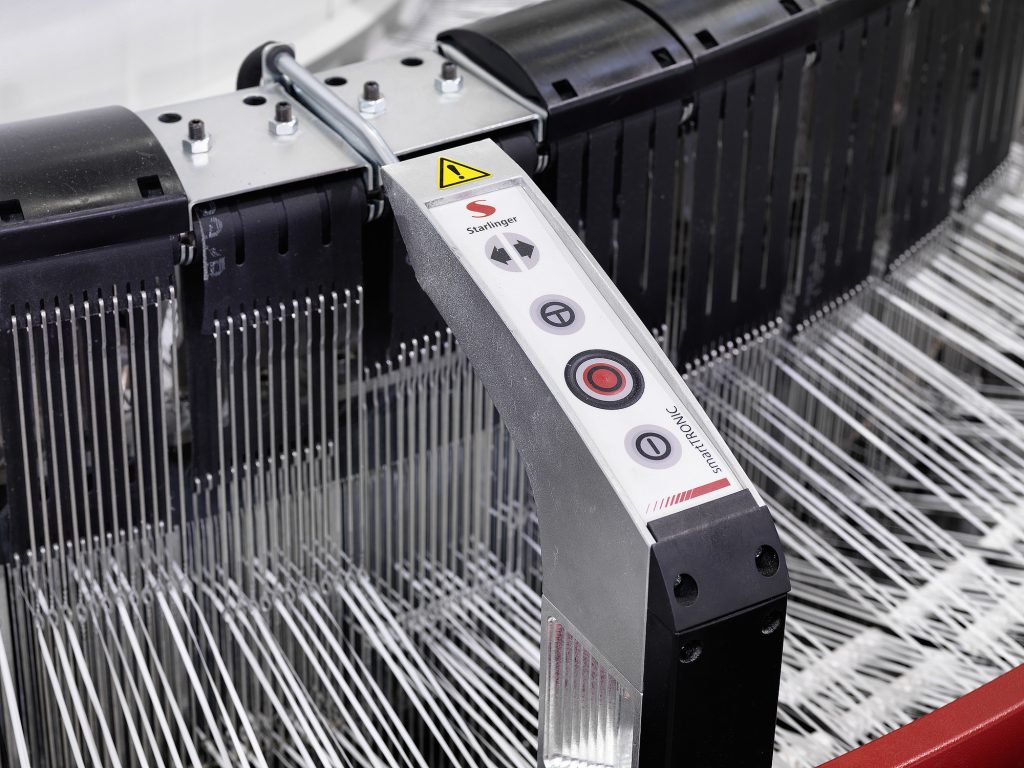
- Starlinger Technology
- Advanced looms and lamination machines enhance precision and production speed.
- Fine Yarn Technology
- Enables lightweight yet durable designs, reducing environmental impact.
- Co-Extrusion Blown Film Processes
- Adds multi-layered protection for specialized applications.
For insights into innovative manufacturing methods, explore laminated woven bags with co-extrusion processes.
Future Trends in Polypropylene Bags
- Eco-Friendly Materials
- Increased adoption of biodegradable polymers and recycled PP.
- Smart Packaging
- Incorporation of RFID tags for better inventory management.
- Improved Aesthetics
- Enhanced print technologies for vibrant and detailed designs.
- Global Standards Compliance
- Certifications such as ISO and FSC are becoming essential in export markets.
By embracing these advancements, businesses can optimize packaging efficiency while reducing environmental impact. The evolution of PP bags exemplifies the fusion of innovation, sustainability, and practicality in modern packaging solutions.