
What are Block Bottom Bags?
Block Bottom Bags—also called block‑base woven sacks, square‑bottom poly bags, or brick‑pack PP sacks—are engineered packages that combine a rectangular tube with a folded, sealed base to create a stable, box‑like footprint. Unlike pillow‑style sacks that roll, slump, and waste pallet cube, Block Bottom Bags stand upright, interlock on the skid, and present broad printable faces for branding and regulatory text. In moisture‑sensitive scenarios, advanced inner linings—such as PE tubular liners, co‑extruded films, or EVOH barrier layers—elevate protection while preserving drop strength and clean filling.
From a systems perspective, Block Bottom Bags merge four subsystems into one solution: (1) a woven or film‑reinforced skeleton for mechanical strength; (2) a lining stack tailored to moisture and aroma control; (3) a forming/closure architecture that locks in shape and dust performance; and (4) a compliance/traceability layer that keeps audits predictable. When these parts are tuned as a whole, plants see fewer splits, tighter pallets, and cleaner warehouses—even in humid seasons and long, vibration‑heavy routes.
What are the features of Block Bottom Bags?
To understand the value of Block Bottom Bags, treat them as a coupled system. Four pillars—mechanical integrity, moisture & barrier strategy, retail/brand presentation, and governance & sustainability—interact like gears. Spin one too fast and another slips. Balance them, and throughput rises without surprises.
Woven PP tapes (≈700D–1200D; 8×8–12×12 picks/inch) deliver puncture and tear resistance. The block base distributes shock on edge‑drops, while double‑turned or pinch‑sealed bottoms reduce sifting. Anti‑slip overprints target bag/bag COF ≈0.4–0.6 to calm stacks on smooth decks.
Liner options scale with risk: PE tubular liners (30–70 μm) for practical moisture moderation; co‑extruded films for better fold continuity; EVOH layers when oxygen or aroma sensitivity matters. Micro‑perfs above headspace vent air during fast fills without blowing WVTR targets.
Broad faces support photographic gravure on BOPP or matte kraft for low‑glare regulatory zones. The square stance lifts shelf facings and scanability. Label pockets keep GS1 codes at ISO/IEC 15416 grade ≥3.0 after rough handling.
Standards discipline (ISO 9001/14001; ISO 22000 or FSSC 22000 where applicable) plus chemical stewardship (REACH, EU 94/62/EC, FDA/EU contact) makes audits predictable. Right‑weighting and mono‑polymer stacks minimize waste and simplify end‑of‑life streams.
Feature sets are strongest when they are orchestrated. A tighter weave raises burst but can trap air at the spout; micro‑perfs restore flow yet must not compromise barrier. A glossier print screams on shelf but glares under scanners; a matte zone solves that without muting the rest of the artwork. Every knob you turn nudges another metric—so we specify in systems, not in silos.
Data Reinforcement — Metrics that Matter in Moisture Control
Films and liners are screened via ASTM F1249. A 40–60 μm PE liner often lowers moisture ingress sufficiently for rice and flour while preserving drop robustness of the outer sack.
Peel strength to ASTM D903 confirms the heat‑seal window and consistency. Pinch‑bottom geometries routinely outperform sewn‑only bottoms for dust‑tight operations and base squareness.
Bag/bag and bag/corrugate COF is tuned (ASTM D1894) to ≈0.4–0.6 using anti‑slip overprints, preventing “skiing” on smooth decks without over‑drag at depots.
Comparative Study — Why Block Geometry Changes Everything
Geometry is not cosmetic; it is functional. Pillow sacks waste cube, topple when vibration builds, and scuff labels as stacks lean. Block Bottom Bags distribute pressure more evenly, reduce corner stress on drops, and face the shopper—or the forklift operator—with consistent panels. Against multiwall paper, woven block formats trade a little surface quietness for superior wet strength and puncture tolerance; against pouches, they win the 10–50 kg tier on cost‑to‑ruggedness ratio.
What is the production process of Block Bottom Bags?
From resin to qualified bag, quality emerges from a linked chain: inputs → lamination/printing → tubing → block‑bottom forming → closing → QA. Each step sets constraints the next must respect.
- Inputs. Woven PP fabric (tape extrusion → drawing → 8×8–12×12 picks/inch). BOPP film (gloss or matte) or kraft paper faces (70–120 gsm). Liners: PE tubular 30–70 μm; optional co‑ex/EVOH based on risk. Adhesives/resins for extrusion or solvent/water‑based lamination; low‑odor, low‑migration inks for sensitive lines.
- Lamination & printing. Extrusion lamination maximizes bond strength and moisture continuity; adhesive lamination protects temperature‑sensitive graphics. Gravure on BOPP for photographic panels; flexo/offset on kraft for low‑glare regulatory blocks; color held to ISO 12647 ΔE targets.
- Tubing & gusseting. Create longitudinal seam; tune gussets for final base dimensions; apply micro‑perfs above intended headspace to vent during filling while protecting moisture targets.
- Block‑bottom forming. Fold/glue or heat‑seal to create the square base. Pinch‑bottom variants deliver dust‑tight edges and cleaner retail presentation versus sewn‑only bottoms.
- Closing. Valve top for automated powders or open‑mouth for granules/pellets. Closures: pinch‑seal, heat‑seal, or sewn + crepe depending on filler hardware and hygiene targets.
- Quality assurance. Routine: tensile/elongation (ASTM D5035, ISO 13934‑1), tear (ISO 13937), drop (ISO 2206/2248), compression (ASTM D642), COF (ASTM D1894), peel (ASTM D903), WVTR for liners (ASTM F1249), rub (ASTM D5264). Traceability per ISO 9001 with retained samples and DoCs.
Case in point. Upgrading from sewn‑bottom to pinch‑bottom block‑base increased line speed on a gypsum additive by 10–12%: dust alarms fell, and spout alignment improved due to cleaner base geometry. In comparative peel/WVTR/drop matrices, extrusion lamination delivered higher bond and moisture continuity, while adhesive lamination won where odor and low‑temperature constraints dominated.
What is the application of Block Bottom Bags?
Block Bottom Bags shine where moisture protection, stack stability, and brand impact must coexist. The list below is not exhaustive, but it maps risks to practical bag choices.
Rice, flour, sugar: PE liners (40–60 μm) or co‑ex films; matte regulatory panels; upright stance for shelf blocking and clean facings. Valve or open‑mouth depending on flow properties.
Puncture‑resistant woven cores handle sharp kernels and mineralized recipes. EVOH‑enabled co‑ex films serve aroma‑sensitive pet or premium SKUs. Anti‑slip reduces skid lean in mixed pallets.
Dust‑tight pinch bottoms, tuned micro‑perfs, and PE liners produce clean handling. Anti‑slip overprints maintain pallet coherence in humidity, reducing wrap usage without risking topples.
Calcium carbonate, pigments, gypsum: moisture moderation without sacrificing drop robustness. Pinch seams and anti‑slip prevent dust escapes and sliding at transfers.
Parameter Table — Typical Specifications & Test Methods
System Synthesis — From Risks to a Unified Specification
Specifications should read like cause‑and‑effect, not like a menu. Below is a practical mapping that turns product risks into bag parameters for Block Bottom Bags.
- Hygroscopic grains → PE 40–60 μm tubular liner; micro‑perfs only above headspace.
- Aroma/O₂ sensitive → co‑ex film with EVOH; verify seal window and migration documents.
- Dust‑prone powders → pinch bottom + tuned micro‑perfs; consider internal valve for speed.
- Target COF ≈0.5 on your pallet film; avoid over‑tack that hinders repositioning.
- Validate 0.8–1.2 m drop across orientations; model creep (ASTM D642) for voyage time.
- Use matte code zones to maintain barcode grade in mixed lighting.
- Maintain DoCs (FDA/EU), migration tests ((EU) 10/2011 when applicable), REACH SVHC statements, EU 94/62/EC heavy‑metals totals <100 ppm.
- Retain samples and batch CoAs per ISO 9001; link to color ΔE control and peel test records.
- Right‑weight every layer; the biggest carbon win is avoided product loss.
- Favor mono‑polyolefin stacks (BOPP + PP + PE) where recovery streams exist.
- UV‑stabilize for outdoor staging to lengthen service life and cut scrap.
Case Files — How Choices Play Out on Real Lines
Case 1: Fertilizer with hygroscopic salts. The packer adopted Block Bottom Bags with 50 μm PE liners, pinch bottoms, and anti‑slip bands. Result: pallet collapse events decreased, exterior dust build‑up dropped, and operator clean‑down time per shift shrank measurably.
Case 2: Premium flour with long retail dwell. Moving to matte regulatory zones reduced glare; barcode grades stabilized ≥3.0; scuff returns trended down. A narrower gloss strip preserved brand sheen without affecting scanability.
Case 3: Pigment concentrates shipping via mixed climates. Co‑ex films with EVOH stabilized rheology drift; the bag’s square stance improved warehouse picking as codes were visible from the aisle, not just face‑on.
Frequently Asked Why — Rhetorical Checks that Sharpen Specs
- Why not skip the liner? Because humidity and caking drive rework, and rework drives carbon. A thin PE liner prevents more waste than it creates, especially on hygroscopic SKUs.
- Why not glossy everywhere? Because scanners dislike glare. Keep a matte lane for codes; let gloss carry the brand.
- Why not over‑tack the surface? Because too much COF turns staging into a wrestling match. Target the window, not the extremes.
- Why pinch bottoms over sewn‑only? For dust‑tightness and cleaner bases; sewn lines still serve niche equipment constraints but demand more dust abatement.
Professional Knowledge Reinforcement — Standards & Certificates
Governance turns claims into proofs. For Block Bottom Bags used with food or feed, facilities typically document ISO 9001:2015 (quality), ISO 14001:2015 (environment), and ISO 22000:2018 or FSSC 22000 (food/feed safety). Materials documentation commonly cites FDA 21 CFR 177.1520 (PP), FDA 21 CFR 176.170/176.180 (paper), EU 1935/2004 and (EU) 10/2011 for plastics in contact with food, plus EU 94/62/EC heavy metals total <100 ppm and REACH (EC) 1907/2006 SVHC non‑intent. When kraft is used, FSC® Chain of Custody (FSC‑STD‑40‑004) links fiber to managed forests.
One Link You’ll Actually Use
Explore high‑graphics laminate options that pair naturally with Block Bottom Bags to elevate shelf presence without sacrificing handling performance.
Why VidePak — Engineering, Empathy, Evidence
We specify Block Bottom Bags as laminate systems—structure, lining, closure—tuned to product risk, climate, filler hardware, and lane friction. Square stance, anti‑slip strategy, and code‑ready faces reduce rework on the dock and mis‑scans at receiving. Certificates, DoCs, retained samples, and change control aligned with ISO, FDA, and EU frameworks ensure predictable inspections—and faster approvals.
Denier, picks/inch, pinch geometry, and liner thickness calibrated to moisture windows and drop profiles—not catalog averages.
Matte code lanes, anti‑slip tuning, and easy‑open touches that speed shifts in real‑world light with gloved hands.
Peel, WVTR, drop, compression, COF, and barcode data on file; quarterly reviews to tighten specs or unlock savings without risk.
Call to Action
Tell us your product, moisture window, and route. We’ll return a Block Bottom Bags specification—substrate denier and picks/inch, lining type and thickness, bottom style, closure, COF target, and print program—plus a validation matrix (drop/compression/WVTR/COF/peel) your team can run on the current line without halting production.
- What are Block Bottom Bags?
- What are the features of Block Bottom Bags?
- Data Reinforcement — Metrics that Matter in Moisture Control
- Comparative Study — Why Block Geometry Changes Everything
- What is the production process of Block Bottom Bags?
- What is the application of Block Bottom Bags?
- Parameter Table — Typical Specifications & Test Methods
- System Synthesis — From Risks to a Unified Specification
- Case Files — How Choices Play Out on Real Lines
- Frequently Asked Why — Rhetorical Checks that Sharpen Specs
- Professional Knowledge Reinforcement — Standards & Certificates
- One Link You’ll Actually Use
- Why VidePak — Engineering, Empathy, Evidence
- Call to Action
“Why are block bottom bags increasingly favored for moisture-sensitive products like chemicals and agricultural goods?”
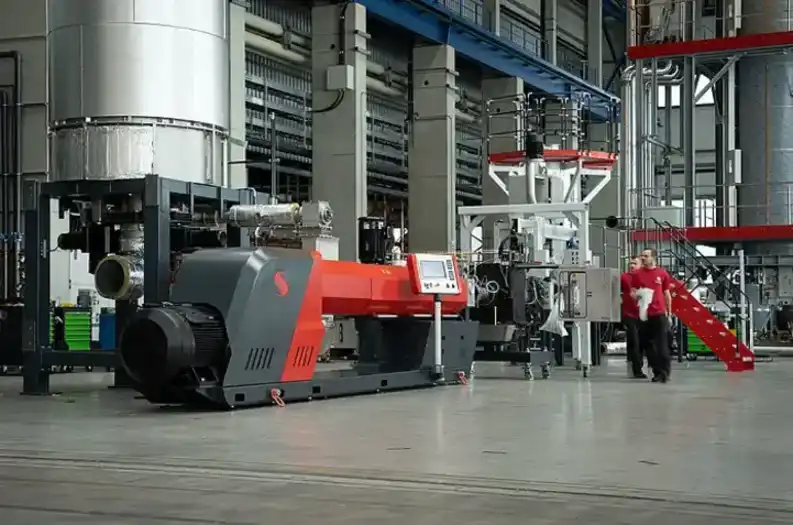
The answer lies in their structural stability, customizable linings, and precision manufacturing enabled by advanced machinery from industry leaders like Starlinger and W&H. VidePak, a global leader in woven bag production, leverages these technologies to deliver block bottom bags that combine durability, moisture resistance, and scalability.
1. Introduction: The Critical Role of Block Bottom Bags in Modern Packaging
Block bottom bags, characterized by their flat rectangular bases and reinforced seams, have become indispensable for industries requiring robust moisture protection. These bags are particularly vital for storing hygroscopic materials like fertilizers, resins, and food additives. VidePak’s adoption of Austrian Starlinger and German W&H equipment ensures that their block bottom bags meet stringent quality standards while optimizing production efficiency.
Key Differentiator:
“Our partnership with Starlinger and W&H allows us to control every variable—from polymer extrusion to final stitching—ensuring consistent barrier properties even in humid environments.”
— Ray, CEO of VidePak
2. VidePak’s Technological Edge: Starlinger and W&H Machinery
VidePak operates over 100 circular looms, 16 extrusion lines, and 30 lamination machines, with Starlinger and W&H systems forming the backbone of their production.
2.1 Controlling Filament Temperature and Draw Ratio
- Filament Temperature Control:
Starlinger’s extrusion systems precisely regulate melt temperatures (typically 200–250°C) during polypropylene (PP) tape production. Consistent temperature prevents polymer degradation, ensuring uniform tape thickness (<0.05mm tolerance) and tensile strength (>45 MPa). - Impact on Quality: Overheating causes brittleness, while underheating leads to weak inter-fiber bonding, compromising moisture resistance.
- Draw Ratio Optimization:
W&H’s stretching units adjust draw ratios (5:1 to 7:1) to align polymer chains, enhancing tensile strength by 30% compared to conventional methods. Higher ratios improve fiber orientation, reducing porosity and moisture ingress. - Case Study: VidePak’s block bottom bags for flood-prone regions use a 6.5:1 draw ratio, achieving <0.1% water vapor transmission rate (WVTR) in 85% humidity environments.
2.2 Advanced Linings and Lamination
VidePak integrates multi-layer linings (e.g., BOPP, PE coatings) using Starlinger’s lamination technology. These linings are heat-sealed at micro-level precision to eliminate weak seams.
| Lining Type | Moisture Barrier Efficiency | Application |
|---|---|---|
| BOPP Film | WVTR: 5–8 g/m²/day | Fertilizers, Chemicals |
| PE-Coated Kraft | WVTR: 2–4 g/m²/day | Food Additives |
| Aluminum Foil | WVTR: <0.5 g/m²/day | Pharmaceuticals |
3. Market Alignment and Competitive Advantages
With annual sales of $80 million and a global footprint, VidePak’s success stems from:
- Customization: Over 20 ink colors and bespoke printing for brand differentiation.
- Scalability: 24/7 production capacity, delivering 5 million bags/month.
- Sustainability: 100% virgin PP resin ensures recyclability, aligning with EU and FDA regulations.
FAQs:
- How do block bottom bags prevent moisture damage?
Advanced linings and hermetic stitching create a multi-barrier system, blocking external humidity while retaining product integrity. - Why choose Starlinger/W&H machines?
Their closed-loop control systems reduce material waste by 15% and energy consumption by 20%, lowering production costs.
4. Industry Trends and Future Outlook
The global moisture-proof packaging market is projected to grow at 6.2% CAGR, driven by agricultural and chemical sectors. VidePak’s R&D focus includes:
- Smart Linings: Integrating RFID tags for real-time humidity monitoring.
- Bio-Based PP: Collaborating with resin suppliers to reduce carbon footprint.
For deeper insights, explore our guides on moisture-proof woven bags and Starlinger’s role in sustainable packaging.
5. Conclusion: Delivering Reliability Through Innovation
VidePak’s block bottom bags exemplify how precision engineering and advanced materials can solve critical packaging challenges. By mastering variables like filament temperature and draw ratio, the company sets benchmarks in moisture protection while driving sustainable growth.
Final Thought:
“In an era where a single leak can cost millions, investing in the right technology isn’t optional—it’s essential.”
— Packaging Industry Report, 2025