

What are BOPP Woven Bags for Chemical Packaging? Clarifying Identity, Scope, and Synonyms
In the industrial packaging ecosystem, BOPP Woven Bags for Chemical Packaging combine structural strength with surface sophistication. The core is a polypropylene (PP) woven fabric—tapes extruded, drawn, and interlaced—while the skin is a biaxially oriented polypropylene film (BOPP) laminated to the fabric for graphics, cleanability, and moisture resistance. Depending on regional practice and user preference, these solutions are also referred to as BOPP laminated PP woven sacks, BOPP woven sacks, or simply BOPP bags. Labels vary; function converges. When powders and granules must endure turbulent logistics yet still look pristine, this hybrid architecture provides the balance: stout in the warehouse, persuasive on the pallet, legible in compliance checks.
Material Stack and Micro-Architecture of BOPP Woven Bags for Chemical Packaging
Packaging lives or dies by its material stack. The interplay between mechanical skeleton and functional skin dictates whether bags tear on the dock, cake in monsoon humidity, or showcase the hazard symbols your EHS team painstakingly curated. Below is a deeper, layer‑by‑layer breakdown—not just what each layer is, but what it does, where it sits, and how it drives cost, quality, and risk.
Outer Film: BOPP (≈18–35 μm)
Biaxial orientation aligns polymer chains in both MD and TD, elevating clarity, stiffness, and scuff resistance while stabilizing dimensions under heat and tension. Reverse-printed BOPP preserves graphics between film and adhesive, defending against abrasion. The laminate shifts the surface energy into a sweet spot for ink anchorage after corona treatment. Costs remain favorable versus PET/PA laminates, and the all‑polyolefin pathway supports mono‑material recycling streams where available.
Tie Layer: Extrusion or Adhesive
Bond strength is more than a number; it is the assurance that artwork will not bubble, that seams will not propagate delamination, and that pallets will not fail cosmetic inspection. Extrusion lamination with PP melts delivers robust fusion; solventless polyurethane adhesives reduce VOCs and balance initial tack with ultimate peel. The choice is contextual: heat‑sensitive inks argue for adhesives; high line speeds and thick webs favor extrusion.
Inner Skeleton: PP Woven Fabric (≈60–120 g/m²)
Drawn PP tapes—often 700D to 1200D—are interwoven into a fabric that shoulders tensile loads, resists ripping at the corners, and dictates seam efficiency. Denier selection impacts elongation at break; loom picks per inch regulate porosity and stiffness. Under identical mass, woven PP often outperforms paper in puncture resistance and outlasts mono‑film PE in edge tear.
Functional Add‑Ons
Options include LDPE or PP liners (20–60 μm) to lower moisture ingress and dust escape; anti‑slip topcoats to tune coefficient of friction; micro‑perforations for air venting during high‑speed filling; side gussets to optimize cube efficiency; and valve spouts for automated line compatibility. These add‑ons should be specified per SKU rheology and environment—not by habit.
Properties and Differentiators that Define BOPP Woven Bags for Chemical Packaging
Why choose this construction for chemicals rather than paper, rather than PE, rather than multi‑layer composites? Because product physics, logistics physics, and brand physics collide in the real world. Powders are cohesive or free‑flowing; granules are abrasive or benign; pallets are strapped or not; graphics are vivid or muted; labels are optional or mandated. The properties below resolve those frictions—not in theory, but in day‑to‑day operations.
Strength-to-Weight
Woven PP achieves high tensile and tear resistance at relatively low fabric GSM. This permits 25–50 kg fills without the weight creep of heavy paper or the stretch profile of mono‑film. Result: fewer ruptures, fewer over-spec’d bags, fewer trucks hauling excess packaging mass.
Moisture and Abrasion Control
BOPP’s low moisture uptake and slick surface reduce caking and surface wear. Add liners for hygroscopic materials and you convert a vulnerable package into a durable container that survives condensation events or coastal shipping without turning into pulp.
Graphic Real Estate
Reverse-print rotogravure/flexo on BOPP supports photo‑quality imagery and durable hazard communication. GHS pictograms, batch codes, multilingual regulatory texts—kept legible, scuff‑resistant, and brand‑consistent through long transit cycles.
Clean Discharge, Less Dust
Smooth internal surfaces, especially with liners, reduce product retention. Micro‑perforations allow air to escape during fast filling, cutting down on pluming dust and inaccurate net weights. Not every plant needs perforations; abrasive granules may demand a non‑perfed path. Specify knowingly.
Stackability and Safety
Gussets, tuned COF, and consistent dimensions support cube efficiency and stable pallets. When humidity rises and paper softens, woven PP keeps its geometry. Pallet lean turns into pallet discipline.
Recyclability Pathways
An all‑polyolefin design (PP fabric + PP‑compatible BOPP) simplifies recycling compared with mixed-material laminates. Availability of take‑back programs varies by region, yet design for circularity starts with material coherence.
From Resin to Ready Bag: The Process Behind BOPP Woven Bags for Chemical Packaging
Processes are choices frozen in time. Each step—extrusion, weaving, printing, lamination, conversion—encodes tradeoffs between speed and quality, cost and capability. Understanding those choices allows operations managers to dial performance without over‑spending. The outline below goes beyond the buzzwords and ties decisions to outcomes.
- PP Tape Extrusion & Orientation. Resin selection affects drawability, gel incidence, and tape uniformity. Draw ratios calibrate tensile strength and elongation at break; higher draw sharpens strength but risks brittleness. Quenching profiles influence haze and later ink outcomes; do not treat cooling as an afterthought when it sets the tone for everything downstream.
- Weaving (Circular or Flat). Picks per inch, warp-to-weft tension, and loom maintenance determine porosity and fabric GSM stability. Optimizing for speed alone invites variation that later masquerades as lamination defects. Preventative loom audits are cheaper than quarantined pallets.
- Printing on BOPP. Reverse rotogravure or high‑end flexo places inks on the inner face of the BOPP, locking graphics behind the film after lamination. Corona treatment raises surface energy for ink wetting. Color management with spectro targets and G7‑style calibration prevents SKU‑to‑SKU drift that otherwise triggers rework.
- Lamination. Extrusion lamination fuses the stack in a single thermal event; adhesive lamination sequences cure and offers lower thermal stress on inks. Measure peel strength statistically—not as hero numbers but as process capability (Cp/Cpk) so you can predict field performance, not just pass lab tests.
- Cutting, Forming, and Closing. Heat‑cutting controls fray. Bottom constructions vary: single/double chain stitch or heat‑seal; top features include hem, valve, or open‑mouth. Gusseting dictates cube and pallet pattern. Dimensional tolerances are not vanity; they are the difference between a bag that runs at 40 BPM and one that stalls at 24.
- In‑Line QA and Final Testing. Tensile (ASTM D5034), seam strength (ISO 13935‑2), drop tests aligned to GB/T 8946 protocols, coefficient of friction (ASTM D1894), and MVTR checks validate the promise you made to production. Track trends; single‑point pass/fail thinking hides drift until it becomes a customer complaint.
If your artwork uses heat‑sensible metallic inks or densely pigmented blacks, adhesive lamination reduces thermal stress. For rugged outdoor SKUs with high abrasion, extrusion lamination can deliver superior bond consistency.
Exterior anti‑slip coatings raise COF to curb pallet slide. Interior slip control eases de‑aeration and discharge. Calibrate both; a one‑sided fix can create a new problem across the aisle.
Micro‑perfs aid fast filling but may raise MVTR. For highly hygroscopic chemistries, pair minimal perforations with a liner; for coarse granules, a non‑perfed spec may run cleaner and stronger.
Use Cases and Fit: Where BOPP Woven Bags for Chemical Packaging Excel
Use fits need. Applications are not generic; they are chemically specific, climatically constrained, and operationally unique. By viewing use cases through formulation behavior and logistics realities, purchasing shifts from copying a competitor’s spec to tuning an ownable one.
Hygroscopic Powders
Desiccants, certain fertilizers, and fine additives demand liners and careful perforation policy. A 40 μm LDPE liner within the woven body mitigates caking after dew‑point excursions in transit.
Abrasive Granules
Calcium carbonate, barite, silica, or PVC pellets favor heavier denier fabrics and reinforced seams. Here, edge‑tear resistance and bottom construction matter more than MVTR.
Brand‑Critical Commodities
For retail‑adjacent chemicals and construction mixes, BOPP’s print fidelity elevates perception and simplifies multilingual compliance without stick‑on labels that peel in humidity.
Valve‑Fill Operations
Valve‑type constructions integrate well with existing fillers, reducing changeover burden while preserving the laminate’s scuff resistance and graphics integrity.
Evidence, Examples, and Comparisons That Inform Decisions
Decision quality improves when abstract claims are tested against data, grounded by examples, and contrasted with alternatives. The following triads—data reinforcement, case analysis, and comparative study—mirror how technical buyers evaluate packaging: metrics, narratives, and options.
1) Barrier & Cleanliness
Data reinforcement: When BOPP laminates overlay woven PP, the moisture vapor transmission rate typically falls versus unlaminated fabric. Pairing with liners reduces ingress further. Dust egress declines thanks to smoother interior surfaces and optional non‑woven neck liners at the top closure.
Case analysis: A desiccant producer operating in a coastal climate reduced caking claims by adopting a linered specification with minimal micro‑perfs. Fill speeds remained acceptable after adding de‑aeration needles at the filler to compensate for lower air permeability.
Comparative study: Relative to multi‑wall paper, woven PP + BOPP retains integrity during precipitation events and in high relative humidity; relative to mono‑film PE bags, it delivers improved puncture and edge‑tear resistance with comparable moisture protection when liners are specified.
2) Mechanical Safety
Data reinforcement: Fabric GSM and tape denier drive tensile and tear performance; seam efficiency—especially with double chain stitch—often governs drop performance more than raw fabric strength alone. Corner protection and hem design mitigate initiation points for tearing.
Case analysis: A PVC resin packer decreased dock‑side ruptures by specifying 90 g/m² fabric with denier near 900D, transitioning bottom closures to double chain stitches, and tightening size tolerances by ±3 mm to reduce bag‑to‑chute friction variability.
Comparative study: Woven PP stacks more stably than paper in humid regions and resists fork‑tip puncture better than mono‑film PE; where extreme water immersion resistance is required, PE liners complement the laminate without forcing an all‑PE outer.
3) Print & Compliance Real Estate
Data reinforcement: Rotogravure up to 8–10 colors on BOPP supports crisp hazard diamonds, legible batch codes, and durable pictograms that survive high‑friction conveyors. Inks protected by lamination resist scuff, maintaining readability through multiple handling cycles.
Case analysis: A multi‑market additives brand consolidated five regional SKUs into two laminated art sets. The result was lower pre‑press cost, fewer label over‑laminations, and reduced risk of label detachment during monsoon seasons.
Comparative study: Paper prints beautifully but scuffs and muddies in wet environments; non‑laminated PP woven accepts fewer color passes with less gloss; BOPP‑laminated woven PP delivers print quality with durability, keeping compliance text intact.
4) Operational Fit
Data reinforcement: Micro‑perforations reduce trapped air, improving scale accuracy at high fill rates. Exterior COF of 0.25–0.40 supports stable pallet stacks; interior surface tuning aids discharge. Valve options align with cement‑style fillers, easing adoption.
Case analysis: After adding an anti‑slip topcoat, a construction chemical supplier recorded fewer pallet collapses in a humid port warehouse, without sacrificing line speed.
Comparative study: Conversion to valve‑type BOPP woven bags often requires minimal filler modification compared with a switch to FFS tubular PE systems, preserving capex while gaining print and tear performance.
Design Parameters and Color-Coded Reference Table
Specifications should be legible, negotiable, and testable. The table below is intentionally color‑coded for quick scanning in cross‑functional meetings.
| Parameter | Typical Range / Option | Why it Matters |
|---|---|---|
| Bag capacity | 5–50 kg (common 25/40/50 kg) | Aligns with feed systems and pallet programs |
| Fabric weight (GSM) | 60–120 g/m² | Strength, tear resistance, and cost per bag |
| Denier (tape) | ~700D–1200D | Correlates with tensile and tear properties |
| BOPP thickness | 18–35 μm | Impacts gloss, scuff resistance, and stiffness |
| Printing | Up to 8–10 colors | Supports brand presence and regulatory text |
| Gusset | Side gusset 70–120 mm | Improves cube efficiency and pallet stability |
| Liners | LDPE/PP 20–60 μm | Moisture and odor barrier; dust control |
| Closure | Single/double chain stitch; heat‑seal | Seal integrity; discharge cleanliness |
| Perforation | Micro‑perfs or none | Balances fill speed and MVTR |
| COF (outer) | 0.25–0.40 (treated) | Pallet stack safety |
System Thinking: Breaking the Problem Into Layers, Then Recombining
Real‑world packaging design resists single‑variable fixes. Moisture, abrasion, stack stability, and print legibility are coupled. A holistic approach decomposes the challenge into sub‑problems—barrier, mechanics, communication, operations—analyzes each, and then synthesizes a combined specification that limits tradeoffs. The framework below mirrors cross‑functional decision‑making in high‑stakes chemical supply chains.
Barrier & Cleanliness
Goal: curb moisture ingress and dust egress. Tools: BOPP thickness, liner selection, perforation density, sealed seams. Metrics: MVTR targets, dust loss during fill, and residue in downstream mixers. Constraint: every extra barrier can raise cost and slow filling; the trick is measured optimization.
Mechanical Safety
Goal: withstand drops, stacking, and rough handling. Tools: fabric GSM, denier, seam style, corner reinforcements. Metrics: drop test heights, tear propagation scores, and pallet lean incidents. Constraint: heavier fabric improves strength but raises cost and stiffness; seam tuning often yields better ROI.
Communication Real Estate
Goal: keep hazard symbols, batch numbers, and instructions readable through the supply chain. Tools: reverse‑print rotogravure, font hierarchy, and QR serialization spots. Metrics: abrasion cycles to illegibility, scan error rates. Constraint: high‑ink coverage may lengthen curing or demand adhesive lamination.
Operational Fit
Goal: run fast, weigh accurately, and stack safely. Tools: perforations, bag geometry, COF control, valve type. Metrics: BPM at steady state, under/overweight incidents, and pallet collapse frequency. Constraint: changes for one line may impair another; use the tightest constraint to define the spec.
- Fabric: 80–100 g/m² PP woven, ~900D.
- BOPP: ~25 μm, reverse‑printed up to 8 colors.
- Closure: double chain stitch with folded hem; consider bottom heat‑seal for powders prone to sifting.
- Perforation: minimal micro‑perfs; add de‑aeration at filler for hygroscopic powders.
- Liner: LDPE 40 μm where humidity, marine transit, or long storage exists.
- COF: 0.30–0.35 outer with anti‑slip topcoat; match to palletization method.
- Testing: tensile (ASTM D5034), seam (ISO 13935‑2), drop per GB/T 8946 protocols, COF (ASTM D1894).
Feature Cards: Choosing Among Configurations
Flexible for manual lines or semi‑auto fillers. Easy to rework; ideal for small‑batch specialty chemicals. Best paired with controlled COF for safe stacking.
Integrated with cement‑style fillers; maintains speed; reduces operator exposure. Often specified where dust control and throughput trump resealability.
Side gussets expand volume, sharpen stack, and tame pallet lean. Logistics teams notice immediately; forklift operators do too.
Highest barrier solution without abandoning the polyolefin stack. Useful for hygroscopic, odor‑sensitive, or fine powders that must not dust.
Rhetorical Lens: Asking the Right Questions
What is durability without legibility? What is line speed without weight accuracy? What is low cost if returns multiply? Short bags fail quickly; long questions save money. Consider this series of provocations as a checklist for teams aligning operations, safety, and brand:
- Is your MVTR target a number from a past tender, or from present humidity data?
- Are seam failures traced to thread, to stitch density, or to fabric edge preparation?
- Do pallets travel by rail, by road, by barge? Should COF change by route?
- Will multi‑language art reduce SKUs and pre‑press costs, or does it increase regulatory risk?
- Should liner gauge differ by season? If not, why not?
Integrated Spec Example for **BOPP Woven Bags for Chemical Packaging**
Pulling the threads together, a cohesive configuration for 25–50 kg chemical SKUs might read as follows. The objective is to show how a set of interdependent levers—fabric, film, closures, liners, perforations—harmonize into a bag that runs fast, travels safely, and communicates clearly.
- Dimensions: 520 × 800 mm with 100 mm side gusset for 50 kg fill.
- Fabric: 90 g/m² PP woven (~900D tapes), tight tolerance.
- BOPP: 25 μm, reverse printed up to 8 colors; corona ≥ 38 dynes/cm.
- Closure: double chain stitch, folded hem; alternate bottom heat‑seal for dusty powders.
- Liner: LDPE 40 μm, open‑mouth, tied or heat‑sealed after fill depending on dust behavior.
- Perforation: minimal micro‑perfs; rely on filler de‑aeration for sensitive powders.
- COF: 0.30–0.35 outer with anti‑slip; inner tuned for discharge.
- Validation: tensile per ASTM D5034, seam per ISO 13935‑2, drop per GB/T 8946 methodology, COF per ASTM D1894.
Practical Orchestration: From Pilot to Scale
Pilots are not theater; they are instrumentation. Move from lab tests to line trials to limited‑route shipments, and watch the metrics: fill rate, net weight variation, return rate, scuff index, pallet lean. When a variable drifts, chase the root cause upstream in the material stack or downstream in handling practices. The choreography below reduces surprises.
- Define performance targets with cross‑functional input (EHS, Quality, Ops, Logistics).
- Run line trials across high and low humidity days; record fill head pressures and air content curves.
- Ship pilot pallets along the most punishing route; inspect on arrival for scuffing, bulging, and label legibility.
- Adjust perforation pattern, liner gauge, and COF in a single DOE, not one at a time; interactions are real.
- Codify the chosen spec and lock process capability with Cp/Cpk monitoring; revisit quarterly.
- What are BOPP Woven Bags for Chemical Packaging? Clarifying Identity, Scope, and Synonyms
- Material Stack and Micro-Architecture of BOPP Woven Bags for Chemical Packaging
- Properties and Differentiators that Define BOPP Woven Bags for Chemical Packaging
- From Resin to Ready Bag: The Process Behind BOPP Woven Bags for Chemical Packaging
- Use Cases and Fit: Where BOPP Woven Bags for Chemical Packaging Excel
- Evidence, Examples, and Comparisons That Inform Decisions
- Design Parameters and Color-Coded Reference Table
- System Thinking: Breaking the Problem Into Layers, Then Recombining
- Feature Cards: Choosing Among Configurations
- Rhetorical Lens: Asking the Right Questions
- Integrated Spec Example for **BOPP Woven Bags for Chemical Packaging**
- Practical Orchestration: From Pilot to Scale
- 1. Strategic Packaging Solutions for Chemicals
- 2. Material Selection & Regulatory Compliance
- 3. Operational Efficiency & Sustainability
- FAQs: BOPP Bags in Chemical Packaging
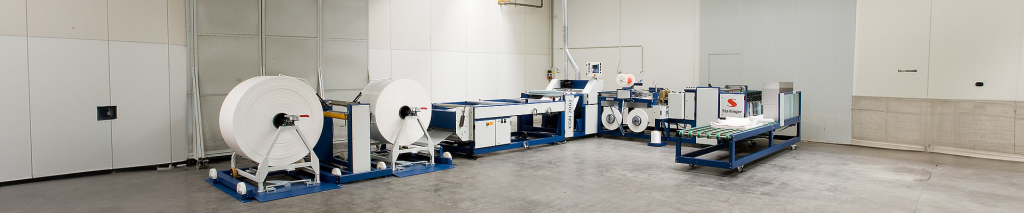
“Chemical packaging isn’t about containment—it’s about creating a molecular fortress,” says Ray, CEO of VidePak, during a plant tour. “Our BOPP woven bags with PE liners reduce leakage by 98% for clients handling corrosive acids, while aluminum foil laminates block UV degradation in photo-sensitive compounds.” This report analyzes how BOPP woven bags address chemical packaging challenges through material science, structural design, and compliance—leveraging VidePak’s 30+ years of expertise and Starlinger’s automated production lines.
1. Strategic Packaging Solutions for Chemicals
1.1 Lamination vs. Inner Liners: Barrier Performance Analysis
Chemical compatibility dictates barrier choices:
- PE Liners: Ideal for non-volatile liquids (e.g., detergents), offering 0.5–1.0 g/m²/day water vapor transmission rates (WVTR) at 20% cost savings versus foil.
- Aluminum Foil Laminates: Essential for volatile solvents (acetone, toluene), achieving <0.01 g/m²/day WVTR and 99.9% UV blockage.
| Material | Thickness | Chemical Resistance | Cost ($/m²) |
|---|---|---|---|
| PE Film | 50–80 µm | Acids, Alkalis | 0.15–0.30 |
| Aluminum Foil | 7–12 µm | Solvents, Oils | 0.50–0.80 |
Case Study: A South Korean agrochemical firm reduced pesticide oxidation by 70% using VidePak’s BOPP/Alu/PE tri-layer bags, validated per ASTM F1980 accelerated aging tests.
1.2 Closure Systems: Precision vs. Cost
- Heat-Sealed Valves: Prevent dust leakage in powdered additives (e.g., titanium dioxide), with 5:1 safety factor stitching.
- Sewn Open Mouth (SOM): Cost-effective for bulk fertilizers, supporting 1,000 kg loads at $0.10/unit.
VidePak’s Block Bottom Valve Bags, produced on Starlinger CX6 machines, automate filling at 40 bags/minute—critical for just-in-time chemical logistics.
2. Material Selection & Regulatory Compliance
2.1 BOPP Film Engineering
VidePak’s BOPP 3500 resin (MFR 3.5 g/10 min) balances tensile strength (2,800 N/5 cm) and chemical inertness, complying with:
- EU REACH: <0.1% heavy metal migration.
- US EPA 40 CFR 261: Passes TCLP leaching tests for hazardous waste containment.
Anti-static coatings (surface resistivity 10⁶–10⁹ Ω/sq) prevent ignition in combustible dust environments per ISO 80079-36.
2.2 Multi-Wall Configurations
- 2-Ply BOPP + Kraft: For hygroscopic compounds (e.g., calcium chloride), reducing moisture uptake by 60%.
- 3-Ply BOPP/PE/Alu: Blocks oxygen ingress (<0.1 cc/m²/day) in antioxidant-sensitive polymers.
3. Operational Efficiency & Sustainability
3.1 Automated Production at Scale
With 30 lamination machines and 16 extrusion lines, VidePak achieves:
- Tolerance Control: ±0.02 mm film thickness uniformity, critical for acid-resistant seams.
- Printing Precision: 10-color gravure printing at 1440 dpi for OSHA/GHS compliance labels.
Case Study: A 2024 partnership with a German paint manufacturer utilized FFS tubular bags to automate 25kg filler operations, reducing labor costs by 55%.
3.2 Recyclability Initiatives
VidePak’s EcoCycle BOPP integrates 30% post-industrial recycled content while maintaining 2,500 N/5 cm tensile strength—certified per ISO 14044 LCA standards.
FAQs: BOPP Bags in Chemical Packaging
Q1: How to prevent BOPP delamination in acidic environments?
A: Use corona-treated PE liners (48–52 dyne/cm surface energy) for enhanced adhesion, tested per ASTM D2578.
Q2: What’s the lifespan of aluminum foil laminates?
A: 18–24 months outdoors, with <5% reflectivity loss under 500 kWh/m² UV exposure.
Q3: Are anti-static bags reusable?
A: Yes—VidePak’s VoltShield series withstands 10+ cycles while maintaining <10⁻⁸ Ω/sq resistivity.
Conclusion
The future of chemical packaging lies in smart barriers—VidePak’s R&D team is prototyping pH-sensitive films that change color upon leakage. As Ray summarizes: “In chemicals, every molecule matters. Our bags ensure none go rogue.”
External Links:
- Explore innovations in multi-layer laminated bags: Safe and Versatile Packaging Solutions.
- Learn how recyclable PP bags meet ESG goals: Recyclable PP Bags: Versatile Packaging for Chemicals.