
What are PP Woven Fabric Bags and why do they matter?
When engineers, brand owners, and procurement teams speak about PP Woven Fabric Bags, they mean a family of industrial sacks made from highly oriented polypropylene tapes that are woven into a fabric, then converted—with coatings, laminations, liners, seams, and prints—into rugged packaging for powders, granules, pellets, and components. The intent is as practical as it is ambitious: carry heavy product safely, communicate clearly with resilient graphics, manage moisture and oxygen within defined limits, and do it all at a competitive unit cost across diverse routes and climates. Because the outer shell is a woven textile rather than a monolithic film or paper sheet, PP Woven Fabric Bags combine exceptional tensile strength per gram with a forgiving handling feel; they stack tall, resist abrasion, and tolerate hostile loading docks where conveyors scrape, forklifts bump, and pallets flex.
Whether you are packaging fertilizer under monsoon clouds, pigments that dust under the slightest vibration, or food‑grade salts destined for a humid port, this format has become a reliable default. It absorbs reality. It forgives operator variation. And, with the right face treatment, it looks sharp while doing so.
- Woven polypropylene bags (WPP)
- PP woven sacks
- Open‑mouth woven PP bags
- Printed woven poly sacks
- BOPP‑laminated woven PP bags
- Coated woven PP bags
- PE‑lined woven PP bags
Different names, one backbone: a woven PP fabric that carries load, a barrier scheme that governs humidity and odor, a seam recipe that keeps fines inside, and a print system that stays legible after the long trip.
Materials and architecture of PP Woven Fabric Bags
A great bag is not one material; it is a small ecosystem. Each layer carries a job, each job introduces trade‑offs, and each trade‑off can be tuned. In PP Woven Fabric Bags the layers are broadly: the woven fabric (load), the outer skin (barrier + print), the inner liner (product interface), and the minor parts (threads, tapes, cords) that decide cleanliness and usability. Below, we map the system the way plant managers and converters actually think about it: by function, by cost signal, and by risk.
1) The fabric body — where strength originates
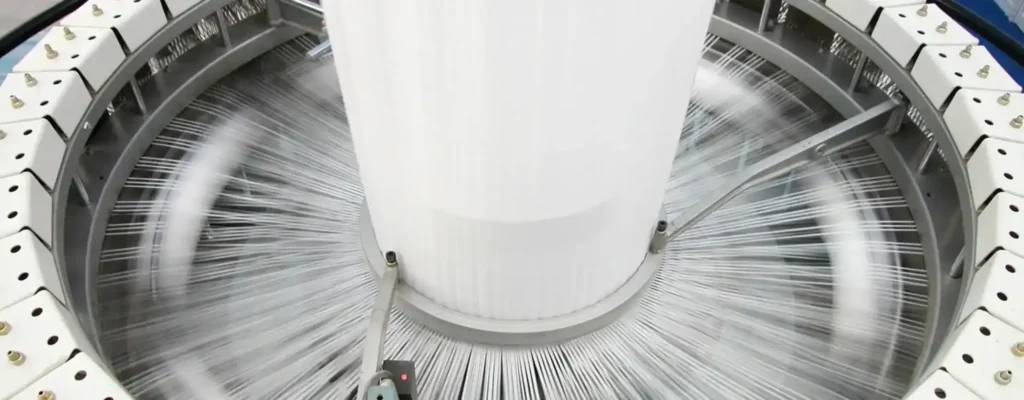
The body is a textile built from slit‑film PP tapes drawn at high ratios to orient polymer chains. Orientation raises tensile strength and reduces creep, allowing excellent strength‑to‑weight at 60–120 g/m² fabric basis weights. Circular‑woven constructions remove a side seam and distribute loads uniformly; U‑panel and four‑panel geometries introduce gussets that square the cross‑section for boxier stacks. Homopolymer PP delivers stiffness and seam strength; impact‑modified copolymers bring low‑temperature toughness for winter handling. In some regions, HDPE tapes appear for extra stiffness and low creep, though at a cost in ductility.
- Pick density (warp/weft tapes per 10 cm) controls tear and early sifting; balance it against loom speed and cost.
- GSM should be the lightest that still hits drop and creep targets; mass drives resin cost and shipping weight.
- UV packages matter when outdoor storage is real; specify the exposure budget (kLy) rather than a vague “UV added.”
2) Coatings and laminations — the skin that carries ink and blocks moisture
Extrusion coatings (PP or PE at ~20–40 µm) close the interstices of the weave, suppress dust sifting, and provide a printable surface for flexography. BOPP laminations (reverse‑printed film at ~18–30 µm) add a scuff‑resistant, moisture‑friendlier face, preserve high‑fidelity graphics, and stiffen panels for tidy pallets. Coatings are lighter and generally cheaper; laminations win on abrasion, shelf presence, and lower surface WVTR. Many plants run a mixed strategy: coated industrial faces for compliance panels, laminated “show” faces where brands must pop.
3) Liners — the barrier at the product interface
LDPE/LLDPE liners offer sealability and conformability; HDPE reduces permeation and stiffens geometry; EVOH co‑extrusions improve oxygen barrier for sensitive additives; foil composites (PET/AL/PE) deliver the tightest moisture and light barrier. Liner formats include loose inserts (tabbed), form‑fit liners that minimize folds, and extended lips designed to be heat‑sealed before a safety stitch is applied. The “seal‑then‑sew” choreography seems trivial—until you look at complaint data. It quietly eliminates vapor paths through the stitch line and cuts moisture claims on long ocean routes.
4) Ancillaries and additives — small parts, big outcomes
Threads, crepe tapes, and filler cords decide whether fines stay in the bag. Stitch density and bite depth must match powder fineness and the dynamic loads of transit; for pigments and ultra‑fine solids, a filler cord or felt seated in the seam blocks needle penetrations that would otherwise become sifting pathways. On the resin side, antistatic packages reduce dust adhesion and mitigate ignition risk; UV stabilizers preserve tape strength during outdoor dwell; slip/antiblock additives keep bag‑on‑bag handling civilized.
5) Sustainability — mono‑material where possible
The direction of travel is clear: mono‑PP outers (fabric + PP coating or PP‑rich laminate) plus separable liners, obvious recycling labels, and auditable traceability (lot and QR/GS1 codes). In practice, many buyers now request post‑industrial PP in the fabric where regulations allow, while keeping virgin liners for cleanliness and compliance. Sustainability does not have to fight performance; it just has to be designed into the bill of materials on purpose.
Feature set of PP Woven Fabric Bags—from loading spout to end‑user opening
A feature is valuable only if it changes the day on the plant floor. In PP Woven Fabric Bags, the winning set is a chain: strength per gram, moisture governance, seam cleanliness, graphic durability, and ergonomic loading and opening. Break any link, and complaints rise. Strength + barrier + seam + print + ergonomics—that is the rhythm of a good specification.
| Feature | Loading benefit | Unloading benefit | Hidden lever |
|---|---|---|---|
| Open mouth with generous hem | Faster spout placement; less spill | Clean tear path with optional tape | Hem stiffness and width |
| Heat‑sealable liner lip | Hermeticity without exotic gear | Cleaner opening after seal cut | Film choice and lip length |
| Sift‑proof seam with filler cord | Less dusting during fill vibration | Cleaner pallets, fewer claims | Cord diameter and compression |
| Laminated outer face | Tough surface rides conveyors | Legible codes after transit | Laminate thickness and bond |
- Strength is not just GSM; it is draw ratio, pick density, and seam path.
- Barrier is a spectrum: coating for dust and splash; lamination for abrasion; liners for pack‑level WVTR.
- Graphics survive when inks, surfaces, and handling are designed as one system.
Production of PP Woven Fabric Bags: from resin to release
Manufacturing is a control loop: select, convert, assemble, verify, release. Specify the loop with numbers, and repeatability follows. Leave it to tribal knowledge, and variability shows up on your customer’s dock. The following sequence mirrors state‑of‑the‑art lines and the audit trails buyers now expect.
A) Upstream — raw material selection and verification
- Resins: homopolymer PP for stiffness and seam strength; impact‑modified PP for cold resilience; HDPE for higher stiffness/low creep. Each lot is checked for melt flow index, density, ash, and pellet moisture.
- Masterbatches: UV packages sized to storage climate; antistatic levels tuned to powder behavior and area classification; pigments matched to brand targets and scannability.
- Films/liners: LDPE/LLDPE/HDPE co‑extrusions with optional EVOH or foil; tests include thickness, dart/drop impact, haze, and seal strength.
- Ancillaries: sewing thread tenacity, crepe tape adhesion, and filler cord dimensional stability verified in incoming QC.
B) Core converting — making the body and skins
- Tape extrusion & orientation: sheet extrusion, slitting into tapes, controlled draw ratios. Targets: high tenacity at minimal GSM, low width CV, minimal fibrillation.
- Weaving: circular or flat looms with pick density tuned for tensile/tear behavior and pre‑coating sift resistance.
- Coating/lamination: extrusion coat PP/PE for dust and moisture; laminate reverse‑printed BOPP for tougher faces and premium graphics. Bond strength and thickness uniformity are CTQs.
- Printing: flexographic or gravure processes apply brand art, compliance marks, and scannable codes with abrasion‑resistant inks.
- Cutting & forming: length cutting with tight tolerance; bottoms folded and stitched (often double‑fold with crepe tape); mouths hemmed for spout guidance and clean tearing.
- Liner insertion & anchoring: loose, tabbed, or form‑fit liners placed; extended lips provided where pre‑seals are required; vents introduced for aerating powders.
- Finishing: easy‑open tapes, lot/QR coding, palletizing with corner boards, stretch‑wrap recipes that avoid bag crushing.
VidePak runs a European pairing: Starlinger (Austria) for tape extrusion, weaving, lamination/coating, and bag conversion; Windmöller & Hölscher, W&H (Germany) for high‑end extrusion and printing/automation. The practical outcome is wider process windows and tighter capability (Cpk) on critical‑to‑quality metrics—tape strength, GSM/pick density, coating thickness, bond uniformity, and registration—which translate into steadier seams, cleaner pallets, and predictable runnability on customer lines.
C) Downstream — quality assurance and release
- In‑process controls: tape tensile/elongation; GSM and pick density; coating/lamination thickness; bond/print adhesion; seam stitch density and bite depth; mouth width and hem stiffness.
- Product tests: dimensional checks; filled‑bag drop testing; sifting trials with representative powders; WVTR checks where liners are used; pallet compression; accelerated UV exposure for outdoor dwell SKUs.
- Compliance: where transport regulations apply, the design is mapped to woven plastic bag codes and the relevant test records are maintained. Markings must match the qualified build and closure method.
Applications of PP Woven Fabric Bags
Because they deliver rugged mechanics, tunable barrier, and resilient graphics, PP Woven Fabric Bags span a wide industrial field: inorganic salts and minerals (sodium chloride, soda ash, gypsum, calcium carbonate), fertilizers and agrochemicals (urea, NPK blends, ammonium phosphate), pigments and fillers (titanium dioxide, carbon black, silica), detergents and builders, and construction chemicals such as tile adhesives and grouts. Hazardous solids can also be addressed when the build is mapped to the applicable woven plastic bag code and the design passes qualification tests—here, the bag is not merely a container but part of the safety system.
| Segment | Typical configuration | Why it works |
|---|---|---|
| Inorganic salts & minerals | Coated fabric, optional LDPE liner, standard seam | Balances cost with moisture discipline; clean seams keep fines in |
| Fertilizers & agrochemicals | UV‑stabilized fabric, form‑fit liner, filler‑cord seams, laminated face for scuff | Outdoor dwell + caking risk demand stronger barrier and surfaces |
| Pigments & fillers | Coated/laminated face, antistatic measures, sift‑proof seams, HDPE/EVOH liner | Dust governance, ESD mitigation, oxygen control when needed |
| Construction chemicals | BOPP lamination, boxier U‑panel geometry, easy‑open tape | Scuff resistance and stable pallets on mixed routes |
How VidePak controls and guarantees the quality
Quality cannot be inspected into a product; it must be designed in. VidePak structures quality in four auditable pillars that mirror how customers buy and how regulators think.
- Standards‑aligned design, production, and testing: engineering against mainstream norms (ISO/ASTM/EN/JIS families for materials and tests where applicable), with transport compliance pathways defined for dangerous goods (woven plastic bag codes). Test plans include drop, sifting, WVTR for linered SKUs, pallet compression, and UV aging where relevant.
- Virgin raw materials from tier‑one producers: resins and masterbatches are vendor‑approved; incoming lots carry COAs and are verified against internal specs (MFI, density, ash, pigment concentration, moisture) before release to production.
- Best‑in‑class equipment: conversion, coating/lamination, and printing on Starlinger and W&H platforms with high automation and in‑line monitoring, locking capability on the metrics that drive cleanliness and run speed.
- Complete test funnel: incoming inspection; in‑process SPC on draw lines and looms; seam audits; adhesion checks; filled‑bag drop and sifting trials; WVTR/MVTR for linered builds; pallet compression; and routine sampling per AQL to maintain statistical confidence.
Keep the audit bundle simple but complete: specification sheet, incoming COAs, in‑process charts for draw lines and looms, seam/adhesion audits, finished‑goods test records (drop, sifting, WVTR), and pallet maps. Trace it to every lot of PP Woven Fabric Bags you release.
PP Woven Fabric Bags: Custom Printing and Color Systems — thinking like a color‑savvy plant
The title puts printing and color at center stage. To make PP Woven Fabric Bags look great and stay on brand across substrates, processes, and regions, treat color not as ink but as data. When color is data, it can be measured, communicated, and replicated. When color is a feeling, it drifts.
1) Fix the printing condition
Start by deciding the physical condition you will print: coated fabric + flexography, or BOPP‑laminated face + gravure (reverse printed). Coated fabric thrives on bold vectors and robust compliance marks; BOPP lamination supports photographic imagery with excellent scuff resistance. Some programs go hybrid: a compliance‑heavy coated face on one side, a brand‑forward laminated face on the other.
2) Choose the color system
- CMYK for photographs and gradients.
- Spot colors for precise brand solids—transmit them as spectral data, not just names.
- Extended gamut (CMYKOGV) when portfolios juggle many brand shades across many SKUs; a fixed seven‑ink palette reduces wash‑ups and stabilizes makereadies.
3) Manage color with standards and files, not opinion
Lock process control aims (tone, dot gain, gray balance) to a recognized characterization; choose process inks that conform to predictable solids and transparency behavior; share spot colors as spectral definitions (CxF/X or comparable systems). Define ΔE tolerances and measurement conditions (e.g., M1) so metamerism does not ambush you at the dock.
4) Calibrate artwork to the substrate
Textured coated fabric is not smooth stock. On coated fabric, favor heavier type, avoid hairline serifs, and keep gradients generous; on laminated faces, push the photographic elements where reverse printing hides ink from abrasion. Always proof against the intended surface; a pretty proof on glossy paper proves nothing about a woven sack.
5) Engineer graphics for survival
- Specify abrasion‑resistant inks for coated faces; rely on reverse printing in BOPP for laminate faces.
- Protect barcodes: quiet zones, resolution, and placement away from fold/seam; laminate when scanning must remain consistent after weeks in transit.
- Reserve clear zones for handling pictograms and lot/UN marks (where applicable); never run fine type across a stitch path.
- Fix the intended printing condition (substrate + process + ink set + aims).
- Build/select the right characterization for that condition; proof to it.
- Send spot colors as spectral data; define ΔE and gray balance aims.
- Engineer the art for the surface—bold vectors on coated fabric, photos on BOPP.
- Measure on press; archive settings and readings into a runbook per SKU.
To explore a closely related family that excels at premium graphics, see this overview of laminated BOPP woven packaging for high‑impact print.
System thinking — decompose the problem, then integrate the solution
Real specifications win when they treat the bag as a small system. Break it down: fabric mechanics (GSM, pick density, tape tenacity) set the load envelope and creep under stacking; the barrier strategy (coating vs lamination vs liner) sets WVTR/OTR and dust containment; seams and closures (stitch density, filler cord, sealability) decide cleanliness and hermeticity; print and compliance (ink/adhesive choices, abrasion, regulatory marks) protect readability and legitimacy; and the test regimen (drop, sifting, WVTR, pallet compression, UV aging) is the loop that proves the solution survives real abuse. Integration is not mysterious: start with hazard and moisture profile, choose fabric GSM and barrier measures, define seam and mouth closure, validate printing durability, and then lock the test plan. Iterate until every acceptance criterion is met with margin.
Technical tables for fast reference
| Element | Main options | When to use | Notes |
|---|---|---|---|
| Fabric type | Circular‑woven; U‑panel; four‑panel | Circular for uniform strength/no side seam; panels for boxier stacks | Panels allow wide gussets; circular improves burst resistance |
| Fabric GSM | 60–120 g/m² (typical) | Heavier for export/stacking; lighter for low‑risk domestic | Confirm with drop tests and pallet plans |
| Barrier outer | PP/PE coating 20–40 µm; BOPP lamination 18–30 µm | Coating for dust/moisture control; lamination for abrasion/graphics | Lamination stiffens faces and supports premium art |
| Liner | LDPE/LLDPE 40–100 µm; HDPE 30–80 µm; EVOH co‑ex; foil composite | Moisture/oxygen/light‑sensitive products | Form‑fit liners reduce folds; heat‑seal lips speed lines |
| Mouth | Hemmed open top; heat‑seal liner lip; tape‑over‑sew | Chosen by closure method and cleanliness target | Hem stiffness aids spout placement |
| Seam | Double‑fold + crepe tape; filler cord/felt; safety stitch | Fine powders and long routes | Sift‑proof seams require rig validation |
| Printing | Flexo 2–8 colors; gravure up to 10 on BOPP | Branding + compliance | Abrasion‑resistant inks preserve codes |
| Decision node | Flexo on coated fabric | Gravure on BOPP laminate |
|---|---|---|
| Typical use | Industrial SKUs, compliance‑heavy art, bold vectors | Retail‑visible SKUs, photographs, rich gradients |
| Strengths | Cost‑efficient, quick turn, robust to handling | Highest image fidelity, abrasion protection via reverse printing |
| Watch‑outs | Texture limits tiny type; protect barcodes from scuff | Lamination adds cost/complexity; bond must stay in spec |
From strategy to specification — a repeatable path
- Fix the intended printing condition (substrate + process + ink set + aims).
- Build/select the right characterization for that condition; proof against it.
- Communicate spot colors as spectral data; define ΔE and gray balance aims.
- Engineer art to the surface: bold vectors on coated fabric; rich photos on BOPP laminate.
- Lock the physical construction: fabric GSM, barrier path (coating vs laminate + liner), seam recipe, mouth geometry, easy‑open feature.
- Write the test plan that proves performance: drop, sifting, WVTR at climate‑relevant condition, barcode abrasion, pallet compression, UV exposure if required.
- Capture a runbook per SKU: inks, screens/cylinders, settings, measurement readings, and acceptance results. This makes repeats trivial and audits painless.
A worked baseline (balanced cost and performance)
- Body: circular‑woven PP fabric, 75–90 g/m², UV‑stabilized per climate.
- Outer: PP extrusion coat 25–30 µm for dust/basic moisture control; for retail‑visible SKUs, upgrade to BOPP lamination ~20–25 µm, reverse printed.
- Seam: double‑fold bottom; mouth with filler cord; one‑needle safety stitch.
- Liner: form‑fit LDPE 50–70 µm with extended lip for heat sealing (upgrade to HDPE/EVOH for oxygen‑sensitive chemistries).
- Closure on line: heat‑seal liner lip, then sew; add tape‑over‑sew for dusty routes.
- Print: flexo 2–6 colors on coated fabric; gravure up to 8–10 colors on laminate; spot colors carried as spectral data; ΔE targets defined.
- Validation: filled‑bag drop tests; sifting trials with your powder; WVTR at 38 °C/90% RH for linered builds; barcode abrasion; pallet compression to your stack plan.
Frequently asked practical questions
Are these bags recyclable? Mono‑PP outer builds (fabric + PP coating or PP‑rich laminate) are generally compatible with PP recycling streams. Design liners to be separable; foil/EVOH liners complicate recycling and should be removed before recovering the outer shell.
Coating or lamination? Use coating when you need a printable surface and moderate moisture/dust control at low cost; use lamination when you need abrasion resistance, photographic graphics, and lower face WVTR. For moisture‑sensitive powders, lamination plus the right liner is often the winner.
When to specify extended gamut (CMYKOGV)? When portfolios include many brand solids across many SKUs, a fixed seven‑ink palette reduces wash‑ups, stabilizes makereadies, and speeds throughput while preserving gamut for signature colors.
Do seams affect graphics? Indirectly. Cleaner seams mean less dust and fewer scuff events; better cleanliness preserves barcode and art legibility downstream.
October 22, 2025
- What are PP Woven Fabric Bags and why do they matter?
- Materials and architecture of PP Woven Fabric Bags
- Feature set of PP Woven Fabric Bags—from loading spout to end‑user opening
- Production of PP Woven Fabric Bags: from resin to release
- Applications of PP Woven Fabric Bags
- How VidePak controls and guarantees the quality
- PP Woven Fabric Bags: Custom Printing and Color Systems — thinking like a color‑savvy plant
- System thinking — decompose the problem, then integrate the solution
- Technical tables for fast reference
- From strategy to specification — a repeatable path
- A worked baseline (balanced cost and performance)
- Frequently asked practical questions
- 1. The Technical Edge of Custom Printing in PP Woven Bags
- 2. Warehouse-Friendly Design Innovations
- 3. Rigorous Quality Assurance: Beyond Industry Standards
- 4. Sustainable Solutions for Modern Logistics
- 5. VidePak’s Manufacturing Ecosystem
- FAQs: Addressing Critical Concerns
- 6. Future Trends: Smart Packaging Integration
- Conclusion: Bridging Branding and Efficiency
“How can businesses optimize inventory management while maintaining brand visibility in bulk packaging?”
This question, posed by a logistics manager at a multinational agricultural supplier, underscores a critical challenge in industrial packaging. The answer lies in customizable color-coded systems and precision printing technologies, which enable both operational efficiency and brand differentiation. At VidePak, a leader in PP woven bag manufacturing since 2008, these solutions are engineered to redefine supply chain workflows.
1. The Technical Edge of Custom Printing in PP Woven Bags
1.1 High-Definition Printing for Brand Identity
VidePak’s 8-color gravure and offset printing systems achieve resolutions up to 1200 dpi, enabling intricate designs, QR codes, and safety labels with pixel-perfect clarity. This technology ensures logos remain legible even under UV exposure or abrasion, critical for outdoor storage. For example, a Southeast Asian fertilizer brand reported a 22% increase in customer recall after adopting VidePak’s UV-resistant printed bags featuring Pantone-matched brand colors.
1.2 Color-Coded Systems for Operational Efficiency
By integrating color stripes (blue, red, green, etc.) into bag designs, VidePak helps clients categorize products at a glance:
Printed BOPP Woven Bags
Professional custom printing solutions for PP woven fabric bags with vibrant color systems and high-quality output.
Check More →BOPP Woven Bags
Premium BOPP woven bags supporting full-color custom printing and personalized design for brand packaging.
Check More →Laminated PP Woven Bags Analysis
Complete analysis of printing techniques and color matching systems for laminated PP woven fabric bags.
Check More →PP Woven Fabric Bags Features
Key features of PP woven fabric bags including customizable printing, stable color systems and versatile applications.
Check More →- Blue: Hazardous chemicals (aligned with UN GHS standards).
- Red: High-priority shipments.
- Green: Eco-friendly or compostable materials.
A 2024 study in the Journal of Industrial Packaging revealed that color-coded systems reduce warehouse sorting errors by 35%. VidePak’s laminated BOPP layers ensure colorfastness, resisting fading even after 500 hours of QUV testing.
2. Warehouse-Friendly Design Innovations
2.1 RFID-Integrated Labels
VidePak embeds RFID tags within bag seams, enabling real-time inventory tracking. A European construction materials distributor reduced stock discrepancies by 18% using this system, which aligns with IoT-driven logistics trends.
2.2 Foldable Designs and Stackability
Bags with gusseted sides and block-bottom structures maximize pallet space utilization. VidePak’s 50 kg-capacity bags, with a ±2 mm dimensional tolerance, allow 15% more units per pallet compared to industry averages.
3. Rigorous Quality Assurance: Beyond Industry Standards
VidePak’s ISO 9001-certified testing protocols include:
| Parameter | Test Method | VidePak Standard | Industry Average |
|---|---|---|---|
| Tensile Strength | ASTM D5034 | 50 N/cm² (warp & weft) | 35 N/cm² |
| Tear Resistance | Elmendorf (ASTM D1922) | 600 mN | 450 mN |
| Color Fastness | AATCC 16 | ΔE ≤1.5 after UV exposure | ΔE ≤3.0 |
| Thickness Tolerance | Laser Micrometry | ±0.02 mm | ±0.05 mm |
A case study with a U.S. cement producer demonstrated that VidePak’s bags reduced transportation damage claims by 40% due to superior seam strength.
4. Sustainable Solutions for Modern Logistics
4.1 Recyclable PP and Circular Economy
VidePak uses 100% virgin PP with an 85% recyclability rate, partnering with European facilities to reprocess post-consumer bags into geotextiles. This aligns with the EU’s Circular Economy Action Plan, targeting 55% plastic recycling by 2030.
4.2 Biodegradable Additives
Pilot programs with oxo-biodegradable PP show 90% degradation within 18 months under industrial composting conditions, offering an alternative for single-use applications without compromising load capacity.
5. VidePak’s Manufacturing Ecosystem
Founded in 2008 under CEO Ray Chiang’s leadership, VidePak combines 30+ years of expertise with cutting-edge infrastructure:
- 100+ Starlinger Circular Looms: Producing 20 million bags monthly.
- 30+ Printing Machines: Supporting 12-color designs for niche markets.
- Global Reach: Serving 40+ countries with $80M annual revenue.
A client in the petrochemical sector noted: “VidePak’s color-coded FIBCs cut our loading time by 25% while meeting OSHA safety standards.”
FAQs: Addressing Critical Concerns
Q: How long does custom design approval take?
A: VidePak provides digital proofs within 48 hours, with physical samples in 5 days.
Q: Can bags withstand -20°C temperatures?
A: Yes, PP retains flexibility at -30°C, ideal for cold chain logistics.
Q: Are recycled PP bags as durable as virgin PP?
A: VidePak’s proprietary blending maintains 95% of virgin PP’s tensile strength.
6. Future Trends: Smart Packaging Integration
VidePak is developing thermochromic inks that change color when exposed to temperature extremes, alerting workers to potential spoilage—a feature demanded by 67% of pharmaceutical clients surveyed in 2024.
Conclusion: Bridging Branding and Efficiency
PP woven bags are no longer mere containers but strategic tools for supply chain optimization. VidePak’s fusion of custom color systems, RFID tracking, and recyclability positions it as a leader in the $120B global flexible packaging market. As industries prioritize ESG compliance, these innovations will drive the next wave of logistical efficiency.
For insights into BOPP lamination techniques, explore our guide on BOPP Laminated Woven Bags. To learn about precision printing, visit The Art of Print in Packaging.
VidePak: Where Innovation Meets Precision.