
This long‑form article expands, reframes, and integrates the practical and theoretical claims surrounding Woven Bags with PE Liner. It analyzes materials science, process engineering, logistics realities, and market dynamics; it contrasts adjacent packaging families; and it connects decisions at the spec sheet with outcomes on pallets. The narrative alternates sentence lengths and employs questions, antitheses, and repetitions to mirror human argumentation. Key phrases such as PP Woven Bags with PE Liner, PP woven sacks with liner, and polypropylene woven bags with polyethylene liner appear throughout to aid discoverability without sacrificing clarity.
What Are Woven Bags with PE Liner? Definition, Function, and Common Aliases
At its simplest, a Woven Bag with PE Liner is a composite container: a load‑bearing woven polypropylene (PP) shell married to a thin polyethylene (PE) inner sleeve. The shell contributes tensile strength, tear resistance, and abrasion tolerance; the liner contributes vapor control, dust hygiene, and a cleaner product interface. Together they form a small ecosystem: structure on the outside, micro‑climate on the inside. Not one at the expense of the other, but both in service of goods that must look right, pour right, and weigh right when they arrive.
The terminology ecosystem is large; regional habits and buyer templates generate variants. The most common aliases include:
- PP Woven Bags with PE Liner
- PP woven sacks with liner
- Woven polypropylene bags with polyethylene liner
- Liner‑insert woven sacks
- BOPP‑laminated woven bags with PE liner
- Valve woven bags with liner
- Woven bags with inner liner
Where on the moisture spectrum do they sit? Bare woven PP tolerates scuff and incidental splashes but leaks water vapor through weave pores and stitch holes. Insert a PE liner—LDPE for sealability, LLDPE for toughness, or HDPE for stiffness—and the WVTR drops markedly; dust control improves; heat‑seal or pinch‑top options become feasible. Add an exterior BOPP layer and you can bind vivid graphics to a tighter moisture barrier.
Material Architecture of Woven Bags with PE Liner: Substrate, Liner, Films, and Additives
Packaging performance is engineered, not wished into existence. The properties we observe on loading docks—clean seams, stack stability, steady pour—emerge from an architecture of parts that cooperate: a woven PP substrate bearing loads, a PE liner tuning the interior environment, optional films or coatings shaping surface energy and print, and discreet additives finessing UV resistance, slip, or anti‑static behavior. Each part costs money; each part buys a specific risk reduction. The art is to mix them just enough.
Substrate (woven PP tapes):
- Extruded, oriented PP tapes form warp and weft on circular looms. Low density (~0.91 g/cm³) and high specific strength create a favorable strength‑to‑weight profile.
- Abrasion tolerance and puncture resistance surpass many paper solutions under rough handling, particularly on conveyors and fork tines.
- Cost follows propylene markets; UV stabilization raises unit price modestly yet reduces embrittlement in sun‑exposed yards.
PE liner (LDPE/LLDPE/HDPE):
- Continuous tubular film inserted as an inner bag; typical thickness 20–80 μm.
- Functions include lowering WVTR, limiting odor exchange, retaining fines, and enabling heat‑seal closures that mute stitch‑hole wicking.
- Material trade‑offs: LDPE seals at lower temperatures; LLDPE improves puncture and tear; HDPE raises stiffness and softens under heat more reluctantly.
Exterior films and coatings (optional but often wise):
- BOPP lamination at 15–35 μm: print platform plus moisture barrier; rub‑resistant artwork survives real forklifts, not just showrooms.
- Extrusion coatings at 10–40 μm (PP/PE): pore‑closing skins that tune surface energy and COF for pallet stability.
- Yes, these layers add cost; no, they are not ornamental. They move dollars from claims to prevention.
Additives and auxiliaries:
- UV stabilizers extend tape life outdoors.
- Anti‑slip patterns prevent pallet slide; choose patterns that match stretch‑wrap recipes and deck materials.
- Anti‑static agents reduce sparks and dust attraction—ergonomics is part of economics.
A canonical build might read: woven PP fabric at 70–120 GSM + optional exterior film/coating + inserted PE liner at 20–80 μm + stitched and taped seams + a closure design that respects the product and the climate.
Feature Set: What Woven Bags with PE Liner Do Well—and Why That Matters
- Moisture management: The liner dramatically cuts vapor ingress relative to bare woven PP, stabilizing flowability and weight in hygroscopic powders and grains.
- Dust and hygiene control: Containment at the spout lowers airborne particulates, improving operator safety and machinery cleanliness.
- Mechanical robustness: The woven shell tolerates abrasion and puncture better than paper‑dominant formats under aggressive logistics.
- Print and brand presence: With BOPP, one can deliver billboard‑grade graphics that endure, not merely impress.
- Sealable options: The liner enables heat‑seal and pinch‑top closures that tame stitch‑hole pathways, improving splash resistance.
- Recycling pathways: Mono‑olefin stacks (PP + PE) sit more cleanly within many recovery systems than paper‑plastic composites.
- Total cost of ownership: Unit cost rises; loss, claims, and rework fall. The ledger tilts in favor of the liner as humidity risk and route length increase.
If the job is to survive humidity cycles and occasional splashes, Woven Bags with PE Liner are a rational middle path: not over‑engineered for submersion, not under‑prepared for dawn dew.
End‑to‑End Production: From Resin Qualification to QA Release
Good bags are born of boring discipline. Dials checked and rechecked. Numbers recorded even when no one is watching. Below is a condensed yet rigorous walk through the chain—from pellets to pallets.
Front‑end: raw material selection and incoming inspection
- PP resin: melt flow consistency avoids die pressure swings; gel count relates to film defects; odor matters for food‑adjacent SKUs.
- Masterbatches: UV content and dispersion checked; anti‑static concentrates tested; slip dialed into COF targets.
- Films: BOPP/PE film thickness tolerance, surface energy, and primer adhesion tested against print and seal needs.
- Liner resins: seal initiation temperature, haze (if visibility matters), dart impact, and puncture resistance profiled.
- Traceability: every lot ID recorded; retains archived for field forensics.
Core processes (typical flow)
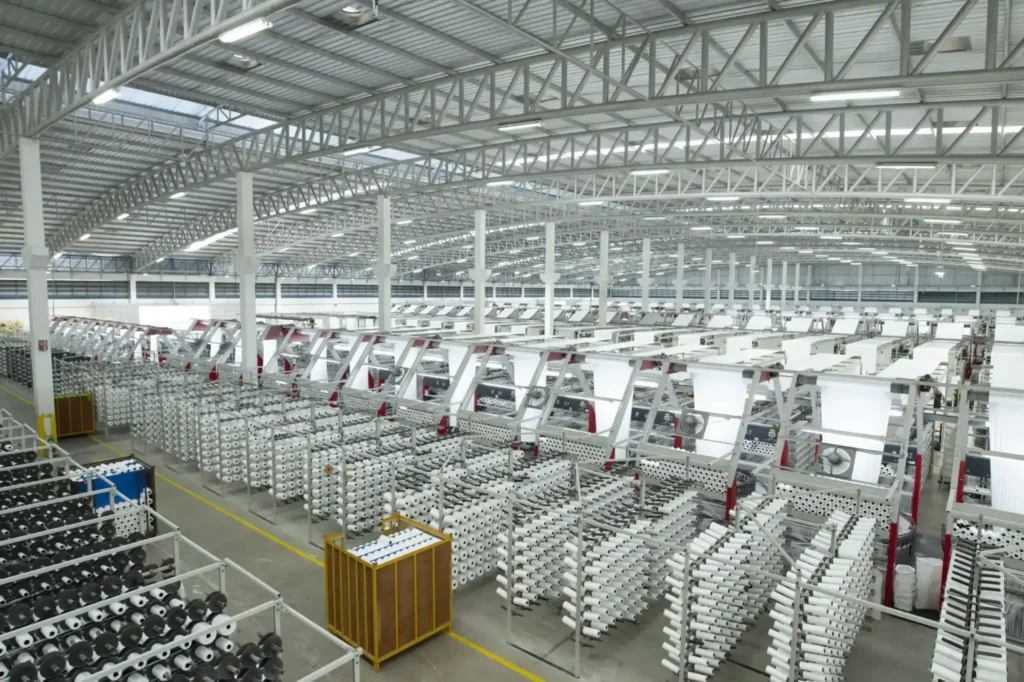
- Tape extrusion and orientation
- Circular loom weaving
- Extrusion coating or BOPP lamination (if specified)
- Printing (gravure or flexo as appropriate)
- Tube forming and gusseting
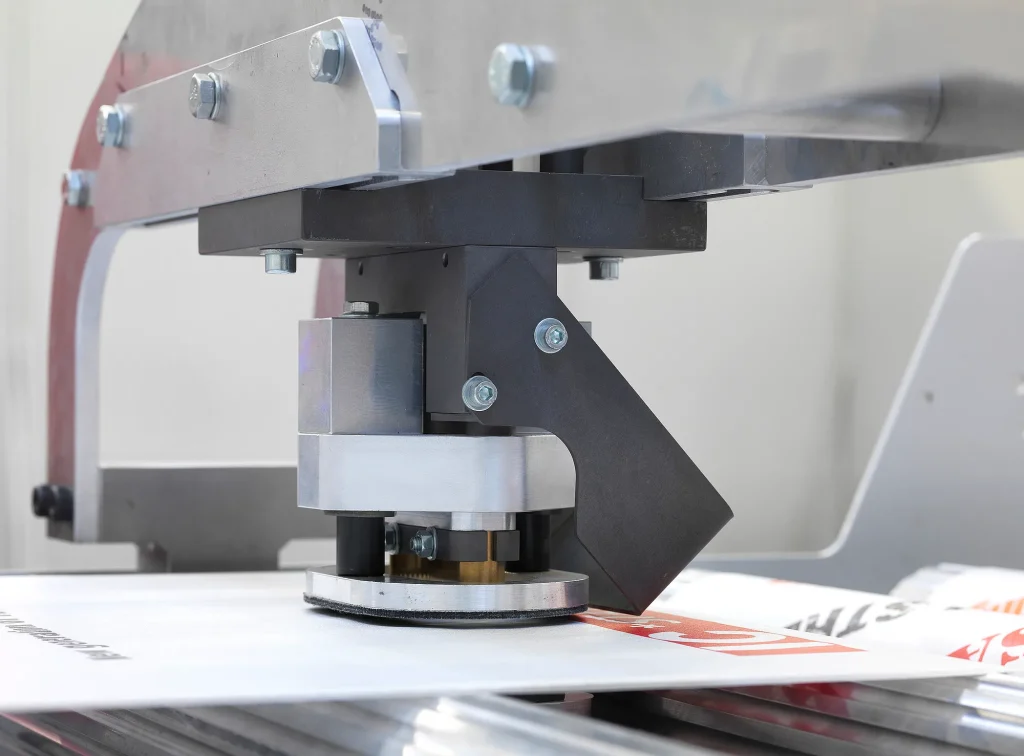
- Cutting and bottom closure
- PE liner insertion and heat‑seal/pinch preparation
- Bundle and bale
Equipment note: high‑precision lines from Starlinger (Austria) and W&H (Windmöller & Hölscher, Germany) regulate web tension, gsm, and film thickness—variables that drive barrier performance, seam integrity, and print registration on real pallets.
Back‑end: in‑process and release testing
- In‑process: tape denier and tensile; loom pick‑count; lamination thickness and peel; registration deviation; seam strength checks.
- Lab: WVTR; hydrostatic head for liquid holdout; tensile/elongation; tear propagation; drop and stacked compression (dry/wet).
- Release: dimensions, gsm, film thickness, COF, seam type, print standards; cosmetic AQL; retains cataloged.
Use‑Case Mapping: Where Woven Bags with PE Liner Truly Shine
Not every environment is hostile; not every route is dry. The sweet spot for PP Woven Bags with PE Liner emerges where humidity risk is real, dust is costly, graphics matter, and mechanical abuse is non‑trivial. Consider the following charts‑as‑paragraphs.
Dry foods and agriculture
Rice, pulses, seeds, sugars. Liner moderates moisture gain and odor exchange; optional BOPP secures shelf appeal.
Fertilizers and salts
Caking, nutrient migration, and coastal humidity argue for continuous liners and sealed closures.
Industrial minerals
Calcium carbonate, gypsum, silica, starch derivatives; liner keeps spouts and floors cleaner, operators safer.
Quality Governance at VidePak: Building Confidence by Procedure
Quality does not burst from slogans; it is cultivated by routines. Four pillars carry the program:
- Build to mainstream norms (ISO/ASTM/EN/JIS families as applicable); define WVTR, hydrostatic, seam, and drop/stack targets by SKU.
- Source virgin resins and films from major producers; qualify masterbatches for active content and dispersion.
- Operate best‑in‑class hardware from Starlinger and W&H; precision in extrusion, weaving, coating/lamination, and converting pays for itself.
- Run a complete inspection regime: incoming → in‑process → finished goods; preserve retains; barcode for traceability.
If a bag fails in the field, the archive tells us why. If a spec drifts, the charts shout before the customer whispers. Confidence is accumulated data.
Systems Thinking: Decompose the Decision, Then Synthesize the Spec
Choosing Woven Bags with PE Liner is not binary; it is structured. Decompose the problem into sub‑questions—barrier, mechanics, environment, chemistry, branding, cost—and then synthesize a spec with just‑enough layers.
Barrier definition
- Is humidity the main villain, or does rain pool in yards and on flatbeds?
- If vapor is the problem, the liner is the answer; if liquid is the problem, liner plus seam sealing and thicker exterior films are the answer.
Mechanical profile
- Stack height? Drop height? Conveyor speeds? Fork habits? Each one argues for gsm and film choices.
- Do not over‑stiffen walls such that filling speed and valve behavior suffer.
Environmental route
- Tropical humidity cycles and dawn dew require lower WVTR; coastal lanes reward continuous liners and sealed lips.
- Cold‑chain exposure favors film blends that resist low‑temperature cracking.
Product chemistry and compliance
- Hygroscopic or odor‑sensitive powders benefit from thicker PE and tighter closures.
- Food‑contact SKUs may require dedicated ink/adhesive sets and line segregation.
Supply chain and branding
- BOPP prints accelerate retail sell‑through; anti‑slip patterns protect pallets in containers.
- COF windows coordinated with stretch‑wrap recipes reduce topple risk.
Synthesis—A quick selection path
- Map humidity versus liquid exposure.
- Classify product sensitivity: hygroscopic, odor‑sensitive, corrosive.
- Choose fabric gsm: 70–120, adjusted for rough handling.
- Pick barrier stack: BOPP or coating; liner thickness 20–80 μm.
- Engineer seams and closure: taped‑stitch plus heat‑seal/pinch‑top.
- Define QA metrics: WVTR, hydrostatic, seam AQL, COF bands.
- Pilot under real climatic and logistics conditions; then lock spec and traceability.
Colored Tables: Materials, Barriers, Processes, and Comparisons
| Bag part | Material options | Primary function | Notes |
|---|---|---|---|
| Woven substrate | PP tapes (homopolymer), UV‑stabilized | Tensile, tear, puncture resistance | 70–120 gsm typical; up‑gauge for heavy loads |
| Exterior film/coating | BOPP 15–35 μm; PP/PE coating 10–40 μm | Vapor barrier, print platform, scuff resistance | Thicker films can improve liquid shedding |
| Inner liner | PE tubular 20–80 μm (LDPE/LLDPE/HDPE) | Lower WVTR; dust/odor control; sealability | Continuous tubes aid waterproof performance |
| Seams & closures | Taped‑stitch; heat‑seal; pinch‑top | Liquid holdout and structural integrity | Seal stitch holes to reduce wicking |
| Additives | UV, anti‑slip, anti‑static | Handling safety & pallet stability | Tailor to climate and powder behavior |
| Property | With PE liner | Without liner |
|---|---|---|
| Vapor transmission | Lower WVTR; improved shelf stability | Higher WVTR; sensitive to RH cycles |
| Liquid holdout | Better with sealed lips and taped seams | Limited by stitch holes and pores |
| Seam strategy | Taped‑stitch plus heat‑seal/pinch‑top | Stitched; optional tape |
| Typical gsm | 70–120 | 70–110 |
Design Cards: What to Measure, When to Intervene
Tape line
Denier, tensile, elongation, gel count. Intervene at neck‑in spikes and uneven chill rolls.
Weaving
Pick‑count stability, edge fray prevention, defect heat maps to spot loom drift.
Lamination/coating
Thickness control, adhesion, COF tuning; monitor web tension and cure windows.
Converting
Seam strength, closure reliability, dimensional repeatability under speed changes.
Risk and Mitigation: Failure Modes, Countermeasures, and Triggers
Fork tines puncture seams; pallets abrade prints; tropical ramps load dew into liners; reefer doors invite thermal shock. Every risk invites a countermeasure: edge tapes and double folds for exposed seams; anti‑slip patterns tuned to board finishes; liner lips heat‑sealed for splash‑prone sizes; wet drop testing after real‑world conditioning rather than room‑temperature rehearsal.
When should you escalate from moisture‑proof to truly waterproof? When the conversation turns from vapor to pooling, from humidity cycles to deck spray. At that moment, add thicker exterior films, sealed seams, and closure strategies that do not invite wicking.
Market Dynamics: Why Liners Are Ascendant
Three currents define the present: climate variability, automation, and brand scrutiny. Humidity spikes and downpours challenge under‑spec bags; automated filling rewards dimensional repeatability and dust control; brand teams demand graphic integrity that does not scuff off at the first conveyor. Within this context, polypropylene woven bags with polyethylene liner are not overkill; they are alignment—between what physics demands and what commerce expects.
- Climate exposure: monsoon corridors and coastal warehouses shift the cost line in favor of liners.
- Automation: liners reduce airborne fines at spouts; BOPP smooths surfaces; both enhance OEE.
- Export growth: longer, multi‑climate legs amplify the payback of barrier stacks.
Adjacent formats deserve fair comparison. Multi‑wall paper plus PE offers visual warmth and, in some regions, tidy recyclability—but its puncture and wet handling lag under rough logistics. Film‑only heavy sacks excel in barrier yet suffer at puncture and tear; they are less forgiving of forklift reality. FIBC with liners occupy a higher mass class—500 to 2000 kg—and do not compete head‑to‑head at the 20–50 kg range, even if their barrier logic rhymes with ours.
From Claim to Contract: A Purchase Spec That Behaves
Write it as if a storm will test it—because one will. Declare WVTR bands, hydrostatic thresholds, seam‑leak AQLs, COF windows, gsm and film thickness ranges, liner grade and thickness, closure style, print durability. Tie each number to operational realities: climate bands, staging practices, automation type, returnability expectations. Numbers are the shortest bridge from promise to performance.
Considering vendors or capacity planning? Explore the ecosystem of manufacturing partners here: reliable PP woven bag manufacturers. Selecting the right partner converts specifications into repeatable reality.
- What Are Woven Bags with PE Liner? Definition, Function, and Common Aliases
- Material Architecture of Woven Bags with PE Liner: Substrate, Liner, Films, and Additives
- Feature Set: What Woven Bags with PE Liner Do Well—and Why That Matters
- End‑to‑End Production: From Resin Qualification to QA Release
- Use‑Case Mapping: Where Woven Bags with PE Liner Truly Shine
- Quality Governance at VidePak: Building Confidence by Procedure
- Systems Thinking: Decompose the Decision, Then Synthesize the Spec
- Colored Tables: Materials, Barriers, Processes, and Comparisons
- Design Cards: What to Measure, When to Intervene
- Risk and Mitigation: Failure Modes, Countermeasures, and Triggers
- Market Dynamics: Why Liners Are Ascendant
- From Claim to Contract: A Purchase Spec That Behaves
“Why are PE-lined woven bags becoming the go-to solution for industries ranging from agriculture to retail? The answer lies in their unmatched ability to balance moisture protection, cost efficiency, and sustainability—a trifecta that VidePak has perfected through decades of innovation and a relentless focus on quality.” At VidePak, our PE-lined woven bags are engineered not just to meet industry standards but to redefine them, leveraging cutting-edge Austrian Starlinger technology and a brand-first philosophy that prioritizes long-term partnerships over short-term gains.
As global demand for durable, eco-conscious packaging surges, the Chinese market has emerged as both a production powerhouse and a testing ground for innovation. This article explores the technical advantages of PE-lined woven bags, analyzes regional market dynamics, and highlights how VidePak’s commitment to quality and brand integrity sets us apart in a crowded marketplace.
1. The Technical Edge of PE-Lined Woven Bags
PE-lined woven bags combine polypropylene (PP) fabric with a polyethylene (PE) inner layer, creating a hybrid structure that addresses critical industrial challenges:
1.1 Moisture and Contamination Resistance
- PE Layer Performance: With a water vapor transmission rate (WVTR) of ≤5 g/m²/day (tested via ASTM E96), PE liners prevent moisture ingress in hygroscopic products like fertilizers and pet food. In contrast, unlined PP bags allow up to 20 g/m²/day, risking spoilage in humid climates.
- Case Study: A Jiangsu-based rice exporter reduced post-harvest losses by 32% after switching to VidePak’s 0.1 mm PE-lined bags, which blocked humidity during monsoon storage.
1.2 Cost Efficiency and Durability
| Parameter | PE-Lined Bags | Traditional Jute Bags |
|---|---|---|
| Cost per Unit | $0.85 (50 kg capacity) | $1.20 |
| Reusability | 5–8 cycles | 2–3 cycles |
| Tear Resistance | 15 N/mm (ASTM D2261) | 8 N/mm |
Why It Matters: For retailers, this translates to a 40% reduction in annual packaging costs and fewer product returns due to damage.
1.3 Sustainability
- Recyclability: VidePak’s PE-lined bags are 100% recyclable via Starlinger’s recoSTAR technology, converting post-consumer waste into new granules with 95% material efficiency.
- Carbon Footprint: Each bag emits 0.7 kg CO2eq—30% less than laminated alternatives, aligning with China’s 2025 Green Packaging Initiative.
2. Market Dynamics: China’s Regional Demand and Branding Trends
2.1 Regional Adoption in China
- Coastal Regions (e.g., Guangdong, Zhejiang): High demand for premium, branded bags in retail sectors like pet food and organic grains. Customers prioritize aesthetics (HD printing) and compliance with EU/FDA standards.
- Inland Provinces (e.g., Sichuan, Henan): Cost-driven markets favoring bulk agricultural packaging, with emphasis on tear resistance and load capacity (up to 2,000 kg).
Data Insight: The Chinese woven bag market grew by 8.7% CAGR from 2020–2024, driven by e-commerce logistics and food safety regulations.
2.2 The Shift Toward Branded Solutions
While many Chinese manufacturers compete on price, VidePak invests in brand equity:
- Customization: 8-color printing with ±0.3 mm registration accuracy, enabling intricate designs for retail-ready packaging.
- Certifications: ISO 9001, BRCGS, and Sedex audits assure global clients of ethical production and traceability.
- Client Example: A European supermarket chain reported a 25% sales boost after rebranding its rice packaging with VidePak’s matte-finish PE-lined bags.
3. VidePak’s Manufacturing Excellence
Our production process integrates precision engineering with rigorous quality control:
3.1 Production Workflow
- Extrusion & Weaving: Virgin PP resin (MFI 4–6 g/10min) is extruded into filaments using Starlinger lines, woven into 10×10 strands/cm² fabric.
- PE Lamination: Food-grade PE (0.05–0.2 mm) is applied at 150°C, monitored by ultrasonic sensors for ±2 µm thickness tolerance.
- Printing & Finishing: High-definition flexographic presses achieve Pantone-matched colors, while heat-sealed valves ensure ±0.5 mm alignment.
3.2 Quality Assurance Protocols
- In-Line Testing: Laser micrometers and tensile testers validate fabric strength (≥40 N/cm²) and seam integrity (≥350 N/cm).
- Batch Sampling: 20% of production undergoes accelerated aging tests (ISO 4892) to simulate 5-year UV exposure.
4. The Future: Sustainability and Smart Packaging
- Bio-Based PE: Piloting 30% sugarcane-derived liners, reducing carbon footprint by 45%.
- IoT Integration: QR codes linked to blockchain platforms for real-time moisture tracking in transit.
5. FAQs
Q1: How does PE thickness affect performance?
A: Thicker PE (0.2 mm) suits chemicals; 0.05 mm is ideal for dry goods. We recommend based on product hygroscopicity.
Q2: Can bags be customized for automated filling systems?
A: Yes. Our CAD-engineered valve designs align with Bosch and Siemens machinery, achieving 99.9% fill accuracy.
Q3: Are VidePak’s bags compliant with EU recycling laws?
A: Absolutely. Our PE-PP separation process meets EU Circular Economy Package standards.
References
- China Plastics Industry Association. (2024). Annual Report on Woven Bag Market Trends.
- ASTM International. (2023). Standard Test Methods for Flexible Barrier Materials.
- Global Packaging Alliance. (2024). Sustainability Metrics in Polymer Packaging.
At VidePak, we don’t just make bags—we build trust. Explore our PE-lined woven bag solutions or discover how sustainable practices drive our innovation.
In a market crowded with compromises, VidePak stands as a beacon of quality and foresight. From farm to shelf, our PE-lined woven bags ensure your products arrive intact, your brand shines, and your values resonate. Choose a partner who weaves integrity into every thread.