
What are Multi-Wall Woven Bags, really?
Ask ten buyers what a bag is, and you will get ten confident answers. Yet the supply chain has a way of humbling confidence. A bag that looks perfect at the loading dock can become a problem inside a container. A bag that is “strong enough” on paper can still fail because the seam slipped, the laminate scuffed, or the pallet shifted. So what exactly are Multi-Wall Woven Bags, and why do they keep appearing wherever packaging stakes are high?
Multi-Wall Woven Bags are industrial sacks built around a woven polypropylene (PP) fabric core and reinforced, protected, or functionalized by additional layers—films, coatings, liners, or paper facings. The “multi-wall” idea is simple, but the outcomes are profound: one wall carries the load, another blocks humidity, another protects the print, another increases friction for stable stacking. Layer by layer, the bag behaves less like a commodity and more like a composite system with purpose.
In everyday trade language, Multi-Wall Woven Bags are also called different names depending on which layer the speaker wants to highlight. The overlap can confuse newcomers, so here are common aliases used in procurement documents and technical discussions:
Aliases The same product family is often referenced as:
- Multiwall Woven Bags
- Multi-Wall Woven Sacks
- Multiwall Laminated Woven Bags
- Laminated Woven Bags
- Laminated PP Bags
Different words, similar intent: layering, lamination, and a PP woven backbone engineered for harsh logistics.
Now, a fair question: if a single-layer woven sack is already strong, why complicate it? Because strength is only one axis of performance. Moisture, dust containment, print durability, regulatory labeling, pallet friction, and long-distance handling do not respect single-axis thinking. Packaging does not fail for one reason; it fails for a chain of reasons. Multiwall Laminated Woven Bags exist precisely to break that chain.
The materials inside Multi-Wall Woven Bags: how each layer earns its place
A layered bag is not just “more material.” It is material with intention. Think of the bag as a small ecosystem: the woven core provides structure, the lamination provides surface and barrier, the liner provides internal sealing, and additives quietly tune behavior. The smartest designs do not throw thickness at problems; they assign the right job to the right layer.
Polypropylene resin (PP)
PP is the structural engine of Multi-Wall Woven Bags. It offers a strong strength-to-weight ratio, practical chemical resistance, low water absorption, and stable cost for mass production. PP becomes tapes, tapes become fabric, and fabric becomes the load-bearing wall.
Films and coatings (PE, PP-compatible layers, BOPP)
These layers improve barrier performance and surface quality. They reduce powder leakage, slow moisture ingress, and create a cleaner substrate for high-resolution printing. BOPP films can add stiffness, gloss or matte aesthetics, and improved scuff resistance.
PE liners and inner films
A liner is a precision barrier component, not a casual add-on. It supports sealing, reduces contamination risk, and can include anti-static or controlled-slip formulations for high-speed filling. In many cases, the liner is the difference between a tidy pour and a dusty complaint.
Kraft paper facings (composite options)
Paper can provide a familiar feel and a certain market language, especially where “paper sacks” imply tradition. In composite Laminated Woven Bags, paper is typically protected by polymer layers so the look is retained without inheriting paper-only moisture weaknesses.
Material selection is not only about physics; it is also about economics. PP remains popular because it delivers reliable performance at scale. Films and coatings add cost, yes, but they also prevent costly failures: moisture caking, leakage loss, and scuffed branding. The most expensive bag is often the cheap bag that triggers claims, rework, and reputational damage. Or to put it sharply: do you pay for barrier now, or pay for product loss later?
In well-engineered Multi-Wall Woven Sacks, materials map to functional zones. This mapping helps teams speak the same language across engineering, purchasing, and operations:
| Functional zone | Typical materials | What it solves | Keyword-friendly phrasing |
|---|---|---|---|
| Load-bearing zone | PP woven fabric | Tensile strength, tear resistance, handling loads | Multi-Wall Woven Bags, Laminated PP Bags |
| Barrier zone | Coating, laminated films, PE inner film | Moisture management, leak control, dust containment | Multiwall Laminated Woven Bags, moisture-resistant woven sacks |
| Interface zone | Bonding layers, surface treatment | Prevents delamination, improves print adhesion | high-adhesion laminated woven packaging |
| Information zone | Ink system + printable laminate surface | Brand identity, compliance, traceability | custom printed Multi-Wall Woven Bags |
| Safety and stability zone | UV stabilizers, anti-slip, anti-static additives | Outdoor aging, pallet shifting, ignition-risk mitigation | UV-stabilized Multiwall Woven Bags, anti-slip woven sacks |
Notice what this table implies: if you demand moisture control but refuse barrier layers, you are asking the wrong layer to do the wrong job. The system will protest. It may not protest immediately, but it will protest eventually, and it will protest in the form of claims, dust, and downtime.
Features that matter in the real world: from puncture resistance to pallet behavior
A feature list becomes meaningful only when it connects to failure modes. What do Multi-Wall Woven Bags actually prevent, reduce, or improve when exposed to real handling? Consider the everyday brutalities: forklift corners, conveyor abrasion, humidity cycles, and human shortcuts. A bag that survives theory but fails practice is not a solution; it is a delay.
A guiding question When evaluating Multiwall Laminated Woven Bags, ask: “Which failure mode is most likely on my route, and which layer is designed to block it?”
Layered durability is the first obvious win. Corner punctures and linear tears are common because warehouses are not laboratories. The woven core absorbs and distributes stress, while lamination can reduce surface snagging. Abrasion matters too; repeated rubbing on pallets can erode printing, expose fibers, and create messy fray. With Laminated Woven Bags, the outer surface is engineered to resist scuffing and maintain readability.
Moisture control is the second win, and arguably the most expensive to ignore. Fertilizers, salts, cement additives, and many chemical powders do not merely “get wet”; they cake, they harden, they lose flowability, and they invite customer frustration. Moisture problems are not cosmetic; they are value destruction. A well-designed Multi-Wall Woven Sack slows vapor ingress through barrier layers and can add a PE liner for sensitive powders. The result: less clumping, cleaner discharge, and fewer angry phone calls.
Dust containment is the third win. Fine powders are impatient—they find gaps, they escape seams, they turn brands into mess. When dust escapes, costs multiply: cleanup labor, worker exposure risks, regulatory attention, and damaged customer sites. Multiwall Woven Bags counter this through sealed micro-pores (lamination), liners, and closure designs that are built for the product’s particle behavior. A bag for coarse granules can tolerate what a bag for micron-sized powder cannot. The bag must match the powder’s personality.
Then comes a less glamorous feature that still decides outcomes: palletization stability. A bag can be strong, yet a pallet can still collapse if friction is low, dimensions drift, or bottoms deform. Anti-slip surfaces, controlled sizing, and stable geometries can reduce shifting. Why is this so important? Because pallet failure is rarely a “bag failure” in the narrow sense. It is a supply-chain failure. And supply-chain failures do not care who is to blame; they simply cost money.
Finally, printing is not decoration; it is control. If a bag’s markings fade, if a barcode cannot scan, if a hazard label smears, what happens? Mis-picks, wrong inventory, delayed customs clearance, compliance penalties. The bag, in that moment, becomes an operational bottleneck. That is why custom printed Multi-Wall Woven Bags must be evaluated for rub resistance, color stability, and scannability, not only for design beauty.
Custom printing solutions: not only branding, but logistics language
Let us ask the obvious question that is often skipped: why print at all? A minimal bag can carry product. So why invest in custom printed Multi-Wall Woven Bags? Because in modern distribution, packaging is not only a container; it is a set of instructions. It tells people what the product is, how to store it, how to handle it, how to trace it, and how to trust it.
Custom printing creates three kinds of value, each aimed at a different stakeholder:
Value for the market
A consistent bag face makes a brand recognizable across wholesalers and regions. In crowded fertilizer or building material markets, packaging is often the first differentiator customers notice. What is the point of quality product if it is mistaken for someone else’s?
Value for operations
Clear icons, handling instructions, multi-language panels, and structured layouts reduce warehouse mistakes. The bag becomes a readable interface. Not a poster. An interface.
Value for compliance and audits
Batch codes, QR codes, standardized label zones, and consistent hazard communication support traceability. When a complaint appears, the printed data reduces the search area from “all shipments” to “this batch.”
Printing also supports security. Counterfeit products do not merely steal sales; they damage trust. When counterfeit goods fail, customers blame the visible brand, not the invisible counterfeiter. Security inks, microtext, and controlled artwork management can raise the barrier to imitation. Is it perfect protection? No. But it is a practical deterrent, and deterrence has economic value.
Importantly, custom printing has to survive the supply chain. A print that looks brilliant in the factory can degrade through abrasion, condensation, and pallet friction. That is why print performance should be validated like any other parameter: rub resistance, ink adhesion, color tolerance, and scan reliability. A bag that cannot be scanned is not modern packaging; it is an analog delay.
If you want additional perspectives that connect printing with specific applications, these internal resources can help you cross-check strategies for different markets and materials:
- How printed woven packaging supports construction waste workflows
- A practical guide to roll-fed printing and FFS roll woven packaging
Now, pause and reflect: if printing is only “marketing,” why does it keep appearing in compliance documents, warehouse SOPs, and audit checklists? Because printing is how information travels when people are moving fast and mistakes are expensive.
Production process: where Multi-Wall Woven Bags are won or lost
Quality problems in Multi-Wall Woven Bags are rarely dramatic at the beginning. They are subtle at first: small density drift in fabric, minor variations in coating thickness, slight differences in sealing temperature, and small print registration shifts. Then, after thousands of pieces, subtle becomes visible. Subtle becomes claims. Subtle becomes downtime.
A disciplined process can be described in three phases: front-end raw material control, mid-process manufacturing discipline, and back-end inspection and release. Each phase blocks different risks. Each phase reduces the chance that variability sneaks through.
Process reality A strong bag design cannot compensate for unstable process control. In mass production, consistency is not a bonus; it is the product.
Front-end control begins with resin selection, supplier qualification, and incoming inspection. PP resin and masterbatch must be consistent in melt behavior and additive composition to keep extrusion stable. Films and liners should be checked for thickness uniformity and seal behavior. Inks and coatings should be controlled for rub resistance and compatibility with the substrate. This is not bureaucracy. It is physics and probability management.
Mid-process steps typically include tape extrusion and stretching, circular weaving, lamination or coating, printing, cutting and conversion, and liner insertion when required. Each step contains parameters that must remain within windows, not just “close enough.” For example:
- Tape stretching ratios and heat-setting conditions influence strength and elongation balance.
- Weaving density affects puncture resistance and dimensional stability.
- Lamination adhesion depends on surface treatment, temperature, pressure, and bonding chemistry.
- Printing performance depends on registration, ink transfer, drying, and topcoat control.
- Seams and closures depend on thread, stitch design, or heat sealing conditions, plus cleanliness of the seal area.
Back-end inspection verifies that the whole system behaves as intended: tensile and tear tests, drop tests, seam strength checks, leak tests for fine powders, and print rub tests. But inspection should not be a passive “gate.” It should be feedback. If results drift, the process must be adjusted, not merely re-sorted.
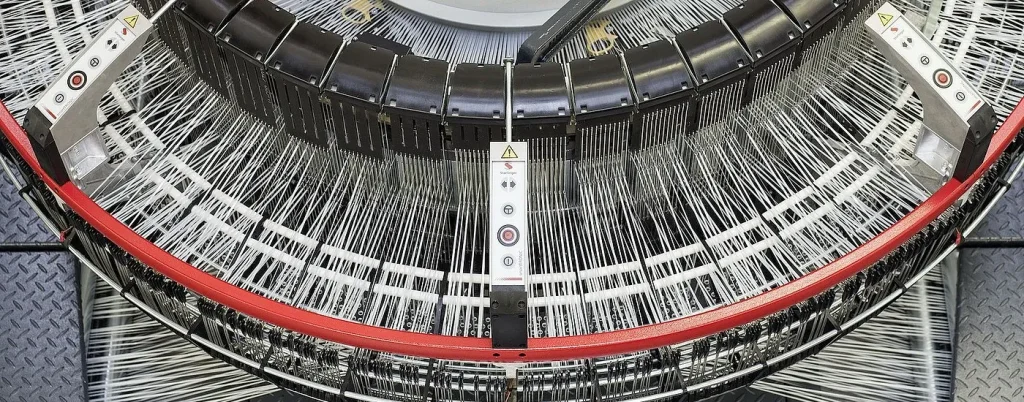
Equipment capability matters because equipment defines how stable a process can be at speed. VidePak emphasizes advanced manufacturing capability by using equipment from Starlinger (Austria) and W&H (Germany). The benefit is not brand prestige; it is process stability: tighter tolerances, better control, and higher repeatability. In multi-layer packaging, repeatability is an asset you can measure—through defect rates, fewer delamination events, consistent dimensions, and print durability across batches.
Quality assurance: how VidePak turns standards into daily discipline
Quality assurance is sometimes described as a checklist. That is a comforting myth. Real quality assurance is a system: standards translated into specs, specs embedded into SOPs, SOPs enforced by inspection, and inspection results feeding corrective actions. If one link is weak, the chain fails. If every link is strong, the bag becomes predictable.
VidePak’s quality philosophy can be framed in four practical layers, each aimed at a different risk category:
Layer 1: Build around mainstream standards
Products are designed and verified using common industrial test approaches and frameworks such as ISO, ASTM, EN, and JIS. The goal is not to collect acronyms, but to make performance claims measurable and comparable.
Layer 2: Keep raw materials consistent
Virgin raw materials sourced from major suppliers reduce contamination and stabilize processing. Stable resin behavior supports stable tapes, stable fabric, stable lamination, stable printing.
Layer 3: Control variability with high-end equipment
Equipment from Starlinger (Austria) and W&H (Germany) supports repeatability across tape extrusion, weaving, lamination, printing, and converting. Stability at speed is a competitive edge.
Layer 4: Inspect at multiple checkpoints
Incoming inspection, in-process checks, final inspection, and sampling inspection create overlapping protection. If variability appears, it can be traced and corrected early rather than discovered by a customer.
Notice the pattern: standards provide language, raw materials provide stability, equipment provides capability, and inspection provides feedback. Together, these create a consistent output: Multi-Wall Woven Bags that behave the same from batch to batch, not only from sample to sample.
For readers who want to see how multi-layer woven packaging is discussed in broader social and economic contexts, this internal article offers a complementary angle that can be helpful in brand storytelling and stakeholder discussions:
Applications: where Multi-Wall Woven Bags create measurable advantage
Where do Multi-Wall Woven Bags matter most? Not in gentle supply chains. Not in short, dry routes. They matter when the product is sensitive, the route is harsh, the storage is long, or the market is unforgiving. In those places, the difference between a basic sack and a layered system shows up in claims, cleanliness, and customer confidence.
In agriculture and fertilizers, moisture is a chronic enemy. Fertilizers can cake; specialty nutrients can degrade; distributors can lose trust. With Multiwall Woven Bags, barrier layers and liners reduce the risk of clumping and preserve flowability. Custom printing supports brand differentiation, especially in markets where product formulas look similar to competitors but performance depends on reliability.
In construction materials, the handling is rough and the environment is unpredictable. Cement and mineral powders face abrasion during transport and humidity at ports. Laminated Woven Bags protect the surface and improve print durability so job-site instructions remain readable. Stable palletization matters too because collapsed pallets do not only waste bags; they waste time and disrupt schedules.
In chemicals and industrial powders, the priorities shift toward containment and compliance. Dust leakage becomes a safety concern. Multi-language labeling becomes an operational need. Anti-static options may be required for certain powder categories. Here, Multi-Wall Woven Sacks function as risk-control tools rather than mere containers.
In food ingredients, hygiene and traceability often dominate. The goal is not only to protect the product, but to protect trust: trust in cleanliness, trust in labeling, trust in consistent handling. Multi-wall structures can support cleaner surfaces and controlled barrier behavior when designed with appropriate raw materials and printing systems.
In waste management, valve designs and stable bag geometry can reduce spillage and increase handling efficiency. If your workflow is waste or recycling-oriented, these resources provide cross-links into related bag styles and sustainability thinking:
- Square-bottom valve bag concepts for cleaner waste handling
- Woven recyclable packaging approaches and practical trade-offs
Comparisons that clarify: multi-wall woven vs paper multiwall vs FIBC vs FFS
Packaging decisions improve when comparisons are honest. What does Multiwall Laminated Woven Bags compete with? Often with multi-wall paper sacks, FIBC bulk bags, or form-fill-seal roll solutions. Each has strengths. Each has limits. The right choice depends on product, volume, route, and end-user behavior.
Multi-wall paper sacks can offer a traditional look and good breathability, and they are familiar in certain markets. Yet paper alone absorbs moisture and can weaken under humidity cycles. That is why paper is frequently combined with woven PP in composite structures: you keep the look while borrowing the woven strength. If you are exploring paper-composite directions, this internal resource provides a focused angle on kraft-based systems:
FIBC bags solve a different problem: larger bulk handling, typically with lifting loops and heavy loads. They can be excellent for high-volume, industrial handling. But when your product is packaged in 25 kg or 50 kg units for distribution networks, Multi-Wall Woven Bags often remain the preferred unit package. For a perspective on bulk packaging strategy, the following internal link can broaden the comparison:
FFS roll woven packaging is designed for high-speed automated filling, where efficiency and consistency drive cost savings. It can reduce labor and improve throughput, especially in modern plants. However, it typically requires a compatible filling line and process discipline. If your operation prioritizes automation, this internal guide offers useful context:
So what is the connective tissue among these options? They all answer the same question in different ways: how do we deliver a product without loss, contamination, confusion, or damage? The methods differ, but the goal is shared. The best procurement decisions recognize shared goals and choose the architecture that meets them with the least risk.
Systems thinking in practice: turning claims into sub-claims, then into a reliable solution
When someone says, “We need a stronger bag,” what do they actually mean? Strong against what? Puncture? Tear? Pallet compression? Humidity? Abrasion? The phrase is vague, and vague requirements create unpredictable outcomes. A systems approach insists on clarity: break big claims into smaller, testable claims. Then design each claim into the correct layer.
Here is a practical decomposition used in high-stakes packaging programs for Multi-Wall Woven Bags:
From vague to testable Replace “stronger bag” with a set of sub-claims:
- Containment claim: no visible leakage for fine powder under defined vibration and stacking.
- Moisture claim: defined protection level during storage duration in expected humidity range.
- Handling claim: seam and fabric survive a defined drop profile and handling pattern.
- Readability claim: printed information remains readable and scannable after abrasion exposure.
- Pallet claim: stable stacking with defined anti-slip performance and dimensional tolerance.
Once sub-claims are clear, solutions can be combined. Barrier layers plus liners address moisture and dust. Tighter weaving and controlled GSM address puncture and tear behavior. Coatings and topcoats address print rub and surface cleanliness. Anti-slip treatments address pallet stability. The system is not magical; it is modular.
What about trends? One trend is the migration from “overbuilt” sacks to “engineered” sacks. Instead of simply increasing thickness, many buyers aim for optimized performance: lighter weight with equal or better protection, fewer defects, fewer claims. Another trend is the expansion of traceability: QR codes, standardized batch marking, clearer multi-language compliance. A third trend is sustainability through practical outcomes rather than slogans: fewer damaged shipments, better pallet efficiency, and designs that can align with recycling realities.
And here is a rhetorical question worth asking in every packaging meeting: if your product formulation is controlled to tight tolerances, why would you accept loose tolerances in the packaging that protects it? Packaging is not an afterthought. It is the final guardrail.
Parameter planning: a color-coded specification table for technical alignment
Specifications fail when they are either too vague or too complicated. A practical specification for Multi-Wall Woven Bags should be detailed enough to prevent misunderstandings, yet readable enough to be executed. The table below is designed to align purchasing, production, and quality teams around the same targets.
| Spec area | What to define | Why it matters | Suggested keyword phrasing |
|---|---|---|---|
| Architecture | Number of layers, lamination type, liner inclusion | Controls barrier, cleanliness, and print substrate | Multiwall Laminated Woven Bags, barrier woven packaging |
| Woven core | GSM range, pick density, tape quality targets | Defines tensile performance and puncture resistance | Multi-Wall Woven Sacks, heavy-duty woven sacks |
| Barrier strategy | Coating thickness, film type, moisture approach | Prevents caking and preserves flowability | moisture-resistant Multi-Wall Woven Bags |
| Closure | Sewing, heat sealing, valve design details | Leak control and filling efficiency | valve Multiwall Woven Bags, sealed woven sacks |
| Printing | Color tolerance, rub resistance, scan readability | Brand and compliance information must survive handling | custom printed Laminated Woven Bags |
| Inspection | Incoming checks, in-process checks, final tests, sampling plan | Detects drift and prevents repeated defects | quality-controlled Multi-Wall Woven Bags |
Note the repetition of the keyword family in a natural way. This is intentional and practical. It reflects how technical teams actually write specifications: the same core product name reappears as the document moves from structure to printing to testing. Consistency in language is part of consistency in execution.
Failure modes and prevention: why bags fail, and how multi-wall design blocks the chain
No one likes talking about failures. Yet mature engineering teams talk about them early, because failure is a teacher with expensive tuition. In the field, common problems for Multi-Wall Woven Bags can be grouped into a small set of root causes. When you recognize them, prevention becomes logical rather than reactive.
Seam and closure failure
Often the weakest point is not the fabric. It is the seam. Stitch parameters, thread choice, seal cleanliness, and closure design determine whether the bag behaves as one unit or as a set of loose parts.
Delamination
Layer separation can occur when adhesion is weak or process control is unstable. Prevention relies on controlled surface treatment, correct lamination windows, and routine adhesion checks.
Moisture-related caking
Barrier strategy must match route conditions and storage time. If humidity exposure is underestimated, the bag may remain intact while the product becomes unusable. The customer will not applaud intact packaging around a hardened block.
Print scuffing and unreadable info
Ink chemistry, substrate compatibility, drying, and topcoat choices determine whether printed information survives abrasion. If compliance labels smear, the “beautiful bag” becomes a liability.
Prevention is not a single fix; it is alignment. Design choices must match process capability, and process capability must be protected by QC checkpoints. That is exactly why Multiwall Woven Bags are often paired with disciplined manufacturing systems and high-grade equipment: it is easier to keep performance stable when the process is stable.
Sustainability and performance: reducing waste by reducing failure
Sustainability discussions often slide into simplistic binaries: paper versus plastic, thick versus thin, recycled versus virgin. Real supply chains are rarely that neat. Sustainability, in practice, is shaped by outcomes: damage rates, rework frequency, pallet efficiency, and product loss. If a bag prevents significant product loss, it can reduce overall environmental impact even if it uses slightly more material. If a bag fails and causes re-bagging, double shipping, and wasted product, the footprint multiplies. The math is not sentimental; it is operational.
Multi-Wall Woven Bags can support sustainability in several practical ways:
- Downgauging through engineering: improve layer efficiency rather than simply increasing thickness.
- Damage reduction: fewer broken bags and fewer claims mean less packaging and product waste.
- Supply-chain efficiency: stable pallets reduce transport inefficiency and reduce incident-driven returns.
- Clear disposal guidance: printing can carry recycling instructions that match local realities.
If sustainability is part of your packaging narrative, the most credible stories connect design decisions to measurable outcomes. For a more focused exploration of recyclable woven packaging directions, this internal resource can help extend the conversation:
A pragmatic roadmap: how to choose the right Multi-Wall Woven Bags for your route
Choosing Multi-Wall Woven Bags should not feel like gambling. A pragmatic roadmap can turn it into a controlled decision. The roadmap below is designed for teams who must balance engineering logic and commercial reality.
Roadmap A route-driven selection workflow for Multiwall Laminated Woven Bags:
- Define product behavior: particle size, dust tendency, hygroscopic nature, chemical compatibility.
- Define route and storage: humidity profile, UV exposure, temperature range, storage duration.
- Define handling: manual vs automated filling, conveyor abrasion, forklift intensity, drop exposure.
- Select architecture: woven core spec, lamination or coating choice, liner choice, closure style.
- Define measurable acceptance: strength, seam integrity, leak limits, print rub targets, scan readability.
- Align quality system: incoming inspection, in-process monitoring, final inspection, sampling plan.
This workflow sounds structured, and it is. But it also matches how humans actually solve problems: observe, define, choose, test, refine. It is not robotic. It is disciplined. And discipline, in packaging, is a form of customer respect.
As you implement the roadmap, you will notice a pattern: the keyword family keeps reappearing. That is not repetition for its own sake. It is the language of the product system. Terms like Multi-Wall Woven Sacks and Laminated PP Bags appear naturally because the discussion moves across structure, lamination, and performance. A consistent vocabulary helps teams avoid costly misunderstandings.
January 25, 2026
- What are Multi-Wall Woven Bags, really?
- The materials inside Multi-Wall Woven Bags: how each layer earns its place
- Features that matter in the real world: from puncture resistance to pallet behavior
- Custom printing solutions: not only branding, but logistics language
- Production process: where Multi-Wall Woven Bags are won or lost
- Quality assurance: how VidePak turns standards into daily discipline
- Applications: where Multi-Wall Woven Bags create measurable advantage
- Comparisons that clarify: multi-wall woven vs paper multiwall vs FIBC vs FFS
- Systems thinking in practice: turning claims into sub-claims, then into a reliable solution
- Parameter planning: a color-coded specification table for technical alignment
- Failure modes and prevention: why bags fail, and how multi-wall design blocks the chain
- Sustainability and performance: reducing waste by reducing failure
- A pragmatic roadmap: how to choose the right Multi-Wall Woven Bags for your route
- 1. Multi-Wall Structural Advantages: Adapting to Global Needs
- 2. Custom Printing: Bridging Branding and Functionality
- 3. Market-Specific Certification Mastery
- 4. Technical Specifications
- 5. FAQs: Navigating Global Procurement
- 6. Case Study: Cement Packaging in Gulf Markets
- 7. Why VidePak Leads in Global Customization
VidePak’s multi-wall woven bags deliver unmatched durability (up to 2,000 kg load capacity), regulatory compliance (FDA, EU REACH, China GB), and hyper-customized branding through 8-color digital printing, engineered to reduce packaging waste by 30% and align with regional market preferences across 50+ countries. With 30+ years of expertise, VidePak produces 60 million+ bags annually via 100+ Starlinger looms, achieving ISO-certified precision for agriculture, chemicals, and construction sectors.
1. Multi-Wall Structural Advantages: Adapting to Global Needs
1.1 Layer Engineering for Regional Climate Challenges
VidePak’s 3–5 layer designs address diverse environmental conditions:
- Tropical markets: BOPP lamination + PE liners reduce humidity ingress to <0.3% over 6 months (tested per ASTM E96).
- Arid zones: UV-stabilized PP fabric retains 95% tensile strength after 1,500 hours of sun exposure (ISO 4892-2).
Case Study: A Southeast Asian fertilizer client reduced spoilage by 28% using our 5-layer bags with aluminum foil barriers, maintaining nutrient integrity in monsoon climates.
1.2 Load Optimization and Palletization
- Block-bottom valves: Stabilize stacking on EUR-pallets (120×80 cm), increasing container space utilization by 22%.
- Anti-slip diamond textures: Surface friction coefficient ≥0.5 (DIN 51131) prevents shifting during maritime transport.
2. Custom Printing: Bridging Branding and Functionality
2.1 Regional Design Preferences
- EU/US markets: Matte finishes with eco-certification logos (FSC, OK Compost).
- Middle East/Asia: Gold foil accents and high-gloss surfaces for premium positioning.
Our 8-color CI flexo presses achieve 175 LPI resolution, reproducing Pantone-matched hues with ΔE ≤1.5 accuracy (ISO 12647-2).
2.2 Smart Packaging Integration
- QR/RFID tags: Enable track-and-trace compliance with EU DDA and China’s GB/T 33993-2017.
- Invisible UV codes: Combat counterfeiting in pharmaceuticals and agrochemicals.
3. Market-Specific Certification Mastery
3.1 Compliance Frameworks
VidePak holds:
- Food safety: FDA CFR 177.1520, EU 10/2011.
- Chemicals: UN 13H1, ADR/RID/IMDG certifications.
- Sustainability: Global Recycled Standard (GRS) for 30% recycled content lines.
3.2 Regional Case Applications
- North America: Kraft paper composite bags with soy-based inks for organic grains.
- Africa: Anti-rodent PP bags with bittering agents, reducing crop loss by 40%.
4. Technical Specifications
| Parameter | Standard Range | Custom Options |
|---|---|---|
| Layers | 3–5 | Up to 7 (hazardous materials) |
| Material | PP woven + BOPP/PE/Kraft | EVOH, aluminum foil barriers |
| Print Colors | 1–8 | Metallic/fluorescent inks |
| Load Capacity | 25–2,000 kg | UN-certified FIBC variants |
| Moisture Barrier (WVTR) | ≤0.5 g/m²/24h | ≤0.1 g/m²/24h (premium) |
| Lead Time | 15–30 days | 10 days (rush orders) |
5. FAQs: Navigating Global Procurement
Q1: How do you ensure color consistency across batches?
A: Our spectrophotometer-controlled systems maintain ΔE ≤1.5, with quarterly G7 calibration (IDEAlliance certified).
Q2: Can bags withstand -30°C freezer storage?
A: Yes. Low-temperature PP formulations pass ASTM D746 brittleness tests at -40°C.
Q3: What’s the MOQ for region-specific designs?
A: 10,000 bags standard, but pilot runs of 2,000 units available for market testing.
Q4: How do you address EU plastic tax regulations?
A: Our 30% recycled PP bags qualify for tax exemptions under EU Directive 2019/904.
Q5: Do you provide anti-static options for flammable powders?
A: Yes. Dissipative liners (≤10^8 Ω surface resistance) meet IEC 61340-4-4 standards.
6. Case Study: Cement Packaging in Gulf Markets
A UAE construction firm required bags surviving 50°C desert heat and 98% humidity. VidePak delivered:
- 4-layer PP/Kraft hybrid: 150 GSM outer + 100-micron PE liner.
- Arabic/English bilingual printing: QR codes linked to SDS sheets.
Results:
- Zero moisture damage during 8-week port storage.
- 18% faster site deployment via standardized 50×80 cm pallet footprints.
7. Why VidePak Leads in Global Customization
- Cultural Competence: Design teams versed in regional aesthetics (e.g., auspicious red for China, minimalist EU layouts).
- Agile Production: 30+ lamination/printing machines enable 15-day turnaround for 95% of SKUs.
- End-to-End Certification: From valve bags compliant with Brazil INMETRO to FIBC meeting Japanese JIS Z 1650.
Explore our BOPP Laminated Woven Bags: Branding and Market Dynamics or Valve Bags: Innovation in Modern Packaging for specialized solutions.
References
- VidePak Technical Manual (2024): Global Packaging Compliance Standards.
- Industry Standards: ASTM D4632, ISO 22000, EU REACH.
- Market Data: Global Flexible Packaging Forecast (Smithers, 2024).
Contact VidePak
- Website: https://www.pp-wovenbags.com/
- Email: info@pp-wovenbags.com
This article synthesizes insights from industry leaders, including case studies on BOPP Laminated Woven Bags and innovations in Valve Bag Technology.