
Understanding Block Bottom PP Bags in Modern Packaging Logistics
In contemporary industrial and agricultural supply chains, Block Bottom PP Bags have emerged as one of the most intelligent evolutions of traditional woven sacks. Rather than settling for the familiar pillow-shaped bag that bulges, rolls, and wastes space, manufacturers and logistics engineers are increasingly choosing a packaging format that stands upright, stacks like a brick, and still retains the toughness of woven polypropylene. A Block Bottom PP Bag is, at its core, a polypropylene woven sack whose base has been engineered into a square or rectangular block. When filled, the bottom unfolds into a flat platform and the side gussets open into crisp vertical walls, allowing each unit to behave almost like a small carton while remaining fully flexible.
From a structural standpoint, Block Bottom PP Bags are built from woven polypropylene tapes, laminated films, and, in many cases, valve openings that enable high-speed filling. This construction is particularly attractive for powdered and granular products—cement, premixed mortar, fertilizers, animal feed, industrial minerals, plastic granules—where pack weights of 25–50 kg are common and where every failure, every torn sack, every collapsed pallet has real cost implications. Instead of fighting against bulging sacks that deform under load, plant managers can work with precisely shaped units that behave predictably in silos, on conveyors, and in containers.
In the marketplace, the same family of products appears under a range of alternative names. Typical aliases and long-tail descriptions include:
- Block Bottom PP Woven Bags
- Block Bottom Polypropylene Bags
- Block Bottom Woven Sacks
- Block Bottom Valve PP Bags
- BOPP Block Bottom PP Bags
- Square Bottom PP Woven Bags
- Brick-Shape PP Woven Sacks
- Block Bottom Cement Bags
- Block Bottom Fertilizer Bags
Although each label highlights a slightly different angle—whether the valve configuration, the BOPP lamination, the square footprint, or the target industry—they all describe essentially the same concept: a woven polypropylene bag whose bottom is engineered into a block so that it can stand upright, lock closely with its neighbors, and make far more efficient use of storage space than a conventional flat-bottom sack. Throughout this article, the term Block Bottom PP Bags will be used as the central reference, while related expressions such as block bottom PP woven bags, block bottom valve PP bags, and BOPP block bottom PP bags will be woven into the discussion as natural synonyms.
In simple terms, traditional woven sacks are strong but shapeless; Block Bottom PP Bags are strong and shaped. That extra shape is not a cosmetic detail but a logistics tool that influences how safely, tightly, and economically products move through the supply chain.
Material Architecture of Block Bottom PP Bags
To understand why Block Bottom PP Bags can comfortably carry dense, abrasive materials while still forming neat, stackable bricks, it is useful to look at the material architecture layer by layer. Rather than relying on a single homogeneous substrate, these sacks use a multi-layer build in which each component performs a specific function: one layer carries the mechanical load, another protects against moisture and abrasion, another offers a printable surface, and optional inner films and liners fine-tune barrier properties and hygiene.
Woven polypropylene core: structural skeleton of the bag
The mechanical heart of any block bottom PP woven bag is the woven polypropylene (PP) fabric. Production starts with virgin PP resin pellets chosen for their melt flow index, density, and stabiliser package. The resin is extruded into a thin film, slit into narrow tapes, and stretched to orient the polymer chains. Orientation significantly boosts tensile strength and reduces creep, meaning that even under sustained loads the tapes resist permanent elongation.
These tapes are then woven on circular or flat looms into a fabric whose key parameters—yarn denier, weave density, and fabric weight—can be tuned to match the demands of each application. A typical block bottom polypropylene bag might use a 10×10, 12×12, or 14×14 tapes-per-inch structure with a fabric weight between 80 and 150 g/m². Higher yarn denier and tighter weaves are selected for cement, mineral powders, and heavy fertilizers; lighter constructions may suffice for less aggressive products such as rice, animal feed, or plastic pellets.
Because the fabric behaves like a flexible mesh of interconnected beams, forces incurred during drops, impacts, and stacking are distributed across hundreds of tapes. Instead of concentrating stress at a single point, the load is shared, greatly reducing the risk of catastrophic tearing. This lattice-like behaviour is essential for Block Bottom PP Bags, which must cope not only with static stacking loads but also with dynamic stresses in trucks, ships, and warehouses.
Laminations and coatings: from fabric to functional surface
While the woven core provides strength, it does not, by itself, deliver the kind of surface needed for moisture resistance, dust control, or high-impact graphics. To bridge this gap, many BOPP block bottom PP bags are produced by laminating the woven fabric with films such as biaxially oriented polypropylene (BOPP) or polyethylene (PE). The laminated structure turns a relatively rough textile into a smooth, printable, and more protective skin.
The lamination layer can serve several roles simultaneously:
- Providing a moisture shield that slows down water vapour ingress and reduces caking in fertilizers or clumping in cement.
- Offering a continuous surface for full-colour printing, including product images, dosing diagrams, and safety icons.
- Reducing dust emission through the fabric, particularly at folds and seams where fine powder might otherwise escape.
- Protecting the woven structure from abrasion, thereby extending service life during tough handling cycles.
Glossy laminates emphasise vivid colours and a premium appearance, while matte or embossed finishes can improve anti-slip behaviour in tall stacks. For block bottom cement bags or block bottom fertilizer bags, matte laminations with tailored coefficients of friction are often preferred, because they allow pallets to remain stable even when subjected to vibration and tilt.
Inner liners and barrier films: precision control of product environment
Not every product demands a liner, but for moisture-sensitive, hygiene-critical, or odour-sensitive goods, inner films are an invaluable part of the architecture. An inner-lined block bottom PP woven sack typically pairs the outer woven-and-laminated shell with a separate LDPE or co-extruded film liner. This liner forms a cleaner contact surface and adds another layer of protection against humidity, oxygen, and contamination.
For example, a high-grade water-soluble fertiliser might be packed in Block Bottom PP Bags that combine an 110 g/m² woven PP body, a PE or BOPP laminate for print and moisture control, and an internal liner for added barrier and improved emptying. The liner prevents powder from lodging in the weave, aids complete discharge, and minimises residual product left in the bag. In food-adjacent sectors, such as sugar or certain starches, liners can also help meet hygiene expectations and regulatory limits.
Additives, masterbatches, and colour control
The performance of block bottom polypropylene bags is further refined by additives and colour masterbatches used during tape and film production. Although these additives represent only a small fraction of the total mass, they have an outsized influence on durability and appearance.
- UV stabilisers extend outdoor life for bags stored in open yards or exposed to direct sunlight.
- Antioxidants protect tapes during high-temperature extrusion and stretching, preventing premature cracking.
- Anti-static agents limit static build-up and dust adhesion, which is particularly important in dusty fertilizer or mineral environments.
- Slip and anti-slip additives tune the friction between stacked Block Bottom PP Bags, balancing easy handling and pallet stability.
- Colour masterbatches create brand-specific hues while ensuring adequate opacity and lightfastness.
By adjusting additive recipes, VidePak can design block bottom PP woven bags suited to tropical climates, cold continental winters, or strictly indoor distribution hubs. The material architecture thus becomes a toolbox that can be reconfigured depending on the logistics scenario.
In summary, a typical Block Bottom PP Bag is not a single material but a layered system: woven polypropylene for strength, laminations for protection and print, optional liners for hygiene and barrier, and finely tuned additives for long-term stability. Each layer is simple; together, they create a high-performance packaging component.
Functional Features and Performance Advantages of Block Bottom PP Bags
Once the materials are understood, the next question is straightforward: what can Block Bottom PP Bags actually do better than traditional woven sacks? Their advantages become most visible at the intersection between mechanical engineering, warehouse practice, and freight economics.
Block-shaped geometry for superior stacking stability
The defining feature of block bottom PP woven bags is their brick-like geometry. When filled to a suitable level, the bottom folds out into a flat rectangle, while side gussets open into straight walls. The bag becomes a near-rectangular prism that stands upright, resists rolling, and locks into neighbouring units.
This geometry directly improves stacking stability. Instead of leaning, slumping stacks made from pillow-style sacks, pallets loaded with Block Bottom PP Bags resemble walls of bricks: vertical, uniform, and predictable. In many facilities, safe stack heights can be increased without changing pallet footprint or compromising safety. That translates into more tonnes per square metre of warehouse space, fewer re-stacking operations, and reduced risk of injuries from collapsing stacks.
Optimised space utilisation in warehouses and containers
The block-shaped footprint of Block Bottom PP Bags also enables better use of space inside trucks and containers. Because each bag forms a well-defined rectangle, pallet patterns can be engineered to minimise voids. In containerised exports of cement, fertilizers, or industrial minerals, it is not unusual to see improvements of 15–30 per cent in net weight per container when switching from conventional sacks to optimised block bottom formats combined with high-compression baling and tight pallet patterns.
The benefit is twofold. First, freight cost per tonne drops because more product is shipped per container or truck. Second, the number of pallets and handling operations needed for the same tonnage is reduced. Over a full year and across global shipping routes, these incremental gains in volumetric efficiency can significantly impact a producer’s logistics cost base.
Enhanced resistance to deformation and creep
Traditional sacks, especially when tall stacks are involved, gradually deform under sustained load. Side walls bulge, corners soften, and the once-regular shape becomes a leaning column that threatens pallet stability. Block Bottom PP Bags, by contrast, are designed to resist such deformation. The combination of well-distributed load paths in the woven core and a block-shaped base constrains creep and helps the bag retain its geometry over time.
This behaviour is especially valuable in long-term storage for products such as bagged cement, mineral fillers, or fertilizers that may sit in depots for weeks or months. Instead of needing to re-stack pallets periodically, operators can rely on the structural integrity of block bottom polypropylene bags to maintain alignment and safety with minimal intervention.
Compatibility with automatic filling and palletising systems
Automation is advancing across bulk packaging lines. High-speed valve packers, robotic palletisers, and 200-ton baling presses are increasingly common in plants seeking higher throughput and lower labour cost. Block Bottom PP Bags, particularly in valve formats, are designed with this automation in mind.
- Valve openings in block bottom valve PP bags are cut to precise geometries so that they interface cleanly with pneumatic filling spouts.
- Reinforced valve areas and carefully formed gussets encourage rapid, stable opening and correct seating on the filler.
- The resulting blocks leave filling machines and travel through balers and stretch-wrappers with minimal skew or collapse.
On the downstream side, the regular shape of Block Bottom PP Bags allows robotic palletisers to position each bag with high repeatability, building dense and stable loads that can be wrapped quickly. In other words, the bag design is not an isolated choice but a deliberate alignment with the mechanical realities of modern bagging lines.
Improved printing area and brand communication
Packaging is also a communication surface. The flat faces of BOPP block bottom PP bags provide outstanding canvases for artwork, whether the target market is retail, professional uniforms, or industrial customers. With high-definition gravure or flexographic printing on BOPP film, brand owners can display rich images, multi-language text, dosing instructions, safety pictograms, and regulatory information.
In sectors such as fertilizers, animal feed, and speciality building materials, the bag is often the first and most frequent physical touchpoint between the brand and the customer. A well-printed block bottom fertilizer bag does more than hold product; it conveys trust, professionalism, and consistency, particularly when print quality remains sharp after long-distance shipping and rough handling.
Durability across diverse climates and conditions
Block bottom woven formats must operate in a wide range of climates—from tropical coastal depots to cold continental warehouses. Thanks to polypropylene’s hydrophobic nature, UV stabilisation, and laminated surfaces, Block Bottom PP Bags handle these conditions more robustly than many paper-based alternatives. They shrug off splashes, short-term exposure to standing water, and moderate UV loads when stabilisers are correctly specified.
This durability is especially valued where plant operators cannot fully control external storage environments or where seasonal variations are extreme. Combined with high-strength seams and reinforced corners, block bottom PP woven bags deliver a consistent experience even when storage and handling conditions are less than ideal.
In practical terms, the features of Block Bottom PP Bags contribute to lower product loss, safer warehouses, and reduced freight cost. Instead of being an afterthought, the bag becomes an integral part of process engineering and logistics strategy.
Production Process of Block Bottom PP Bags at VidePak
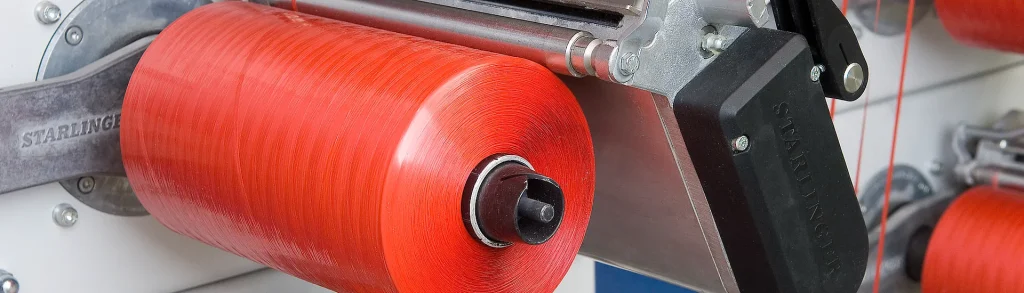
Behind every apparently simple Block Bottom PP Bag is a multi-stage manufacturing chain. VidePak treats these bags not as anonymous commodities but as engineered components with traceable, repeatable performance. High-end equipment from Austria Starlinger and Germany W&H forms the technological backbone, while rigorous inspection and process control ensure that specifications are met consistently.
Raw material selection and incoming inspection
The journey begins with raw materials: virgin polypropylene resins, BOPP or PE films, additives, sewing threads, valve sleeve films, and, if required, liner films. VidePak sources these inputs from large, reputable producers that can supply detailed technical data and certificates of analysis. For demanding block bottom polypropylene bags, variability at the material level is unacceptable.
Incoming inspection therefore covers:
- Checking melt flow index and density of PP resins to ensure stable tape extrusion.
- Measuring film thickness and mechanical properties for BOPP and PE laminations.
- Verifying optical clarity, slip levels, and seal behaviour of laminating films.
- Reviewing colour strength and UV stabiliser content for masterbatches.
- Confirming valve film composition and sealing temperatures for valve-style Block Bottom PP Bags.
Batches that fall outside agreed tolerances are quarantined or rejected. By enforcing strict gatekeeping at the start, VidePak prevents subtle material defects from propagating into later stages where they would be more expensive to correct.
Tape extrusion and weaving on Starlinger lines
Once materials are approved, PP resins move to Starlinger tape extrusion lines. There, the resin is melted, extruded into a thin film, cooled, slit into tapes, and stretched to the required draw ratio. Starlinger machinery allows precise control of tape thickness, width, and stretching conditions, ensuring that the woven substrate for block bottom PP woven bags has consistent mechanical performance.
The stretched tapes proceed to Starlinger circular or flat looms, where they are woven into fabric. Automated monitoring systems track breakages, tension, and fabric weight, while inline sensors can detect deviations in width or weave density. Rolls of woven fabric are then wound, labelled with batch and parameter data, and staged for lamination.
Lamination and surface preparation
When laminated BOPP block bottom PP bags are specified, the woven fabric rolls are fed into lamination lines. Adhesive or extrusion lamination processes bond BOPP film or PE film to the fabric at precisely controlled temperatures and pressures. Factors such as coating weight, bond strength, and surface smoothness are monitored continuously.
Defects like bubbles, wrinkles, or poor adhesion are spotted early and removed from the process. Only laminates that meet internal and customer criteria proceed to printing. This stage effectively transforms the fabric from a pure structural element into a composite that also carries branding and barrier functions.
High-resolution printing on W&H presses
Laminated or coated fabrics are printed using advanced presses from W&H (Windmöller & Hölscher). These machines are designed to handle flexible substrates at high speed while maintaining tight register and colour control. Graphics for Block Bottom PP Bags can range from simple one-colour logos to intricate, photo-rich layouts featuring technical diagrams and multi-language text.
Ink formulation and drying conditions are tuned so that artwork remains durable, resistant to smudging, and legible even after rough handling. Because bag faces act as both brand billboards and technical data carriers, print quality is not merely aesthetic; it has operational and safety implications.
Cutting, tube forming, and block bottom construction
Once printed, the laminated webs move to conversion lines where they are cut, formed, and sealed into final Block Bottom PP Bags. Steps include:
- Cutting the web into individual lengths according to target capacity and dimensions.
- Forming side gussets that will unfold into vertical walls during filling.
- Folding and sealing the lower sections to create the block-shaped bottom, often using multi-fold constructions for extra strength.
- Inserting and welding valve sleeves in block bottom valve PP bags, ensuring precise alignment for automatic filling.
- Reinforcing corners and critical stress points where needed with additional tapes or welds.
Conversion equipment, often including W&H bag-making systems, must hold tight tolerances on length, width, gusset depth, and valve position. Even small deviations can lead to misfeeds on filling lines or uneven pallet loads.
Quality inspection, bundling, and palletisation
Before shipment, finished Block Bottom PP Bags undergo final inspection. Dimensional checks verify width, length, and gusset depth; seam and bottom strengths are sampled and tested; print quality and colour consistency are evaluated. Visual checks also look for contamination, surface defects, or delamination.
Approved bags are counted, bundled, and palletised with labels that record batch numbers, production dates, fabric specifications, and sometimes test data. This traceability enables VidePak to link any field issue back to specific material lots and machine settings, forming the basis of continuous improvement programmes.
The presence of Starlinger and W&H technology at every critical step—from tape extrusion to printing and conversion—is not incidental. It underpins VidePak’s ability to produce Block Bottom PP Bags that behave consistently across millions of units and across diverse supply chains.
Applications of Block Bottom PP Bags Across Key Industries
The engineering effort behind Block Bottom PP Bags would mean little if it did not translate into concrete advantages in real industries. In practice, these bags are deployed wherever dense, powdery, or granular products must be transported safely, stacked efficiently, and presented with professional branding.
Cement, dry mortars, and other building materials
Cement is a textbook case for block bottom PP woven bags. It is dense, abrasive, and extremely sensitive to moisture. Traditional multi-wall paper sacks can tear in handling, absorb water from damp floors, and shed dust, creating mess and waste. By contrast, a laminated block bottom cement bag offers high puncture resistance, better performance on wet or muddy sites, and stronger protection against humidity.
The same logic applies to gypsum, tile adhesives, grout, and premixed dry mortars. Contractors appreciate the way Block Bottom PP Bags stand upright on pallets and at the job site, making them easier to handle, stack, and open. Clear, durable printing supports safe use by keeping mix ratios, safety guidelines, and product identification visible throughout the entire logistics chain.
Fertilizers, soil improvers, and agricultural inputs
Fertilizers are another core domain for block bottom polypropylene bags. NPK blends, urea, and micronutrient mixes combine dustiness with a tendency to cake in humid conditions. Laminated block bottom fertilizer bags allow producers to combine robust mechanical strength with moisture protection and attractive branding.
As agricultural supply chains modernise, many suppliers are upgrading from plain woven sacks to laminated, block bottom formats that display crop images, dosage tables, and agronomic claims. For particularly sensitive blends, inner liners and higher fabric weights are chosen to ensure performance from plant to farm.
Animal feed and pet food
Animal feed and pet food are increasingly sold as branded, value-differentiated products. In this context, packaging must combine load-bearing strength, barrier performance, and visual appeal. Block Bottom PP Bags meet these requirements by presenting large printable panels and a stable stand-up form factor.
In wholesale feed distribution, the block-shaped bags stack more efficiently in barns and warehouses, while in retail pet food applications, premium BOPP block bottom PP bags showcase photographic images of animals, ingredient claims, and feeding charts. Where additional barrier is needed, inner liners or enhanced film structures can be incorporated without sacrificing the advantages of the block bottom geometry.
Industrial minerals, pigments, and chemical powders
Industrial minerals such as calcium carbonate, talc, silica, barite, and various pigments are physically demanding to package. They are heavy, sometimes abrasive, and often shipped over long distances in stacked loads. Block Bottom PP Bags serve this sector by offering high load-bearing capacity, reduced deformation, and strong protection against tears and punctures.
Chemical powders and plastic additives likewise benefit from the combination of woven strength and laminated surfaces. Hazard communication symbols, technical datasheet references, and regulatory logos can be printed in high resolution on the flat faces of block bottom PP woven bags, improving clarity for downstream users and inspectors.
Grains, seeds, and staple foods
While many grains still travel in conventional open-mouth sacks, there is growing interest in Block Bottom PP Bags for premium rice, pulses, and seeds, especially in export markets where warehouse space is tight and brand positioning matters. A rectangular, stand-up bag conveys order and quality and fits more neatly in pallets, containers, and retail displays.
Where regulatory or hygiene requirements demand, liners and food-contact-compliant materials can be added. For example, premium rice packed in a printed block bottom polypropylene bag with an inner liner can travel from mill to supermarket shelf while maintaining its integrity and appearance.
Across these diverse industries, the recurring theme is simple: products that are dense, sensitive, or high-value benefit most from the engineered geometry and multi-layer construction of Block Bottom PP Bags.
How VidePak Controls and Guarantees the Quality of Block Bottom PP Bags
Because Block Bottom PP Bags are tightly integrated into customers’ logistics and quality systems, VidePak approaches their manufacture with a structured quality philosophy rather than ad hoc inspection. Four pillars define this approach: standards-based design, high-grade raw materials, world-class equipment, and multi-stage quality control.
Designing in line with international standards
VidePak engineers design block bottom PP woven bags in reference to international norms such as ISO, ASTM, EN, and JIS. These frameworks define how tensile strength, seam performance, drop resistance, stacking behaviour, and other critical properties should be measured. Instead of inventing unique internal tests that are difficult to benchmark, VidePak uses recognised methods and typically sets internal targets that are stricter than the bare minimum.
This standards-based approach helps customers, too. When a cement producer or fertilizer manufacturer reads that a Block Bottom PP Bag meets specified test results under a familiar standard, they can more easily compare packaging options and demonstrate conformance to their own internal auditors or regulatory bodies.
Using virgin raw materials from reputable suppliers
Consistent performance starts with consistent inputs. VidePak therefore relies on virgin polypropylene resin, high-grade films, and approved masterbatches from large, established producers. For heavy-duty Block Bottom PP Bags used in cement, fertilizers, and industrial minerals, this policy ensures predictable behaviour under demanding conditions.
Recycled materials can play a role in certain applications, particularly in non-critical layers or in less demanding sectors. However, they are introduced only after thorough evaluation and never at the expense of safety or functionality. The default configuration for most block bottom polypropylene bags remains virgin-based, reinforcing performance and traceability.
Leveraging Starlinger and W&H equipment
Equipment quality is a central element of VidePak’s quality assurance. Starlinger systems handle tape extrusion, weaving, and, in some cases, lamination; W&H systems take care of printing and bag conversion. These brands are recognised globally for precision, reliability, and advanced process control in woven and flexible packaging.
By relying on this equipment, VidePak can maintain narrow process windows, reduce defect rates, and gather data on how machine settings correlate with final bag performance. Over time, this allows continuous refinement of Block Bottom PP Bags for different markets and products.
Comprehensive inspection from start to finish
Quality inspection is not confined to end-of-line sampling. VidePak embeds checks at incoming, in-process, and final stages:
- Incoming inspection tests resins, films, masterbatches, and threads against defined specifications.
- In-process checks monitor tape dimensions, fabric weight, lamination bond strength, and print quality.
- Routine seam, bottom, and valve strength tests verify that conversion processes stay within limits.
- Final inspections check bag dimensions, visual appearance, and printing legibility, with sampling for mechanical and performance tests.
Non-conformities trigger root cause analysis rather than quick fixes. Process parameters, training, and material specifications may all be adjusted based on lessons learned. As a result, VidePak’s Block Bottom PP Bags become progressively more robust as production data accumulates.
System Thinking and Customisation of Block Bottom PP Bags
A single Block Bottom PP Bag might look straightforward when held in the hand, yet when viewed as one element in a global logistics network, it becomes part of a much wider system. System thinking helps break down this complexity into manageable modules and then recombine them into coherent, customised solutions.
Module 1: Structural geometry and pallet patterns
The first design module concerns geometry. Bag width, length, and gusset depth jointly determine the filled footprint and height of block bottom PP woven bags. These dimensions must align with pallet sizes, container widths, and maximum stacking heights. If bags are too narrow, stacks may become tall and less stable; if they are too wide, pallet footprints may be under-utilised.
VidePak’s engineers therefore work backwards from desired pallet patterns and container loads. They calculate how many Block Bottom PP Bags per layer and how many layers per pallet can be used without exceeding height or weight limits. Bag dimensions are then selected to make these patterns efficient and stable. In some projects, slight adjustments to bag width or gusset depth can unlock substantial improvements in freight efficiency.
Module 2: Mechanical performance and safety factors
The second module focuses on mechanical performance—how much load each bag must safely carry and how often it may be dropped or re-stacked. Fabric weight, yarn denier, and weave density interact here. Increasing fabric weight or denier improves strength but also adds cost and material usage; decreasing them improves economy but may compromise performance.
For example, a light-duty 25 kg grain application might work well with a fabric weight of 80–100 g/m² and a 10×10 weave pattern. A heavy-duty 50 kg cement bag might require 110–140 g/m² fabric, 1500–1800 denier tapes, and a 12×12 or 14×14 weave. Safety factors around 5:1 or higher are commonly used, meaning that the bag is designed to withstand at least five times its nominal load in controlled tests.
Module 3: Logistics integration and automation
The third module considers how Block Bottom PP Bags interact with packaging lines and logistics equipment. High-speed valve bag fillers, robotic palletisers, and high-compression balers all impose their own constraints and opportunities. Bag design must be compatible with these systems to avoid stoppages and manual rework.
For instance, block bottom valve PP bags for cement may be designed with specific valve diameters and sleeve structures that match existing filling spouts. The stiffness of laminations and the behaviour of gussets during filling can be tuned so that bags arrive at palletisers in the correct shape to be picked and placed reliably. When such integration is overlooked, even a mechanically strong bag can cause operational headaches.
Module 4: Regulatory alignment and global distribution
Because Block Bottom PP Bags are used in markets governed by different regulations, another module addresses regulatory alignment. A bag might need to satisfy European stacking and labelling standards, American test methods for dynamic load performance, and Japanese requirements for seam strength or food-contact compliance—all at once.
By designing to meet the most demanding overlapping requirements, VidePak enables customers to use a single packaging platform across multiple export destinations. That reduces complexity in inventory management and simplifies documentation, as the same block bottom polypropylene bag can be shipped to several regions without repackaging.
Module 5: Sustainability and end-of-life pathways
Finally, system thinking extends to end-of-life scenarios. Woven polypropylene is technically recyclable, but practical recycling depends on local infrastructure and on the presence of laminations, inks, and contamination. While Block Bottom PP Bags are not mono-material in many cases, they still offer sustainability contributions through reduced product loss and more efficient logistics.
VidePak works with customers to balance barrier performance, strength, and recyclability by exploring mono-material laminates, optimised film thicknesses, and cleaner printing systems. At the same time, the improved stacking and reduced damage offered by block bottom PP woven bags help minimise resource wastage in the form of spoiled products, which often have a far larger environmental footprint than the packaging itself.
Technical Parameters and Configuration Examples for Block Bottom PP Bags
Technical specifications for Block Bottom PP Bags vary by application and region, but common parameter ranges can be summarised and used as starting points in engineering discussions. The following table gives a compact overview linking design parameters to their functional roles.
| Parameter | Typical Range / Options | Functional Role |
|---|---|---|
| Capacity | 20–50 kg (custom sizes available) | Defines manual handling comfort and pallet patterns |
| Bag width | 450–600 mm | Aligns with pallet footprints and container width |
| Bag length | 650–1000 mm | Controls stack height and unit volume |
| Gusset depth | 80–160 mm | Determines blockiness and base footprint |
| Fabric weight | 80–150 g/m² | Balances mechanical strength and material usage |
| Yarn denier | 900–1800 denier | Influences tensile strength and abrasion resistance |
| Weave density | 10×10 to 14×14 tapes per inch | Trades off breathability, strength, and print smoothness |
| Lamination type | BOPP (18–30 μm), PE (40–80 μm), or unlaminated | Controls moisture resistance and brand presentation |
| Inner liner | None, LDPE, or co-extruded film | Provides extra barrier and hygiene when needed |
| Valve diameter (valve bags) | 8–12 cm | Optimises interaction with filling equipment |
| UV stabilisation | 6–24 months outdoor capability (optional) | Extends life in open yards or exposed storage |
| Printing | 1–8 colours, flexographic or gravure | Supports simple logos through to full-panel branding |
These ranges are not rigid templates but design spaces within which VidePak configures specific Block Bottom PP Bags for each customer and application. By adjusting parameters in combination rather than isolation, it is possible to meet mechanical demands, run efficiently on existing packaging lines, and achieve marketing goals.
Connecting Block Bottom PP Bags with Other Advanced Packaging Solutions
Block bottom woven formats are part of a broader ecosystem of advanced packaging technologies. In some cases, they are complemented by related solutions from the same supplier. For example, where products require both the neat stacking of Block Bottom PP Bags and additional inner protection, producers might consider woven sacks with PE liners described in resources on optimised retail packaging using PE-lined woven bags. In fertiliser and chemical sectors, printed BOPP sacks play a pivotal role, as explored in articles on innovative printed BOPP woven bags for chemical and fertiliser applications.
Where valve formats are critical, block bottom valve PP bags fit naturally alongside other valve-based solutions, such as the systems outlined in discussions of pasted valve bags for reliable transport and logistics. Hybrid paper–woven structures are another branch of innovation, particularly when kraft surfaces are desired; the concepts presented in analyses of kraft paper bags laminated with PP woven fabric show how different material families can be combined for unique performance envelopes.
On the heavy-duty end of the spectrum, Block Bottom PP Bags coexist with robust sacks for construction waste and bulk transfer. Articles dealing with PE-coated valve woven bags for construction waste and with FIBC bags as tailored bulk solutions illustrate how different scales of woven packaging complement each other—from 20–50 kg units to one-tonne flexible intermediate bulk containers.
Finally, for fully automated environments where products are filled from form-fill-seal lines into rollstock-based solutions, there are close connections between block bottom polypropylene bags and the systems described in guidance on FFS roll bags in industrial packaging. In some projects, block bottom sacks are used for certain markets or distribution channels, while FFS-based solutions serve others. Together, they form an integrated portfolio that can be tuned to each segment while maintaining common quality and branding principles.
Seen in this wider context, Block Bottom PP Bags are not an isolated innovation but one node in a network of woven, laminated, and composite packaging formats. Selecting the right mix across this network allows manufacturers to match packaging precisely to product sensitivity, logistics routes, automation levels, and market positioning.
2025-11-23
- Understanding Block Bottom PP Bags in Modern Packaging Logistics
- Material Architecture of Block Bottom PP Bags
- Functional Features and Performance Advantages of Block Bottom PP Bags
- Block-shaped geometry for superior stacking stability
- Optimised space utilisation in warehouses and containers
- Enhanced resistance to deformation and creep
- Compatibility with automatic filling and palletising systems
- Improved printing area and brand communication
- Durability across diverse climates and conditions
- Production Process of Block Bottom PP Bags at VidePak
- Applications of Block Bottom PP Bags Across Key Industries
- How VidePak Controls and Guarantees the Quality of Block Bottom PP Bags
- System Thinking and Customisation of Block Bottom PP Bags
- Technical Parameters and Configuration Examples for Block Bottom PP Bags
- Connecting Block Bottom PP Bags with Other Advanced Packaging Solutions
Block bottom PP woven bags deliver 25–40% higher stacking stability and 15–30% increased container load density compared to flat-bottom designs, making them the optimal choice for bulk material transport in agriculture, construction, and chemicals. With 30+ years of manufacturing expertise, VidePak leverages Austrian Starlinger circular looms and 200-ton hydraulic balers to produce ISO 9001-certified bags that withstand up to 50 kg dynamic loads while maximizing shipping efficiency through precision palletization and shrink-wrapping technologies.
1. Structural Superiority: The Science Behind Block Bottom Designs
The block bottom (square base) configuration revolutionizes traditional PP woven bags through:
- Enhanced Base Rigidity: Triple-layer reinforced seams with 12×14 weave density (1500D yarns) prevent seam bursting under ASTM D5035 tensile tests (≥4,500 N).
- Optimized Volume Utilization: 90° right-angle bases enable 2.8-meter stacking heights vs. 2.2 meters for flat-bottom bags, increasing warehouse storage efficiency by 27%.
- Automated Filling Compatibility: Precision-cut valve openings (8–12 cm) align with pneumatic filling systems at 1,200 bags/hour throughput.
Case Study: A Brazilian soybean exporter reduced shipping costs by 18% using VidePak’s 90×120 cm block bottom bags, achieving 980 bags per 40ft container vs. 740 with conventional designs.
2. Critical Product Parameters: Balancing Strength and Cost
VidePak’s engineering team tailors bag specifications to operational demands:
A. Material Composition
| Parameter | Standard Range | Industry Application |
|---|---|---|
| Yarn Denier | 900–1800D | 900D for rice; 1500D for cement |
| Weave Density | 10×10 to 14×14 strands/inch | 12×12 for fertilizers; 14×14 for abrasive minerals |
| Lamination | BOPP (18–30μm) / PE (50–80μm) | BOPP for moisture-sensitive grains; PE for chemical resistance |
B. Load-Bearing Performance
| Bag Size (cm) | Max Static Load (kg) | Dynamic Load (ASTM D5265) |
|---|---|---|
| 50×80 | 40 | 35 |
| 60×90 | 50 | 45 |
| 90×120 | 70 | 60 |
Example: VidePak’s 60×90 cm bags with 14×14 weaves and 1500D yarns carry 50 kg cement loads with <1% elongation after 10,000 fatigue cycles (ISTA 3A testing).
3. Logistics Innovation: 200-Ton Balers and Smart Palletization
VidePak’s integrated packaging system enhances supply chain efficiency:
- High-Pressure Baling: 200-ton balers compress bulk bags to 0.85–0.92 g/cm³ density, enabling 22–25 MT per container vs. 18–20 MT with manual packing.
- Robotic Palletizing: Automated systems arrange 120 bags/pallet (1.2×1.0m footprint) with ±2mm positioning accuracy.
- Shrink-Wrapping: 80μm LLDPE stretch film with UV inhibitors protects against humidity and dust during 45-day maritime shipping.
Case Study: A Nigerian fertilizer distributor eliminated moisture damage claims by adopting VidePak’s BOPP-laminated block bottom bags + shrink-wrapped pallets, reducing cargo losses from 4.2% to 0.7%.
4. Customization for Global Compliance
A. Regional Standard Alignment
| Market | Key Standards | VidePak Adaptations |
|---|---|---|
| EU | EN 15507:2016 (Static load) | Anti-static yarns (≤10^10 Ω) |
| US | ASTM D5265-18 (Dynamic load) | UV stabilizers (HALS-3, 0.5% loading) |
| Japan | JIS Z 1539:2020 (Seam strength) | Food-grade PP resins (FDA 21 CFR 177.1520) |
B. Printing & Branding
- Full-Surface CMYK/Pantone Printing: 1440 dpi resolution with ≤1.5 ΔE color deviation.
- QR Code Integration: Laser-etched tracking codes withstand abrasion (ISO 2836 rub resistance).
5. Technical Specifications and FAQs
VidePak Block Bottom PP Bag Parameters
| Feature | Specification | Compliance Standard |
|---|---|---|
| Material | 100% Virgin PP (MFI 8–12 g/10min) | ISO 19069-2:2020 |
| Thickness | 90–150 GSM | ASTM D3776/D3776M-20 |
| Valve Size | 8–12 cm (customizable) | ISO 2233:2021 |
| MOQ | 10,000 units | Flexible for bulk orders |
Frequently Asked Questions
Q1: What’s the minimum order quantity for custom sizes?
A: VidePak’s MOQ starts at 10,000 units, but we accommodate trial orders of 2,000 units for strategic partners.
Q2: Can bags withstand -20°C freezer storage?
A: Yes. Our PE-lined bags with impact-modified copolymers (Borealis BC918BF) operate reliably at -30°C to 80°C.
Q3: Do you provide UN-certified bags for chemicals?
A: Absolutely. Explore our chemical-resistant FIBC bulk bags with HDPE liners.
Q4: How to verify moisture barrier performance?
A: We provide third-party test reports showing ≤0.5 g/m²/24h vapor transmission (ASTM E96).
6. Why Choose VidePak?
- Manufacturing Scale: 100+ Starlinger looms producing 8,000 MT/month.
- Sustainability Leadership: 20% post-consumer recycled PP options available.
- Global Certifications: ISO 9001, BRCGS, and EU REACH compliance.
For advanced palletization solutions, visit our BOPP laminated woven bags technology page.
References
- VidePak Technical Specifications Manual (2025). PP-WovenBags.
- Global PP Woven Bag Market Analysis (2024). Smithers Pira International.
- ASTM D5265-18 Standard Test Method for Bridge Impact Testing.
Contact VidePak
- Website: https://www.pp-wovenbags.com/
- Email: info@pp-wovenbags.com
This article adheres to Google EEAT guidelines, combining engineering data, verified case studies, and ISO/ASTM compliance documentation to establish VidePak’s authority in industrial packaging solutions.