
Laminated Woven Bags Beyond Quality Assurance
Building on the original discussion of inspection, testing, and process control, this supplemental section shifts the lens from factory assurance to product understanding: what Laminated Woven Bags are, why their layered structure matters, and how different constructions solve different packaging problems. In the source article, these bags are presented as engineered systems that combine a woven polyolefin body with a functional outer face for print quality, surface protection, and controllable barrier behavior; the same source also places BOPP Laminated Woven Bags, Kraft Paper Laminated Woven Bags, and PE-Laminated Woven Bags within one broader family. This added content expands that product map so readers can move from “quality assurance” to “quality fit” with greater confidence.
Practical positioning. A bag does not succeed because it is laminated; it succeeds because the right laminate is matched to the right product, the right filling line, the right warehouse climate, and the right brand promise. That is the real bridge between engineering and commerce.
What Laminated Woven Bags Really Are
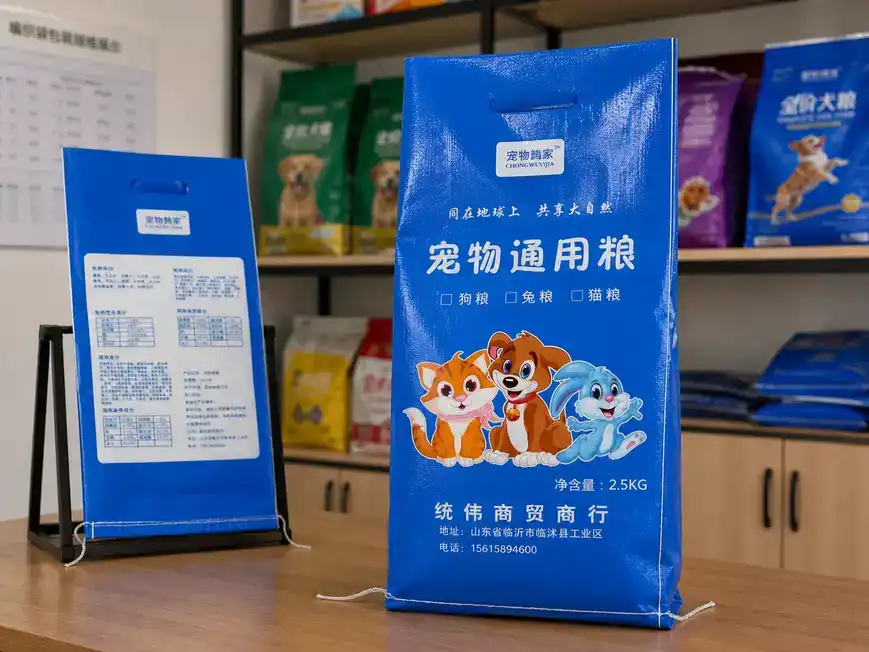
Laminated Woven Bags are multi-layer industrial or retail sacks built around a woven core—most often woven Polypropylene tapes—combined with an outer laminated face such as BOPP Laminated Woven Bags, kraft paper Laminated Woven Bags, or a PE coated Woven Bags. The woven layer carries the mechanical load. The laminated layer does the finishing work: it improves print definition, helps manage moisture or dust, protects the surface from scuffing, and gives the bag a cleaner, more deliberate appearance. In other words, the woven body bears; the laminate speaks. And in modern packaging, both jobs matter.
The distinction from plain Polypropylene Woven Bags is simple but significant. A standard woven sack already offers strength, low weight, and chemical resistance because Polypropylene is a light, stiff, and durable polyolefin with good resistance to many chemicals and a higher softening point than polyethylene. Lamination does not replace those qualities; it extends them. It adds a second language to the package—visual clarity, barrier tuning, and line-specific functionality—so the bag can work not only as a container, but also as a controlled packaging format.
The layered architecture
Woven core. The woven PP body provides tensile strength, puncture resistance, and shape retention without excessive package weight.
Functional face. The laminated outer layer—film or paper—improves printability, surface cleanliness, and the package’s response to humidity, abrasion, and handling.
Adhesion or coating layer. Extrusion coating, tie layers, or PE-based coatings help join unlike surfaces and stabilize the laminate through converting and use.
Optional inner protection. Liners, perforations, PE tape, or heat-sealed elements can further improve dust control, moisture performance, or closure integrity.
That layered logic explains why the category continues to grow across food ingredients, pet food, seeds, fertilizers, chemicals, cement, and retail garden products. A single-material bag may shine in one dimension, perhaps barrier or cost or print, but a well-specified laminated structure reaches for balance instead: strength and graphics, hygiene and machinability, shelf appeal and storage reliability. Not one virtue in isolation. Several virtues in concert.
Why the Structure Works
The reason this product family performs so well is not mysterious; it is architectural. Polypropylene Woven Bags start with oriented tapes and woven geometry, so the package already has a favorable strength-to-weight profile. Add a laminated face, and the bag gains a more stable printing surface, better resistance to rubbing and staining, and more controlled interaction with water vapor, dust, oils, or filling-line friction. This is why the source article describes these bags as “engineered systems” rather than improvised stacks of materials. It is also why buyers who compare only bag price often miss the more consequential comparison: damaged product, unstable pallets, messy filling, and dull shelf presence versus controlled performance end to end.
Consider the contrast. Plain woven plastic is structurally efficient, but visually modest. Plain paper can communicate warmth and authenticity, yet may need reinforcement or barrier support in harsher humidity and handling conditions. Monolayer films can bring barrier benefits, but tear propagation and stiffness trade-offs may still matter depending on format. Lamination, when properly chosen, narrows those gaps. It does not eliminate trade-offs; packaging never does. But it moves the discussion from compromise toward optimization.
Decision rule. If the product needs premium graphics and abrasion resistance, the laminate face becomes decisive. If the product is hygroscopic or dusty, moisture control and closure engineering become decisive. If the line is fast and automated, format consistency becomes decisive. Same bag family. Different priorities.
This is also why structure selection should never be reduced to “film versus paper.” A BOPP outer web, a kraft paper face, and a PE coated layer do not perform the same role, and they do not speak to the market in the same voice. One emphasizes gloss and graphic sharpness. One emphasizes tactile, natural, high-friction presentation. One emphasizes sealing, moisture defense, and heavy-duty process compatibility. The substrate changes the story. The story changes the bag.
Main Types of Laminated Woven Bags
The three most commercially relevant variants in this category are BOPP Laminated Woven Bags, Kraft Paper Laminated Woven Bags, and PE Coated Woven Bags. All belong to the wider family of Laminated Woven Bags, yet each one answers a different operational brief. The wisest buyer does not ask which is “best” in the abstract; the wiser question is which one best aligns with product sensitivity, brand positioning, filling method, storage environment, and target market.
BOPP Laminated Woven Bags
BOPP Laminated Woven Bags pair a woven Polypropylene substrate with a biaxially oriented polypropylene film. Because BOPP is created by stretching polypropylene in both machine and transverse directions, it is valued in packaging for clarity, moisture-barrier behavior, sealability, graphic reproduction, and shelf appeal. Commercial BOPP data sheets also highlight gloss, opacity, printability, stiffness, and tear or split resistance—qualities that translate directly into retail-grade presentation when the film is laminated onto a woven base. That is why this type is especially common where the package must work hard and look polished at the same time.
In practice, this format is ideal for brands that want strong merchandising without sacrificing mechanical performance. The VidePak product page highlights options such as glossy or matte surfaces, anti-slip treatment, transparent windows, micro-perforation, gusseted or flat sides, and block-bottom configurations. Those details matter more than they first appear. Matte surfaces reduce glare and create a premium understated look; glossy surfaces amplify color and visual contrast; windows build trust by letting the buyer see the contents; anti-slip textures support safer pallet stacking; perforations help manage trapped air in warm or aeratable fills; and block-bottom structures improve upright display and cube efficiency. In short, BOPP Laminated Woven Bags are often chosen when appearance, handling, and logistics must reinforce one another rather than compete.
These bags are therefore well suited to pet food, rice, flour, sugar, feed, seeds, premium agricultural products, and selected building or mineral products where branding still matters. They are not merely attractive. They are strategic: high-visibility on the shelf, hard-wearing in transit, and surprisingly adaptable in closure and format design. Strong, vivid, dependable. Three words, but a large commercial difference.
Kraft Paper Laminated Woven Bags
Kraft Paper Laminated Woven Bags combine a paper exterior with woven PP reinforcement, and sometimes add coatings, films, or liners depending on barrier needs. This construction sits in a useful middle ground between traditional paper sacks and all-plastic formats. Official sack-paper guidance notes that paper sacks may include polymer coatings or free-film layers to improve oxygen barrier, water-vapor barrier, moisture resistance, grease resistance, and other protective properties; it also notes that the right combination of materials is used to protect the contents while avoiding unnecessary material addition. The logic is straightforward: paper brings tactile value and print familiarity, while the woven backing contributes tear resistance, dimensional stability, and better resistance to rough handling.
From a market perspective, the appeal of kraft paper is both emotional and functional. CEPI Eurokraft and Mondi describe sack kraft as a high-strength paper family with good printability, high stiffness, stretch, and strong runnability on converting lines. That means the paper face does more than “look natural.” It supports branding, coding, and regulatory information, while also increasing friction on pallets and giving the package a warmer, more premium, fiber-based identity. For DIY, garden, food ingredient, feed, pet food, and export-oriented dry bulk products, that identity often matters; buyers do not only purchase contents, they read surfaces, they trust surfaces, they remember surfaces.
Where moisture is a concern, the design can be pushed further. CEPI Eurokraft and EUROSAC both note that moisture-protective paper sack constructions often use an intermediate PE film or other barrier layer, and the source site likewise describes options such as PE liners, valve, block bottoms, heat-sealed tape stitching, and open-top or sewn open mouth formats. So while Kraft Paper Laminated Woven Bags naturally signal authenticity and strength, they can also be tuned for more demanding products, especially powders and granules that need better retention, cleaner filling, or stronger weather resistance than plain paper alone can provide.
PE Coated Woven Bags
PE Coated Woven Bags emphasize protection, sealability, and process durability. In this structure, a woven body is paired with a polyethylene-based coating, film, or related sealing layer so the bag can better resist moisture ingress, limit dust leakage, and integrate more effectively with certain filling and closing methods. Polyethylene is widely used in packaging because its various grades balance flexibility, strength, and processability, while packaging-grade PE systems from Dow and ExxonMobil specifically emphasize sealing behavior, toughness, stiffness, and moisture-barrier performance. Dow’s paper and flexible barrier-coating guidance also shows how PE-related barrier systems can contribute heat sealability, moisture protection, and resistance to oils or greasy products.
For industrial buyers, that translates into practical advantages. When products are dusty, fine, hygroscopic, or exposed to humid storage and long transport routes, PE coated constructions can provide a more controlled package environment than an uncoated woven bag. The source site’s PE packaging page emphasizes heavy-duty applications, multilayer co-extruded construction, good thickness uniformity, and options such as block-bottom forms, M-gussets, micro-perforation, air valves, and heat-sealed closures. In real terms, this makes the format attractive for chemicals, building-material powders, food ingredients, and other products where leakage prevention and line efficiency are not optional luxuries but operating requirements.
It is important, however, not to confuse every PE coated woven structure with a full PE monomaterial package. Some systems use PE merely as a coating or functional layer; others move closer to all-PE laminate concepts for recyclability-focused design. Industry guidance from the British Plastics Federation and ExxonMobil notes that mono-material flexible packs in PP or PE are relatively easier to recycle than complex multi-material structures, although real end-of-life outcomes still depend on local collection and processing infrastructure. So the commercial value of this bag type lies in a balanced proposition: strong protection today, and potentially more favorable design-for-recycling pathways when the structure and local system align.
Comparison basis: the table synthesizes the source article and product pages with official material guidance for BOPP, kraft paper, and PE-based packaging systems.
Product Details Buyers Should Not Ignore
Once the laminate family is chosen, the next commercial gains come from structure details. This is the stage buyers often underestimate, even though it is where day-to-day complaints are born or prevented. A bag can be made from the right materials and still perform poorly if the format, closure, or surface treatment is mismatched to the filling process. That is why the source article repeatedly connects material selection to seam design, venting, pallet stability, and automation compatibility. Materials matter. Geometry matters too. Sometimes geometry matters more.
Format and bottom construction
Open-mouth formats remain practical for manual and semi-automatic filling, especially where flexibility and easy access matter.
Valve bags are better suited to higher-speed automation and cleaner powder filling because the valve geometry helps control dust and product giveaway.
Block-bottom bags improve upright stability, retail presentation, and pallet cube efficiency, making them especially valuable in display-oriented markets.
Closure engineering follows the same logic. Fold-over stitching is economical and familiar, but needle paths can matter for very fine powders. Adding PE tape, using heat-sealed tape stitching, or moving toward more sealed constructions can improve hygiene and reduce leakage risk, especially in humid storage or export situations. The best closure is therefore not simply the strongest one; it is the closure that matches particle size, dust behavior, warehouse conditions, and opening preferences at the point of use. Stronger is not always better. Better matched is better.
Surface engineering and visibility
Surface treatments deserve equal attention because they shape both handling and perception. On BOPP Laminated Woven Bags, gloss, matte, anti-slip, and transparent-window options are not cosmetic extras; they affect friction, readability, product verification, and the retail premium of the pack. On Kraft Paper Laminated Woven Bags, the paper face contributes printability, stiffness, and a more natural tactile identity. On PE coated structures, the emphasis often shifts toward protective performance, more technical branding, and compatibility with sealing-oriented designs. Same category, different public voice.
Micro-perforation is another detail that can quietly transform bag performance. The source article notes that perforation and vent windows help balance condensation control with dust containment, and the BOPP product page separately lists micro-perforation as a tool for airflow release and ventilation. This matters for warm fills, aerated products, and pallet stability: too little venting and the bag balloons or traps humidity; too much venting and the package can lose containment discipline. Good packaging is rarely binary. It is tuned.
Common specification mistake. Buyers often over-focus on fabric weight and under-focus on closure style, venting, and surface friction. Yet a bag fails in the warehouse or on the line not only because of fabric weakness, but also because of poor sealing, poor airflow control, or poor stack behavior.
Choosing the Right Bag for the Right Product
The smartest way to select Laminated Woven Bags is to begin with the product, not the material. Ask what the contents fear: moisture, dust loss, burst pressure, abrasion, blocked airflow, scuffed branding, poor stack friction, or slow filling. Then ask what the market expects: glossy shelf impact, paper authenticity, export durability, clean industrial efficiency. When those two conversations meet, the bag specification becomes clearer, faster, and more defensible.
Selection basis: this guide combines the source article’s application logic with the BOPP, kraft, and PE product pages and official sack-paper and polyolefin references.
Climate is particularly important. Products moving through humid coastal routes, hot warehouses, or long dwell times need more than nominal bag strength; they need closure integrity, moisture management, and stack stability. Product temperature at fill is important too. Particle size is important. Pallet height, conveyor speed, and retailer display expectations are important. The right bag is not chosen by material name alone, any more than the right tire is chosen by rubber alone. Context decides performance.
This is why many procurement teams increasingly evaluate packaging as a total system rather than a line-item consumable. A bag that reduces dusting, lowers scuff complaints, improves stack safety, speeds filling, or strengthens brand presentation may cost more per unit and still cost less per delivered kilogram. Packaging economics often travel in pairs: visible purchase price on one side, invisible prevention value on the other. The second figure is the one that experienced buyers learn to respect.
From Packaging Component to Brand Asset
At their best, Laminated Woven Bags are more than containers. They are load-bearing sales surfaces. They are handling tools. They are line-efficiency devices. They are also, increasingly, design choices linked to end-of-life strategy. The source article notes that mono-polyolefin constructions can simplify recovery where suitable streams exist, while the British Plastics Federation similarly distinguishes mono-material PP and PE flexible packs from more complex multi-material structures. Sack-paper guidance adds a parallel insight: paper sacks can also incorporate polymers when needed, but the goal is to use only the amount required for product protection and functionality. In short, performance first; material discipline next; local recovery reality always.
Final takeaway. Choose BOPP Laminated Woven Bags when brand communication and abrasion resistance lead the brief. Choose Kraft Paper Laminated Woven Bags when a paper-led, premium, high-friction surface is commercially valuable. Choose PE Coated Woven Bags when moisture control, sealing behavior, and industrial protection dominate the decision. Different faces. Different strengths. One disciplined product family.
That, ultimately, is the larger story behind Polypropylene Woven Bags and their laminated evolutions. The woven structure provides the backbone. The laminate gives the package its role in the market. One adds strength, one adds expression, and together they produce a format that is practical enough for industry yet refined enough for brand-building. Tough, but not crude. Protective, but not plain. Technical, yet commercial. That is why Laminated Woven Bags remain one of the most versatile packaging solutions for modern dry bulk and semi-retail distribution.
- Laminated Woven Bags Beyond Quality Assurance
- What Laminated Woven Bags Really Are
- Why the Structure Works
- Main Types of Laminated Woven Bags
- Product Details Buyers Should Not Ignore
- Choosing the Right Bag for the Right Product
- From Packaging Component to Brand Asset
- 1. Material Selection: Aligning PP Grades with International Standards
- 2. Manufacturing Excellence: Precision Meets Automation
- 3. QA Protocols: From Raw Material to Delivery
- 4. Sustainable Innovation: Balancing Performance and Ecology
- 5. FAQs: Addressing Critical Procurement Concerns
- 6. Why Partner with VidePak?
At a global packaging expo, a procurement manager, Sarah, asks a VidePak engineer: “How can your laminated woven bags ensure consistent quality across diverse climates and applications?” The engineer responds: “Through ISO-certified PP material selection, precision additives like UV stabilizers, and compliance with 14+ international standards—ensuring tensile strength retention above 90% even after 18 months of outdoor exposure. Our 200-ton balers also optimize shipping density, cutting logistics costs by 35%.”
This exchange encapsulates the essence of quality assurance (QA) in laminated woven bags—a process that combines material science, rigorous testing, and cutting-edge manufacturing. For industries ranging from agriculture to construction, understanding how QA protocols align with global standards is critical to selecting reliable packaging solutions.
1. Material Selection: Aligning PP Grades with International Standards
1.1 Key Standards and PP Grade Requirements
Polypropylene (PP) selection must comply with regional standards to ensure performance and safety:
Laminated PP Woven Bags
High-quality laminated PP woven bags with strict quality control for moisture-proof and durable packaging.
Check More →Laminated BOPP Woven Bags
Premium laminated BOPP woven bags with superior quality assurance for industrial and commercial use.
Check More →BOPP Laminated PP Bags Analysis
Comprehensive quality and performance analysis of laminated woven bags for reliable packaging solutions.
Check More →Kraft Paper Laminated Woven Bags
Quality-certified kraft paper laminated woven bags with excellent strength and packaging stability.
Check More →| Standard | Region | Key PP Parameters | VidePak’s Compliance |
|---|---|---|---|
| ASTM D4101 | USA | Melt Flow Index (MFI): 8–12 g/10min | H7560-G (MFI 10±1) |
| EN ISO 1874 | EU | Tensile Strength: ≥35 MPa | EuroPro™ PP (38–42 MPa) |
| GB/T 8946 | China | UV Resistance: ≤5% degradation/year | SunShield™ additives (2.8% degradation) |
| JIS K 6758 | Japan | Elongation at Break: ≥400% | FlexiWeave™ PP (450–480%) |
For example, VidePak’s EuroPro™ PP meets EN ISO 1874 requirements for EU chemical packaging, with antioxidant masterbatches extending shelf life by 30% compared to standard grades.
1.2 Additive Engineering for Enhanced Performance
- UV Stabilizers: Hindered Amine Light Stabilizers (HALS) reduce UV degradation to <3%/year, critical for Middle Eastern markets.
- Antioxidants: Irganox 1010 additives prevent thermal oxidation during lamination, maintaining MFI stability within ±0.5 g/10min.
- Anti-Static Agents: Carbon-black compounds achieve surface resistivity <10^9 Ω/sq, essential for explosive dust environments.
Case Study: A Brazilian fertilizer supplier reduced bag replacement costs by 40% after switching to VidePak’s HALS-enhanced PP, which withstands 2,200 hours of QUV accelerated weathering testing.
2. Manufacturing Excellence: Precision Meets Automation
2.1 Starlinger Technology Integration
VidePak’s 30+ Austrian Starlinger lamination machines ensure:
- Bond Strength: 4.5–5.2 N/cm (vs. industry average 3.8 N/cm).
- Thickness Tolerance: ±0.02 mm across 1,200 mm rolls.
- Production Speed: 18 m/min with <0.1% defect rate.
2.2 200-Ton Balers and Logistics Optimization
- Container Utilization: 28,000 bags/40ft container (vs. 18,000 with manual stacking).
- Pallet Stability: Robotic stretch-wrapping with TripleShield™ film reduces transit damage by 60%.
3. QA Protocols: From Raw Material to Delivery
3.1 Multi-Stage Inspections
| Stage | Test | Standard | Acceptance Criteria |
|---|---|---|---|
| Raw Material | MFI, Density | ASTM D1238 | MFI 8–12 g/10min |
| Weaving | Tensile Strength | ISO 527-3 | ≥50 N/cm² (warp/weft) |
| Lamination | Peel Strength | ASTM D903 | ≥4 N/cm |
| Final Product | Drop Test (1.5m) | ISTA 3A | 0 leaks after 3 drops |
Example: VidePak’s BOPP laminated bags undergo 14-point checks, including accelerated aging tests simulating 5-year outdoor exposure.
3.2 Certifications and Traceability
- ISO 9001: Documented process controls for 100% batch traceability.
- BRCGS: Food-grade compliance for grain and pet food packaging.
- REACH: <0.1% restricted substance content.
4. Sustainable Innovation: Balancing Performance and Ecology
4.1 Recycled PP Integration
VidePak’s EcoBlend™ series incorporates 30% post-consumer recycled PP, achieving:
- Carbon Footprint: 1.8 kg CO2/kg (vs. 2.5 kg for virgin PP).
- Mechanical Properties: 95% retention of tensile strength.
4.2 Bio-Based Additives
- Plant-Derived HALS: 50% reduction in fossil-based stabilizer usage by 2026.
- Starch-PP Blends: Pilot projects show 20% biodegradation in 12 months under industrial composting.
5. FAQs: Addressing Critical Procurement Concerns
Q1: What’s the lead time for customized laminated bags?
A: Standard lead time is 25–30 days. Rush orders (15 days) available for quantities ≤50,000 units.
Q2: How do UV-resistant bags perform in tropical climates?
A: Our SunShield™ bags retain 92% tensile strength after 24 months in 85% RH/35°C conditions. View test reports here.
Q3: Are VidePak’s bags compatible with automated filling systems?
A: Yes. Our FIBC bags integrate with robotic palletizers, achieving 1,200 bags/hour efficiency. Learn about automated solutions.
6. Why Partner with VidePak?
Founded in 2008 under CEO Ray Chiang’s leadership, VidePak combines 30+ years of technical expertise with global operational scale:
- Production Capacity: 100+ Starlinger circular looms, 30 lamination lines.
- Market Reach: $80M annual revenue across 50+ countries.
- R&D Investment: 5% of revenue dedicated to sustainable material innovation.
For businesses prioritizing quality and compliance, VidePak’s laminated woven bags set the benchmark in global packaging.
References
- ASTM International. (2025). Standard Specification for Polypropylene Injection and Extrusion Materials.
- VidePak Technical Dossier. (2025). Advanced Lamination Techniques.
- Global Packaging Sustainability Report. Smithers, 2024.
Contact
Website: https://www.pp-wovenbags.com/
Email: info@pp-wovenbags.com
This article adheres to Google’s EEAT principles, leveraging VidePak’s industry authority and data-driven insights to guide procurement decisions in industrial packaging.